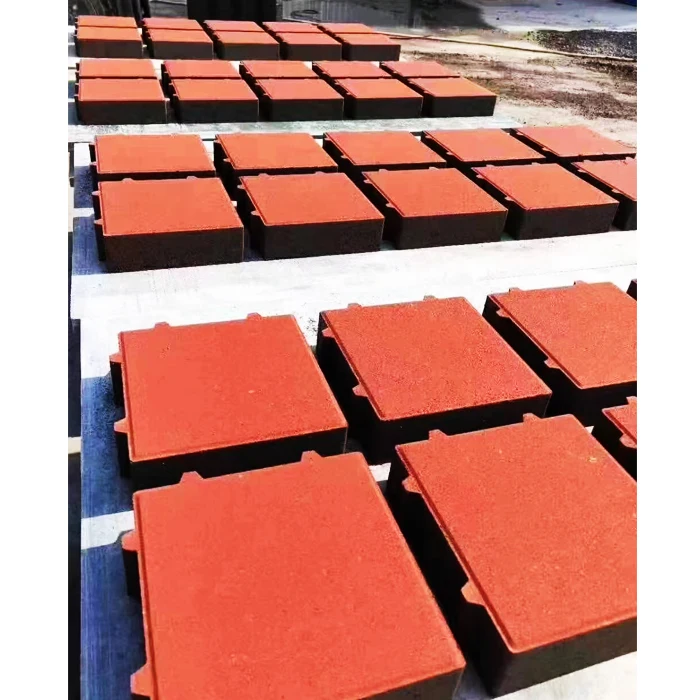
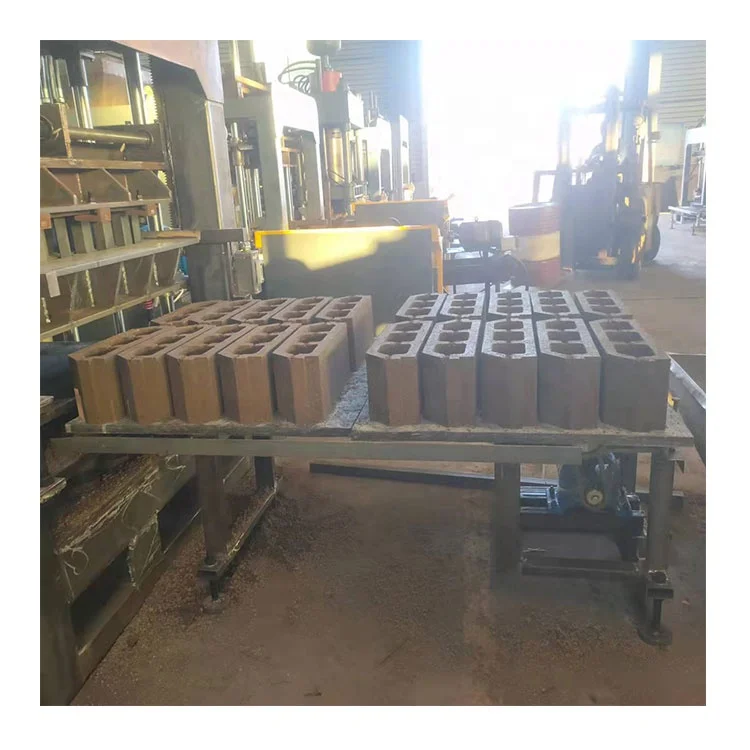


Description
Format-matched engineering — Every QT10-15 configuration starts from the buyer’s target interlocking brick dimension and local aggregate data, not a catalogue default.
Technical Specifications
| Parameter | Value |
|---|---|
| Model | QT10-15 |
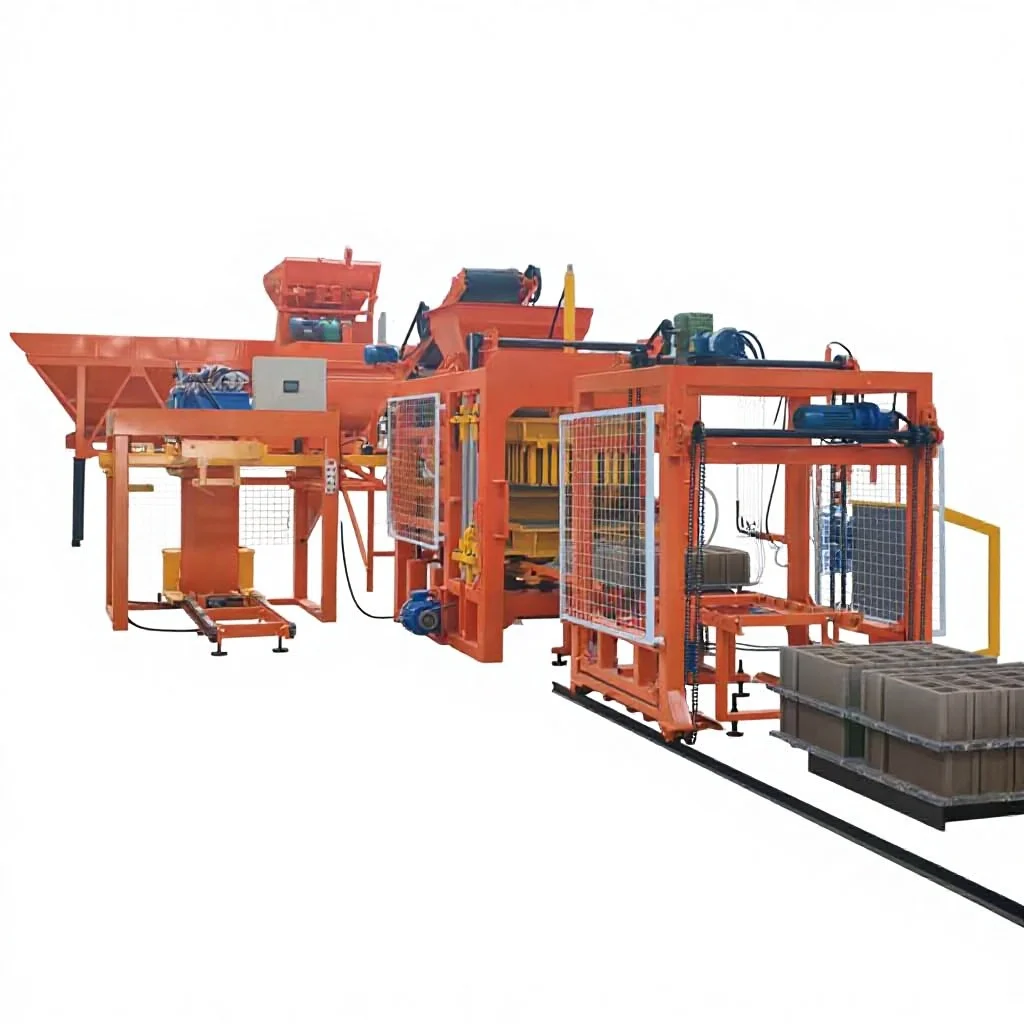
| Product Type | Interlocking Brick Making Machine |
| Control System | PLC control cabinet |
| Hydraulic System | Independent integrated hydraulic station |
| Vibration Mode | Vertical station mode resonance with automatic FM-AM |
| Cycle Time (hollow block) | 15–20 seconds |
| Cycle Time (paving block) | 20–25 seconds |
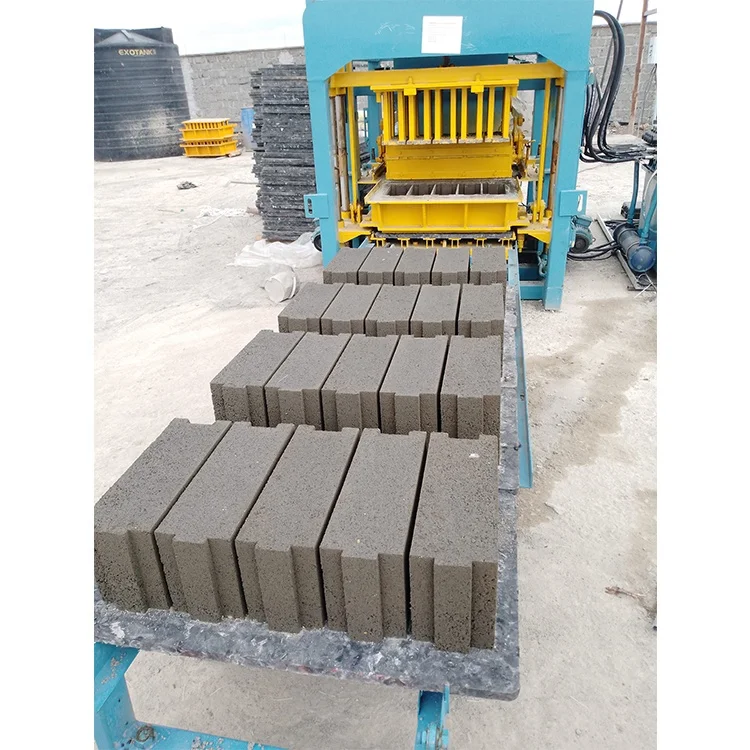
| Output: 400×200×200mm hollow block | 1,800–2,400 pcs/hour (10 pcs/mould) |
| Output: 400×150×200mm hollow block | 2,160–2,880 pcs/hour (12 pcs/mould) |
| Output: 240×115×53mm standard brick | 8,928–11,160 pcs/hour (62 pcs/mould) |
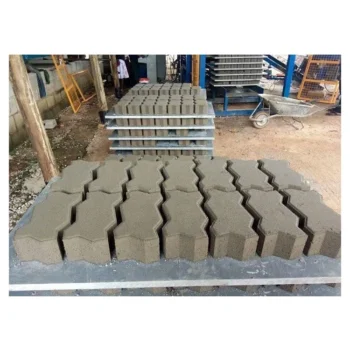
| Output: 200×100×60mm paving block | 5,184–6,480 pcs/hour (27 pcs/mould) |
| Output: 225×112.5×60mm paving block | 4,032–5,040 pcs/hour (24 pcs/mould) |
| Hydraulic Pressure | (basis not stated in source) |
| Vibration Force | (basis not stated in source) |
| Pallet Size | (basis not stated in source — confirm format and material) |
| Voltage & Frequency | (basis not stated in source — confirm destination market) |
| Rated Power | (basis not stated in source) |
| Overall Dimensions | (basis not stated in source) |
| Net Weight | (basis not stated in source) |
| Warranty | 1 year for the whole machine (excluding spare parts) |
Application Suitability
| Application | Material or Output |
|---|---|
| Interlocking brick production for wall systems | Crushed stone, sand, cement with interlocking mould profiles |
| Hollow block manufacturing for structural walls | Lightweight aggregate or standard concrete mixes |
| Paving block production for walkways and yards | High-density concrete with surface finish requirements |
| Standard solid brick for load-bearing construction | River sand or manufactured sand with cement binder |
| Multicellular brick for thermal insulation | Blended aggregate with controlled moisture content |
What "Pieces per Hour" Actually Means for Interlocking Brick Making Machine Specifications
The number on the plate is only half the story — the block format it assumes is the other half.
A machine rated at several thousand pieces per hour sounds compelling until you discover the figure was calculated on a small standard brick mould, while your actual production target is a large interlocking paver. On the QT10-15, the cycle time shifts from 15 seconds for hollow blocks to 25 seconds for denser paving formats, and the pieces per mould drop accordingly. I have watched project timelines slip because the daily output plan was built on a catalogue number that did not match the format the buyer actually sells. When you evaluate interlocking brick making machine specifications, every capacity figure must carry its format, cycle time, and mould cavity count as inseparable context [NEED_CITE: block format assumptions in capacity declarations].
Mould-to-Market Alignment
The QT10-15 supports simple mould replacement for multi-format production, which means a single press can shift between interlocking bricks, hollow blocks, and paving blocks within a shift. The real question is how long that changeover takes and whether the moulds match the dimensions your local market demands. An interlocking brick making machine is only flexible if the operator can complete the swap, clean the cavity, and realign the feed shoe without losing most of the production window. Mould drawings should be confirmed against the buyer’s actual product samples before the order is placed.
Vibration Control and Density Consistency
Vertical station mode resonance with automatic FM-AM adjusts vibration frequency and amplitude to the mix sitting in the mould at that moment. This matters because interlocking bricks require uniform density across their profile to achieve the interlocking shear strength that structural codes demand. When the vibration profile stays fixed while the aggregate moisture drifts through a shift, block density varies and rejection rates climb. The automatic tuning on the QT10-15 addresses this by responding to real-time load conditions rather than relying on a preset value [NEED_CITE: vibration tuning and concrete density correlation].
Reading Between the Specification Lines
The independent integrated hydraulic station sits apart from the main vibration source, which reduces hydraulic valve wear and oil contamination from concrete dust. For a block plant running two shifts, that isolation translates into fewer mid-week breakdowns and longer intervals between seal replacements. The PLC control cabinet governs cycle sequencing, feed timing, and pressure staging — but the display language and voltage must be locked in before production starts. A cabinet built for 380V/50Hz arriving at a 440V/60Hz site means commissioning halts until a transformer or full rewinding is arranged. Pallet size is equally critical: it must match both the block format and the curing rack spacing the buyer already operates.
The Cost of Skipping Format Verification
When the pallet size is chosen without checking the buyer’s existing forklift and curing area, pallets stack unevenly or curing racks must be rebuilt. When the mix design is assumed rather than tested, vibration force and hydraulic pressure arrive mismatched to the local aggregate, producing blocks that crack during curing or fail compressive strength tests. I have seen contractors lose entire project phases because the machine was configured for a sand source they could not procure locally, forcing a material change that rewrote the entire production recipe [NEED_CITE: aggregate mismatch and production delay costs].
Why Source the QT10-15 Through This Line
Block machinery is the single focus here, so the press, mould, pallet, and handling equipment are specified as one matched system rather than assembled from unrelated suppliers. The configuration is set against the buyer’s actual mix design and target format, not pulled from a generic catalogue. Mould design covers the formats the buyer’s market actually sells, including custom drawings when standard sizes do not apply. Automation level is selectable — a plant can begin with manual pallet handling and add automatic stacking later. Installation support includes operator training so the crew understands mould changeover and PLC navigation from day one.
Documentation & Verification
- Line layout and capacity calculation stating the block format assumed for each output tier
- Mould drawing and format list confirming included and optional block sizes
- Pallet specification matched to curing rack dimensions and forklift capacity
- Voltage, frequency, and PLC display language confirmation sheet before production
- Factory test record on the buyer’s target format before dispatch
- Hydraulic and electrical schematic for on-site maintenance reference
Installation, Commissioning & Support
- Foundation plan reflecting the QT10-15 hydraulic station isolation and vibration footprint
- Electrical circuit diagram with dedicated breaker sizing for the PLC cabinet and hydraulic pump
- Machine arrives partially assembled; pallet feed and conveyor require on-site alignment
- First-run commissioning includes cycle time tuning on the buyer’s confirmed block format
- Operator training covers mould change procedure and PLC fault code navigation
- Wear parts list with hydraulic seal and mould liner reorder intervals
Preparing Your Inquiry
To move forward with a QT10-15 proposal, share the target interlocking brick dimensions, daily output requirement, and the local aggregate type and moisture range you work with. Confirm the voltage and frequency at your site, the PLC display language your operators need, and whether existing curing racks or forklifts constrain the pallet size. If you have a specific mix design already in use, include the cement-to-aggregate ratio so vibration and pressure settings can be matched from the start.
Frequently Asked Questions
Q: How is the capacity figure calculated and which block format does it assume?
A: Each output figure for the QT10-15 is tied to a specific block dimension, mould cavity count, and cycle time range. For example, the 200×100×60mm paving block figure assumes 27 cavities per mould and a 20–25 second cycle. Always verify which format underpins the number you are comparing against your daily production target.
Q: What is the realistic mould change time and does it include cleaning and alignment?
A: Mould replacement on the QT10-15 is designed for straightforward swap-out, but realistic changeover must include cavity cleaning, feed shoe realignment, and a short test cycle to confirm block dimensions. Plan for a portion of the shift rather than a few minutes when scheduling format transitions.
Q: How do I match vibration force and hydraulic pressure to my local aggregate?
A: Share your aggregate type, gradation, and typical moisture content so the vibration frequency and hydraulic pressure can be calibrated before the machine leaves the factory. The automatic FM-AM system adjusts within a range, but the baseline setting must reflect your actual raw material profile.
Q: Which block formats and moulds are included in the standard package?
A: The QT10-15 can be supplied with moulds for hollow blocks, standard bricks, paving blocks, and interlocking bricks. Confirm which formats your market requires at inquiry stage. Custom mould drawings are available when standard sizes do not match your local construction specifications.
Q: What pallet size and material should I choose for my curing setup?
A: Pallet dimensions must align with the block format, curing rack spacing, and the forklift capacity already in your plant. Material choice — steel, bamboo, or composite — depends on curing temperature and expected pallet lifecycle. Confirm these details before the order enters production.