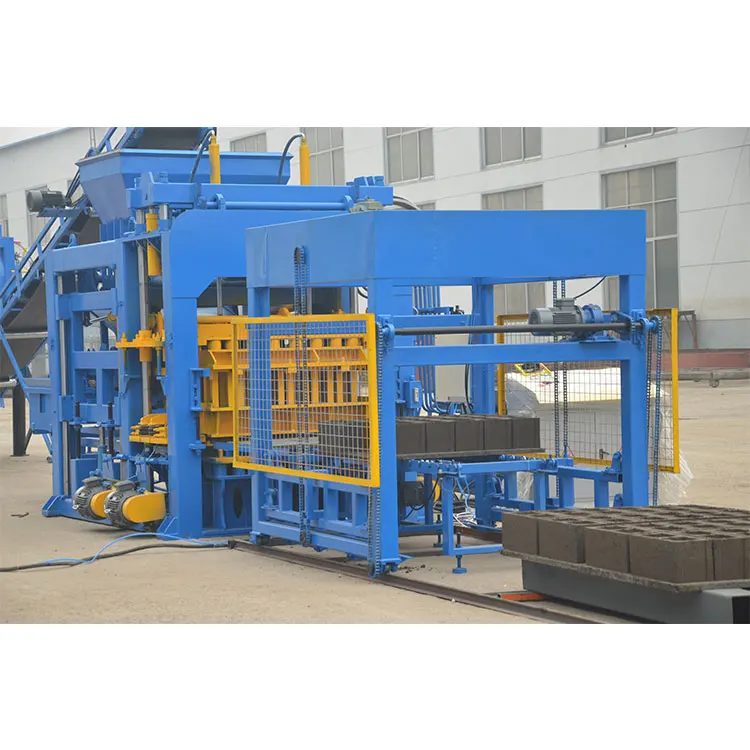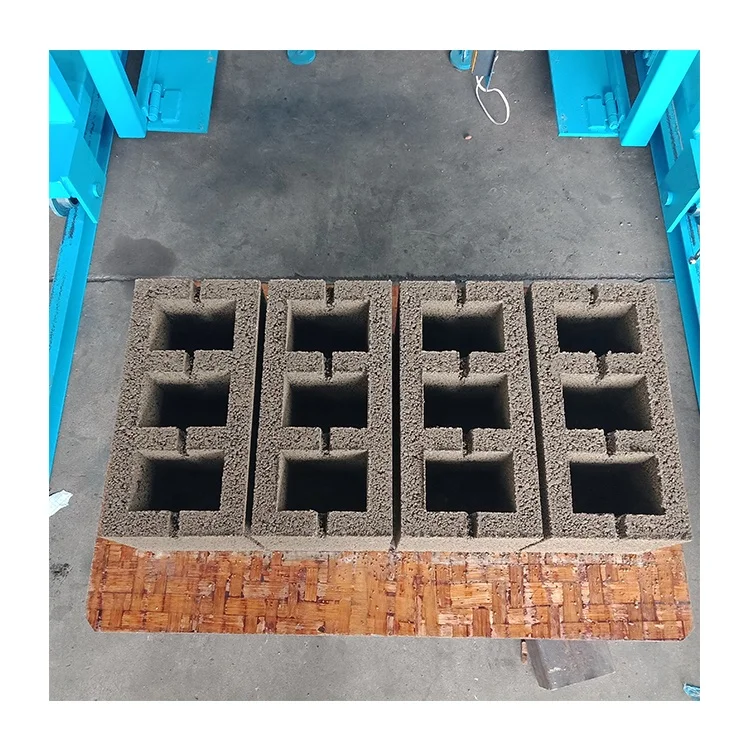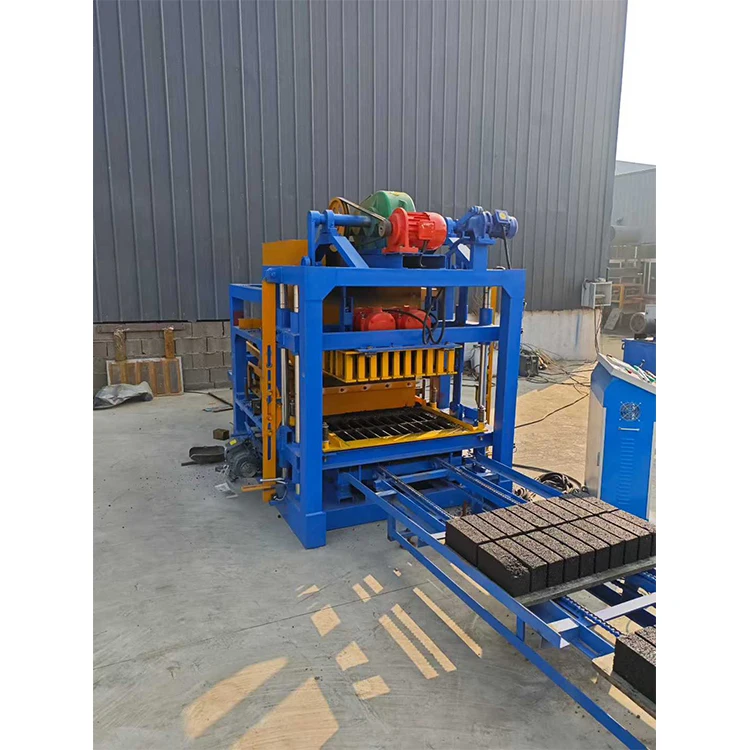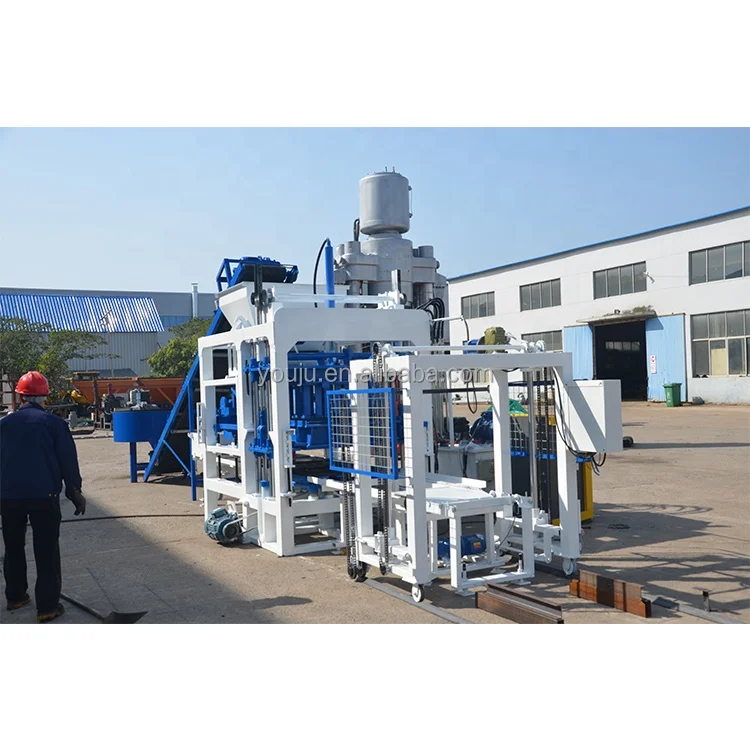
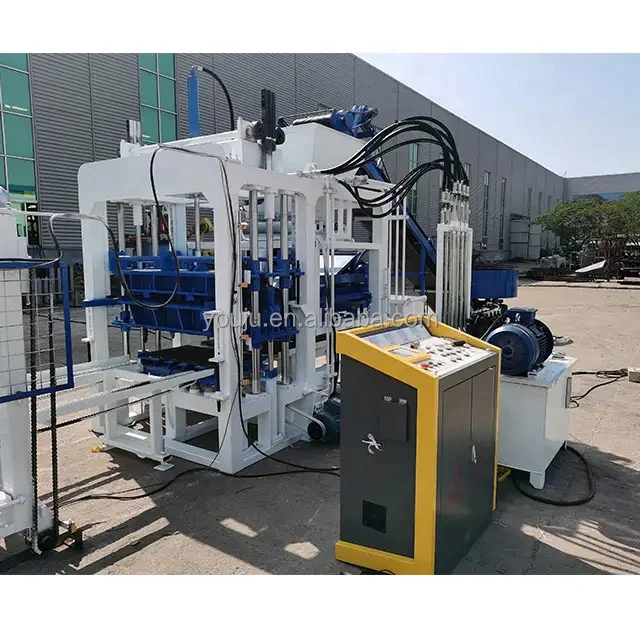
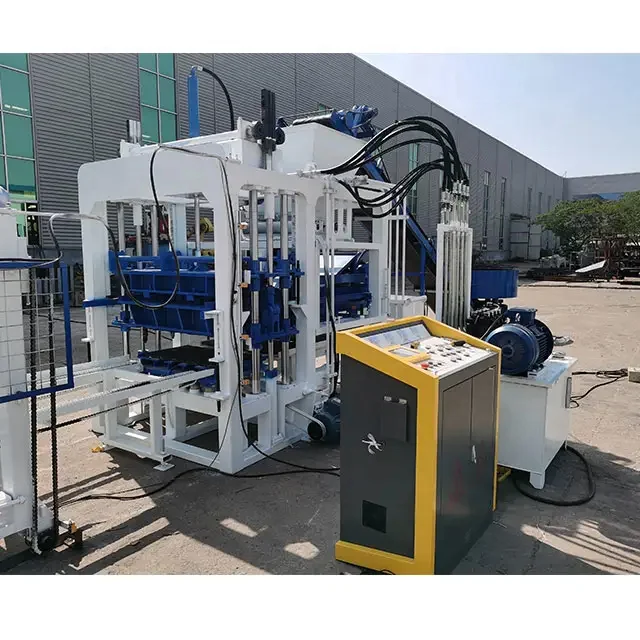
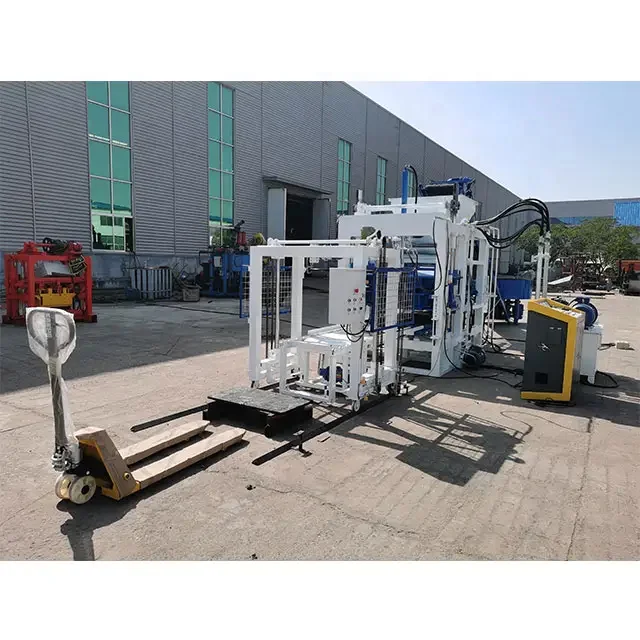
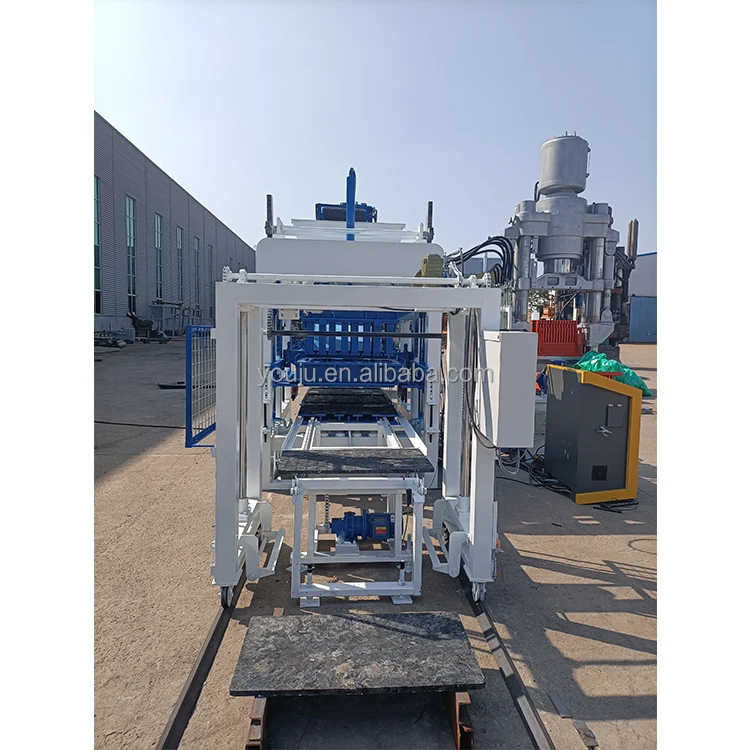

Description
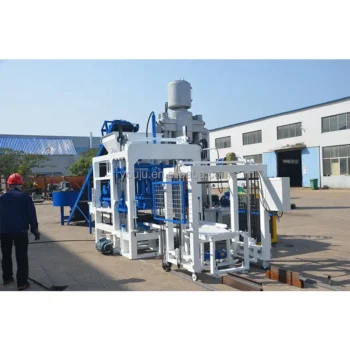
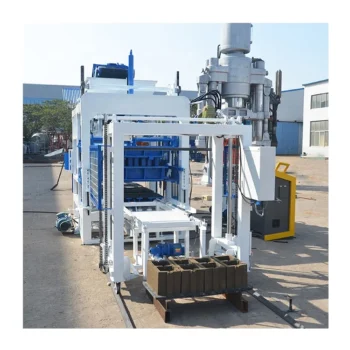
Matched System Configuration — QT4-18 block machine, mould, pallet and handling are specified together against the buyer’s actual format and local aggregate, not pulled from separate catalogues.
Technical Specifications
| Parameter | Value |
|---|---|
| Model | QT4-18 |
| Product Type | Automatic Concrete Block Making Machine |
| Overall Dimension | 250017502200mm |
| Rated Pressure | 16 MPa |
| Vibration Form | Platform Vibration |
| Pallet Size | 950x550mm |
| Molding Cycle | 18-25s (basis to be confirmed depending on block format) |
| Overall Power | 27.5 kW |
| Control System | PLC control with frequency converter (language options to confirm) |
| Electrical Components | Schneider brand |
| Mold Lifting Mechanism | Double-sided sync gears |
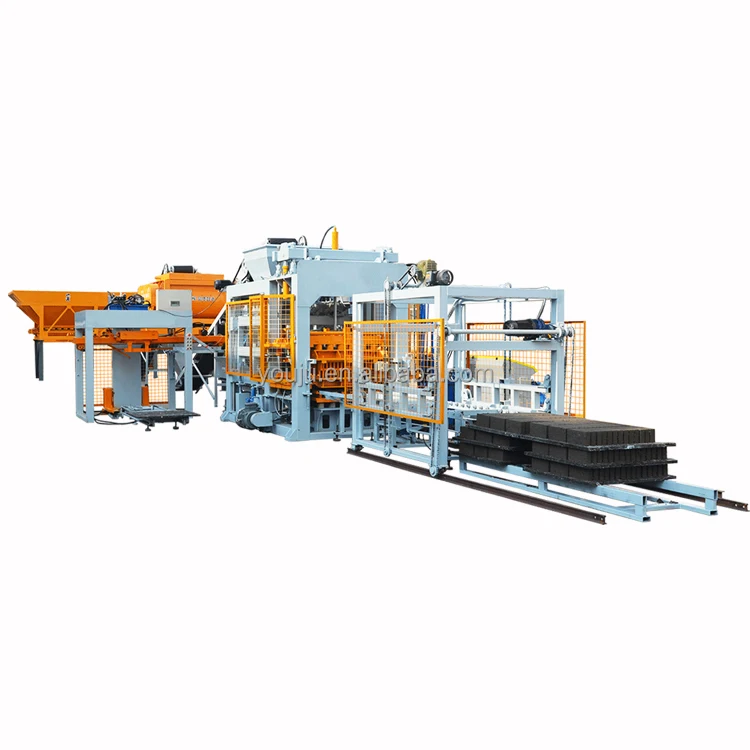
| Material Feeding System | Hopper, feeding box, feeding platform, conveyor system |
| Block Receiver | Chassis, transport system, idlers with motor, reducer, triangular belt |
| Automation Level | Automatic, single-operator PLC operation |
| Mould Change Method | Manual bolt removal with forklift assist |
Application Suitability
| Application | Material or Output |
|---|---|
| Hollow block production | Crushed stone, cement, sand, water |
| Solid block production | Dense aggregate blend with cement binder |
| Paving block production | Fine aggregate and cement for high-density surface |
| Kerbstone production | Coarse aggregate mix requiring higher vibration force |
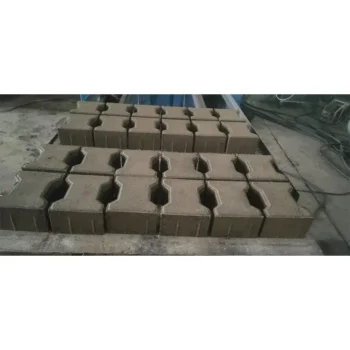
| Interlocking brick production | Specialized mould with interlocking profile |
| Porous brick production | Lightweight aggregate or aerated concrete mix |
What "18-25 Seconds Molding Cycle" Leaves Out About QT4-18 Automatic Block Machine Specifications
A cycle time is only meaningful when tied to the exact block format being produced.
Suppliers often quote the fastest cycle achievable on a simple solid block and let the buyer assume that number applies across every format in the catalogue. In reality, a hollow block with thin walls demands a longer vibration phase than a solid paver, and a kerbstone with deep profile detail adds seconds to each press stroke. I have seen buyers in Latin America commit to a daily output figure that simply could not be reached once the machine was set to their actual product mix [NEED_CITE: block cycle time variation by format and aggregate type]. The QT4-18 automatic block machine specifications must be read format by format, not as a single blanket claim.
Matching Vibration Force and Hydraulic Pressure to Local Aggregate
The QT4-18 automatic block machine specifications list a rated pressure of 16 MPa combined with platform vibration. These two forces work together to compact the concrete mix into the mould cavity. If the local aggregate is volcanic ash or a high-clay material, the mix tends to absorb more water and resist compaction, which means vibration duration must increase to achieve target block density. Conversely, clean crushed granite responds quickly to pressure and short vibration bursts. This is why we always request a material test report before finalizing the machine configuration.
Why Pallet Size Must Be Confirmed Before the Mould Order
The 950×550 mm pallet size on the QT4-18 determines the total block area per press stroke. But pallet size also dictates the curing rack spacing and the forklift tine width the buyer already has on site. A mismatch here means blocks are stacked by hand or curing racks must be rebuilt. We confirm pallet dimensions against the buyer’s existing curing infrastructure before production begins, so the QT4-18 automatic block machine specifications align with the physical plant, not just the press [NEED_CITE: pallet and curing area compatibility in block plants].
Reading the Molding Cycle, Power and Gear System Together
The 18-25 second molding cycle range reflects the span from a simple solid block to a complex interlocking or kerbstone format. The 27.5 kW overall power covers the vibration motor, hydraulic pump, conveyor drives and PLC system running simultaneously. The double-sided sync gear mold lifting mechanism keeps the mould box level during raising and lowering, which prevents uneven wall thickness when switching from a shallow paver mould to a tall hollow block mould. Frequency converter control allows the operator to adjust vibration intensity per format without mechanical belt changes, giving finer control over surface finish on paving blocks where visual quality matters.
The Hidden Cost of Skipping the Aggregate Report
When the mould cavity and vibration settings are calibrated for a standard river sand mix but the buyer sources laterite or volcanic tuff, the blocks leave the press under-compacted. Surface cracking appears during curing, compressive strength fails the local building code and entire batches are scrapped. The cost is not just wasted cement — it is lost production days while the operator tries to compensate by adjusting water ratios manually [NEED_CITE: aggregate variability effects on concrete block compressive strength]. This problem is entirely preventable if the mix design is shared before the mould is machined.
Why Configuration Integrity Matters Here
Every QT4-18 we ship is configured against the buyer’s confirmed block format, local raw material and plant layout rather than assembled from catalogue defaults. Moulds are designed to the exact profile the buyer’s market demands, including custom drawings when standard formats do not match. Pallet size and material are chosen to match the buyer’s curing racks and forklift capacity. Voltage, frequency and PLC display language are confirmed in writing before the machine enters production. Supporting equipment — mixer, belt conveyor, stacker — is specified so cycle times align across every station and the press is never left waiting for material or pallets [NEED_CITE: block production line station synchronization principles].
Documentation & Verification
- Line layout and capacity calculation stating the block format assumed for each output figure
- Mould drawing and format list confirming standard and custom profiles included
- Pallet specification sheet matching size and material to buyer’s curing area
- Voltage, frequency and PLC language confirmation signed before production
- Factory test record on buyer’s target block format before dispatch
- CE declaration and operation manual included with shipment documentation
Installation, Commissioning & Support
- Foundation pad sized to the 250017502200mm footprint with level tolerance specified
- Dedicated power circuit for the 27.5 kW total draw, voltage and frequency confirmed pre-shipment
- Machine arrives with mould box and hopper partially assembled to reduce on-site setup time
- PLC parameters set and vibration duration tuned to buyer’s mix during commissioning
- Operator training covers mould change procedure using forklift-assisted bolt removal
- Wear parts list and hydraulic seal kit provided for first replacement cycle
Before You Request a Quote
Send your target block format with dimensions, the daily output you need to meet project deadlines, and a sample or test report of the aggregate and cement available locally. Confirm the voltage and frequency at your site along with your preferred PLC display language. Let us know your curing rack dimensions and forklift capacity so pallet sizing is right the first time.
Frequently Asked Questions
Q: How is QT4-18 daily output calculated per block format and what cycle time applies?
A: Daily output depends on which block format is in the mould. The 18-25 second molding cycle range covers simple solid blocks at the fast end and complex hollow or interlocking formats at the slower end. We provide a written capacity calculation that states the exact format, cycle time and assumed operating hours so the buyer can plan against their project deadline without guessing.
Q: How is the mould configured to match my local aggregate rather than a catalogue default?
A: We request a material test report or a physical sample of your aggregate, sand and cement before the mould is machined. The vibration duration and hydraulic pressure settings are then adjusted to match how that specific mix compacts. This prevents under-density and surface cracking that occur when a mould designed for river sand is run on volcanic ash or laterite.
Q: What is the mould change procedure and how long does a format change actually take?
A: The QT4-18 uses manual bolt removal with forklift assist to lift the mould box. The double-sided sync gear system keeps the mould level during removal and installation, reducing alignment adjustments. A trained operator with the correct tools can complete a change within a single shift break, though exact time depends on mould complexity and operator experience.
Q: How are pallet size and material selected to match my existing curing racks and forklift?
A: The standard pallet is 950×550 mm, but we confirm this against your curing rack spacing and forklift tine width before production. If your existing infrastructure uses a different dimension or requires bamboo rather than PVC pallets, we adjust the specification so blocks move from press to curing area without manual rehandling or rack modification.
Q: Which block formats can the QT4-18 produce and can custom moulds be designed from my drawings?
A: The machine produces hollow blocks, solid blocks, paving blocks, kerbstones, interlocking bricks and porous bricks. Custom moulds can be designed from buyer-provided drawings when the local market demands a profile not in our standard range. Each mould is tested on the buyer’s specified mix before shipment to confirm block density and surface finish.