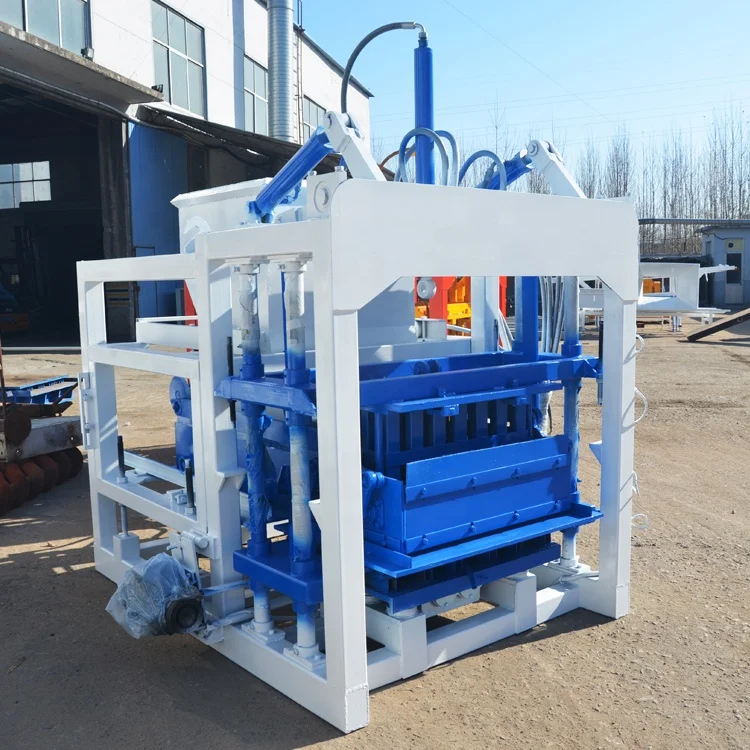
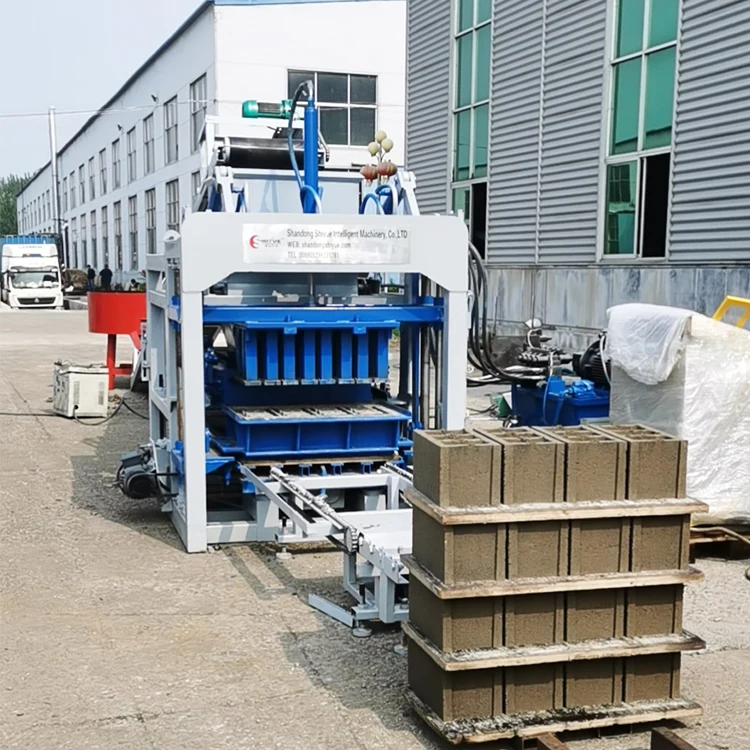
Description
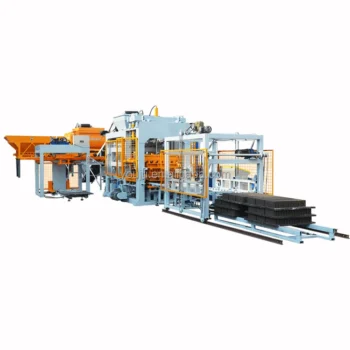
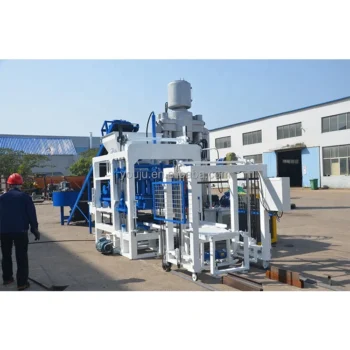
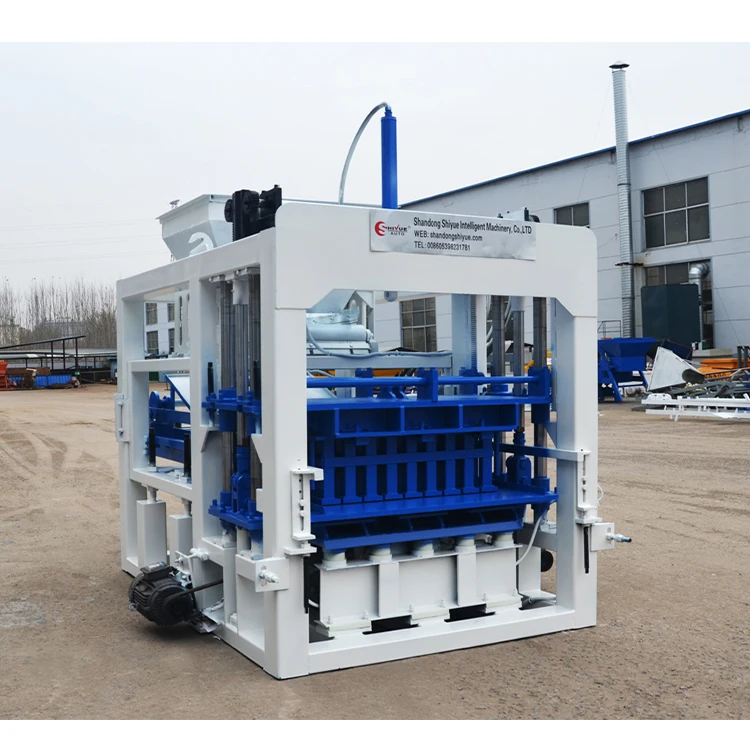
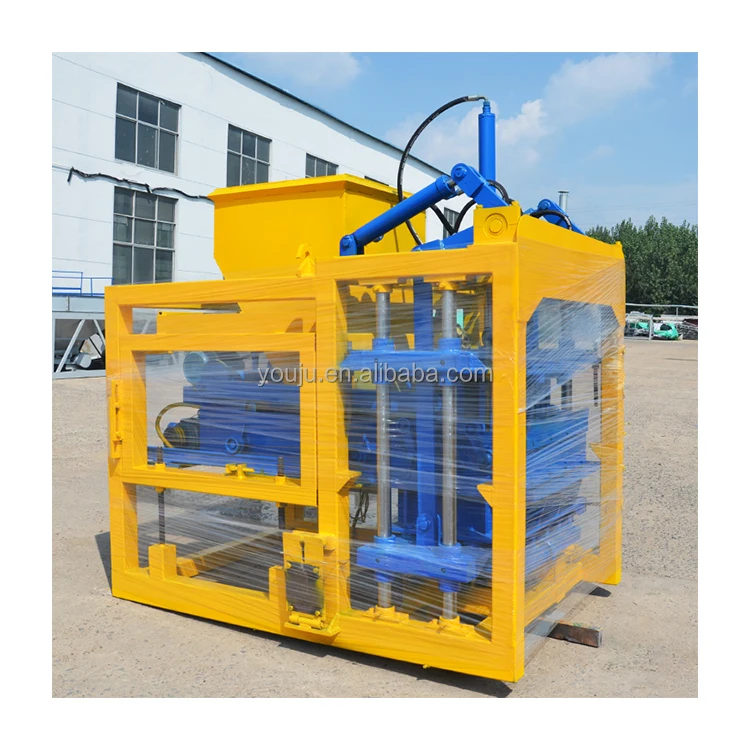
Matched Mould and Pallet System — the QT4-15A automatic block machine is specified against your target block format, local aggregate and curing yard dimensions before production begins, not shipped as a catalogue default.
Technical Specifications
| Parameter | Value |
|---|---|
| Model | QT4-15A |
| Product Type | Automatic Concrete Block Making Machine |
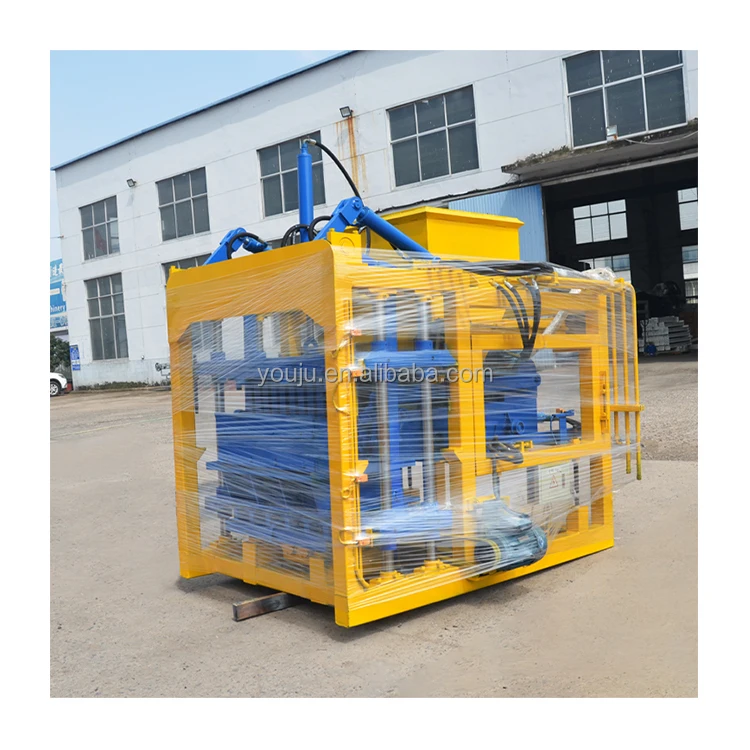
| Overall Dimensions (L×W×H) | 7100 x 1600 x 2610 mm |
| Rated Pressure | 16 MPa |
| Vibration Form | Platform Vibration |
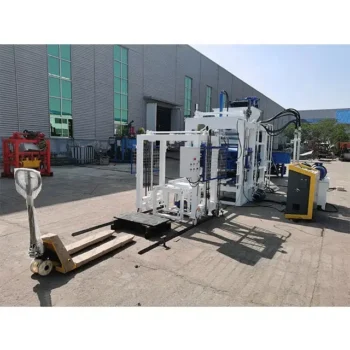
| Pallet Size | 1020 x 570 mm |
| Molding Cycle | 15-25 s (basis not stated in source — confirm block format and material) |
| Overall Power | 27.5 kW |
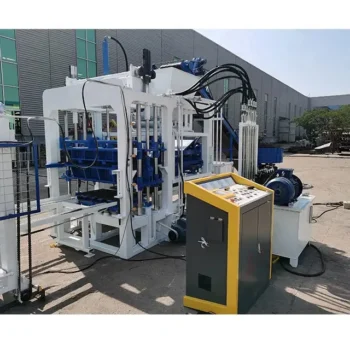
| Control System | PLC (electronic console) |
| Voltage & Frequency | Configurable to target market (to be confirmed before production) |
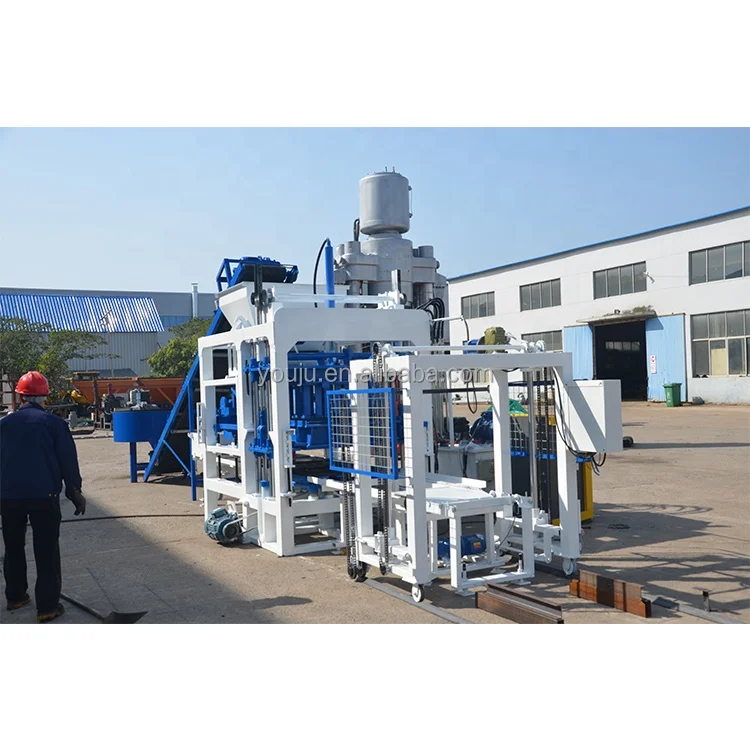
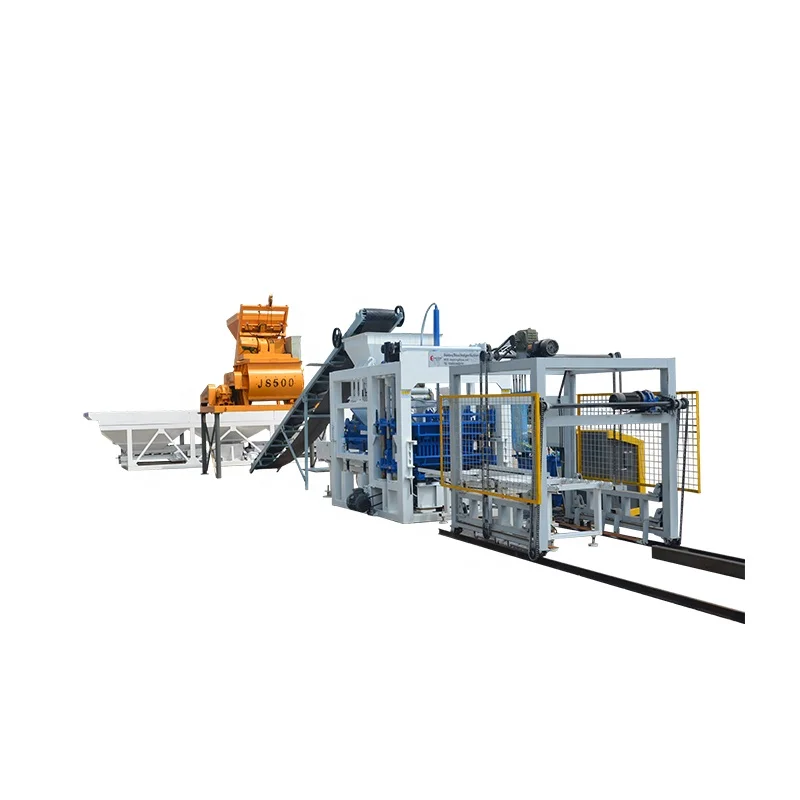
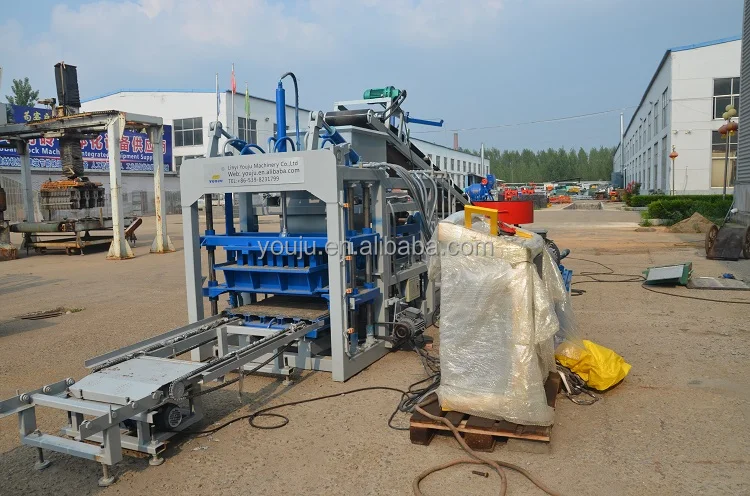
| Automation Level | Automatic (mixer, pallet conveyor, press, block conveyor, hydraulic station, PLC console) |
| Material Feeder System | Hopper, feeding box, feeding platform, conveyor system |
| Mould Change Method | Manual bolt removal (M24 side bolts, upper mould bolts) |
| Included Mould | One hollow mould; additional formats customizable to buyer drawings |
| Supporting Equipment | JQ500 pan mixer, 8 m belt conveyor, stacker, block clamper, trolley, cement silo, batching plant |
| Assembly State | Requires foundation pouring and installation per foundation drawing |
| PLC Display Language | To be confirmed with buyer before production |
| Certification | To be confirmed (CE or other as applicable) |
Application Suitability
| Application | Material or Output |
|---|---|
| Hollow block production for masonry walls | Crushed stone, sand, cement, water — local aggregate gradation confirmed before configuration |
| Solid block manufacturing for load-bearing structures | Dense aggregate mix with cement content matched to target compressive strength |
| Paving block production for walkways and driveways | Fine aggregate face mix with standard body mix for interlocking or rectangular formats |
| On-site block production for housing projects | Locally sourced sand and gravel with portable mixer and manual curing setup |
| Format expansion for existing concrete product plants | Additional moulds built to buyer drawings for kerbstones, interlocking bricks, or porous blocks |
What "15-25 Seconds per Cycle" Actually Means for Your Output
Every cycle time figure must name the block format, mould cavity count, and mix design it assumes — a single range tells you nothing about daily production.
I once watched a buyer in the Middle East receive an automatic block machine with a quoted cycle time that looked impressive on paper. The problem was that the number assumed a small solid block format his market never bought. When he installed the hollow block mould he actually needed, the QT4-15A automatic block machine specifications mould capacity conversation had never happened, and his real output fell well short of the project schedule he had committed to [NEED_CITE: block format assumptions in manufacturer capacity claims]. The cycle time range listed above covers multiple formats and thicknesses, so the exact number for your production must be calculated against the specific mould and mix you will run.
Mould Format and Honest Capacity per Block Type
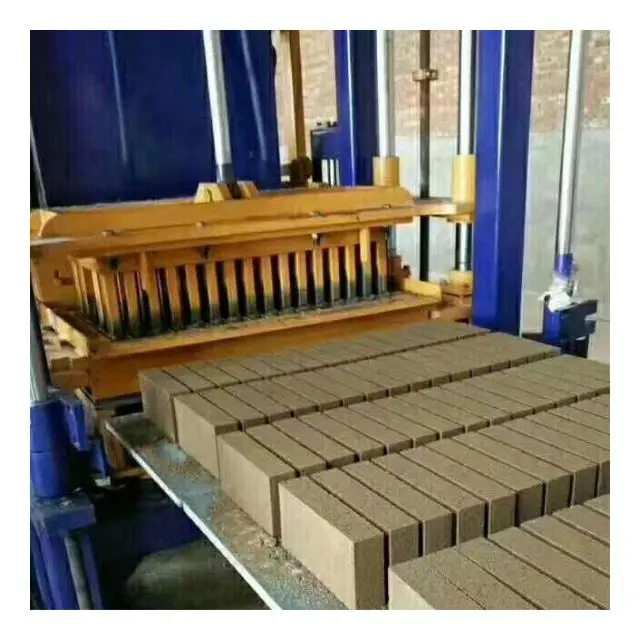
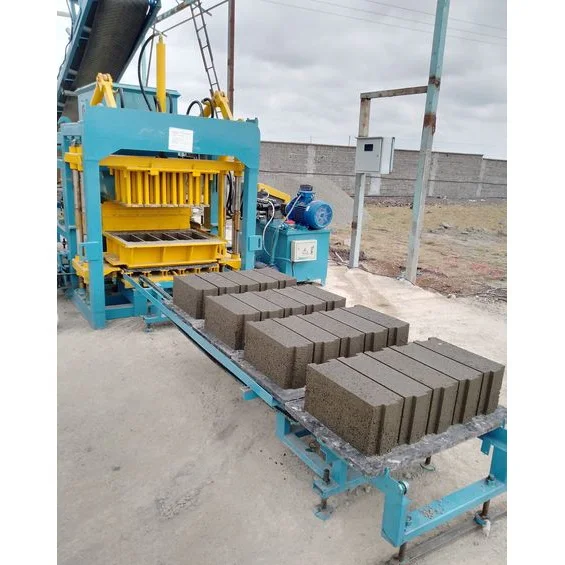
The QT4-15A supports hollow, solid, paving, and custom block formats through a bolt-on mould system, with one hollow mould included at delivery and additional moulds manufactured to buyer drawings. The mould cavity count and block dimensions directly determine how many pieces each cycle produces, which is why the QT4-15A automatic block machine specifications mould capacity must be stated per format rather than as a single hourly figure. A four-cavity hollow block mould and a twelve-cavity paving block mould will produce vastly different piece counts from the same press cycle, and any supplier quoting one number for all formats is leaving out the detail that determines whether your line meets its targets.
Pallet Size, Curing Area, and Handling Alignment
The 1020 x 570 mm pallet size on this press defines how many blocks sit on each board, how the boards move through the curing yard, and whether your existing forklift can handle loaded stacks. Before an order is placed, the pallet dimensions must be checked against the curing rack spacing, yard layout, and handling equipment already on site [NEED_CITE: pallet handling compatibility in block production lines]. A mismatch here means boards pile up on the floor because the racks do not accept them, or the forklift cannot lift a full rack load — problems that have nothing to do with the press itself but shut down production just as effectively.
Pressure, Vibration, and Mix Design Matching
The 16 MPa rated hydraulic pressure and platform vibration system work together to compact the concrete mix into the mould cavity, and the balance between pressure and vibration must match the specific aggregate gradation and cement content available at your site. A mix with high fines content needs different vibration intensity than one with coarse crushed stone, and setting the press parameters without testing the actual local material leads to blocks that either crack during curing or fail compressive strength tests at the construction site. The QT4-15A automatic block machine specifications mould capacity discussion is incomplete without confirming which mix design the machine will actually run.
The Hidden Cost of Skipping Format Confirmation
When a buyer accepts a capacity number without asking which block format it assumes, the consequences arrive months later on the production floor. The press runs, the mixer feeds, the conveyor moves — but the daily pallet count does not match the project delivery schedule. I have seen contractors forced to add a second shift or rent additional machines because the original quotation was based on a format the buyer never intended to produce [NEED_CITE: output shortfall from unconfirmed block format assumptions]. This is not a machine failure; it is a specification failure that happens before the equipment is built.
Why Source the QT4-15A Through This Configuration Process
The machine, mould, pallet, and handling equipment are specified as one matched system rather than assembled from separate suppliers, which eliminates the interface gaps that cause downtime on mixed-source lines. Configuration is set against your actual mix design and local aggregate, not a catalogue default that assumes materials you cannot buy. Mould design covers the formats your market actually sells, with custom drawings accepted for non-standard shapes. The automation level is selectable, so a buyer can start with the standard pallet conveyor and block conveyor setup and add stacking or cubing equipment later as production volume grows. Installation includes operator training on mould change procedure, PLC operation, and daily maintenance routines specific to this press.
Documentation & Verification
- Line layout drawing showing the QT4-15A press position, conveyor routing, and curing yard allocation
- Capacity calculation sheet stating the exact block format and mould cavity count behind each output figure
- Mould drawing and format list for every block type included in the order
- Pallet specification sheet with dimensions, material, and load rating matched to your curing racks
- Hydraulic and electrical schematic with voltage and frequency confirmed for your site
- Factory test record using a mix profile matching your local aggregate before dispatch
Installation, Commissioning & Support
- Foundation drawing provided for the 7100 x 1600 mm footprint, specifying slab thickness and anchor bolt positions
- Power supply requirement of 27.5 kW confirmed against your site transformer capacity before shipment
- Machine ships in assembly-ready sections and requires on-site bolting, hydraulic line connection, and PLC commissioning
- First production run supervised with parameter adjustment to your confirmed mix design and block format
- Operator training covers mould change using the M24 bolt system, PLC menu navigation, and daily vibration platform inspection
- Wear parts list with hydraulic seals, vibration motor bearings, and mould liner replacement intervals documented
What to Include in Your Inquiry
To configure the QT4-15A correctly, share the block formats you intend to produce with dimensions and target daily output per format. Provide a sample or description of your locally available aggregate — sand type, maximum stone size, and any clay or silt content — so the mix design can be confirmed before the machine is built. Confirm your site voltage, frequency, and the language you need on the PLC display so the electrical system and control console are correct at delivery. If you already have a curing yard, forklift, or existing mixer in place, include those details so the pallet size and supporting equipment can be matched to what is already on your floor.
Frequently Asked Questions
Q: How is daily output calculated for the QT4-15A, and which block format does each number assume?
A: Daily output is calculated by multiplying the cycle time for a specific mould by the number of cavities in that mould, then factoring in operating hours and pallet handling time. Each capacity figure on our quotation names the exact block format, dimensions, and cavity count it assumes, so there is no single number hiding multiple assumptions.
Q: What mould formats are available, and how long does a mould change take?
A: The QT4-15A accepts hollow, solid, paving, and custom-format moulds built to buyer drawings. Mould change involves removing M24 side bolts and upper mould bolts manually. The procedure is documented step by step, and the time depends on operator familiarity after training on your specific format set.
Q: How is the machine configured for my local aggregate rather than a catalogue default?
A: We request a description or sample of your local sand, stone, and cement before configuration. The vibration intensity, hydraulic pressure setting, and feeder system are then adjusted to match that specific mix design, ensuring block strength and surface finish meet your market requirements without material substitution.
Q: Is the 1020 x 570 mm pallet size compatible with my existing curing area and forklift?
A: This must be confirmed before ordering. We provide the pallet specification sheet with dimensions and loaded weight so you can verify rack spacing, yard capacity, and forklift load rating. If a mismatch exists, pallet size options are discussed before the machine enters production.
Q: What documentation comes with the machine?
A: You receive a line layout with capacity per format, mould drawings, pallet specification, hydraulic and electrical schematics, a factory test record on your confirmed mix, an operation manual, and a wear parts list. Voltage, frequency, and PLC language are confirmed in writing before production begins.