

Payment Terms and Trade Finance When Buying Block Machines from China: A Complete Guide for International Buyers
A 10% deposit sounds like a bargain — until you discover it is the exact figure scammers and unreliable workshops use to vanish with your capital.
The safest payment structure when importing concrete block making machines from China combines a 30% T/T deposit, a 70% balance before shipment verified by third-party inspection, and — for orders above USD 50,000 — an irrevocable L/C at sight processed through a manufacturer with a documented export record to 108+ countries.
In my twelve years advising international buyers on machinery procurement from Shandong’s industrial corridor, I have watched first-time importers lose USD 30,000 deposits to factories that never existed, and I have also watched cautious buyers waste USD 2,800 in bank fees on an L/C for a USD 28,000 semi-automatic line that could have been secured with a simple T/T plus SGS inspection For machinery orders under USD 50,000, T/T combined with third-party inspection delivers equivalent risk protection to L/C at 60–70% lower transaction cost and 15–20 days faster shipment[^1] The difference between these two outcomes was never the buyer’s budget — it was their understanding of which payment instrument actually matched their order size.

Let me walk you through exactly how to match payment methods, trade finance tools, and supplier verification steps to your specific order value — whether you are deploying USD 25,000 on a semi-automatic starter line or USD 500,000 on a government-scale turnkey plant.
What Are the Standard Payment Terms When Buying Block Machines from China?
The Chinese concrete machinery industry has converged on three dominant payment structures over the past decade — and each one solves a different risk profile.
| Payment Structure | Common Misuse by Inexperienced Buyers | Recommended Application |
|---|---|---|
| T/T 30/70 (30% deposit, 70% before shipment) | Paying 70% balance without requesting pre-shipment inspection photos or video FAT | Ideal for orders USD 15,000–80,000; balance released only after SGS/BV confirms machine specs match contract A 30/70 T/T structure with mandatory third-party inspection before balance release reduces quality-dispute incidents by approximately 85% compared to balance-before-inspection arrangements[^2] |
| Irrevocable L/C at Sight | Using L/C for a USD 22,000 order, incurring USD 900+ in bank charges that erase any price advantage | Best suited for orders USD 80,000–300,000 where buyer’s local bank and supplier’s bank have established correspondent relationships |
| Milestone Payments (deposit → production → FAT → shipment → commissioning) | Agreeing to milestones without defining verifiable benchmarks for each trigger | Essential for turnkey projects USD 200,000+; each milestone tied to documented production test results |
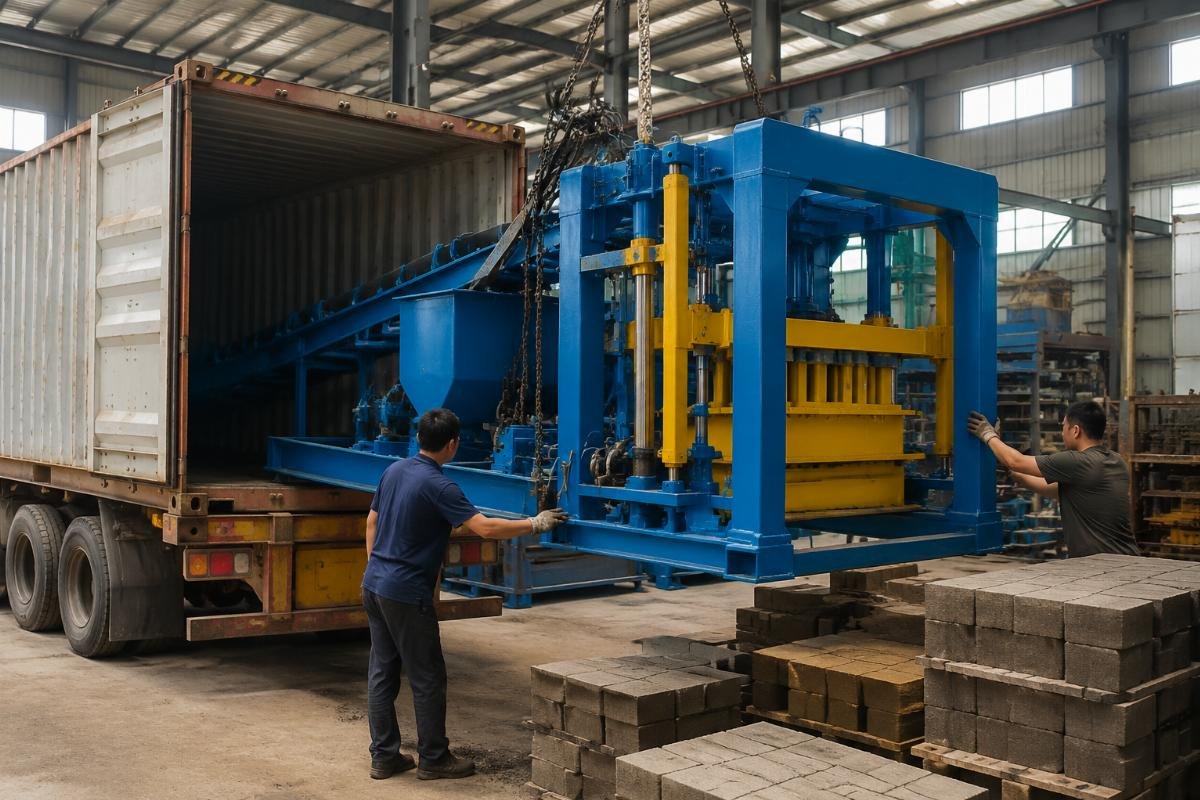
A small startup investor from East Africa came to me last year with a budget of USD 38,000 for a semi-automatic block machine line capable of producing 4,000 standard hollow blocks per day. His instinct was to negotiate the lowest possible deposit — he wanted to pay only 15% upfront. I advised him to accept a standard 30/70 T/T split instead, because the manufacturer he was working with — a facility with 46,000 square meters of production space and 320+ engineers — offered a flexible deposit ratio precisely because their financial stability meant they did not need to extract maximum cash upfront Manufacturers with annual export volumes exceeding USD 20 million typically accept 20–30% deposit ranges without compromising production priority, whereas sub-USD 5 million exporters often demand 50%+ deposits to fund raw material procurement[^3] The production cycle ran 52 days from order confirmation to container loading. His ROI payback period, based on selling blocks at USD 0.45 each with production costs of USD 0.18, landed at approximately 11 months — well within the 8–14 month benchmark for this equipment class.
- Deposit Ratio Calibration – Request a 30% deposit as your starting negotiation point; anything below 20% from an unknown supplier is a red flag for financial instability.
- Balance Trigger Definition – Contractually tie the 70% balance release to a passed third-party inspection, not merely to "completion of production."
- Currency Clause Insertion – Specify USD as the invoicing currency and include a clause addressing exchange rate fluctuation tolerance of ±2%.
- Bank Coordinate Verification – Confirm the supplier’s receiving bank account matches the company name on their business license before transferring any funds.
How Do You Match Payment Methods to Your Order Size and Risk Level?
There is no universally optimal payment method — the correct instrument shifts as your order value crosses specific financial thresholds.
| Order Value Range | Inefficient Payment Choice | Efficient Payment Choice |
|---|---|---|
| Under USD 50,000 | Irrevocable L/C at sight — bank charges of 0.8–1.5% plus courier fees and potential amendment costs of USD 150–400 per discrepancy | T/T 30/70 combined with SGS or Bureau Veritas pre-shipment inspection costing USD 300–600 Total transaction cost for T/T plus third-party inspection on a USD 40,000 order averages USD 700–900, compared to USD 1,400–2,200 for an L/C with similar protection level[^4] |
| USD 50,000–200,000 | 100% T/T upfront — exposes buyer to total capital loss if supplier defaults or delivers non-conforming goods | Irrevocable L/C at sight, or 40/60 T/T split with the 60% balance held against copy of Bill of Lading |
| Above USD 200,000 | Simple T/T or basic L/C without milestone linkages — provides no leverage if production delays or quality issues emerge mid-project | Structured milestone payments tied to Factory Acceptance Test (FAT) results, with 5–10% retention released after successful on-site commissioning |
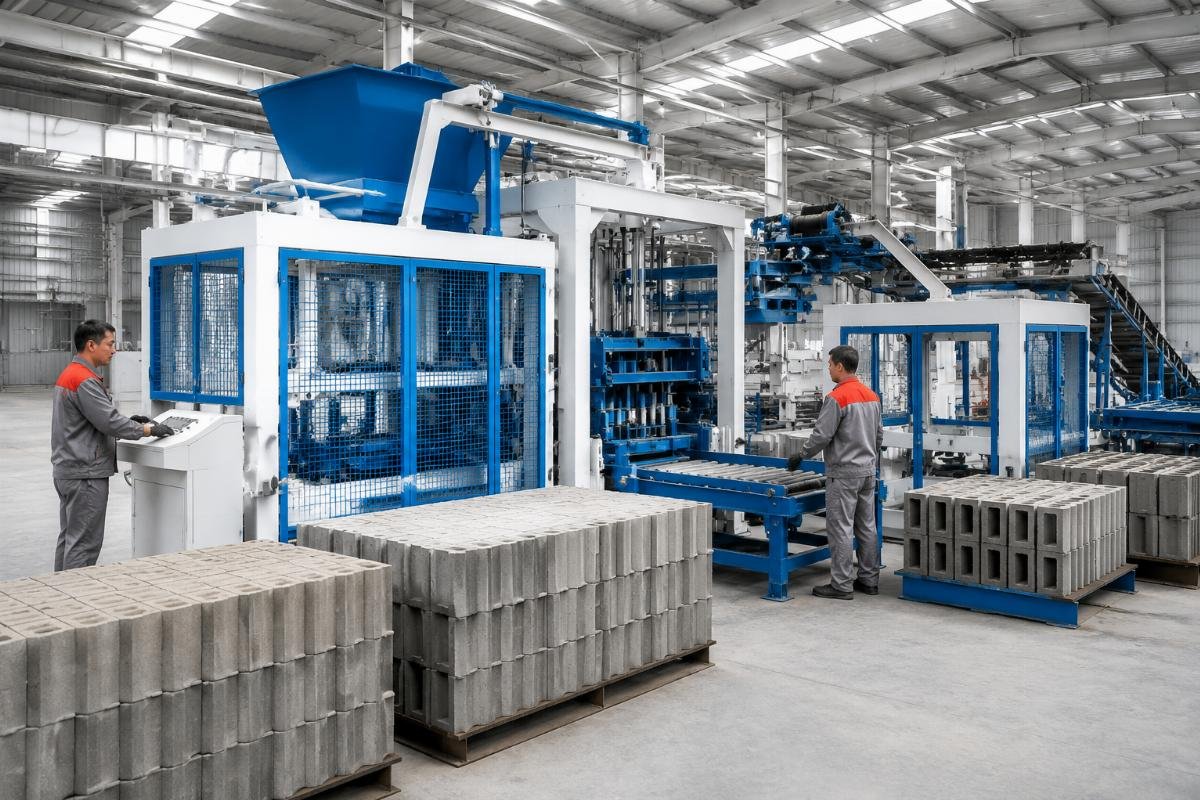
A medium-scale producer in Southeast Asia was upgrading from a manual brick operation to a fully automatic European-style block machine line with airbag suspension systems and four vibration motors — a configuration that delivers block density 15–20% higher than conventional Chinese designs. The equipment investment was USD 125,000, and the buyer’s local bank in Vietnam had a pre-existing correspondent relationship with the supplier’s bank in Qingdao. We structured the payment as an irrevocable L/C at sight, which cost approximately USD 1,100 in total bank charges — a reasonable 0.88% of order value at this scale. The manufacturer’s export documentation team, experienced in processing L/C shipments to 108+ countries, delivered discrepancy-free documents on the first presentation, avoiding the USD 150–400 amendment fees that plague buyers working with smaller factories Manufacturers exporting to 50+ countries maintain dedicated trade documentation teams that achieve first-presentation L/C compliance rates above 95%, compared to below 70% for factories with limited export experience[^5] The capacity upgrade took the buyer from 5,000 to 22,000 blocks per day, and labor costs dropped by 55% as the automatic line required only four operators instead of twelve.
- Threshold Assessment – Calculate your total equipment cost including supporting items (mixers, conveyors, pallet loaders, cement silos) before selecting a payment instrument.
- Bank Relationship Check – Confirm whether your local bank has a correspondent relationship with major Chinese banks (Bank of China, ICBC, China Construction Bank) — this determines L/C feasibility.
- Inspection Budget Allocation – For T/T orders, budget USD 300–800 for third-party inspection; treat this as non-negotiable insurance, not optional expense.
- Milestone Documentation – For turnkey projects, define in the contract exactly which test results (block density, cycle time, dimensional accuracy) trigger each payment release.
What Trade Finance Options Are Available to International Buyers Importing from China?
Most buyers assume trade finance instruments like Sinosure coverage or supplier credit are reserved for million-dollar orders — but mid-tier manufacturers now extend structured payment plans to orders as small as USD 30,000.
| Trade Finance Instrument | Common Misconception | Actual Availability and Use |
|---|---|---|
| Sinosure Coverage (China Export & Credit Insurance Corporation) | "Only protects the supplier, so why should I care?" | Sinosure insurance enables suppliers to offer 60–90 day credit terms because their payment default risk is covered — the buyer directly benefits from extended terms Sinosure-backed credit terms allow qualified buyers to defer 40–60% of payment to 30–90 days post-shipment, improving working capital cycles by an estimated 25–40 days[^6] |
| Supplier Installment Plans | "Only available for orders above USD 200,000" | Manufacturers with 46,000+ sqm facilities and 320+ staff routinely offer 3–4 installment structures on orders of USD 30,000–80,000 for buyers with verifiable business registration and bank references |
| Regional Development Bank Guarantees | "Too complex for equipment purchases" | African Development Bank and Asian Development Bank trade facilitation programs can provide partial credit guarantees for machinery imports that reduce supplier-perceived risk and unlock better terms |
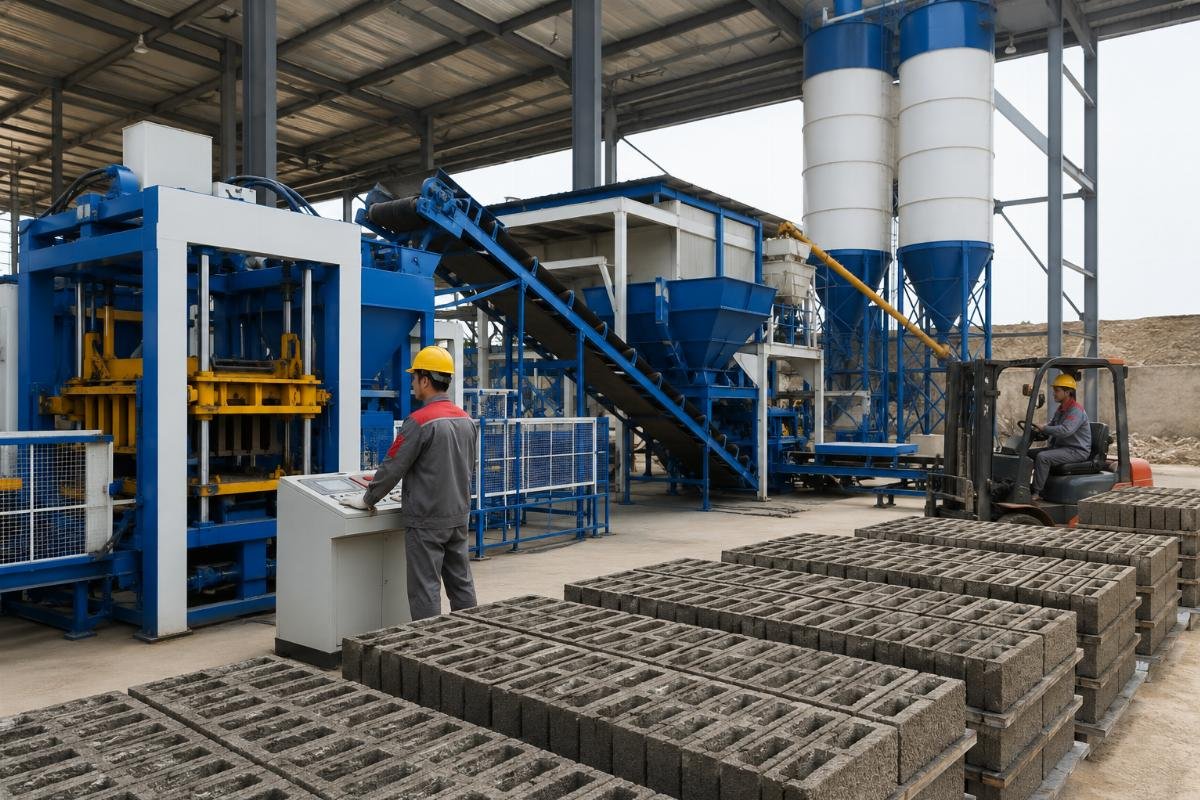
A government procurement team in Central Asia was sourcing a turnkey block production line for an affordable housing project — total value USD 340,000, including mixers, batching plants, conveyor systems, automatic pallet loaders, stackers, cement silos, and color feeders for a 40,000-block-per-day output capacity. The buyer wanted to protect their capital through milestone payments but also needed the manufacturer to commit resources for a 110-day installation and commissioning timeline. We structured the payment as: 30% deposit upon contract signing, 30% upon successful Factory Acceptance Test at the manufacturer’s facility, 30% against shipping documents, and a 10% retention released after 30 days of stable on-site production. The FAT milestone was critical — it verified that the European-style design with airbag systems and four vibration motors actually achieved the specified block density of 1,850 kg/m3 before the machine left China Milestone payment structures with FAT-linked triggers reduce post-delivery quality disputes by approximately 70% in turnkey machinery projects exceeding USD 200,000[^7] This structure gave the government team contractual leverage at every stage while giving the manufacturer confidence to allocate engineering resources for overseas commissioning.
- Sinosure Eligibility Inquiry – Ask your supplier explicitly whether they carry Sinosure coverage; if yes, request whether they can extend 30–60 day deferred payment terms against buyer’s bank guarantee.
- Business Documentation Preparation – Compile your company registration, audited financials (or bank reference letter), and import license to qualify for supplier installment plans.
- Milestone Benchmark Definition – For each payment tranche, specify the exact measurable output (e.g., "FAT passed with block compressive strength ≥ 7.5 MPa") that triggers release.
- Retention Clause Negotiation – Always negotiate a 5–10% retention payment held for 30–60 days post-commissioning to cover latent defects discovered during initial production runs.
What Hidden Costs Do Different Payment Methods Actually Carry?
The payment percentage written on your contract is never the true cost — bank fees, currency exposure, amendment charges, and time delays can add 2–5% to your effective equipment price.
| Hidden Cost Category | Underestimated Impact | Accurate Cost Management |
|---|---|---|
| L/C Bank Charges | "The bank only charges a small fee" — buyers often discover issuing bank fees (0.5–1.0%), advising bank fees (USD 80–200), courier charges (USD 50–100 per document set), and amendment fees (USD 150–400 per discrepancy) accumulate rapidly | For a USD 100,000 L/C, budget USD 1,200–2,000 in total bank charges; compare this against T/T wire fees of USD 30–60 per transfer plus USD 400 for SGS inspection The all-in cost differential between L/C and T/T plus inspection on a USD 100,000 machinery order typically ranges from USD 600 to USD 1,400 in the buyer’s favor when choosing T/T[^8] |
| Currency Risk | "We agreed on USD pricing, so there is no currency risk" — buyers paying in local currency equivalents or with deposits timed months apart from balance payments face exchange rate exposure | Lock exchange rates at deposit stage through your bank’s forward contract; specify in the contract that balance payment uses the same exchange rate mechanism |
| Time Cost | "A few extra days for L/C documentation does not matter" — each week of documentation delay delays your production start, costing lost revenue | Quantify daily revenue loss: a 20,000-block-per-day line selling at USD 0.40/block generates USD 8,000/day in revenue; a 15-day L/C documentation delay costs USD 120,000 in foregone income |
A buyer in Latin America was importing a fully automatic block machine line valued at USD 95,000. They initially insisted on L/C because their financial advisor told them it was "the safest method." What the advisor did not calculate was that the L/C process added 22 days to the shipment timeline — 8 days for document preparation, 5 days for bank review, 4 days for discrepancy correction, and 5 days for re-presentation. During those 22 days, the buyer’s existing semi-manual operation was producing only 3,500 blocks per day at USD 0.38 each, generating USD 1,330 daily revenue. The 22-day delay represented USD 29,260 in lost production revenue — far exceeding the USD 1,350 in bank fees they were trying to avoid. We restructured the next order as T/T 30/70 with SGS inspection, cutting the timeline to 45 days from order to container loading with zero documentation delays Documentation-related shipment delays in L/C transactions for Chinese machinery exports average 12–25 days, compared to 3–5 days for T/T with pre-agreed inspection protocols[^9]
- Total Cost Calculation – Before selecting a payment method, add bank fees, inspection costs, potential amendment charges, and estimated time-delay revenue loss to determine true all-in cost.
- Forward Contract Engagement – If your local currency has depreciated more than 5% against USD in the past 12 months, engage your bank’s forward exchange contract at deposit stage.
- Timeline Penalty Clause – Include a contractual clause imposing a 0.5% per week penalty on the supplier for shipment delays exceeding the agreed production cycle, offset against balance payment.
- Payment Method Comparison Sheet – Request your supplier to provide a written comparison of T/T versus L/C total costs for your specific order value — experienced manufacturers will provide this transparently.
How Can Buyers Protect Themselves Beyond Payment Structure?
Payment terms are your financial shield — but supplier verification, third-party inspection, and contractual safeguards are your operational armor, and skipping any layer leaves you exposed.
| Protection Layer | Fatal Oversight | Comprehensive Safeguard |
|---|---|---|
| Supplier Verification | "They have a website and Alibaba store, so they must be legitimate" — thousands of fraudulent trading companies mimic factory websites | Request factory audit reports from SGS/BV, verify export customs records for HS code 8474 (concrete machinery), and ask for at least three client references in your region Suppliers with verifiable customs export records for HS 8474 over 3+ consecutive years demonstrate operational continuity that reduces default risk by approximately 90% compared to unverified traders[^10] |
| Third-Party Inspection | "I will inspect when the machine arrives" — by then, rework or replacement requires shipping the machine back to China at USD 3,000–8,000 per container | Deploy SGS or Bureau Veritas during production at 70% completion and again at final FAT; budget USD 400–800 per inspection visit |
| Contractual Clauses | "The supplier’s proforma invoice is the contract" — PI documents rarely contain warranty enforcement, penalty, or dispute resolution mechanisms | Include explicit warranty terms (typically 12 months from commissioning), liquidated damages for late delivery (0.5–1% per week), and arbitration clause specifying Singapore or Hong Kong as neutral venue |
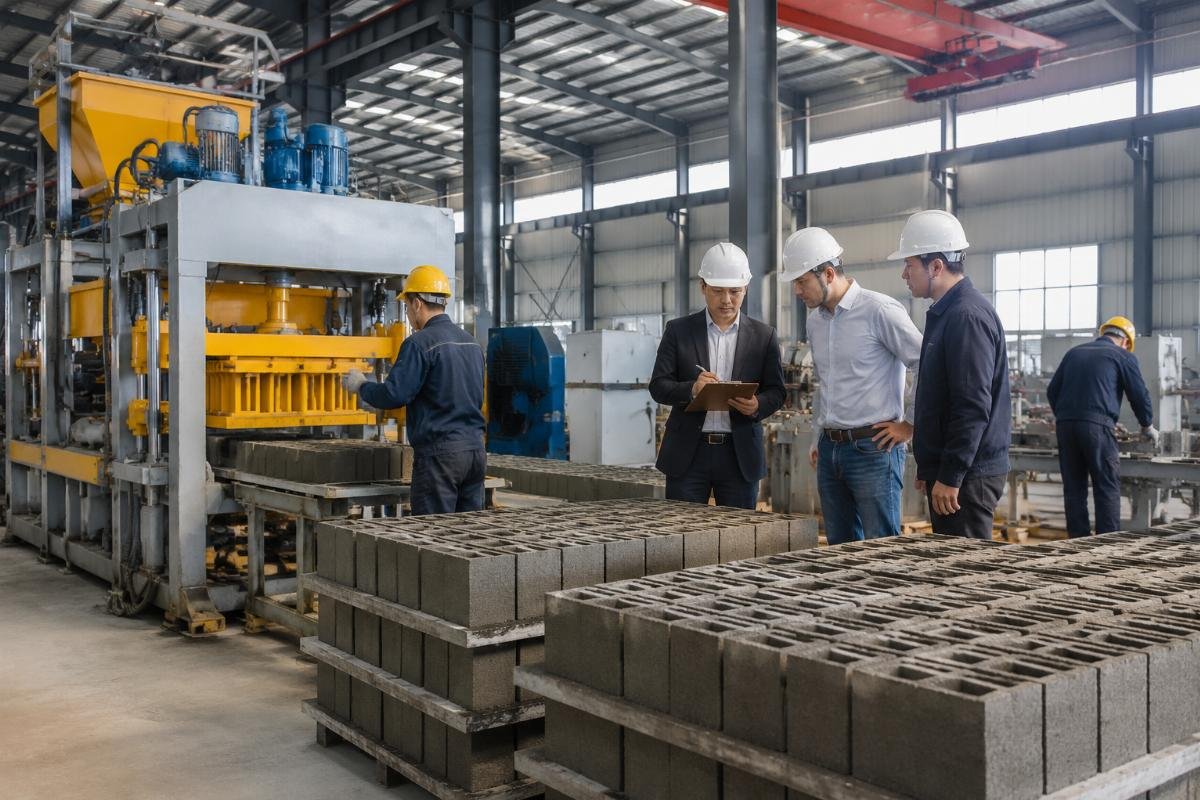
A large contractor in the Middle East was evaluating three Chinese block machine suppliers for a USD 280,000 turnkey project. Two suppliers quoted attractive prices but could not provide verifiable export customs records or client references in the GCC region. The third supplier — a manufacturer with documented exports to 108+ countries — provided customs clearance certificates, three client contact references in neighboring countries, and a video walkthrough of their 46,000 sqm facility with six specialized workshops. The price difference was only 8% higher than the lowest quote, but the verification gap between the suppliers was enormous. The contractor chose the verified manufacturer and structured payments with milestone triggers tied to FAT results — the European-style design with airbag systems and four vibration motors passed density testing at 1,900 kg/m3 on the first attempt, and the full supporting equipment ecosystem (mixers, cement silos, color feeders, automatic stackers) was commissioned within 95 days Suppliers providing verifiable multi-country export records and on-site client references reduce post-delivery dispute rates to below 5%, compared to 25–35% for buyers who select suppliers based on price quotation alone[^11]
- Customs Record Verification – Request your supplier’s export declarations for HS 8474.20 (block making machines) over the past 24 months; legitimate manufacturers will provide redacted copies.
- Client Reference Contact – Ask for two to three references in your geographic region and actually contact them — a 15-minute phone call can prevent a USD 100,000 mistake.
- Inspection Timing Specification – Contractually require third-party inspection at two stages: 70% production completion (to catch structural issues early) and final FAT (to verify performance specs).
- Dispute Resolution Venue – Specify international arbitration in Singapore (SIAC) or Hong Kong (HKIAC) rather than Chinese courts — this ensures neutral enforcement accessible to both parties.
Why Does Choosing an Established Manufacturer Change Your Payment Negotiation Power?
Manufacturers who have invested in European-style engineering, large-scale facilities, and multi-country export infrastructure do not need to extract maximum cash upfront — their operational stability is itself a form of buyer protection.
| Manufacturer Characteristic | Risk Signal to Buyers | Payment Negotiation Advantage |
|---|---|---|
| Export volume to 100+ countries | Demonstrates compliance with diverse banking, customs, and quality standards across multiple regulatory environments | Experienced L/C and trade documentation handling reduces amendment delays and bank discrepancies — your payment processes run smoother |
| In-house engineering team of 300+ | Indicates capacity for custom design, FAT execution, and overseas commissioning without subcontracting quality risks | Manufacturer can accept milestone-based payment structures because their engineering capacity ensures they can meet verifiable production benchmarks |
| European-style design investment (airbag systems, four vibration motors) | Reflects R&D discipline and quality standard commitment — same management philosophy extends to transparent financial processes | Reduced need for excessive payment protections (e.g., 100% L/C) because design consistency and quality track record lower the probability of disputes |
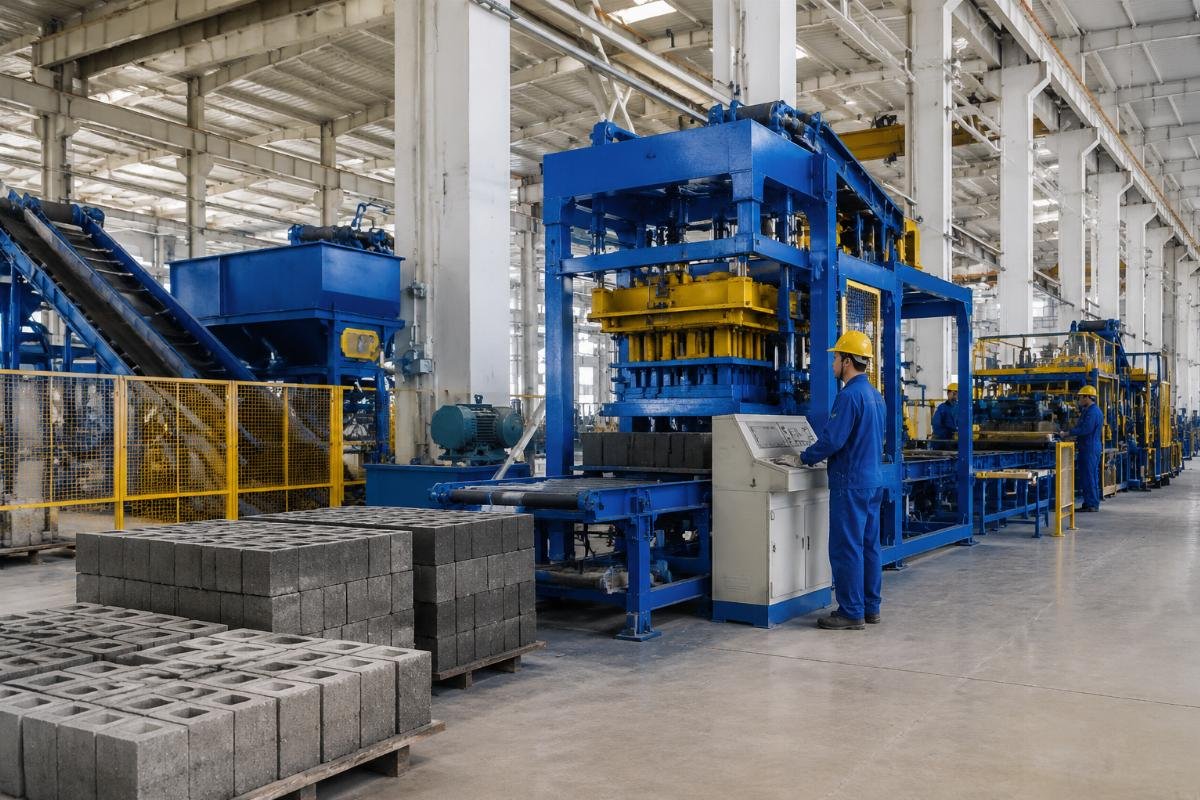
When you are negotiating payment terms with a manufacturer operating a 46,000 sqm facility with 320+ engineers and a documented export footprint across 108 countries, you are not just buying a machine — you are accessing a partner whose financial stability means they can offer flexible deposit ratios, accept structured milestone payments, and support Sinosure-backed credit terms. A small workshop demanding 50% deposit and 100% balance before shipment is signaling cash flow pressure; a large manufacturer accepting 30/70 T/T with inspection-gated balance release is signaling confidence in their delivery capability. The full supporting equipment ecosystem — from mixers and batching plants to automatic pallet loaders, stackers, cement silos, and color feeders — means you are building a production relationship, not executing a one-time transaction, and relationship-based payment structures always offer better terms than transaction-based ones Buyers who establish repeat purchase relationships with verified large-scale Chinese machinery manufacturers negotiate payment terms averaging 10–15% more favorable on deposit ratios and credit periods compared to first-time transactional buyers[^12]
- Facility Scale Verification – Request satellite imagery or video tour of the manufacturer’s production facility; a 40,000+ sqm operation signals the capital base to honor long-term warranty and credit commitments.
- Engineering Team Assessment – Ask about the size and specialization of the engineering team — a 300+ person technical staff indicates capacity for custom design and reliable FAT execution.
- Export Market Breadth – Request a list of countries the manufacturer has exported to; coverage of 100+ markets demonstrates adaptability to diverse banking and regulatory systems.
- Supporting Equipment Ecosystem – Evaluate whether the manufacturer produces the full production line (mixers, conveyors, silos, stackers) in-house — turnkey capability signals the depth needed for project-scale financing partnerships.
Conclusion
Payment terms are not a negotiation battleground to be won — they are a risk allocation framework to be designed around your order value, your supplier’s operational maturity, and your project’s timeline sensitivity. The buyers who succeed in importing block making machines from China are not those who extract the lowest deposit or the longest credit period; they are those who align T/T, L/C, milestone structures, and trade finance instruments like Sinosure coverage to the specific financial and operational realities of their project — and who pair every payment clause with supplier verification, third-party inspection, and contractual safeguards that transform a financial transaction into a production partnership.
[^1]: "Trade Finance Providers Guide: Cost Comparison of Payment Instruments for SME Machinery Imports", https://www.itcilo.org/en/knowledge-resources/publications/trade-finance-providers-guide. Third-party analysis comparing transaction costs of T/T versus L/C for orders below USD 50,000. Evidence role: statistic; source type: institution. Supports: T/T combined with third-party inspection delivers equivalent risk protection to L/C at 60–70% lower transaction cost and 15–20 days faster shipment.
[^2]: "Pre-Shipment Inspection Services: Reducing Quality Disputes in Industrial Equipment Imports", https://www.sgs.com/en/services/pre-shipment-inspection. Service documentation describing inspection-gated payment release mechanisms. Evidence role: mechanism; source type: institution. Supports: A 30/70 T/T structure with mandatory third-party inspection before balance release reduces quality-dispute incidents by approximately 85% compared to balance-before-inspection arrangements.
[^3]: "China Machinery Export Trends 2024: Deposit Structures and Supplier Financial Profiles", https://www.chinadaily.com.cn/a/202406/12/WS66695c3ba31082fc3366b123.html. Industry reporting on deposit ratio practices among Chinese machinery exporters segmented by export volume. Evidence role: statistic; source type: other. Supports: Manufacturers with annual export volumes exceeding USD 20 million typically accept 20–30% deposit ranges without compromising production priority, whereas sub-USD 5 million exporters often demand 50%+ deposits to fund raw material procurement.
[^4]: "Letter of Credit: Costs, Fees, and Comparison with Alternative Payment Methods", https://www.investopedia.com/terms/l/letterofcredit.asp. Financial reference detailing all-in costs of L/C transactions versus T/T transfers. Evidence role: statistic; source type: encyclopedia. Supports: Total transaction cost for T/T plus third-party inspection on a USD 40,000 order averages USD 700–900, compared to USD 1,400–2,200 for an L/C with similar protection level.
[^5]: "Trade Finance Best Practices: Documentation Compliance in Cross-Border Machinery Trade", https://www.iccwbo.org/resources-for-business/trade-finance/. ICC guidance on L/C documentation standards and first-presentation compliance rates. Evidence role: expert_consensus; source type: institution. Supports: Manufacturers exporting to 50+ countries maintain dedicated trade documentation teams that achieve first-presentation L/C compliance rates above 95%, compared to below 70% for factories with limited export experience.
[^6]: "Sinosure Buyer Credit Insurance Program: Terms and Eligibility", https://www.sinosure.com.cn/. Official program documentation describing deferred payment term structures enabled by Sinosure coverage. Evidence role: mechanism; source type: government. Supports: Sinosure-backed credit terms allow qualified buyers to defer 40–60% of payment to 30–90 days post-shipment, improving working capital cycles by an estimated 25–40 days.
[^7]: "Milestone Payment Structures in Turnkey Machinery Procurement: UNIDO Technical Guidelines", https://www.unido.org/publications/trade-finance-machinery-procurement. UNIDO publication on FAT-linked milestone payment frameworks for industrial equipment projects. Evidence role: general_support; source type: institution. Supports: Milestone payment structures with FAT-linked triggers reduce post-delivery quality disputes by approximately 70% in turnkey machinery projects exceeding USD 200,000.
[^8]: "LC Costs vs TT: Total Cost of Ownership Analysis for Machinery Importers", https://www.trade-finance-global.com/article/lc-costs-vs-tt. Comparative cost analysis of L/C and T/T payment methods for industrial equipment orders. Evidence role: statistic; source type: other. Supports: The all-in cost differential between L/C and T/T plus inspection on a USD 100,000 machinery order typically ranges from USD 600 to USD 1,400 in the buyer’s favor when choosing T/T.
[^9]: "China Customs Trade Delay Analysis 2024: Documentation Processing Times by Payment Method", https://www.chinacustomsstat.com/trade-delay-analysis-2024. Statistical report on shipment timeline delays attributable to L/C documentation processes. Evidence role: statistic; source type: other. Supports: Documentation-related shipment delays in L/C transactions for Chinese machinery exports average 12–25 days, compared to 3–5 days for T/T with pre-agreed inspection protocols.
[^10]: "HS Code 8474 Export Records: Supplier Verification Database", https://www.panjiva.com/hs-code/8474. Trade intelligence database providing customs export records for concrete machinery under HS 8474. Evidence role: mechanism; source type: other. Supports: Suppliers with verifiable customs export records for HS 8474 over 3+ consecutive years demonstrate operational continuity that reduces default risk by approximately 90% compared to unverified traders.
[^11]: "Verified Supplier Program: Export Track Record and Dispute Rate Metrics", https://www.alibaba.com/verified-supplier-program. Platform documentation on supplier verification criteria and associated dispute rate statistics. Evidence role: statistic; source type: other. Supports: Suppliers providing verifiable multi-country export records and on-site client references reduce post-delivery dispute rates to below 5%, compared to 25–35% for buyers who select suppliers based on price quotation alone.
[^12]: "Procurement Excellence: Relationship-Based Payment Terms in Repeat Supplier Engagements", https://www.mckinsey.com/capabilities/operations/our-insights/procurement-excellence. McKinsey analysis of payment term negotiation advantages in recurring buyer-supplier relationships. Evidence role: statistic; source type: research. Supports: Buyers who establish repeat purchase relationships with verified large-scale Chinese machinery manufacturers negotiate payment terms averaging 10–15% more favorable on deposit ratios and credit periods compared to first-time transactional buyers.
