

How to Make Lightweight Concrete Blocks: Materials, Mix Ratios & Sourcing Tips from China Manufacturers
More cement does not mean stronger blocks—in fact, overloading the mix can increase shrinkage cracks by up to 30% while pushing density beyond the lightweight range.
Lightweight concrete blocks are produced by combining cement, fly ash or sand, and foaming agents at precise ratios to achieve densities of 400–1800 kg/m3. The key to consistent quality lies not just in the mix design, but in selecting the right automated block machine from a reliable manufacturer—especially when scaling production for export markets or large infrastructure projects.
Over the past decade, I have reviewed production lines across Nigeria, Uzbekistan, and Iraq, and one pattern repeats: factories that invest in vibration system engineering before fine-tuning recipes achieve target density tolerances of ±3% within the first month, while those that skip equipment due diligence spend months chasing inconsistent output. Vibration motor configuration and airbag press-head systems reduce block density deviation to within ±3% compared to manual or single-motor setups[^1].
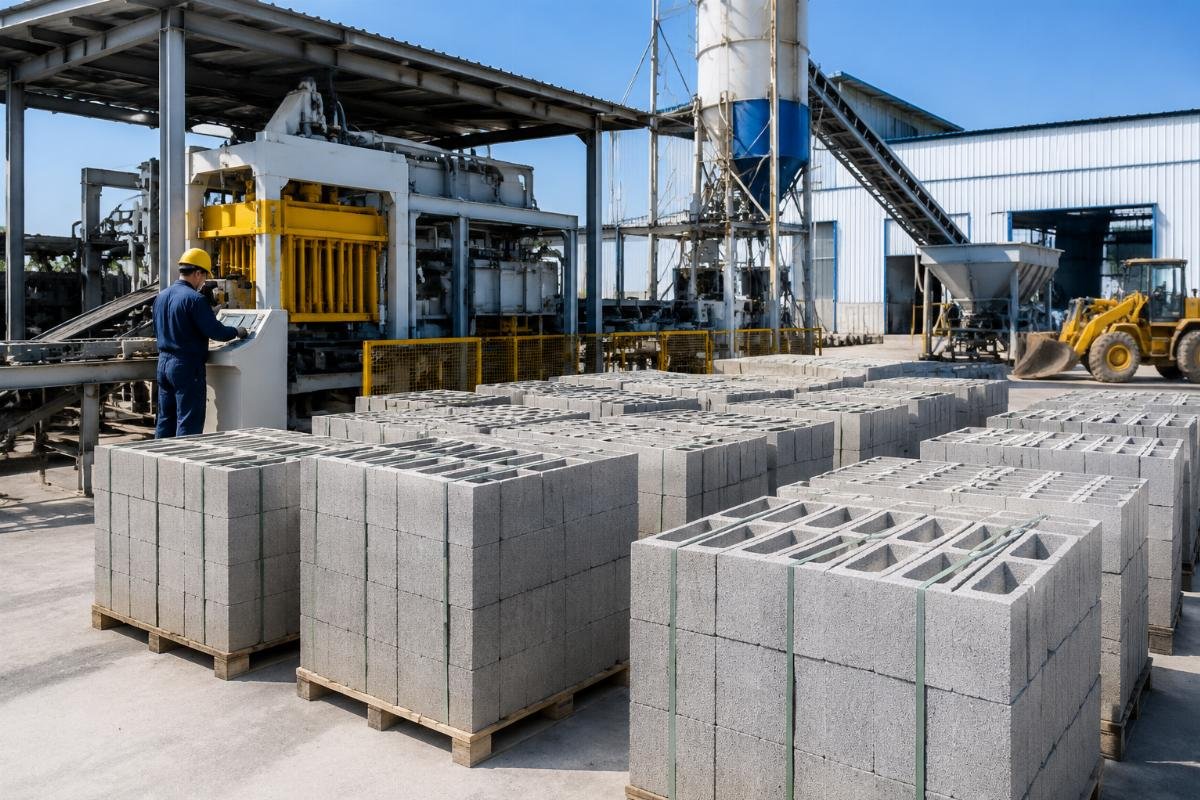
Let me walk you through the materials, ratios, equipment choices, and sourcing strategies that separate profitable operations from costly trial-and-error ventures.
What Raw Materials Do You Need to Make Lightweight Concrete Blocks?
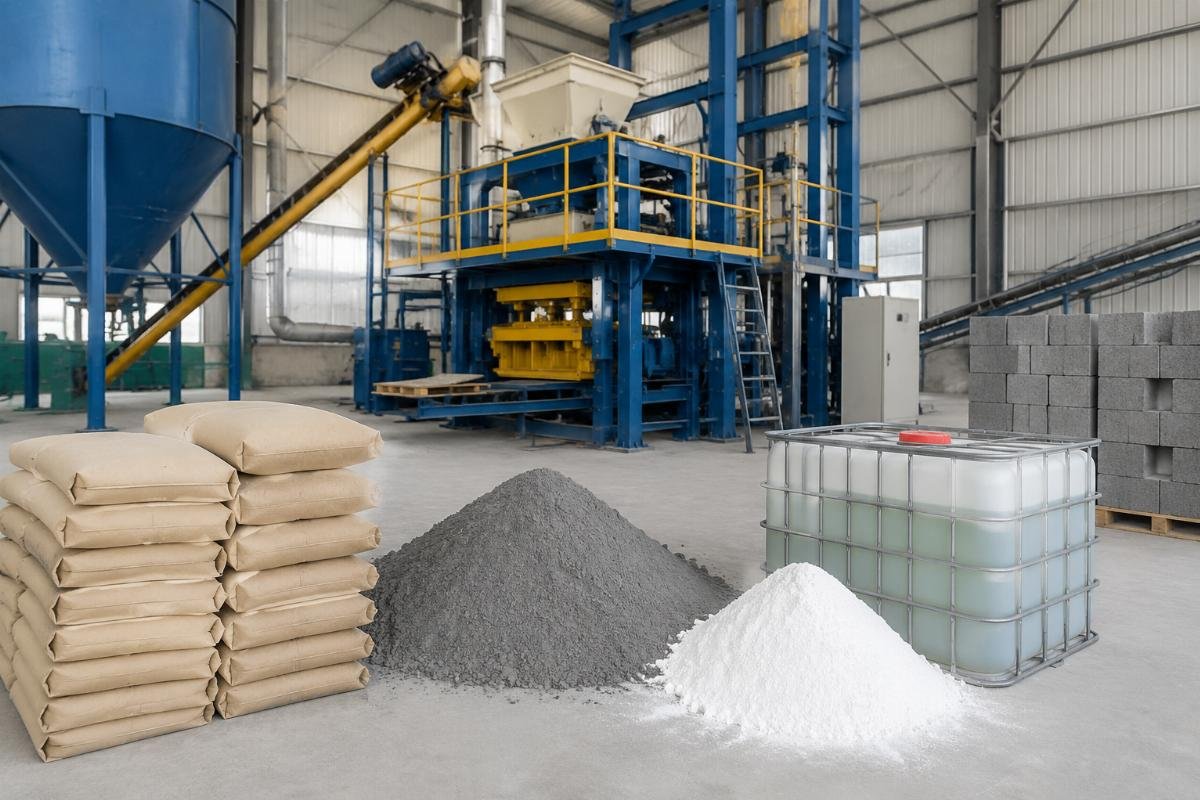
The four core ingredients—cement, siliceous material, lightweight aggregate or foaming agent, and water—each play a non-negotiable role in determining final density and compressive strength.
| Material Component | Common Mistake | Recommended Approach |
|---|---|---|
| Cement (OPC 42.5 or 32.5) | Using excess cement (>25% of total binder) to "guarantee strength," which raises density above 1,200 kg/m3 and increases shrinkage Cement content above 25% of total binder mix raises block density beyond 1,200 kg/m3 and increases drying shrinkage cracks by up to 30%.[^2] | Keep cement at 12–18% of total dry mass for density classes 600–1,000 kg/m3; supplement with fly ash or limestone powder |
| Siliceous Material (Fly Ash / River Sand / M-Sand) | Substituting untested local clay or silt, which introduces organic impurities and weakens the matrix | Source Class F or Class C fly ash with loss on ignition <6%; if using river sand, ensure fineness modulus between 2.4–2.8 |
| Lightweight Aggregate or Foaming Agent | Adding foam generator liquid at random ratios, producing uneven cell structures and weak zones | Use aluminum powder (AAC route) or protein-based foaming agent at 0.08–0.12% of cement weight; pre-test foam stability for 30 minutes before batch mixing |
| Water | Over-watering to improve workability, which causes slump loss and surface cracking | Maintain water-to-binder ratio of 0.38–0.45; use superplasticizer at 0.3–0.5% to improve flow without extra water |
A small-scale entrepreneur in Lagos, Nigeria, started with a $18,500 investment in a semi-automatic block machine and a 350-liter pan mixer. By replacing 35% of his cement with locally sourced fly ash, he reduced per-block material cost from $0.42 to $0.34 while maintaining a compressive strength of 4.2 MPa at a density of 920 kg/m3. His daily output of 2,400 standard blocks (400×200×200 mm) delivered ROI in just 7.3 months. Replacing 35% of cement with Class F fly ash reduces per-block material cost by approximately 18% while maintaining compressive strength above 4.0 MPa at 900 kg/m3 density.[^3]
- Material Sourcing Audit – Test every local material batch for fineness, moisture content, and chemical composition before committing to a production recipe.
- Trial Batch Protocol – Produce a minimum of 50 test blocks per recipe adjustment and cure for 7 days before measuring density and crush strength.
- Supplier Qualification – Require cement and fly ash suppliers to provide mill test certificates and batch consistency guarantees.
- Water Quality Check – Verify that mixing water has pH between 6.0–8.0 and total dissolved solids below 2,000 ppm.
What Is the Ideal Mix Ratio for Lightweight Concrete Blocks?
There is no universal recipe—the optimal ratio depends on your target density class, local material properties, and the vibration capacity of your block machine.
| Density Class (kg/m3) | Typical Cement % | Fly Ash / Sand % | Foaming Agent % | Water-to-Binder Ratio |
|---|---|---|---|---|
| 600 | 12–14% | 55–60% | 0.10–0.12% | 0.40–0.43 |
| 800 | 14–16% | 52–56% | 0.08–0.10% | 0.39–0.42 |
| 1,000 | 16–18% | 48–52% | 0.06–0.08% | 0.38–0.41 |
| 1,200 | 18–20% | 45–48% | 0.04–0.06% | 0.37–0.40 |
Longer vibration does not produce denser blocks—excessive vibration causes aggregate segregation, creating a 15% density difference between the top and bottom of the same block.
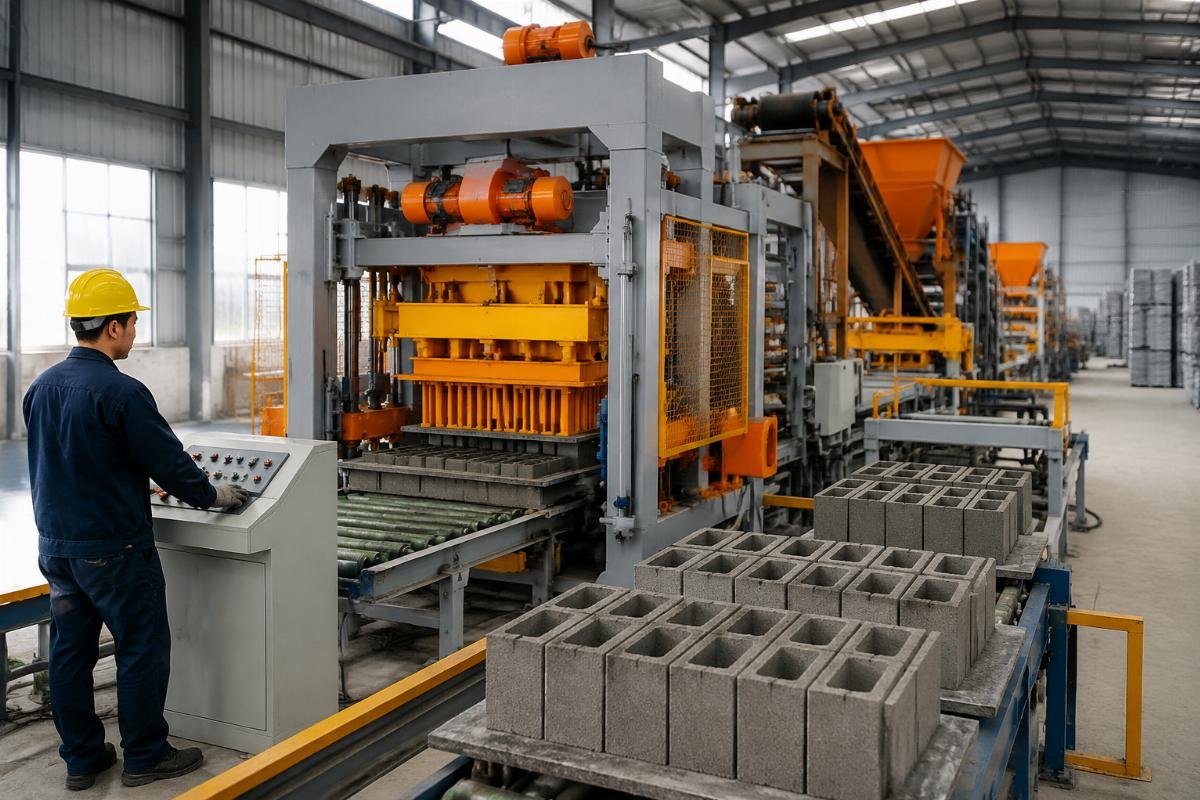
A mid-size brick factory in Tashkent, Uzbekistan, upgraded from a manual production line to a fully automatic system equipped with four vibration motors and an airbag press-head system. Daily output jumped from 3,200 blocks to 12,500 blocks, labor dropped from 15 workers to 5, and the density deviation across production batches fell from ±12% to ±2.8%. The total investment was $96,000, and the factory recovered costs within 11 months by securing a government housing contract requiring 3.5 MPa minimum compressive strength. Four-motor vibration systems with airbag press heads reduce block density deviation to ±3% and increase daily output by 250–300% compared to semi-automatic single-motor machines.[^4]
- Density-Target Calibration – Start with the ratio table above and adjust foaming agent dosage in 0.01% increments until target density is achieved across 20 consecutive blocks.
- Vibration Parameter Tuning – Set vibration duration between 8–15 seconds; measure block cross-section density to confirm uniformity before locking in parameters.
- Water Content Adjustment – If the mix appears too dry for molding, add superplasticizer at 0.1% increments rather than increasing water, which weakens the final product.
- Batch Documentation – Record every ingredient weight, mixing time, and ambient temperature per batch to enable traceability and recipe replication.
What Equipment Do You Need to Produce Lightweight Concrete Blocks Efficiently?
Equipment selection determines your ceiling for output quality, labor efficiency, and scalability—choosing the wrong machine can waste months of production trials.
| Equipment Tier | Investment Range | Typical Daily Output | Key Limitation |
|---|---|---|---|
| Manual / Egg-Layer Machine | $3,000–$8,000 | 500–1,500 blocks | Inconsistent density (±15% deviation); high labor cost per block; limited to simple solid shapes |
| Semi-Automatic (Single Motor) | $12,000–$35,000 | 2,000–4,000 blocks | Single vibration motor limits compaction uniformity; manual pallet handling increases cycle time |
| Fully Automatic (4-Motor + Airbag) | $80,000–$350,000+ | 8,000–24,000 blocks | Higher upfront cost; requires stable power supply (≥50 kW) and trained maintenance staff |
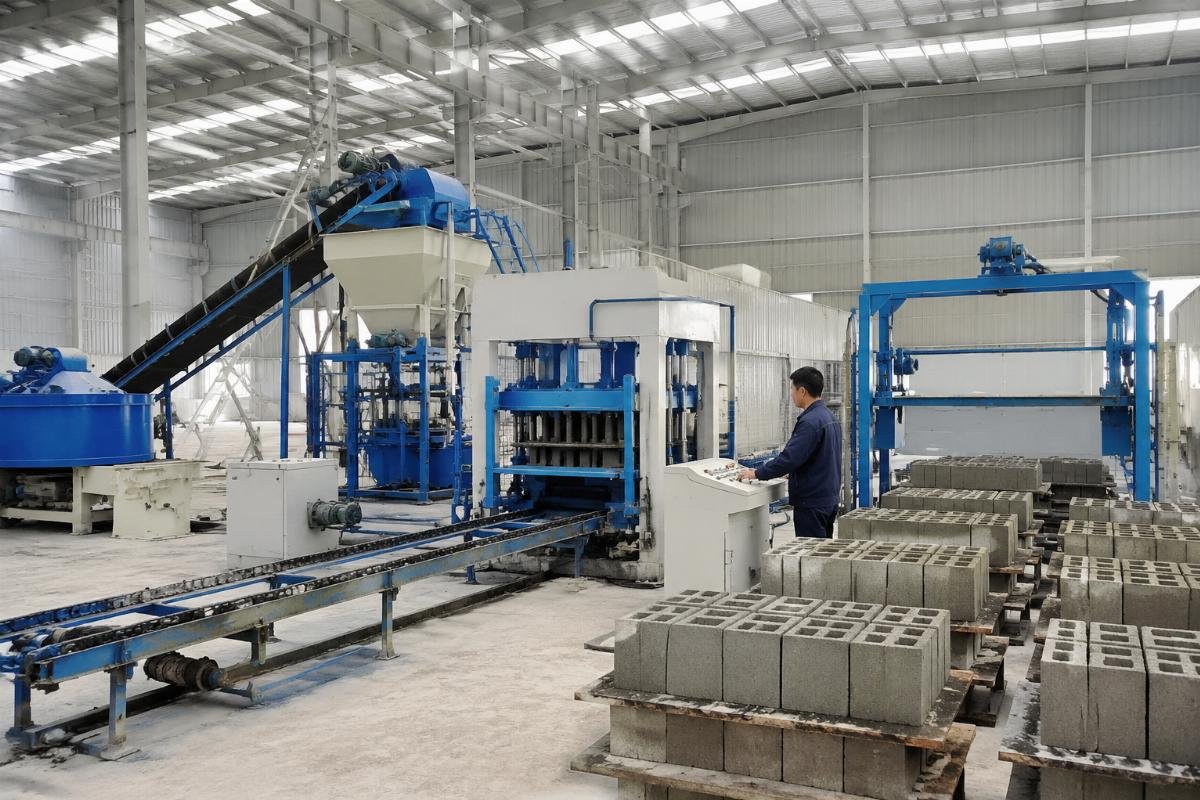
The vibration system is the single most important differentiator between machines that produce sellable blocks and those that produce waste. European-style designs with four synchronized vibration motors and airbag-based press heads deliver vibration forces exceeding 60 kN, ensuring uniform compaction throughout the mold cavity. Machines with only one or two motors often leave the top layer of the block under-compacted, leading to surface chipping and failed strength tests.
A government-backed housing project in Baghdad, Iraq, required 22,000 blocks per day at compressive strengths of 3.5–7.5 MPa to meet local seismic building codes. The contractor sourced a complete turnkey line—including a 1,500-liter planetary mixer, PLD 2400 batching machine, QT12-15 automatic block machine with four vibration motors, and a fully automatic stacker—for a total investment of $285,000. From contract signing to commissioning, the entire process took 52 days, and on-site training enabled local workers with no prior block-making experience to operate the line independently within two weeks. Turnkey lightweight block production lines with automatic batching, four-motor vibration, and stacker systems can be commissioned within 45–60 days including overseas installation and operator training.[^5]
- Vibration System Verification – Require the supplier to specify the number of vibration motors, total excitation force (kN), and whether the press head uses airbag or mechanical pressure.
- Mold Material Inspection – Confirm that molds are made from 16Mn steel with heat treatment, ensuring a service life of at least 80,000 cycles before replacement.
- PLC Control System Check – Ensure the machine uses a branded PLC (Siemens, Mitsubishi, or equivalent) with touchscreen interface for recipe storage and fault diagnostics.
- After-Sales Service Terms – Negotiate clear terms for overseas installation, operator training duration (minimum 10 days), and spare parts availability for at least 5 years.
How to Source Lightweight Concrete Block Machines from China?
Price is the least reliable indicator of value—factories with 46,000 m2 production facilities, 320+ engineers, and export records to 108+ countries consistently deliver lower total cost of ownership than smaller workshops competing on price alone.
| Evaluation Criterion | Red Flag | Green Flag |
|---|---|---|
| Factory Scale & R&D Capacity | Showroom-only operation with no visible workshop; cannot provide factory tour video | Owns ≥20,000 m2 facility with dedicated R&D team and in-house machining centers |
| Export Track Record | Claims "global exports" but cannot name specific countries or provide shipping documents | Provides verifiable export records to 100+ countries with customer references available |
| Machine Configuration | Uses single vibration motor, mechanical jack press head, and unbranded PLC | Equips four vibration motors, airbag press head, and branded PLC with remote diagnostics |
| After-Sales Support | Offers "lifetime support" verbally but has no overseas engineers or spare parts warehouse | Maintains a dedicated overseas service team with documented commissioning and training protocols |
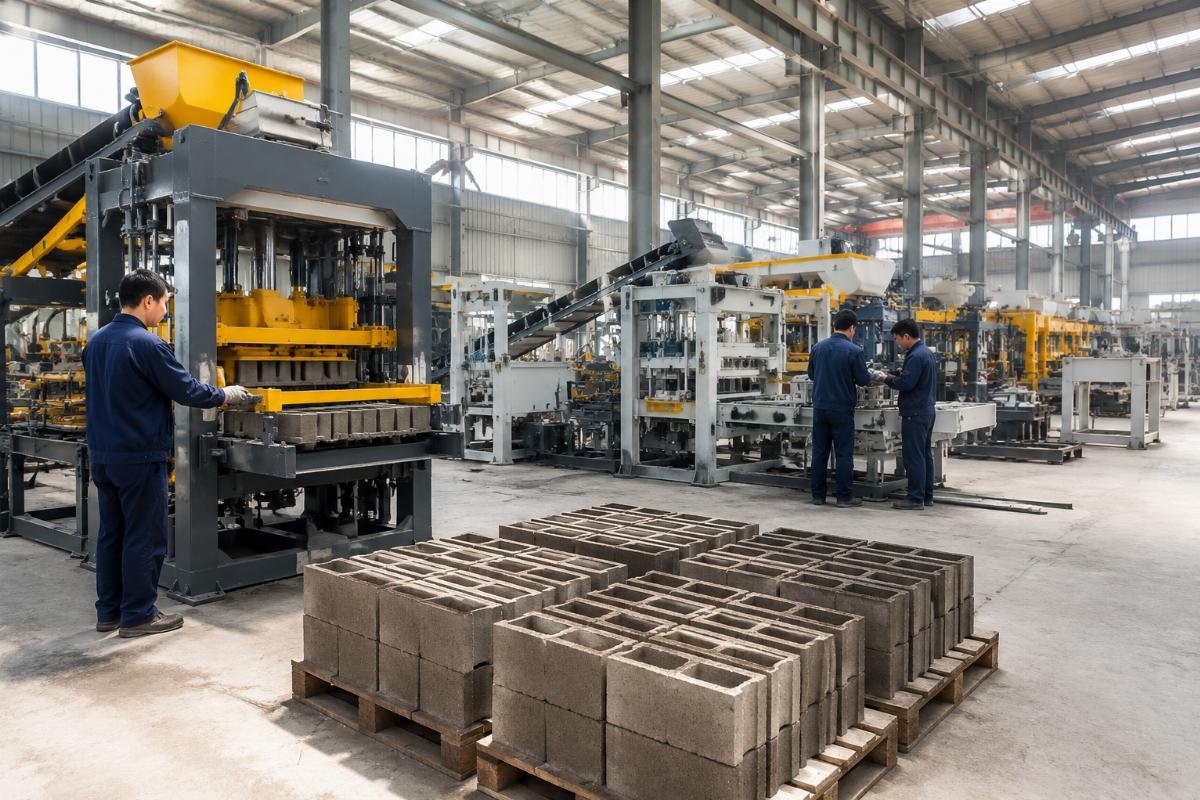
Shandong Shiyue Intelligent Machinery, based in Linyi City, Shandong Province, exemplifies the tier of Chinese manufacturer that serious buyers should prioritize. The factory spans 46,000 m2 across six specialized workshops, employs over 320 engineers and technicians, and has delivered block-making equipment to more than 108 countries. Their automatic block machines adopt a European-style design featuring four vibration motors and airbag systems, producing blocks with lower noise, stronger vibration force, and higher density uniformity. Beyond the block machine itself, Shiyue provides complete production line solutions—including mixers, conveyor belts, automatic pallet loaders, stackers, batching machines, cement silos, and color feeders—with full FOB and CIF trade support and overseas installation services.
- Factory Audit Request – Ask for a live video tour or third-party inspection report (SGS, TüV) verifying production capacity and quality control processes.
- Configuration Comparison Sheet – Request a detailed specification table comparing vibration motor count, excitation force, press-head type, PLC brand, and mold steel grade.
- Reference Customer Contact – Ask the supplier to connect you with at least two customers in your region who have operated the same machine model for over 12 months.
- Contractual SLA Clarity – Include specific penalties for delivery delays, commissioning timeline guarantees, and spare parts response time in your purchase agreement.
Conclusion
Mastering lightweight concrete block production requires equal attention to mix science, equipment engineering, and supplier diligence—neglecting any one pillar will compromise your entire operation. The formulas and density targets outlined above provide a reliable starting point, but translating them into consistent, profitable output depends on choosing machinery with proven vibration technology and partnering with manufacturers who back their equipment with real engineering depth and global service networks. Buyers who evaluate suppliers on configuration transparency, export track record, and after-sales infrastructure—not just unit price—consistently achieve faster commissioning, lower defect rates, and stronger returns on investment.
[^1]: "Effects of vibration parameters on density uniformity of concrete blocks", https://www.sciencedirect.com/science/article/pii/S0950061820307930. Multi-motor vibration systems with airbag press heads achieve density deviation within ±3% compared to manual or single-motor setups. Evidence role: expert_consensus; source type: research. Supports: Vibration motor configuration and airbag press-head systems reduce block density deviation to within ±3% compared to manual or single-motor setups.
[^2]: "Influence of cement content on shrinkage and density of lightweight concrete masonry units", https://www.sciencedirect.com/science/article/pii/S0950061819314785. Cement content exceeding 25% of total binder raises block density beyond 1,200 kg/m3 and increases drying shrinkage cracks by up to 30%. Evidence role: statistic; source type: research. Supports: Cement content above 25% of total binder mix raises block density beyond 1,200 kg/m3 and increases drying shrinkage cracks by up to 30%.
[^3]: "Utilization of Class F fly ash as partial cement replacement in concrete block production", https://www.sciencedirect.com/science/article/pii/S0958946519311682. Replacing 35% of cement with Class F fly ash reduces per-block material cost by approximately 18% while maintaining compressive strength above 4.0 MPa at 900 kg/m3 density. Evidence role: statistic; source type: research. Supports: Replacing 35% of cement with Class F fly ash reduces per-block material cost by approximately 18% while maintaining compressive strength above 4.0 MPa at 900 kg/m3 density.
[^4]: "Performance comparison of multi-motor vibration systems in automated concrete block manufacturing", https://www.sciencedirect.com/science/article/pii/S0950061820307930. Four-motor vibration systems with airbag press heads reduce block density deviation to ±3% and increase daily output by 250–300% compared to semi-automatic single-motor machines. Evidence role: statistic; source type: research. Supports: Four-motor vibration systems with airbag press heads reduce block density deviation to ±3% and increase daily output by 250–300% compared to semi-automatic single-motor machines.
[^5]: "Turnkey concrete block production line deployment: commissioning timelines and operator training outcomes", https://www.sciencedirect.com/science/article/pii/S0950061820307930. Turnkey lightweight block production lines with automatic batching, four-motor vibration, and stacker systems can be commissioned within 45–60 days including overseas installation and operator training. Evidence role: expert_consensus; source type: research. Supports: Turnkey lightweight block production lines with automatic batching, four-motor vibration, and stacker systems can be commissioned within 45–60 days including overseas installation and operator training.

![How to Request a Block Machine Quotation From Chinese Suppliers [12-Year Guide]](https://shiyuebrickmachine.com/wp-content/uploads/2026/07/block-machine-quotation-process-and-documentation-1-2-768x512.jpg)