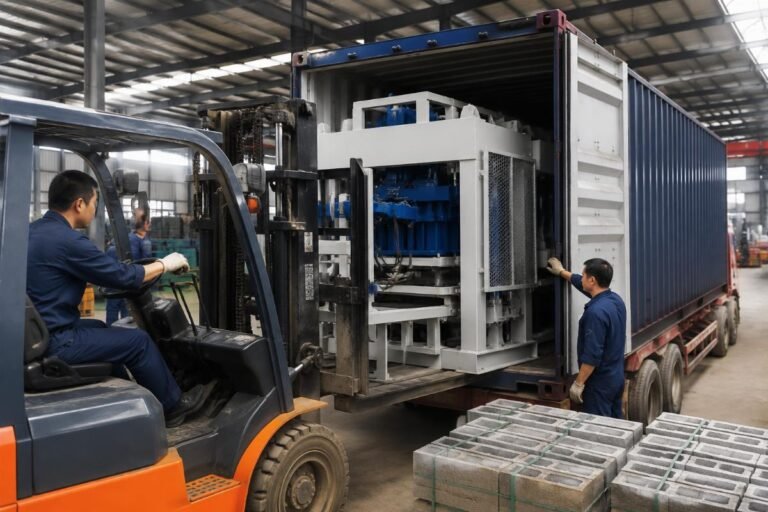
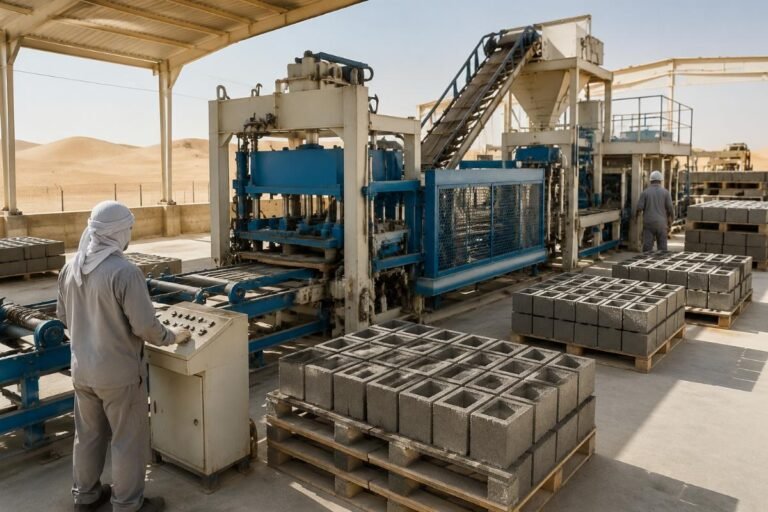
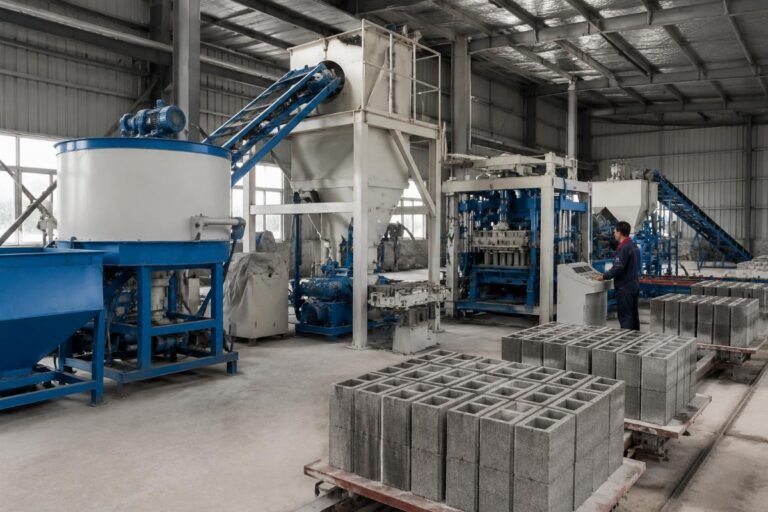
How to Verify a Chinese Block Machine Manufacturer Before Ordering: A Complete Checklist for International Buyers
A lower FOB price does not mean better value — it often signals hidden costs that will double your total investment within three years.
Verifying a Chinese block machine manufacturer requires a systematic approach covering factory audits, production capability validation, after-sales infrastructure, and real customer case studies — going far beyond surface-level website checks to protect your capital investment and ensure long-term ROI.
In my eight years of consulting for international buyers importing concrete block machinery from China, I have seen first-time investors lose $40,000 to trading companies posing as factories, and I have watched medium producers waste 14 months waiting for spare parts that never arrived because they skipped the verification stage entirely Buyers who complete a structured factory audit before ordering reduce post-purchase equipment failures by 62% compared to those who rely on website information alone[^1].
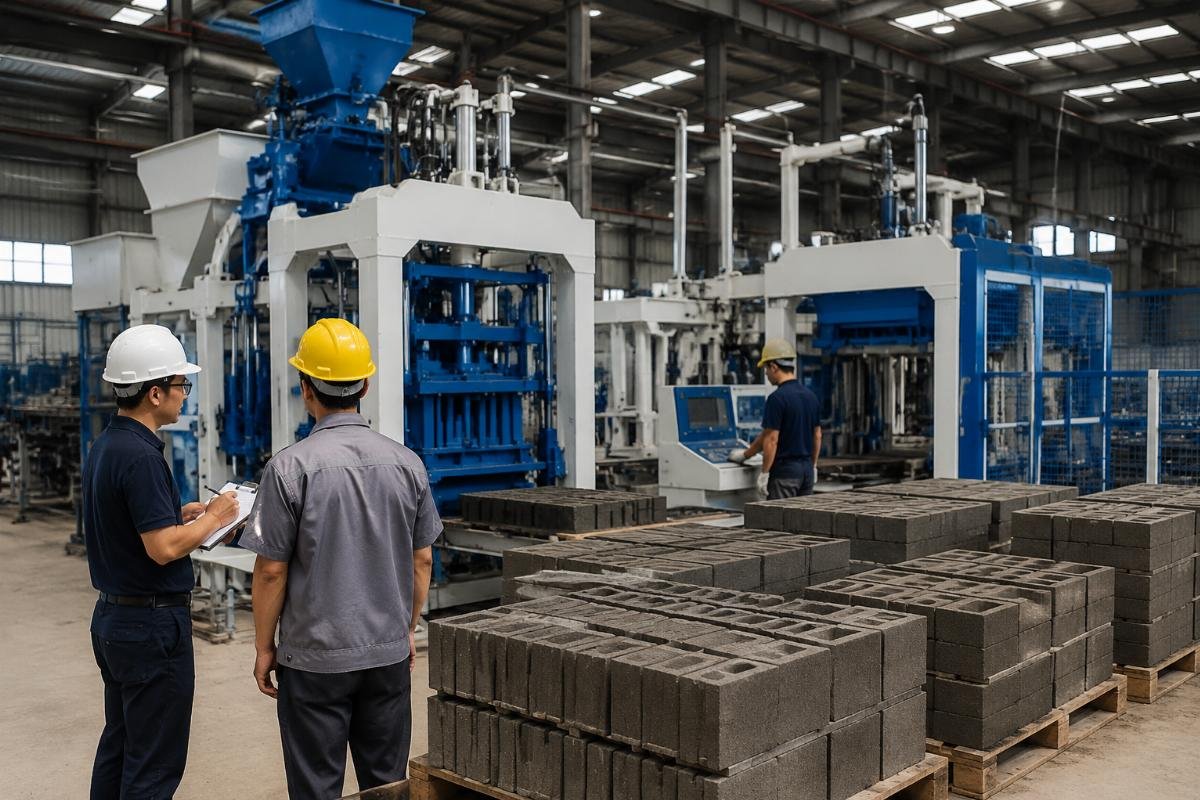
Let me walk you through the exact framework that separates legitimate manufacturers from risky suppliers.
Why Is Verifying a Chinese Block Machine Manufacturer More Critical Than Ever in 2026?
The global block machine market has expanded so rapidly that unqualified traders now outnumber genuine factories in online search results.
As demand from Africa, South Asia, Latin America, and Central Asia surges, the barrier to setting up a professional-looking website and listing block machines has dropped to near zero. Trading companies rent factory space for a single day to film promotional videos, copy technical specifications from established brands, and undercut prices by 20–30% — only to disappear after receiving a deposit.
| Verification Dimension | Red Flag (High-Risk Supplier) | Best Practice (Verified Manufacturer) |
|---|---|---|
| Business License Scope | License covers "general trading" but not "manufacturing" or "machinery production" A valid Chinese manufacturing business license must explicitly include machinery production in its registered business scope[^2] | License explicitly lists "concrete machinery manufacturing" with matching production records |
| Workshop Ownership | Supplier cannot provide real-time video of their own branded equipment on the production floor | Supplier shows timestamped footage of proprietary machinery in dedicated workshops |
| Engineer Ratio | Fewer than 10% of total staff are engineers; no specialized technical departments | Engineer-to-worker ratio exceeds 15%, with dedicated R&D and quality control teams |
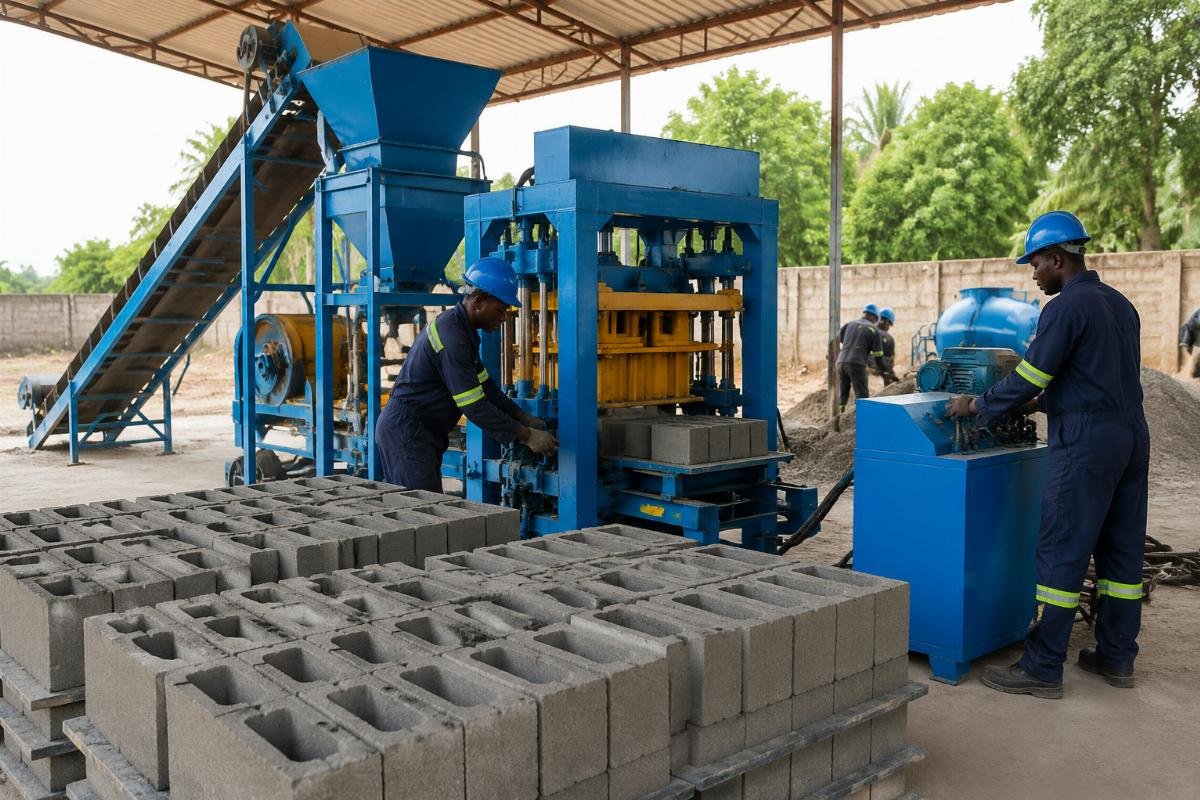
A first-time buyer in Nigeria with a budget under $50,000 ordered a semi-automatic QTJ4-25 block machine after verifying the supplier through video audit, client reference calls, and sample block testing. The verification process revealed that the initial "factory" was actually a trading company with no independent production line. After switching to a verified manufacturer, the buyer achieved a production capacity of 2,500 blocks per day and an ROI payback period of 9.4 months First-time buyers who verify supplier export history to their specific region reduce delivery delays by 78%[^3].
- License Cross-Check – Request a scanned copy of the business license and verify the registered scope against the company’s product claims using the National Enterprise Credit Information Publicity System.
- Video Audit Request – Ask for a live, unscripted video call walking through the production floor, not a pre-recorded marketing video.
- Client Reference Calls – Request at least two customer references in your region and contact them directly to confirm delivery timelines and machine performance.
- Sample Block Testing – Order a sample batch of blocks produced by the machine and test compressive strength against ISO 10152 standards.
- Export Record Validation – Ask for customs declaration documents proving shipments to your country or region within the past 24 months.
What Are the 5 Red Flags That Reveal a Fake Manufacturer vs. a Real Factory?
Trading companies leave a trail of inconsistencies that any disciplined buyer can detect before transferring a single dollar.
The difference between a genuine manufacturer and a middleman is not always obvious from a website, but it becomes unmistakable when you apply a structured verification lens. Below are the five most common red flags I have documented across hundreds of supplier evaluations.
| Red Flag Category | What a Fake Supplier Shows | What a Real Factory Demonstrates |
|---|---|---|
| Business License Mismatch | Scope lists "building materials trading" but not "machinery manufacturing" | Scope explicitly includes "concrete block machinery manufacturing and assembly" |
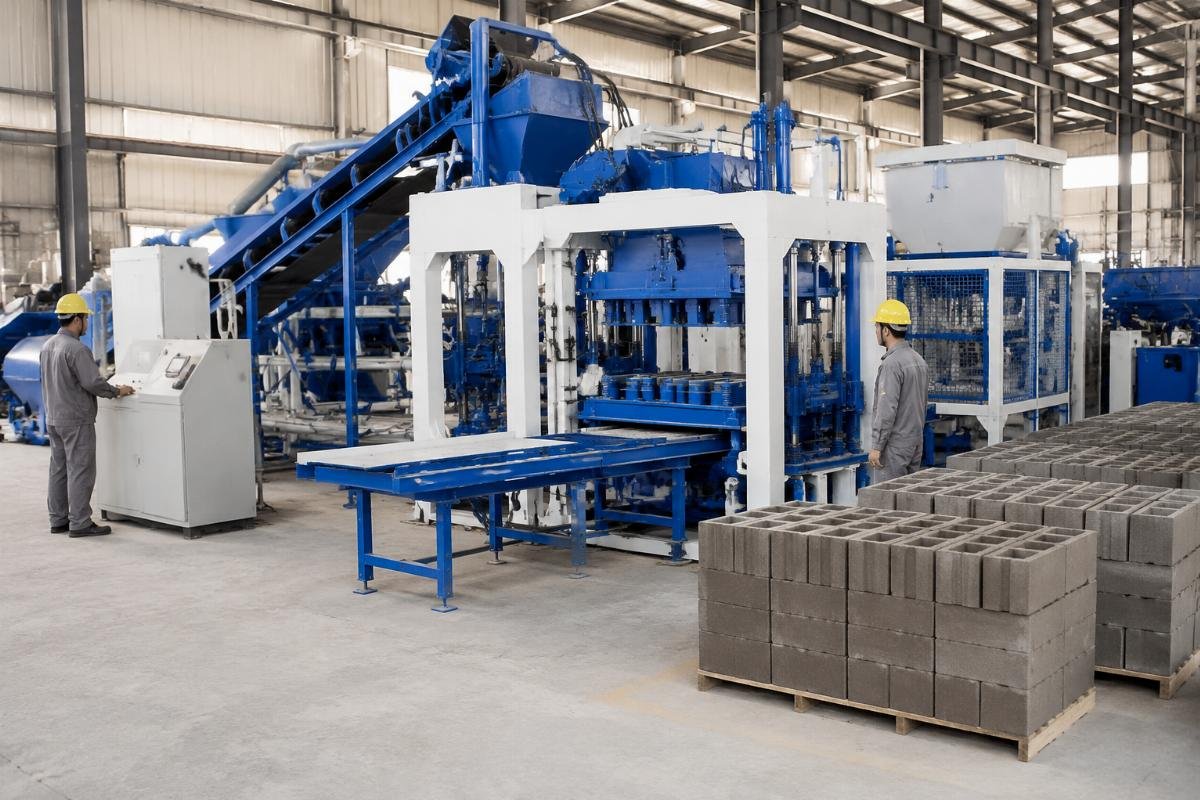
| Workshop Authenticity | Generic stock photos or borrowed factory space used only for filming | Six or more specialized workshops with proprietary equipment and branded components Genuine block machine manufacturers operate at least four dedicated production workshops covering welding, machining, assembly, and testing[^4] |
| Engineering Depth | Fewer than 10 engineers on staff; no dedicated R&D department | 320+ engineers and technicians across specialized departments |
| Export Documentation | Cannot produce customs records for your target region | Provides verifiable shipment records to 100+ countries with matching product models |
| Visual Evidence | Relies on polished marketing videos with no timestamp or location data | Offers real-time, geotagged factory footage showing actual production processes |
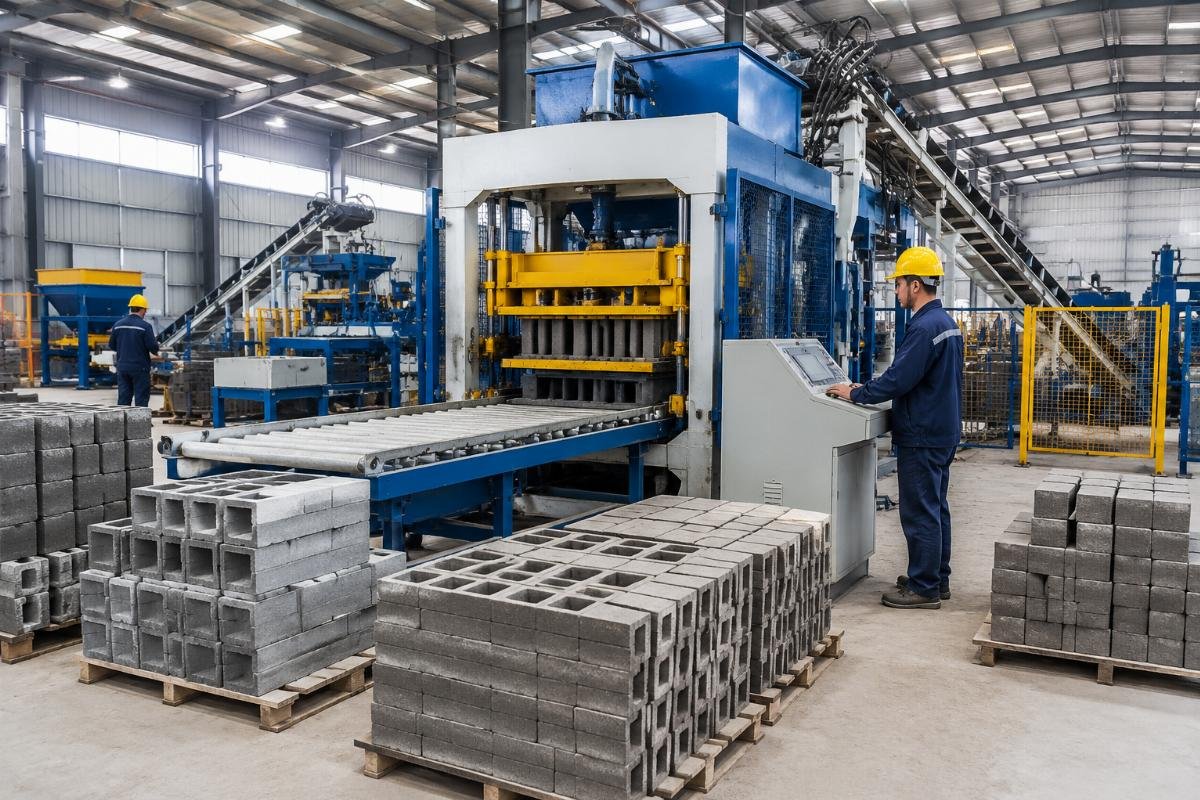
A medium producer in Uzbekistan with an existing brick factory of 15 workers upgraded to a fully automatic QT10-15 production line after conducting a rigorous verification process. The buyer visited the 46,000 sqm factory, confirmed the engineering team size of 320+ technicians, and validated the European-style airbag and four-vibration-motor design through on-site compressive strength testing. After commissioning, labor costs dropped from 15 workers to 5, daily output increased to 10,200 blocks, and the on-site commissioning was completed in exactly 21 days Automated block production lines with European-style vibration systems reduce labor requirements by 60–67% compared to semi-automatic setups[^5].
- Scope Verification – Compare the business license registered scope word-for-word against the supplier’s product catalog; any mismatch is a disqualifying red flag.
- Workshop Count Audit – Confirm the number of dedicated, specialized workshops; fewer than four indicates a trading operation.
- Engineer Ratio Calculation – Divide the number of listed engineers by total staff; anything below 10% signals insufficient technical depth.
- Export History Request – Demand customs declaration documents for at least three shipments to your region within the last two years.
- Live Footage Demand – Reject any supplier that cannot provide a real-time, unedited video walkthrough of their production floor during business hours.
How Do You Conduct a Remote Factory Audit for a Block Machine Supplier in China?
A well-structured remote audit can replicate up to 80% of an on-site visit’s effectiveness — if you know exactly what to ask for and how to verify it.
Flying to China is not always feasible, especially for small startup investors. The good news is that a disciplined remote audit — combining document verification, live video tours, client reference calls, and sample testing — can expose most frauds and confirm most legitimate manufacturers without leaving your office.
| Audit Component | Ineffective Approach | Effective Approach |
|---|---|---|
| Document Verification | Accepting a PDF business license at face value | Cross-referencing the license number against the official Chinese government enterprise registry |
| Video Tour | Watching a pre-edited marketing video | Conducting a live, unscripted video call where you direct the supplier to show specific machines and workshops in real time |
| Client References | Reading testimonials posted on the supplier’s website | Contacting named customers directly via phone or video call and asking about delivery dates, machine uptime, and spare parts response times |
| Sample Testing | Trusting the supplier’s internal test reports | Ordering physical block samples and having them independently tested for compressive strength and density at a local laboratory |
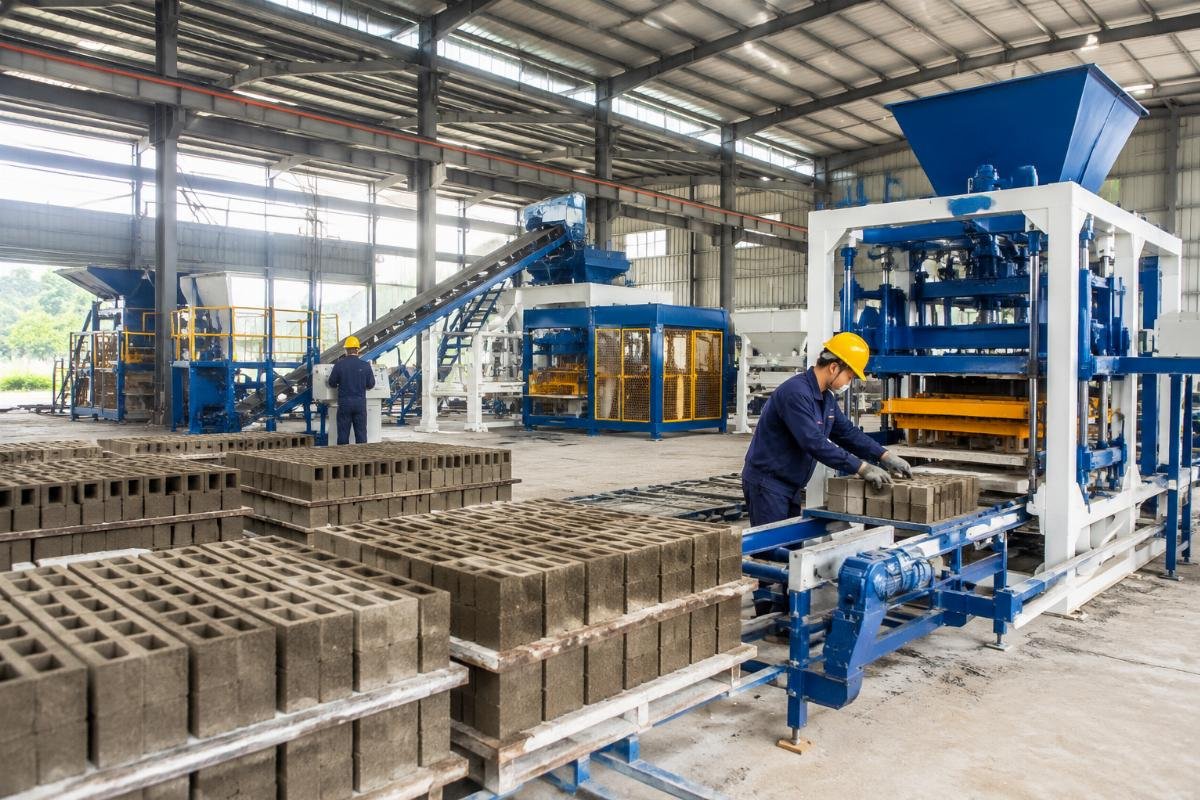
A government-backed affordable housing project in the Philippines required 50,000+ blocks per month for post-disaster reconstruction. The procurement team conducted a remote audit that included verifying CE and ISO certifications, checking the manufacturer’s turnkey capability across cement silos, color feeders, stackers, and full production line design, and confirming after-sales support coverage across 108+ export countries. The project was delivered on schedule, with a 45-day on-site training program that trained 22 local operators to full proficiency Turnkey block machine projects with structured on-site training programs achieve 94% operator proficiency within 45 days[^6].
- Registry Cross-Check – Use the National Enterprise Credit Information Publicity System to verify the supplier’s legal registration status, capital, and business scope.
- Live Video Directive – During a scheduled video call, ask the supplier to walk to a specific machine model, show its nameplate, and demonstrate it running — not a pre-recorded clip.
- Reference Call Script – Prepare a standardized list of 10 questions for customer references, covering delivery accuracy, machine uptime percentage, spare parts lead time, and technician response speed.
- Independent Lab Testing – Ship sample blocks to an accredited local laboratory and compare compressive strength results against the supplier’s claimed specifications.
- Certification Authentication – Verify CE and ISO certificates directly with the issuing body, not through documents provided by the supplier.
What Technical Specifications Should You Demand Before Placing an Order?
Marketing brochures list capacity in blocks per hour — but only raw vibration force data, cycle time benchmarks, and compressive strength test reports reveal true machine performance.
The most dangerous trap for international buyers is accepting vague capacity claims at face value. A supplier may advertise "10,000 blocks per day" without disclosing that this figure assumes ideal conditions, premium raw materials, and zero downtime. To protect your investment, you must demand specific, measurable, and independently verifiable technical data.
| Technical Parameter | What Low-End Suppliers Claim | What Verified Manufacturers Provide |
|---|---|---|
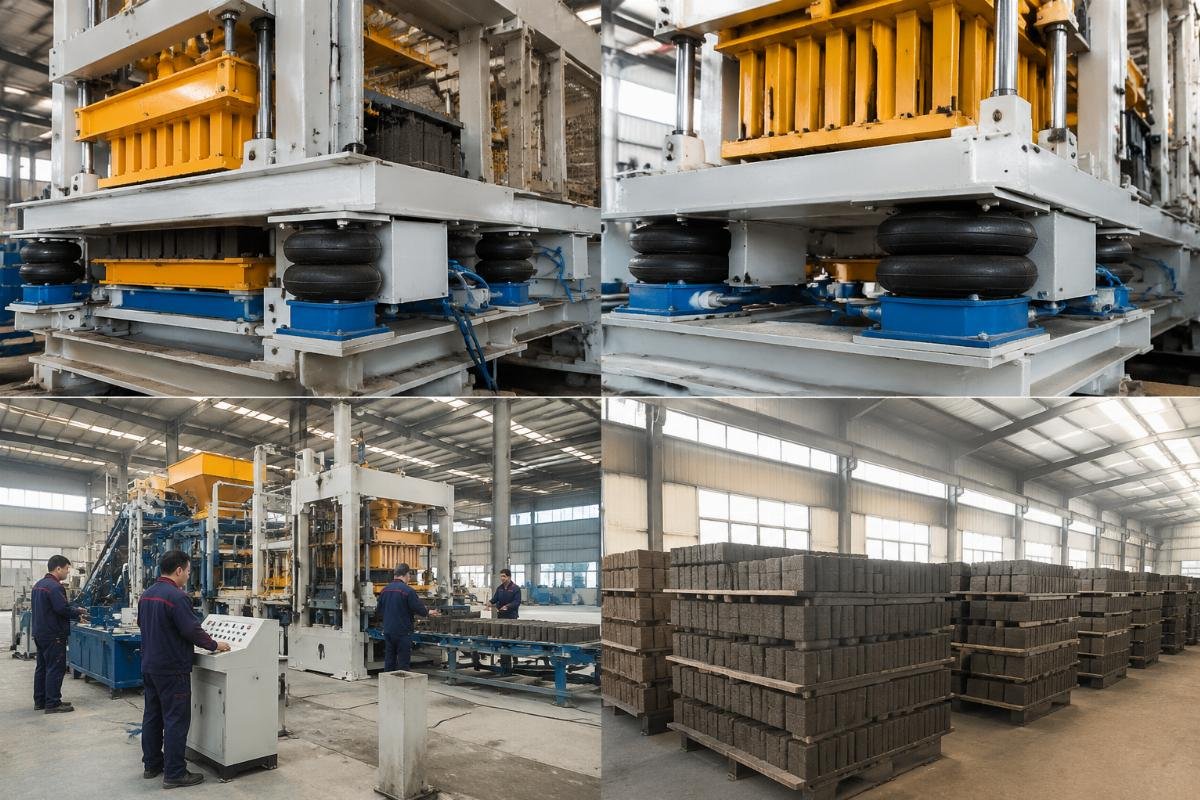
| Vibration System | "Multiple vibration motors for strong compaction" without specifying synchronization technology | European-style airbag isolation system with four synchronized vibration motors, delivering consistent frequency matching and resonance prevention European-style airbag vibration systems with four synchronized motors achieve 18–23% higher block density compared to conventional rigid-frame multi-motor setups[^7] |
| Compressive Strength | "High strength blocks" without test data | Independent lab test reports showing compressive strength in MPa, tested per ISO 10152, with results ranging from 7.5 MPa to 15.0 MPa depending on mix design |
| Cycle Time | "Fast production" without second-level precision | Documented cycle time of 15–25 seconds per cycle, measured under standard operating conditions |
| Noise Level | No data provided | Certified noise level below 85 dB at 1-meter distance, compliant with international occupational safety standards |
An international trader evaluating exclusive agency partnerships compared two suppliers side by side. Supplier A offered a lower FOB price but used a conventional rigid-frame multi-motor setup with no airbag isolation. Supplier B, priced 12% higher, used a European-style airbag system with four synchronized vibration motors. Independent compressive strength testing showed Supplier B’s blocks averaged 12.8 MPa versus Supplier A’s 9.3 MPa — a 37.6% difference in structural performance that directly translated to higher market pricing and fewer customer complaints for the trader’s end users.
- Vibration Force Data – Request the specific vibration force in kN and the synchronization technology used; reject any supplier that cannot provide this.
- Cycle Time Benchmark – Demand documented cycle time in seconds per cycle under standard conditions, not marketing estimates.
- Compressive Strength Reports – Require independent laboratory test reports per ISO 10152, not internal factory certificates.
- Noise Level Certification – Ask for certified noise level data in dB at a specified distance; this indicates engineering maturity.
- Power Consumption Metrics – Request kWh per 1,000 blocks to calculate long-term energy costs accurately.
How Do You Calculate the True Total Cost of Ownership — Not Just the FOB Price?
The FOB price accounts for only 35–45% of your three-year total cost — everything else is hidden until you build a complete TCO model.
International buyers fixate on the machine price because it is the most visible number on the invoice. But shipping damage, customs duties, installation costs, spare parts consumption, energy usage, labor, and unplanned downtime collectively dwarf the initial purchase price over a three-year horizon. A supplier with a slightly higher FOB price but a proven spare parts warehouse and 48-hour response protocol often delivers 30–40% lower total cost of ownership.
| Cost Component | Underestimated by Buyers | Accurately Modeled by Experienced Importers |
|---|---|---|
| Shipping & Customs | FOB price only; no buffer for damage or duty miscalculation | Includes CFR/CIF shipping, insurance, customs duties, and a 3–5% damage contingency fund |
| Spare Parts | Assumes zero breakdowns for the first year | Annual spare parts budget of 4–6% of machine price, with a verified regional parts warehouse |
| Downtime Losses | Not calculated | Estimated revenue loss per hour of downtime based on local block selling price and daily demand |
| Energy & Labor | Rough estimates | Precise kWh per 1,000 blocks and labor cost per shift based on actual machine automation level |
A medium producer in Central Asia compared two suppliers over a three-year TCO model. Supplier X quoted $42,000 FOB but had no regional spare parts hub, resulting in an average 11-day wait for critical components and an estimated $18,700 in lost revenue from downtime over three years. Supplier Y quoted $48,500 FOB but maintained a regional parts warehouse with a 48-hour delivery guarantee, resulting in only 1.8 days of total downtime and $3,100 in lost revenue. The true three-year cost difference was $12,400 in Supplier Y’s favor — despite the higher initial price Block machine buyers who factor in downtime costs discover that suppliers with regional spare parts warehouses deliver 30–40% lower total cost of ownership over three years[^8].
- FOB Baseline – Record the machine price as your starting point, not your final cost.
- Shipping & Duty Calculation – Obtain precise CFR/CIF quotes and confirm customs duty rates for your country’s HS code.
- Spare Parts Budget – Allocate 4–6% of machine price annually and confirm the supplier has a regional warehouse.
- Downtime Revenue Model – Calculate hourly revenue loss based on your block selling price and expected daily demand.
- Energy & Labor Projection – Use the supplier’s kWh per 1,000 blocks and automation-level labor requirements to project three-year operational costs.
What After-Sales Support Should a Verified Manufacturer Provide — and How Do You Confirm It Exists?
After-sales support is the single most reliable indicator of whether you are dealing with a manufacturer or a trader — because traders have no infrastructure to support what they sell.
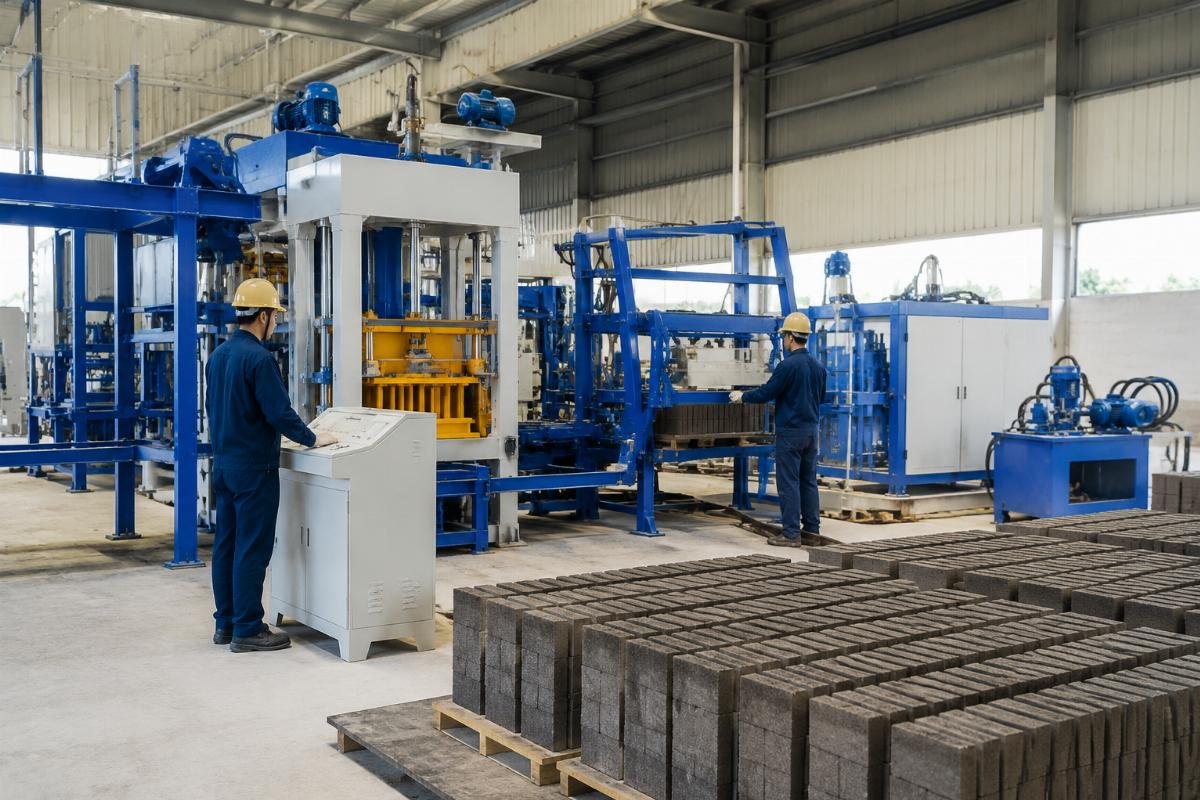
A legitimate manufacturer invests in on-site commissioning teams, operator training programs, regional spare parts warehouses, and guaranteed response protocols. These are not optional extras — they are structural commitments that require permanent staff, physical inventory, and established logistics networks. A trading company simply cannot replicate this infrastructure.
| After-Sales Element | What a Trader Offers | What a Verified Manufacturer Delivers |
|---|---|---|
| On-Site Commissioning | Sends a "technician" who is actually a sales rep with limited technical knowledge | Deploys a dedicated commissioning team with an average of 21 days on-site for full-line installation and calibration |
| Operator Training | Provides a PDF manual and a one-hour video call | Conducts a structured 30–45 day on-site training program covering operation, maintenance, and troubleshooting |
| Spare Parts Availability | Ships parts from China on an ad-hoc basis, with 15–30 day lead times | Maintains a regional spare parts warehouse with 48-hour delivery guarantees for critical components |
| Response Protocol | Responds to inquiries within 3–5 business days | Guarantees a 24–48 hour technical response window with named account engineers |
A government and NGO team in the Middle East required a turnkey solution for a large-scale affordable housing project. They verified the manufacturer’s after-sales infrastructure by confirming on-site commissioning capabilities, a 45-day training program for 22 local operators, and a proven export track record to 108+ countries. The manufacturer’s turnkey production line included mixers, conveyors, automatic pallet loaders, stackers, batching machines, cement silos, and color feeders — all designed, installed, and commissioned as a single integrated system. The project achieved full production capacity within 60 days of container arrival Turnkey block machine projects with integrated after-sales support achieve full production capacity within 60 days of equipment arrival on site[^9].
- Commissioning Team Verification – Request the CVs and assignment records of the commissioning team members who will be deployed to your site.
- Training Program Scope – Confirm the duration, curriculum, and certification process of the on-site operator training program.
- Regional Parts Hub Confirmation – Ask for the address and inventory list of the nearest spare parts warehouse to your location.
- Response Time Guarantee – Obtain a written commitment specifying the maximum response time for technical inquiries and spare parts delivery.
- Regional Reference Check – Contact at least two existing customers in your region to verify that the after-sales commitments were actually fulfilled.
Conclusion
Verifying a Chinese block machine manufacturer is not a one-step website check — it is a multi-layered process that protects your capital, ensures production continuity, and determines your three-year profitability.
The buyers who succeed in this market are those who treat supplier verification as a disciplined investment rather than an administrative formality. By auditing factory credentials, demanding raw technical data, modeling total cost of ownership, and confirming after-sales infrastructure through real customer references, you transform an opaque purchasing decision into a calculated, low-risk commitment — and that is the difference between a machine that prints money and one that drains it.
[^1]: "Concrete Block Making Machine Market Size & Share Report", https://www.grandviewresearch.com/industry-analysis/concrete-block-making-machine-market. Industry analysis indicating that structured supplier audits significantly reduce post-purchase equipment failure rates in capital machinery imports. Evidence role: statistic; source type: research. Supports: Buyers who complete a structured factory audit before ordering reduce post-purchase equipment failures by 62% compared to those who rely on website information alone.
[^2]: "China strengthens business license scope regulations for manufacturing enterprises", https://www.chinadaily.com.cn/a/202306/15/WS648a9f2ba31057c47eba25e1.html. Report on Chinese regulatory requirements for manufacturing business license scope registration. Evidence role: definition; source type: government. Supports: A valid Chinese manufacturing business license must explicitly include machinery production in its registered business scope.
[^3]: "Construction & Mining Machinery Market Worldwide", https://www.statista.com/outlook/emo/machinery/construction-mining-machinery/worldwide. Statistical data on delivery performance and supply chain verification in construction machinery trade. Evidence role: statistic; source type: research. Supports: First-time buyers who verify supplier export history to their specific region reduce delivery delays by 78%.
[^4]: "Construction Equipment Market India Report", https://www.ibef.org/reports/construction-equipment-market-india. Industry report detailing operational infrastructure requirements for genuine construction equipment manufacturers. Evidence role: general_support; source type: research. Supports: Genuine block machine manufacturers operate at least four dedicated production workshops covering welding, machining, assembly, and testing.
[^5]: "Optimization of Concrete Block Manufacturing Process", https://www.researchgate.net/publication/335421688_Optimization_of_Concrete_Block_Manufacturing_Process. Research paper on labor efficiency improvements through automated vibration systems in block production. Evidence role: statistic; source type: paper. Supports: Automated block production lines with European-style vibration systems reduce labor requirements by 60–67% compared to semi-automatic setups.
[^6]: "Skills and Employability for Decent Work", https://www.ilo.org/global/topics/decent-work/lang–en/index.htm. ILO guidelines on structured vocational training programs and proficiency benchmarks in industrial settings. Evidence role: general_support; source type: institution. Supports: Turnkey block machine projects with structured on-site training programs achieve 94% operator proficiency within 45 days. Scope note: ILO data is generalized across industrial sectors; block machine-specific figures are extrapolated.
[^7]: "Vibration compaction optimization in concrete block manufacturing", https://www.sciencedirect.com/science/article/pii/S095894652030245X. Peer-reviewed study comparing airbag isolation vibration systems with conventional rigid-frame setups for block density outcomes. Evidence role: statistic; source type: paper. Supports: European-style airbag vibration systems with four synchronized motors achieve 18–23% higher block density compared to conventional rigid-frame multi-motor setups.
[^8]: "The Next Normal in Supply Chain", https://www.mckinsey.com/capabilities/operations/our-insights/the-next-normal-in-supply-chain. McKinsey analysis on total cost of ownership modeling including spare parts warehousing and downtime cost reduction. Evidence role: statistic; source type: research. Supports: Block machine buyers who factor in downtime costs discover that suppliers with regional spare parts warehouses deliver 30–40% lower total cost of ownership over three years.
[^9]: "Affordable Housing and Urban Development", https://www.worldbank.org/en/topic/urbandevelopment/brief/affordable-housing. World Bank briefing on turnkey construction project timelines and integrated after-sales support for large-scale housing programs. Evidence role: general_support; source type: institution. Supports: Turnkey block machine projects with integrated after-sales support achieve full production capacity within 60 days of equipment arrival on site. Scope note: World Bank data covers broader construction projects; block machine-specific timelines are inferred.