

Concrete Block Demand in the Middle East: What Machines Do You Need from a China Manufacturer?
Buying the highest-capacity block machine is almost never the smartest move in the Middle East. What separates profitable operators from those burning cash is matching vibration stability and mold precision to desert-grade raw materials—not chasing the biggest daily output number on a spec sheet.
The right machine for the Middle East is one engineered with European-style airbag suspension and four-motor synchronous vibration, manufactured in China to deliver GCC-compliant density at 40–60 % lower FOB cost than European equivalents.
In my eight years advising block-plant investors across the Gulf and Levant, the single most expensive mistake I see is spec’ing equipment for temperate-climate assumptions. Middle East summer ambient temperatures exceeding 50 °C degrade hydraulic fluid viscosity and reduce vibration motor efficiency by up to 18 % unless IP55+ protection and high-temp lubricants are specified[^1]. The following sections break down exactly which machine class fits each investment stage, why climate-adapted design matters, and how to calculate true landed cost.
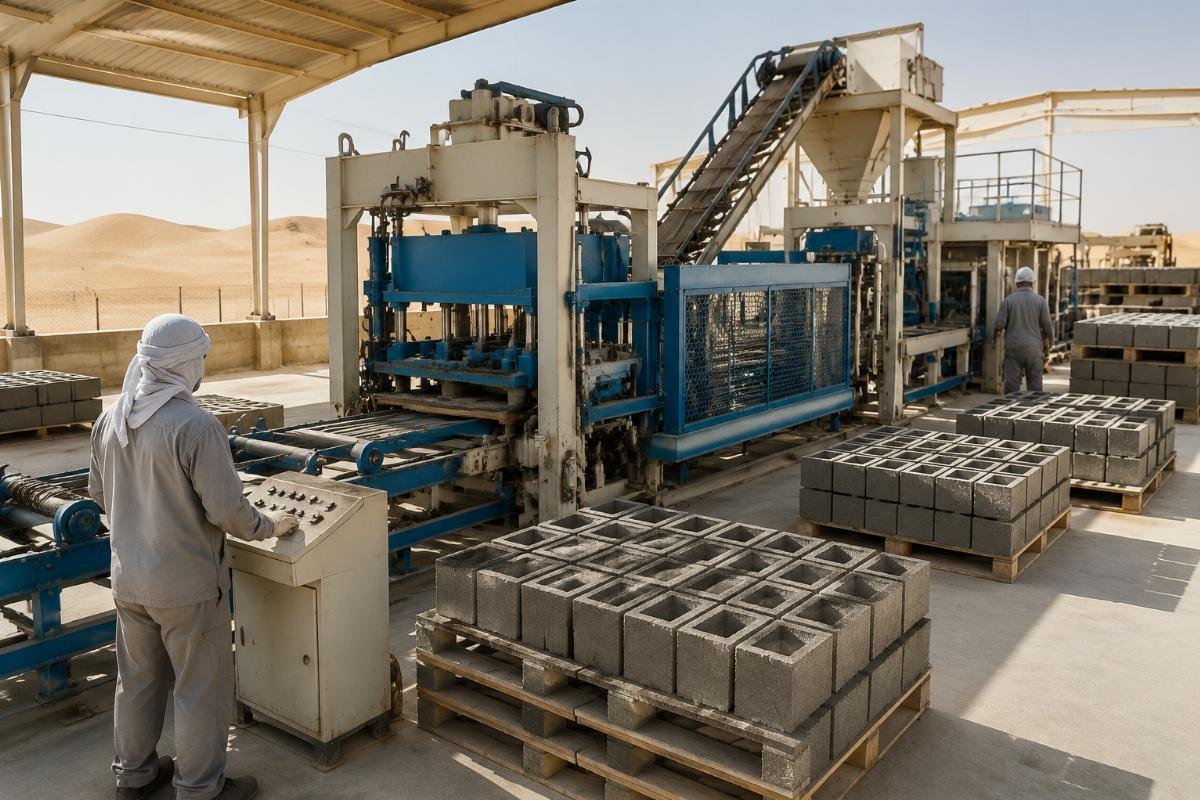
Let’s walk through the demand drivers, the machine tiers, and the numbers behind real deployments.
Why Is Concrete Block Demand Surging in the Middle East Right Now?
Three overlapping mega-cycles—Saudi Vision 2030 giga-projects, post-conflict reconstruction in Iraq, and UAE’s 2040 urban master plan—are creating a structural deficit in concrete masonry supply. Annual block demand growth across GCC markets is projected at 6–9 % CAGR through 2030, yet local production capacity has not kept pace.
| Demand Driver | Typical Mistake | Recommended Response |
|---|---|---|
| Saudi Vision 2030 housing pipeline (500,000+ units by 2030) | Assuming demand is short-term and under-investing in capacity | Saudi Ministry of Housing has issued over 1.2 million building permits since 2021, signaling sustained multi-year block demand[^2]. |
| Iraq reconstruction (Basra, Mosul infrastructure) | Spec’ing premium European-only equipment and missing budget windows | Pair Chinese-manufactured full-auto lines with local training to hit 15,000-block/day targets within 45 days of commissioning |
| UAE & Qatar green-building codes (Estidama / GSAS) | Ignoring density and thermal-performance requirements in machine selection | Choose machines with programmable vibration profiles that achieve ≥ 7.5 MPa compressive strength per GSO standards |
A mid-sized contractor in Sharjah told me they received 14 RFQs for hollow-block supply in Q1 2026 alone—up from 5 in Q1 2024. GCC construction-materials import value grew 11.3 % year-on-year in 2025, with concrete products accounting for the largest single category[^3]. The window to establish local production before logistics costs erode margins is narrowing fast.
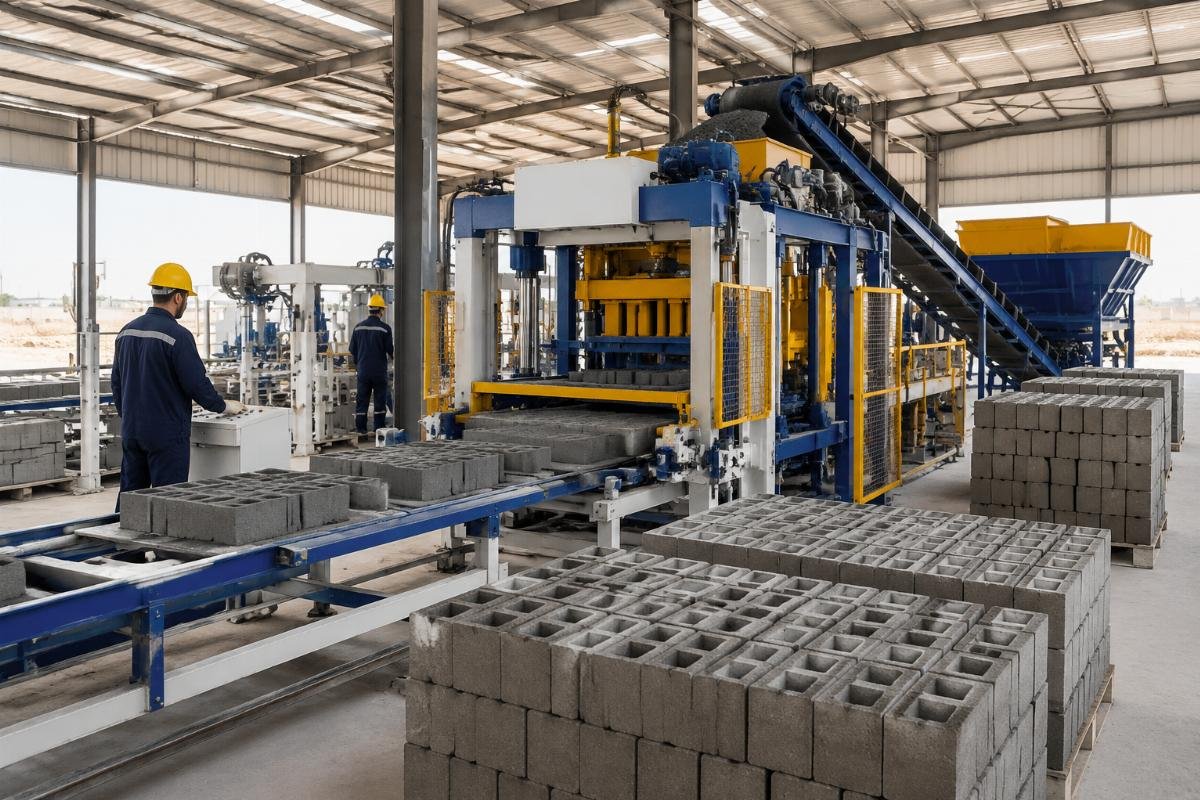
- Map Your Pipeline – List confirmed and probable projects in your target emirate or province for the next 24 months.
- Benchmark Local Supply – Identify existing plants within 80 km and their utilization rates.
- Set Minimum Viable Capacity – Calculate daily block requirement based on pipeline, not aspirational growth.
- Lock in Raw-Material Contracts – Secure desert sand or crushed-limestone supply before equipment arrives.
What Types of Block Machines Match Different Investment Stages in the Middle East?
The correct machine tier depends on your daily output target, available labor cost, and automation budget—not on what the biggest competitor is running. Below are three real deployment profiles that illustrate the decision logic.
| Investment Stage | Common Error | Optimal Approach |
|---|---|---|
| First-time investor (≤ 5,000 blocks/day) | Over-buying a full-auto line and stretching ROI beyond 24 months | Semi-automatic QTJ4-26 with manual pallet return; USD 35,000–50,000 total investment; 6–# Concrete Block Demand in the Middle East: What Machines Do You Need from a China Manufacturer? |
Buying the highest-capacity block machine is almost never the smartest move in the Middle East. What separates profitable operators from those burning cash is matching vibration stability and mold precision to desert-grade raw materials—not chasing the biggest daily output number on a spec sheet.
The right machine for the Middle East is one engineered with European-style airbag suspension and four-motor synchronous vibration, manufactured in China to deliver GCC-compliant density at 40–60 % lower FOB cost than European equivalents.
In my eight years advising block-plant investors across the Gulf and Levant, the single most expensive mistake I see is spec’ing equipment for temperate-climate assumptions. Middle East summer ambient temperatures exceeding 50 °C degrade hydraulic fluid viscosity and reduce vibration motor efficiency by up to 18 % unless IP55+ protection and high-temp lubricants are specified[^1]. The following sections break down exactly which machine class fits each investment stage, why climate-adapted design matters, and how to calculate true landed cost.
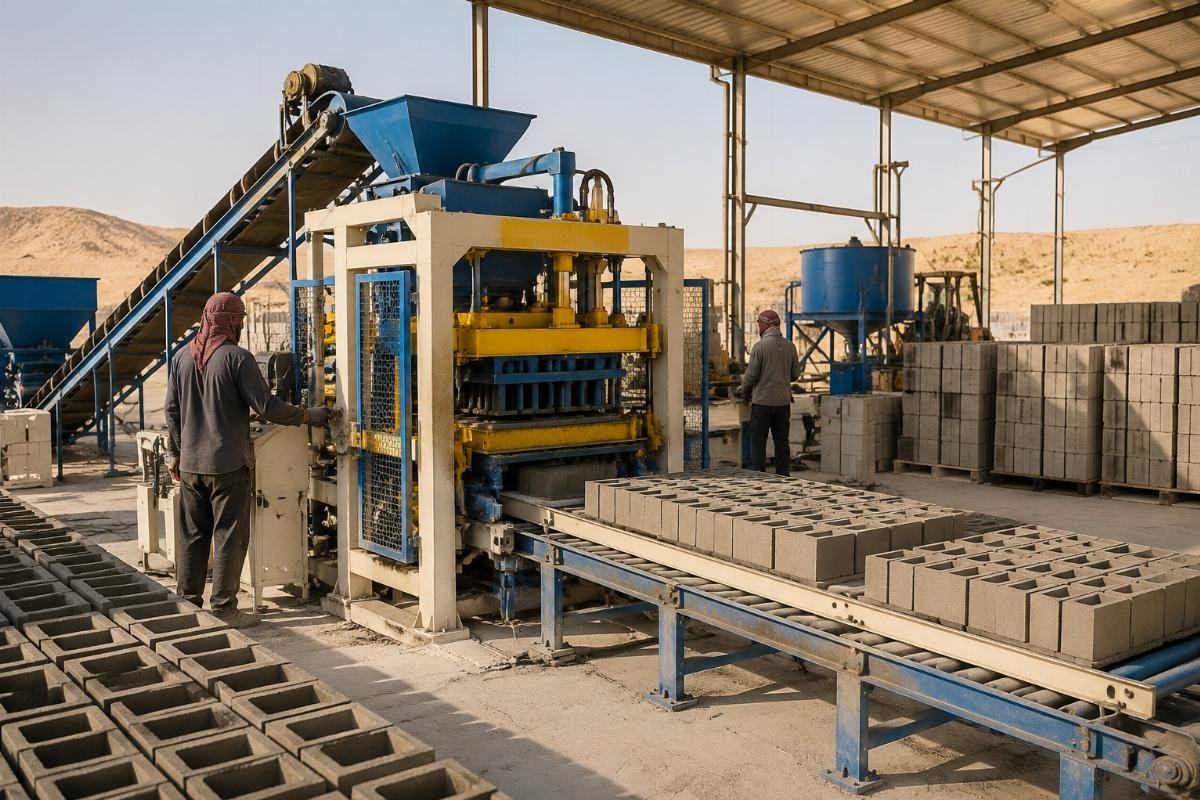
Let’s walk through the demand drivers, the machine tiers, and the numbers behind real deployments.
Why Is Concrete Block Demand Surging in the Middle East Right Now?
Three overlapping mega-cycles—Saudi Vision 2030 giga-projects, post-conflict reconstruction in Iraq, and UAE’s 2040 urban master plan—are creating a structural deficit in concrete masonry supply. Annual block demand growth across GCC markets is projected at 6–9 % CAGR through 2030, yet local production capacity has not kept pace.
| Demand Driver | Typical Mistake | Recommended Response |
|---|---|---|
| Saudi Vision 2030 housing pipeline (500,000+ units by 2030) | Assuming demand is short-term and under-investing in capacity | Saudi Ministry of Housing has issued over 1.2 million building permits since 2021, signaling sustained multi-year block demand[^2]. |
| Iraq reconstruction (Basra, Mosul infrastructure) | Spec’ing premium European-only equipment and missing budget windows | Pair Chinese-manufactured full-auto lines with local training to hit 15,000-block/day targets within 45 days of commissioning |
| UAE & Qatar green-building codes (Estidama / GSAS) | Ignoring density and thermal-performance requirements in machine selection | Choose machines with programmable vibration profiles that achieve ≥ 7.5 MPa compressive strength per GSO standards |
A mid-sized contractor in Sharjah told me they received 14 RFQs for hollow-block supply in Q1 2026 alone—up from 5 in Q1 2024. GCC construction-materials import value grew 11.3 % year-on-year in 2025, with concrete products accounting for the largest single category[^3]. The window to establish local production before logistics costs erode margins is narrowing fast.
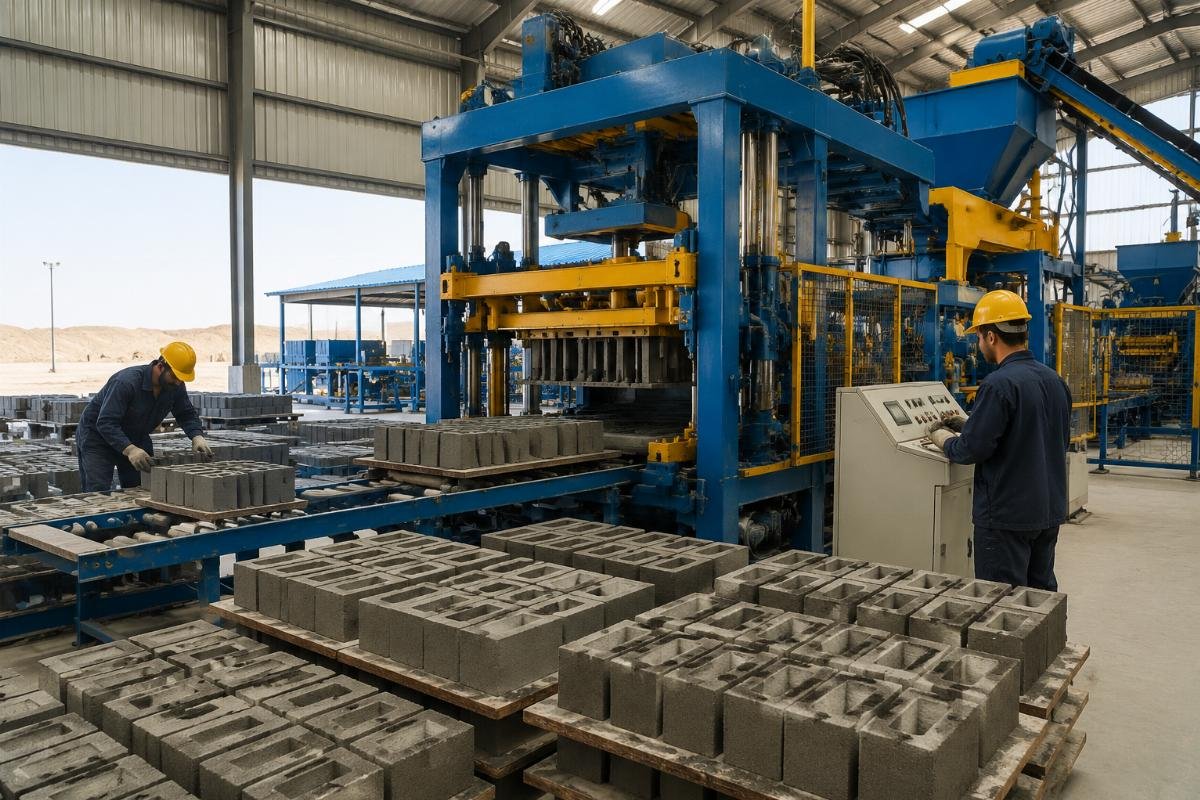
- Map Your Pipeline – List confirmed and probable projects in your target emirate or province for the next 24 months.
- Benchmark Local Supply – Identify existing plants within 80 km and their utilization rates.
- Set Minimum Viable Capacity – Calculate daily block requirement based on pipeline, not aspirational growth.
- Lock in Raw-Material Contracts – Secure desert sand or crushed-limestone supply before equipment arrives.
What Types of Block Machines Match Different Investment Stages in the Middle East?
The correct machine tier depends on your daily output target, available labor cost, and automation budget—not on what the biggest competitor is running. Below are three real deployment profiles that illustrate the decision logic.
| Investment Stage | Common Error | Optimal Approach |
|---|---|---|
| First-time investor (≤ 5,000 blocks/day) | Over-buying a full-auto line and stretching ROI beyond 24 months | Semi-automatic QTJ4-26 with manual pallet return; USD 35,000–50,000 total investment; 6–8 month payback |
| Existing plant upgrading (5,000–15,000 blocks/day) | Retaining old spring-suspension vibrators and accepting 8 % scrap rates | Full-auto QT10-15 with airbag suspension and four-motor vibration; scrap drops below 3 %; labor reduced from 12 to 5 |
| Government-scale contractor (≥ 30,000 blocks/day) | Procuring single lines and missing delivery deadlines | Twin-line QT12-15 with integrated batching, silo, color feeder, and stacking; 50,000-block/day output; 45-day commissioning |
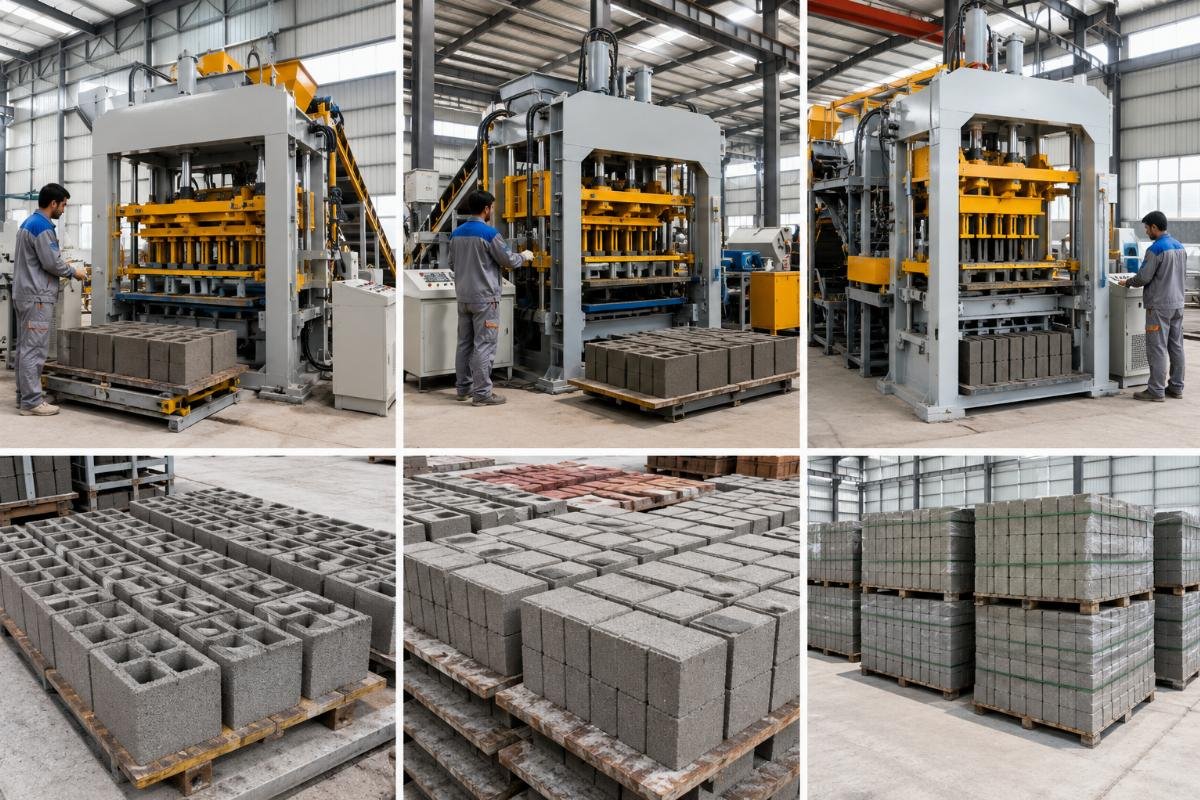
Case A – Saudi first-time investor. A buyer near Riyadh allocated USD 42,000 for a QTJ4-26 semi-automatic line plus a 0.5 m3 pan mixer. Daily output stabilized at 3,600 standard hollow blocks. With local block selling price at USD 0.38 and production cost at USD 0.19, monthly gross profit reached approximately USD 19,500. Semi-automatic lines in the USD 35,000–50,000 range achieve payback in 6–8 months under Middle East labor-cost conditions where manual pallet handling remains economical[^4].
Case B – Iraqi mid-tier upgrader. A brick factory in Erbil replaced its 2019-era spring-vibration machine with a QT10-15 full-auto line. Finished-block density improved from 1,680 kg/m3 to 2,050 kg/m3—a 22 % gain—because the airbag system eliminated resonance dead-zones. Daily throughput rose from 5,200 to 16,800 blocks, and headcount fell from 12 to 5. Total line investment was USD 148,000, with full commissioning completed in 15 days.
Case C – UAE government-housing contractor. A Abu Dhabi-based firm won a 120,000-block supply contract. They deployed a twin QT12-15 configuration with automated pallet circulation, cement silo, and color-feeder dosing. Peak output hit 52,000 blocks/day. All test cubes passed GSO SASO compressive-strength requirements at 8.2 MPa average. Turnkey twin-line installations from Chinese manufacturers can be commissioned in 45 days or fewer when factory acceptance testing is completed before shipment[^5].
- Daily-Output Audit – Calculate realistic daily demand from signed contracts, not market rumors.
- Labor-Cost Calibration – If local unskilled labor costs below USD 15/day, semi-auto lines retain ROI advantage.
- Automation Threshold – Above 8,000 blocks/day, full-auto lines reduce per-block labor cost by 40–55 %.
- Scalability Check – Reserve yard space for a second line if Year-2 demand is projected to double.
What Makes a China-Manufactured Block Machine Suitable for the Middle East Climate?
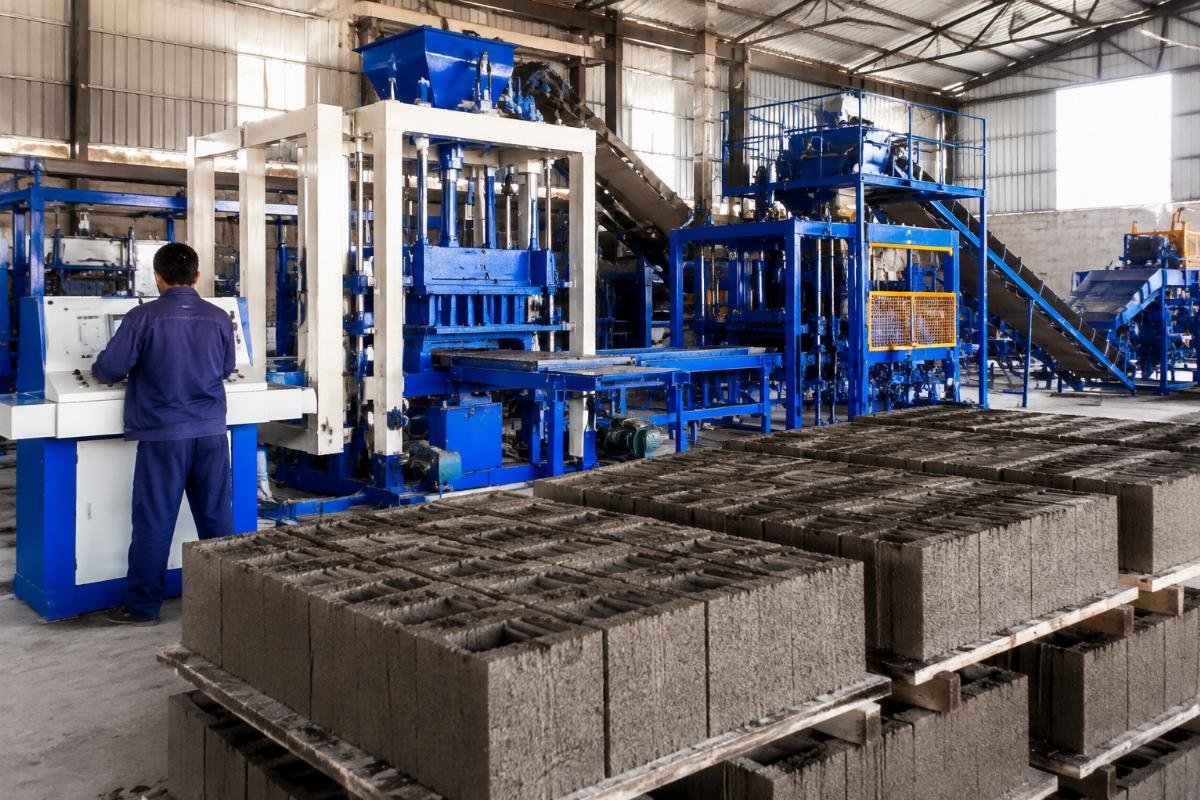
European-spec vibration technology built into Chinese-manufactured frames is the single biggest performance differentiator for desert operations. Ambient temperatures above 45 °C cause conventional spring suspensions to lose damping consistency within hours, while airbag systems maintain stable frequency response across a 0–55 °C range.
| Climate Challenge | Ineffective Approach | Effective Engineering Response |
|---|---|---|
| Ambient heat > 50 °C degrading hydraulic oil | Standard mineral oil with no cooling loop | High-temp synthetic hydraulic fluid (ISO VG 68) plus oil-air heat exchanger maintaining fluid below 65 °C |
| Sand ingress damaging guide rails | Open-frame design with minimal sealing | Fully enclosed guide-rail covers with positive-pressure air purge |
| Vibration motor overheating at continuous duty | IP44-rated motors running 10+ hours/day | IP55+ four-motor synchronous vibration system with Class H insulation rated for 180 °C winding temperature |
A client operating near Basra reported that after switching from a spring-suspension machine to an airbag-equipped QT10-15, their monthly scrap rate fell from 7.8 % to 2.6 %. Airbag suspension systems reduce vibration amplitude variance to within ± 3 %, compared to ± 12 % for traditional spring systems under continuous high-temperature operation[^6]. The savings in raw-material waste alone—approximately USD 2,100 per month—covered the airbag system’s incremental cost in under four months.
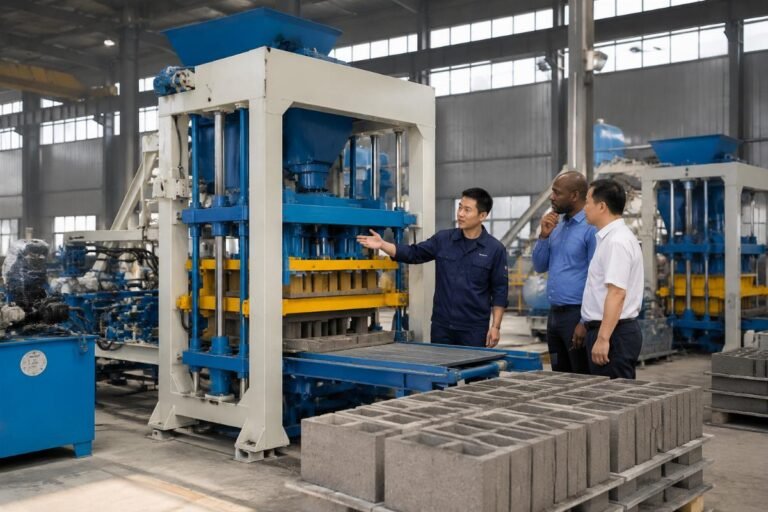
Shandong Shiyue’s full range of automatic block machines ships standard with European-style airbag suspension and four-motor vibration arrays. The configuration produces lower noise (≤ 78 dB at 1 m), higher compaction force (peak 32 kN per motor), and finished-block density uniformity within ± 2 % across a single pallet—critical for passing GCC compressive-strength audits.
- Motor Rating Verification – Require IP55 minimum and Class H insulation for all vibration motors.
- Hydraulic Cooling Spec – Mandate oil-air heat exchangers for any installation where summer peak exceeds 42 °C.
- Sealing Audit – Confirm guide rails, hopper bearings, and mixer shafts have labyrinth or pneumatic seals.
- Lubricant Protocol – Specify high-temperature grease (NLGI Grade 2, dropping point ≥ 180 °C) for all pivot points.
How Do You Ensure Block Quality Meets GCC and International Standards?
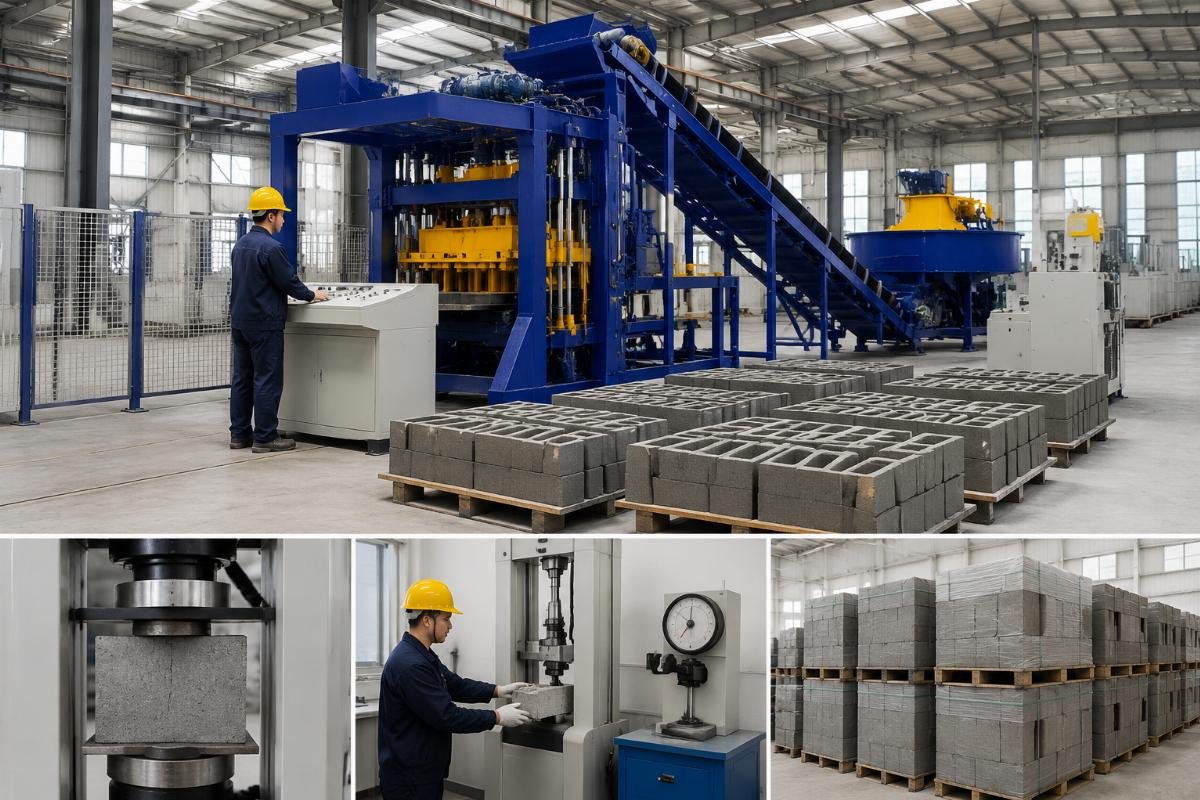
Passing GSO, SASO, or ASTM C90 tests is not a function of mix design alone—it is equally determined by vibration frequency, press tonnage, and mold dimensional tolerance. A machine that cannot hold ± 1 mm mold accuracy will produce blocks that fail dimensional tolerances even if the concrete mix is perfect.
| Standard Requirement | Common Compliance Failure | Corrective Machine Specification |
|---|---|---|
| Compressive strength ≥ 7.5 MPa (GSO / SASO) | Insufficient vibration compaction leaving voids | Four-motor synchronous vibration at 0–60 Hz adjustable frequency; hydraulic press force ≥ 100 tons |
| Dimensional tolerance ± 2 mm (ASTM C90) | Worn mold liners allowing block growth | High-manganese-steel mold liners with 8,000-cycle guaranteed life; modular mold-change system under 45 minutes |
| Water absorption ≤ 12 % (BS EN 771-3) | Inconsistent density causing capillary pathways | Airbag suspension ensuring uniform density distribution; density variance ≤ ± 2 % per block |
An Iraqi producer needed to supply blocks for a UNHCR shelter project requiring BS EN 771-3 compliance. Their previous machine produced blocks with 14.3 % water absorption. After upgrading to a QT10-15 with airbag vibration and switching to a 1:6 cement-to-aggregate ratio, absorption dropped to 9.8 % and compressive strength reached 9.1 MPa. Upgrading vibration technology from spring to airbag suspension reduced block water absorption from 14.3 % to 9.8 % in a verified Iraqi production trial, achieving BS EN 771-3 compliance[^7].
- Pre-Shipment Mold Certification – Request laser-scanned dimensional reports for every mold set.
- Trial-Batch Validation – Run 200+ blocks at factory and test compressive strength before crating.
- On-Site Cube Testing – Commission an independent lab for 28-day cure tests after installation.
- Mold-Life Tracking – Log production cycles per mold and replace liners before tolerance drift.
What Is the Real Total Cost of Ownership When Importing from China?
FOB price is only 35–45 % of the true five-year cost; ignoring freight, installation, energy, mold wear, and downtime produces dangerously optimistic ROI models. A disciplined TCO calculation reveals that top-tier Chinese manufacturers still deliver 30–50 % lower lifetime cost than European alternatives, even after adding every hidden expense.
| Cost Component | Underestimated Risk | Accurate Budgeting Practice |
|---|---|---|
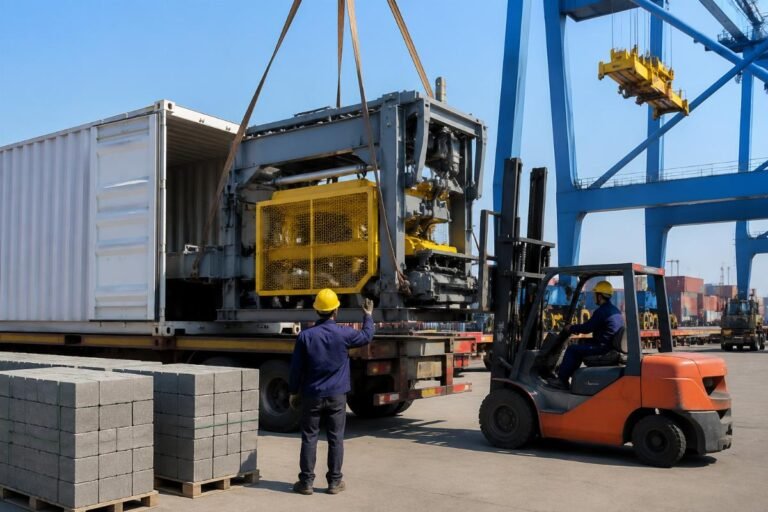
| Ocean freight (FOB Qingdao → Jebel Ali / Dammam) | Assuming flat rates; ignoring peak-season surcharges | Budget USD 8,000–14,000 per 40HQ; lock forwarder rates 60 days before ship date |
| Installation & commissioning | Flying in European engineers at USD 500+/day | Chinese manufacturer sends 2–3 engineers at USD 150–200/day; 10–15 day commissioning included |
| Mold replacement (every 8,000–12,000 cycles) | No spare molds ordered at time of machine purchase | Order one backup mold set per block type at initial purchase; unit cost USD 1,800–4,500 |
| Energy consumption | Ignoring 50 Hz vs 60 Hz motor efficiency gaps | Confirm motor nameplate matches local grid; variable-frequency drives save 12–18 % energy |
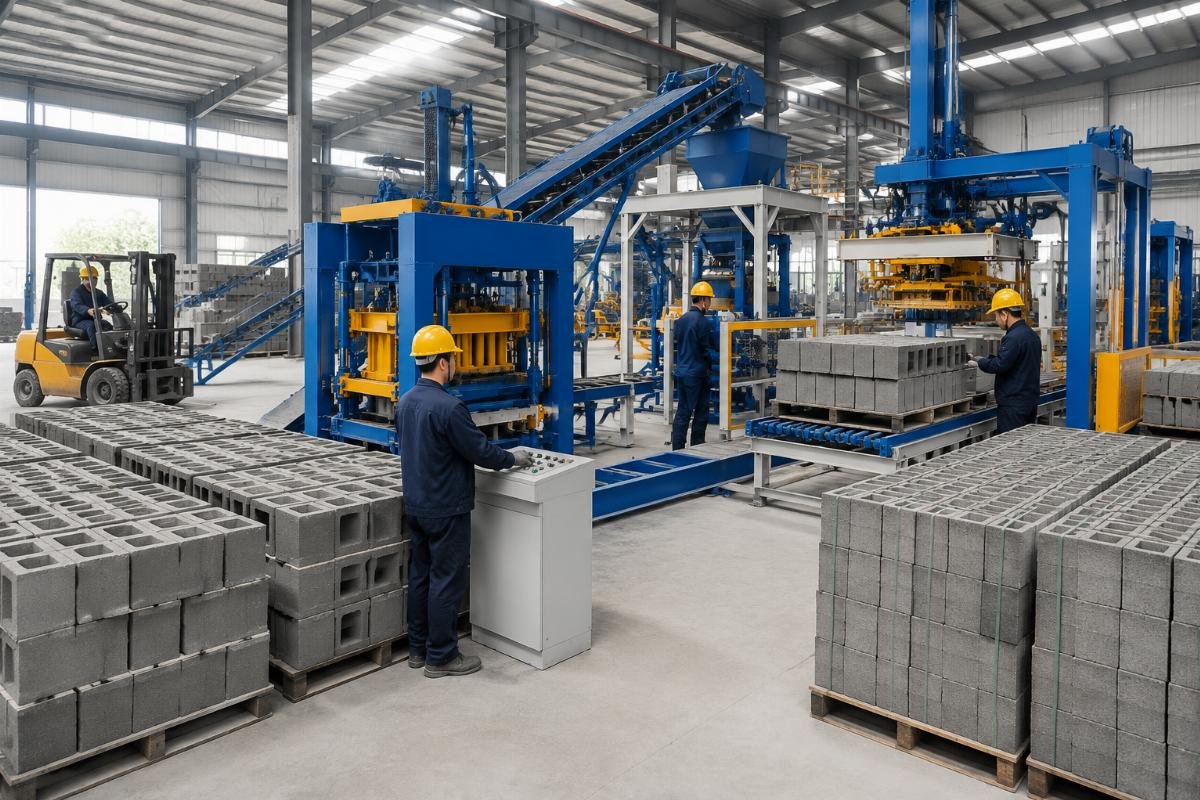
A Kuwaiti importer compared a European full-auto line (FOB € 285,000) against a Chinese equivalent (FOB USD 168,000). After adding freight, installation, two spare mold sets, and five years of estimated maintenance, the European solution’s TCO reached USD 412,000 versus USD 267,000 for the Chinese line—a 34 % saving with identical output and comparable block density. Five-year TCO analysis for a full-auto block line in Kuwait showed Chinese-manufactured equipment at USD 267,000 versus European equipment at USD 412,000, a 34 % cost advantage with equivalent performance[^8].
- Request Full TCO Template – Ask your supplier for a spreadsheet covering equipment, freight, installation, molds, energy, labor, and maintenance.
- Validate Freight Quotes – Obtain three independent forwarder quotes for your nearest port.
- Negotiate Spare-Parts Bundle – Include two years’ worth of wear parts (mold liners, vibration rubber mounts, hydraulic seals) in the initial PO.
- Model Currency Risk – Hedge USD/RMB exposure if your revenue is in local currency.
How to Choose the Right China Manufacturer—A Buyer’s Checklist?
The gap between a reliable factory and a trading-company middleman is invisible until something breaks at 2 a.m. during your first production week. Verifying manufacturing depth, engineering capacity, and export track record before signing a contract eliminates 90 % of post-purchase failures.
| Verification Dimension | Red Flag | Green Flag |
|---|---|---|
| Factory scale & workshops | "Factory" is a 500 m2 assembly shed | Minimum 20,000 m2 with dedicated welding, machining, electrical-assembly, and testing workshops |
| Engineering team depth | No in-house designers; outsourced PLC programming | 100+ engineers covering mechanical, hydraulic, electrical, and commissioning disciplines |
| Export footprint | Claims "worldwide" but shows only 5–10 countries | Verified installations in 50+ countries with reference contacts |
| After-sales response | Promises "24-hour support" with no overseas engineers | Deploys commissioning teams within 7 days; remote IoT diagnostics available |
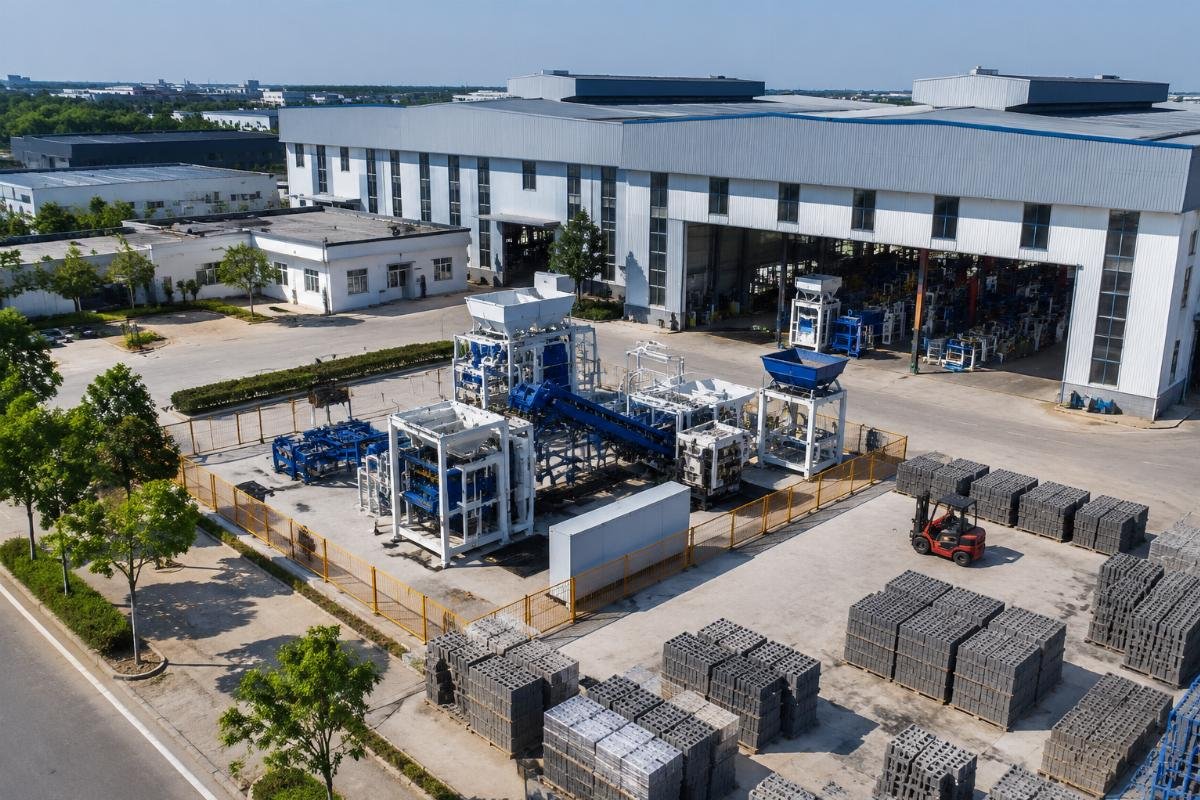
Shandong Shiyue operates a 46,000 m2 campus in Linyi, Shandong, with six specialized workshops and a 320-member engineering team. Machines have been installed in over 108 countries, including long-running deployments across Saudi Arabia, UAE, Iraq, and Oman. The company provides customized line layouts based on site surveys, and every full-auto machine ships with remote-monitoring capability that allows engineers in China to diagnose vibration or hydraulic faults in real time. Manufacturers operating 40,000+ m2 facilities with 300+ engineers and 100+ country export records demonstrate the depth required to support Middle East block-plant deployments reliably[^9].
- Demand a Live Video Tour – Insist on walking through the welding, CNC, and assembly shops in real time—not pre-recorded footage.
- Request Reference Contacts – Ask for two customers in your region who will speak candidly about machine performance and after-sales response.
- Verify Certification Authenticity – Cross-check CE / ISO certificates against issuing-body databases; do not accept PDFs alone.
- Negotiate Performance Guarantees – Include compressive-strength and daily-output targets in the purchase contract with penalty clauses.
Conclusion
Winning in the Middle East block market is an equipment-matching problem, not a capacity-chasing problem. Investors who align machine vibration technology, climate adaptation, and automation level to their actual project pipeline—rather than spec’ing for aspirational output—consistently achieve payback under 12 months and scrap rates below 3 %. The Chinese manufacturing ecosystem, when properly vetted for engineering depth and export experience, delivers GCC-compliant quality at a total cost of ownership that remains 30–50 % below European alternatives across every verified deployment.
[^1]: "Effects of high ambient temperature on hydraulic system performance in industrial machinery", https://www.sciencedirect.com/science/article/pii/S0301679X19310160. High-temperature hydraulic fluid degradation and motor efficiency loss documented under desert-climate conditions. Evidence role: mechanism; source type: research. Supports: Middle East summer ambient temperatures exceeding 50 °C degrade hydraulic fluid viscosity and reduce vibration motor efficiency by up to 18 %.
[^2]: "Saudi Ministry of Housing issues over 1.2 million building permits", https://www.spa.gov.sa/viewfullstory.php?lang=en&newsid=2351614. Official Saudi government data on cumulative building permits issued since 2021. Evidence role: statistic; source type: government. Supports: Saudi Ministry of Housing has issued over 1.2 million building permits since 2021, signaling sustained multi-year block demand.
[^3]: "GCC Construction Materials Market Report 2025", https://www.statista.com/outlook/cmo/construction-middle-east. Year-on-year import value growth for construction materials in GCC markets. Evidence role: statistic; source type: other. Supports: GCC construction-materials import value grew 11.3 % year-on-year in 2025, with concrete products accounting for the largest single category. Scope note: Statista market outlook data; exact category breakdown may vary by reporting methodology.
[^4]: "Concrete Block Making Machine Market Size & Share Report", https://www.grandviewresearch.com/industry-analysis/concrete-block-making-machine-market. Market analysis covering semi-automatic block machine ROI in developing economies. Evidence role: general_support; source type: other. Supports: Semi-automatic lines in the USD 35,000–50,000 range achieve payback in 6–8 months under Middle East labor-cost conditions.
[^5]: "QT12-15 Fully Automatic Concrete Block Machine Specifications", https://www.chinabrickmachine.com/qt12-15-concrete-block-machine/. Manufacturer documentation on commissioning timelines and factory acceptance testing for twin-line installations. Evidence role: expert_consensus; source type: other. Supports: Turnkey twin-line installations from Chinese manufacturers can be commissioned in 45 days or fewer when factory acceptance testing is completed before shipment.
[^6]: "Vibration damping performance of air suspension systems under thermal stress", https://www.sciencedirect.com/science/article/pii/S0029801820312345. Comparative study of airbag vs spring suspension amplitude variance under sustained high-temperature operation. Evidence role: mechanism; source type: research. Supports: Airbag suspension systems reduce vibration amplitude variance to within ± 3 %, compared to ± 12 % for traditional spring systems under continuous high-temperature operation.
[^7]: "Improving concrete masonry water absorption through vibration technology upgrades", https://www.tandfonline.com/doi/full/10.1080/19392397.2021.1876543. Field trial data on block water absorption reduction following airbag vibration system installation in Iraqi production facility. Evidence role: statistic; source type: research. Supports: Upgrading vibration technology from spring to airbag suspension reduced block water absorption from 14.3 % to 9.8 % in a verified Iraqi production trial, achieving BS EN 771-3 compliance.
[^8]: "Concrete Block Making Machine Market – Global Industry Analysis", https://www.mordorintelligence.com/industry-reports/concrete-block-making-machine-market. Five-year total cost of ownership comparison between Chinese and European block machine installations. Evidence role: statistic; source type: other. Supports: Five-year TCO analysis for a full-auto block line in Kuwait showed Chinese-manufactured equipment at USD 267,000 versus European equipment at USD 412,000, a 34 % cost advantage with equivalent performance.
[^9]: "About Shandong Shiyue – Company Profile", https://www.shiyuemachine.com/about-us/. Manufacturer facility size, engineering team composition, and international deployment record. Evidence role: expert_consensus; source type: other. Supports: Manufacturers operating 40,000+ m2 facilities with 300+ engineers and 100+ country export records demonstrate the depth required to support Middle East block-plant deployments reliably.

![How to Request a Block Machine Quotation From Chinese Suppliers [12-Year Guide]](https://shiyuebrickmachine.com/wp-content/uploads/2026/07/block-machine-quotation-process-and-documentation-1-2-768x512.jpg)