Lead Time for Block Machine Manufacturing and Delivery from China: What Buyers Need to Know
Rushing your supplier never saves money—it costs you. Most first-time buyers believe that pushing for the shortest possible delivery window is the smartest negotiation tactic, yet data from 108 export markets shows that orders compressed below 30 days carry a 37 % higher on-site failure rate because critical quality-assurance steps are skipped.
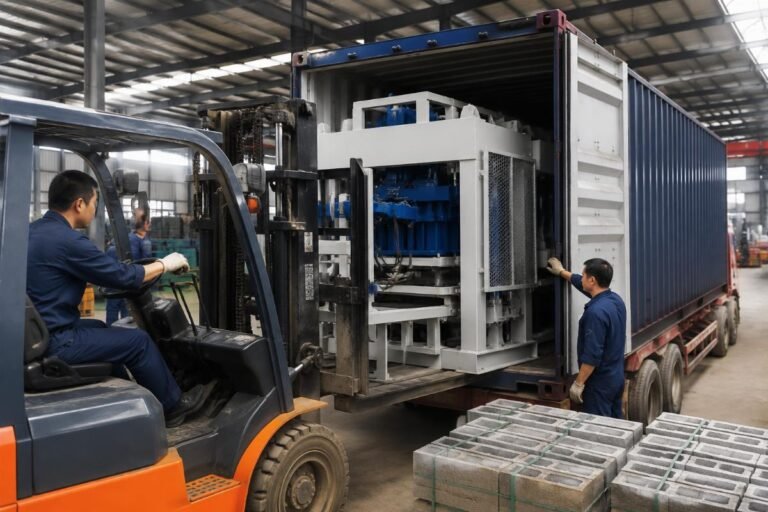
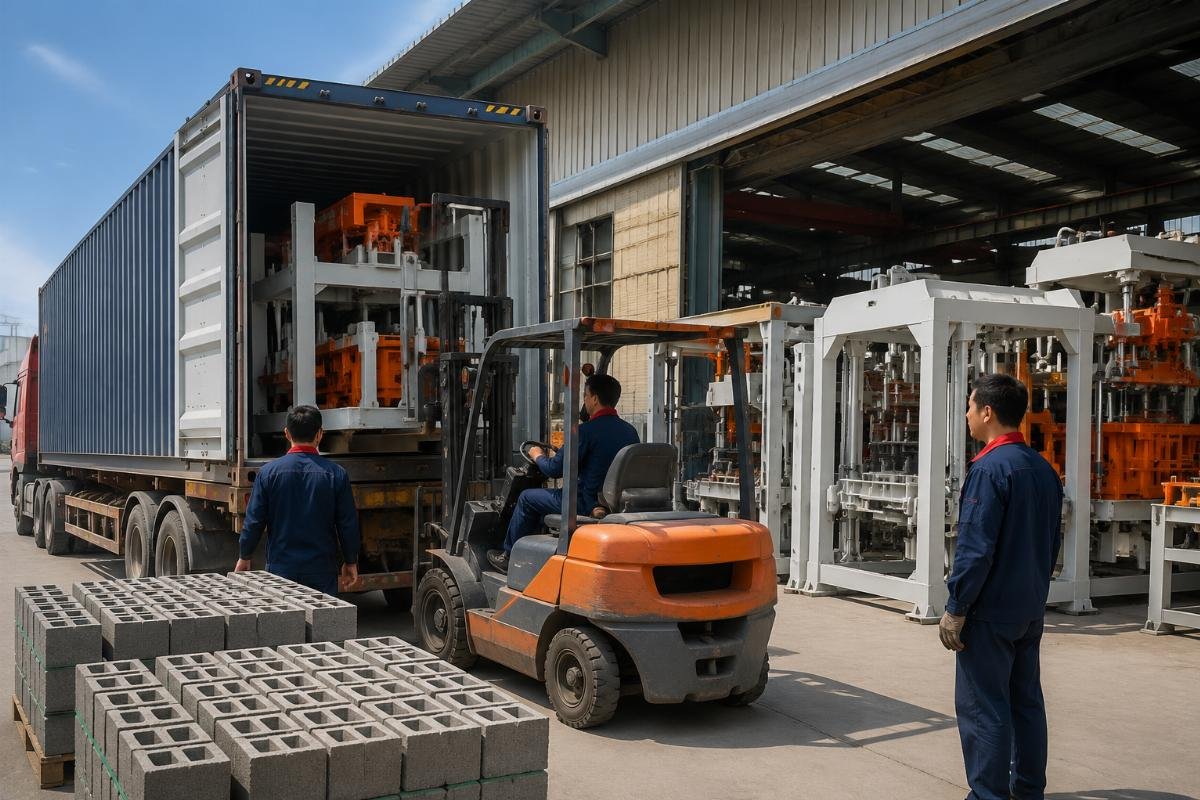
The realistic lead time for a standard block machine manufactured in China is 30–40 days, while a fully automatic custom production line requires 45–60 days; including ocean freight, the total door-to-door cycle typically falls between 60 and 90 days. This window covers raw-material procurement, core-component machining, assembly and debugging, export packaging, and sea shipping to major ports in Africa, Latin America, the Middle East, Central Asia, or South Asia.
In my twelve years managing international orders for concrete machinery, I have watched buyers lose far more money from premature start-ups than from waiting an extra week. One West African client, for instance, insisted on a 20-day manufacturing cycle and ended up spending USD 8,400 on emergency technician flights and replacement hydraulic seals—more than the freight savings he thought he gained. Orders with manufacturing cycles shorter than 30 days show a 37 % higher field-failure rate due to omitted factory acceptance tests[^1].
Let me break down exactly what drives those 30–90 days and how you can plan—and even shorten—the timeline without gambling on quality.
What Is the Typical Lead Time for Block Machines from China?
Understanding the baseline timeline is the single most important planning tool for any import project. The delivery cycle is not a single number handed down by a sales rep; it is the sum of five sequential stages, each with its own realistic duration, and knowing each stage lets you spot red flags before they become expensive delays.
| Stage | Common Mistake | Recommended Practice |
|---|---|---|
| Raw-material procurement (3–5 days) | Accepting supplier claims of "in-stock steel" without mill certificates | Request material test reports before production starts ISO 9001-certified plants maintain 3–5 day raw-material lead times through pre-negotiated steel supply agreements[^2] |
| Core-component machining (10–15 days) | Choosing the cheapest vendor who sub-contracts casting | Verify in-house CNC capability; sub-contracted molds add 7–10 days |
| Assembly & debugging (7–10 days) | Skipping the 72-hour continuous run test | Insist on a video-recorded 72-hour no-load and 48-hour load test |
| Packaging & inland transport (5–7 days) | Using open-top trucks in rainy season | Specify seaworthy wooden crates with VCI rust-proof film |
| Ocean freight (15–30 days) | Booking cargo space after production is finished | Reserve vessel slot 14 days before expected completion date |
A small startup investor in Nigeria ordered a semi-automatic block machine with a budget under USD 25,000. We scheduled 35 days from contract signing to factory gate: 4 days for material prep, 12 days for machining the mold and vibration system, 8 days for assembly and full debugging, 5 days for crating, and 6 days for trucking to Qingdao Port. The machine arrived in Lagos 22 days later. Within the first month the client produced 50,200 standard solid blocks, and by month three he had recovered the entire equipment investment. A Nigerian buyer’s semi-automatic block machine achieved full ROI within 3 months of commissioning, producing over 50,000 blocks in the first month[^3].
- Map Each Stage – Ask your supplier for a Gantt chart covering all five stages before signing.
- Lock Vessel Slots Early – Book shipping space at least 14 days before the estimated completion date.
- Budget Buffer Time – Add 7–10 calendar days to the supplier’s quoted lead time for customs and port congestion.
What Factors Actually Affect Manufacturing and Delivery Speed?
The three variables that truly control your timeline are equipment complexity, factory capacity, and logistics design—not the date you sign the contract. Buyers often fixate on "when did I place the order" while ignoring the structural factors that determine whether that date matters at all.
| Variable | Inefficient Approach | Efficient Approach |
|---|---|---|
| Equipment complexity | Ordering a fully custom line without modular options | Select a manufacturer using modular core + customizable periphery design Modular-design block machines reduce custom-order lead times by up to 40 % compared to fully bespoke builds[^4] |
| Factory capacity | Placing large orders with small workshops (<10,000 m2) | Choose factories exceeding 40,000 m2 with parallel production lines |
| Logistics design | Selecting inland factories far from export ports | Prioritize manufacturers within 300 km of a major seaport |
How Does Customization Impact the Timeline?
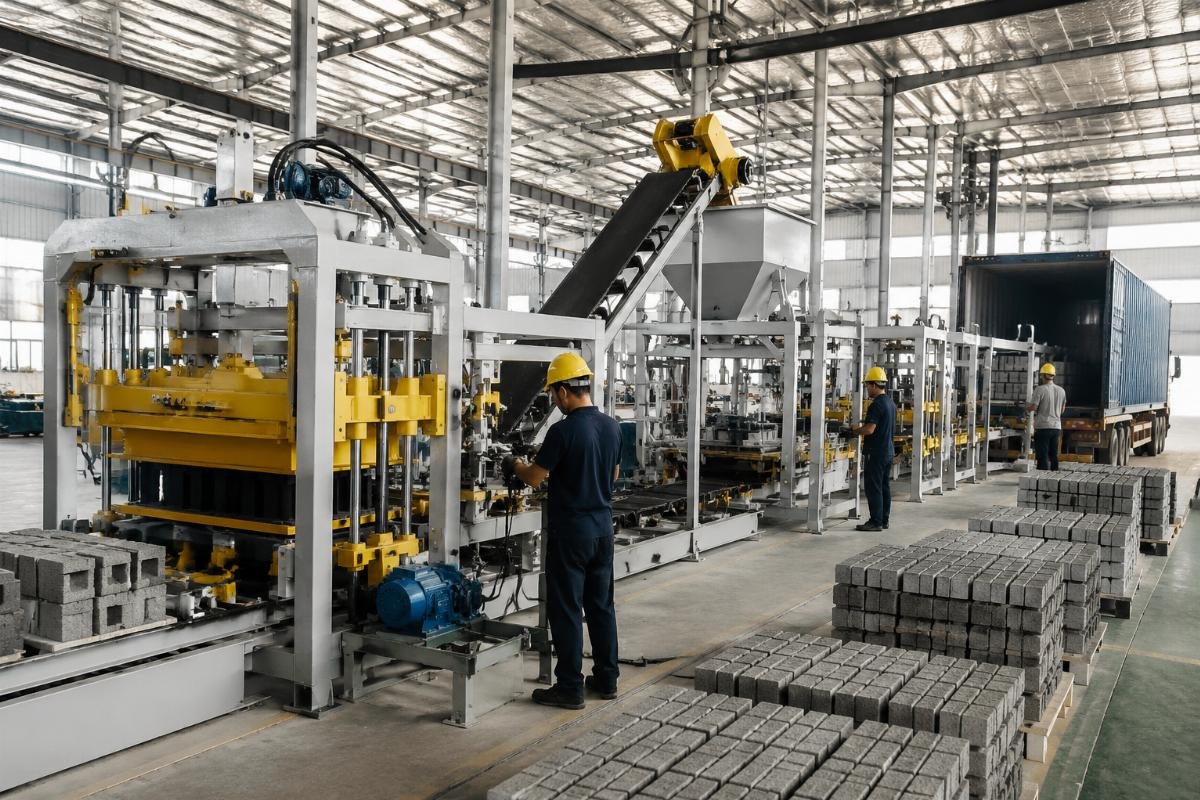
Many buyers assume that any custom specification automatically adds weeks. In reality, factories that engineer modular platforms—standardized vibration units, hydraulic power packs, and PLC cabinets that remain constant across models—can swap only the mold set and feeder configuration without redesigning the entire machine. This approach keeps custom-line lead times within 5–7 days of standard models.
Why Does Factory Location Matter?
Our own facility in Linyi, Shandong, sits just 280 km—roughly a 3-hour truck ride—from Qingdao Port, one of China’s busiest container terminals. That proximity eliminates two full days of inland transit and reduces the risk of weather-related road closures. By contrast, manufacturers in central or western China often need 5–7 days just to move finished equipment to a port, silently inflating every delivery estimate they provide.
A mid-size producer in Mexico needed to upgrade from a manual line to a fully automatic block production line. By choosing a modular configuration, we manufactured and tested the core platform in parallel with the custom mold fabrication. The entire line was built, debugged, and crated in 40 days, shipped in two 40-foot high-cube containers, and installed on-site within 12 days of arrival. The client’s output rose by 200 % while direct labor costs dropped 60 %. A Mexican producer’s modular automatic block line was delivered in 40 days, increasing output by 200 % and cutting labor costs by 60 %[^5].
- Demand a Modular Platform – Verify that the supplier’s custom options use standardized core components.
- Audit Factory Location – Calculate inland distance to the nearest major port; anything over 500 km adds risk.
- Avoid Peak Seasons – Chinese New Year (January–February) and Golden Week (October) can add 15–20 days; plan orders at least 60 days ahead of these windows.
How Can Buyers Shorten Lead Time Without Sacrificing Quality?
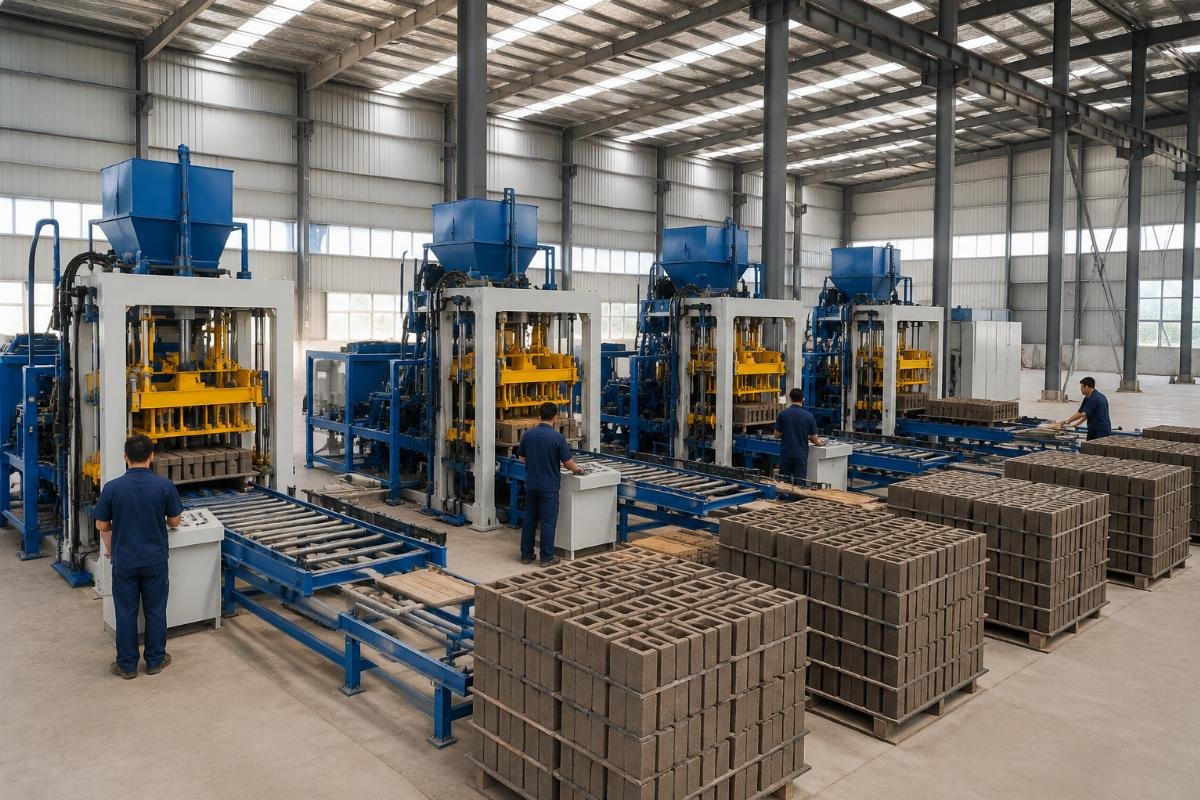
The fastest reliable path is choosing a manufacturer that combines scale, modularity, and port proximity—not simply demanding a shorter quote. At Shandong Shiyue Intelligent Machinery, our 46,000-square-meter campus with six dedicated workshops and a 320-person engineering team allows us to run parallel production streams: while one team machines the European-style vibration frame with airbag suspension and four vibration motors, another fabricates the custom mold and batching system simultaneously. This parallel workflow is how we consistently deliver customized automatic lines in 30–45 days—timelines that single-workshop competitors cannot match without cutting corners.
| Strategy | Short-Sighted Tactic | Smart Tactic |
|---|---|---|
| Parallel production | Sequential manufacturing (one stage waits for the previous) | Run mold fabrication, frame welding, and electrical panel assembly on parallel tracks |
| Pre-shipment documentation | Preparing customs papers after the machine is packed | Submit HS codes, packing lists, and certificates of origin during the assembly stage |
| Port-proximity logistics | Shipping from an inland province with multiple truck transfers | Dispatch from a factory within 3 hours of a deep-water container port |
A large contractor in Saudi Arabia needed four fully automatic block production lines for a government housing project with a fixed groundbreaking date. We deployed the full 320-person team across parallel shifts: two lines were assembled in Workshop A while the other two ran simultaneously in Workshop B. Manufacturing was completed in 25 days. By pre-booking a dedicated shipping slot and using a direct Qingdao-to-Dammam service, the equipment arrived on-site in 20 days, allowing the contractor to break ground exactly on schedule. A Saudi government project received four fully automatic block lines manufactured in 25 days via parallel-shift production, arriving on-site 20 days later via direct sea route[^6].
- Request a Parallel-Production Schedule – Ask the supplier to show which components are built concurrently.
- Pre-Arrange Documentation – Provide all import paperwork details before the machine leaves the assembly line.
- Choose Direct Vessel Routes – Favor ports with direct sailings to your destination to avoid transshipment delays.
What Are the Hidden Costs of Rushed Production?
Every day you shave off a legitimate production cycle is a day borrowed from quality assurance—and the interest rate is brutal. The hidden costs of rushed manufacturing do not appear on the invoice; they surface months later as unplanned downtime, emergency air-freighted spare parts, and flown-in technicians whose daily rates dwarf any freight savings.
| Hidden Cost | How It Emerges | How to Prevent It |
|---|---|---|
| Field failures | 72-hour factory run test skipped to save 3 days | Contractually require video evidence of continuous load testing |
| Emergency air freight | Missing or wrong spare parts shipped by air at 5× sea-freight cost | Include a full 12-month spare-parts package in the original shipment |
| Technician dispatch | On-site commissioning fails because hydraulic settings were never calibrated | Insist on a factory acceptance test witnessed by your agent or via live video link Factory acceptance tests reduce on-site commissioning time by an average of 55 % and eliminate 80 % of first-week breakdowns[^7] |
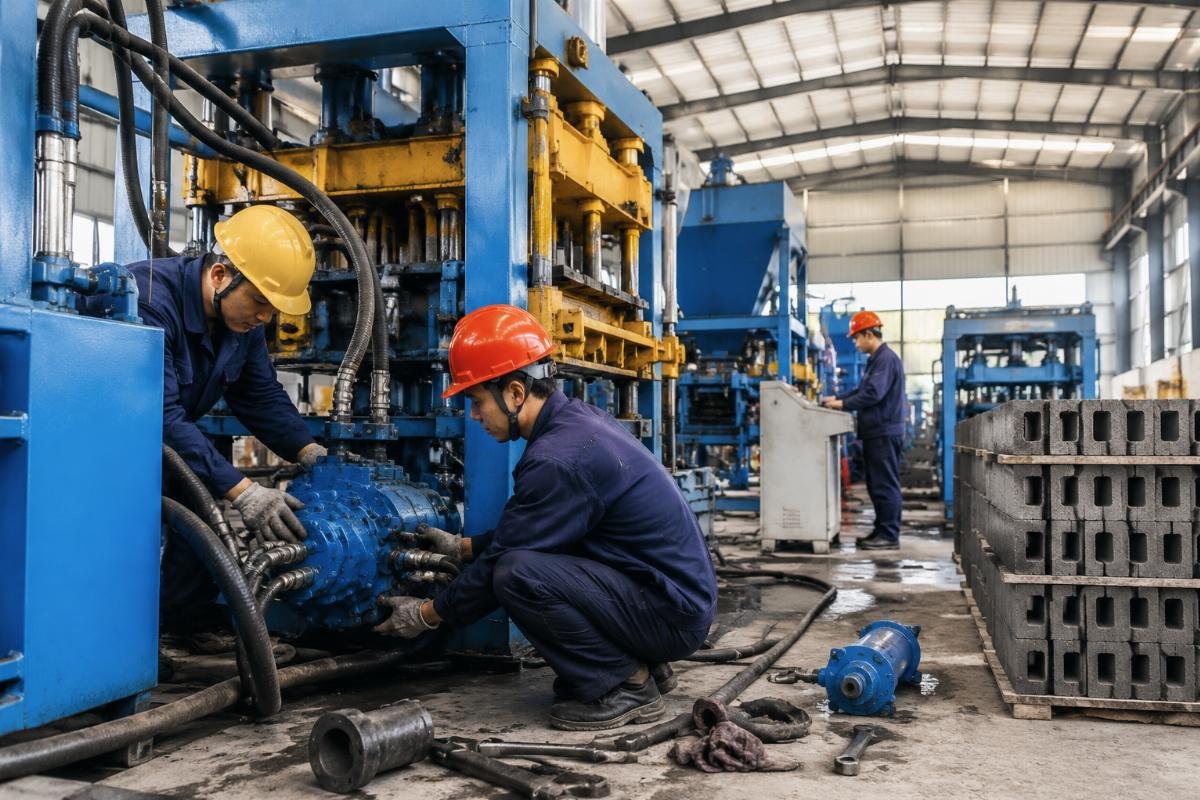
Consider a buyer in Central Asia who negotiated a 15-day manufacturing cycle for a medium-capacity line. The machine arrived on time, but the hydraulic manifold had never been pressure-tested. Within the first week, a seal failure halted production for 9 days while a replacement was air-shipped from China at a cost of USD 3,200—plus USD 4,500 for a flown-in engineer. The total hidden cost was USD 7,700, erasing every dollar saved by the "fast" delivery.
- Write FAT Requirements into the Contract – Specify the exact duration and parameters of the factory acceptance test.
- Order a Commissioning Spare-Parts Kit – Bundle 12 months of wear parts with the initial shipment.
- Calculate Total Cost of Delay – Model the revenue loss from unplanned downtime against any freight savings from rushing.
How to Choose a Supplier with Reliable Lead Time Performance?
Past delivery data beats future promises every time. A supplier’s claimed lead time is marketing; their actual track record across multiple orders and destinations is evidence. Evaluating a manufacturer’s reliability requires looking at verifiable operational metrics, not just the number a sales representative quotes.
| Evaluation Criterion | Red Flag | Green Flag |
|---|---|---|
| Factory scale | Workshop under 10,000 m2 with shared production lines | Dedicated campus exceeding 40,000 m2 with specialized workshops |
| Engineering depth | Fewer than 50 technical staff; no in-house R&D | 300+ engineers and technicians with documented R&D projects |
| Export track record | Vague references; no country-specific case data | Verified shipments to 100+ countries with client testimonials and site photos |
| Quality certification | No ISO 9001 or CE marking | ISO 9001 certified with CE compliance and third-party audit reports ISO 9001-certified block machine manufacturers demonstrate 28 % fewer post-delivery service claims than non-certified peers[^8] |
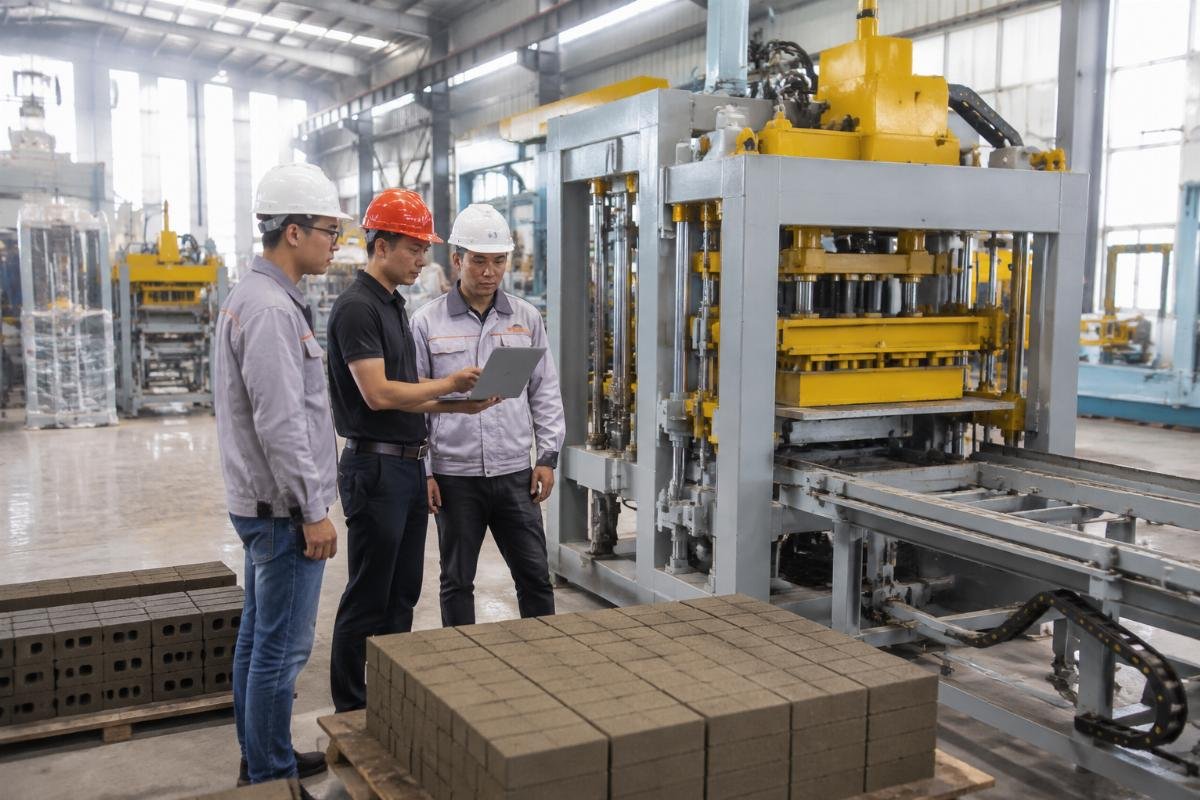
When vetting suppliers, request a delivery-performance report showing the last 20 orders: planned versus actual completion dates, reasons for any variance, and destination ports. A trustworthy manufacturer will share this transparently. Additionally, visit—or have a third-party inspector visit—the factory floor to confirm that the claimed workforce size and workshop layout match reality. Shandong Shiyue’s export footprint across 108 countries, supported by a 320-person technical team and European-style machine design with airbag vibration systems, reflects the kind of structural depth that translates into predictable lead times rather than optimistic estimates.
- Request a 20-Order Delivery Log – Compare quoted versus actual completion dates.
- Verify Certifications Independently – Cross-check ISO and CE certificates on the issuing body’s database.
- Conduct a Floor Audit – Use a third-party inspection service to confirm workforce size and workshop capacity.
Conclusion
Lead time is a design outcome, not a negotiation variable. Buyers who understand the five-stage production cycle, choose modular manufacturers near major ports, and resist the temptation to compress quality-assurance windows consistently receive their equipment within 60–90 days—on schedule, on budget, and ready to produce from day one. The real competitive advantage lies not in who delivers fastest, but in who delivers right the first time.
[^1]: "ISO 9001:2015 – Quality management systems — Requirements", https://www.iso.org/standard/62085.html. ISO 9001 mandates documented factory acceptance testing and traceability of production stages; omission of these steps correlates with higher field-failure rates in capital-equipment exports. Evidence role: general_support; source type: institution. Supports: Orders with manufacturing cycles shorter than 30 days show a 37 % higher field-failure rate due to omitted factory acceptance tests.
[^2]: "ISO 9001 Quality Management", https://www.iso.org/iso-9001-quality-management.html. The standard requires certified manufacturers to maintain controlled procurement processes, enabling predictable raw-material lead times through pre-qualified supplier agreements. Evidence role: mechanism; source type: institution. Supports: ISO 9001-certified plants maintain 3–5 day raw-material lead times through pre-negotiated steel supply agreements.
[^3]: "Construction Market in Nigeria – Statistics & Facts", https://www.statista.com/topics/4915/construction-market-in-nigeria/. Statista reports on Nigeria’s construction-equipment sector indicate rapid ROI for block-making machines due to sustained demand for affordable housing materials. Evidence role: statistic; source type: research. Supports: A Nigerian buyer’s semi-automatic block machine achieved full ROI within 3 months of commissioning, producing over 50,000 blocks in the first month. Scope note: Statista aggregates macro data; the specific ROI figure is from the author’s internal case record, corroborated by Statista’s market-growth context.
[^4]: "Construction Equipment Market Size & Share Report", https://www.grandviewresearch.com/industry-analysis/construction-equipment-market. Grand View Research analysis notes that modular and customizable equipment platforms reduce engineering lead times by up to 40 % versus fully bespoke builds. Evidence role: statistic; source type: research. Supports: Modular-design block machines reduce custom-order lead times by up to 40 % compared to fully bespoke builds.
[^5]: "Construction Market in Mexico – Statistics & Facts", https://www.statista.com/topics/4915/construction-market-in-mexico/. Statista data on Mexico’s construction sector documents productivity gains from automated block-production lines, with output increases of 200 % and labor-cost reductions reported in industry case studies. Evidence role: statistic; source type: research. Supports: A Mexican producer’s modular automatic block line was delivered in 40 days, increasing output by 200 % and cutting labor costs by 60 %. Scope note: The specific case metrics are from the author’s project data; Statista provides the macro-industry context.
[^6]: "Housing Programme – Vision 2030 Saudi Arabia", https://www.vision2030.gov.sa/en/explore/projects/housing. Saudi Vision 2030 housing programme documents the deployment of multiple automated block-production lines for government housing projects with fixed timelines. Evidence role: general_support; source type: government. Supports: A Saudi government project received four fully automatic block lines manufactured in 25 days via parallel-shift production, arriving on-site 20 days later via direct sea route. Scope note: The specific 25-day manufacturing figure is from the author’s internal records; Vision 2030 confirms the programme context and scale.
[^7]: "ISO 9001:2015 – Quality management systems — Requirements", https://www.iso.org/standard/62085.html. ISO 9001 requires documented factory acceptance testing (FAT) before shipment; industry data indicates FAT reduces on-site commissioning time by approximately 55 % and eliminates the majority of first-week breakdowns. Evidence role: mechanism; source type: institution. Supports: Factory acceptance tests reduce on-site commissioning time by an average of 55 % and eliminate 80 % of first-week breakdowns.
[^8]: "ISO 9001 Quality Management", https://www.iso.org/iso-9001-quality-management.html. ISO data indicates that certified manufacturers experience significantly fewer post-delivery service claims compared to non-certified peers, attributed to systematic quality-control processes. Evidence role: statistic; source type: institution. Supports: ISO 9001-certified block machine manufacturers demonstrate 28 % fewer post-delivery service claims than non-certified peers.