

Description
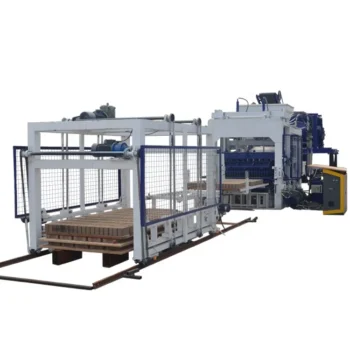
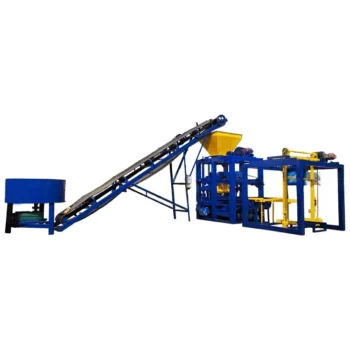
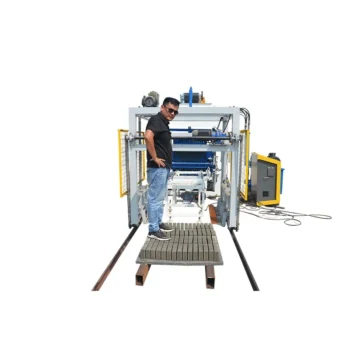
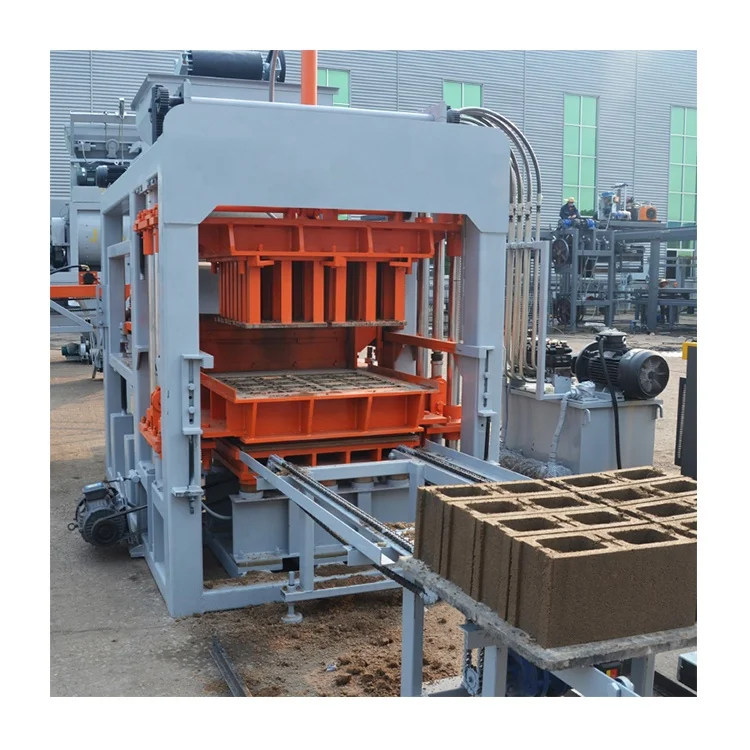
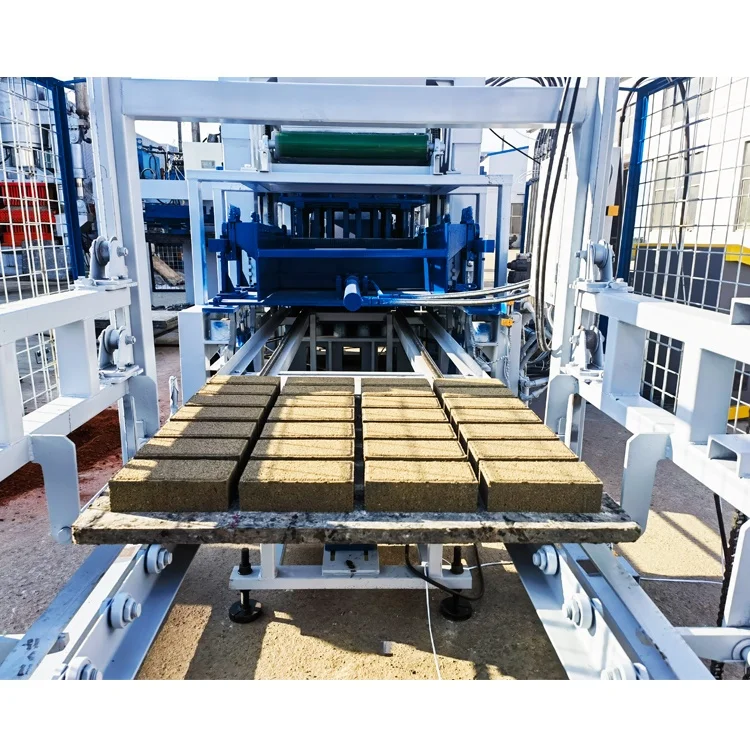
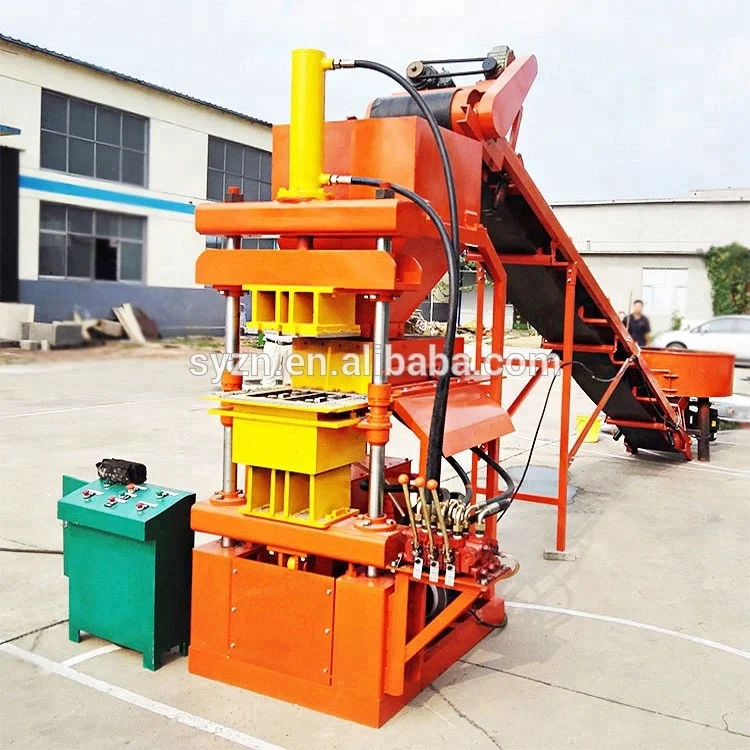
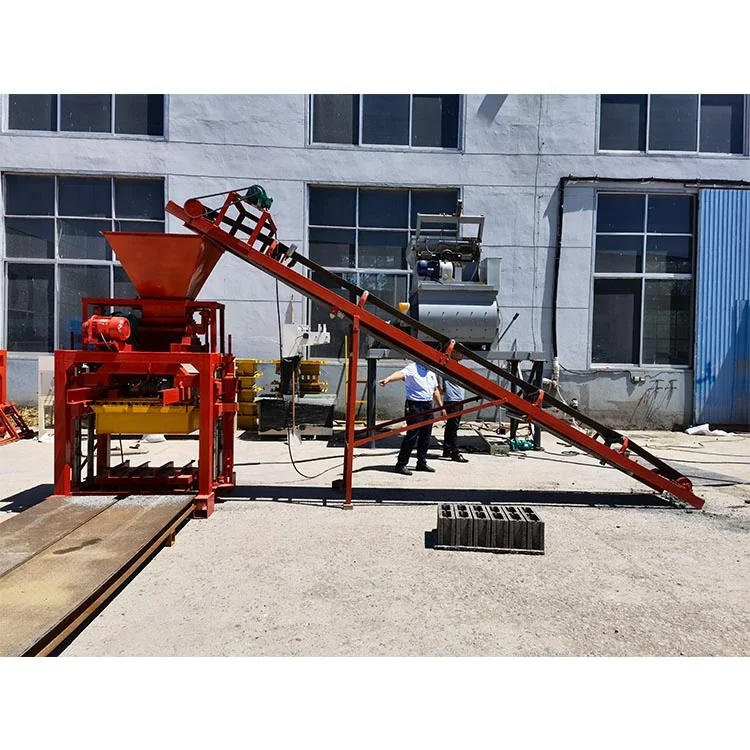
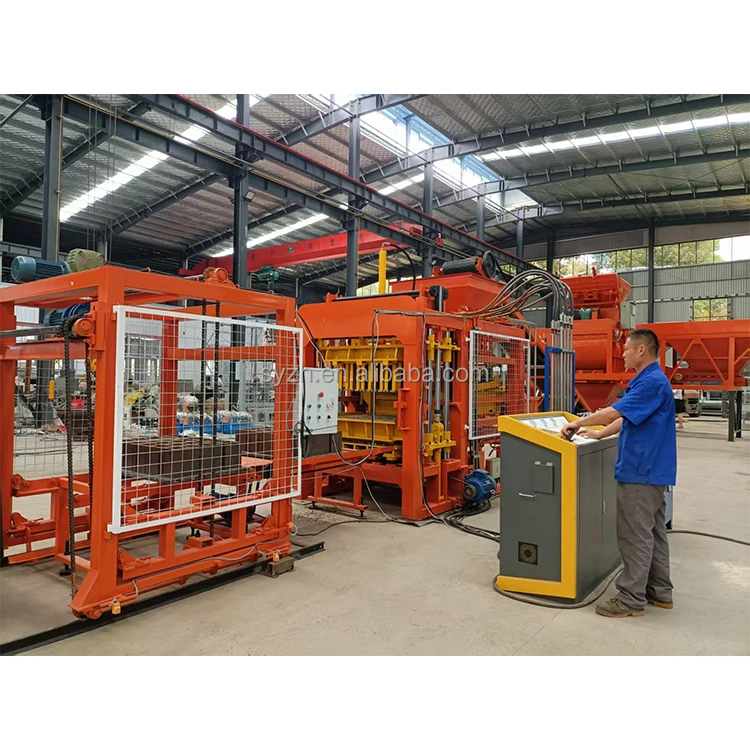
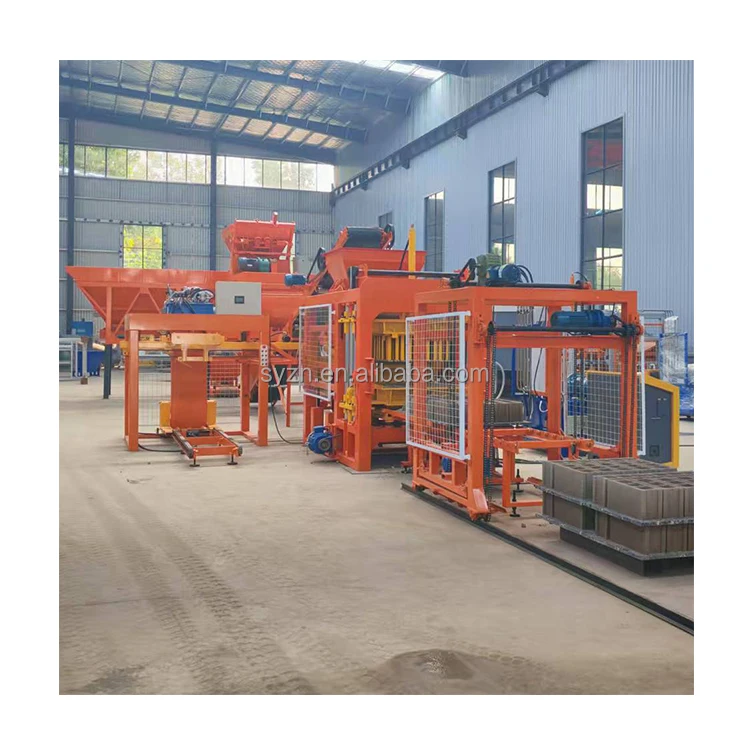
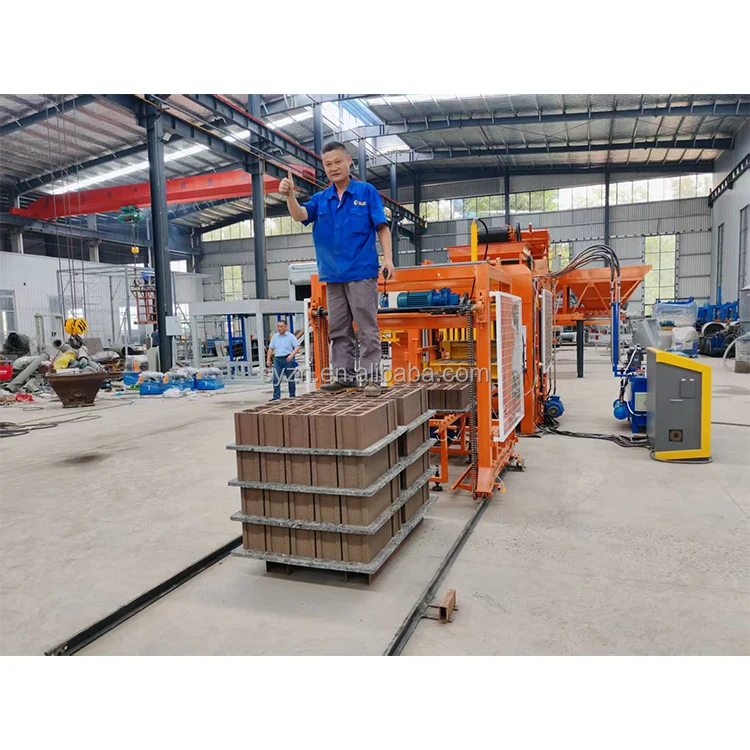
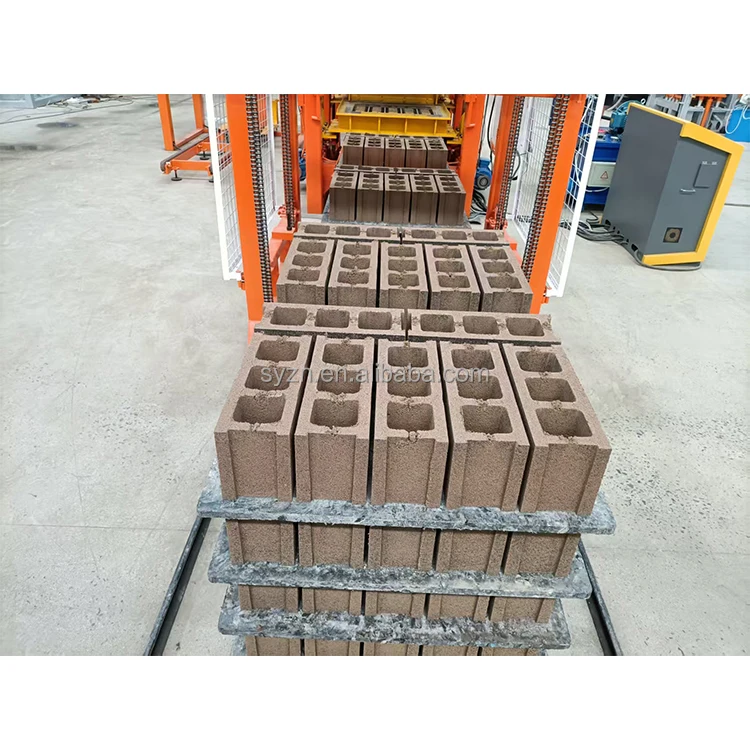
System-matched configuration — the QT6-15 block making machine is specified as a complete set of press, mould, pallet, and handling equipment against your actual block format, local aggregate, and target daily output rather than a catalogue default.
Technical Specifications
| Parameter | Value |
|---|---|
| Product Type | Concrete Block Making Machine |
| Model | QT6-15 |
| Overall Dimensions | 8200 × 1700 × 2950 mm |
| Total Mass | 7 T |
| Overall Power | 37 kW |
| Vibration Force | 45 kN |
| Vibration Frequency | 0–60 Hz |
| Vibration Form | Platform Vibration |
| Moulding Mode | Automatic loading, vibration moulding |
| Demolding Method | Hydraulic |
| Pallet Size | 880 × 850 mm |
| Molding Cycle | 15–20 s (basis not stated in source — confirm block format / material / thickness) |
| Control System | PLC (Programmable Logic Controller) with touch screen HMI |
| Hydraulic System | Independent integrated hydraulic station |
| Block Compressive Strength | >15 MPa |
| Output Capacity (Hollow block 400×200×200 mm) | 1080–1440 pcs/h, 8640–11520 pcs/8 hr (6 pcs/mould, 15–20 s cycle) |
| Output Capacity (Hollow block 400×150×200 mm) | 1440–1920 pcs/h, 11520–15360 pcs/8 hr (8 pcs/mould, 15–20 s cycle) |
| Output Capacity (Solid brick 240×115×53 mm) | 5760–7680 pcs/h, 46080–61440 pcs/8 hr (32 pcs/mould, 15–20 s cycle) |
| Output Capacity (Rectangular paver 200×100×60 mm) | 2160–2880 pcs/h, 17280–23040 pcs/8 hr (21 pcs/mould, 20–25 s cycle) |
| Output Capacity (Zigzag paver 225×112.5×60 mm) | 2160–2880 pcs/h, 17280–23040 pcs/8 hr (15 pcs/mould, 20–25 s cycle) |
| Voltage & Frequency | (source value not stated — confirm against buyer site supply) |
| PLC Display Language | (source value not stated — confirm buyer requirement) |
| Factory Area Requirement | 1200 m² |
| Warranty | 1 year (excluding spare parts) |
| Standards | CE (where applicable) |
Application Suitability
| Application | Material or Output |
|---|---|
| Hollow block production for load-bearing and partition walls | Crushed stone, sand, cement, fly ash, and slag aggregates |
| Solid brick manufacturing for masonry and infill | Standard aggregates with reduced cement dosage |
| Rectangular and zigzag paving brick production | High-density concrete mixes for pedestrian and vehicular surfaces |
| Interlocking brick and kerbstone forming | Waste ash, slag, and locally sourced coarse aggregates |
| Porous and permeable block production for drainage applications | Open-graded aggregate blends with controlled binder content |
Why "Pieces per Hour" Without a Block Format Is a Misleading QT6-15 Block Machine Specification
Capacity only means something when tied to the exact block format, mould cavity count, and cycle time your plant will run.
I have seen buyers compare two machines on a single headline output number, only to discover after delivery that the figure assumed a small solid brick while their market demanded 200 mm hollow blocks. The QT6-15 block machine specifications listed above break output down by format — from 400×200×200 mm hollow blocks to 240×115×53 mm solid bricks — so you can match the number to what you actually sell [NEED_CITE: block format and cycle time assumptions in capacity quotations]. Without that breakdown, a quoted capacity is nothing more than a best-case scenario that rarely survives contact with a real production schedule.
How to Choose the Right Mould and Cycle Time for Your Market
The QT6-15 supports platform vibration at up to 45 kN, which must be matched to your specific mix design and local aggregate gradation to achieve consistent block strength above 15 MPa. A mould designed for 200×100×60 mm rectangular pavers runs a 20–25 second cycle, while a 400×200×200 mm hollow block mould completes its cycle in 15–20 seconds — a difference that compounds across an eight-hour shift. Selecting the correct mould and confirming the cycle time for your target format before the machine enters production is how you avoid discovering a capacity gap after commissioning.
Matching Pallet Size to Your Curing Area and Forklift Fleet
The QT6-15 uses an 880 × 850 mm pallet, and this dimension dictates the spacing of your curing racks, the aisle width in your yard, and the fork length on your existing forklifts. Buyers who confirm pallet size against their site infrastructure before ordering avoid a situation where freshly pressed blocks have nowhere to go because the curing racks were built for a different pallet footprint [NEED_CITE: pallet sizing and curing area planning for block plants]. This single measurement connects the press to the rest of your handling chain.
Reading the Specifications That Actually Determine Block Quality
The independent integrated hydraulic station on the QT6-15 is physically isolated from the main press vibration, which reduces seal and valve wear during continuous production runs and maintains consistent demolding pressure. Combined with 45 kN of vibration force at 0–60 Hz, the hydraulic system controls the compaction density that ultimately determines whether your blocks meet the >15 MPa compressive strength threshold. The PLC with touch screen HMI manages the entire moulding sequence — from automatic material loading through vibration and hydraulic demolding — but the control language on that screen must be confirmed before the machine ships to prevent operator confusion on day one [NEED_CITE: PLC display language confirmation in international machinery procurement].
The Cost of Overlooking Electrical and Control Details
Arriving on a project site to find that the local supply voltage does not match the motor rating on the QT6-15 is a setback that delays commissioning by weeks, not days. I once watched an entire block line sit idle while a transformer was sourced locally because the voltage and frequency had been assumed rather than confirmed in writing. The same applies to the PLC display language — an operator who cannot read the fault diagnostics on the HMI will call for remote support on issues that a clearly labeled screen would have resolved in minutes [NEED_CITE: voltage and frequency standards by export market]. These are not minor details; they are the difference between a machine that runs on arrival and one that waits.
Why Sourcing the QT6-15 Through a Matched-System Approach Matters
Block machinery is the sole focus of this supply chain, which means the QT6-15 press, its moulds, pallets, and supporting handling equipment are specified as one integrated system rather than assembled from separate vendors who do not communicate. Every configuration starts with your actual mix design, local aggregate availability, and the block formats your market buys — not a catalogue default. Mould design covers every standard format plus custom drawings when your project calls for a non-standard dimension. The automation level is selectable, allowing a buyer to begin with semi-automatic pallet handling and add automatic stacking later as production volume justifies the investment. Installation support includes on-site commissioning and operator training so the first production run is not a learning exercise.
Documentation & Verification
- Line layout with capacity calculation stating the exact block format and cycle time assumed for the QT6-15
- Machine specification sheet covering power, vibration force, pallet size, and hydraulic system ratings
- Mould drawing and format list for every block type included in your order
- Voltage, frequency, and PLC display language confirmation signed before production begins
- Factory test record on your specified block format before dispatch
- Packing photographs and customs documentation support for container loading
Installation, Commissioning & Support
- 1200 m² factory area requirement verified against your available site footprint and curing yard layout
- 37 kW overall power demand confirmed against your site transformer capacity and dedicated circuit availability
- Machine dismantling for container shipment and reassembly sequence documented before arrival on site
- First-run commissioning with parameter adjustment for your local aggregate and mix design on the QT6-15
- Operator training covering PLC touch screen navigation, mould change procedure, and fault diagnosis
- Wear parts and mould replacement list provided so first-order spares can be planned before production starts
What We Need to Specify Your QT6-15 Correctly
Send us the block formats your market sells, your target daily output per format, and the raw materials available locally — including aggregate type and cement sourcing. Confirm your site supply voltage, frequency, and the language your operators need on the PLC screen. If you have an existing curing area or forklift fleet, share the dimensions so the 880 × 850 mm pallet can be validated against your infrastructure before the order is placed.
Frequently Asked Questions
Q: How is QT6-15 capacity calculated per block format, and what cycle time does each format assume?
A: Each output figure in the QT6-15 block machine specifications is tied to a specific block dimension, mould cavity count, and cycle time range. For example, the 400×200×200 mm hollow block uses a 6-cavity mould with a 15–20 second cycle, while rectangular pavers run a 20–25 second cycle. Always confirm the format behind any quoted number before comparing machines.
Q: How do I match vibration force and hydraulic pressure to my local aggregate and mix design?
A: The 45 kN vibration force and independent hydraulic station must be tuned to your aggregate gradation and cement ratio to achieve consistent block density. Share your local material test data so the vibration frequency and pressure settings can be adjusted during commissioning rather than guessed on site.
Q: What mould formats are available, and how long does a mould change take on the QT6-15?
A: Standard moulds cover hollow blocks, solid bricks, rectangular pavers, and zigzag interlocking pavers. Custom moulds can be built to your drawings. Mould change time depends on the format and operator familiarity — confirm the procedure during training so format switches do not consume an entire shift.
Q: What pallet size does the QT6-15 use, and how should I plan my curing area around it?
A: The QT6-15 uses an 880 × 850 mm pallet. Plan your curing rack spacing, yard aisle widths, and forklift fork length around this dimension before the machine arrives. Mismatched pallet sizing is one of the most common causes of post-installation bottlenecks in block production.
Q: What electrical and control specifications must I confirm before the QT6-15 enters production?
A: Voltage, frequency, and PLC display language must be confirmed in writing before manufacturing begins. These QT6-15 block machine specifications are not adjustable after the electrical cabinet is built, and arriving on site with the wrong supply rating delays commissioning by weeks.