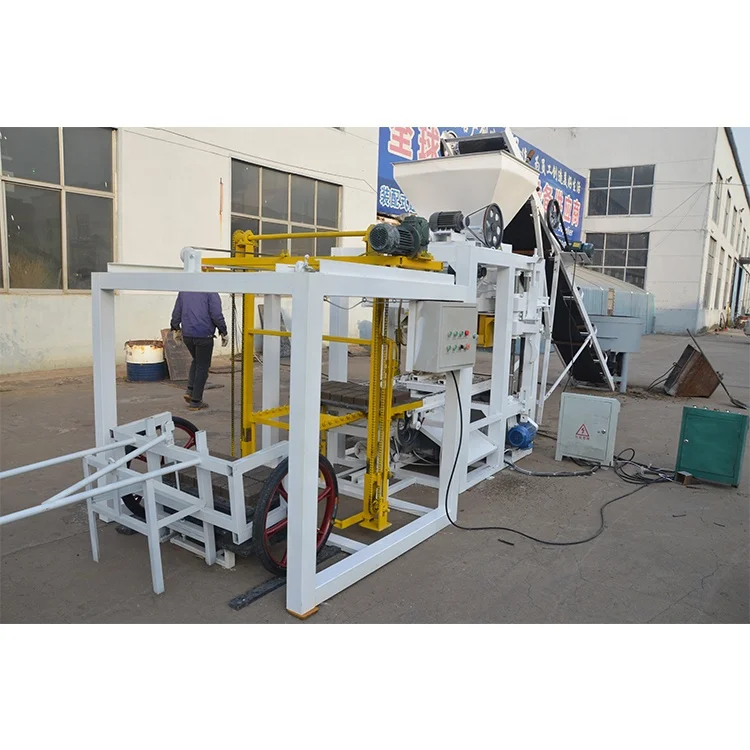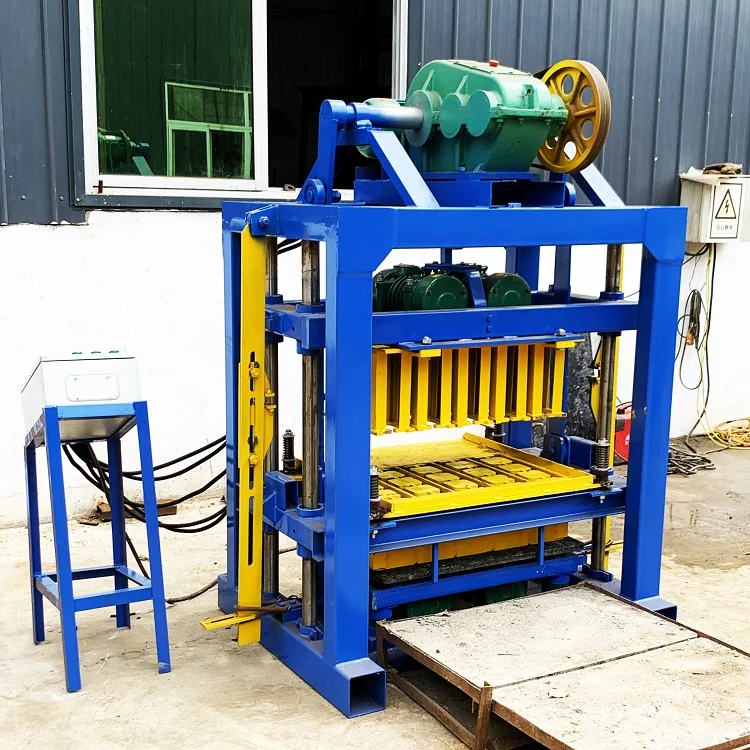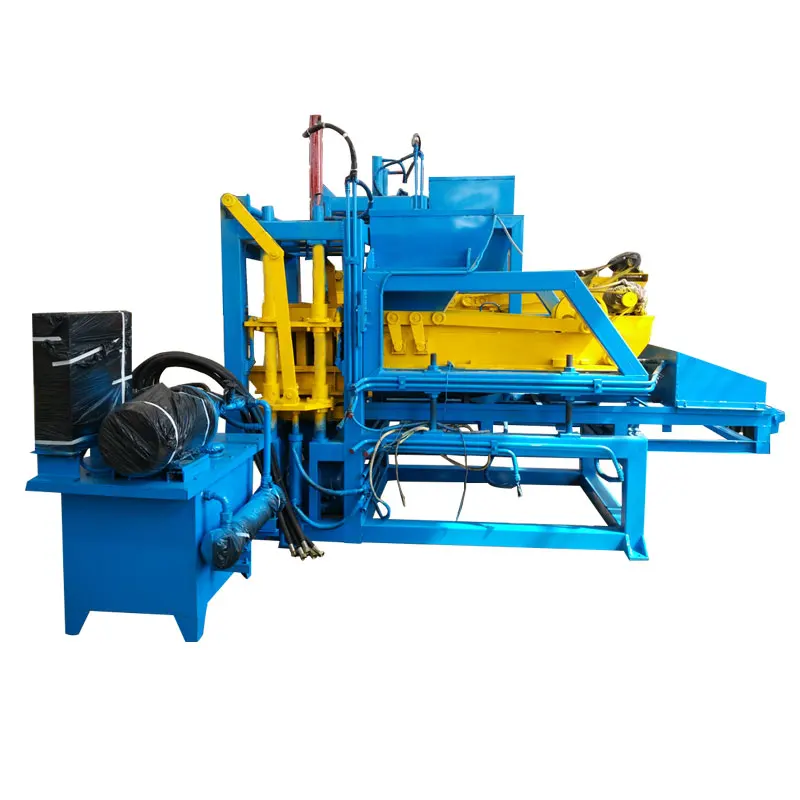
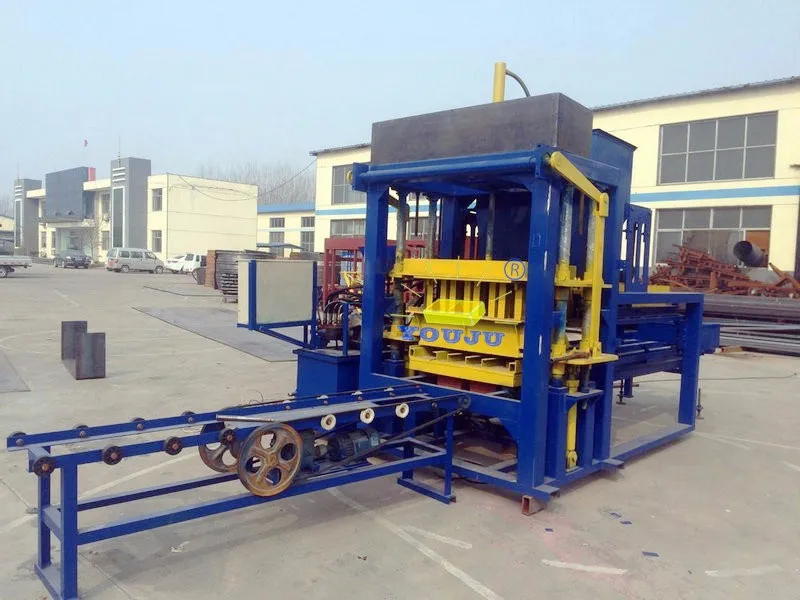
Description
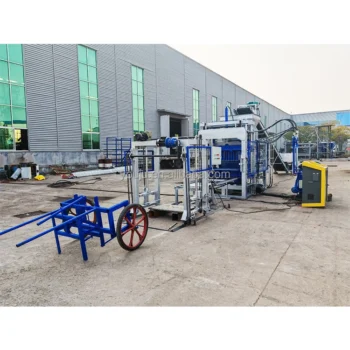
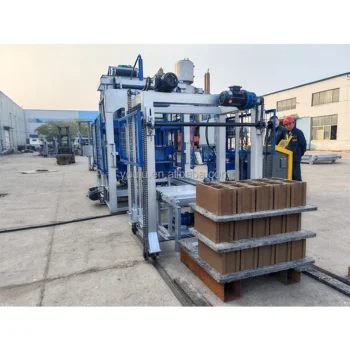
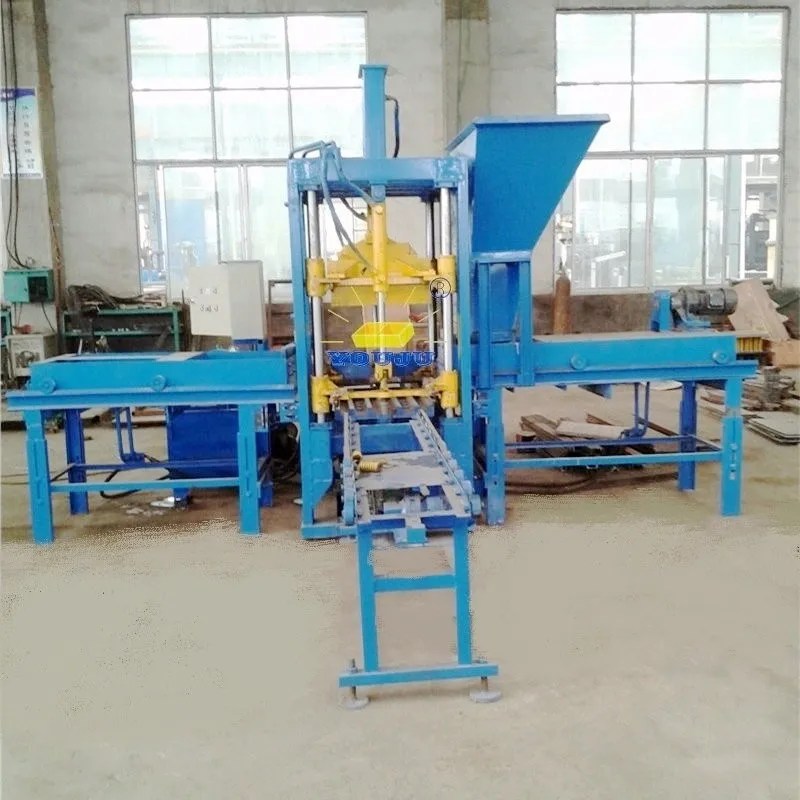
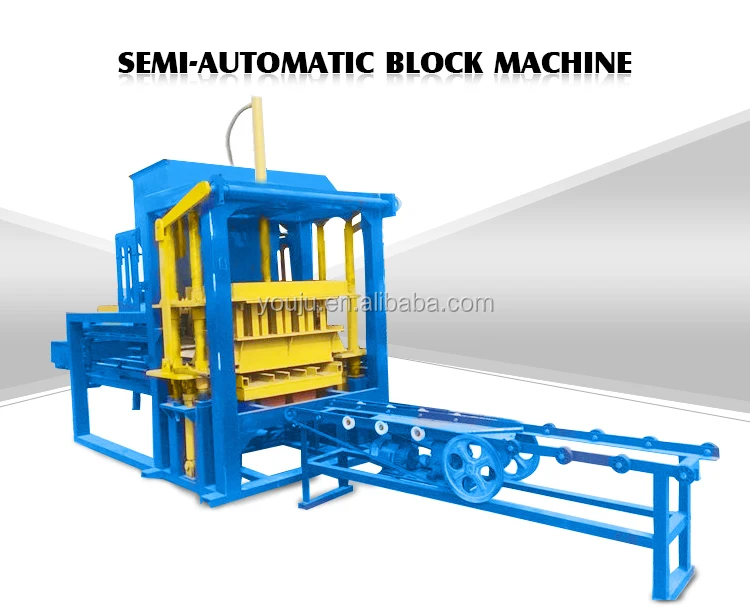
Configuration matched to local aggregate — the QT4-20 block machine specifications are finalized only after reviewing the buyer’s actual mix design, block format, and curing logistics, not pulled from a catalogue default.
Technical Specifications
| Parameter | Value |
|---|---|
| Model | QT4-20 |
| Product Type | Hydraulic Block Making Machine |
| Overall Dimensions (L×W×H) | 7100 × 1600 × 2610 mm |
| Molding Area Consumption | 400 × 800 mm |
| Pallet Size | 1020 × 570 mm |
| Rated Pressure | 16–21 MPa |
| Main Vibration Form | Platform Vibration |
| Vibration Frequency | 4600 r/min |
| Vibration Force | 40 KN |
| Molding Cycle | 15–25 s |
| Demolding Method | Hydraulic |
| Overall Power | 27.5 kW |
| Total Mass | 5 T |
| Factory Area Requirement | 500 m² |
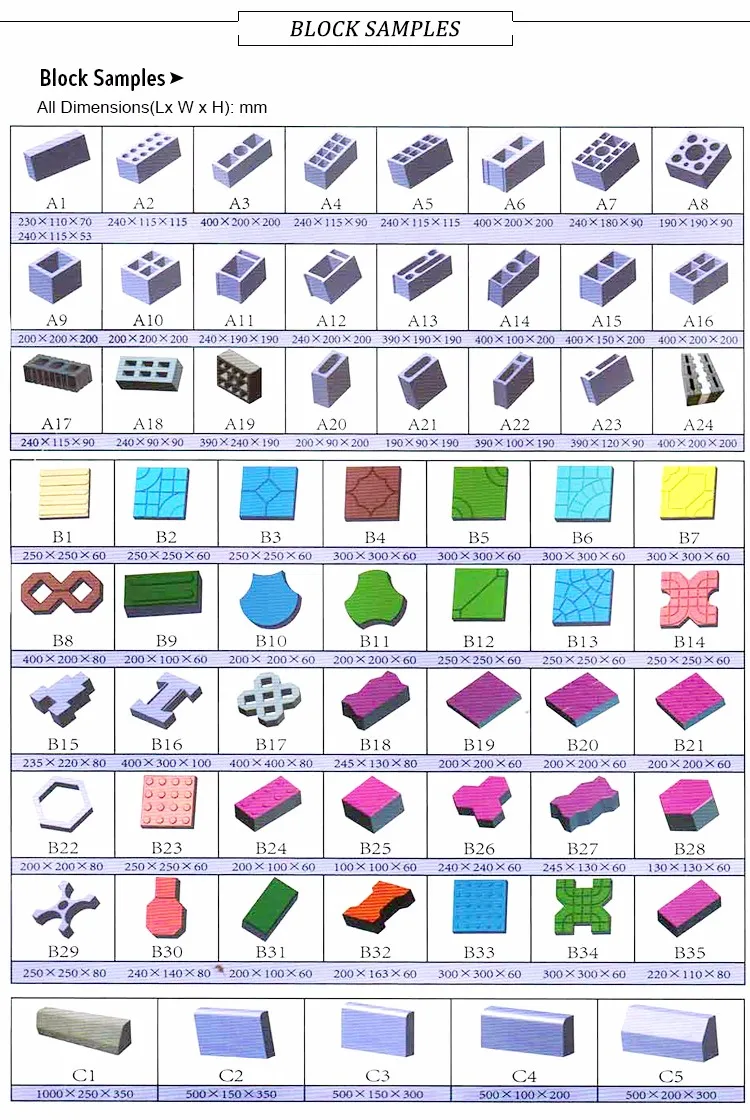
| Output Capacity (Hollow Brick 400×200×200mm) | 7200–9600 pcs/day (4 pcs/mold, 15–20s cycle) |
| Output Capacity (Porous Brick 240×115×90mm) | 20200–26800 pcs/day (14 pcs/mold, 15–20s cycle) |
| Output Capacity (Standard Brick 240×115×53mm) | 47400–53700 pcs/day (28 pcs/mold, 15–17s cycle) |
| Control System | (basis not stated in source — confirm PLC brand and language) |
| Voltage & Frequency | (basis not stated in source — confirm block format / material / thickness) |
Application Suitability
| Application | Material or Output |
|---|---|
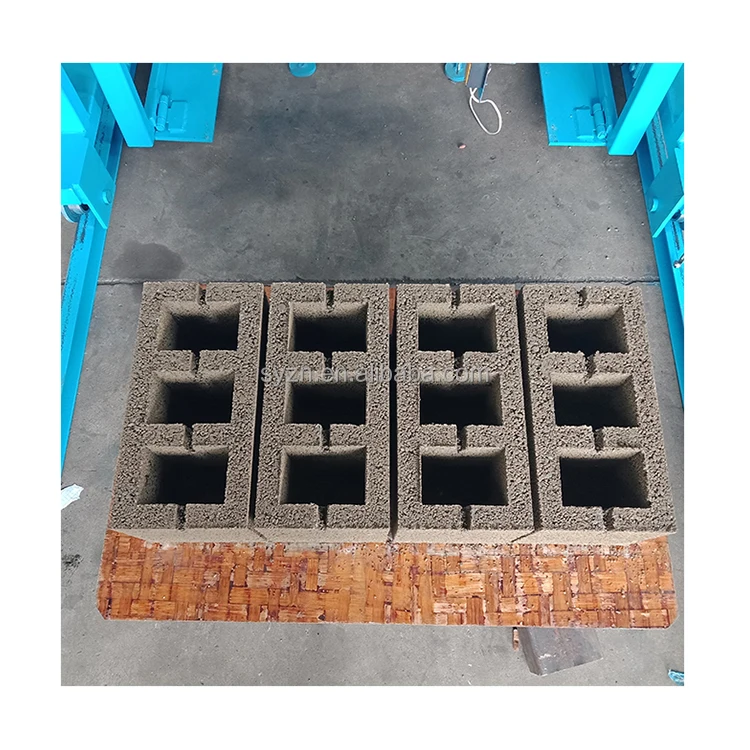
| Hollow Block Production | Concrete blocks 400×200×200mm using crushed stone, sand, and cement |
| Porous Brick Production | Bricks 240×115×90mm using fly ash, dust, and gravel blends |
| Standard Solid Brick | Bricks 240×115×53mm from cement, slag, and fine sand mixes |
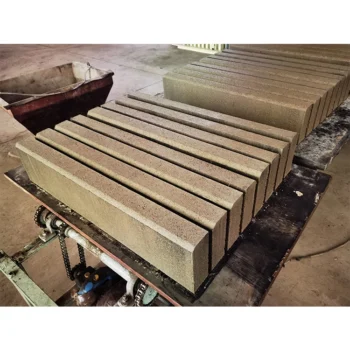
| Paving Block Production | Interlocking pavers using high-strength aggregate and cement |
| Site-Specific Formats | Custom block dimensions based on buyer’s mould drawings and market demand |
What "Output Capacity" Leaves Out When the Block Format Is Not Stated
A daily output number means nothing unless the exact block format, mould cavity count, and cycle time behind it are named.
I once worked on a line where the buyer received a machine quoted at a headline capacity figure, but the quotation never specified which block size that number assumed. When they switched from standard bricks to the 400×200×200mm hollow blocks their market actually demanded, the daily volume dropped to a fraction of what they had planned their curing yard around. [NEED_CITE: mismatch between quoted capacity and actual block format output] The QT4-20 block machine specifications avoid this trap by listing output per format: 7200–9600 hollow blocks per day at four cavities and a 15–20 second cycle, up to 47400–53700 standard bricks at twenty-eight cavities and a 15–17 second cycle. Every figure carries its assumption, so the buyer can plan pallet inventory, curing space, and raw material delivery against reality rather than a best-case scenario that only applies to the smallest brick in the catalogue.
Matching Vibration Force and Hydraulic Pressure to Your Mix
The QT4-20 pairs 40 KN of vibration force with 16–21 MPa of hydraulic pressure through a platform vibration system running at 4600 r/min. These two forces must work together: vibration compacts the aggregate while hydraulic pressure locks the matrix before demolding. If the local aggregate has high clay or silt content, the vibration frequency and pressure range need to be evaluated against the actual mix, not a laboratory-grade sand assumption. A mismatch here is one of the most common reasons blocks crack or fail compressive strength tests on site.
Pallet Size and Its Effect on the Entire Curing Chain
The 1020 × 570 mm pallet size on the QT4-20 is not an isolated dimension — it dictates how many pallets fit on a curing rack, what forklift tine spacing is required, and how much floor area the wet blocks will occupy during the curing period. [NEED_CITE: pallet sizing considerations for block curing logistics] Buyers who already have curing infrastructure in place need to cross-check this pallet dimension against their existing racks before the machine ships. Specifying a pallet that does not match the yard layout forces a costly retrofit or leaves blocks curing on the ground where strength development is inconsistent.
Reading the Specifications Beyond the Headline Numbers
Three parameters on the QT4-20 block machine deserve closer attention during the selection phase. The molding area of 400 × 800 mm defines the maximum footprint a single mould can occupy, which limits the number of cavities for larger formats like hollow blocks. The overall power draw of 27.5 kW determines the transformer and dedicated circuit sizing at the plant, and undersizing this supply leads to voltage drops that shorten motor life. The 15–25 second molding cycle range reflects the spread between simple solid bricks and more complex hollow or interlocking formats where longer vibration dwell is necessary for full compaction. Understanding these three values together — area, power, cycle — gives a clearer picture of what the machine can produce per shift than any single output number alone.
The Hidden Cost of Skipping Format-Specific Capacity Planning
When a machine arrives and the buyer discovers the actual cycle time for their primary block format is at the upper end of the range, the entire production plan unravels. Raw material deliveries arrive too early, pallets run out before the shift ends, and the curing yard overflows while blocks that are still too green get moved to make room. [NEED_CITE: consequences of underestimating cycle time on block plant logistics] These problems do not show up in a catalogue specification table, but they consume real time and money on the production floor. Confirming the cycle time for the specific block format during the proposal stage prevents this cascade.
Why Sourcing the QT4-20 Through a Single-System Approach Matters
Block machinery is the only product line we configure, so the QT4-20 is never quoted as a standalone press disconnected from its mould, pallet, and handling requirements. The mould is designed around the buyer’s block format and local aggregate characteristics, not selected from a standard shelf. [NEED_CITE: importance of matched mould and machine specifications] Pallet material and dimensions are confirmed against the buyer’s existing curing racks and forklift equipment before production begins. The automation level can be set to match current labor availability and upgraded later as the plant scales. Voltage, frequency, and PLC display language are confirmed in writing before the machine enters assembly, eliminating the commissioning delays that occur when these details surface only after the container arrives.
Documentation & Verification
- Line layout drawing with QT4-20 placement and pallet flow direction
- Capacity calculation sheet stating block format and cycle time per figure
- Mould drawing and format list showing cavity count per block type
- Pallet specification matched to buyer’s curing rack dimensions
- Voltage, frequency, and PLC language confirmation before assembly
- Factory test record on buyer’s specified block format prior to dispatch
Installation, Commissioning & Support
- Foundation plan based on 7100 × 1600 mm footprint and 5 T operating mass
- 27.5 kW power supply circuit with dedicated breaker sizing guidance
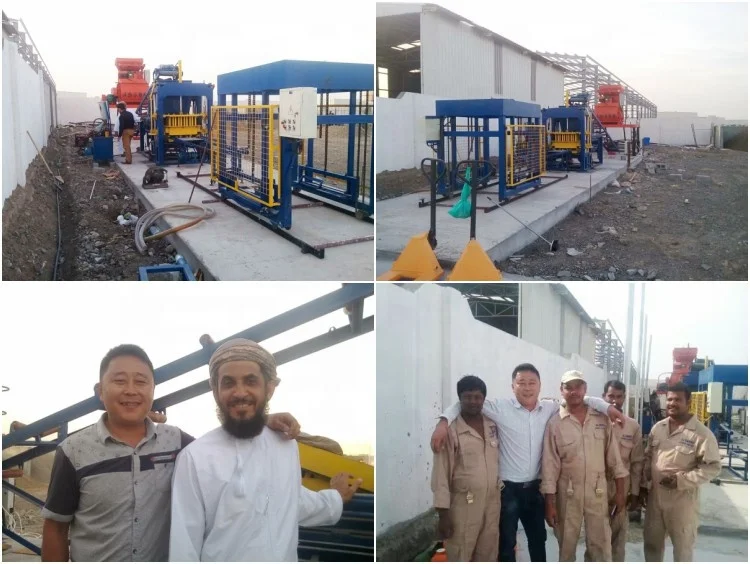
- Machine assembled and leveled on site with vibration isolation checked
- First-run parameter tuning for buyer’s specific mix and block format
- Operator training on mould change procedure and cycle time adjustment
- Wear parts list covering hydraulic seals and vibration components
Preparing Your Inquiry with the Right Technical Details
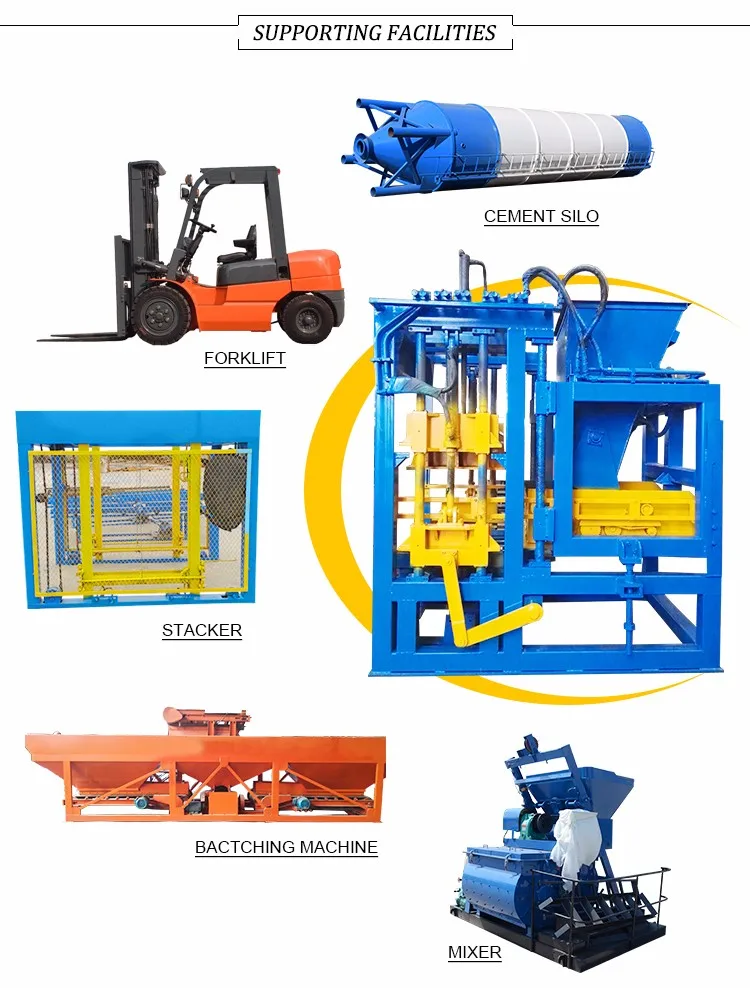
To move from general interest to a firm QT4-20 block machine specification, the most useful information a buyer can provide includes the primary block format and target daily output, the locally available aggregate types and their gradation, and the voltage and frequency standard at the installation site. Details about existing curing racks, forklift capacity, and any upstream mixing or batching equipment already in place allow the proposal to cover the full line rather than just the press. Stating the PLC display language needed for local operators at this stage removes a frequent source of delay.
Frequently Asked Questions
Q: How is daily output calculated for each block format on the QT4-20?
A: Output is calculated by multiplying the number of cavities per mould by the number of cycles achievable in a standard shift, using the cycle time range specific to that format. For example, 400×200×200mm hollow blocks run at four cavities per mould with a 15–20 second cycle. Each capacity figure in the QT4-20 block machine specifications states the format, cavity count, and cycle assumption behind it.
Q: How does the 1020×570mm pallet size affect my curing area planning?
A: The pallet dimension determines rack spacing, forklift handling requirements, and total floor area needed for wet block curing. Buyers should measure their existing curing racks and forklift tine spacing against this size before the machine enters production. A mismatch forces either a rack retrofit or ground curing, which compromises block strength development.
Q: Can vibration force and pressure be adjusted to my local aggregate?
A: The QT4-20 delivers 40 KN vibration force at 4600 r/min paired with 16–21 MPa hydraulic pressure. These settings are evaluated against the buyer’s specific aggregate type, gradation, and cement ratio during configuration. Aggregates with higher fines or clay content may require different vibration dwell or pressure staging to maintain consistent block density.
Q: What mould change time should I plan for between block formats?
A: Mould change time depends on the format complexity and the changeover method specified during configuration. For plants running multiple formats per shift, this time must be factored into daily capacity planning. Requesting the mould change procedure during the proposal stage allows realistic shift scheduling rather than assuming instantaneous format switching.