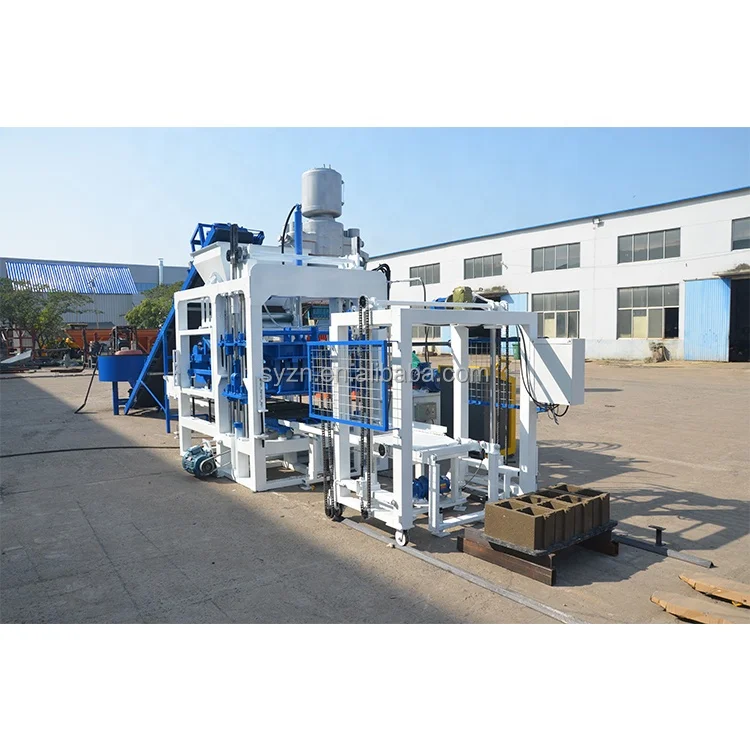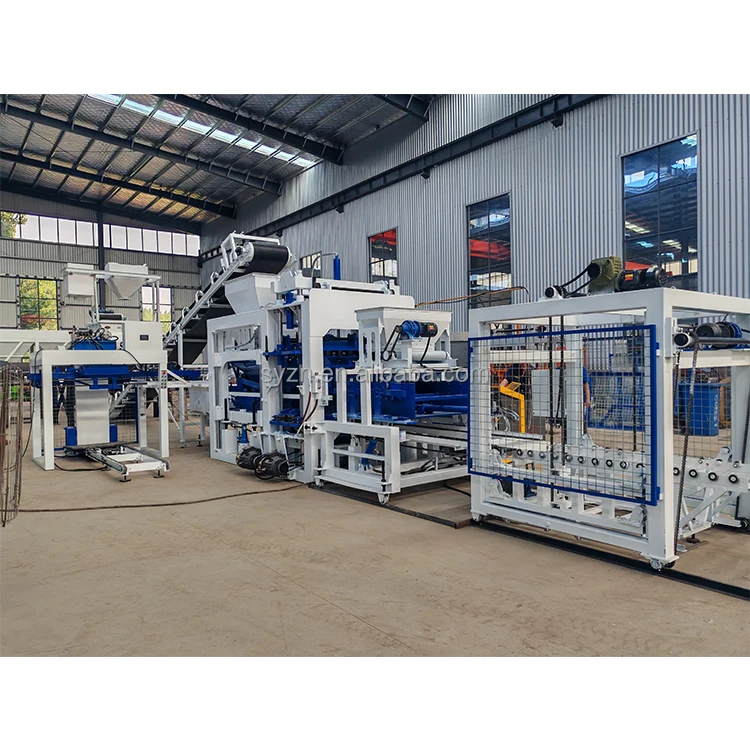
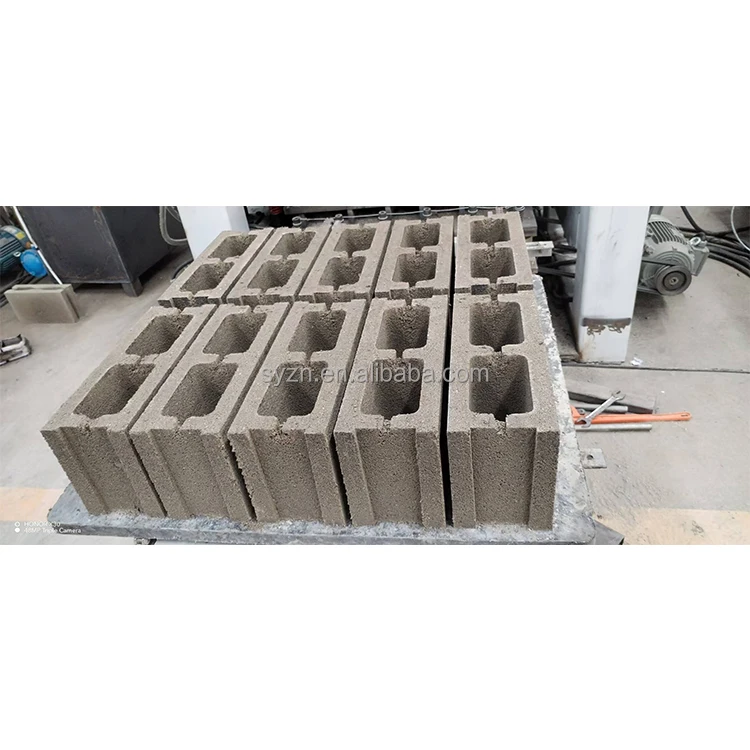
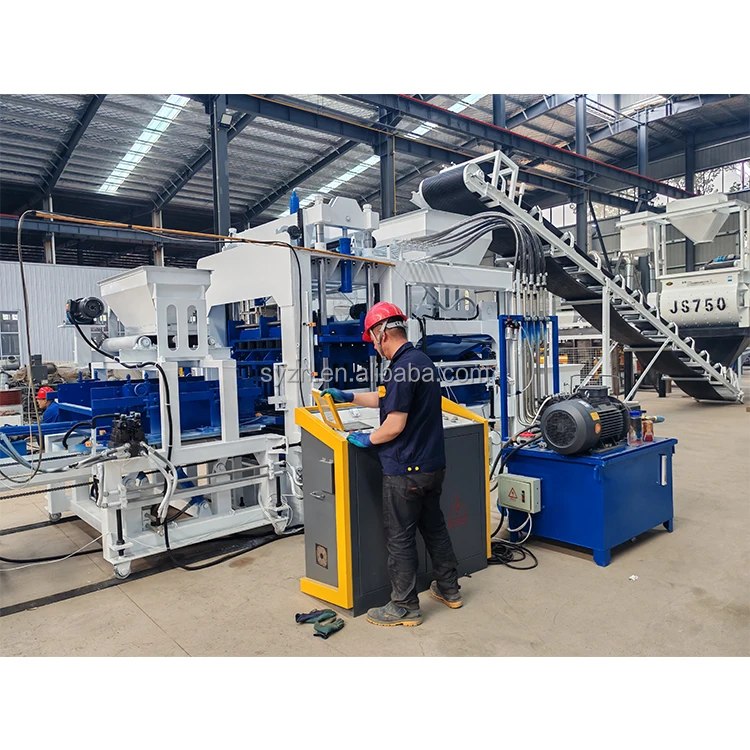
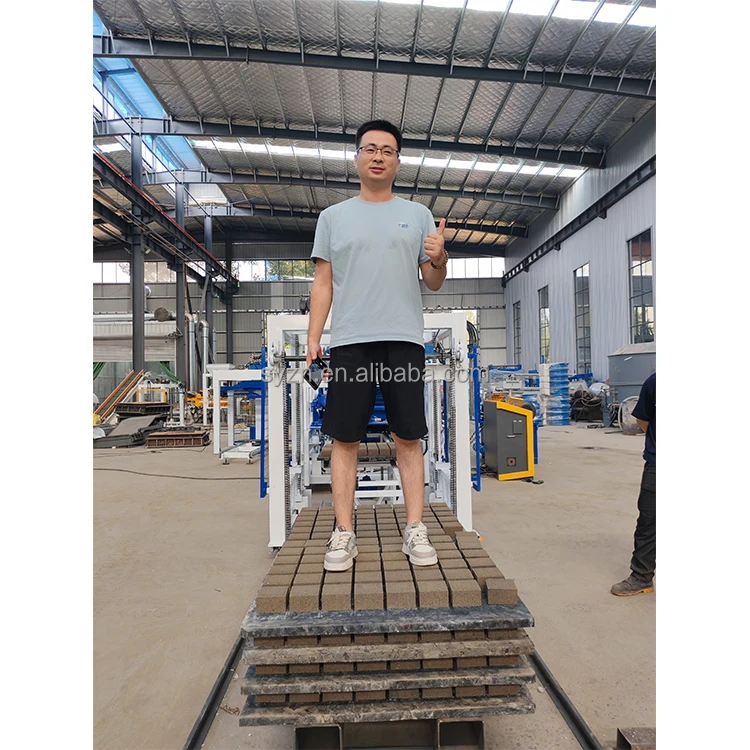
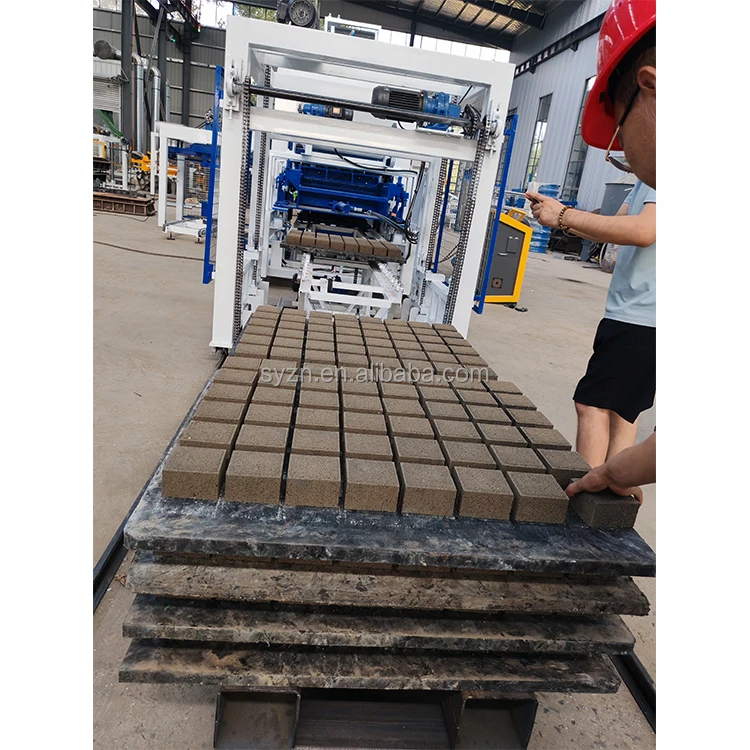

Description
Matched Mould and Cycle Time — every quoted capacity figure for the QT8-15 block machine is tied to a named block format and mix, so the daily output you plan on is the one you actually get.
Technical Specifications
| Parameter | Value |
|---|---|
| Model | QT8-15 |
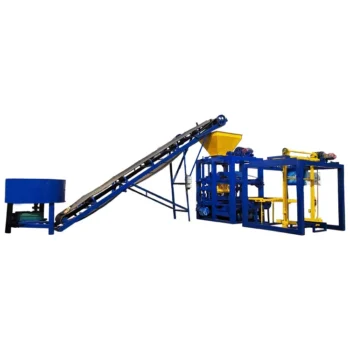
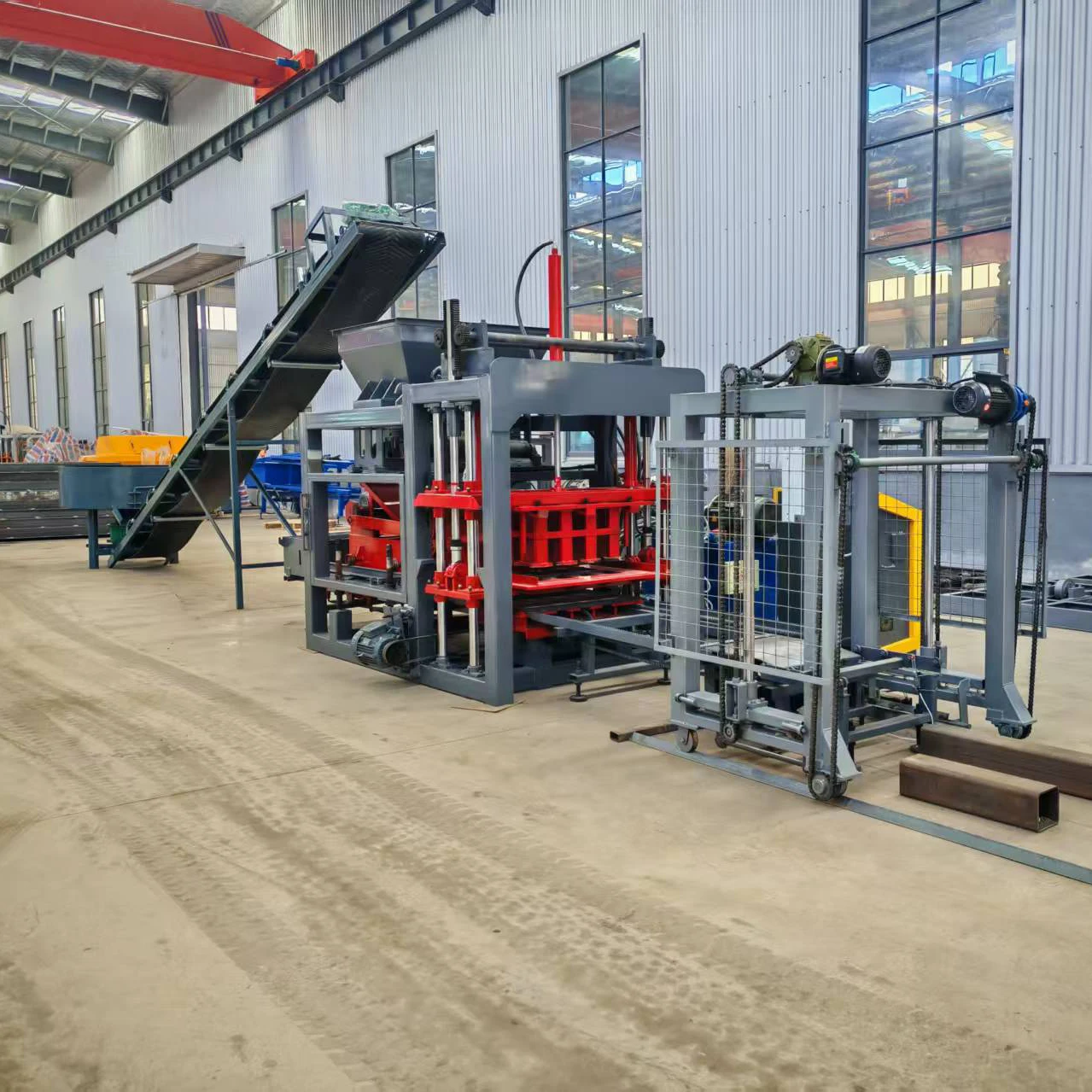
| Product Type | Hydraulic Concrete Block Making Machine |
| Overall Dimensions (L×W×H) | 8300×1860×3000 mm |
| Rated Hydraulic Pressure | 21 MPa |
| Main Vibration Form | Platform Vibration |
| Vibration Frequency | 2800–4500 r/min |
| Vibration Force | 45 kN |
| Pallet Size | 950×900 mm |
| Molding Cycle | 15–20 s (basis to be confirmed by block format) |
| Overall Power | 55.5 kW |
| Total Mass | 8 T |
| Demolding Method | Hydraulic |
| Factory Area Required | 300 m² |
| Raw Materials | Crushed stone, sand, cement, fly ash, gravel, slag |
| Applied Products | Hollow blocks, solid blocks, pavers, interlocking blocks, kerbstone |
Application Suitability
| Application | Material or Output |
|---|---|
| Hollow block production for load-bearing walls | Crushed stone, sand, cement with fly ash addition |
| Solid block production for foundation courses | Dense aggregate mix with cement binder |
| Interlocking paver production for driveways | Fine sand and cement with pigment for colored faces |
| Kerbstone production for road edging | Coarse gravel and cement at high hydraulic pressure |
| Colored paving block production | Two-layer mix design with face color and base aggregate |
Why a Single "Pieces per Hour" Figure Misleads Block Buyers
The QT8-15 block machine specifications mean very little until they are tied to a specific block format, wall thickness, and local aggregate.
Catalogue sheets for hydraulic concrete block making machines often quote a single output number — cycles per hour or pieces per shift — without stating which block shape that number assumes. On my first commissioning trips through East Africa, I watched operators run hollow blocks on a machine configured for solid pavers, and the cycle time stretched well past the quoted range because the vibration frequency and hydraulic pressure were never re-matched to the lighter mix. The plant owner had budgeted for a daily run that simply never materialized [NEED_CITE: block format assumptions behind quoted output figures]. Real capacity only becomes honest when every format on the mould list carries its own cycle time and its own realistic shift output.
Cycle Time Is Not a Constant — It Follows the Block Format
A 15–20 second molding cycle applies to standard hollow blocks at common wall thickness on the QT8-15 block machine specifications. The moment you switch to a dense interlocking paver that requires extended vibration to achieve full compaction, or a tall kerbstone that needs a longer hydraulic press stroke, that cycle stretches. The proposal you receive must state the assumed format next to every output figure so that your business plan rests on numbers you can actually reproduce on the shop floor.
Mould Selection Defines the Machine You Actually Run
The QT8-15 platform accepts moulds for hollow blocks, solid blocks, paving blocks, interlocking bricks, and kerbstones, and the pallet size of 950×900 mm sets the maximum mould envelope. A technical buyer evaluating the QT8-15 block machine specifications for a market that sells primarily 6-inch hollow blocks will configure the line very differently from a buyer adding colored pavers to an existing product range [NEED_CITE: mould envelope limits relative to pallet dimensions]. Custom mould design from buyer drawings is available, which matters when your local market uses a block profile that does not appear in any standard catalogue.
Reading the Numbers That Matter Most
The 21 MPa rated hydraulic pressure and 45 kN vibration force together determine the achievable block density and, ultimately, the compressive strength the finished product will reach. Platform vibration at 2800–4500 r/min allows frequency tuning so that a lightweight fly ash mix and a dense gravel mix can both be compacted effectively without changing hardware. The 8 T total mass of the QT8-15 block machine specifications reflects the structural steel needed to absorb repeated vibration cycles without frame fatigue — a factor that becomes visible only after the first year of continuous production. Overall power of 55.5 kW covers the hydraulic pump, vibration motors, and material feed system running together, which should be checked against the available transformer capacity at the intended site before the order is placed.
What Happens When Pallet Size Is Chosen Without Checking the Curing Yard
A pallet dimension of 950×900 mm sounds like a minor line item until the cured blocks arrive at the yard and the forklift tines do not span the pallet width, or the curing racks built for the previous machine leave a gap that wastes a third of the available space. I have seen plants where the owner had to order an entirely new set of steel curing racks because the new machine’s pallets were fifty millimeters wider than the old ones — a cost that never appeared in the quotation [NEED_CITE: pallet and curing rack compatibility in block plant layout]. The pallet size, material, and spacing must be confirmed against the buyer’s existing infrastructure before the machine enters production.
Why the Mould and Press Configuration Is Specified Together Here
Every QT8-15 configuration starts from the block format the buyer actually sells, not from a catalogue default. The vibration frequency, hydraulic pressure, and molding cycle are matched to the buyer’s local aggregate and target block strength so that the machine runs consistently from the first shift. Mould drawings are reviewed and approved before fabrication, including custom profiles from buyer-supplied sketches. Pallet dimensions are confirmed against the buyer’s curing area and handling equipment. The result is a block line where the press, the mould, the pallet, and the handling stations are specified as one coordinated system.
Documentation & Verification
- Line layout drawing showing capacity calculated per named block format
- Mould drawing and format list with cycle times stated for each shape
- Pallet specification sheet matched to buyer curing rack dimensions
- Voltage, frequency, and PLC language confirmed before production starts
- Factory test record run on buyer’s specified block format before dispatch
- Hydraulic and electrical schematic for local maintenance teams
Installation, Commissioning & Support
- Foundation plan sized for 8300×1860 mm footprint and 8 T operating mass
- Power feed confirmed for 55.5 kW total draw at site voltage and frequency
- Vibration frequency tuned on-site to buyer’s actual mix design and aggregate
- Mould change procedure demonstrated with buyer’s operator team on all formats
- Wear parts list covering hydraulic seals and vibration platform bearings
- Follow-up technical support available after the first production month
Before You Request a Quote, Get These Details Ready
To size the QT8-15 block machine specifications to your plant, share the block format or formats your market demands, the target daily output per format, and the local aggregate you plan to use. Include the voltage and frequency at your site, the PLC display language your operators read, and the curing area dimensions you already have in place. If you have existing forklifts or racks, send their specifications so the pallet size can be confirmed before the machine is built.
Frequently Asked Questions
Q: How is output capacity calculated per block format on the QT8-15?
A: Each block format — hollow, solid, paver, kerbstone — has its own molding cycle and demolding sequence. The capacity calculation in the proposal names the specific format, wall thickness, and assumed shift length so the daily output figure matches what your line will actually produce rather than a generic catalogue number.
Q: How are vibration force and hydraulic pressure matched to my aggregate?
A: The platform vibration frequency adjusts across 2800–4500 r/min and the hydraulic system delivers up to 21 MPa. Before final configuration, the buyer’s local aggregate sample and mix proportions are reviewed so that vibration amplitude and press pressure are set to achieve the required block strength without over-compacting or under-filling the mould cavity.
Q: How long does a mould change actually take on site?
A: Mould change time depends on the format being removed and the one being installed, plus the operator’s familiarity with the clamping system. The proposal includes a documented change procedure, and during commissioning the operator team practices the swap until the time is predictable enough to plan into a normal production shift.
Q: Can custom moulds be designed from my own block drawings?
A: Yes. Custom moulds are designed from buyer-supplied drawings or dimensional sketches, reviewed against the 950×900 mm pallet envelope and the QT8-15 vibration characteristics, and approved by the buyer before fabrication. This covers block profiles that are specific to regional building codes or local market preferences.
Q: What do I need to check about pallet compatibility before ordering?
A: Confirm that the 950×900 mm pallet fits your existing curing racks and that your forklift tines span the pallet width safely. If racks or handling equipment need adjustment, those changes should be identified during the layout stage rather than after the first production run arrives at the yard.