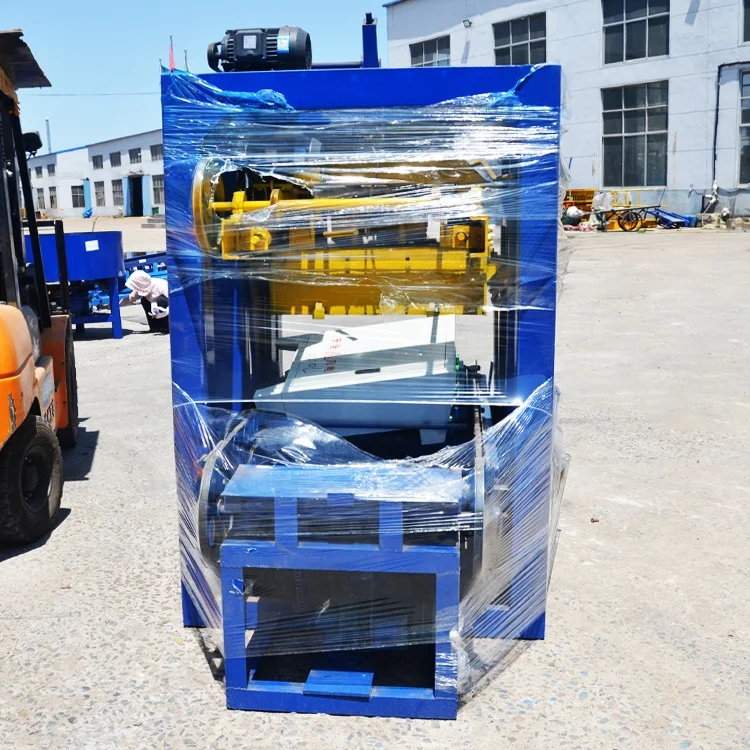
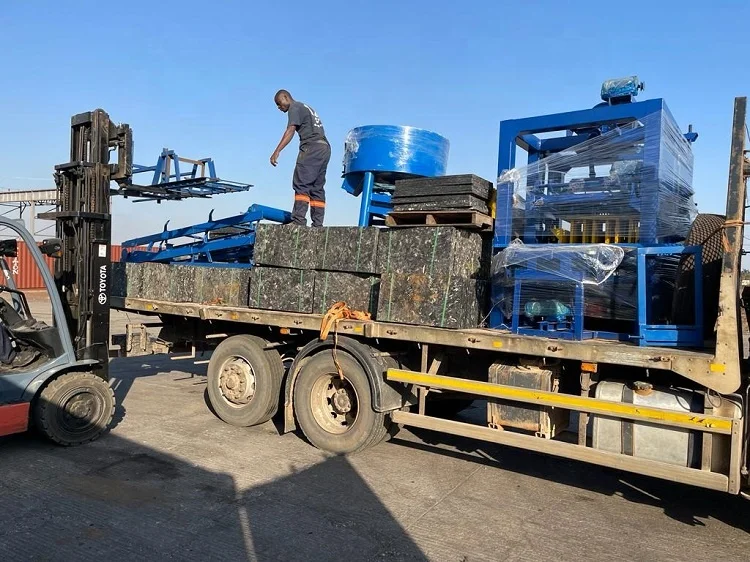


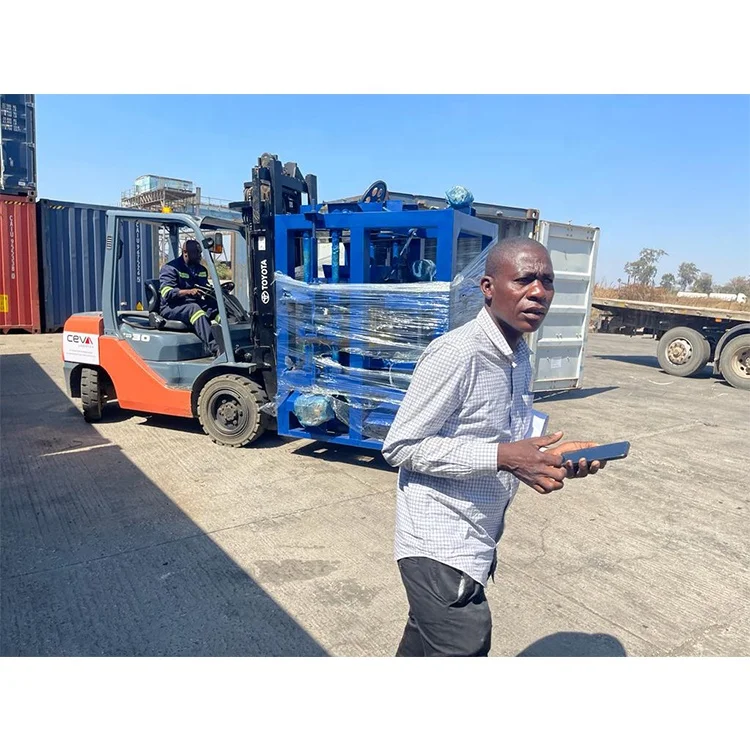
Description
Honest Capacity by Format — every output figure for the QTJ4-26 is stated against a named block size, mould, and 26-second cycle, not a catalogue maximum that disappears on the job site.
Technical Specifications
| Parameter | Value |
|---|---|
| Model | QTJ4-26 |
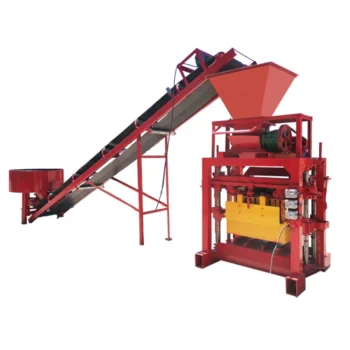
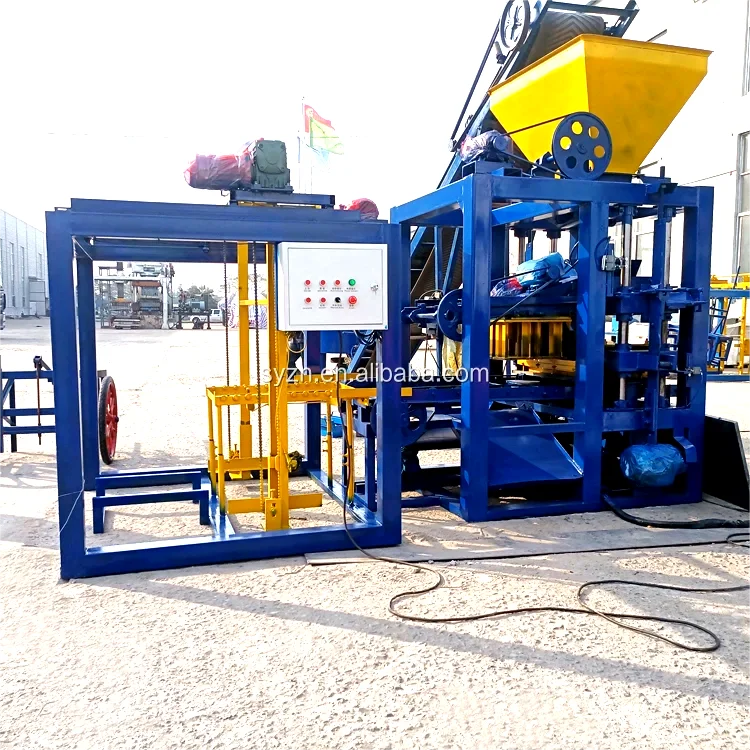
| Product Type | Semi-Automatic Concrete Block Making Machine |
| Overall Dimensions (L×W×H) | 2060×1730×2580 mm |
| Molding Cycle | 26 s |
| Vibration Frequency | 4200 r/min |
| Exciting Power (Vibration Force) | 35.5 kN |
| Rated Power | 11.95 kW |
| Mixer Model | JQ350 |
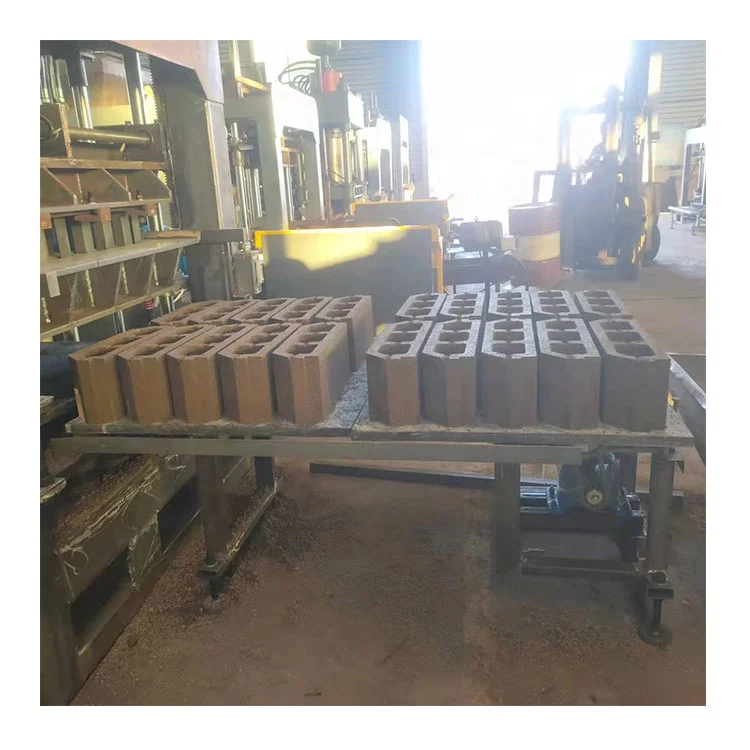
| Pallet Size | 850×450×20 mm |
| Net Weight | 1800 kg |
| Guide System | Four guide pillars |
| Vibration Type | Dual vibrating motor under mould (direct and vertical vibration) |
| Automation Level | Semi-automatic |
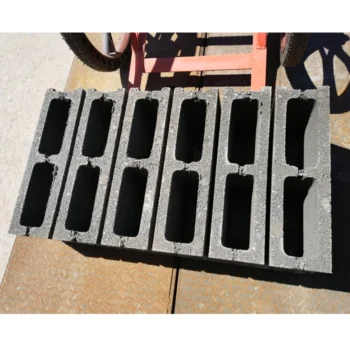
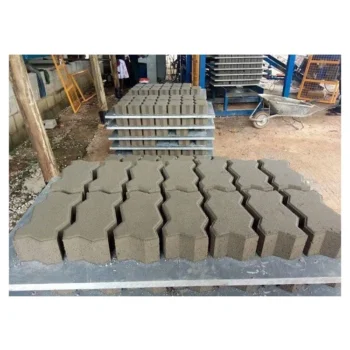
| Applied Products | Hollow block (8 inch, 6 inch), solid brick |
| Raw Materials | Crushed stones, sand, cement, dust, fly ash |
| Output — 390×190×190 mm Hollow Block | 4 pcs/mould, 480 pcs/hr, 3800 pcs/8hr |
| Output — 400×150×200 mm Hollow Block | 5 pcs/mould, 600 pcs/hr, 4800 pcs/8hr |
| Output — 240×115×53 mm Solid Brick | 18 pcs/mould, 2100 pcs/hr, 17000 pcs/8hr |
| Hydraulic Pressure | Not stated (basis to be confirmed) |
| Control System | Not stated (basis to be confirmed) |
| Voltage & Frequency | Not stated (basis to be confirmed) |
Application Suitability
| Application | Material or Output |
|---|---|
| Small-scale block plant start-up | Hollow blocks and solid bricks from crushed stone, sand, and cement |
| On-site contractor block production | 8-inch and 6-inch hollow blocks using locally sourced aggregate and fly ash |
| Existing producer adding solid brick format | Standard 240×115×53 mm solid brick alongside hollow block on the same pallet |
| First-time entrepreneur block venture | Semi-automatic production with JQ350 mixer for low initial automation investment |
What "480 Pieces per Hour" Actually Means on the QTJ4-26
The QTJ4-26 block machine capacity by format is 480 pieces per hour only when running the 390×190×190 mm hollow block mould at a sustained 26-second cycle.
I once watched a site manager in Riyadh stare at a pallet of collapsed hollow blocks and ask why the brochure promised a number his crew could never hit. The answer was simple: the quoted capacity assumed a clean, low-clay sand and a specific moisture window, neither of which matched what his local quarry delivered. Semi-automatic block machine specifications mean nothing if they are detached from the actual block format and raw material on your site [NEED_CITE: effect of aggregate clay content on block green strength].
Matching Mould to the Block Your Market Actually Buys
The QTJ4-26 ships with mould options covering three common formats: 390×190×190 mm hollow, 400×150×200 mm hollow, and 240×115×53 mm solid brick. Each format has its own cycle count and hourly output tied to the 26-second molding cycle, so a buyer comparing semi-automatic block machine specifications across suppliers must match the figure to the exact block the local market demands rather than a single headline number.
Pallet Size, Curing Area, and the Forklift You Already Own
The 850×450×20 mm pallet is the interface between the press and everything downstream. If your curing racks were built for a different pallet dimension, every loaded board becomes a manual re-stacking problem. Confirm the pallet spec against your existing yard layout and forklift fork width before the machine enters production [NEED_CITE: pallet handling standards in small block plants].
How Vibration Force and Mix Design Meet at the Mould
The 35.5 kN exciting power delivered by dual vertical vibration motors under the mould works with the upper press to compact the concrete mix into a dense, uniform block. That force was calibrated for a particular range of aggregate gradation and moisture content; when the local sand carries higher silt or the crushed stone is angular rather than rounded, the vibration must be evaluated against trial batches to avoid edge collapse or low compressive strength [NEED_CITE: vibration force and aggregate shape interaction in concrete block forming].
The Hidden Cost of Skipping the Pallet and Voltage Check
Ordering a block machine without confirming the pallet material and electrical supply leads to two predictable delays: cured blocks crack on pallets too thin for the yard forklift, and commissioning stalls while a local electrician rewires the control panel for the wrong frequency. Both issues surface only after the machine has crossed an ocean, turning a straightforward installation into a multi-week troubleshooting exercise [NEED_CITE: voltage and frequency standards by export market].
Why Buyers Specify This Machine Through Our Process
- Block machinery is our single product focus, so the QTJ4-26 is quoted as one matched system — press, mould, JQ350 mixer, and pallet — not assembled from separate vendor catalogues.
- Configuration starts with your actual mix design and local aggregate sample, so vibration force and moisture targets are set before the machine is built.
- Mould design covers the formats your market sells, with custom drawings available when standard options do not match a local specification.
- Automation level is selectable; a buyer can start with the semi-automatic QTJ4-26 and plan a future upgrade path without replacing the entire press.
- Every quotation includes a capacity calculation that names the block format, cycle time, and pallet count behind each output figure.
Documentation & Verification
- Line layout drawing showing QTJ4-26 footprint with JQ350 mixer and pallet feed positions
- Capacity calculation sheet stating output per named hollow block and solid brick format
- Mould drawing and format list for each ordered cavity configuration
- Pallet specification covering 850×450×20 mm dimensions and material grade
- Factory test record with actual molding cycles run on your target block format
Installation, Commissioning & Support
- Foundation pad leveled to the 2060×1730 mm footprint, rated for the 1800 kg static load
- Dedicated circuit sized for the 11.95 kW rated power at confirmed voltage and frequency
- Four-pillar guide alignment verified on site after transport vibration
- Mould change procedure walked through with operators during first production run
- JQ350 mixer blade and vibration motor wear parts list supplied at handover
Before You Request a Quote, Get These Details Ready
Tell us the exact hollow block or solid brick dimensions your local market specifies, the daily output you need for that format, and the aggregate sources within hauling distance of your site. Include your site voltage, frequency, and the language your operators read on a control screen so the QTJ4-26 arrives ready to run instead of waiting for an electrical rework.
Frequently Asked Questions
Q: How is the QTJ4-26 capacity verified per block format, and what if my market needs a non-standard size?
A: Each capacity figure is tied to a specific mould cavity count and the 26-second cycle. If your market demands a format outside the standard 390×190×190, 400×150×200, or 240×115×53 mm range, a custom mould is designed to your drawing, and a revised cycle time and hourly output are stated before production begins.
Q: What mix design does the 35.5 kN vibration force assume, and how do I confirm it fits my aggregate?
A: The vibration force targets a mix of crushed stone, sand, cement, and optional fly ash within typical moisture ranges. We request a sample of your local sand and aggregate to run trial batches, adjusting moisture and vibration duration until green strength and surface finish meet your block standard.
Q: How long does a mould change take on the QTJ4-26, and is a quick-change system available?
A: Mould change time depends on the guide pillar bolt pattern and whether quick-release clamps are specified. We confirm the exact changeover duration during the factory test and include the procedure in the operator manual so your crew can plan format switches within a shift.
Q: The pallet is 850×450×20 mm — what material options exist, and how does this affect my curing yard?
A: Pallets can be supplied in bamboo, hardwood, or steel depending on your curing method and forklift capacity. The 850×450 mm footprint must match your curing rack spacing; we provide a yard layout drawing so pallet flow from press to rack to truck is planned before installation.