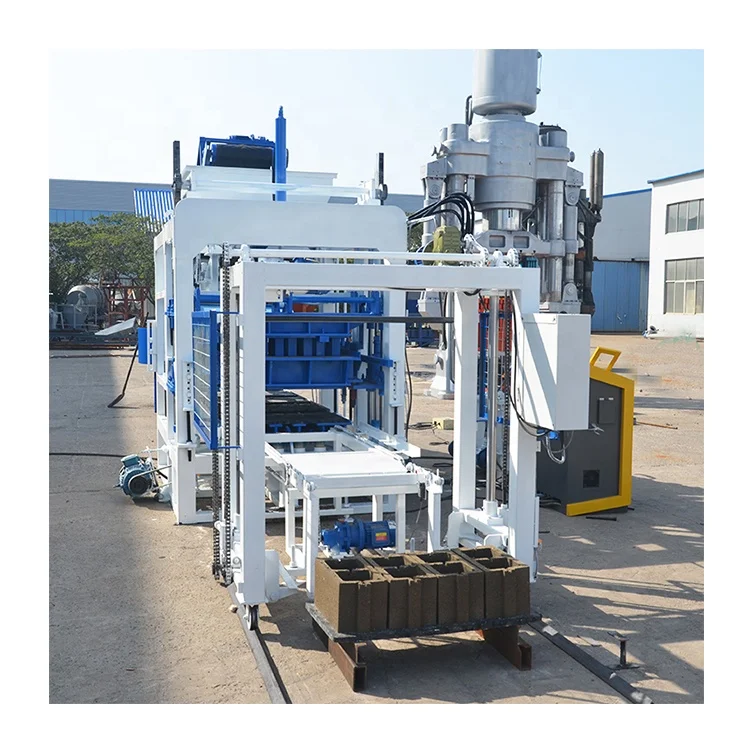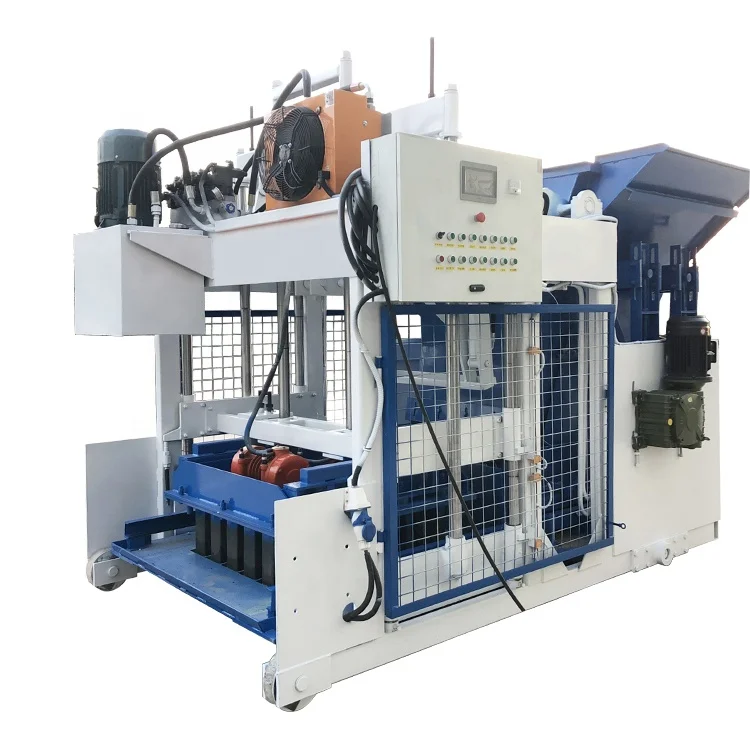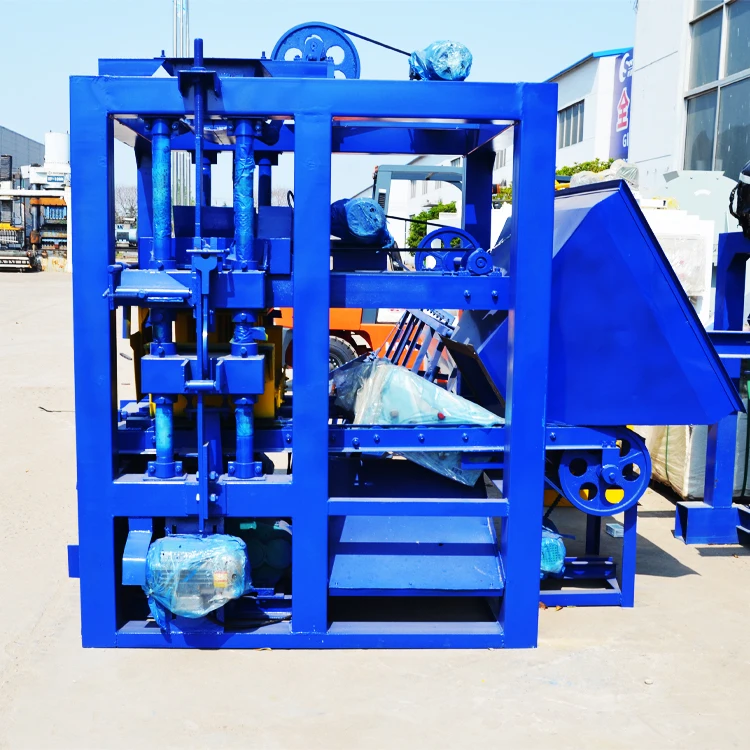

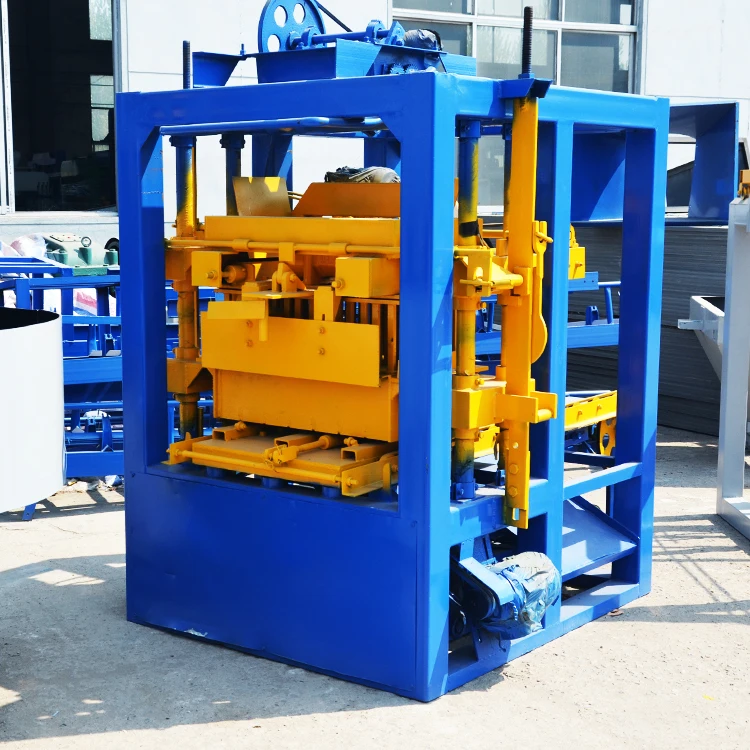

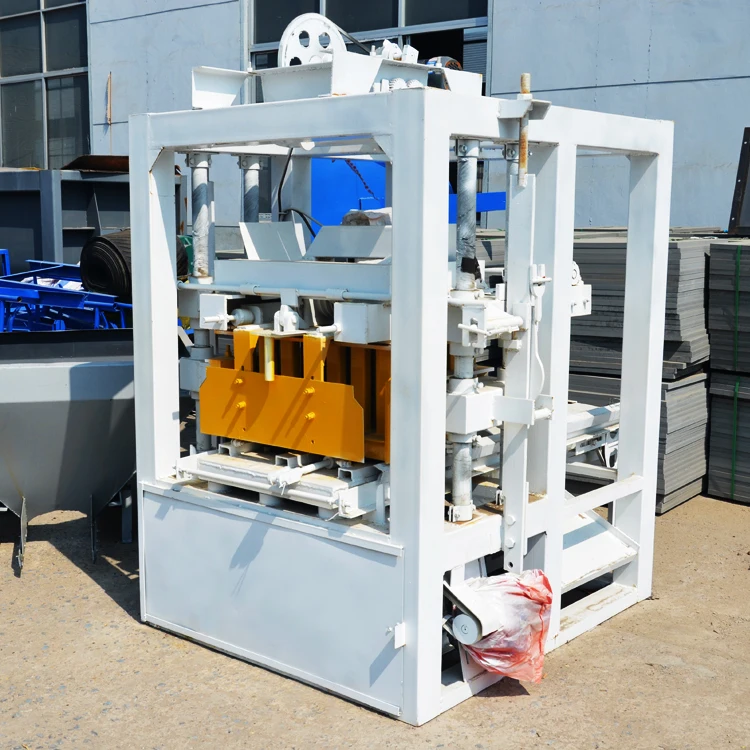

Description
Honest capacity by format — Every output figure tied to a specific block dimension, mix design, and pallet size before the quotation is issued.
Technical Specifications
| Parameter | Value |
|---|---|
| Model | QTJ4-26 |
| Product Type | Concrete Block Making Machine |
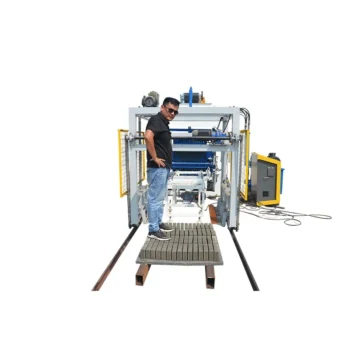
| Overall Dimensions (L×W×H) | 2060×1730×2580 mm |
| Moulding Cycle | 26 s (basis not stated in source — confirm block format / material / thickness) |
| Vibration Frequency | 4200 r/min |
| Exciting Power (Vibration Force) | 35.5 kN |
| Rated Power | 14.25 kW |
| Mixer Model | JQ350 |
| Pallet Size | 850×450×20 mm |
| Net Weight | 1800 kg |
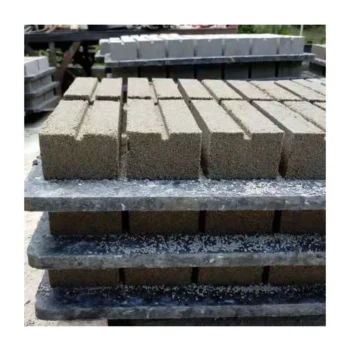
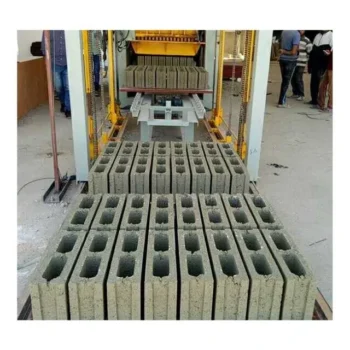
| Applied Products | Concrete blocks, hollow block (8 inch, 6 inch), solid brick |
| Raw Materials | Crushed stones, sand, cement, dust, fly ash |
| Output Capacity (Hollow Block) | 480 pcs/h for 390×190×190 mm (4 pcs/mould); 600 pcs/h for 400×150×200 mm (5 pcs/mould) |
| Output Capacity (Solid Brick) | 2100 pcs/h for 240×115×53 mm (18 pcs/mould) |
| Automation Level | Semi-automatic (four guide pillars, automatic mould movement) |
| Control System | Not stated in source (confirm PLC / relay / manual) |
| Voltage & Frequency | Not stated in source (confirm before commissioning) |
| Stacking Method | Manual |
Application Suitability
| Application | Material or Output |
|---|---|
| Small to medium hollow block plant | 8 inch and 6 inch hollow blocks from crushed stone, sand, and cement |
| On-site block production for contractors | Solid bricks and hollow blocks using locally available aggregate and fly ash |
| First block plant for entrepreneurs | Semi-automatic hollow block and solid brick production with lower initial investment |
| Format addition for existing manufacturers | Custom mould formats matching local market dimensions on the 850×450 mm pallet |
Why "480 Pieces per Hour" Means Nothing Without the Block Format
The QTJ4-26 block machine specifications only become meaningful when tied to the exact block dimension your market demands.
I have watched contractors in West Africa take delivery of a machine quoted at a single headline output number, only to discover on the first production day that the figure assumed a small solid brick while their entire order book was for 8 inch hollow blocks. The real shift output fell to less than half the projected volume, and the manual stacking crew stood idle waiting for the press to complete each longer cycle [NEED_CITE: common causes of block plant output shortfall in emerging markets]. When you evaluate the QTJ4-26 block machine specifications, the 480 pcs/h figure applies specifically to 390×190×190 mm hollow blocks at 4 pcs per mould. Switch to 400×150×200 mm blocks at 5 pcs per mould and the stated rate shifts to 600 pcs/h. For 240×115×53 mm solid bricks at 18 pcs per mould, the figure is 2100 pcs/h. None of these numbers transfers to a different format, and none accounts for the mould change time, pallet handling delays, or mix consistency variations you will encounter on an actual site.
Matching Vibration Force to Your Local Aggregate
The 35.5 kN vibration force at 4200 r/min is the core compaction mechanism of this QTJ4-26 block machine. Whether that force produces consistent block strength depends entirely on how well it couples with your specific aggregate gradation and cement content. A mix with high clay content from local river sand will absorb vibration energy differently than a clean crushed stone mix, resulting in lower density and weaker blocks if the parameters are not adjusted. Confirming the match before the machine ships prevents the most common cause of rejected batches.
Pallet Size and Curing Area Must Agree Before You Order
The 850×450×20 mm pallet is a fixed dimension on the QTJ4-26, and every block you produce will cure on that exact footprint. If your existing curing racks, forklift tines, or yard layout were built around a different pallet size, you face a choice between replacing your handling infrastructure or running a mismatched system that slows output [NEED_CITE: pallet handling bottleneck in semi-automatic block plants]. Verifying pallet compatibility during the inquiry stage avoids a problem that cannot be solved by adjusting the machine itself.
Reading the Specs That Actually Determine Your Daily Output
The 26-second moulding cycle is the starting point for capacity planning, but it must be validated against your target block format and mix design. The four guide pillars and automatic mould movement keep the cycle consistent once parameters are set, yet the 26-second figure may not apply to every block type — thicker hollow blocks or denser solid bricks can require longer vibration and pressing phases. The JQ350 mixer feeds the press, and its batch volume must keep pace with the moulding cycle or the press will wait between batches, eroding the theoretical output. The 14.25 kW rated power covers vibration, mixer, and mould movement together; confirming that your site electrical supply can sustain this load continuously, including starting current, is a prerequisite for stable operation. Semi-automatic operation means pallets are fed and blocks are stacked manually, so your labour plan must account for the hands required at both ends of the machine throughout every shift.
The Cost of Skipping the Mix Design Conversation
Ordering the QTJ4-26 without confirming how the vibration force interacts with your locally sourced sand and stone leads to one of two outcomes: blocks that crumble at the edges during handling, or a mix so rich in cement that your margin disappears. Both problems trace back to the same missing step — a trial batch that pairs your actual raw materials with the machine’s compaction parameters [NEED_CITE: aggregate testing requirements for concrete block production]. The fix after the machine arrives is far more expensive than the conversation before it ships.
Why Sourcing the QTJ4-26 Through a Block-Line Perspective Matters
Block machinery as a single focus means the QTJ4-26 is specified alongside the mould, pallet, and JQ350 mixer as one matched system rather than assembled from separate suppliers. Configuration is set against your actual mix design and target block format, not a catalogue default, so the capacity calculation you receive states the format assumed. Mould design covers the formats your market sells, with custom drawings available when standard sizes do not match local demand. The semi-automatic level lets a buyer start with lower investment and add automation later, keeping the upgrade path open without replacing the press. Installation and commissioning support includes operator training so the crew understands cycle settings from the first production day.
Documentation & Verification
- Capacity calculation sheet stating the block format assumed for each output figure of the QTJ4-26
- Mould drawing and format list matching your local block dimensions before mould fabrication
- Pallet specification confirming material and thickness against your curing conditions
- Voltage and control language confirmation documented before production begins
- Factory test record on your target block format with cycle time logged per mould
Installation, Commissioning & Support
- Foundation must support the 1800 kg net weight and dynamic vibration load of the QTJ4-26 without resonance
- Dedicated electrical circuit rated for 14.25 kW continuous draw with confirmed voltage and frequency
- Mixer JQ350 positioned for gravity feed to the press hopper within the 2060×1730 mm machine footprint
- First production run supervised to set vibration duration and cycle time for your specific block format
- Operator training covers mould change procedure, guide pillar lubrication, and daily pallet inspection
- Wear parts list and mould maintenance schedule provided at commissioning for ongoing production continuity
What to Prepare Before Requesting a Quotation
Share the exact block dimensions your market sells, including wall thickness for hollow blocks and compressive strength requirements. Provide a sample or analysis of your locally available sand, crushed stone, and any supplementary materials like fly ash so the mix design can be matched to the vibration force. Confirm your site voltage, frequency, and preferred control language, along with the pallet material you intend to use, so the QTJ4-26 block machine arrives ready for commissioning without delays.
Frequently Asked Questions
Q: How is the 26-second cycle time measured, and does it apply to every block format?
A: The 26-second figure is the base moulding cycle, but actual time varies with block thickness, mix consistency, and required compaction density. Thicker hollow blocks may need extended vibration. Confirm the cycle time against your specific target format during the factory test to establish a realistic shift output for the QTJ4-26 block machine.
Q: What pallet material is supplied, and can I use my existing pallets?
A: The pallet size is fixed at 850×450×20 mm. Material options include wood, bamboo, or composite depending on your curing environment and humidity. If your existing pallets match this dimension and thickness, they can be used; otherwise, new pallets must be sourced to ensure smooth feeding and consistent block quality.
Q: How long does a mould change take on the QTJ4-26, and what tools are required?
A: Mould change time depends on the format switch and operator familiarity. The four guide pillars and automatic mould movement simplify alignment, but the procedure still requires basic hand tools and a planned downtime window. Request the mould change procedure document and practice during commissioning to reduce format switch time on the QTJ4-26.
Q: Can the vibration force and pressing parameters be adjusted to match my local aggregate?
A: The 35.5 kN vibration force at 4200 r/min is the rated output of the exciter motor. Matching it to your aggregate requires confirming mix proportions and moisture content so that compaction produces consistent block strength. A trial batch with your actual materials during the factory test establishes the correct settings before shipment.
Q: What documentation is provided for customs clearance, and is a CE declaration available?
A: Standard documentation includes the machine specification sheet, packing photographs, and customs documentation support. CE declaration availability depends on your target market requirements and must be confirmed during the inquiry stage so that any necessary testing or labelling is completed before the QTJ4-26 block machine ships.