

Description
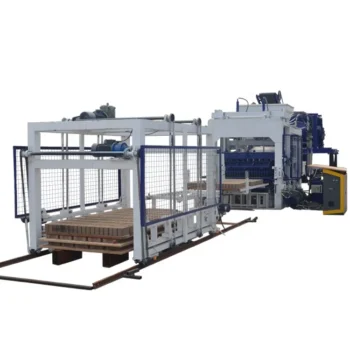
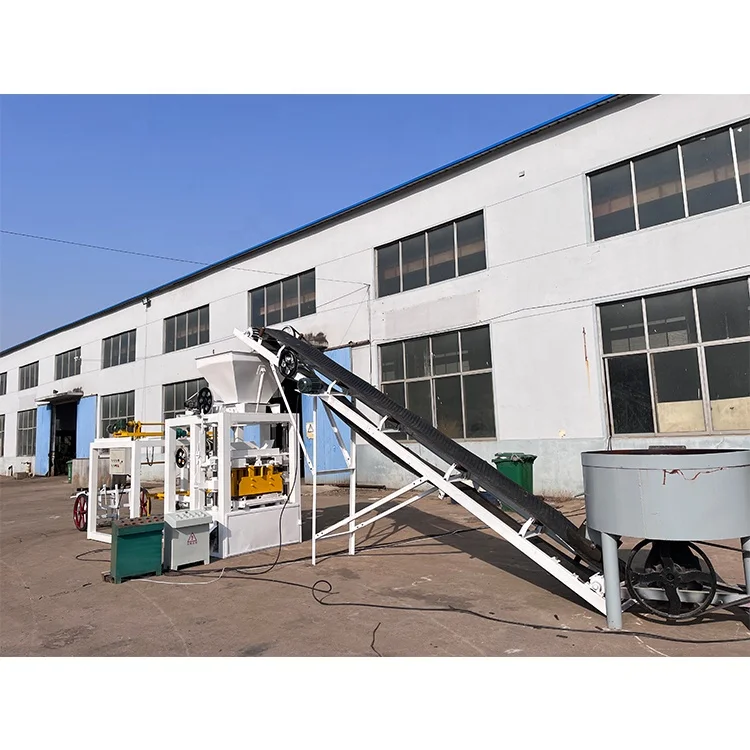
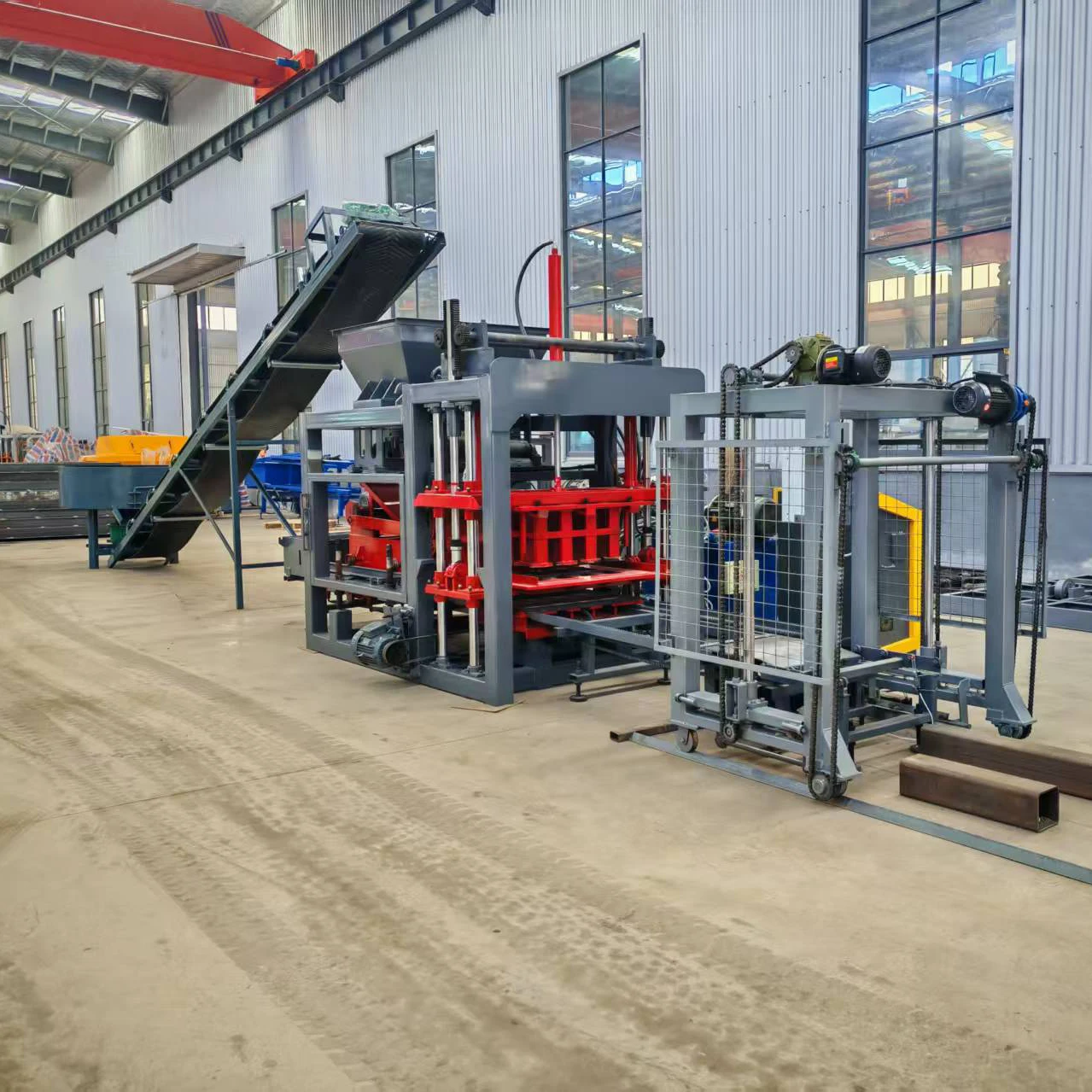
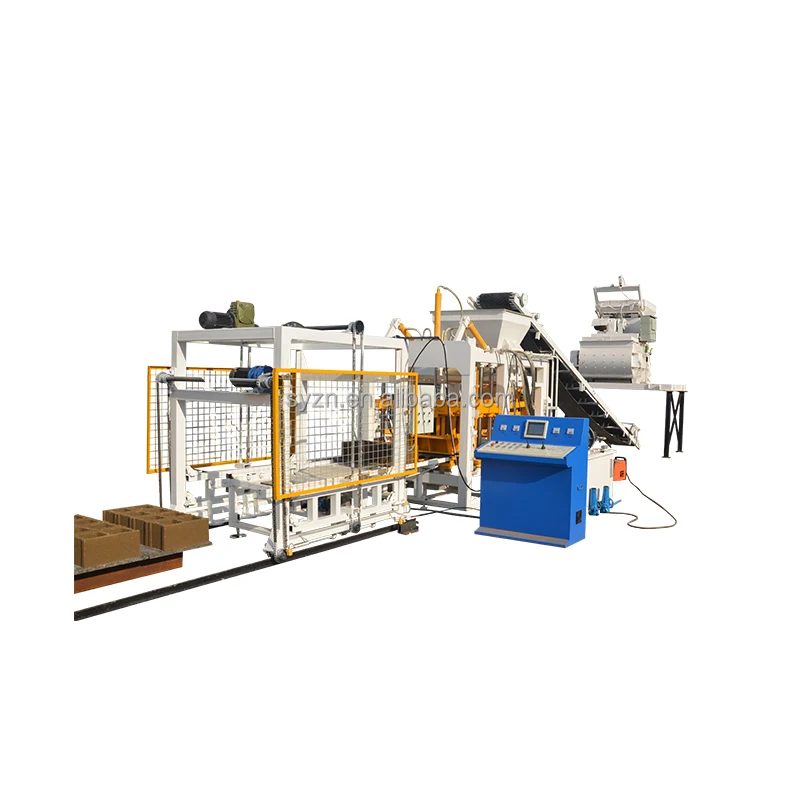
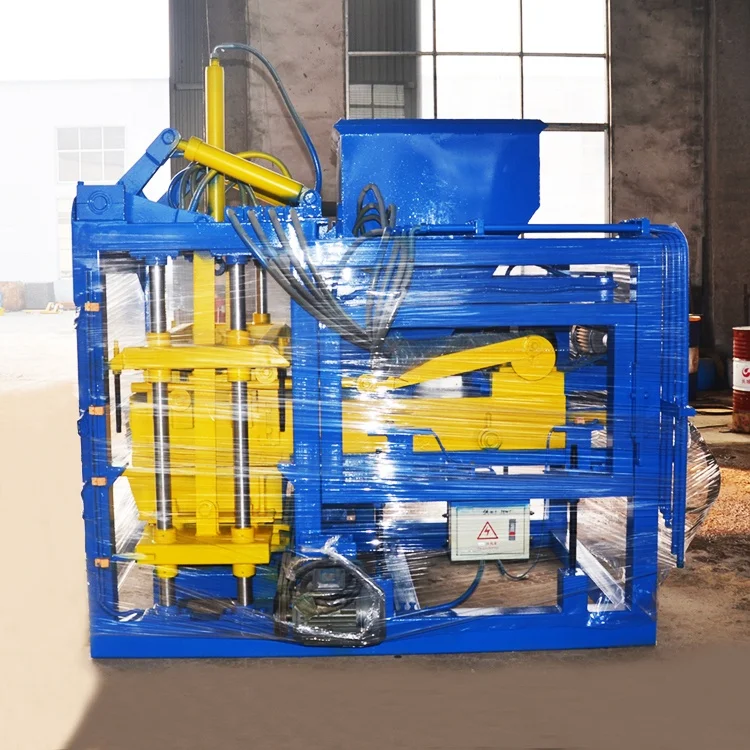
Matched System Specification — the QTJ4-25 block machine, mould, pallet, and handling equipment are configured as a single system against your target block format rather than sourced as separate components.
Technical Specifications
| Parameter | Value |
|---|---|
| Model | QTJ4-25 |
| Product Type | Semi-Automatic Concrete Block Making Machine |
| Overall Dimensions (L×W×H) | 6400×1500×2700 mm |
| Molding Cycle | 25 s |
| Vibration Frequency | 2800–5100 r/min |
| Vibration Force | 60 kN |
| Rated Power | 17.9 kW |
| Mixer Model | JQ350 |
| Pallet Size | 850×550×20 mm |
| Net Weight | 2500 kg |
| Automation Level | Semi-automatic |
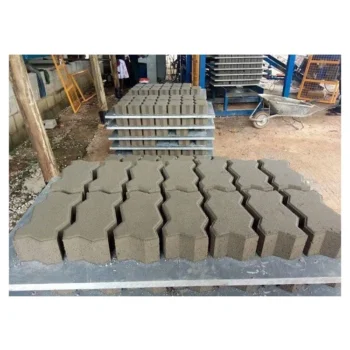
| Applied Products | Concrete hollow blocks, solid bricks, pavers |
| Mould Format Options | Hollow block (390×190×190 mm / 400×150×200 mm), solid brick (240×115×53 mm) |
| Output Capacity | 480 pcs/h based on 390×190×190 mm hollow block, 4 pcs/mould |
| Output Capacity | 600 pcs/h based on 400×150×200 mm hollow block, 5 pcs/mould |
| Output Capacity | 2100 pcs/h based on 240×115×53 mm solid brick, 18 pcs/mould |
| Daily Output | 3800 pcs/8hr based on 390×190×190 mm hollow block |
| Daily Output | 4800 pcs/8hr based on 400×150×200 mm hollow block |
| Daily Output | 17000 pcs/8hr based on 240×115×53 mm solid brick |
| Raw Materials | Crushed stone, sand, cement, dust, fly ash |
| Voltage & Frequency | Configurable — confirm before commissioning |
| Control Language | Configurable — confirm before shipment |
| Stacking Method | Manual, trolley-assisted |
Application Suitability
| Application | Material or Output |
|---|---|
| Hollow block production for building contractors | 390×190×190 mm or 400×150×200 mm blocks from crushed stone, sand, and cement |
| Solid brick manufacturing for local masonry markets | 240×115×53 mm bricks using fly ash and sand mixes |
| On-site paver and block production for construction projects | Format changeable on the same host machine with mould swap |
| First-plant setup for entrepreneurs entering block production | Semi-automatic operation with manual pallet handling |
What the QTJ4-25 Block Machine Specifications Actually Mean for Your Daily Output
Capacity figures only hold value when tied to the exact block format your market buys.
Most quotations list a single hourly number without revealing which mould cavity count and block dimension it assumes. A machine that runs 2100 solid bricks per hour drops to 480 when the same press switches to 390×190×190 mm hollow blocks because the mould carries fewer cavities and the cycle time stays constant. I once spent a full week on-site adjusting vibration force and hydraulic matching because the buyer’s local aggregate had high clay content, and actual output fell to half the catalogue figure. The QTJ4-25 block machine specifications here are tied to specific mould formats so you can calculate real daily production before committing. [NEED_CITE: concrete block capacity calculation standards by block format]
Mould Format Determines Realistic Throughput
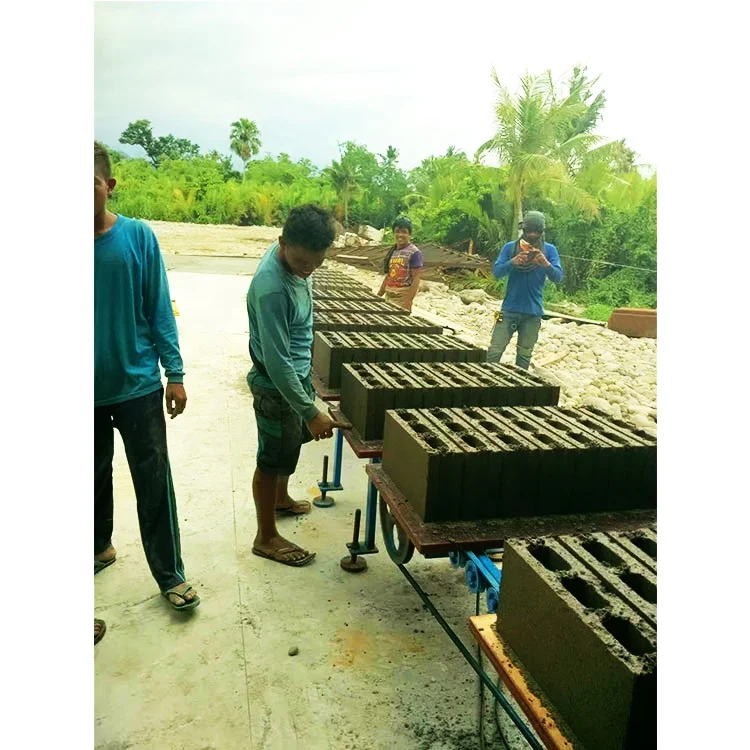
The QTJ4-25 accommodates three standard mould formats: 390×190×190 mm hollow block at 4 pieces per mould, 400×150×200 mm hollow block at 5 pieces per mould, and 240×115×53 mm solid brick at 18 pieces per mould. Each format produces a different hourly and daily output despite the same 25-second molding cycle. Buyers selecting a machine based on the highest catalogue number often discover that their local contractors only purchase one of these formats, and that format sits at the lower end of the output range.
Vibration Matching to Local Aggregate Density
The 60 kN vibration force operates across a frequency range of 2800 to 5100 r/min, combined with bed mould vertical vibration and upper mould compression vibration. This dual vibration approach compacts the concrete mix evenly across the mould cavity. However, the effectiveness of this vibration profile depends entirely on whether the local crushed stone and sand gradation matches the machine’s expected mix design. Aggregate with excessive fines or high moisture content absorbs vibration energy differently, resulting in blocks with inconsistent density and strength. [NEED_CITE: vibration force requirements for different concrete aggregate types]
Pallet Size and Curing Area Alignment
The 850×550×20 mm pallet is the fixed interface between the press and your curing area. If your existing curing racks, forklift tines, or drying yard dimensions were built around a different pallet size, every loaded pallet becomes a handling problem. The pallet material must also withstand the vibration force during molding without warping, which would cause uneven block thickness across the mould. Before confirming an order, measure your curing infrastructure against this pallet dimension rather than assuming standard sizes are interchangeable across manufacturers.
What Happens When Configuration Is Skipped
Ordering a block machine without confirming the mould format, pallet size, and voltage against your site conditions leads to predictable problems. The machine arrives and produces blocks in a format your market does not buy, forcing an unplanned mould purchase. The pallet size does not match your forklift, requiring new handling equipment. The voltage and frequency differ from local supply, delaying commissioning until a transformer is sourced. These are not rare edge cases but routine consequences of treating the press as a standalone purchase rather than part of a configured system. [NEED_CITE: common commissioning delays in imported concrete block equipment]
Why Specification Matching Matters at This Output Tier
The QTJ4-25 block machine specifications define a semi-automatic press where the operator handles pallet loading and block stacking manually with trolley assistance. This configuration suits plants where labour cost is manageable and full automation would exceed the output requirement. The machine, mould, pallet, and handling equipment are specified together so cycle times match across stations. Mould design follows the buyer’s target format, including custom mould production from buyer-supplied drawings. Configuration is set against the buyer’s actual mix design and local aggregate rather than a catalogue default. Voltage, frequency, and control display language are confirmed before production to prevent on-site delays.
Documentation & Verification
- Line layout with capacity calculation stating the block format assumed for each output tier
- Mould drawing and format list confirmed before production begins
- Pallet specification sheet matched to your curing area dimensions
- Voltage and control language confirmation document signed before shipment
- Factory test record on your specified block format before dispatch
- Operation and maintenance manual in confirmed language
Installation, Commissioning & Support
- Foundation pad sized to the 6400×1500 mm footprint with level tolerance specified
- Power supply matched to confirmed voltage and frequency with dedicated circuit for 17.9 kW load
- Machine shipped in assembled or dismantled state per container loading plan
- On-site vibration force and molding cycle adjustment to match local aggregate characteristics
- Operator training covering mould change procedure and pallet handling workflow
- Wear parts list and mould replacement schedule provided at commissioning
What to Include in Your Inquiry
To size the QTJ4-25 correctly for your production line, specify the block format your market actually purchases and the daily volume target for that format. Provide your local aggregate type and any available material test report so the vibration and pressure settings can be matched to your mix. Confirm the voltage, frequency, and preferred control display language at inquiry stage so these are locked before production begins.
Frequently Asked Questions
Q: How is the daily output calculated and which block format does each number assume?
A: Each output figure is based on a specific mould and block dimension. The QTJ4-25 produces 3800 pieces per 8-hour shift using 390×190×190 mm hollow blocks, 4800 pieces with 400×150×200 mm hollow blocks, and 17000 pieces with 240×115×53 mm solid bricks. All calculations use the 25-second molding cycle as the baseline.
Q: What mould formats are available and can I order a custom mould?
A: Standard moulds cover 390×190×190 mm hollow, 400×150×200 mm hollow, and 240×115×53 mm solid brick. Custom mould design is available from buyer-supplied drawings. The mould drawing and format list are confirmed before production so the machine ships with the correct tooling installed.
Q: How should I choose pallet size and material for my curing setup?
A: The standard pallet measures 850×550×20 mm. Verify this against your existing curing racks, forklift tine spacing, and drying yard layout before ordering. Pallet material must resist warping under 60 kN vibration force to maintain consistent block thickness across the mould surface.
Q: What electrical and control details must be confirmed before shipment?
A: Voltage, frequency, and control display language are configurable and must be confirmed before the machine enters production. Incorrect voltage causes motor failure on arrival. An unspecified display language delays operator training and commissioning at your site.
Q: Which raw materials does the QTJ4-25 work with and can it handle my local aggregate?
A: The machine processes crushed stone, sand, cement, dust, and fly ash. Vibration force and frequency settings must be matched to your specific aggregate gradation and moisture content. Provide a material test report at inquiry so the configuration accounts for your local material characteristics.