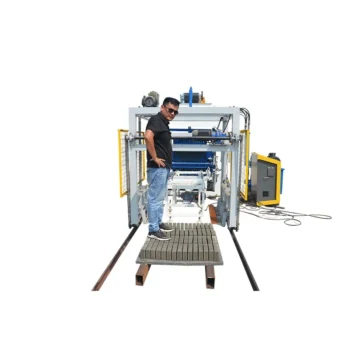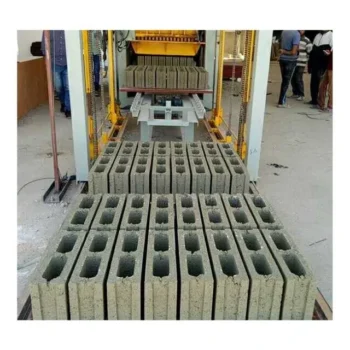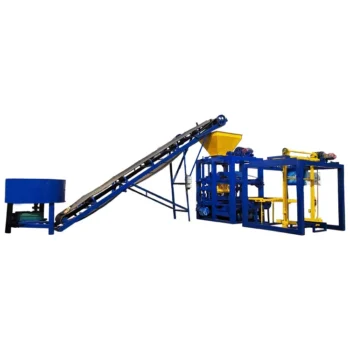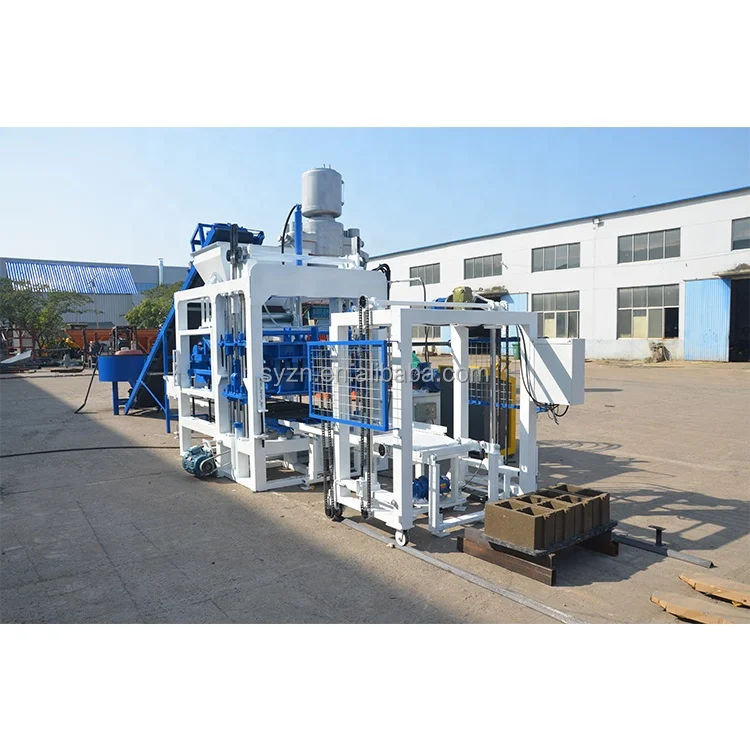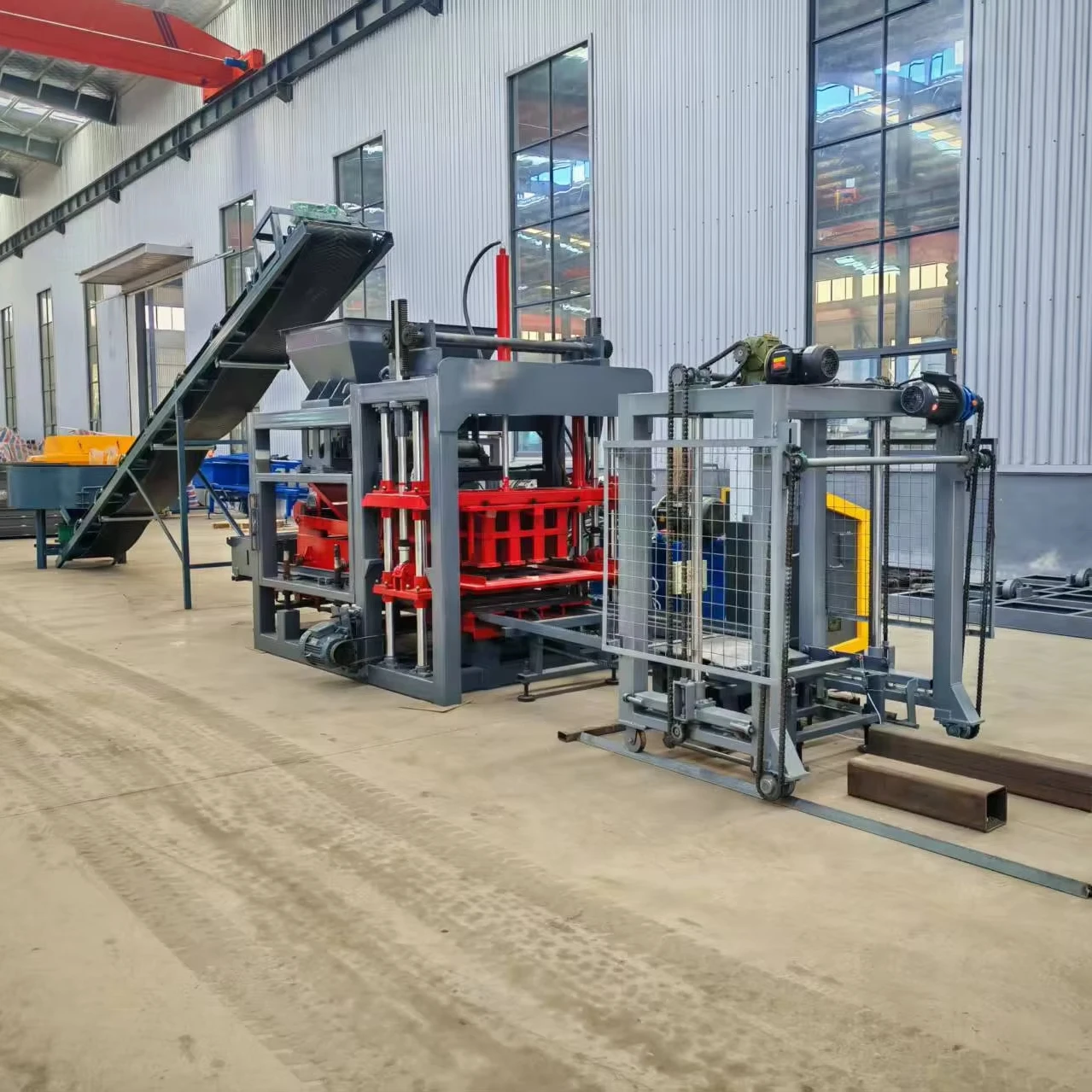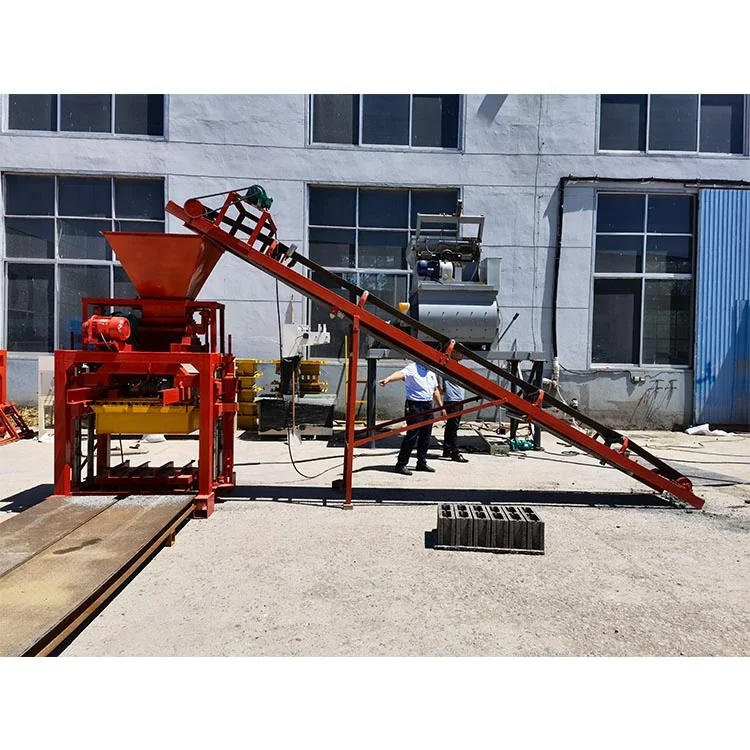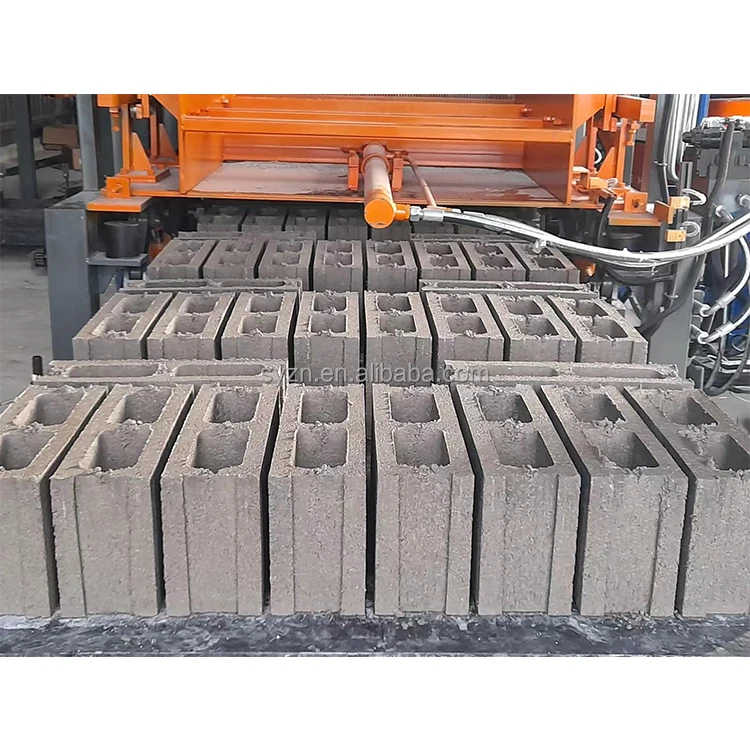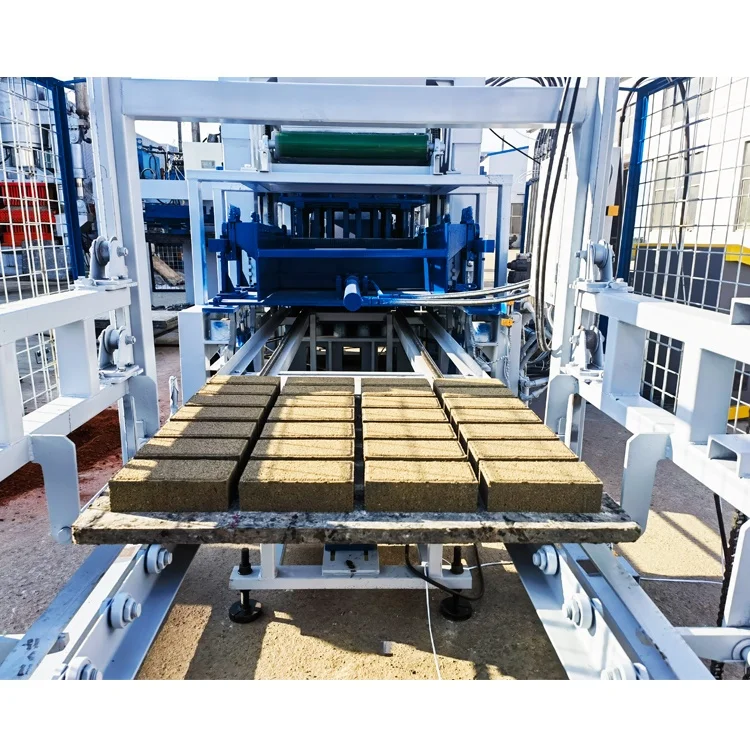

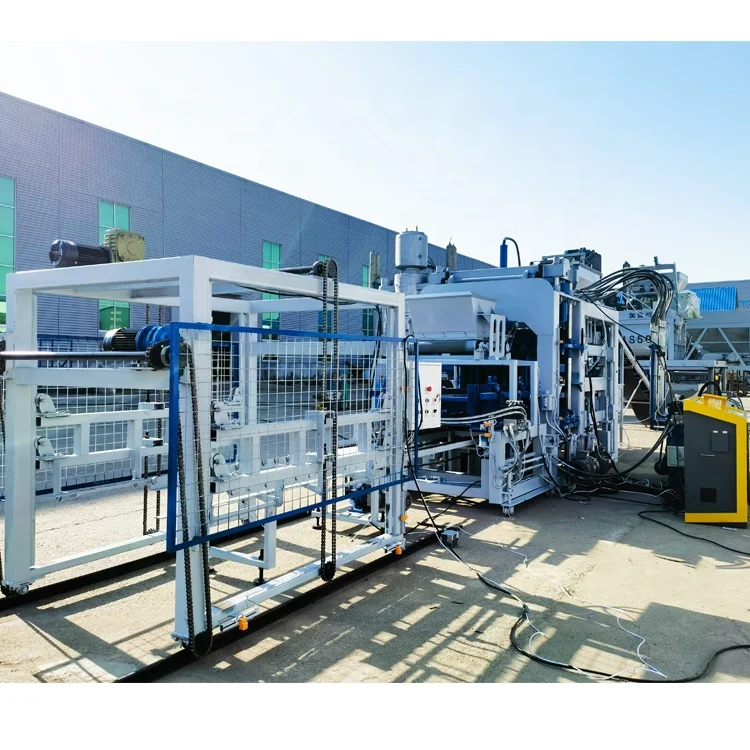
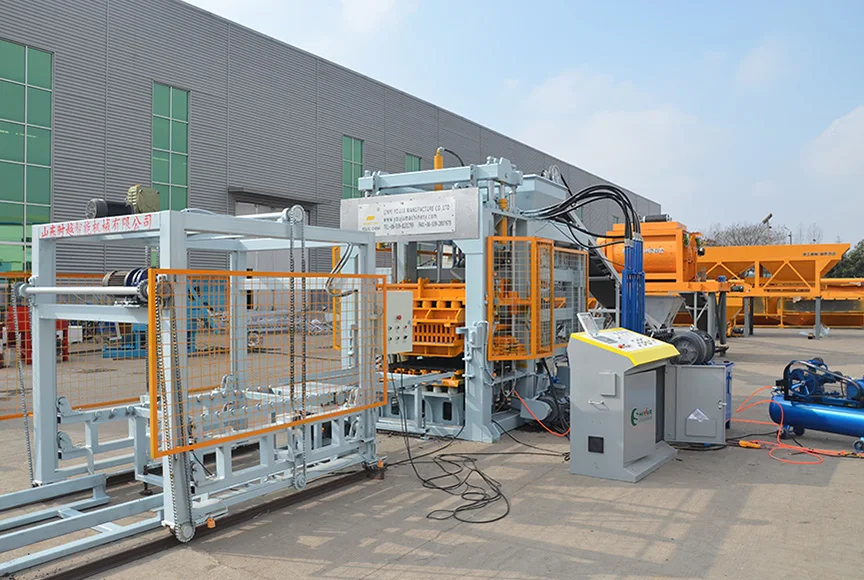

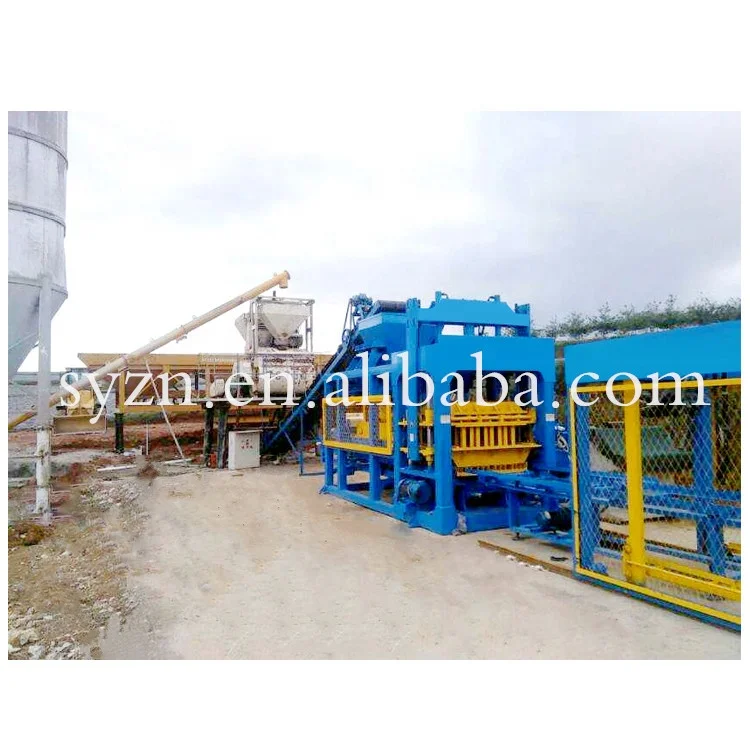
Description
Matched System Sizing — the QT8-15 block making machine is configured against your actual paving block dimensions, local aggregate, and daily output target rather than a catalog default.
Technical Specifications
| Parameter | Value |
|---|---|
| Model | QT8-15 |
| Product Type | Automatic Hydraulic Concrete Block Making Machine |
| Overall Dimensions (L×W×H) | 8300×1860×3000 mm |
| Vibration Force (Exciting Power) | 55 KN |
| Rated Power | 37.2 kW |
| Pallet Size | 1020×900 mm |
| Total Weight | 8 T |
| Mixer Model | JS750 |
| Molding Cycle | 15-20s (basis not stated in source — confirm block format / material / thickness) |
| Control System | PLC control system |
| Hydraulic Station | Included |
| Applied Products | Paver, solid block, hollow block, curbstone |
| Raw Materials | Crushed stones, sand, cement, dust, fly ash |
| Included Equipment | Block making machine, hydraulic station, PLC control unit, pallet feeder, block mould, material feeder, block conveyor, block sweeper, spare parts and tools |
| Voltage & Frequency | To be confirmed before order |
| Automation Level | Automatic |
Application Suitability
| Application | Material or Output |
|---|---|
| Interlocking paving block production for municipal walkways and parking lots | Crushed stone, sand, and cement mix with fly ash substitution |
| Hollow block manufacturing for residential and commercial wall construction | Sand, cement, dust, and lightweight aggregate blends |
| Solid block production for load-bearing structural applications | Dense crushed stone and cement mixes requiring high compaction |
| Curbstone and kerbstone forming for road edging and drainage channels | Coarse aggregate blends with higher cement content for weathering resistance |
What the Quoted Cycle Time Actually Means for Paver Output
A 15-20 second cycle on the QT8-15 block making machine only translates into realistic daily tonnage when the exact paver thickness, mix moisture, and pallet return speed are factored in together.
I have seen buyers sign contracts based on a single cycle figure, only to discover that their local weathered sand demanded longer vibration to reach target density. The result was a daily output that fell well short of projections, with pallets backing up at the curing racks because the press outpaced the handling line. That mismatch is the most common reason technical buyers lose confidence in the first month of production [NEED_CITE: common causes of block plant underperformance in first 90 days].
Pallet Size Determines Your Entire Curing Footprint
The 1020×900 mm pallet on the QT8-15 block making machine is not an arbitrary number; it dictates how many blocks cure per square meter of floor space and which forklift tine length you need on the curing side. Buyers who confirm their existing rack dimensions and forklift capacity before ordering avoid the expensive surprise of having to rebuild curing bays or buy new handling equipment after arrival.
Vibration Force Must Match the Aggregate, Not the Brochure
A 55 KN vibration rating tells you the ceiling of what the eccentric boxes can deliver, but the effective compaction depends on whether your local crushed stone is angular or rounded, and whether the sand fraction retains moisture. I configure the QT8-15 block making machine vibration amplitude and dwell time to the buyer’s specific sieve analysis, so block strength stays consistent from the first pallet to the last [NEED_CITE: relationship between aggregate shape and required vibration energy in block compaction].
Reading the Spec Sheet Beyond the Headline Numbers
The 37.2 kW rated power covers the main press motor, mixer drive, and hydraulic pump running simultaneously — a figure that matters when you are negotiating transformer capacity with the local utility. The JS750 mixer paired with this press handles batch volumes that match a 15-20 second cycle window, preventing the press from idling while waiting for the next mix. Total machine weight at 8 T means the foundation must absorb dynamic vibration loads well beyond static weight, so a reinforced concrete pad with isolation gaps around the perimeter is standard practice. Pallet feeder and block sweeper included in the package reduce manual intervention between cycles, keeping the operator focused on mould changes and quality checks rather than clearing debris.
The Real Cost of Skipping the Pallet and Handling Audit
When pallet specification happens as an afterthought, the consequences ripple through the entire production shift. Undersized pallets force double-handling at the stacker, while pallets that do not fit the buyer’s existing curing racks mean every block must be manually re-stacked before it even enters the curing chamber [NEED_CITE: block plant pallet logistics and hidden handling costs]. I have watched a production team lose half a shift to pallet re-arranging because nobody measured the forklift fork width against the pallet overhang. The QT8-15 block making machine performs reliably on the press side, but if the downstream handling is mismatched, the bottleneck simply moves to the curing yard.
Why Sizing Starts with the Block You Actually Sell
Every configuration decision on the QT8-15 flows backward from the paver or block format your market demands. Paver thickness, interlocking profile, and surface texture determine the mould cavity depth, which in turn sets the fill volume the JS750 mixer must deliver per cycle. Hollow block web thickness and shell depth dictate the vibration profile and hydraulic pressure curve needed to achieve target density without cracking the cores. Curbstone length and weight push the pallet load toward the upper limit of the feeder mechanism, so confirming the heaviest format up front prevents mechanical overload. I work through the buyer’s complete format list — including the niche products like porous pavers or split-face blocks — before the machine specification is finalized.
Documentation You Receive Before the Machine Ships
- Line layout showing pallet flow from press through curing rack to cubing station
- Capacity calculation sheet stating the exact paver format and mix assumed per figure
- Mould drawing package with cavity dimensions and changeover procedure for each format
- Pallet specification matched to buyer’s curing rack spacing and forklift capacity
- Voltage and PLC display language confirmation document signed before production begins
- Factory test record run on buyer’s target block format before container loading
Installation, Commissioning & Support
- Reinforced concrete foundation designed to handle 8 T static plus dynamic vibration loads from the QT8-15
- Dedicated electrical circuit sized for 37.2 kW total draw with voltage and frequency confirmed for site
- Press arrives partially assembled; hydraulic station and PLC cabinet bolt on within the first shift
- Mould fitted and first test pallets run with operator present to verify cycle timing against format
- Spare wear parts kit included, covering vibration springs and hydraulic seals for initial production months
- Daily maintenance schedule covers grease points on eccentric boxes and pallet guide rails
What to Have Ready Before You Request a Quote
Tell me the exact paver dimensions you sell most — length, width, and thickness — along with the hollow or solid block formats you plan to run alongside. Share your local aggregate source and whether you use fly ash or stone dust as filler. Confirm the voltage and frequency at your site, the PLC display language your operators read, and whether your curing yard already has racks and forklifts sized for 1020×900 mm pallets.
Frequently Asked Questions
Q: How is output capacity calculated per paver format on the QT8-15 block making machine?
A: Capacity is derived from the confirmed mould cavity count, the cycle time specific to that paver thickness and mix, and the pallet return speed. I provide a written calculation sheet that names the exact format and mix assumption behind every output figure, so there is no ambiguity between press cycles and realistic daily production.
Q: How do I match the 1020×900 mm pallet to my curing area and forklift?
A: Measure your curing rack shelf depth and the distance between uprights, then confirm your forklift tine length and rated capacity. I cross-reference these numbers against the pallet dimensions and loaded weight before finalizing the pallet specification, so the pallets slide straight into your existing racks without modification.
Q: What mould formats are available, and how long does a changeover take?
A: Moulds cover pavers, solid blocks, hollow blocks, and curbstones, with custom profiles available to buyer drawings. Changeover procedure and time are documented per format in the mould package, covering bolt sequence, vibration plate alignment, and PLC recipe selection so the shift does not lose momentum between formats.
Q: How is the 55 KN vibration force matched to local aggregate for consistent block strength?
A: I review your aggregate sieve analysis and mix moisture content, then adjust vibration amplitude and dwell within the press settings. This ensures angular crushed stone and rounded river sand each receive the compaction energy they need, keeping compressive strength uniform across every production batch.
Q: What voltage and PLC language options are confirmed before shipment?
A: Voltage and frequency are confirmed in writing to match your site supply, and the PLC display language is set to your operator preference before the control cabinet is wired. This avoids rewiring delays and language barriers during the commissioning week on site.