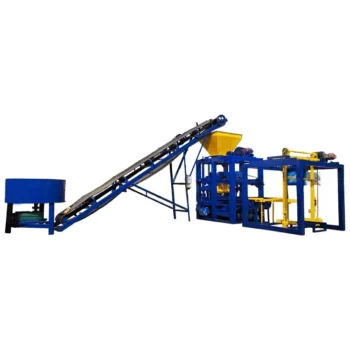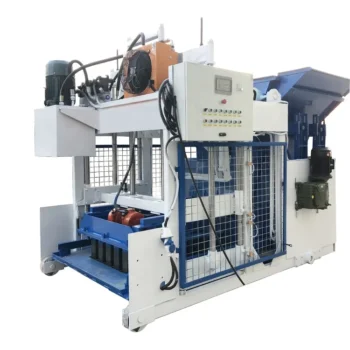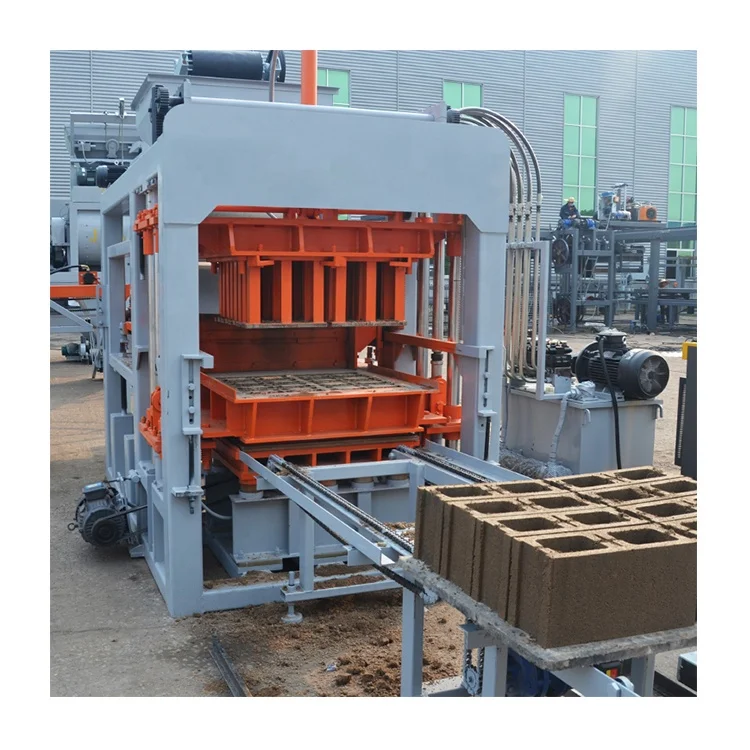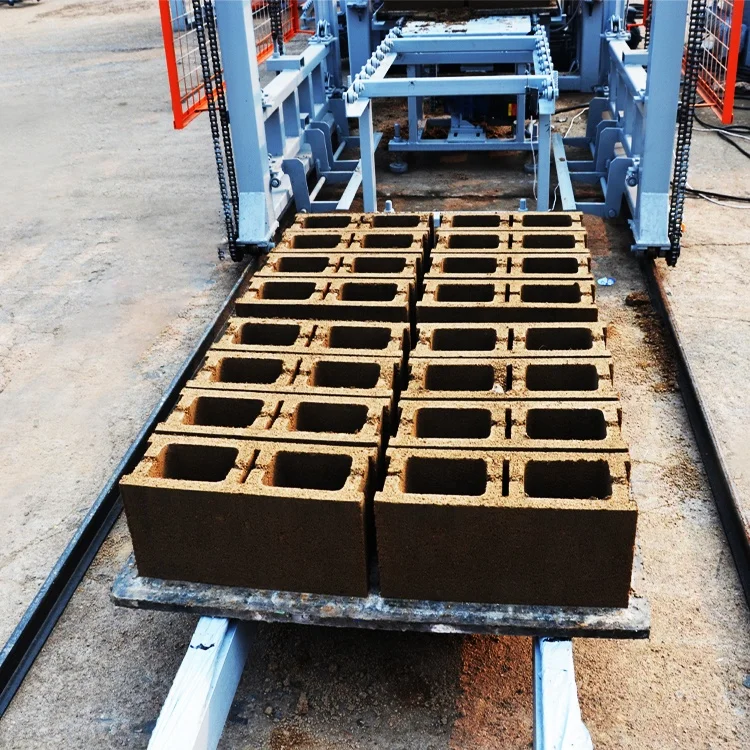


Description
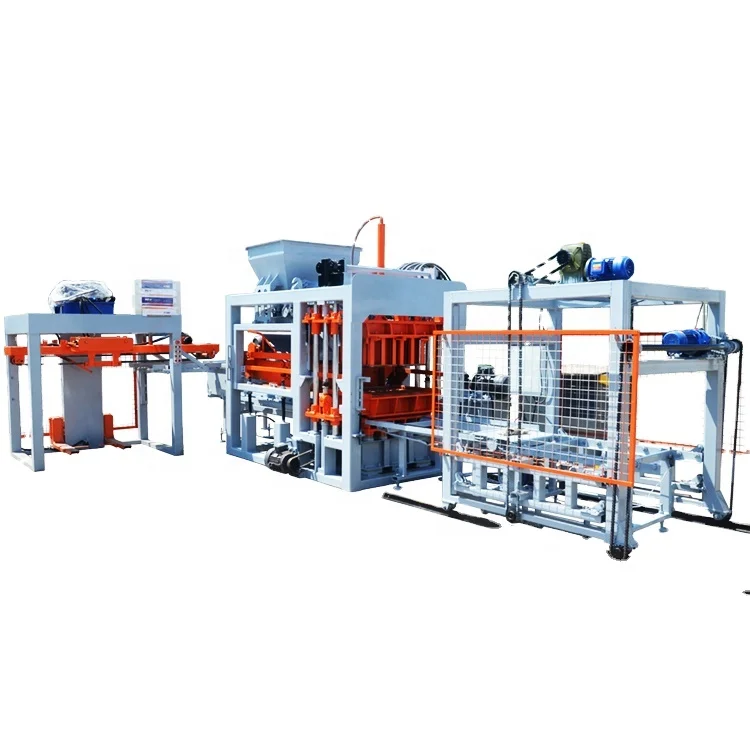
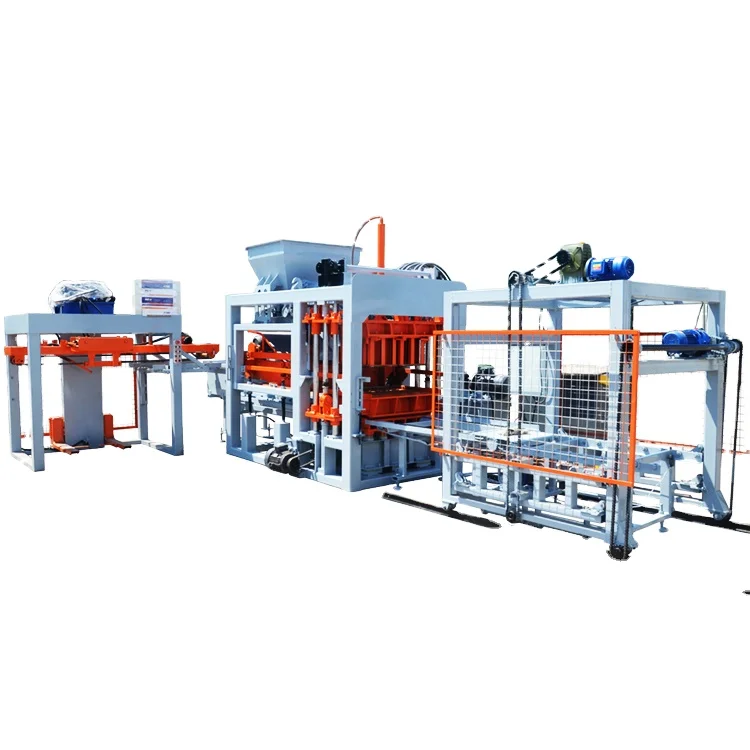
Matched System Approach — the QT6-15 hydraulic block making machine is specified against your target block format with capacity stated per format, not a single headline number, so daily output expectations match what the machine actually produces on your mould.
Technical Specifications
| Parameter | Value |
|---|---|
| Product Type | Hydraulic Block Making Machine |
| Model | QT6-15 |
| Overall Dimensions (L×W×H) | 8200×1700×2950 mm |
| Total Mass | 7 T |
| Overall Power | 37 kW |
| Vibration Frequency | 0-60 Hz |
| Vibration Force | 45 kN |
| Vibration Form | Platform Vibration |
| Moulding Mode | Automatic loading, vibration moulding |
| Pallet Size | 880×850 mm |
| Molding Cycle | 15-20 s (hollow/solid blocks); 20-25 s (paving bricks) |
| Demolding Method | Hydraulic |
| Hydraulic System | Independent integrated hydraulic station |
| Control System | PLC with touch screen |
| Block Compressive Strength | >15 MPa |
| Factory Area Required | 1200 m² |
| Fault Diagnosis | Built-in fault diagnosis system with action interlock logic |
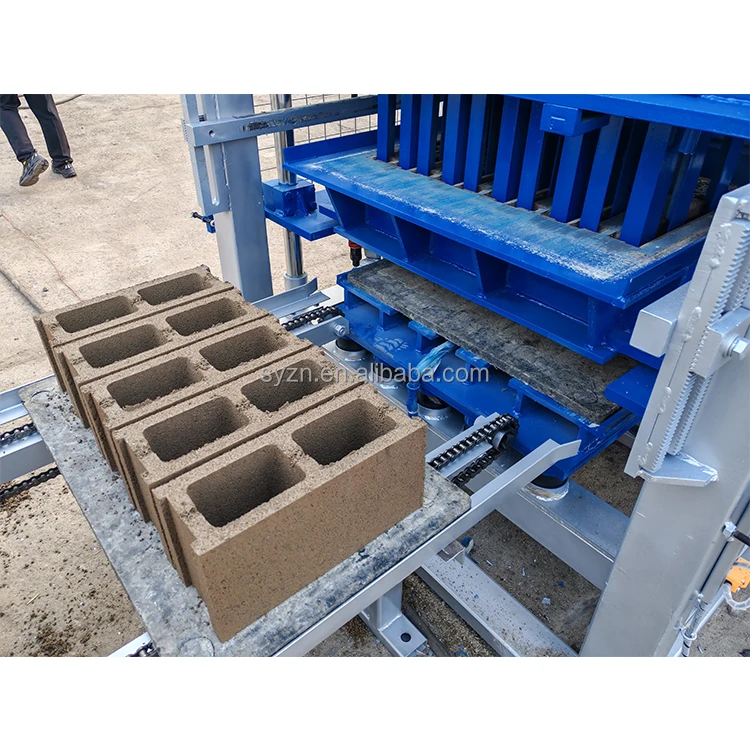
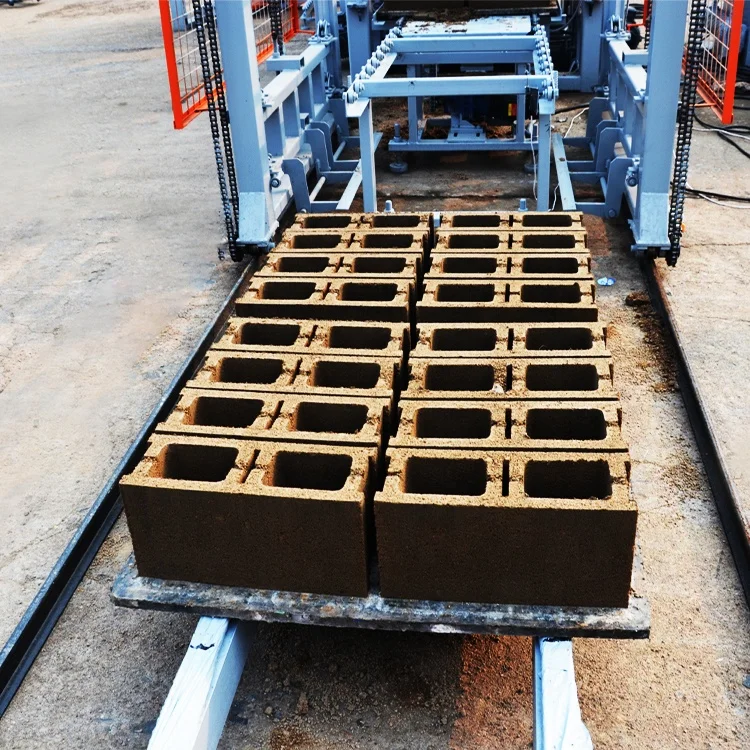
| Output – Hollow Block 400×200×200 mm | 1080-1440 pcs/h, 8640-11520 pcs/8hr |
| Output – Hollow Block 400×150×200 mm | 1440-1920 pcs/h, 11520-15360 pcs/8hr |
| Output – Solid Brick 240×115×53 mm | 5760-7680 pcs/h, 46080-61440 pcs/8hr |
| Output – Rectangular Paving Brick 200×100×60 mm | 2160-2880 pcs/h (basis: 20-25s cycle), 17280-23040 pcs/8hr |
| Output – Zigzag Paving Brick 225×112.5×60 mm | 2160-2880 pcs/h (basis: 20-25s cycle), 17280-23040 pcs/8hr |
| Raw Material Adaptability | Waste ash, slag, and various aggregates; reduces cement dosage |
| Warranty | 1 year (excluding spare parts) |
Application Suitability
| Application | Material or Output |
|---|---|
| Hollow block production for building construction | Crushed stone, sand, cement, waste ash and slag aggregates on 400×200×200 mm and 400×150×200 mm formats |
| Solid brick manufacturing | Fine aggregate and cement mixes producing 240×115×53 mm solid bricks |
| Rectangular paving brick production | High-density aggregate and cement blends for 200×100×60 mm pavers |
| Zigzag interlocking paving brick | Coarse and fine aggregate blends for 225×112.5×60 mm interlocking format |
| Industrial waste utilization | Fly ash, slag and similar by-products replacing partial cement content |
Why "Pieces per Hour" Without Format Context Misleads Every Buyer
The QT6-15 hydraulic block making machine specifications always state which block format sits behind every output number, because a headline capacity figure without a format assumption is meaningless on the production floor.
I learned this lesson the hard way on a Latin American line years ago. A buyer signed off on a block machine rated at a headline hourly number, then discovered the calculation assumed a solid brick format while his market ran hollow blocks almost exclusively. His daily output fell to less than half of what he had planned around. That mismatch cascaded into missed delivery schedules and strained relationships with his own contractors. [NEED_CITE: common capacity quoting practices in block machinery exports]
The QT6-15 hydraulic block making machine specifications on this page list each format individually — hollow block in two sizes, solid brick, rectangular paving, and zigzag paving — each with its own cycle time range and per-shift output. When you compare this machine against a project requirement, you compare format-to-format, not a generic number against a specific product need.
Format-by-Format Cycle Time and What It Means for Daily Planning
The QT6-15 hydraulic block making machine runs hollow and solid blocks on a 15-20 second moulding cycle, while paving brick formats require 20-25 seconds due to the denser fill and longer vibration needed for surface finish. That five-second difference per cycle may look small, but across a full eight-hour shift it translates into a materially different pallet count and curing rack requirement. Buyers who plan their curing area around the faster hollow block cycle and then switch to pavers mid-shift will find racks filling slower than expected.
Mould Selection Tied to the Market You Actually Sell
The pallet size of 880×850 mm determines how many cavities each mould can carry, and that cavity count is what drives the per-format output figures listed above. A buyer producing 400×200×200 mm hollow blocks gets a different cavity layout than one running 200×100×60 mm rectangular pavers. Confirming which moulds ship with the machine and which are available as additional orders prevents the situation where a buyer discovers after arrival that the paving format they need was never included in the original scope. [NEED_CITE: mould cavity layout and pallet size relationship in block machines]
Reading the Specs That Actually Shape Block Quality
The 45 kN vibration force works through platform vibration, meaning the energy transmits through the pallet into the mould cavity rather than being applied from the mould walls. This approach produces more uniform density across the block cross-section, which matters when local aggregate varies in particle shape and grading. The independent integrated hydraulic station sits isolated from the main frame vibration, reducing fatigue on hydraulic seals and valves — a detail that matters for long-term maintenance intervals. The PLC touch-screen control stores cycle parameters per mould, so when an operator switches from hollow block to paving brick, the machine recalls the correct vibration duration, pressure hold time, and feed cycle without manual re-entry. Block compressive strength exceeding 15 MPa is achievable when the mix design matches the vibration characteristics, which is why confirming local aggregate properties before finalizing the configuration is a non-negotiable step.
The Hidden Cost of Configuring for the Wrong Mix and Mould Set
When a block machine arrives configured for an aggregate blend the buyer cannot source locally, the entire production trial becomes a material substitution experiment rather than a commissioning exercise. I have watched contractors spend weeks chasing block strength targets on a machine that was perfectly tuned to a different sand source. Similarly, when pallet size is chosen without checking the curing rack spacing and forklift fork width already in the buyer’s yard, pallets arrive that simply do not fit the existing infrastructure, forcing an unplanned rack rebuild or a new forklift purchase. [NEED_CITE: aggregate mismatch impact on block compressive strength]
What Sets This Procurement Path Apart
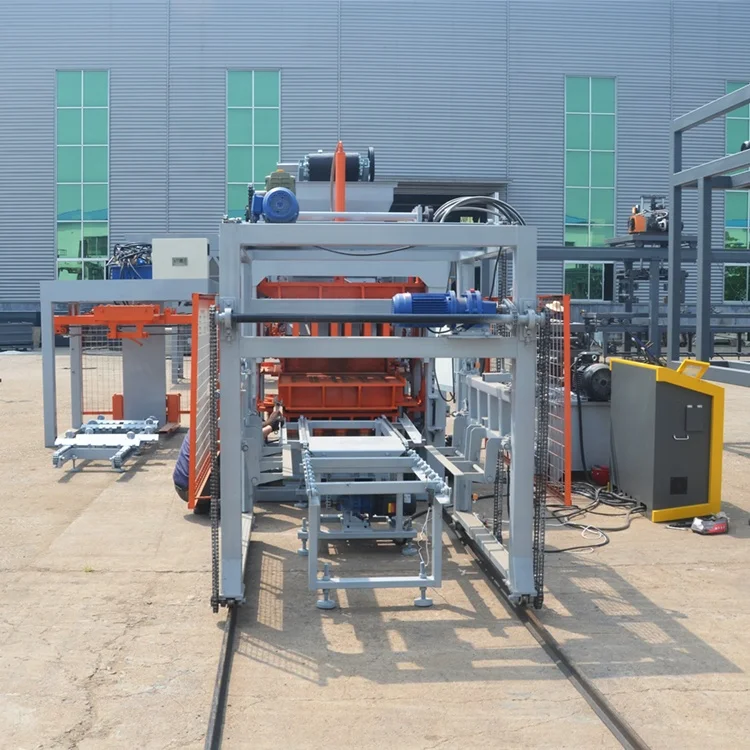
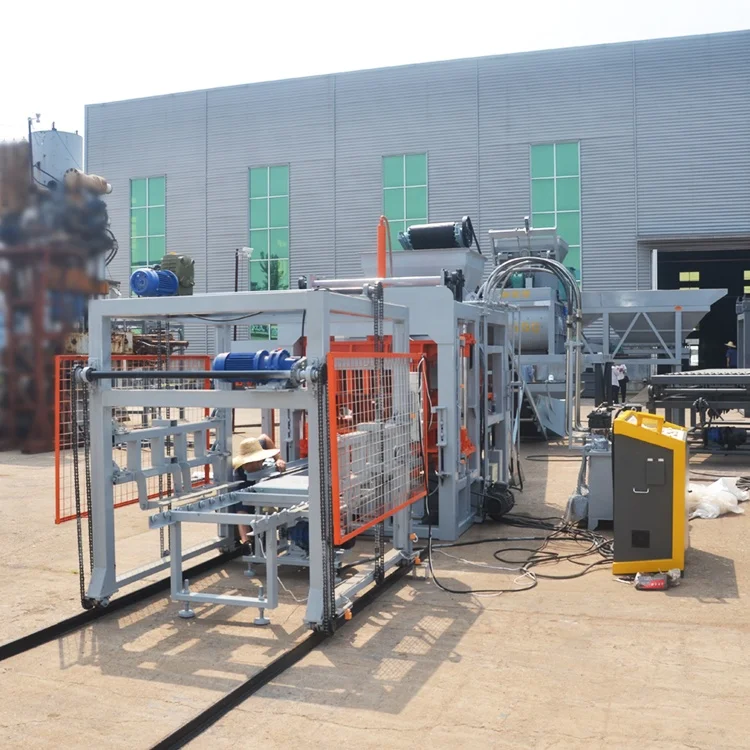
Machine, mould, pallet, and handling equipment are specified together as one matched system rather than assembled from separate suppliers with mismatched cycle times. Configuration is set against the buyer’s actual mix design and local aggregate, not pulled from a catalogue default that assumes a material source on another continent. Mould design covers the formats the buyer’s market actually sells, with custom drawings available when standard cavity layouts do not match local block dimensions. Automation level is selectable, allowing a buyer to start with semi-automatic pallet handling and add automatic stacking later as volume justifies the investment. Installation support includes operator training on the PLC interface, and the wear parts list is calculated from the buyer’s actual production shift pattern so that the first replacement seal or vibration spring is on site before it is needed.
Documentation & Verification
- Line layout and capacity calculation sheet stating the block format assumed for each output figure
- Mould drawing and format list confirming included and optional cavity layouts
- Pallet specification matched to buyer’s curing rack dimensions and forklift capacity
- Voltage, frequency, and PLC display language confirmation before production begins
- Factory test record run on the buyer’s target block format prior to dispatch
- Hydraulic and electrical schematic with component identification for local servicing
Installation, Commissioning & Support
- Foundation plan sized to the QT6-15 overall dimensions of 8200×1700×2950 mm with vibration isolation provisions
- Power supply confirmed for 37 kW total connected load with dedicated circuit breaker sizing
- Independent hydraulic station pre-filled and pressure-tested at factory, requiring only line connection on site
- PLC touch screen configured to buyer’s language and cycle parameters loaded per mould before arrival
- Operator training covers mould change procedure, fault diagnosis interlock logic, and daily maintenance checkpoints
- Wear parts list calculated against buyer’s shift pattern with first replacement set shipped alongside the machine
What We Need From You to Size This Machine Correctly
To prepare a configuration that reflects your actual production environment, share your target block format dimensions, the daily output volume your market absorbs, and the local aggregate sources available within a practical transport radius. We also need your site voltage and frequency, the PLC display language your operators read, and the pallet dimensions your existing curing racks accept. If you are planning a first plant rather than a replacement, tell us the total covered area you have allocated so the line layout can fit within your building envelope.
Frequently Asked Questions
Q: How is the QT6-15 capacity calculated for each block format, and what cycle time is assumed?
A: Each output figure on this page is tied to a specific block dimension and its corresponding moulding cycle. Hollow and solid blocks run on a 15-20 second cycle, while paving formats use 20-25 seconds due to denser fill requirements. The per-hour and per-shift numbers are calculated directly from those cycle times with the 880×850 mm pallet cavity count, so you can verify the arithmetic against your own shift length.
Q: Which mould formats are included, and what is the mould change time on this machine?
A: The standard scope includes one mould matched to your primary block format, with additional formats available as separate orders. The PLC stores cycle parameters per mould, so once the physical change is complete the control system recalls the correct settings automatically. Mould change time depends on the format pair being swapped and operator familiarity after training.
Q: How should pallet size 880×850 mm be verified against my curing racks and forklift?
A: Before production starts, confirm that your curing rack shelf width accommodates the 850 mm pallet dimension with clearance for loading, and that your forklift fork spacing and capacity handle a loaded pallet at the machine’s output rate. We supply the pallet specification sheet so your local team can measure against existing infrastructure before the machine ships.
Q: Can the QT6-15 be configured for my local aggregate and mix design to ensure block strength above 15 MPa?
A: Yes. The vibration force and hydraulic pressure settings are adjusted against your specific aggregate grading and cement content during configuration. We ask buyers to send a sample of their local sand and coarse aggregate so that the factory test can run on a representative mix, confirming compressive strength before the machine leaves the production floor.
Q: What is the difference in cycle time between hollow block and paving brick production on this model?
A: Hollow and solid blocks run on a 15-20 second moulding cycle, while rectangular and zigzag paving bricks require 20-25 seconds. The longer cycle for paving formats reflects the additional vibration duration needed to achieve the surface density and finish quality that paving applications demand.