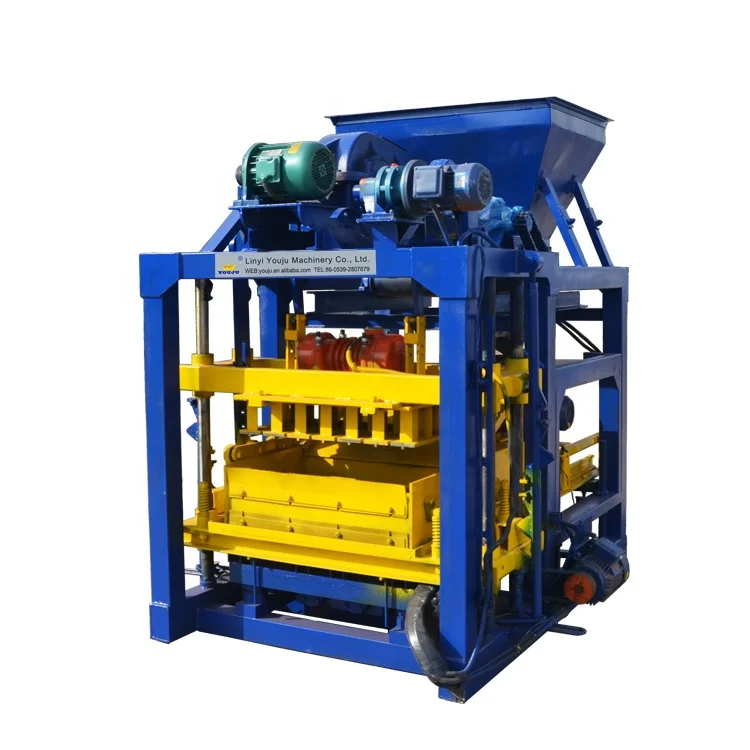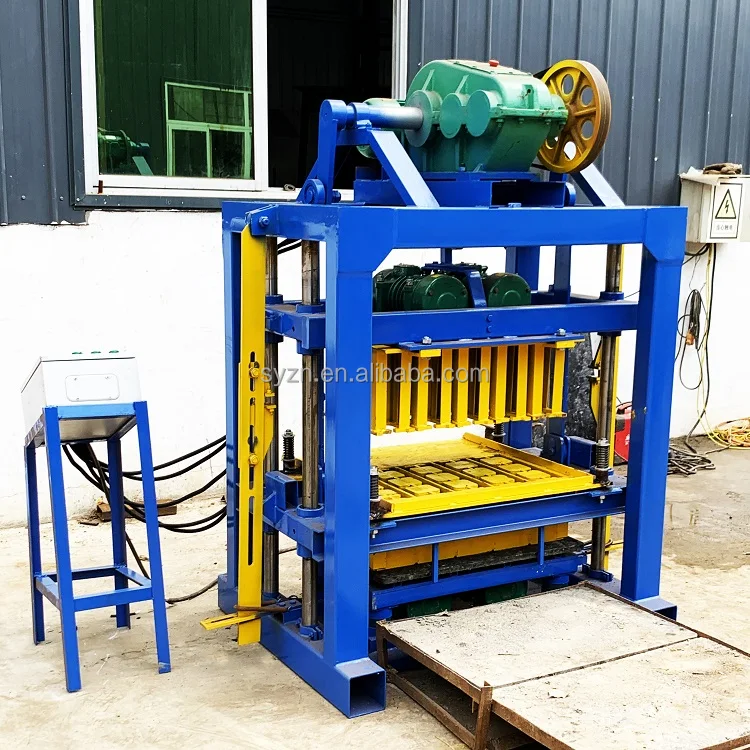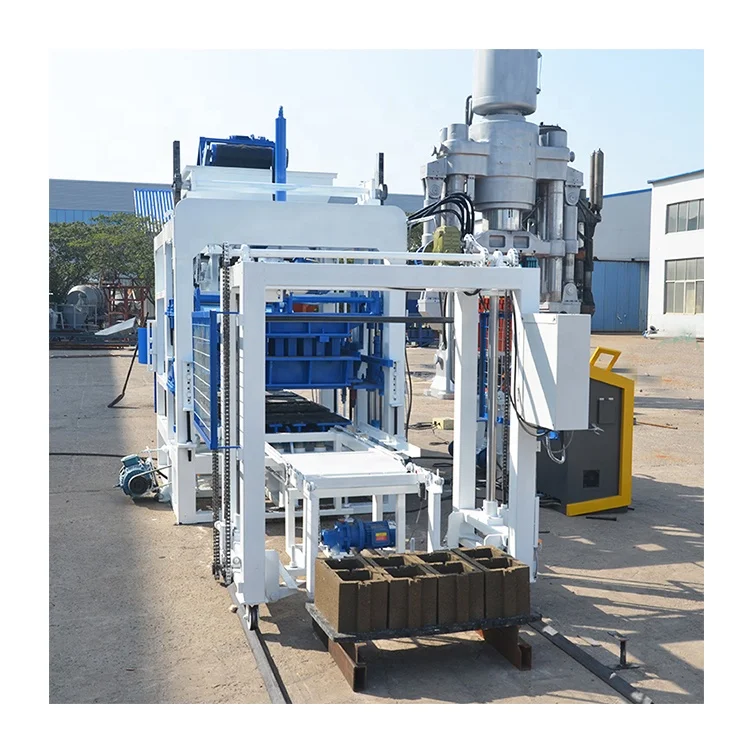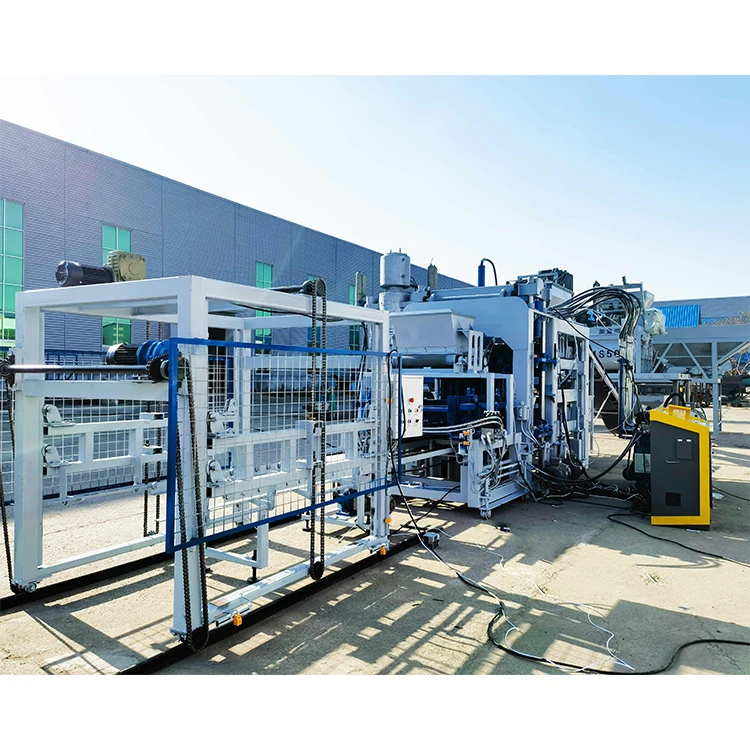

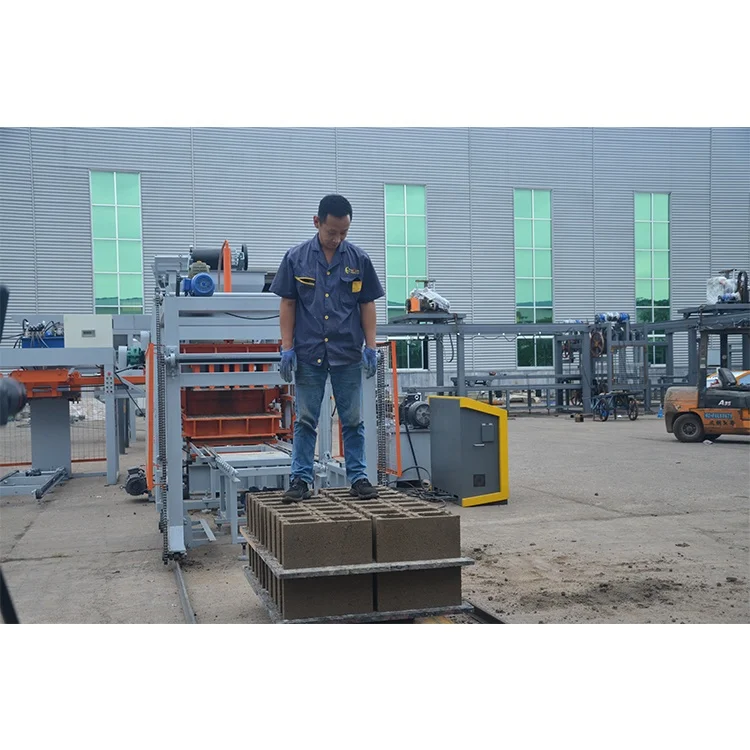
Description
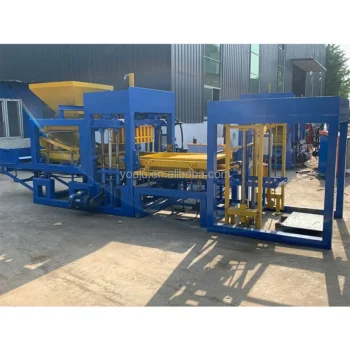
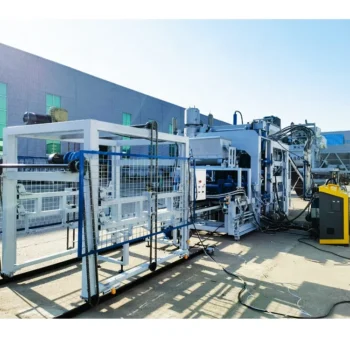
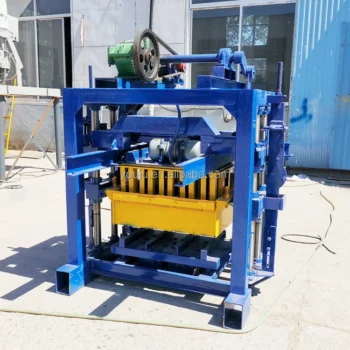
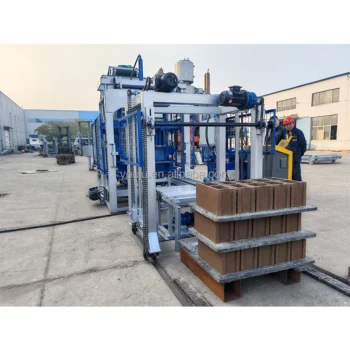
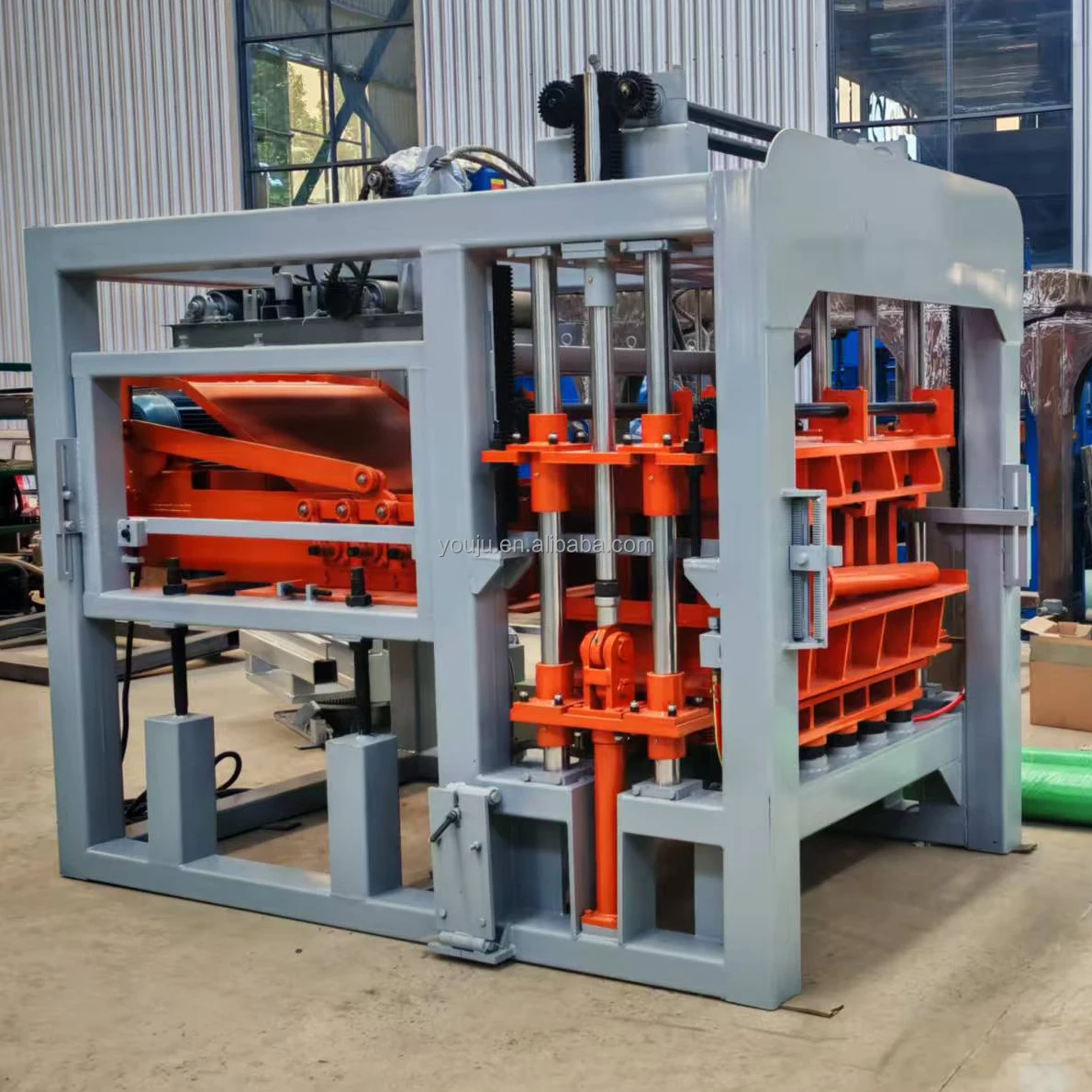
Format-specific configuration — every cycle time and pallet dimension is verified against the buyer’s target block type and curing area, not pulled from a generic catalogue.
Technical Specifications
| Parameter | Value |
|---|---|
| Model | QT6-15 |
| Product Type | Hydraulic Block Making Machine |
| Overall Dimensions (L×W×H) | 7100×1500×3000 mm |
| Rated Pressure | 21 MPa |
| Main Vibration Form | Platform vibration |
| Vibration Frequency | 4500–5100 r/min |
| Pallet Size | 880×850 mm |
| Moulding Cycle | 15–25 s |
| Overall Power | 31.25 kW |
| Net Weight | 8700 kg |
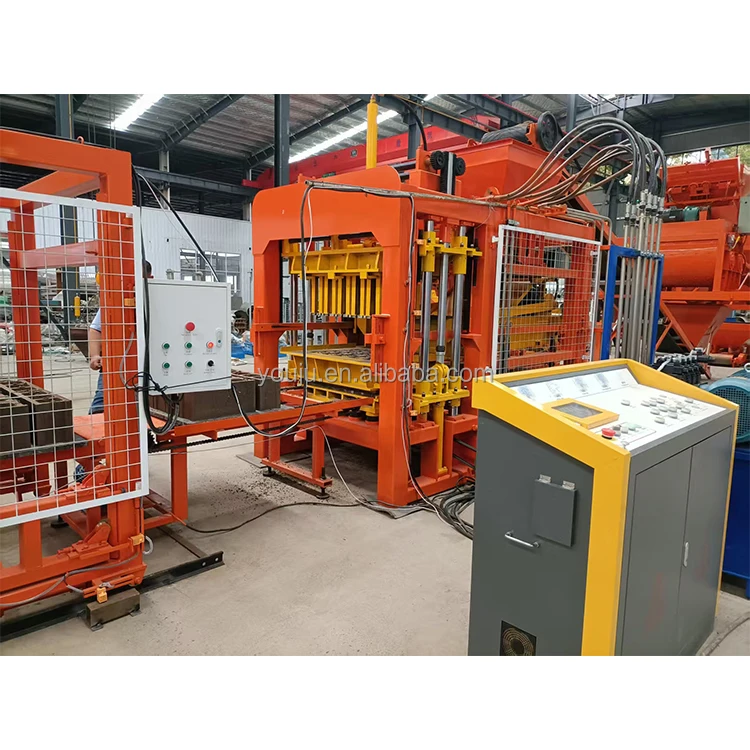
| Control System | PLC intelligent control |
| Drive Type | Hydraulic |
| Automation Level | Automatic |
| Block Format / Mould | Replaceable moulds for different concrete brick sizes (basis to be confirmed) |
| Output Capacity | (basis not stated in source — confirm block format / material / thickness) |
| Daily Raw Material Consumption | 150–190 T (basis not stated in source — confirm block format / material / thickness) |
| Water Consumption | 3–5% of raw material weight |
| Raw Material Ratio (Cement : Sand : Stone) | 1 : 4 : 5 (Cement 8–10%, Sand 30–40%, Stone 50–60%) |
| Block Strength (Hollow) | 8–10 MPa (source value — verify against manufacturer catalog) |
| Block Strength (Solid) | 10–20 MPa (source value — verify against manufacturer catalog) |
Application Suitability
| Application | Material or Output |
|---|---|
| Hollow block production for regional building markets | Crushed stone, cement, and sand mixed at 1:4:5 ratio |
| Solid brick manufacturing for load-bearing walls | Local aggregate with cement content 8–10% |
| Interlocking and paving block formats | Variable stone grading with platform vibration compaction |
| On-site production for housing development projects | Site-available aggregate tested for compatibility before mould selection |
Why "Cycles per Hour" Tells You Almost Nothing About Real Output
A cycle time only matters when paired with the exact block format and wall thickness you intend to produce.
I have watched buyers compare two machines side by side using a single output figure, only to discover after delivery that the number assumed a thin paving block while their market actually buys 200 mm hollow blocks. The moulding cycle on the QT6-15 hydraulic block making machine specifications sheet reads 15–25 seconds, which is a wide band for a reason. A thin solid brick may complete a cycle at the lower end, but a tall hollow block with thin walls needs more vibration time to reach adequate density. [NEED_CITE: effect of block geometry on vibration compaction time] Without a format-specific capacity table, any daily output claim is guesswork.
Matching Vibration Force to Your Local Aggregate
The platform vibration system operates between 4500 and 5100 r/min, and the hydraulic circuit delivers 21 MPa of rated pressure. These two forces must work together against the specific particle shape and moisture profile of the aggregate available near your plant. Angular crushed stone locks together under vibration differently than rounded river gravel, and a mix that compacts well in one region may produce crumbly blocks in another. We always ask buyers to ship a sample of their local stone and sand so the QT6-15 hydraulic block making machine specifications can be validated before the machine leaves the factory.
Pallet Size Decisions That Affect Everything Downstream
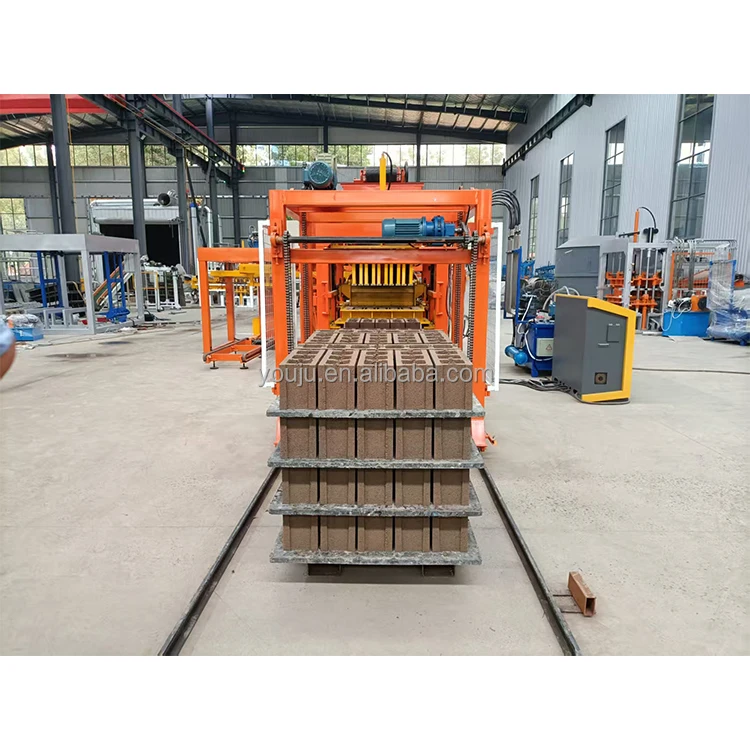
The standard pallet dimension of 880×850 mm determines not only how many blocks fit per cycle but also how pallets stack in the curing area and whether your existing forklift can handle a loaded rack. A pallet that is too wide for the curing room forces manual restacking, while one that is too narrow wastes press capacity. Before confirming the QT6-15 hydraulic block making machine specifications for a project, we review the buyer’s curing room dimensions and forklift rated load to ensure the pallet choice does not create a bottleneck after the press. [NEED_CITE: pallet logistics in stationary block plant layout]
What the Pressure and Frequency Numbers Actually Mean on the Shop Floor
The 21 MPa hydraulic pressure provides the static compaction force, while the 4500–5100 r/min vibration rearranges particles so the pressure can lock them into a dense matrix. If vibration frequency is too low for a fine sand mix, air pockets remain and block strength drops below the 8–10 MPa hollow block target. If pressure is insufficient for a coarse aggregate, the block edges chip during demoulding. The 31.25 kW total power rating must cover both systems simultaneously without voltage sag, which is why confirming local supply capacity matters before commissioning. The PLC control adjusts cycle timing within the 15–25 second range based on the selected mould, but the underlying pressure and vibration settings need manual calibration to the mix. Mould changeovers are part of daily operation when a plant runs multiple formats, so the time required to swap moulds and recalibrate directly subtracts from productive hours.
The Hidden Cost of Skipping Format-Specific Verification
When a machine arrives configured for a standard sand mix that the buyer cannot source locally, the entire production line stalls while alternative materials are tested. I recall a project where the vibration frequency was set for limestone aggregate, but the buyer’s region only had volcanic scoria. The blocks looked fine on the outside but failed compressive strength tests because the porous scoria absorbed water differently, leaving the core under-compacted. [NEED_CITE: aggregate moisture absorption and block core density] Re-calibration took weeks of trial runs, and the buyer lost an entire delivery window. The pallet handling system was also mismatched — the curing racks were built for a different pallet width, forcing workers to carry blocks by hand across the yard.
Why Sourcing the Press From a Line-Focused Supplier Matters
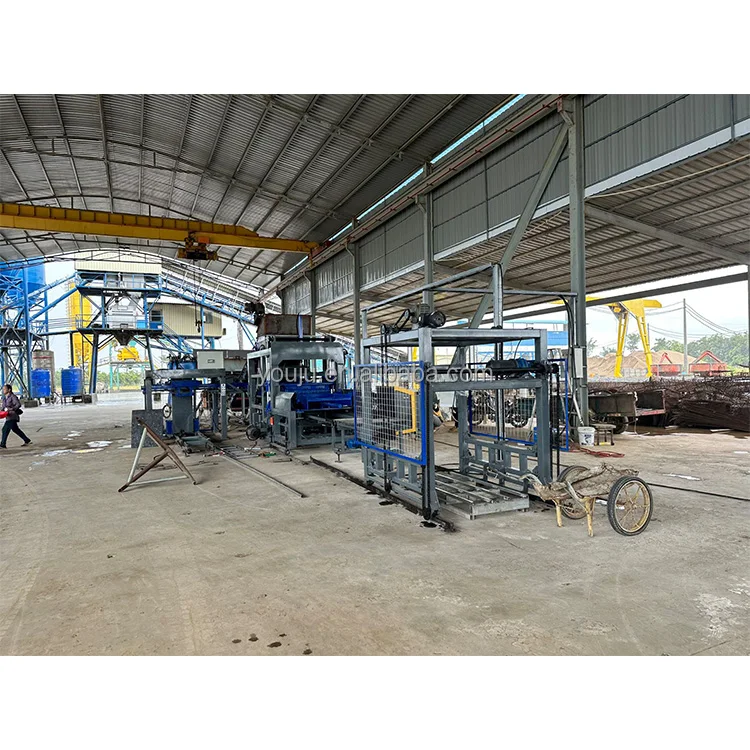
The QT6-15 hydraulic block making machine specifications are only one station in a complete production line. Raw material feeding, mixing, pallet feeding, stacking, and curing rack handling must all keep pace with the press cycle, or the machine sits idle waiting for the next pallet. We design the entire line around the press output so that feeder capacity, mixer batch size, and pallet return speed are balanced to the specific block format. Mould design is handled in-house, meaning custom drawings for non-standard block shapes can be produced without waiting on a third-party toolmaker. Automation level is selectable, so a buyer can start with manual pallet handling and add automatic stacking later without replacing the press. Every machine undergoes a factory test using the buyer’s confirmed mix design before shipment, and the PLC display language is set to the operator’s preference before the control cabinet is sealed. [NEED_CITE: CE machinery directive requirements for industrial block presses]
Documentation & Verification
- Line layout showing capacity calculated per block format you intend to produce
- Mould drawing and format list confirming every block type the quoted moulds cover
- Pallet specification sheet matched to your curing room dimensions and forklift capacity
- Voltage, frequency, and PLC language confirmation signed off before dispatch
- Factory test record run on your target block format with your confirmed mix ratio
Installation, Commissioning & Support
- Foundation pad sized to the 7100×1500 mm footprint with anchor bolt template provided
- Dedicated 31.25 kW circuit with voltage and frequency confirmed to local grid standards
- Machine shipped in dismantled state with reassembly sequence documented per station
- PLC parameters calibrated on-site to your local aggregate during first production run
- Operator training covers mould change procedure, cycle adjustment, and daily maintenance checks
- Wear parts list and hydraulic seal kit supplied for the first replacement cycle
What We Need From You to Size This Machine Correctly
Tell us the exact block formats your market buys, including wall thickness and target compressive strength. Share a sample or lab report of your local sand and stone so we can run a mix trial. Let us know your available curing area dimensions and any existing forklifts or pallet racks. We also need your site voltage and frequency, plus the preferred PLC display language, so the QT6-15 arrives ready to run.
Frequently Asked Questions
Q: How is the QT6-15 output capacity verified for my specific block format?
A: We calculate capacity using the moulding cycle time for your exact block dimensions and wall thickness, not a generic figure. A trial run with your local aggregate confirms the vibration and pressure settings needed to reach target strength, and the resulting cycle time is documented in the line layout before shipment.
Q: Which mould formats are available and what is the realistic cycle time per format?
A: Replaceable moulds cover hollow blocks, solid bricks, paving blocks, and custom shapes. Cycle time within the 15–25 second range depends on block height and wall thickness — a thin paver completes faster than a 200 mm hollow block. We provide a format-specific cycle table so you can plan daily output accurately.
Q: How should vibration force and hydraulic pressure be matched to my local aggregate?
A: Angular crushed stone needs different vibration frequency and amplitude than rounded gravel or lightweight scoria. We test your aggregate sample at the factory, adjusting the 4500–5100 r/min range and 21 MPa pressure to find the combination that delivers target block strength without surface cracking.
Q: What pallet size and material are recommended for my curing area and forklift?
A: The standard 880×850 mm pallet works for many layouts, but we verify against your curing rack spacing and forklift rated load. If your yard uses a different pallet dimension, we adjust the feed system so pallets move from press to curing area without manual restacking or handling delays.
Q: What voltage, frequency, and PLC language options are confirmed before delivery?
A: We confirm your site voltage and frequency before production, configure the motor and control cabinet accordingly, and set the PLC display to your operator’s preferred language. A written confirmation sheet is signed off by both sides so no re-wiring or re-programming is needed when the QT6-15 arrives on site.