

Description
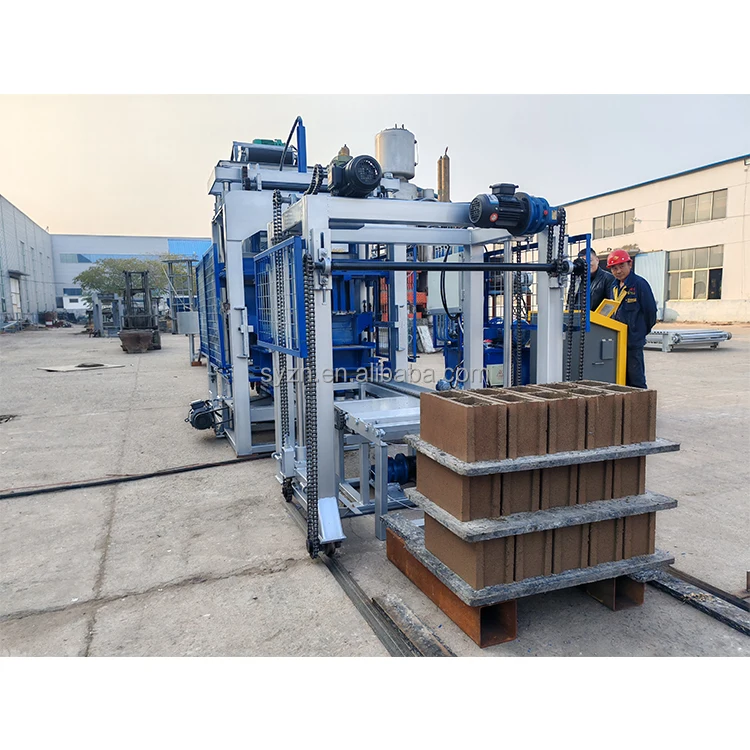
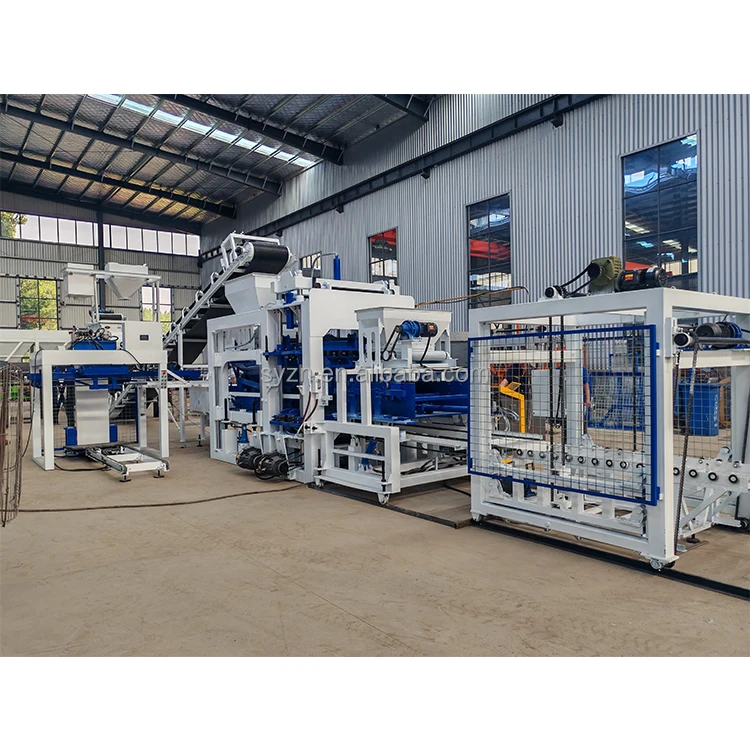
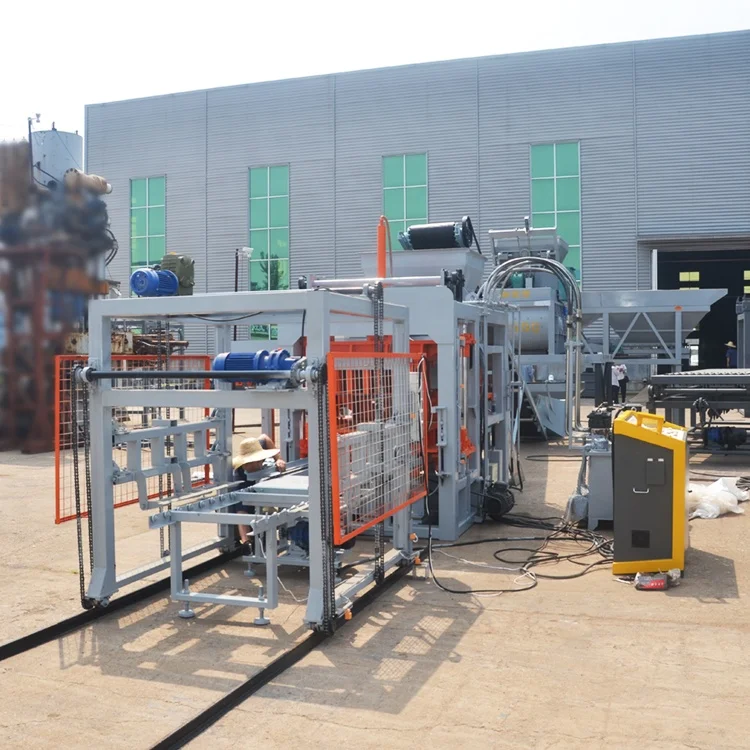
Matched System Configuration — The QT6-15 block machine, its 880×850 mm pallets, and the selected mould set are specified together against your local aggregate and target block format, not sourced as separate items and assembled on site.
Technical Specifications
| Parameter | Value |
|---|---|
| Model | QT6-15 |
| Product Type | Hydraulic Hollow Block Making Machine |
| Overall Dimensions (L×W×H) | 8200 × 1700 × 2950 mm |
| Total Mass | 7 T |
| Overall Power | 37 kW |
| Vibration Form | Platform Vibration |
| Vibration Frequency Range | 0–60 Hz |
| Vibration Force | 45 kN |
| Moulding Mode | Automatic loading, vibration moulding |
| Demolding Method | Hydraulic |
| Pallet Size | 880 × 850 mm |
| Molding Cycle (Hollow Blocks / Solid Bricks) | 15–20 s |
| Molding Cycle (Paving Blocks) | 20–25 s |
| Control System | PLC with touch screen |
| Factory Area Required | 1200 m² |
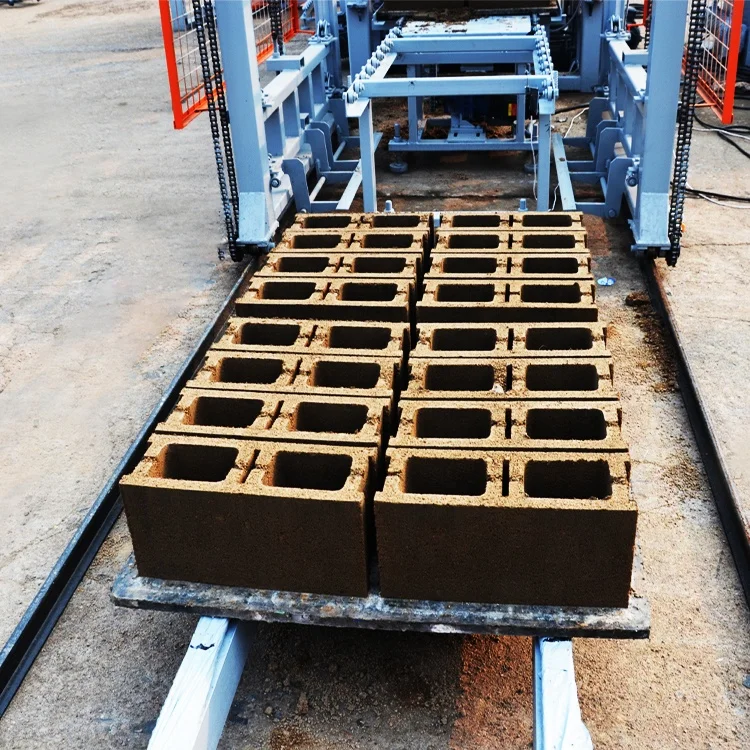
| Output — Hollow Block 400×200×200 mm | 1080–1440 pcs/hour, based on 6 pcs/mould, 15–20 s cycle |
| Output — Hollow Block 400×150×200 mm | 1440–1920 pcs/hour, based on 8 pcs/mould, 15–20 s cycle |
| Output — Solid Brick 240×115×53 mm | 5760–7680 pcs/hour, based on 32 pcs/mould, 15–20 s cycle |
| Output — Rectangular Paver 200×100×60 mm | 2160–2880 pcs/hour, based on 21 pcs/mould, 20–25 s cycle |
| Output — Zigzag Paver 225×112.5×60 mm | 2160–2880 pcs/hour, based on 15 pcs/mould, 20–25 s cycle |
| Automation Level | Semi-automatic to automatic (PLC controlled) |
| Warranty | 1 year for the whole machine (excluding spare parts) |
| CE Declaration | Available where applicable (confirm for specific shipment) |
| Hydraulic Pressure | (basis not stated in source — confirm system rating) |
| Voltage & Frequency | (basis not stated in source — confirm target market supply) |
Application Suitability
| Application | Material or Output |
|---|---|
| Hollow block production for bearing and non-bearing walls | Crushed stone, sand, cement, and waste ash blends in 400×200×200 mm and 400×150×200 mm formats |
| Solid brick manufacturing | Local aggregate and cement mixes producing 240×115×53 mm standard bricks |
| Paving block production for walkways and yards | Interlocking and rectangular pavers from high-strength concrete mixes with reduced cement dosage |
| On-site construction block production | Housing and infrastructure project sites producing hollow blocks from locally sourced aggregates |
| New block plant start-up | Entrepreneurs entering block production with format-specific capacity data to validate the business case |
What the Catalogue Capacity Number Leaves Out About QT6-15 Block Machine Specifications
A single output figure without a named block format, mould cavity count, and cycle time tells you nothing about your actual shift production.
I once configured a QT6-15 for a buyer who sized his order against a brochure headline number. When the machine arrived and ran his local aggregate — high clay content, completely different from the sand used in the factory test — the vibration force at the default frequency could not compact the mix properly. Block strength fell below spec, cycle times stretched, and his daily output dropped to roughly half the quoted figure. We spent weeks adjusting vibration parameters remotely before the line stabilised. That is why QT6-15 block machine specifications must be read against the exact format you intend to produce, not a generic peak number [NEED_CITE: block strength testing standards for concrete masonry units].
Cycle Time Stated per Format, Not a Blanket Average
The QT6-15 runs hollow blocks and solid bricks at a 15–20 second cycle and paving blocks at 20–25 seconds. These are separate, format-specific ranges — not a single averaged figure applied across the entire product list. When you calculate shift output, multiply the pcs per mould by the number of cycles your operators can realistically sustain over eight hours, accounting for pallet changes, mix delivery pauses, and mould switches. The hollow block machine how to choose question starts here: if your market mostly buys 400×200×200 mm hollow blocks, your baseline is 6 pcs per mould at 15–20 seconds, and everything else is secondary.
Vibration Force and Frequency Matched to Compactness Requirements
Platform vibration at 45 kN across a 0–60 Hz range gives the QT6-15 the adjustability needed when local aggregate properties shift between batches. Higher frequency with lower amplitude suits fine sand mixes, while lower frequency with sustained force compacts coarser crushed stone more effectively. The PLC touch screen lets operators store vibration profiles for each block format, so switching from hollow blocks to pavers does not mean starting the tuning process from scratch [NEED_CITE: vibration compaction principles in concrete block manufacturing].
Pallet Dimensions and Curing Area Alignment
The 880×850 mm pallet size is locked to the mould format range of this machine. Before confirming an order, check that your curing racks, floor space layout, and forklift fork width all accommodate this pallet dimension. A mismatch here does not show up in the machine specifications — it shows up on the first production day when pallets jam at the stacking station or the forklift cannot lift a full rack load.
Reading the Specs Against Your Actual Product Mix
The total installed power of 37 kW covers the hydraulic system, vibration motors, and PLC control together. The factory area requirement of 1200 m² accounts for the press, raw material feeding, pallet circulation, and a basic curing zone — not the aggregate stockpile yard. When reviewing QT6-15 block machine specifications, treat the overall dimensions of 8200 × 1700 × 2950 mm as the press footprint alone; the full line layout extends well beyond this envelope depending on your chosen automation level.
Why Mould Change Time Determines Real Format Flexibility
The QT6-15 can run hollow blocks, solid bricks, and interlocking pavers on the same press, but format flexibility only matters if the mould change fits within your shift schedule. A change that takes an entire morning effectively limits you to one format per day. Ask for the documented mould change procedure and the time it takes with your operator skill level — not the best-case figure from a factory demonstration.
Choosing the Automation Level That Matches Your Labour Market
The QT6-15 is configurable from semi-automatic with manual pallet handling through to fully automatic stacking and cubing. The right choice depends on local labour costs, operator skill availability, and your production volume target. Starting semi-automatic and upgrading later is a valid path — the PLC architecture supports adding automatic pallet feeding and stacking modules without replacing the press [NEED_CITE: automation upgrade paths in concrete block production lines].
The Hidden Cost of Skipping the Aggregate Report
When a machine is configured for a standard sand-cement mix and your local aggregate contains high clay or organic matter, the vibration parameters, hydraulic pressure, and moulding cycle all need adjustment. If this is discovered after the machine ships, you face weeks of trial-and-error commissioning instead of a clean start. Providing your local aggregate test report before the configuration is finalised lets the vibration force and frequency be set to match what your plant will actually process.
Why This Configuration Approach Works
The QT6-15 is treated as part of a matched system — press, mould, pallet, and handling equipment are specified together rather than assembled from separate suppliers. Configuration is set against your actual mix design, local aggregate, and target block format, not pulled from a catalogue default. Mould design covers the formats your market sells, including custom drawings when standard sizes do not match local building codes. The automation level is selectable so you can start at a comfortable investment point and add modules as volume grows. Installation includes commissioning support with operator training on your specific product range [NEED_CITE: CE machinery directive requirements for industrial block making equipment].
Documentation & Verification
- Line layout and capacity calculation stating the exact block format assumed for each QT6-15 output figure
- Mould drawing and format list confirming included and optional block sizes
- Voltage, frequency, and PLC display language written confirmation before production starts
- Pallet specification sheet covering size, material, and quantity matched to your curing racks
- Factory test record on your specified block format before dispatch
- Hydraulic and electrical schematic for your site maintenance team
Installation, Commissioning & Support
- Foundation plan sized to the QT6-15 overall mass of 7 T and vibration load during platform operation
- Dedicated power circuit rated for the 37 kW overall power draw with correct voltage and frequency for your site
- Machine dispatched in dismantled state with reassembly sequence documented for your installation crew
- PLC touch screen parameters set to your confirmed block formats during on-site commissioning
- Operator training covering mould change procedure, vibration profile selection, and daily maintenance checks
- Wear parts and hydraulic seal list provided with recommended replacement intervals for your production volume
What to Prepare Before Requesting a Quotation
To give you a configuration that matches your actual production conditions rather than a catalogue default, the following details are needed: the block formats your market currently buys and their dimensions, your local aggregate type with a lab test report if available, your target daily output per format, the voltage and frequency at your site, and the preferred PLC display language for your operators. If you already have curing racks or forklifts in place, share their specifications so the pallet size and stacking method can be aligned before the line is laid out.
Frequently Asked Questions
Q: How is the output capacity verified per block format for the QT6-15?
A: Each capacity figure is based on a stated block format, pcs per mould, and cycle time range — for example, 1080–1440 hollow blocks per hour assumes the 400×200×200 mm format at 6 pcs per mould with a 15–20 second cycle. Ask for the written capacity calculation document that names every format and its assumptions before placing your order.
Q: Which pallet size does the QT6-15 require and why does it matter?
A: The machine uses 880×850 mm pallets, and this dimension must align with your curing rack spacing, stacking method, and forklift capacity. Ordering pallets without checking these downstream elements causes jams at the stacking station or damage during rack loading, which stops production and negates the machine’s rated output.
Q: What voltage, frequency, and PLC language will the machine ship with?
A: These must be confirmed against your site power supply and operator language before production begins. Changing voltage transformers or reprogramming the PLC display after the machine arrives causes commissioning delays that can extend for several weeks while replacement components are sourced.
Q: How long does a mould change take on the QT6-15?
A: The change procedure and time depend on the mould format and your operator experience level. Request the documented change sequence and verify it against your shift schedule — if a change consumes most of a morning, your plant effectively runs one format per day regardless of how many moulds you own.
Q: Which raw materials can the QT6-15 process?
A: The machine handles crushed stone, sand, waste ash, slag, and cement blends with reduced cement dosage. The vibration profile and hydraulic pressure must be matched to your specific local aggregate. Providing a lab test report of your material before configuration ensures the machine arrives tuned to what your plant will actually feed it.