


Description
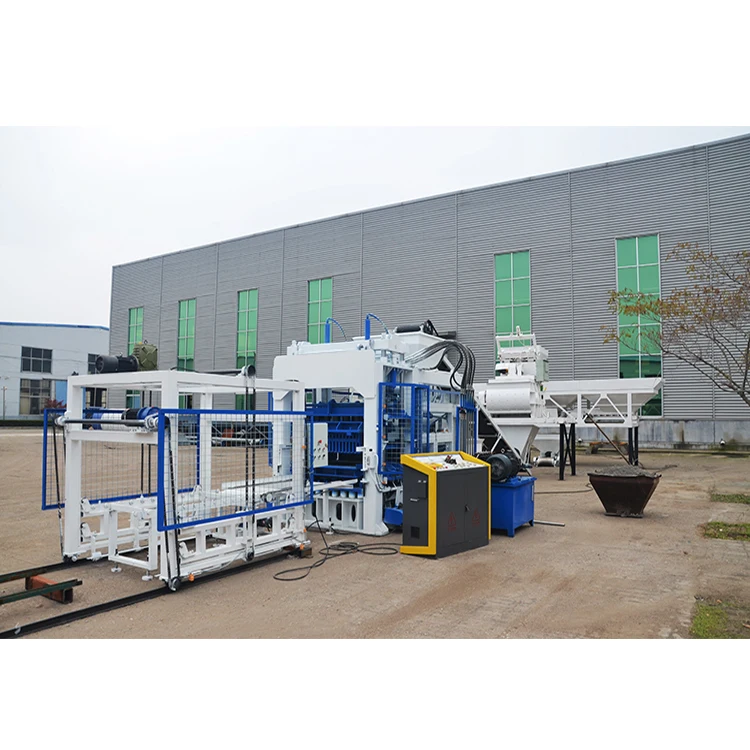
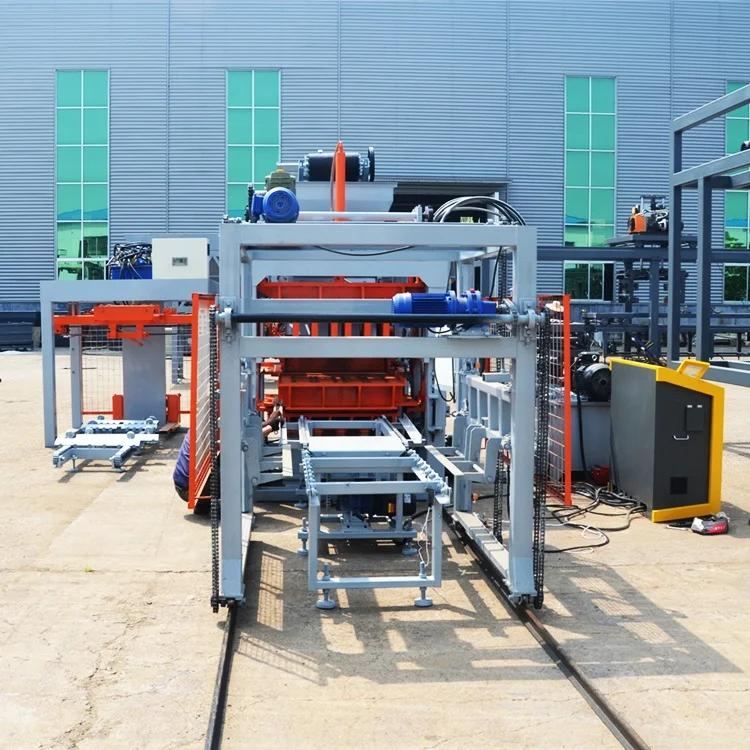
[Format-Specific Capacity] — the QT6-12 block machine is sized against the buyer’s actual block format, local aggregate and pallet flow rather than a single headline output number.
Technical Specifications
| Parameter | Value |
|---|---|
| Model | QT6-12 |
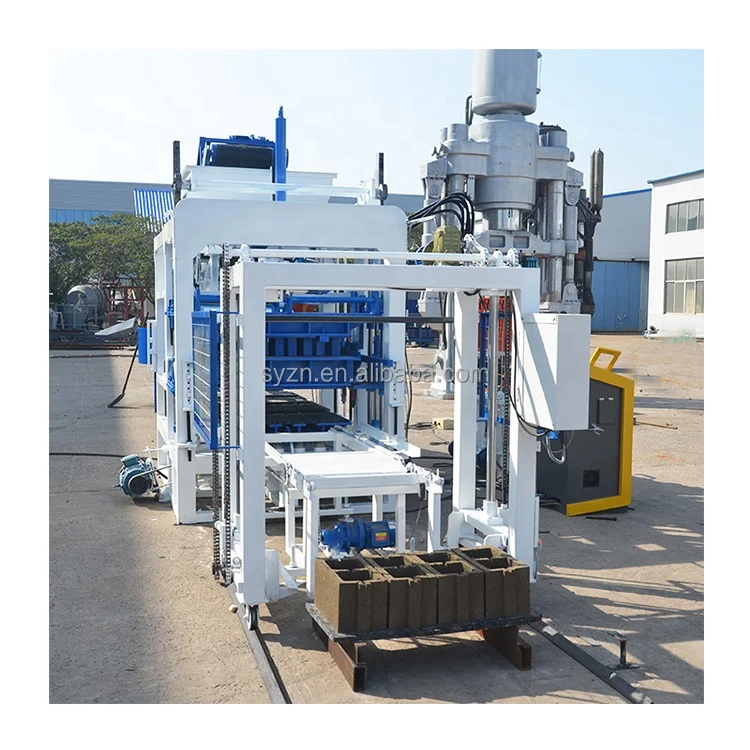
| Product Type | Automatic Hydraulic Block Making Machine |
| Overall Dimensions (L×W×H) | 7350×1780×2950 mm |
| Rated Power | 30.5 kW |
| Hydraulic Pressure | 16 MPa |
| Main Vibration | Platform vibration |
| Vibration Frequency | 4600 r/min |
| Pallet Size | 880×700 mm |
| Moulding Cycle | 14–20 s (varies by block format) |
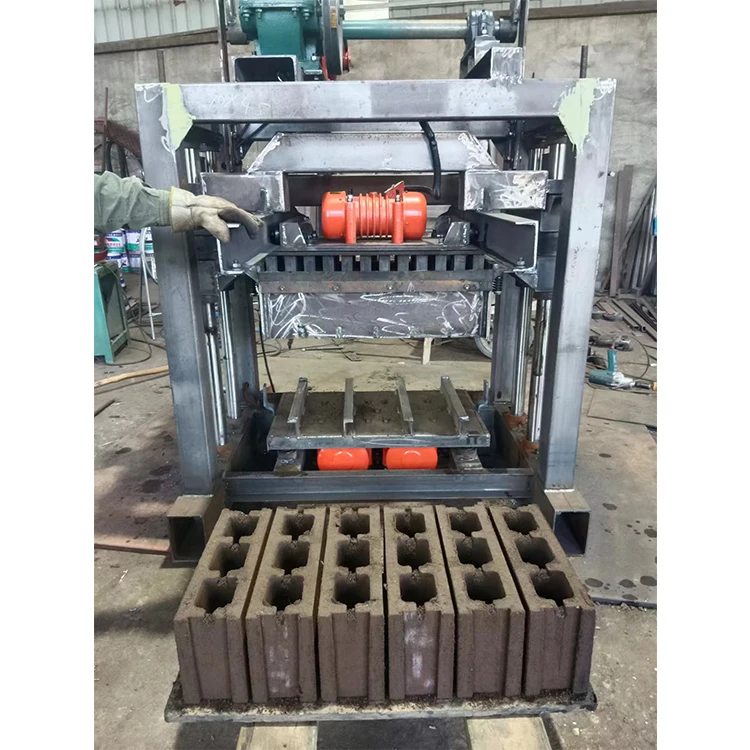
| Output – Hollow Block 400×200×200 mm | 1080 pcs/h, 8640 pcs/day (6 pcs/mould, 16–20 s cycle) |
| Output – Porous Brick 240×115×90 mm | 2800 pcs/h, 22400 pcs/day (14 pcs/mould, 15–18 s cycle) |
| Output – Standard Brick 240×115×53 mm | 6800 pcs/h, 54400 pcs/day (30 pcs/mould, 14–17 s cycle) |
| Raw Materials | Crushed stone, sand, cement, fly ash, cinder, slag, gangue, gravel, perlite, industrial wastes |
| Automation Level | Automatic |
| Control System | PLC (language to be confirmed with buyer before production) |
| Voltage & Frequency | Configurable (to be confirmed against buyer’s site supply) |
| Standards | CE, SGS, ISO 9001 |
Application Suitability
| Application | Material or Output |
|---|---|
| Hollow block production for residential and commercial walls | Crushed stone, sand, cement, fly ash blends |
| Standard and porous brick manufacturing | Local aggregate with cement binder |
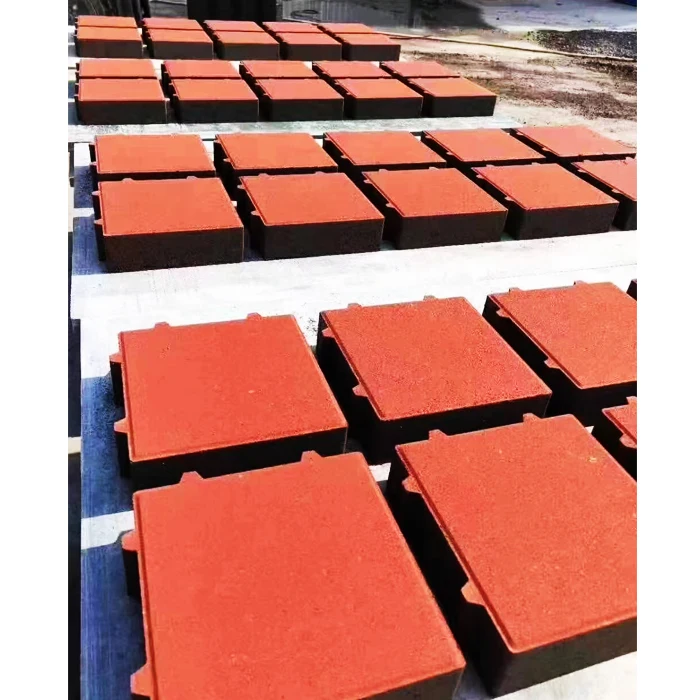
| Paving stone and interlocking block production | Face-mix or single-layer concrete |
| Kerbstone, edger and slope block fabrication | Dense concrete mixes with coarse aggregate |
| Landscaping and garden block products | Lightweight aggregates including perlite and cinder |
| On-site production for housing and development projects | Locally sourced sand, gravel and industrial waste |
What "8640 Blocks per Day" Actually Means for the QT6-12 Block Machine
Capacity only matters when the block format, mould cavity count and cycle time behind it are visible.
Too many quotations state a daily output figure without naming the block size or the cycle assumption. A buyer compares two machines on that single number and assumes the comparison is fair. It rarely is. The QT6-12 hollow block making machine quotes its 8640-piece daily capacity specifically for a 400×200×200 mm hollow block at six cavities per mould and a 16–20 second cycle. Switch that same press to a 240×115×53 mm standard brick at thirty cavities and the number jumps to 54400 pieces per day — not because the machine runs faster, but because the format is smaller and the mould holds more. I have sat with buyers who signed off on a capacity figure, then discovered on commissioning day that the block their market actually sells was never the one used for the calculation [NEED_CITE: common causes of block machine output shortfall versus quoted capacity].
Matching Vibration and Pressure to Your Mix Design
Platform vibration at 4600 r/min paired with 16 MPa hydraulic pressure gives the QT6-12 brick machine a wide compaction envelope, but that envelope only works when the vibration force is matched to the buyer’s specific aggregate and cement ratio. A mix heavy in fine sand needs different vibration amplitude and dwell time than one built around coarse crushed stone. When the match is right, block strength stays consistent across every pallet. When it is wrong, the outer shell looks fine but the core remains loose, and breakage shows up at the curing rack. This is where a QT6-12 block machine specifications review must go beyond the nameplate and into the buyer’s actual material test results.
Pallet Size, Curing Area and the Bottleneck Nobody Quotes
The 880×700 mm pallet is the interface between the press and everything downstream. If the buyer’s curing racks are built for a different pallet dimension, or the site forklift cannot handle the loaded pallet weight at that size, the press sits idle while workers move block by hand. I always ask for the curing area layout and the forklift model before finalizing the pallet specification, because a mismatch here cancels out whatever cycle time advantage the press itself offers. The QT6-12 block making machine can cycle every 14 to 20 seconds, but the line only moves as fast as the pallets can be fed, stripped and returned [NEED_CITE: pallet handling bottlenecks in concrete block production lines].
Reading the Core Specs Beyond the Brochure
The rated power of 30.5 kW covers the main vibration motor, hydraulic pump and conveyor drives. Buyers in regions with unstable grid supply should confirm whether the local transformer can sustain that draw through repeated start-stop cycles without voltage sag, which directly affects hydraulic pressure consistency and therefore block density. The moulding cycle range of 14–20 seconds reflects the spread across formats — a thin standard brick compacts and releases faster than a tall hollow block that needs longer vibration dwell to settle the core. Hydraulic pressure at 16 MPa is adequate for most structural block grades, but interlocking pavers with face-mix layers may require longer hold times at pressure to bond the two layers cleanly. Understanding these relationships is the real value of reviewing QT6-12 block machine specifications before placing an order.
The Hidden Cost of Skipping Format-Level Sizing
When a machine is ordered on a headline output number, the first sign of trouble is usually the mould change. A buyer who planned to run hollow block in the morning and paving stone in the afternoon discovers that the changeover consumes most of a shift, wiping out the format flexibility they paid for. Then the first replacement mould arrives and does not seat correctly because the mould drawing was never reviewed against the machine’s platen dimensions. These problems do not show up in the quotation stage [NEED_CITE: block machine mould compatibility and changeover downtime factors]. They show up three months after commissioning, when the buyer is already committed and the production schedule is slipping.
Why Buyers Source This Machine Through Our Configuration Process
Block machinery is our single focus, which means the QT6-12 press, its moulds, pallets and handling equipment are specified as one matched system rather than assembled from unrelated suppliers. Configuration is set against the buyer’s actual mix design and local aggregate, not pulled from a catalogue default. We design and supply moulds for the formats the buyer’s market sells, including custom drawings when a standard mould does not fit the product range. Automation level is selectable, so a buyer can start with semi-automatic pallet handling and add automatic stacking later as volume grows. Every machine ships with installation support and operator training on site, because the first week of production is when settings either hold or drift.
Documentation & Verification
- Line layout with capacity calculation stating the block format assumed for each output figure
- Machine specification sheet confirming hydraulic pressure, vibration frequency and pallet size
- Mould drawing and format list for every mould included in the order
- Voltage, frequency and PLC display language confirmation signed off before production
- Factory test record showing cycle times on the buyer’s specified block formats
- Wear parts and mould list with part numbers for first replacement orders
Installation, Commissioning & Support
- Foundation plan referencing the 7350×1780 mm machine footprint and dynamic load from platform vibration
- Power supply check confirming 30.5 kW draw and dedicated circuit for the hydraulic pump motor
- Dismantling and container loading plan for shipment, with reassembly sequence on site
- First-run commissioning covering vibration frequency tuning and hydraulic pressure adjustment to the buyer’s mix
- Operator training on PLC interface, mould change procedure and daily maintenance checkpoints
- Wear parts schedule covering hydraulic seals, vibration springs and mould liners with reorder lead times
What We Need to Size the QT6-12 to Your Line
Send us the block format your market sells most — dimensions, weight target and daily volume requirement. Include a sample or lab report of your local aggregate so we can match vibration and pressure settings before the machine is built. Let us know your site voltage, frequency and the language your operators read, along with the curing area dimensions and forklift capacity already in place. With that information we can return a QT6-12 brick machine configuration that holds up from factory test to first production run.
Frequently Asked Questions
Q: How is QT6-12 capacity verified, and what block format is each figure based on?
A: Every output figure we quote names the block dimensions, mould cavity count and cycle time behind it. For example, 8640 pieces per day assumes a 400×200×200 mm hollow block at six cavities and a 16–20 second cycle. We provide a written capacity calculation per format so buyers can compare honestly.
Q: How do I match vibration force and hydraulic pressure to my local aggregate?
A: We ask for a sample or lab analysis of your aggregate — particle size distribution, moisture range and cement ratio. The QT6-12’s 4600 r/min platform vibration and 16 MPa hydraulic pressure are then tuned in factory testing against that mix to confirm consistent block density before dispatch.
Q: What pallet size should I choose based on my existing curing area and forklift?
A: The standard 880×700 mm pallet must be checked against your curing rack spacing and forklift fork width and load rating. If either does not match, we adjust the pallet specification before production so the press, pallet and curing area work as one continuous flow without manual handling bottlenecks.
Q: Which voltage, frequency and PLC language options are available, and when must they be confirmed?
A: Voltage and frequency are configurable to your site supply. PLC display language is set to your operator preference. Both must be confirmed in writing before production starts — changing them after the machine is built causes commissioning delays and may require component replacement on arrival.
Q: How long does a mould change take on the QT6-12, and what affects it?
A: Mould change time depends on the mould type, fastening system and whether the operator has done it before. We provide the mould drawing, changeover procedure and training during commissioning so the team can complete the swap within a planned maintenance window rather than losing a full shift.