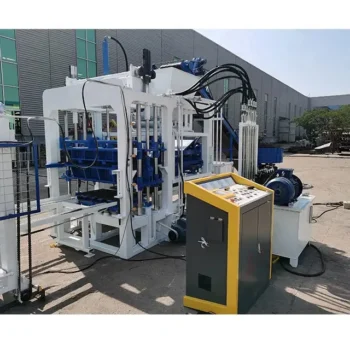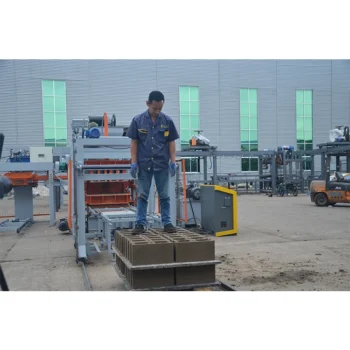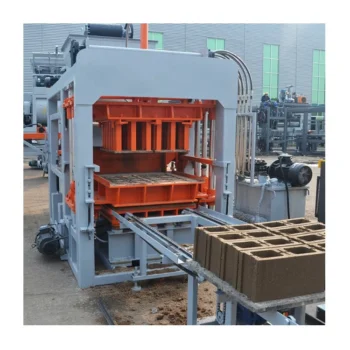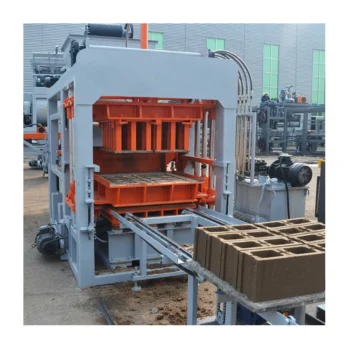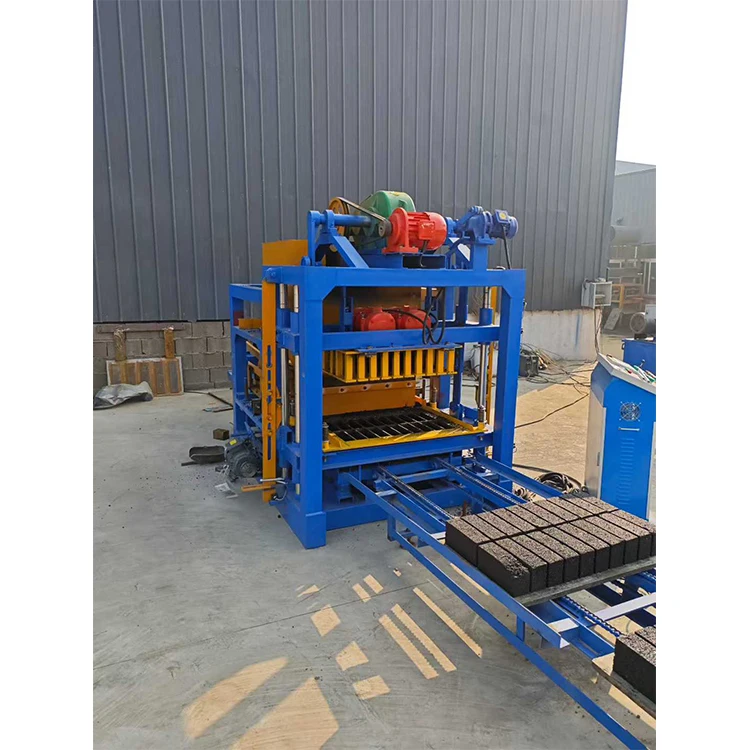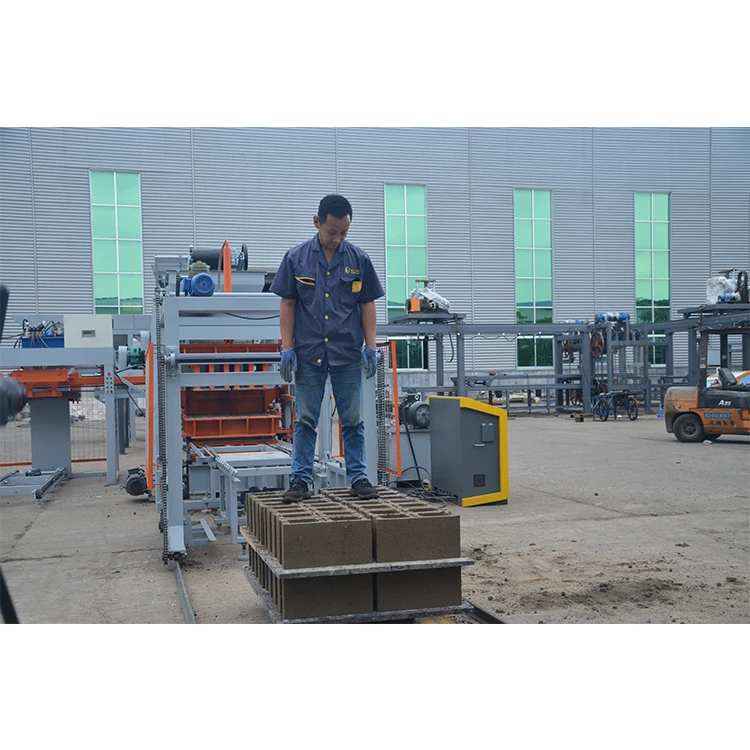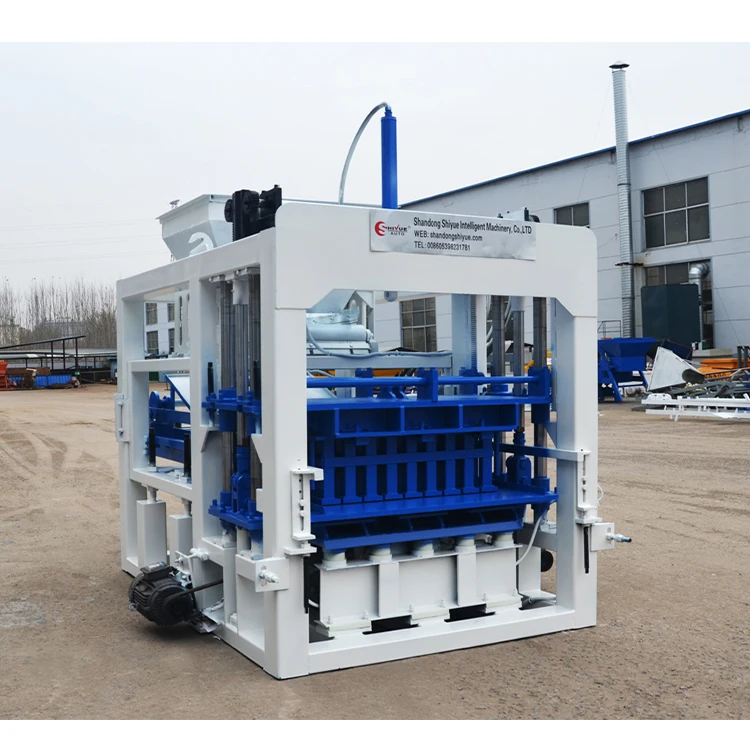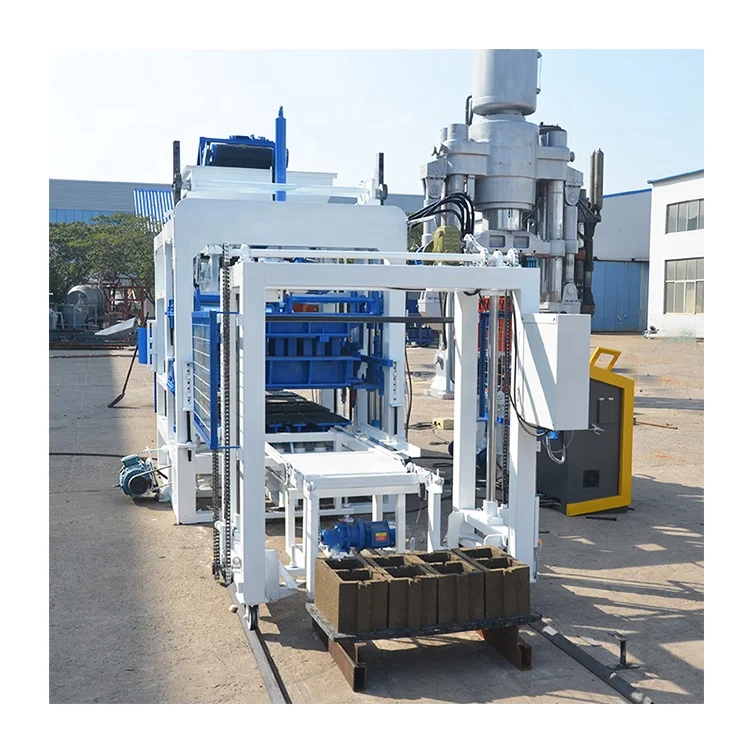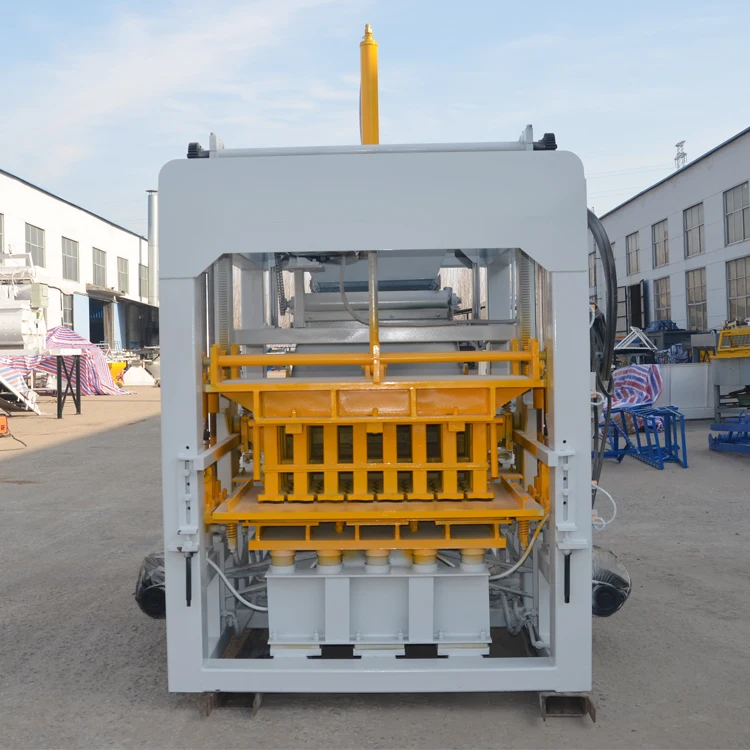
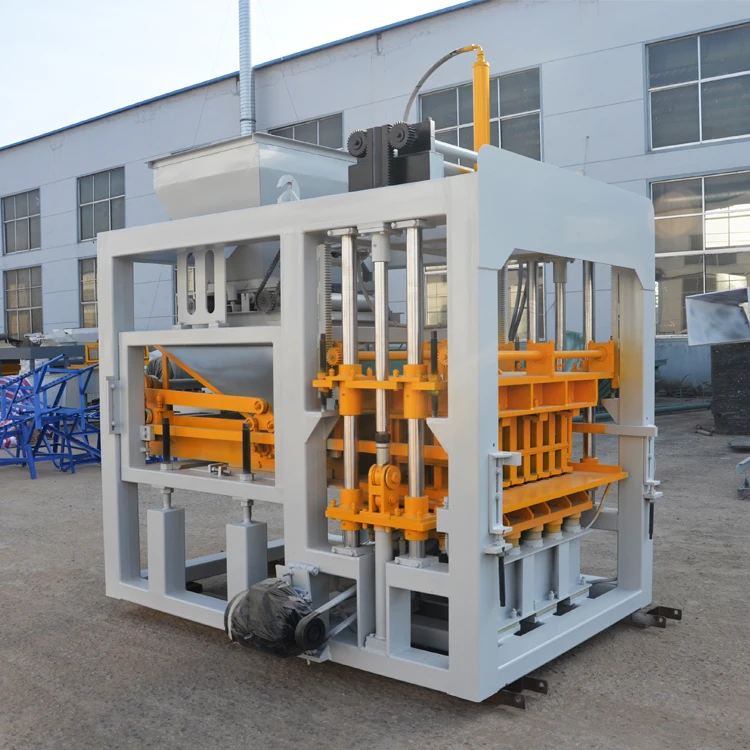
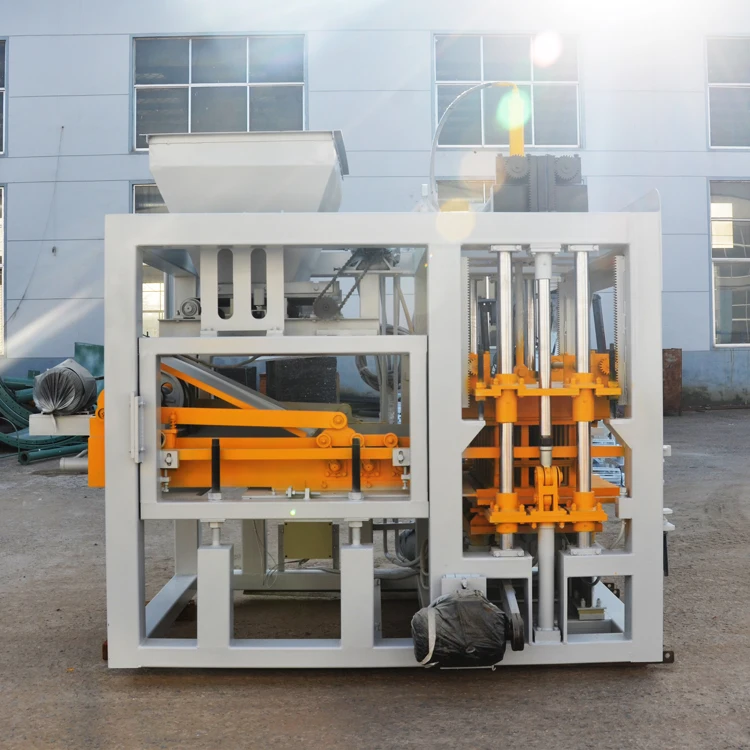
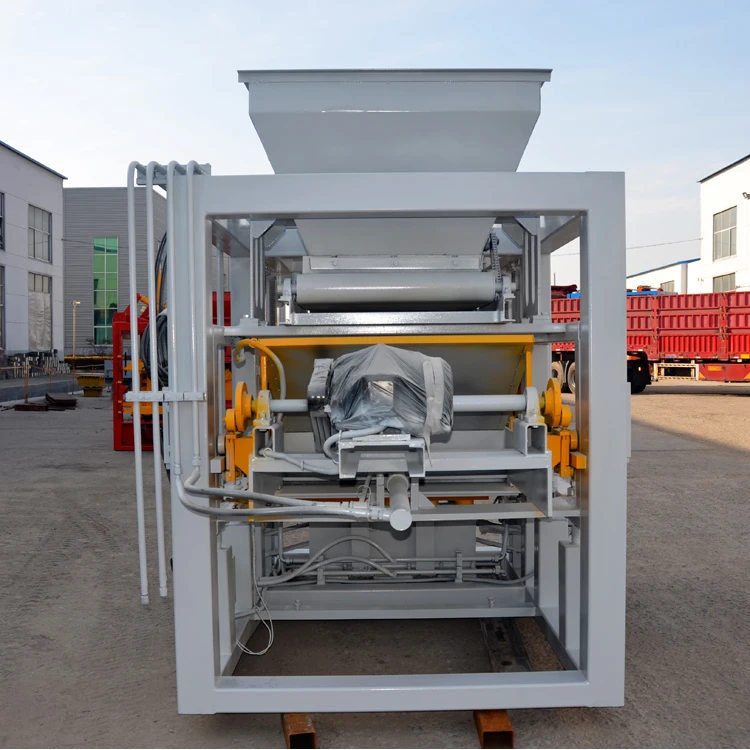
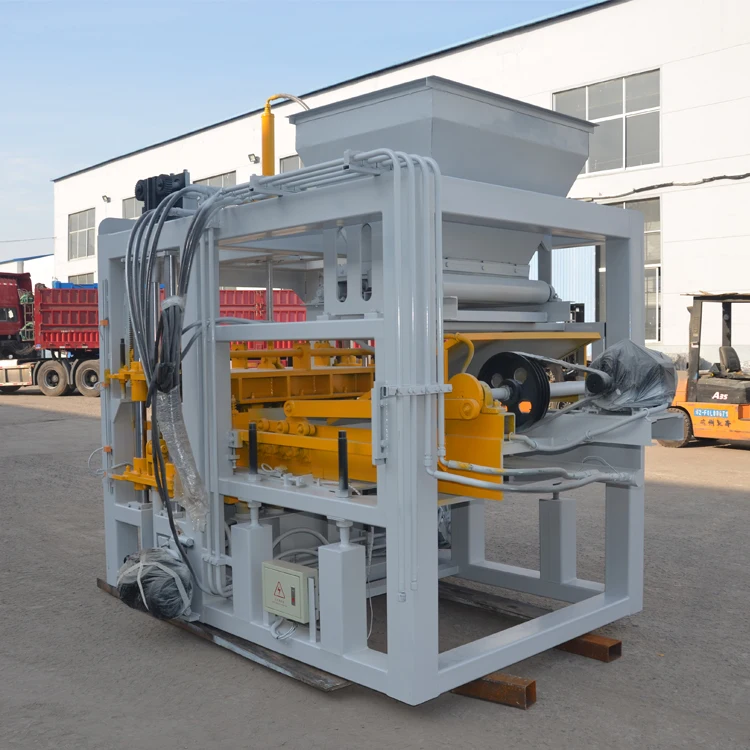
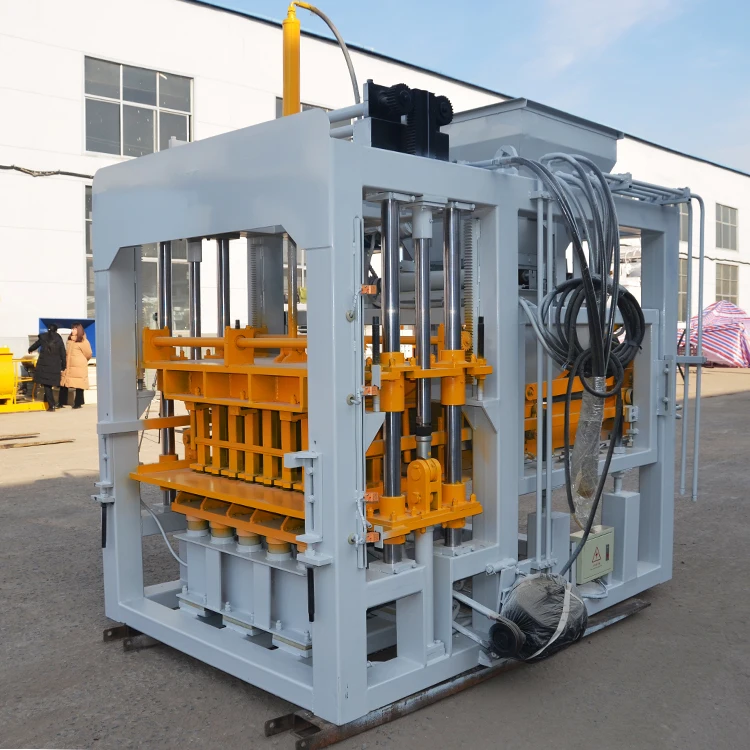
Description
Mould-first configuration — Every cycle time and output figure we quote for the QT5-15 is tied to a specific block format, pallet size, and local aggregate, not pulled from a generic catalogue chart.
Technical Specifications
| Parameter | Value |
|---|---|
| Model | QT5-15 |
| Product Type | Automatic Concrete Block Making Machine |
| Dimension of Host Machine | 5870 × 2220 × 2850 mm |
| Weight of Host Machine | 5.5 Tons |
| Molding Area | 1050 × 500 mm |
| Host Machine Power | 31.5 kW |
| Vibration Force | 55 kN |
| Vibration Frequency | 2800–4500 Times/Minute |
| Vibration Method | Hydraulic + Platform Vibration |
| Pallet Size | 1100 × 550 × 25 mm |
| Mould Hardness | 54–58 HRC (heat treatment and carburizing) |
| Control System | Siemens PLC with independently developed program |
| Motor Brand | Germany SIEMENS or CE standard brand |
| Travel Switch | France Schneider / Japan Omron |
| Voltage | 220 / 380 / 415 / 440V (Customized) |
| Automation Level | Full Automatic |
| Stacking Method | Automatic stacker (SY-4 model, 3 kW) |
| Batching Machine | PLD1200, weigh-batching hopper 1200L, ingredient precision ±2% |
| Concrete Mixer | JS500, discharging volume 500L, production capacity 25 m³/h |
| Mould Format Options | Interlocking, solid, paver, hollow |
| Molding Period | 15 Seconds (basis not stated in source — confirm block format and material) |
| Warranty | 1 year for whole machine (excluding spare parts) |
| Standards | CE (referenced for materials and component standards) |
Application Suitability
| Application | Material or Output |
|---|---|
| Hollow block production for wall construction | Crushed stone, sand, cement, and water mix |
| Interlocking brick production for landscaping | Fine aggregate with cement binder |
| Paving block production for roads and walkways | High-density concrete mix with coarse aggregate |
| Solid block production for load-bearing walls | Standard concrete mix with local aggregate |
Why "15 Seconds per Cycle" Is Not the Full Story
Cycle time only matters when you know which block is being pressed.
I have watched buyers compare automatic block making machine specifications across suppliers, picking the fastest quoted cycle and then wondering why daily output never matched the spreadsheet. A 15-second cycle on a thin paver is a very different reality from a 15-second cycle on a 200 mm hollow block, and the difference sits in the vibration duration, hydraulic hold, and mould fill sequence. Before I write a capacity number, I ask for the exact block drawing, the local aggregate sieve analysis, and the target compressive strength [NEED_CITE: relationship between aggregate grading and vibration time in block pressing]. Without those three inputs, any output figure is guesswork.
Matching Vibration to Block Density
The QT5-15 delivers 55 kN of vibration force combined with hydraulic pressure across a 1050 × 500 mm moulding area. That combination determines how tightly the concrete mix is compacted into the mould cavity. For a hollow block with thin walls, the vibration frequency needs to climb toward the upper end of the 2800–4500 times per minute range to settle fine particles into tight corners. For a thick paver, the force matters more than frequency, because the mass of concrete needs to be driven downward. The Siemens PLC stores separate parameter sets so the operator can recall the correct vibration profile for each automatic block making machine format change without manual guesswork.
What the Pallet Size Dictates Downstream
The 1100 × 550 × 25 mm pallet is the physical link between the press and everything that follows. Its length and width determine how many blocks sit on one pallet per cycle. Its thickness and material determine whether it can survive months of vibration without cracking. And its overall loaded weight determines which forklift the buyer needs in the curing yard. I always check the buyer’s existing curing rack spacing and forklift capacity before confirming pallet specification, because a mismatch here blocks the entire line [NEED_CITE: pallet handling compatibility in concrete block plants].
Reading the Numbers That Matter
The JS500 mixer discharges 500 litres per batch, which feeds the PLD1200 batching hopper at a theoretical rate tied to the mix design. If the block format demands a dry, zero-slump mix, the mixer runs longer per batch and the effective throughput drops. The 31.5 kW host machine power covers the hydraulic pump and vibration motors, but actual draw depends on cycle frequency and mould fill weight. Mould hardness at 54–58 HRC means the cavity surfaces resist abrasive wear from coarse aggregate, and the rated lifespan exceeds 100,000 cycles before re-machining or replacement becomes necessary [NEED_CITE: HRC hardness and wear life in block mould steels].
The Hidden Cost of Skipping the Mix Report
When a buyer orders a block machine without sharing their local aggregate report, the factory sets hydraulic pressure and vibration timing to a standard mix. If the buyer’s sand has high clay content, the mix sticks to the mould walls, extending the demould phase and adding seconds to every cycle. Over a shift, those extra seconds compound into a noticeably lower pallet count. The automatic stacker keeps running, but the press is feeding it fewer pallets per hour, and the buyer attributes the shortfall to machine quality rather than configuration mismatch.
Why Buyers Source the QT5-15 Here
The machine, mould, pallet, and handling equipment are specified as one system, so cycle time calculations reflect the entire line, not just the press in isolation. Mould design covers the formats the buyer’s market actually sells, including custom drawings when a regional standard does not match the catalogue list. The automation level is selectable, so a plant can start with manual pallet return and add the SY-4 automatic stacker later. Voltage and PLC display language are confirmed before production starts, eliminating on-site commissioning delays. Installation support includes operator training on format change procedures and daily maintenance checkpoints [NEED_CITE: pre-shipment voltage confirmation for exported machinery].
Documentation & Verification
- Line layout drawing showing block format assumed for each capacity figure
- Mould drawing and format list confirming included and optional moulds
- Factory test record on buyer’s specified block format before dispatch
- Voltage, frequency, and PLC language confirmation sheet signed before production
- Hydraulic and electrical schematic with component part numbers
- Operation and maintenance manual with wear parts list and replacement intervals
Installation, Commissioning & Support
- Foundation plan based on the 5870 × 2220 mm host machine footprint and 5.5 ton operating weight
- Dedicated power circuit sized for 31.5 kW host draw plus mixer and batching loads
- Machine ships partially dismantled; reassembly and alignment verified on site
- First-run parameter tuning for buyer’s specific block format and aggregate mix
- Operator training covers mould change procedure, PLC menu navigation, and daily lubrication points
- Wear parts list with mould cavity insert and hydraulic seal part numbers for reorder
Before You Send the Inquiry
Tell me the block formats you sell today and the ones you plan to add in the next two years. Share your local aggregate sieve report or a photo of the raw material stockpile, your workshop dimensions, and the voltage and frequency at your site. If you already have curing racks and forklifts, send the pallet dimensions they accept so the line is configured around what you have, not the other way around.
Frequently Asked Questions
Q: How is output capacity calculated per block format on the QT5-15?
A: We calculate output by multiplying blocks per pallet by pallets per hour, using the cycle time for each specific format. A hollow block may require a longer vibration and demould phase than a thin paver, so the pallets-per-hour rate differs. Every capacity figure on the proposal names the block format, dimensions, and mix assumption behind it.
Q: How do I confirm voltage, frequency, and PLC language before the QT5-15 ships?
A: We send a confirmation sheet listing voltage, phase, frequency, and PLC display language for your signature before production begins. Once the electrical cabinet is wired, changes require rewiring and new component orders. Getting this right at the drawing stage avoids weeks of delay at commissioning.
Q: What mould formats are available and how long does a change take?
A: The QT5-15 accepts moulds for hollow, solid, interlocking, and paving block formats. Mould change time depends on whether the machine has the quick-clamp option or standard bolt-on mounting. We state the changeover procedure and expected duration in the operator manual for each mould included in the order.
Q: How is vibration matched to my local aggregate and mix design?
A: The PLC stores separate vibration profiles for each block format. We adjust force, frequency, and duration based on your aggregate sieve analysis and target block strength. A mix with more fine sand needs a different vibration pattern than one with coarse crushed stone to achieve consistent density.
Q: Which pallet size and material should I choose for the QT5-15?
A: The standard pallet is 1100 × 550 × 25 mm, but the material — bamboo, steel, or composite — depends on your curing environment and handling equipment. We match pallet weight and rigidity to your existing forklift capacity and curing rack spacing so loaded pallets move smoothly from press to yard.