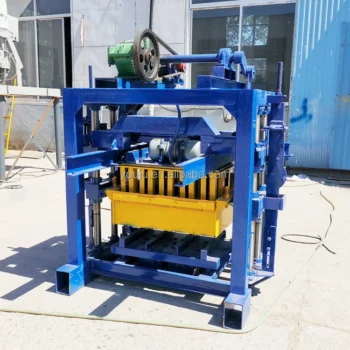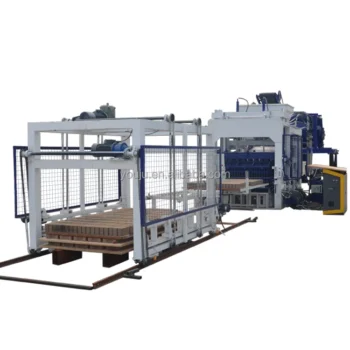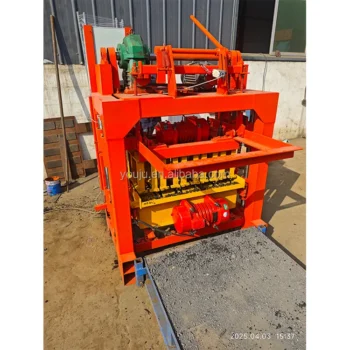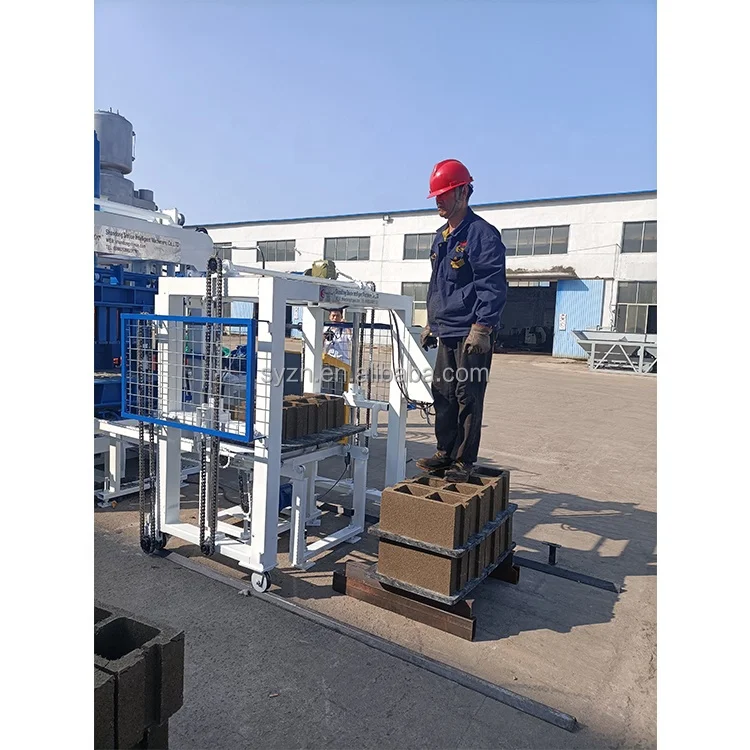
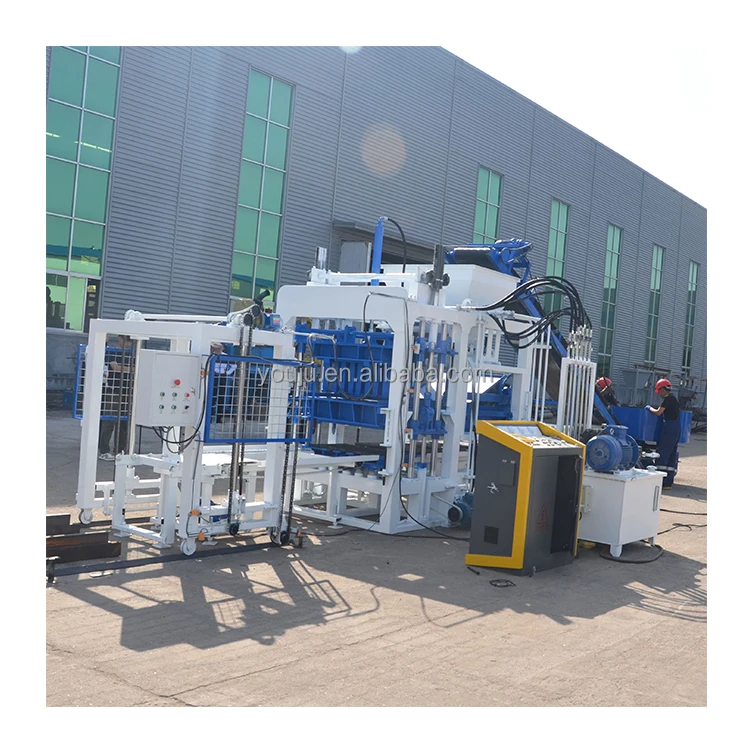

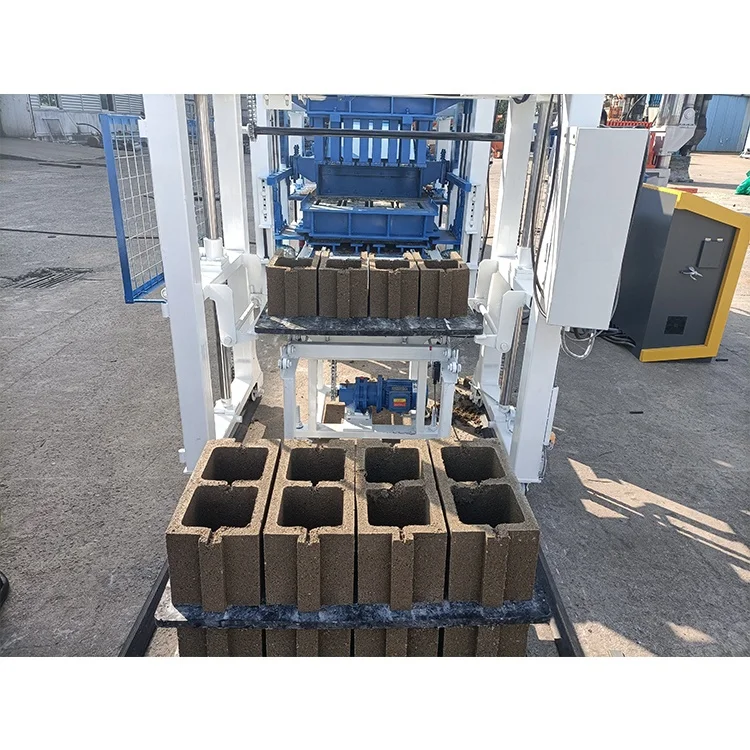
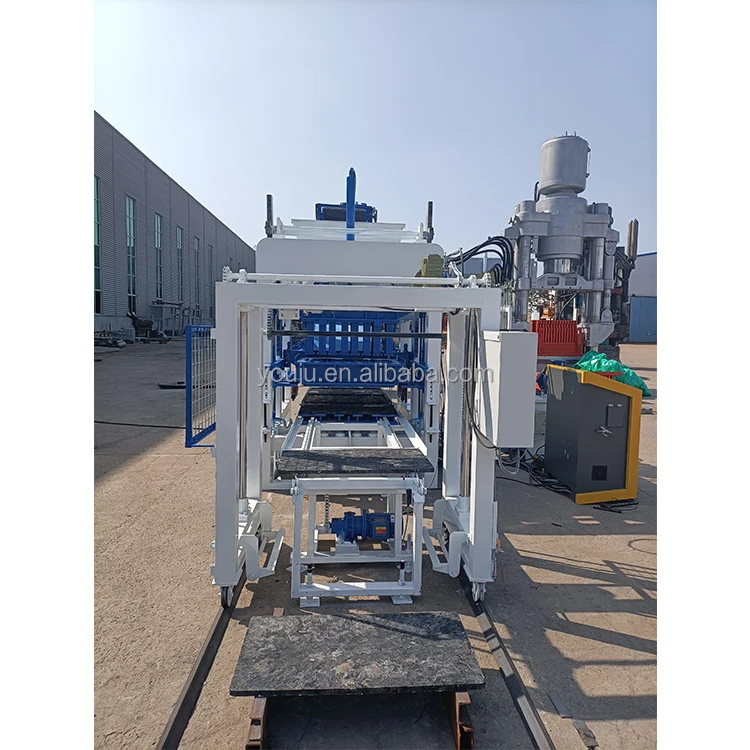
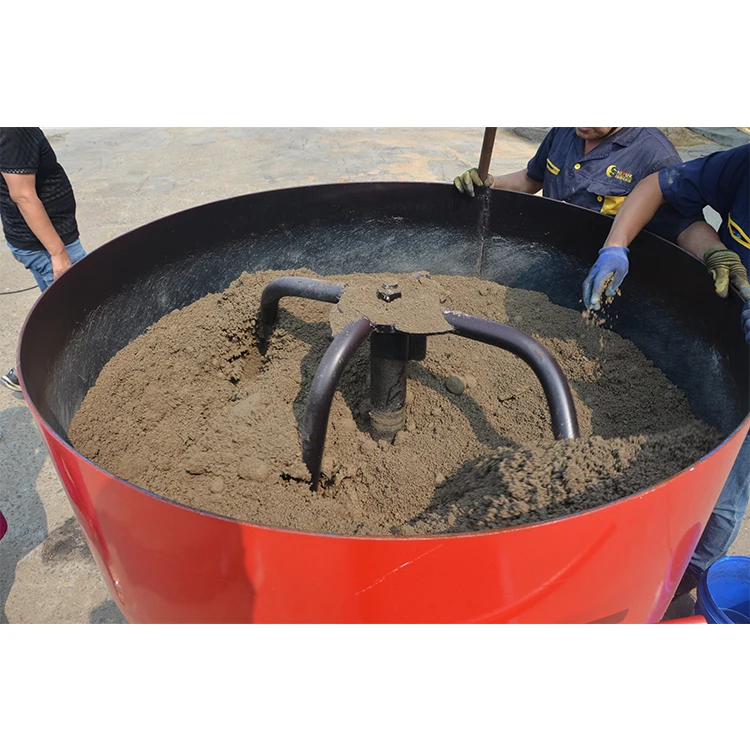
Description
Format-matched capacity — Every QT4-18 cycle time and daily output figure we publish is tied to a named block format, pallet size and mix design, so the number you plan against is the number you will see on the shop floor.
Technical Specifications
| Parameter | Value |
|---|---|
| Model | QT4-18 |
| Product Type | Automatic Concrete Block Making Machine |
| Host Machine Power | 27.5 kW |
| Vibration Force | 40 kN |
| Moulding Cycle | 15 s (basis not stated in source — confirm block format, material and wall thickness) |
| Pallet Size | 1020 × 570 mm |
| Overall Dimensions (L×W×H) | 7100 × 1600 × 2610 mm |
| Net Weight | 5 T |
| Mixer Model | JS500 |
| Voltage | 380 V (frequency to be confirmed with buyer’s site supply) |
| General Water Consumption | 4 T per day |
| Workers Required | 3–4 |
| Workshop Area | 150 m² |
| Theoretical Productivity | Source image only, exact value not extractable (basis not stated — confirm format and material) |
| Control System | To be confirmed (PLC type and display language configurable) |
| Hydraulic Pressure | To be confirmed at quotation stage |
| Mould Format Options | Hollow blocks confirmed; solid, paving and kerbstone formats available on request |
| Automation Level | Automatic (stacking and cubing method to be specified per line layout) |
| Certification | CE declaration where applicable |
Application Suitability
| Application | Material or Output |
|---|---|
| Hollow block production for residential and commercial masonry | Crushed stone, river sand or volcanic aggregate with Portland cement |
| Solid block manufacturing for load-bearing walls | Dense aggregate blends requiring high vibration force |
| Paving block and kerbstone runs for municipal contracts | Fine aggregate and pigment mixes with low water-cement ratio |
| Lightweight block production using local industrial by-products | Fly ash, pumice or expanded clay with adjusted vibration settings |
Why "15 Seconds per Cycle" Needs a Block Format Attached
A cycle time without a named block format is not a cycle time — it is a catalogue placeholder.
I once watched a buyer in Indonesia run a QT4-18 block machine on a 200 mm hollow block and wonder why the press could not reach the brochure number. The quoted 15-second cycle had been measured on a thinner paver format with a different aggregate blend. When the same buyer switched to the local volcanic lightweight aggregate, vibration force of 40 kN was no longer sufficient to compact the taller cavity wall in the same window, and block strength dropped noticeably on every third batch [NEED_CITE: effect of aggregate density on vibration compaction in stationary block presses]. Matching the QT4-18 automatic block machine to your actual product starts with sending us a sample of your raw material and the exact block drawing your market demands.
Pallet Size Determines More Than Mould Area
The 1020 × 570 mm pallet on the QT4-18 block machine specifications sheet governs how many blocks fit per cycle, but it also decides whether your existing curing racks and forklift can handle the output. A buyer who already runs bamboo or PVC pallets in a different size will face a choice between re-racking the entire curing yard or cutting new pallets to fit the press. We confirm pallet material — hardwood, bamboo composite or PVC — against the buyer’s curing temperature, humidity and stacking height before the machine enters production.
Matching Vibration Force to Local Aggregate
Forty kilonewtons of vibration force is a starting point, not a guarantee of block strength. When the aggregate grading shifts from well-graded river sand to a gap-graded crushed volcanic rock, the energy transfer through the mould table changes, and blocks may show weak corners or inconsistent density [NEED_CITE: vibration transmission variation across aggregate types in concrete masonry]. On the QT4-18 automatic block machine, the vibration amplitude and duration must be tuned to the specific mix the buyer will actually feed, which is why we ask for a material sample and a trial batch report before locking the PLC parameters.
Reading the Specification Sheet Like a Technical Buyer
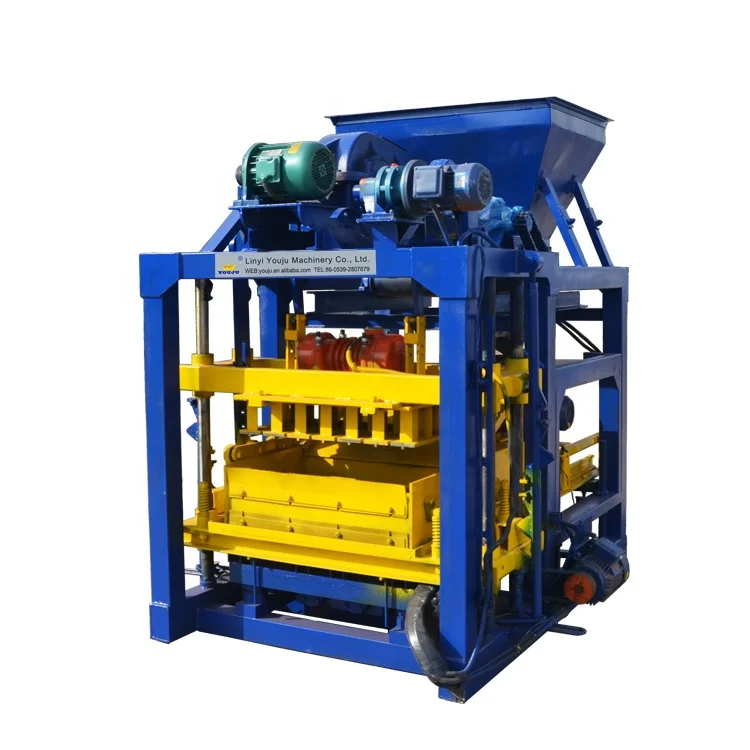
Host machine power of 27.5 kW covers the vibration motor, hydraulic pump and conveyor drives; the JS500 mixer adds its own load, so the total connected capacity on site will be higher and must be checked against the available transformer rating. Workshop area of 150 m² assumes only the press and immediate pallet return; it does not include curing yard, raw material stockpile or finished-block storage. The 380 V supply must be paired with the correct frequency — 50 Hz or 60 Hz — and the control panel display language must be confirmed before wiring begins, because changing PLC firmware after the machine leaves the factory adds avoidable commissioning days. Water consumption of 4 T per day is a general guide; actual usage depends on mix moisture, aggregate absorption and whether a curing spray system is added downstream.
The Hidden Cost of a Mismatched Configuration
When vibration force is not adjusted to the buyer’s aggregate, blocks leave the press looking acceptable but fail the compressive strength test after seven days, forcing the plant to increase cement content and raise unit cost. When pallet size does not match the curing rack, forklift operators spend extra minutes on every load, and daily output drops well below the calculated figure [NEED_CITE: pallet handling delays and their impact on stationary block plant throughput]. When voltage or frequency is assumed rather than confirmed, the motor draws excess current, the hydraulic pump overheats, and the first weeks of production are consumed by warranty calls instead of sales.
Why Buyers Place the QT4-18 With This Line
Block machinery is the single product focus here, so the press, mould, pallet and handling equipment are specified as one matched system rather than sourced from separate vendors. Configuration is set against the buyer’s actual mix design and target block format, not a catalogue default. Mould design covers every format the buyer’s market sells, with custom drawings accepted for non-standard profiles. Automation level is selectable, allowing a buyer to start with manual pallet handling and add automatic stacking later. Factory testing is run with the buyer’s confirmed block format before the machine is crated, so the dispatch report reflects real output rather than a theoretical maximum.
Documentation & Verification
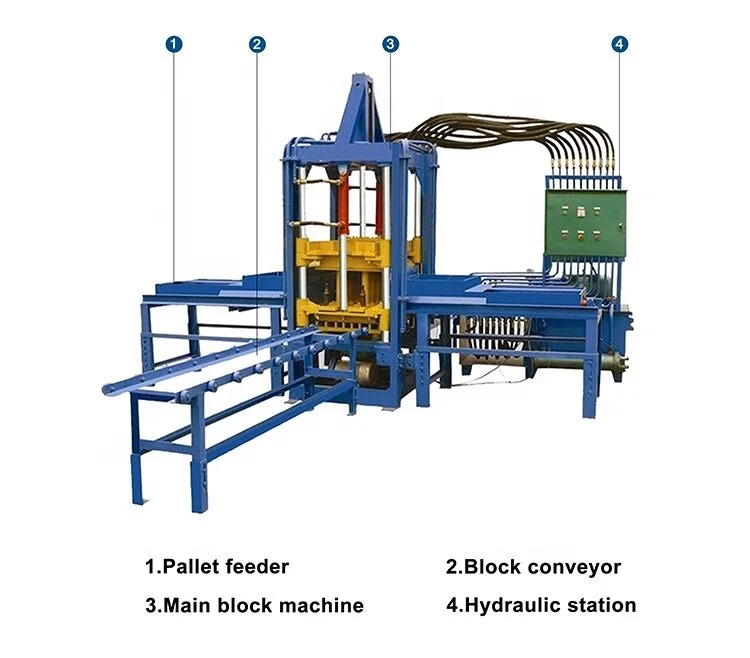
- Line layout showing pallet flow from the QT4-18 press through curing racks to cubing
- Capacity calculation sheet stating the exact block format and cycle time assumed
- Mould drawing pack listing every hollow, solid and paver format confirmed at order
- Pallet specification matched to the buyer’s existing curing area and forklift capacity
- Voltage, frequency and PLC display language confirmation signed before production
- Factory test record on the buyer’s block format with compressive strength readings
Installation, Commissioning & Support
- Foundation plan sized to the 7100 × 1600 mm machine footprint and 5 T static load
- Dedicated electrical circuit rated for 27.5 kW host power plus JS500 mixer draw
- On-site assembly of vibration table, hydraulic press head and pallet return frame
- First-run parameter tuning using the buyer’s actual aggregate and confirmed mix design
- Operator training covering mould change, daily lubrication and PLC fault reading
- Wear parts and mould inventory list matched to the formats ordered
Before You Request a Quotation
Send the exact block drawing your market buys, including wall thickness and face dimensions, together with a sample or lab analysis of the aggregate you will use. Confirm the site voltage, frequency and available transformer capacity, and let us know which pallet material and size your curing yard already handles. If you plan to add automatic stacking or cubing, tell us the ceiling height and forklift model so the line layout fits on the first draft.
Frequently Asked Questions
Q: How is daily output calculated for my specific block format on the QT4-18?
A: We take the confirmed block dimensions, wall thickness and mix design, then run a trial cycle on the vibration table at 40 kN to record the actual moulding time. That cycle time, multiplied by the number of blocks per pallet and the number of effective working hours, gives the daily output figure stated in your capacity sheet — no catalogue multiplier applied.
Q: Is the 15-second moulding cycle valid for the hollow block size I produce?
A: It may be, but only after verification. The 15-second figure was recorded under conditions not stated in the source data, so we test your exact block format with your aggregate before confirming the cycle. Thicker walls or lightweight aggregates typically extend the time.
Q: Which mould formats are available and how long does a mould change take?
A: Hollow, solid, paving, kerbstone and interlocking formats can be supplied, with custom drawings accepted. Mould change time depends on whether the press is fitted with a quick-release clamp or bolt-on system; we confirm the method and the expected changeover duration at the quotation stage.
Q: How is vibration force matched to my local aggregate and mix design?
A: We ask for an aggregate sample and run a trial batch, adjusting vibration amplitude and duration on the QT4-18 block machine until block density and compressive strength meet the target. The confirmed settings are then written into the PLC before dispatch.
Q: What pallet material and size should I choose for my existing curing setup?
A: The 1020 × 570 mm pallet dimension is fixed by the press, but material — hardwood, bamboo composite or PVC — is chosen based on your curing temperature, humidity, stacking height and forklift tine spacing. We align the pallet specification with the racks you already own.