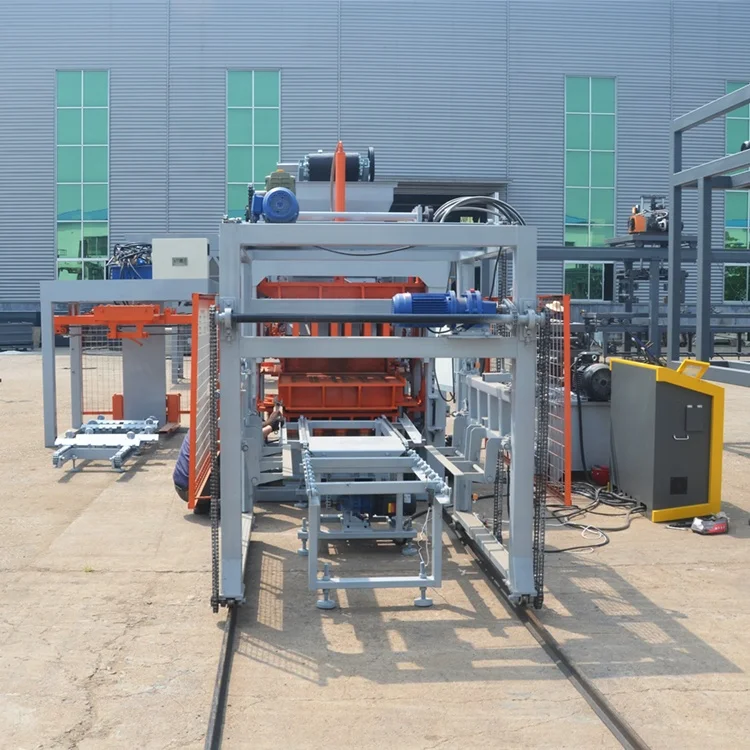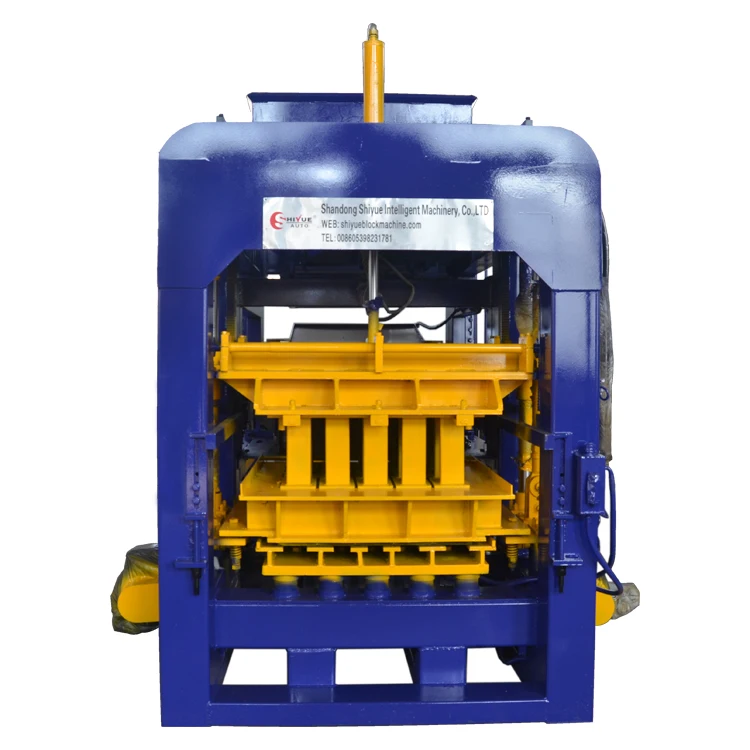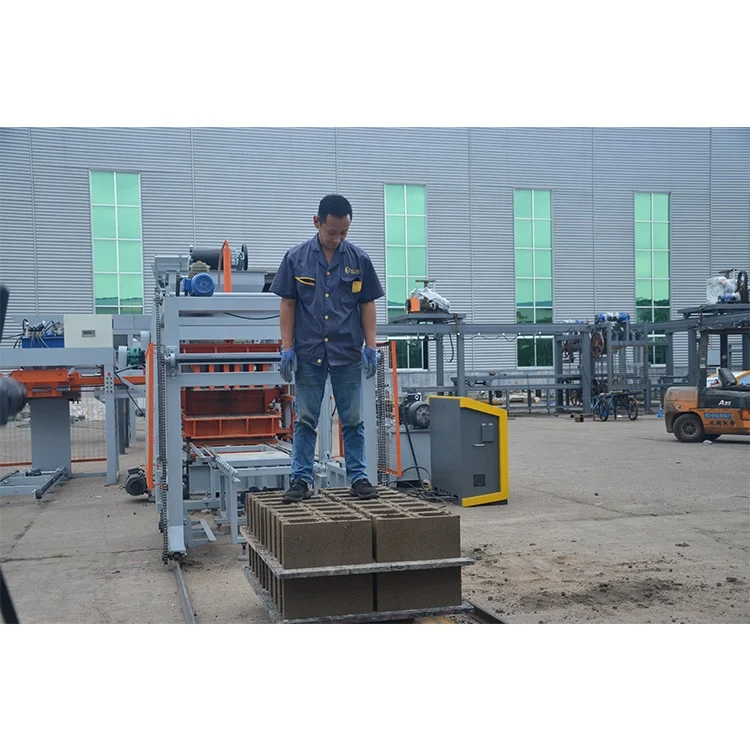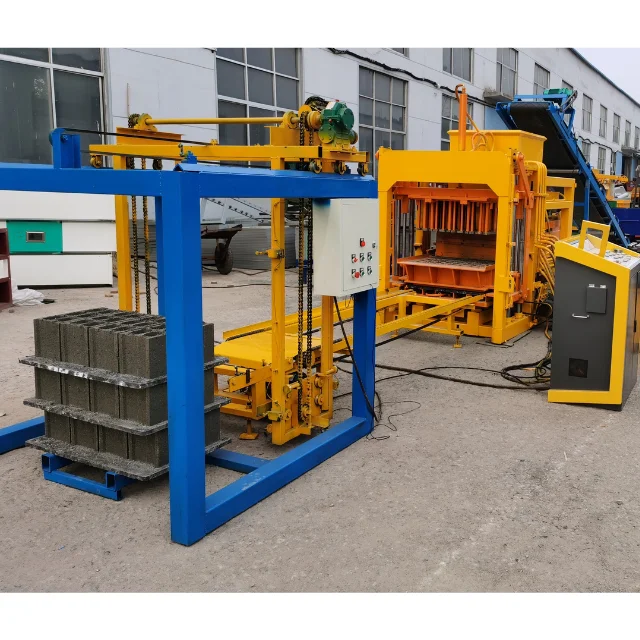

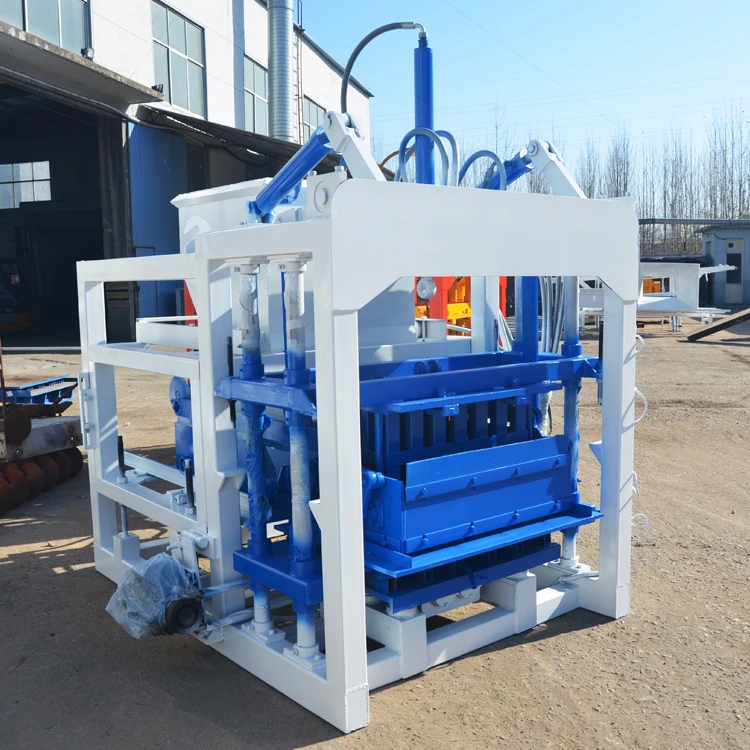
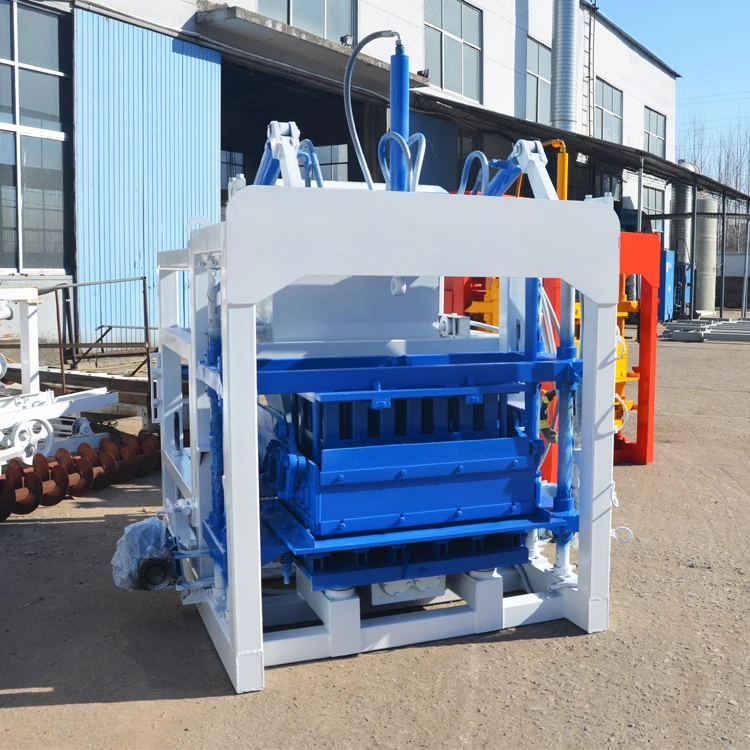
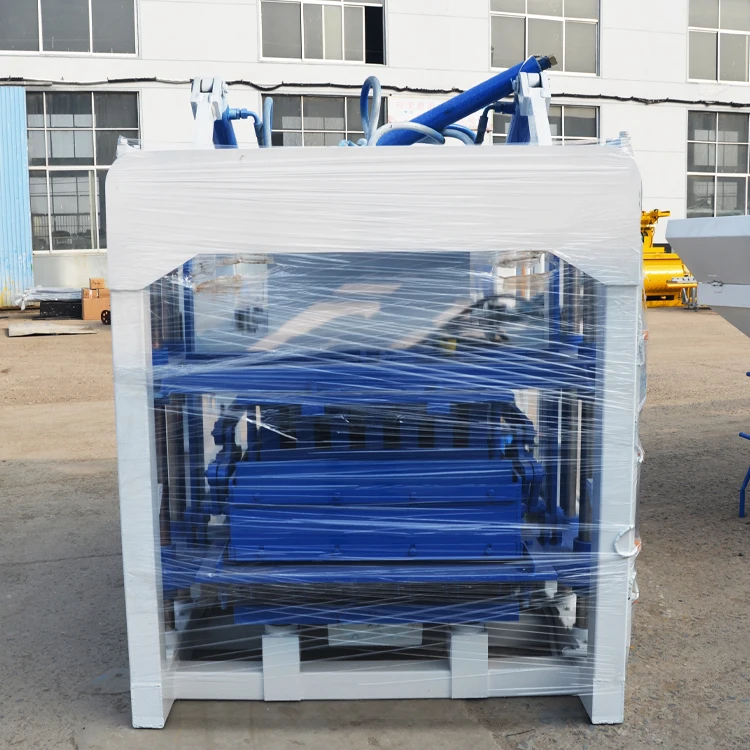

Description
Matched Vibration to Local Aggregate — Platform vibration force and hydraulic pressure are configured together against the buyer’s mix design, not pulled from a catalogue default, so block strength holds up in the curing yard.
Technical Specifications
| Parameter | Value |
|---|---|
| Model | QT4-15A |
| Product Type | Hydraulic Concrete Block Making Machine |
| Overall Dimensions (L×W×H) | 4100 × 1600 × 2600 mm |
| Rated Pressure | 16–21 MPa |
| Main Vibration Form | Platform Vibration |
| Vibration Frequency | 4200 r/min |
| Vibration Force | 55 kN |
| Molding Cycle | 25–30 s (basis not stated in source — confirm block format and material) |
| Pallet Size | 880 × 550 mm |
| Overall Power | 18.45 kW |
| Total Mass | 4 T |
| Demolding Method | Hydraulic |
| Recommended Factory Area | 300 m² |
| Automation Level | Semi-automatic (configuration to be confirmed) |
| Warranty | 1 year |
Application Suitability
| Application | Material or Output |
|---|---|
| Hollow block production | Crushed stone, sand, cement, fly ash |
| Solid block production | Gravel, sand, cement, slag |
| Paving block and colored paver production | Fine aggregate, cement, pigment |
| Interlocking block production | Crushed stone, sand, cement |
| Kerbstone production | Coarse aggregate, cement |
Why "Cycle Time" Means Nothing Without the Block Format Attached
A cycle time is only meaningful when the block format, mix design, and pallet size are stated alongside it.
I have watched buyers receive a QT4-15A block machine specifications sheet quoting 25–30 seconds per cycle, then discover on the shop floor that this figure assumed a small solid block — while their market runs hollow blocks that need longer vibration and a different pressure profile. The real daily output ends up well below what the spreadsheet promised. That gap between quoted capacity and actual throughput is where most first-time block plant disputes begin [NEED_CITE: common causes of capacity disputes in concrete block equipment procurement].
Cycle Time Quoted Per Format, Not a Single Blanket Number
The QT4-15A concrete block making machine capacity by format must be calculated against the actual hollow block, paver, or interlocking brick the buyer’s market demands. A 25-second cycle on a 400×200×200 mm hollow block produces a very different daily figure than the same cycle on a 200×100×60 mm paving block. We state the assumed block dimensions next to every output number so buyers can size their plant realistically.
Mould Selection Drives the Real Production Schedule
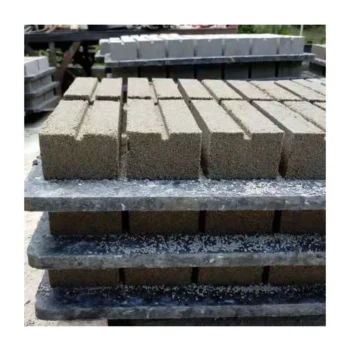
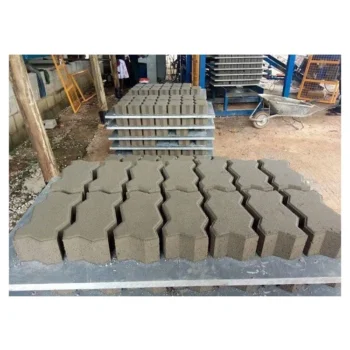
Mould options on this platform cover hollow blocks, solid blocks, pavers, interlocking bricks, and curbstones. The practical question is not how many formats exist in a catalogue, but which ones sell in the buyer’s local market and how quickly the press can switch between them. A machine configured around the two or three formats that actually move volume will outperform a line that claims flexibility but spends half a shift changing tooling [NEED_CITE: mould changeover impact on daily block plant output].
Vibration Force and Hydraulic Pressure as a Matched Pair
The 4200 r/min platform vibration and 55 kN force work together with 16–21 MPa hydraulic pressure to compact the mix. On a lightweight fly-ash blend, the vibration must fill the mould completely before the hydraulic head applies full pressure — otherwise the block corners stay soft. On a dense crushed-stone mix, the pressure needs to arrive sooner. Setting these two forces independently is a common mistake that leads to inconsistent block strength from one pallet to the next.
Pallet Size Tied to the Curing Yard, Not Just the Press
The 880×550 mm pallet must fit the buyer’s existing curing racks and forklift tines. Specifying a pallet without checking the curing area means wet blocks sit stacked by hand on the floor while the press keeps cycling — output is technically being made but nothing is curing properly. We confirm pallet dimensions and material against the yard layout before the machine enters production.
The Cost of Skipping the Mix-Design Conversation
When vibration force and hydraulic pressure are set to catalogue defaults rather than the buyer’s actual aggregate, blocks may look fine at demolding but crack during curing or fail a compressive strength test weeks later. The press itself is not at fault — the configuration simply did not account for a local sand with high fines content or a gravel that absorbs more water. Correcting this after installation means adjusting valves, rewriting PLC parameters, and sometimes replacing the mould entirely [NEED_CITE: relationship between aggregate gradation and block compressive strength].
Why Sourcing From Here Reduces Specification Risk
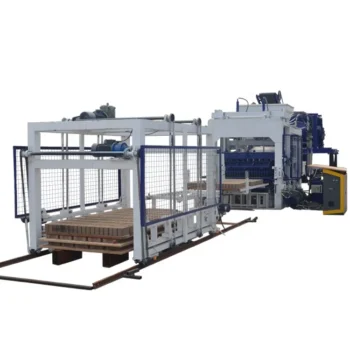
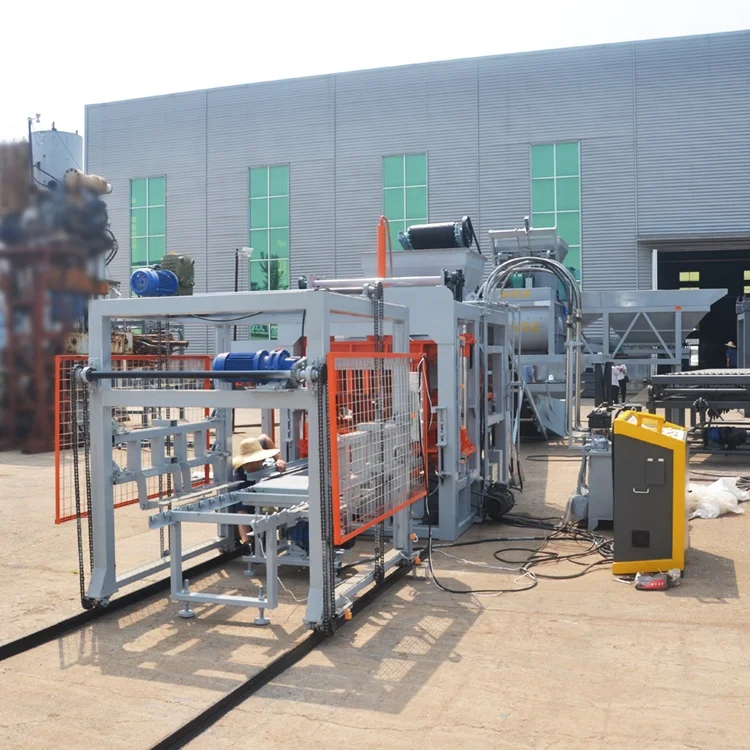
The QT4-15A is treated as one matched system — press, mould, pallet, and handling are specified together rather than assembled from separate purchase orders. Configuration is set against the buyer’s mix design and target block format before the quotation is issued, not after the machine ships. Mould drawings are produced for the exact formats the buyer’s market moves, including custom profiles from buyer-supplied sketches. The automation level is selectable, so a buyer can commission the line in semi-automatic mode and add automatic stacking later. Installation support includes operator training on the specific mix and block formats the plant will run.
Documentation & Verification
- Line layout with capacity stated per block format, not a single headline number
- Mould drawing and format list matching the buyer’s local market dimensions
- Pallet specification sheet confirming size, material, and forklift compatibility
- Hydraulic and electrical schematic for the buyer’s confirmed voltage and frequency
- Factory test record run on a mix profile close to the buyer’s raw materials
Installation, Commissioning & Support
- 300 m² recommended area accounts for press footprint, pallet return, and curing rack access
- 18.45 kW total power requires a dedicated circuit sized for motor start-up surge
- Hydraulic demolding system calibrated on-site against the buyer’s confirmed mix design
- Platform vibration frequency verified with a tachometer before production begins
- Mould change procedure trained with the operator using the actual block formats ordered
- Wear parts list covers hydraulic seals, vibration springs, and mould liner plates
What to Send With Your Inquiry
Share the exact block dimensions your market sells, the local aggregate you plan to use, and your available workshop area. Confirm the voltage and frequency at the site, along with the PLC language your operators read. If you already have curing racks or a forklift in place, send the pallet dimensions those systems accept so the 880×550 mm pallet can be verified or adjusted before the order is locked.
Frequently Asked Questions
Q: How is the QT4-15A capacity calculated, and which block format is assumed?
A: Every capacity figure we quote names the block format, dimensions, and mix type it assumes. A 25–30 second cycle on a standard hollow block gives a different daily total than the same cycle on a thin paver. We provide a capacity table listing each format the buyer plans to produce so the real output expectation is clear before order.
Q: How are vibration force and hydraulic pressure matched to local aggregate?
A: We ask for a sample of the buyer’s crushed stone, sand, or fly ash and note the typical moisture content. The 55 kN vibration force and 16–21 MPa pressure are then balanced so the mix fills the mould fully before peak pressure arrives. This prevents soft corners on lightweight blends and over-compaction on dense gravel mixes.
Q: What mould formats are available, and how long does a change take?
A: Standard formats include hollow blocks, solid blocks, pavers, interlocking bricks, and curbstones. Custom moulds can be built to buyer drawings. Changeover time depends on the mould mounting system specified — we confirm the expected changeover duration during the configuration stage so buyers know the real format-switching cost on the shop floor.
Q: Is the 880×550 mm pallet compatible with my existing curing racks and forklift?
A: That depends on the rack slot width and the forklift tine spacing already in the yard. We ask for these dimensions before confirming pallet size and material. If the buyer’s existing infrastructure requires a different pallet, we adjust the specification so wet blocks move straight from press to rack without manual rehandling.
Q: What raw materials can the QT4-15A process?
A: The press handles crushed stone, sand, cement, fly ash, gravel, slag, and stone dust. The machine is configured around whichever materials the buyer can source locally. We do not ship a default recipe — the vibration and pressure settings are adjusted to the specific aggregate blend the plant will actually run.