

Description
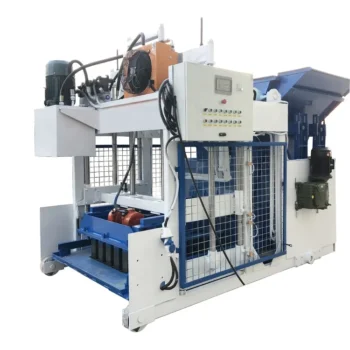
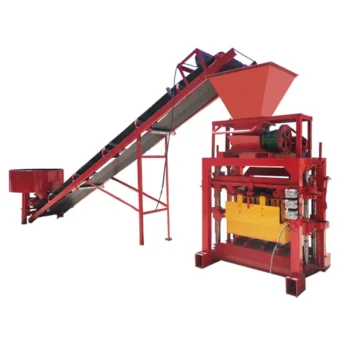
Format-Matched Configuration — Every cycle time and pallet size on the QT4-15A block machine specifications sheet is tied to a named block format and local aggregate profile, not a catalogue default.
Technical Specifications
| Parameter | Value |
|---|---|
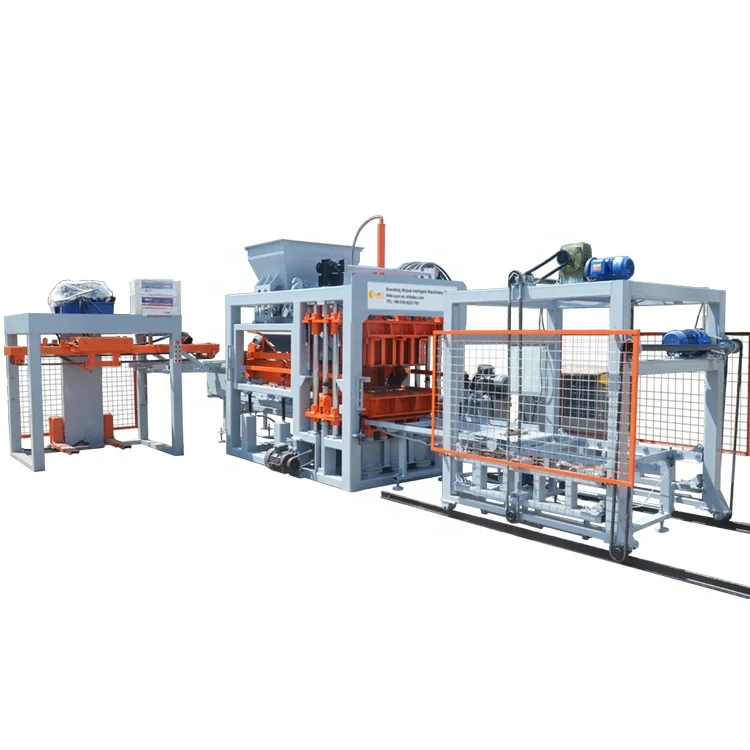
| Product Type | Fully Automatic Concrete Block Making Machine |
| Model | QT4-15A |
| Overall Dimensions (L×W×H) | 4100×1600×2600 mm |
| Total Mass | 4 T |
| Rated Pressure | 16-21 MPa |
| Main Vibration Form | Platform Vibration |
| Vibration Frequency | 4200 r/min |
| Vibration Force | 55 kN |
| Pallet Size | 880×550 mm |
| Molding Cycle | 25-30 s (basis not stated in source — confirm block format / material / thickness) |
| Overall Power | 18.45 kW |
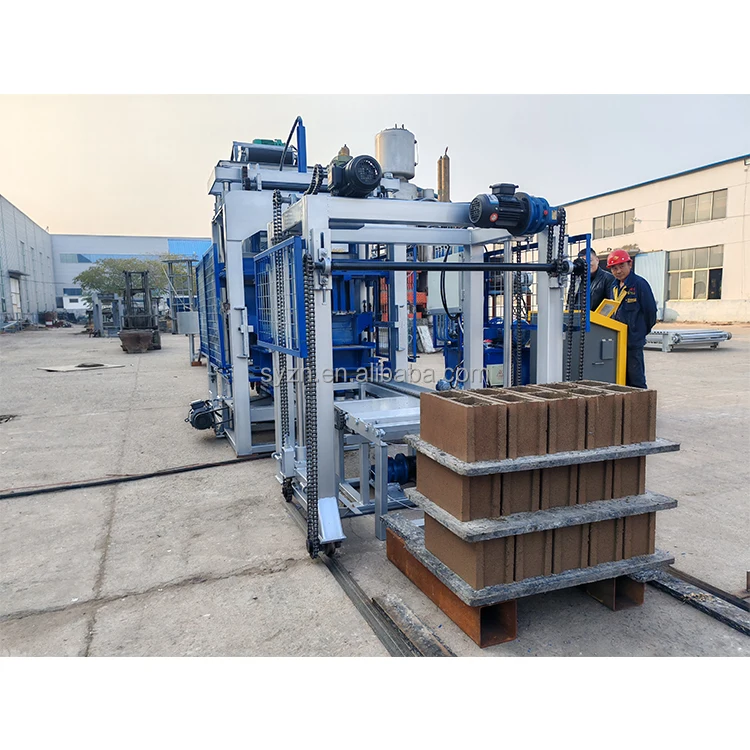
| Demolding Method | Hydraulic |
| Raw Materials | Crushed stone, sand, cement, fly ash, gravel, slag |
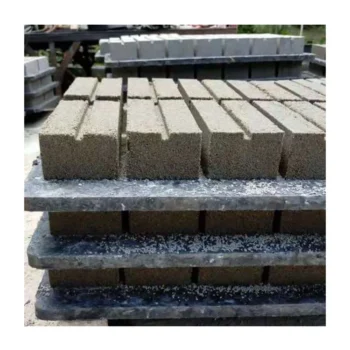
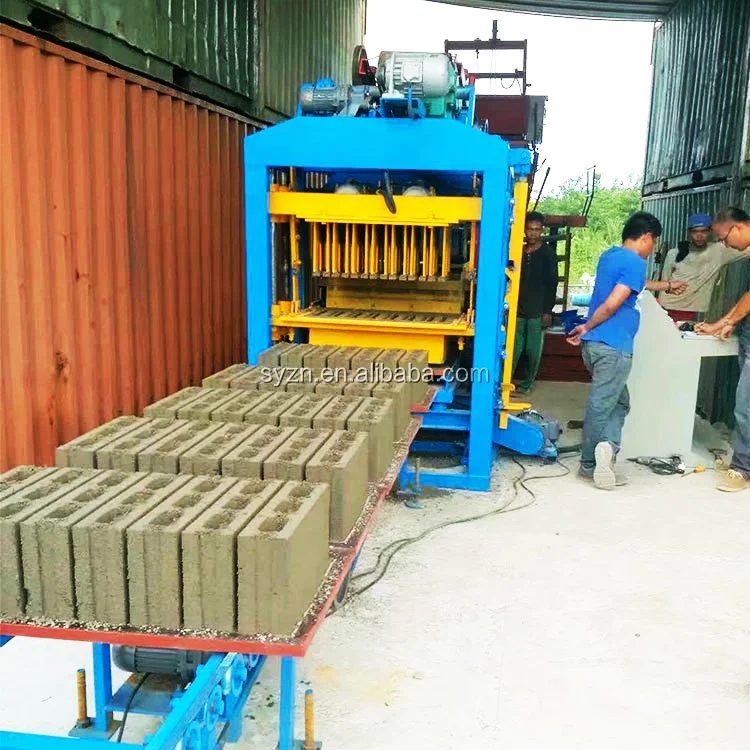
| Applied Products | Hollow/solid blocks, pavers, interlocking blocks, curbstone, colored pavers |
| Control System | Not stated in source — confirm PLC brand and language |
| Voltage & Frequency | Not stated in source — confirm before shipment |
| Warranty | 1 year (whole machine, excluding spare parts) |
Application Suitability
| Application | Material or Output |
|---|---|
| Hollow block production for housing projects | Crushed stone, sand, and cement with local aggregate |
| Solid block manufacturing for load-bearing walls | Gravel, sand, and cement blends |
| Interlocking paver production for municipal works | Fly ash, dust, and cement mixtures |
| Curbstone forming for road construction | Coarse aggregate and cement |
| Colored paver production for landscaping | Pigmented concrete mixes with fine sand |
What the QT4-15A Block Machine Specifications Leave Unsaid About Daily Output
Capacity figures that omit the block format are marketing, not engineering.
I have watched plant owners receive a QT4-15A block machine specifications sheet quoting a cycle time without naming the block format it applies to. The 25-30 second cycle listed above assumes conditions that must be confirmed — block thickness, mix design, and pallet fill pattern all shift that number. A hollow block with thin walls completes faster than a dense interlocking paver requiring full compaction. When buyers compare daily output across suppliers without asking which format was assumed, they end up with equipment that cannot meet their contract deadlines [NEED_CITE: block format impact on cycle time in concrete block production].
Matching Vibration Force to Your Actual Mix Design
The QT4-15A block machine specifications list 55 kN of vibration force at 4200 r/min through platform vibration. That number only produces consistent block strength when it is matched to the density and moisture content of the aggregate available at your site. High-clay materials absorb vibration differently than clean crushed stone, and the hydraulic pressure range of 16-21 MPa must be set in relation to that vibration profile. When these two forces are balanced against a tested mix, blocks emerge with uniform density from the first pallet to the last.
Pallet Size and Its Effect on Curing Logistics
The 880×550 mm pallet dimension was not chosen arbitrarily. This size determines how many blocks fit per cycle, how the pallets stack on your curing racks, and whether your existing forklift can handle loaded pallets without modification. Buyers who confirm pallet dimensions against their curing area layout before ordering avoid the costly discovery that their rack spacing or forklift capacity does not match the machine output. The QT4-15A block machine specifications must be read alongside your plant floor plan, not in isolation [NEED_CITE: pallet handling logistics in block plant design].
Reading the Specs That Actually Govern Block Quality
Rated pressure of 16-21 MPa combined with 55 kN vibration force defines the compaction energy delivered to each block. In concrete block production, insufficient pressure produces weak blocks that crack during curing, while excessive pressure on a fine-aggregate mix squeezes out cement paste and leaves voids. The hydraulic demolding system then extracts the formed block without edge damage, which matters most for interlocking pavers where dimensional tolerance governs installation quality. The 18.45 kW overall power rating covers the hydraulic pump, vibration motor, and material feed system running simultaneously — confirming this against your site electrical capacity prevents tripped breakers during commissioning.
The Cost of Skipping Format-Level Capacity Verification
When a buyer orders based on a generic pieces-per-hour figure without demanding a format-by-format breakdown, the machine arrives and produces fewer blocks than the project schedule requires. The shortfall only becomes visible during the first production run, when the local aggregate, the chosen mould, and the actual mix design all interact in ways the catalogue number never predicted. Correcting this after delivery means adjusting vibration parameters, sourcing different moulds, or renegotiating delivery schedules with contractors [NEED_CITE: consequences of undersized block plant capacity on project timelines].
Why the QT4-15A Block Machine Specifications Should Come With Context
Block machinery as a single focus means the QT4-15A is supplied with mould, pallet, and handling specified as one matched system. Configuration is set against the buyer’s actual mix design and target block format rather than a generic default. Mould options cover hollow, solid, paver, interlocking, and curbstone formats, with custom mould design available to buyer drawings. Automation level is selectable, allowing a plant to begin with semi-automatic pallet handling and expand later. Installation and commissioning include operator training so the crew understands how vibration force and hydraulic pressure interact with their specific materials.
Documentation & Verification
- Line layout with capacity calculation stating the block format assumed for each output figure
- Mould drawing and format list confirming which products the QT4-15A will produce
- Pallet specification matched to your curing rack dimensions and forklift capacity
- Voltage, frequency, and PLC display language confirmed in writing before production
- Factory test record on your specified block format and mix design before dispatch
- Hydraulic and electrical schematic for your site maintenance team
Installation, Commissioning & Support
- The 4100×1600 mm footprint requires a level concrete foundation with anchor bolt provisions
- Confirm three-phase voltage and frequency matching before the 18.45 kW system is energized
- Machine ships assembled; on-site setup includes pallet feed alignment and hydraulic line checks
- First production run uses your local aggregate to verify the 16-21 MPa pressure setting
- Operator training covers mould change procedure and vibration frequency adjustment for different formats
- Wear parts list identifies hydraulic seals and vibration motor bearings for your first reorder
What to Prepare Before Requesting a Quotation
Share your target block format with exact dimensions, the local aggregate type and any available test reports, and your required daily output per format. Confirm the three-phase voltage and frequency at your site, along with the preferred PLC display language. Provide your curing rack dimensions and forklift capacity so the 880×550 mm pallet configuration can be validated against your existing handling equipment.
Frequently Asked Questions
Q: How is cycle time and daily output calculated for each block format on the QT4-15A?
A: Cycle time depends on the block format, wall thickness, and mix design. The listed 25-30 second range is a starting point that must be confirmed against your specific product. We provide a capacity calculation sheet naming the exact block format, mould configuration, and pallet pattern behind each output figure so your daily production target can be verified before purchase.
Q: How do you match vibration force and hydraulic pressure to my local aggregate and mix design?
A: We request an aggregate test report or sample to assess particle size, clay content, and moisture absorption. The 55 kN vibration force and 16-21 MPa hydraulic pressure are then adjusted in combination — higher vibration for coarse aggregate, higher pressure for fine mixes — and validated during a factory test using material matching your profile.
Q: What mould formats are available, and can I order custom moulds to my own drawings?
A: Standard moulds cover hollow block, solid block, paver, interlocking brick, and curbstone formats. Custom mould design is available to buyer drawings, with dimensional confirmation before machining. Each mould is tested on the QT4-15A platform before shipment to verify demolding clearance and block dimensional accuracy.
Q: What pallet size and material do you recommend for my curing area and handling equipment?
A: The standard 880×550 mm pallet is specified alongside your curing rack spacing and forklift load capacity. Pallet material — wood, bamboo, or composite — is selected based on local humidity and expected service life. We confirm pallet dimensions against your handling setup before the order enters production.
Q: How long does a mould change take, and what tools are required?
A: Mould change time depends on the format and the operator’s familiarity with the procedure. The QT4-15A uses a bolt-fixed mould mounting system. We provide a mould change procedure during commissioning and training so your crew can complete the swap without extended downtime once they have practiced the sequence.