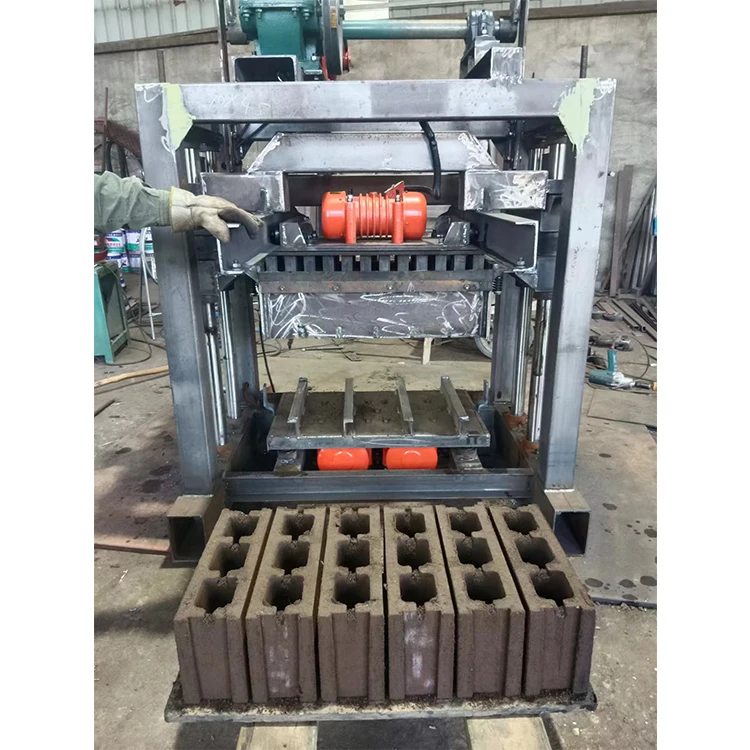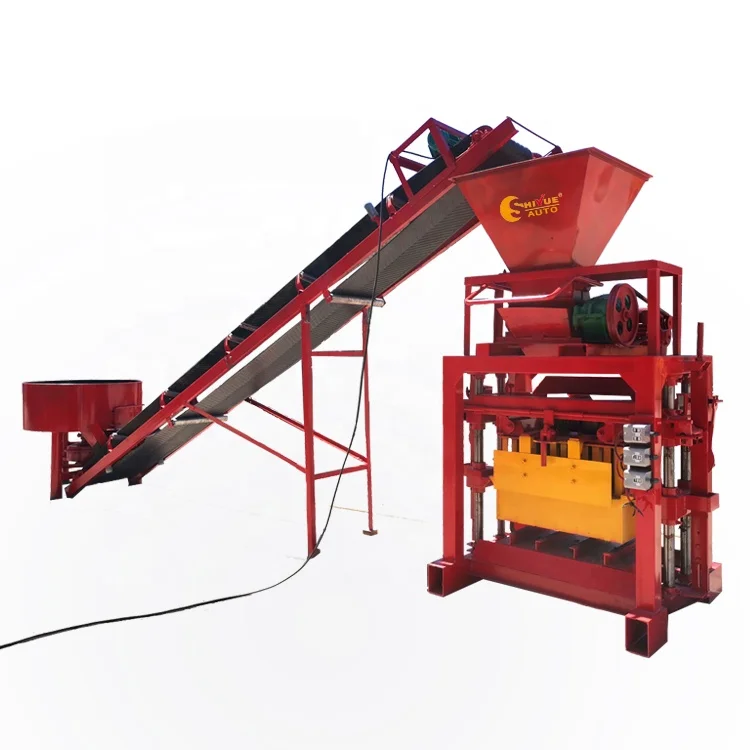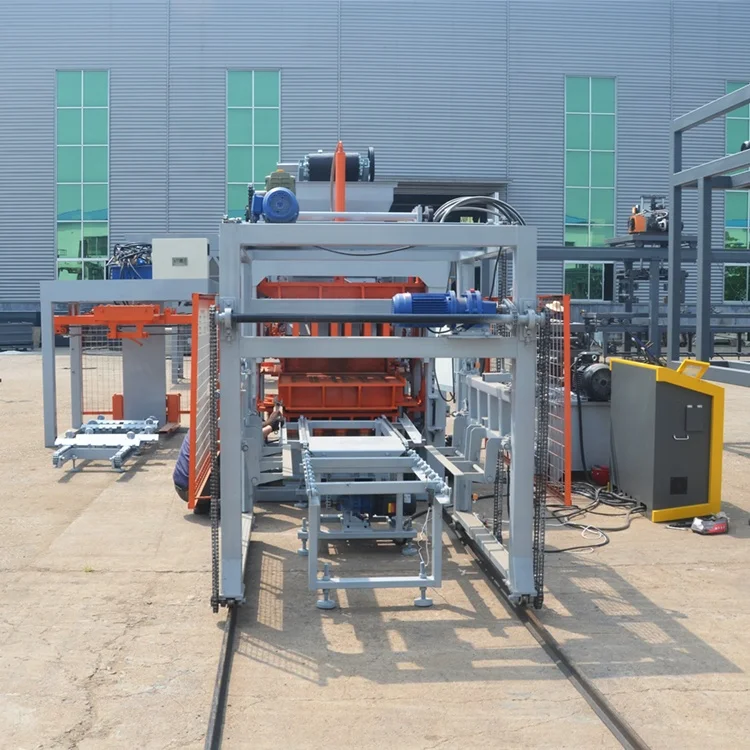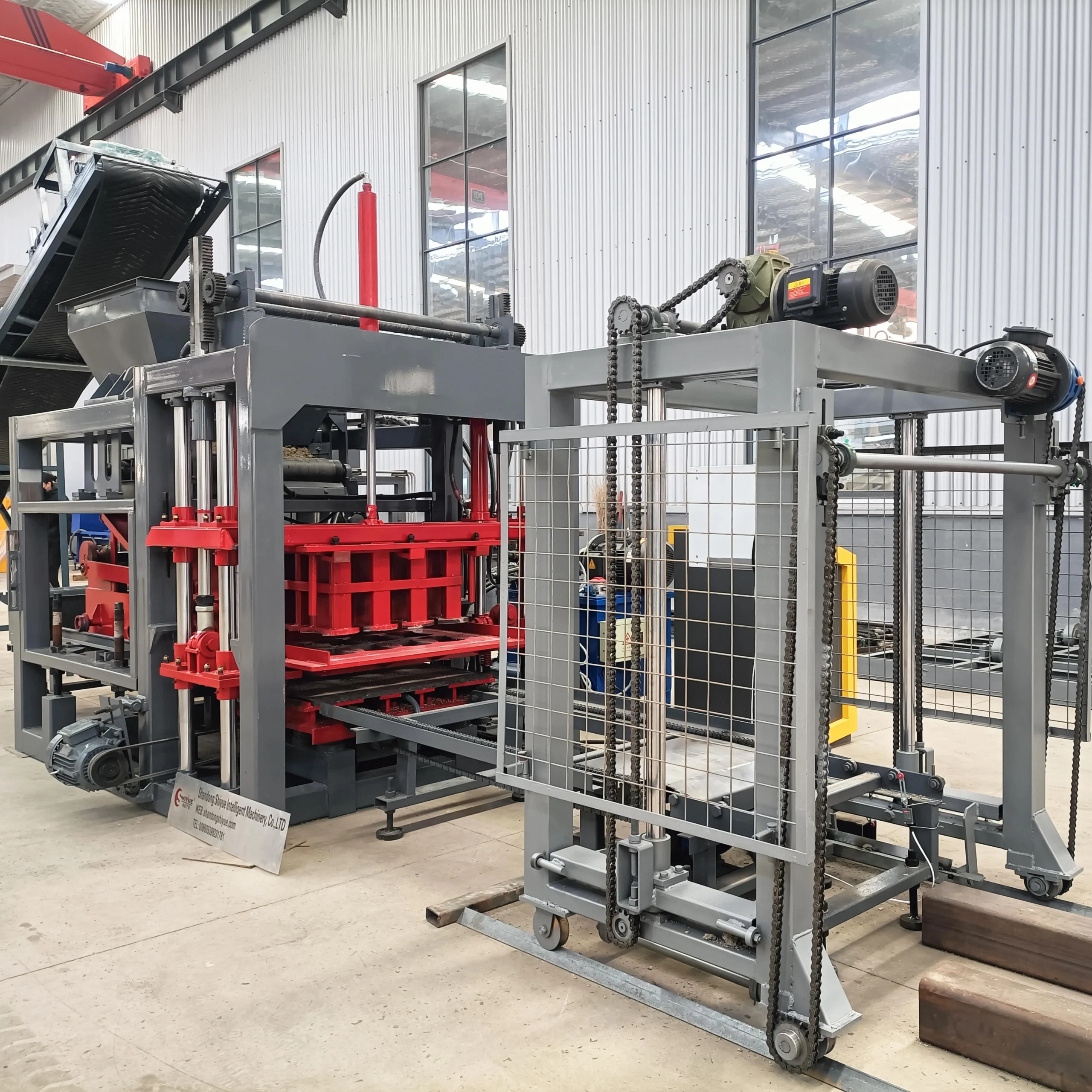
Description
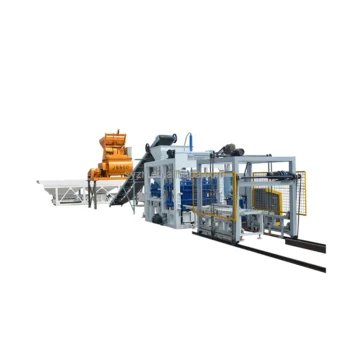
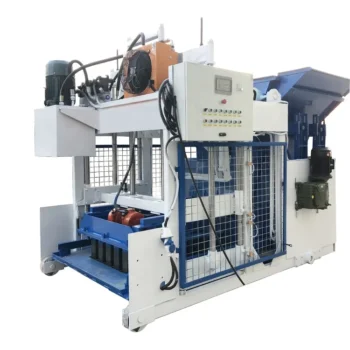
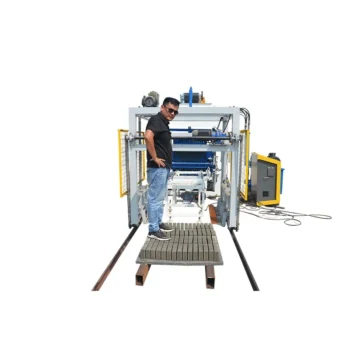
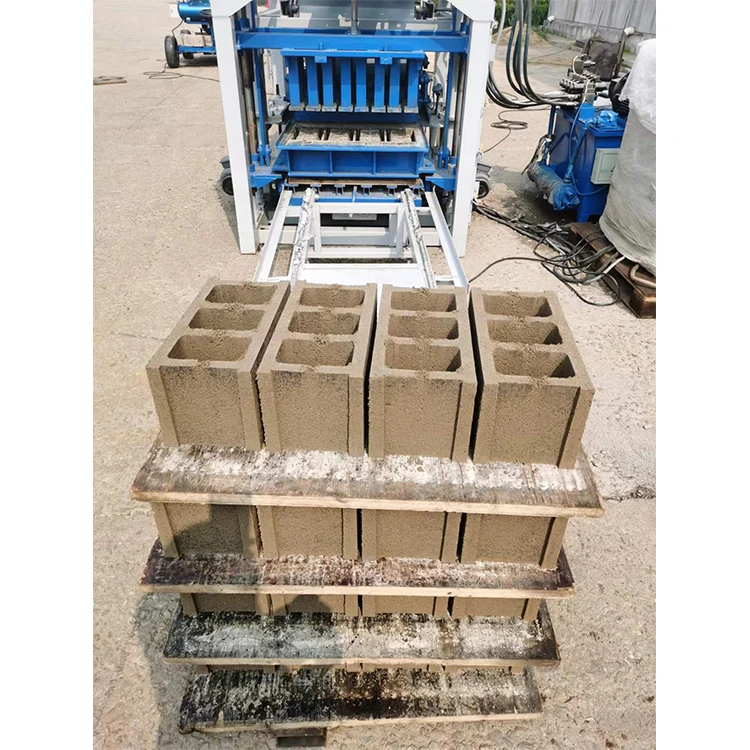
Format-Matched Configuration — Every QT4-15 is sized against the block format your market actually sells, so the 25–30 s molding cycle is verified per product type rather than quoted as a single catalogue figure.
Technical Specifications
| Parameter | Value |
|---|---|
| Model | QT4-15A |
| Product Type | Fully Automatic Concrete Block Making Machine |
| Overall Dimensions (L×W×H) | 4100×1600×2600 mm |
| Rated Pressure | 16–21 MPa |
| Main Vibration Form | Platform Vibration |
| Vibration Frequency | 4200 r/min |
| Vibration Force | 55 kN |
| Pallet Size | 880×550 mm |
| Molding Cycle | 25–30 s (basis not stated in source — confirm block format / material / thickness) |
| Overall Power | 18.45 kW (source value listed as "18.45W" — verify against manufacturer catalog) |
| Demolding Method | Hydraulic |
| Total Mass | 4 T |
| Applied Products | Hollow/solid blocks, pavers, interlocking blocks, curbstone, colored pavers |
| Raw Material | Crushed stone, sand, cement, fly ash, gravel, slag |
| Control System | PLC |
Application Suitability
| Application | Material or Output |
|---|---|
| Hollow block production for load-bearing walls | Crushed stone and cement mixes requiring 16–21 MPa compaction |
| Solid block manufacturing for partition walls | Sand, fly ash, and gravel blends with platform vibration densification |
| Paving brick runs for driveways and walkways | Fine aggregate and cement formulations needing high surface finish |
| Interlocking block production for retaining structures | Coarse aggregate mixes demanding precise hydraulic demolding |
| Curbstone casting for road and edge detailing | Heavy-duty concrete blends requiring extended vibration cycles |
What "25–30 Seconds per Cycle" Actually Means for Your Block Format
The cycle time only matters if it is measured on the exact block you plan to produce.
When suppliers quote the QT4-15 concrete block making machine specifications with a single cycle figure, they rarely state which block format that number assumes. A 400×200×200 mm hollow block and a 200×100×60 mm paver demand very different vibration durations, pressure hold times, and demolding strokes. If the cycle time is based on a thin paver but your daily production target assumes standard hollow blocks, your real output will fall short from day one. I have watched operators stand idle waiting for a press that was promised to run faster than the format allows [NEED_CITE: block format cycle time variations in hydraulic vibration presses].
Matching Vibration Force to Your Local Aggregate
The QT4-15 delivers 55 kN of vibration force at 4200 r/min through platform vibration. This energy must be sufficient to consolidate whatever aggregate you source locally — whether that is river sand, crushed basalt, or recycled fly ash. When the vibration force is too low for a coarse, angular aggregate, the resulting blocks show inconsistent density and lower compressive strength. Matching the QT4-15 concrete block making machine specifications to your actual mix design ensures every block leaves the press at the target density.
Hydraulic Pressure and Block Integrity
The 16–21 MPa rated pressure range works alongside platform vibration to compact the concrete mix into the mould cavity. Higher pressure settings are necessary for dense solid blocks and heavy curbstone formats, while lower settings suit lighter hollow blocks where excessive force could fracture thin webs. The hydraulic demolding method pulls the mould away cleanly, reducing edge damage across all formats. Getting this balance right between pressure and vibration is where honest QT4-15 concrete block making machine specifications prevent costly rework downstream [NEED_CITE: hydraulic pressure and vibration force balance in block compaction].
Reading the Pallet Size Against Your Curing Area
An 880×550 mm pallet defines more than the block footprint — it determines how many blocks fit on each curing rack, how the forklift tines engage the stack, and how much floor space the curing zone occupies. If your existing curing racks were built for a different pallet dimension, you face either wasted rack capacity or a complete rack rebuild before the first production run. Specifying the pallet size against your actual facility layout avoids a mismatch that no amount of machine adjustment can fix later.
The Cost of Skipping Format Verification Before Order
Buyers who confirm the QT4-15 without verifying cycle time against their primary block format often discover the shortfall only after the machine is installed and running. The daily output gap compounds across every shift, and the investment calculation made at the quotation stage no longer holds. In some cases, the buyer then requests a larger machine to compensate — a cost that could have been avoided by stating the target format and required daily volume before the order was placed [NEED_CITE: production shortfall consequences from unverified cycle time assumptions].
Why Sourcing the Press as Part of a Matched Line Matters
The QT4-15 is specified as one element of a block production line, not as an isolated press. The mould is designed for the formats your market sells, including custom drawings when standard options do not cover your product range. The pallet specification is confirmed against your curing racks and forklift capacity. Voltage, frequency, and PLC display language are locked before production begins so commissioning is not delayed by an unreadable control screen. Every configuration decision references your site conditions and target block format rather than a default catalogue setting [NEED_CITE: matched block line configuration versus standalone press procurement].
Documentation & Verification
- Line layout showing capacity calculation stated per block format you intend to produce
- Mould drawing and format list covering every block type in your product range
- Pallet specification sheet cross-referenced with your curing rack dimensions and forklift model
- Voltage, frequency, and PLC language confirmation signed off before production starts
- Factory test record demonstrating cycle time on your chosen block format
Installation, Commissioning & Support
- Foundation plan sized for the 4100×1600 mm footprint and 4 T operating mass of the QT4-15A
- Electrical supply matched to the 18.45 kW total power requirement with dedicated circuit protection
- PLC display language set to operator preference before dispatch to eliminate first-day confusion
- Mould change procedure trained on-site so format switches do not consume an entire shift
- Wear parts list supplied with initial spares for hydraulic seals and vibration components
Before You Request a Quote
To size the QT4-15 to your project, share the specific block formats your market demands, the daily output target per format, and the aggregate materials available in your region. Include your site voltage and frequency, the PLC language your operators read, and the dimensions of any existing curing racks or forklifts. This information allows the configuration to be built around your actual production conditions rather than a generic default.
Frequently Asked Questions
Q: How is the QT4-15 cycle time verified for each block format I plan to produce?
A: The 25–30 s figure must be confirmed against your specific block dimensions, mix design, and target strength. A factory test on your chosen format produces a verified cycle time that reflects real production conditions, not a catalogue default measured on a different product.
Q: How do I match the 880×550 mm pallet to my existing curing racks and forklift?
A: Provide your curing rack slot dimensions and forklift tine spacing before the order is finalized. The pallet specification is then checked against both to ensure loaded pallets seat correctly on racks and can be lifted without modification.
Q: What block strength can I expect with 55 kN vibration and 16–21 MPa pressure using my local aggregate?
A: Compressive strength depends on the interaction between vibration energy, hydraulic pressure, and your specific mix proportions. A sample test using your local crushed stone or sand determines whether the achieved density meets your market’s block standard.
Q: How long does a mould change take on the QT4-15, and can I order custom moulds?
A: Mould change duration depends on the format size and clamping arrangement. Custom moulds can be produced to buyer-supplied drawings, and the change procedure is covered during on-site operator training so format flexibility is practical, not theoretical.