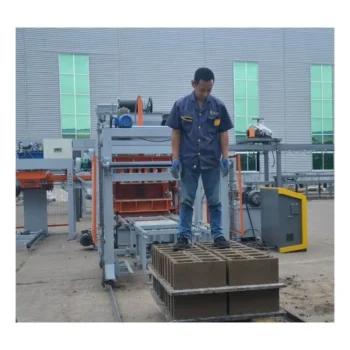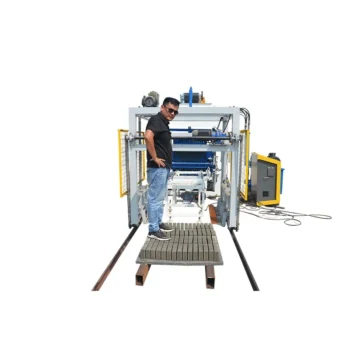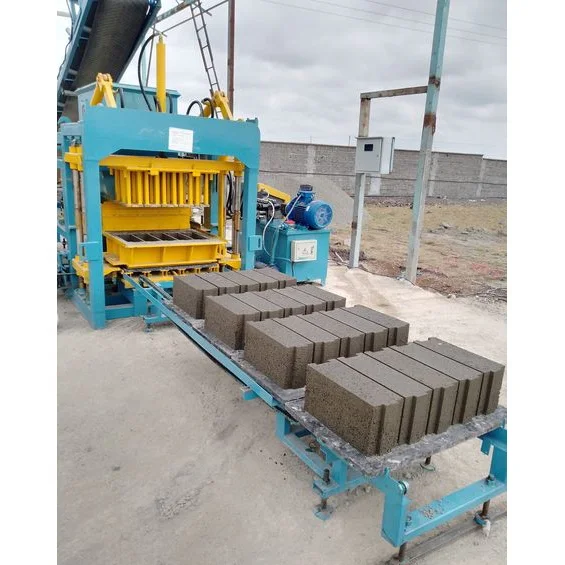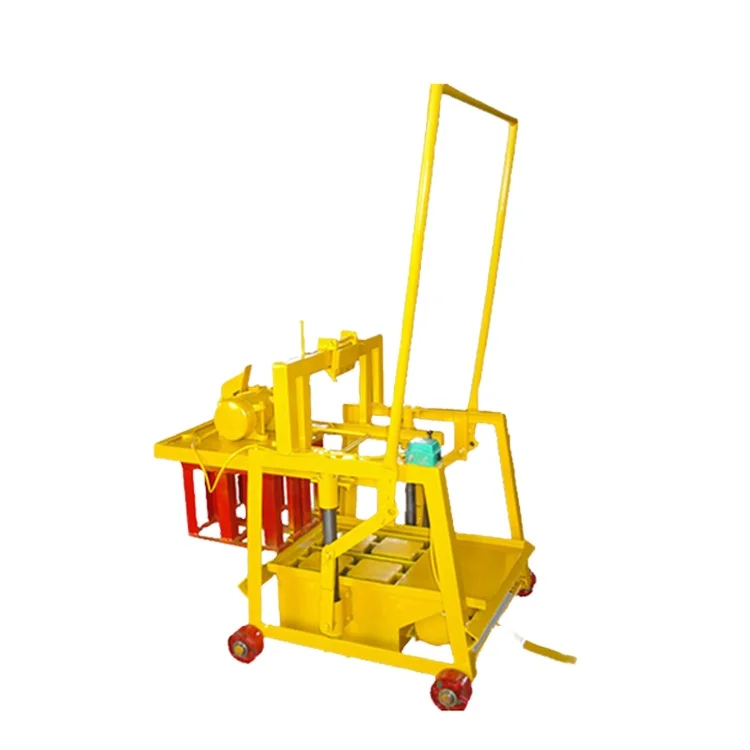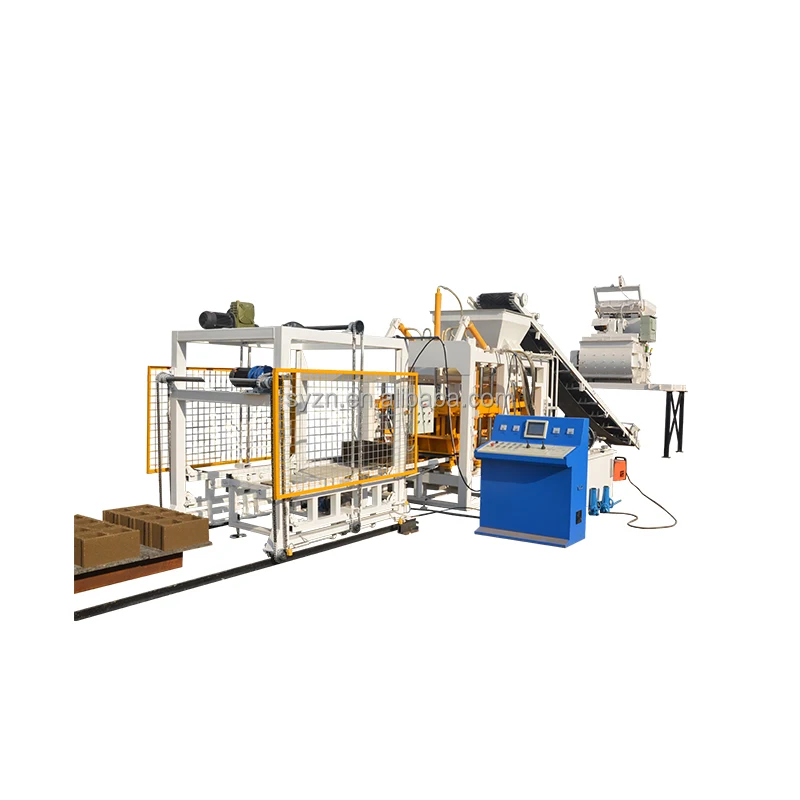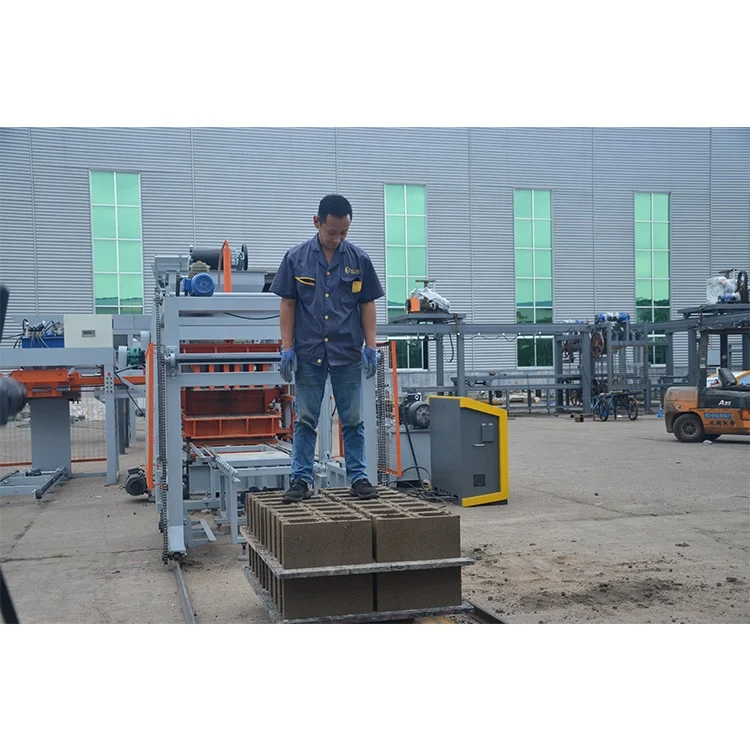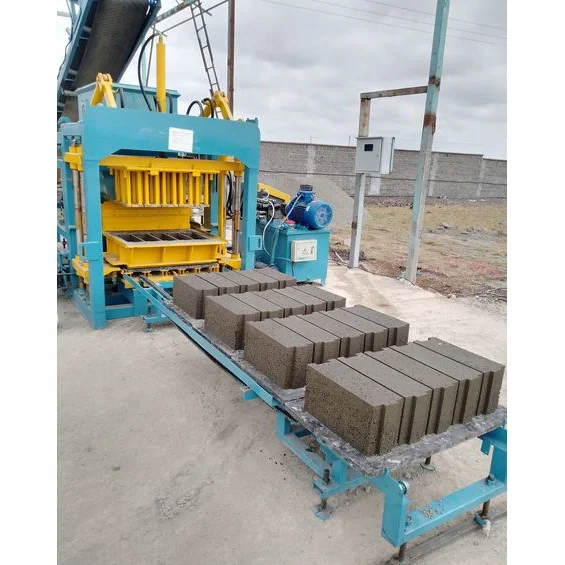
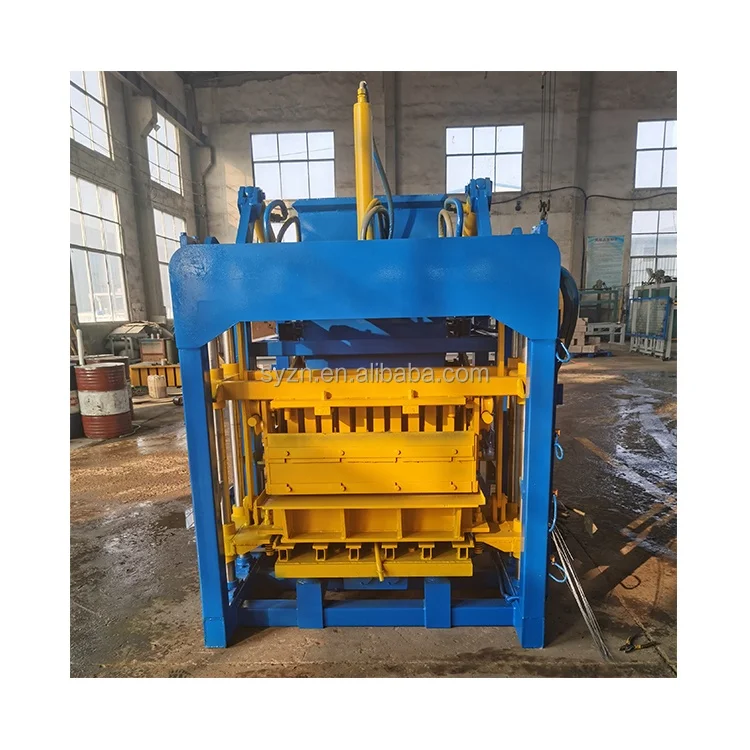


Description
Honest capacity by format — we quote QT4-15 output against the exact block dimensions, local aggregate and pallet size you will run, so the daily figure on paper is the one you see on the yard.
Technical Specifications
| Parameter | Value |
|---|---|
| Model | QT4-15A |
| Product Type | Automatic Concrete Block Making Machine |
| Overall Dimensions (L×W×H) | 7100 x 1600 x 2610 mm |
| Molding Cycle | 15–25 s (basis to be confirmed per block format) |
| Vibration Frequency | 4600 r/min |
| Vibration Force | 40–50 KN |
| Rated Power | 18.45 kW |
| Mixer Model | JQ350 |
| Pallet Size | 850 x 550 x 25 mm |
| Net Weight | 3 T |
| Applied Products | Paver, solid block, hollow block, curbstone |
| Raw Materials | Crushed stone, sand, cement, dust, fly ash |
| Output — Hollow 400×200×200 mm | 408 pcs/hr, 3264 pcs/8 hr |
| Output — Hollow 400×150×200 mm | 510 pcs/hr, 4080 pcs/8 hr |
| Output — Solid Brick 240×115×53 mm | 2100 pcs/hr, 17000 pcs/8 hr |
| Control System | PLC (language to be confirmed) |
| Standard | CE |
Application Suitability
| Application | Material or Output |
|---|---|
| Medium-scale hollow block plant | 400×200×200 mm hollow blocks from crushed stone and cement |
| Solid brick production for housing projects | 240×115×53 mm solid bricks using fly ash and sand |
| Paver and curbstone runs for municipal contractors | Interlocking pavers and kerbstones with pigment-dosed face mix |
| On-site block making for development contractors | Hollow and solid formats switched on a single pallet circuit |
What "408 Pieces per Hour" Actually Means for Your Yard
Capacity only exists in relation to a specific block format and mix.
Catalogue sheets often quote the QT4-15 automatic concrete block making machine specifications at peak cycle without stating which block size that figure assumes. I have watched buyers order on a single headline number, then discover on day one that their local sand carries high clay content, the vibration table cannot compact it in the stated cycle, and real output drops by half. [NEED_CITE: effect of aggregate clay content on block compaction cycle time]
The numbers in the table above are tied to specific formats: 408 pieces per hour assumes a 400×200×200 mm hollow block, and 2100 pieces per hour assumes a 240×115×53 mm solid brick. Change the format, change the cycle, change the daily total. That is the only honest way to size a machine.
Matching Mould to the Format Your Market Buys
A block plant only earns money on the formats that move off the pallet. The QT4-15 automatic concrete block making machine supports hollow, solid, paver and curbstone moulds, and each format pulls a different cycle time from the 15–25 second range. We confirm which moulds you need before the machine enters production, so the formats sitting in your curing yard on week one are the ones your market actually orders.
Pallet Circuit and Curing Yard Alignment
The 850×550×25 mm pallet is the link between press output and your curing racks. If your forklift forks are spaced for a different width, or your curing chamber shelves are built around another pallet dimension, the whole handling rhythm breaks down. We check your existing equipment before locking pallet size, so blocks move from the machine to the rack without manual re-stacking.
Vibration, Pressure and Your Local Mix
The 40–50 KN vibration force at 4600 r/min is the compacting muscle of this press, but force alone does not guarantee block strength. Hydraulic pressure must be tuned against the mix design your local aggregate allows — high-fly-ash mixes need different dwell timing than pure crushed-stone blends. [NEED_CITE: relationship between vibration force and mix moisture in concrete block compaction] We ask for your aggregate report and trial mix before recommending vibration and pressure settings, rather than shipping a default profile and leaving your operator to guess.
The Cost of Skipping the Aggregate Conversation
Buyers who confirm voltage and skip the material conversation often discover the problem only after the first container is opened. Blocks crack during curing because the vibration frequency was never matched to a high-fines sand, or the mould wears prematurely because the aggregate grading exceeds the design envelope. [NEED_CITE: premature mould wear linked to ungraded aggregate in block production] These are not warranty claims — they are configuration errors, and they are entirely avoidable when the mix is on the table before the order is signed.
Why Source This Press Through Shiyue
- Block machinery is our only product line, so the QT4-15 press, mould, pallet and handling stations are specified as one system.
- Capacity calculations state the block format assumed, leaving no gap between quotation and yard output.
- Mould design covers the formats your market sells, including custom drawings for non-standard dimensions.
- Automation level is selectable, allowing a semi-automatic start with a defined upgrade path to full stacking and cubing.
- Factory testing runs your mix profile before dispatch, not a generic catalogue cycle.
Documentation & Verification
- Line layout showing pallet flow and capacity per block format
- Mould drawing pack with cycle time noted for each cavity
- Pallet specification cross-referenced to your forklift and rack dimensions
- Voltage, frequency and PLC language confirmation signed before production
- Factory test record run on your mix design and target format
- Operation and maintenance manual with wear part list
Installation, Commissioning & Support
- Foundation drawing provided for the 7100×1600 mm footprint before machine arrival
- 18.45 kW power requirement confirmed against your site transformer capacity
- JQ350 mixer positioned to match raw material feed direction on your plot
- PLC language set to your operator preference before first shift
- Vibration force and hydraulic pressure dialed in using your local aggregate on day one
- Mould change procedure trained with your crew against actual cavity swap times
Before You Send an Inquiry
To size the QT4-15 correctly we need your target block format and daily output requirement, the aggregate and cement types available locally, and the pallet dimensions your curing yard already handles. Please also confirm your site voltage, frequency and preferred PLC display language so the control cabinet leaves the factory ready for your electrician.
Frequently Asked Questions
Q: How is output capacity calculated and which block format does it assume?
A: Every capacity figure we quote is tied to a named format. The 408 pieces per hour rating, for example, assumes a 400×200×200 mm hollow block running a standard crushed-stone mix. Switch to a solid brick and the cycle shortens; switch to a larger paver and it lengthens. We provide a format-by-format table before you commit.
Q: What mould formats are available and what is the mould change time?
A: Hollow, solid, paver and curbstone cavities are available, and custom moulds can be drawn to your dimensions. Mould change time depends on cavity count and locking mechanism, and we confirm this figure against your chosen format list during the proposal stage rather than quoting a generic number.
Q: How do I match pallet size to my curing area and existing forklift?
A: The standard pallet is 850×550×25 mm, but we cross-check this against your rack spacing and forklift fork width. If your existing infrastructure uses a different dimension, we adjust pallet size and mould layout so blocks move from press to rack without manual handling.
Q: What voltage, frequency and PLC language options are confirmed before delivery?
A: Voltage and frequency are set to your site supply, and the PLC display language is agreed in writing before the control cabinet is wired. This prevents commissioning delays once the QT4-15 automatic concrete block making machine is bolted to your foundation.
Q: How is vibration force and hydraulic pressure matched to my local aggregate?
A: We request your aggregate grading report and a trial mix ratio. The 40–50 KN vibration force and hydraulic pressure are then tuned against that data, so block density and surface finish meet your target without your operator having to re-tune the machine on site.