
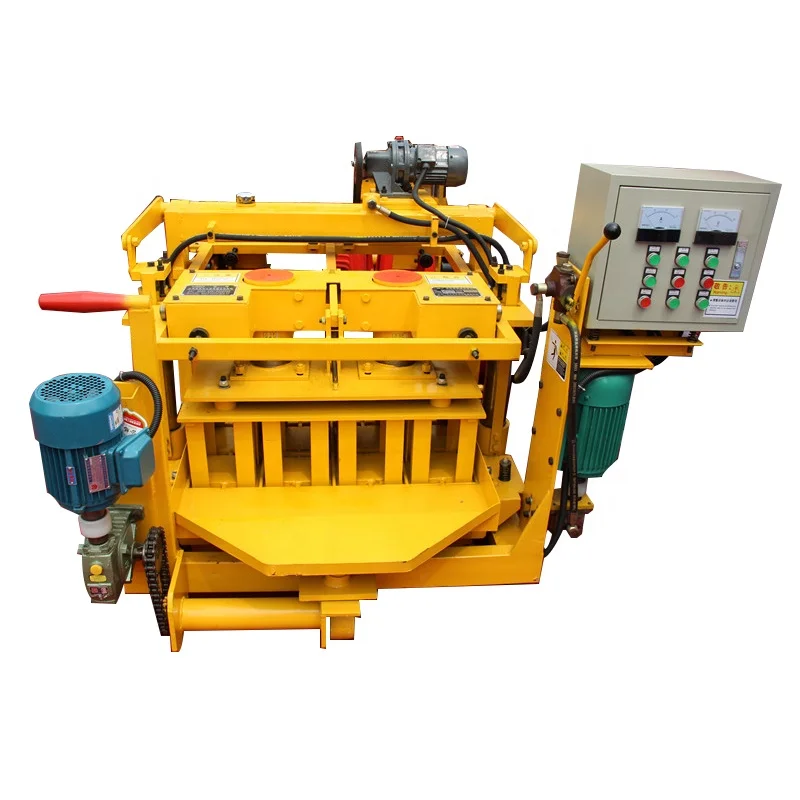
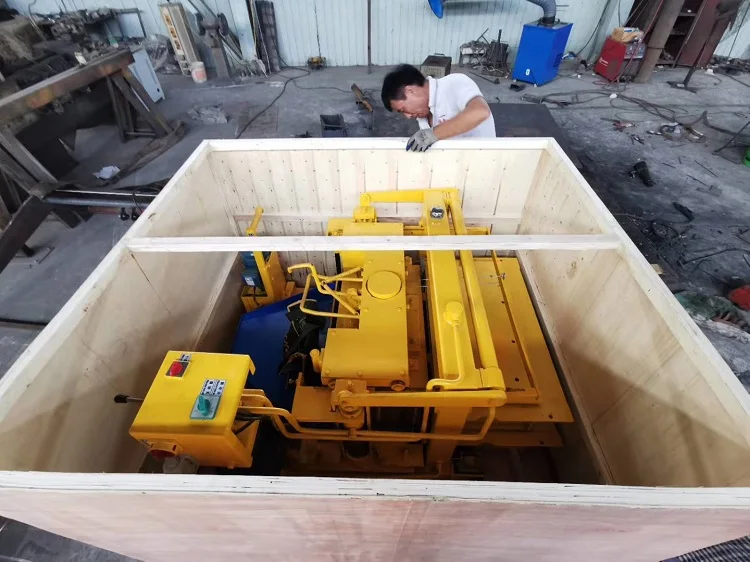

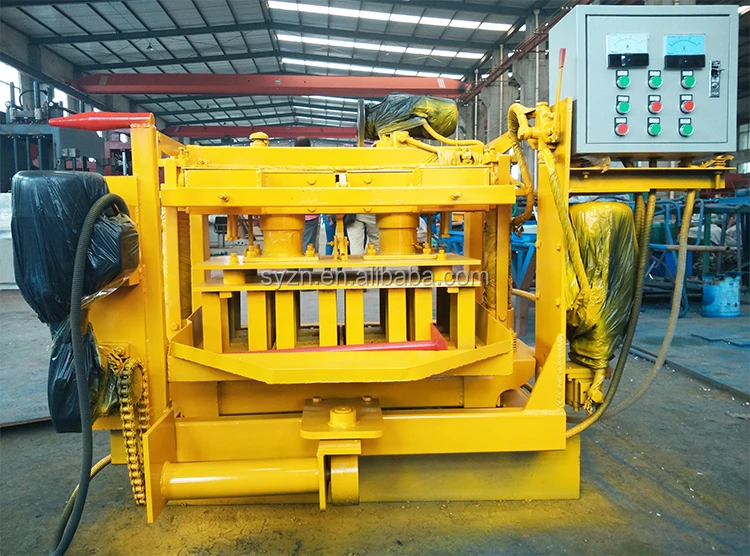
Description
Matched Vibration to Your Aggregate — We configure the QMY4-30 excitation force and frequency against your actual mix sample, not a catalogue default, so block strength stays consistent from the first pallet to the last.
Technical Specifications
| Parameter | Value |
|---|---|
| Model | QMY4-30 |
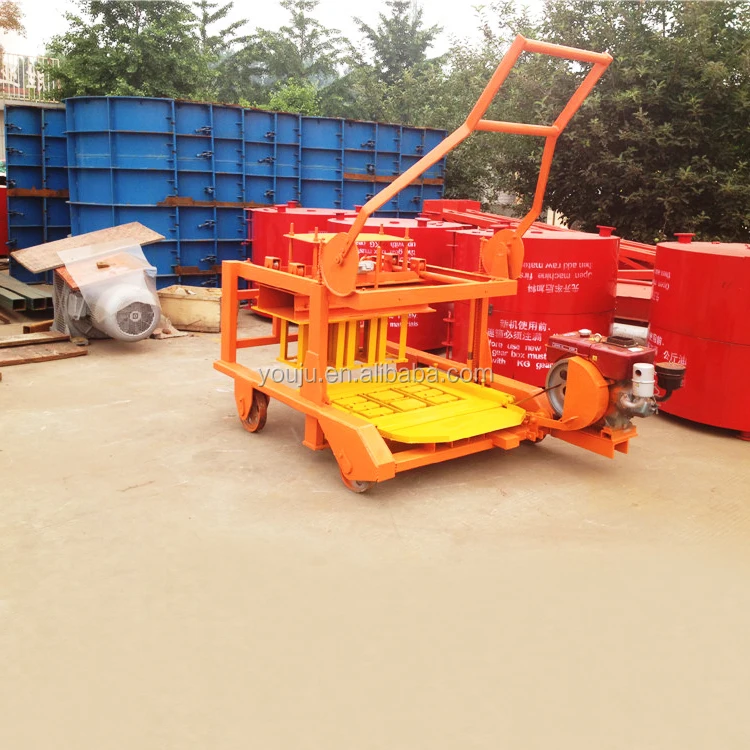
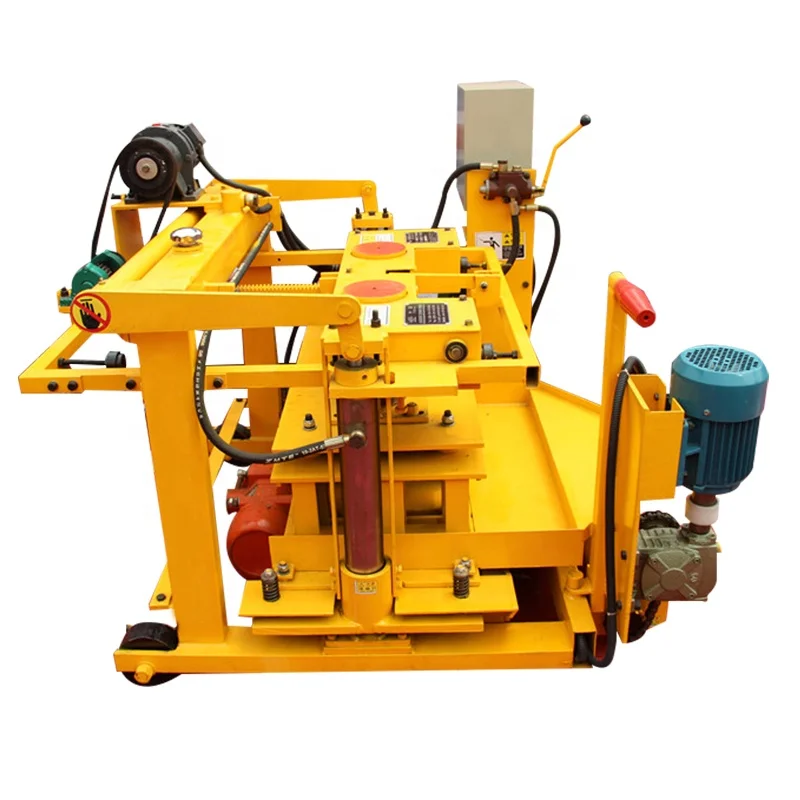
| Product Type | Mobile Hydraulic Block Making Machine |
| Overall Dimensions (L×W×H) | 1300 × 1500 × 1000 mm |
| Total Mass | 950 – 1000 kg |
| Hydraulic Method | Mold Vibration |
| Exciting Power | 28.6 kN |
| Excitation Frequency | 4500 r/min |
| Total Power | 5.95 kW |
| Molding Cycle | 30 s |
| Output Capacity | 3000 pcs/day (basis not stated in source — confirm block format, material and thickness) |
| Raw Material Compatibility | Concrete, sand, cement, fly ash, lime, gypsum, stone dust, construction waste, slag, mine tailings, river sand, coal gangue, porcelain granule, sandrock |
| Automation Level | Manual / Semi-automatic (manual pallet handling, manual material feeding) |
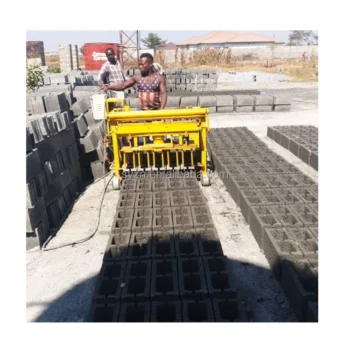
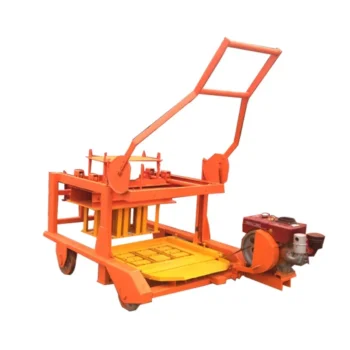
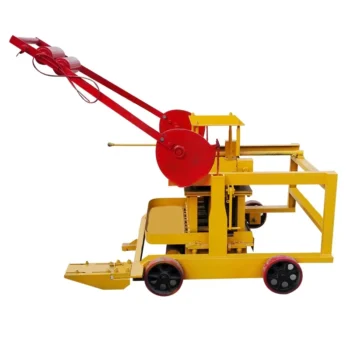
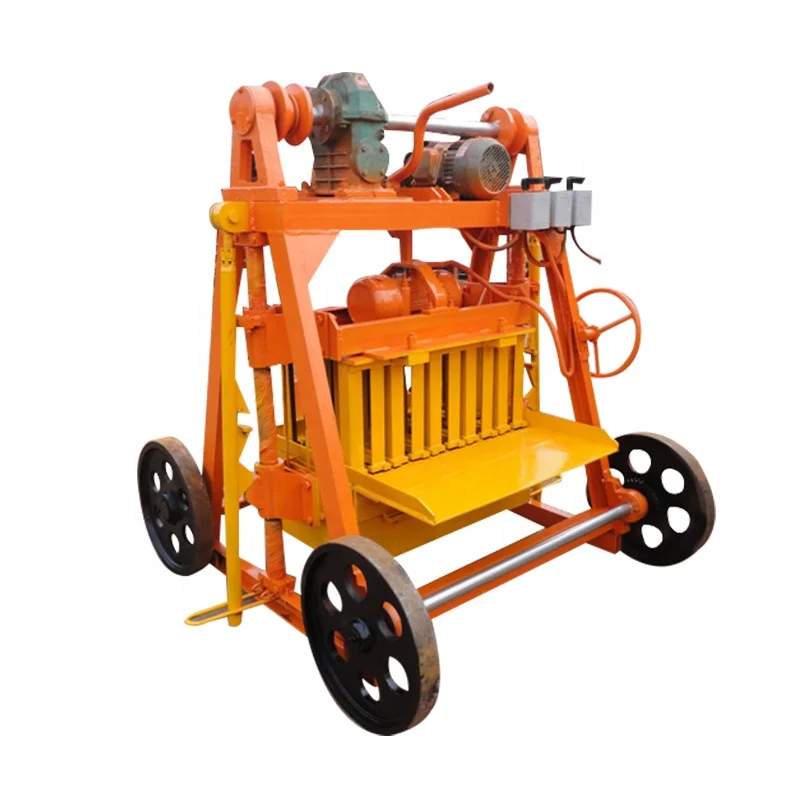
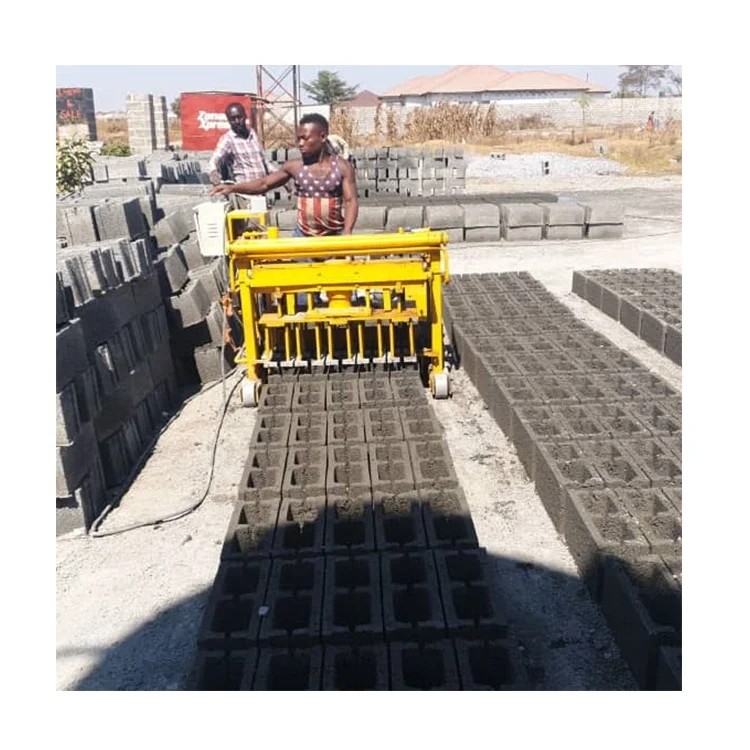
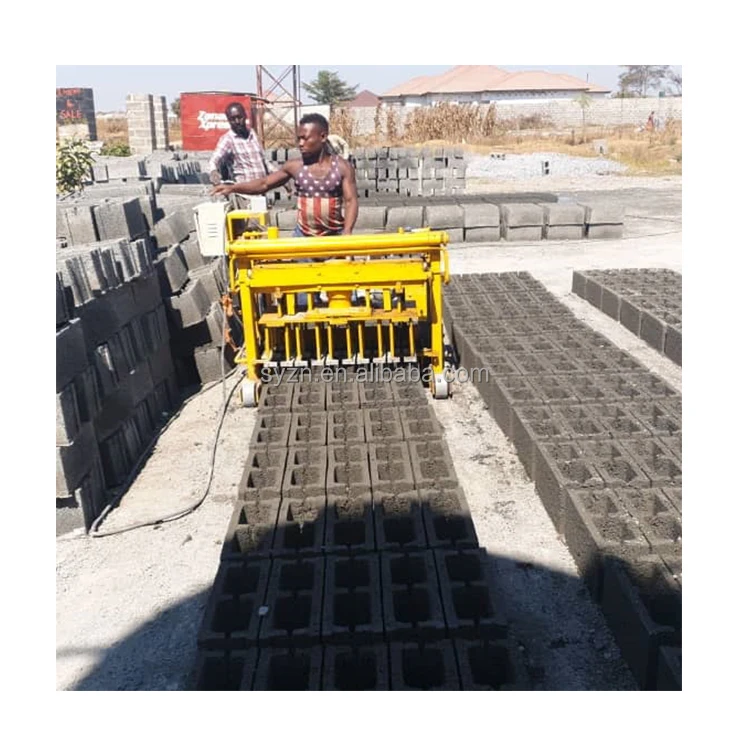
| Assembly State | Mobile egg-laying type |
Application Suitability
| Application | Material or Output |
|---|---|
| On-site hollow block production for housing projects | Crushed stone, cement, river sand |
| Solid brick runs for remote or rural contractors | Fly ash, lime, gypsum blends |
| Paving and interlocking brick for local infrastructure | Stone dust, sand, cement |
| Construction waste recycling into usable blocks | Demolition debris, slag, mine tailings |
| Small-scale coastal or desert block production | Local aggregate, sandrock, carpolite |
What "3000 Pieces per Day" Actually Means for Mobile Block Machine Specifications
A daily output figure only matters when you know exactly which block format and mix it was measured against.
Catalogue sheets often quote a single number pulled from a best-case hollow block run on a standard concrete mix. In practice, a thicker kerbstone or a dense interlocking paver cuts that figure substantially. On a sticky laterite mix in West Africa, I watched a mobile egg-laying machine lose nearly half its stated output because the vibration setting was tuned for a completely different aggregate. The buyer spent two months convinced the press was underperforming before we adjusted the frequency and force to match the material actually available on site. [NEED_CITE: effect of aggregate grading on vibration compaction density]
When you evaluate mobile block machine specifications, the first question should always be: which format, which mix, and which pallet size produced that number?
Mould Format Range and Changeover Reality
The QMY4-30 accepts moulds for hollow, solid, paving, interlocking and kerbstone formats, with custom mould design available to buyer drawings. The 30-second molding cycle holds across standard formats, though thicker or denser products may require longer vibration dwell. Mould changes are manual on this tier, so the time between formats depends on how well the operator is trained and how the tooling is stored on site. Buyers who plan frequent format switches should discuss quick-release options before the order is confirmed.
Matching Excitation Force to What You Can Actually Source
The 28.6 kN exciting power at 4500 r/min is the compaction baseline. For a coarse crushed-stone mix, this force and frequency compact effectively without over-vibrating the fines out of the matrix. For a sticky clay or laterite blend, the same setting can cause material to cling to the mould walls, producing uneven faces and lower density. We ask for a sample of your local aggregate — not just a description — before finalising the vibration configuration. [NEED_CITE: vibration compaction behaviour across aggregate types]
Reading the Numbers That Matter for Production Planning
The 5.95 kW total power draw tells you what generator or site supply you need before the machine arrives. At under 1000 kg total mass and 1300 × 1500 × 1000 mm overall, the QMY4-30 fits into areas where a fixed plant is impractical — hillside sites, narrow urban plots, remote project camps. The egg-laying design means blocks are laid directly on the ground surface, so the curing area must be level and prepared. The 30-second cycle time per mould position sets the rhythm for manual feeding and pallet handling; operators and mixers must keep pace or the press waits.
The Hidden Cost of Skipping the Aggregate Conversation
A machine set for a catalogue mix that you cannot source locally forces a material change you did not budget for. Pallet size chosen without checking your existing curing racks means blocks stacked by hand on whatever surface is available, slowing the entire line. Voltage and control language left unconfirmed until the crate is opened can delay commissioning by weeks while transformers or replacement PLC screens are shipped. [NEED_CITE: commissioning delays from unconfirmed voltage and frequency] These are not engineering failures — they are specification gaps that surface only after the machine is on your floor.
Why Buyers Place Repeat Orders Through This Range
Every QMY4-30 is configured against the buyer’s block format, local aggregate and target strength, not shipped as a catalogue default. Mould design covers the formats your market actually sells, with custom drawings accepted. The machine, pallet and handling requirements are specified as one matched system so nothing is left for the operator to improvise on day one. Installation support includes operator training on mould change, vibration adjustment and daily maintenance. Documentation arrives with the machine — factory test records, mould drawings, hydraulic schematics and a wear parts list — so your first replacement order is already planned.
Documentation & Verification
- Factory test record run on your specified block format before dispatch
- Mould drawing and format list confirming every size covered by your quotation
- Voltage, frequency and control language confirmation sheet signed before shipment
- Hydraulic and electrical schematic matching the as-built configuration
- Wear parts and mould replacement list with part numbers for your first reorder
- Operation and maintenance manual in the operator’s working language
Installation, Commissioning & Support
- Level ground preparation required across the curing area for the egg-laying travel path
- 5.95 kW total power supply with dedicated circuit matching confirmed voltage and frequency
- Machine arrives assembled; operator familiarisation covers start-up and basic fault clearing
- Vibration force and frequency retuned on site against your live aggregate sample
- Mould change training included so format switches do not consume a full shift
- Wear parts list provided at handover for timely first replacement ordering
What to Share Before Requesting a Quote
Tell us the block formats your market sells and the daily volume you need for each. Send a sample or detailed description of the aggregate you can source locally — sand type, stone grading, any industrial by-products. Confirm your site voltage, frequency and preferred control language so the electrical package is correct before the machine leaves the factory.
Frequently Asked Questions
Q: How is the 3000 pcs/day output verified, and which block format does it assume?
A: That figure comes from the source data without a stated block format, material or thickness assumption. Before we quote, we run a capacity calculation based on your specific format — for example, a standard 400×200×200 mm hollow block versus a denser interlocking paver will produce different daily totals from the same 30-second cycle. We share the calculation so you can plan against a real number.
Q: Which mould formats are included, and how long does a mould change take?
A: The QMY4-30 accepts hollow, solid, paving, interlocking and kerbstone moulds, with custom designs available to your drawings. Mould changes are manual at this tier, and changeover time depends on operator training and tooling storage. We include changeover training during commissioning and can discuss quick-release mould options if your production plan calls for frequent format switches.
Q: How is the machine configured for my local aggregate rather than a catalogue default?
A: We ask for a physical sample of your aggregate — sand, stone, fly ash or whatever you source locally — before finalising the vibration and hydraulic settings. The 28.6 kN excitation force and 4500 r/min frequency are adjusted to match the material’s behaviour under compaction, so block strength stays consistent across production runs instead of drifting as the mix varies.
Q: What pallet size does the QMY4-30 work with, and does it match my curing area?
A: Pallet size is confirmed during the configuration stage based on your block format and existing curing rack dimensions. Because the QMY4-30 is an egg-laying machine, blocks can also be laid directly on a prepared ground surface, reducing pallet dependency. We verify the layout with you before production so pallet handling and curing space are aligned.