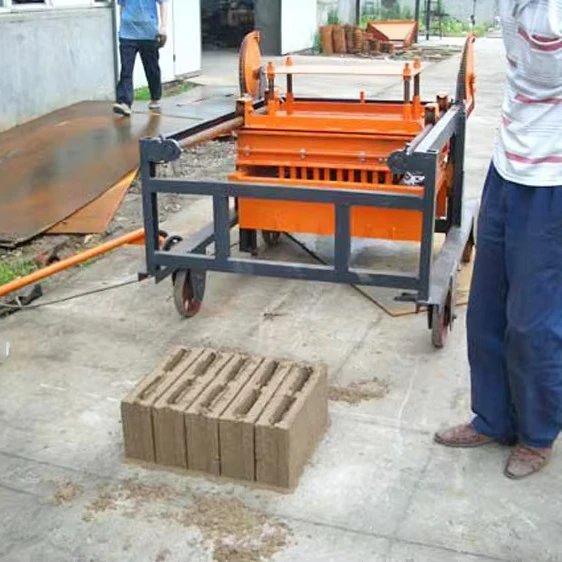
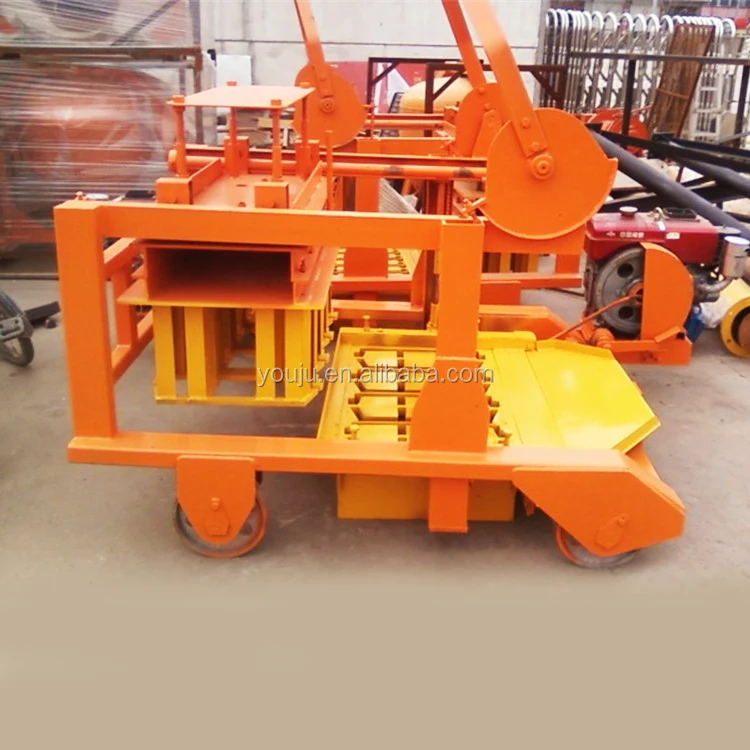

Description
Matched to Your Actual Block Format — the QMR4-45 is quoted with cycle times and daily outputs tied to specific hollow block dimensions and mould cavity counts, not a single headline figure that assumes an unstated format.
Technical Specifications
| Parameter | Value |
|---|---|
| Model | QMR4-45 |
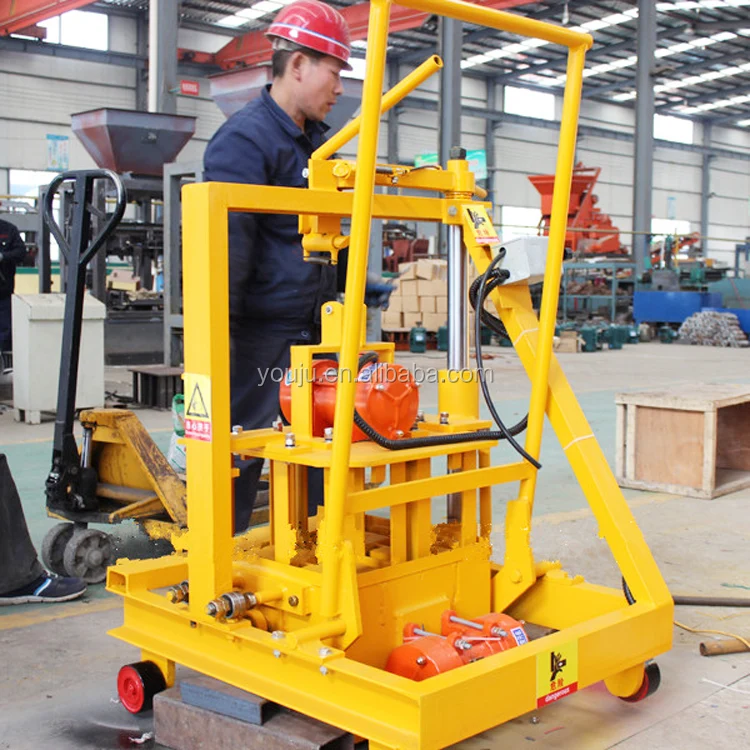
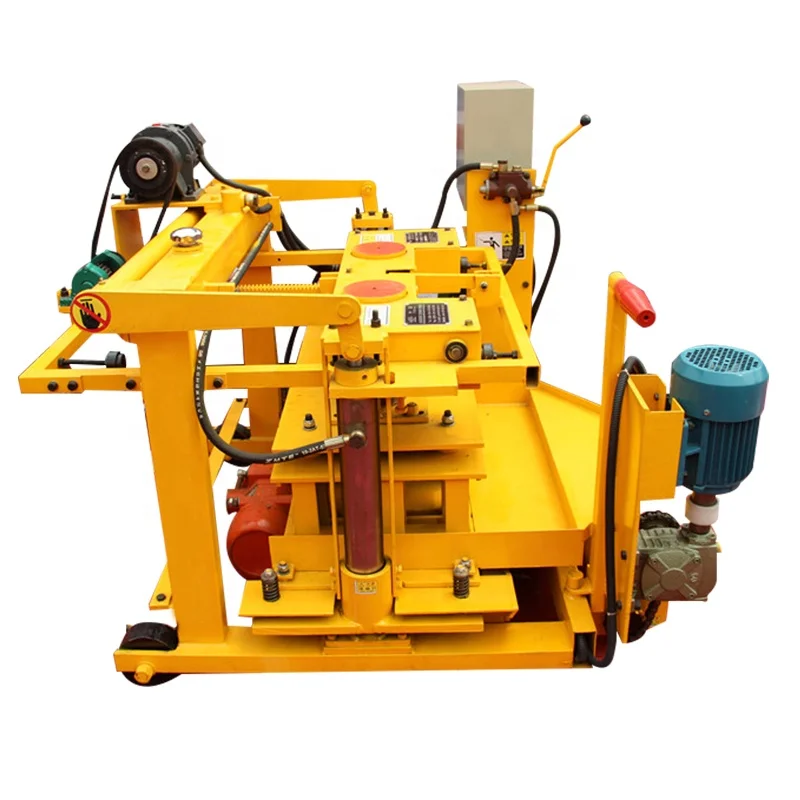
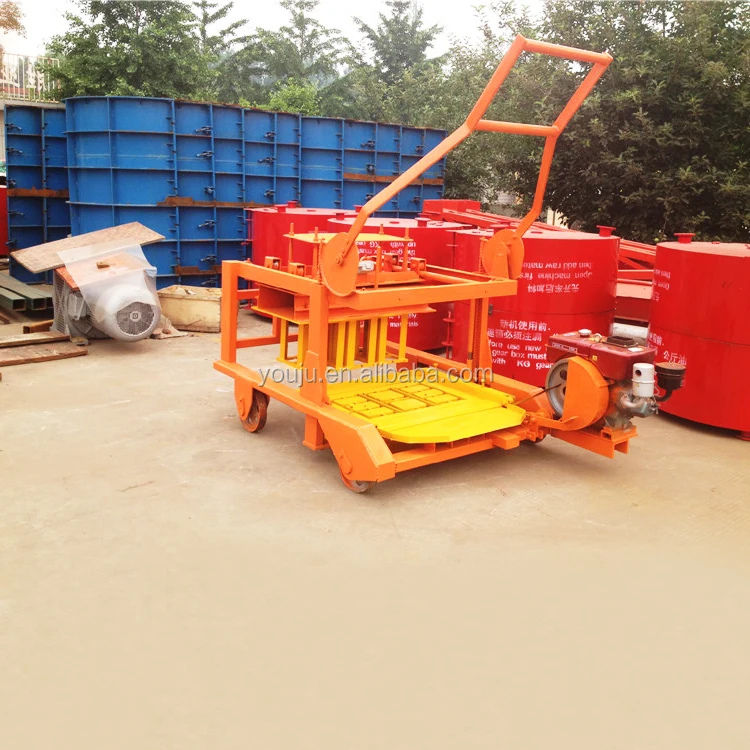
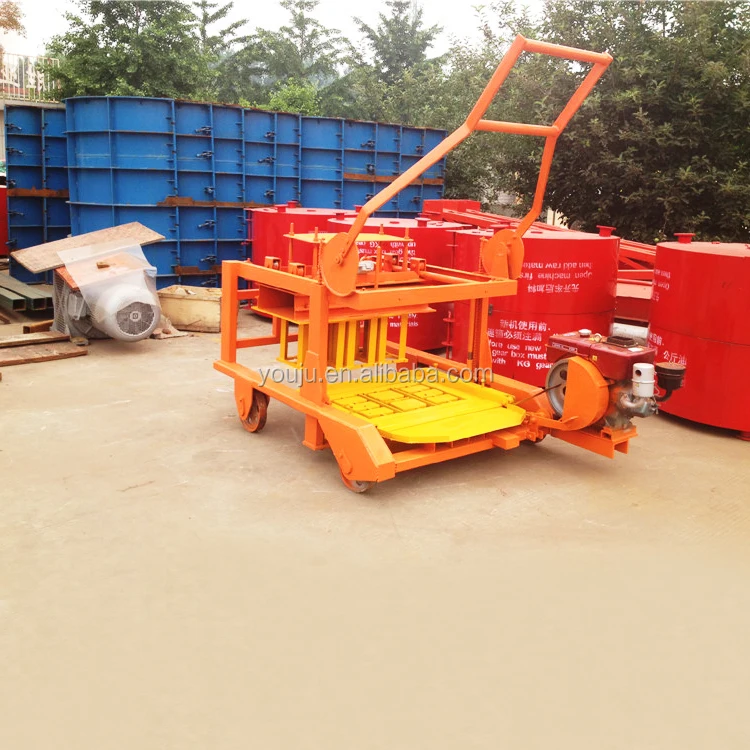
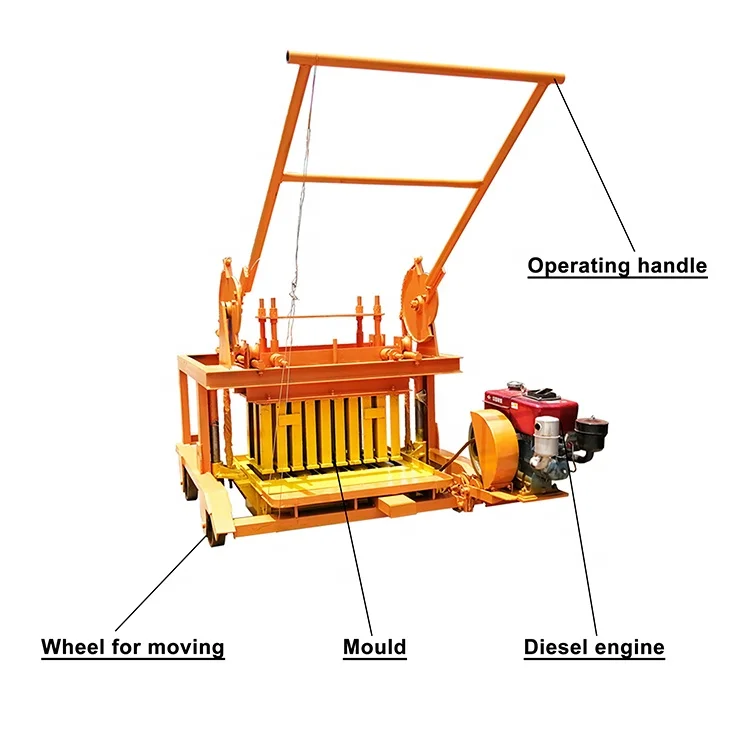
| Product Type | Diesel Egg-Laying Mobile Block Making Machine |
| Overall Dimensions (L×W×H) | 2420×1320×1650 mm |
| Net Weight | 810 kg |
| Moulding Cycle | 40–45 s |
| Pallet Requirement | No pallet required (egg-laying type) |
| Rated Power | 6 kW |
| Diesel Engine | 6 kW or 6–8 HP |
| Voltage | 220 V / 380 V / configurable to buyer local grid |
| Output Capacity | 3000 pcs/day based on 400×200×200 mm hollow block, 4 pcs/mould, 8-hour shift |
| Output Capacity (alt.) | 3500 pcs/day based on 400×150×200 mm hollow block, 5 pcs/mould, 8-hour shift |
| Output Capacity (alt.) | 4500 pcs/day based on 400×120×200 mm hollow block, 6 pcs/mould, 8-hour shift |
| Automation Level | Manual / egg-laying (mobile, no fixed plant required) |
| Mould Change | Interchangeable moulds for hollow, solid and paving block formats |
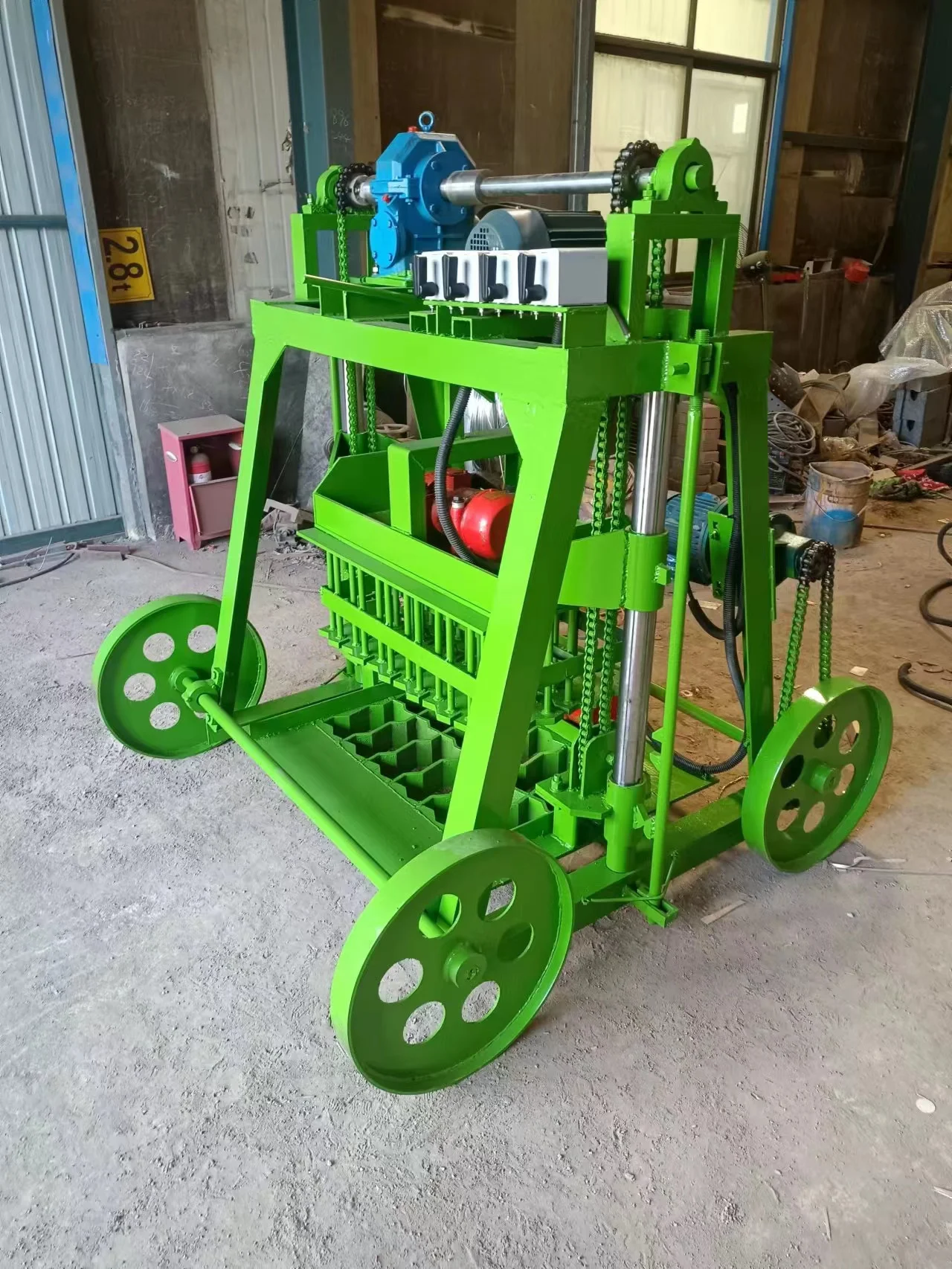
| Assembly State | Skid-mounted, mobile |
| Warranty | 1 Year |
Application Suitability
| Application | Material or Output |
|---|---|
| On-site hollow block production for housing projects | Crushed stone, sand and cement mixes laid directly on prepared concrete floors |
| Remote or off-grid block making | Diesel-powered operation where grid electricity is unreliable or absent |
| First-plant entrepreneur setups | Low-infrastructure egg-laying production without pallet inventory |
| Paving block and solid block runs via mould change | Local aggregate and cement blends matched to buyer market demand |
Why "Pieces per Day" Means Nothing Without the Block Format
Every capacity figure on this page names the exact block size, mould cavity count and shift length behind it.
Too many mobile block machines arrive on site only to reveal that the quoted daily output was based on a small solid brick the buyer never intended to produce. When the actual hollow block format is loaded, the cycle stretches, the mould cavity count drops and real output falls far short of what was promised. With the QMR4-45 diesel egg-laying block making machine, the 3000-piece figure assumes a 400×200×200 mm hollow block at four cavities across an eight-hour shift. Switch to a 400×120×200 mm block at six cavities and the same machine reaches 4500 pieces — but only because the format is smaller, not because the press runs faster. This transparency matters because your market decides which block you sell, and the machine must be sized to that format [NEED_CITE: common mismatch between quoted and actual block machine output in export markets].
Mould Options Dictate Real Output, Not the Press Alone
The QMR4-45 accepts interchangeable moulds for hollow blocks, solid blocks and paving blocks. Each format carries a different cavity count and demoulding behaviour, which is why cycle time and daily output must be restated every time the mould changes. A technical buyer sizing a machine to a specific product and market needs the capacity calculation per format, not a single brochure number. We supply the mould drawing and format list before the order is confirmed so there is no guesswork about which block dimensions the machine will produce on arrival.
Diesel Power Removes the Grid Bottleneck
The 6 kW / 6–8 HP diesel engine supplies hydraulic pressure independently of site electricity. For construction contractors producing blocks on housing-project sites where grid power is limited or entirely absent, this is the difference between starting production on day one and waiting weeks for a temporary connection. Fuel consumption and fuel grade tolerance should still be confirmed against local diesel specifications before the engine is ordered, because lower-grade fuel in some markets can affect injector life and cold-start reliability [NEED_CITE: diesel fuel grade variations across African and Southeast Asian construction markets].
How Vibration, Pressure and Mix Design Intersect on an Egg-Laying Machine
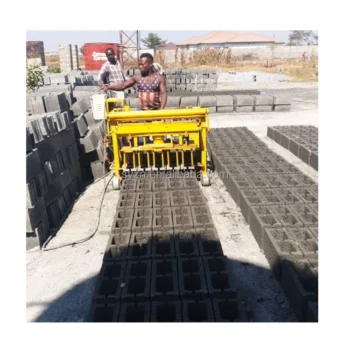
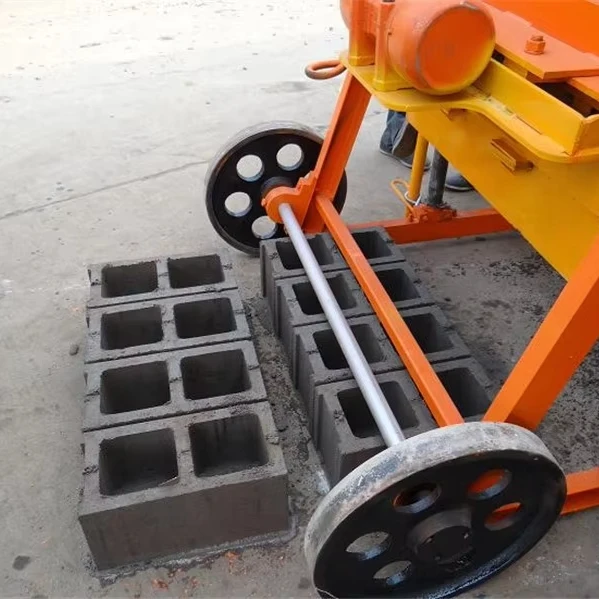
On an egg-laying machine the block is demoulded directly onto the floor with no pallet underneath, so green strength at the moment of release is critical. The QMR4-45’s 40–45 second moulding cycle must be matched to a mix design that holds shape immediately after vibration stops. Hydraulic pressure and vibration force together determine the compaction density; if the local aggregate is a lightweight volcanic scoria rather than dense river gravel, the vibration frequency that works for standard sand will leave blocks under-compacted and prone to corner damage. This is why we request a sample of the buyer’s actual aggregate before finalising the vibration settings. Pallet size is irrelevant here — the machine needs no pallet — but floor preparation is not. A smooth, level concrete surface is required so that blocks cure evenly and can be collected without breakage. The skid-mounted assembly keeps the machine portable between sites while maintaining a stable base during production.
What Happens When the Mix Does Not Match the Machine
I watched a QMR-class machine lose almost half its expected output in West Africa because the buyer’s local aggregate was a porous volcanic碎石 that absorbed water differently from the river sand we tested with at the factory. The vibration frequency was wrong for that material, blocks stuck in the mould and corners broke on release. The fix required on-site adjustment and a revised water-to-cement ratio, costing the contractor days of lost production. A trial run with the buyer’s actual material before shipment eliminates this category of failure entirely [NEED_CITE: aggregate variation impact on concrete block compaction and green strength].
Why Buyers Source This Machine Here
Block machinery is our single focus, so the QMR4-45 is specified as a matched system — machine, mould and handling — rather than assembled from unrelated suppliers. Configuration is set against the buyer’s actual mix design, local aggregate and target block format, not pulled from a catalogue default. Mould design covers the formats the buyer’s market actually sells, including custom drawings when standard formats do not fit. The automation level is selectable: a buyer can start with the manual egg-laying setup and later add supporting equipment as production scales. Installation support includes on-site commissioning and operator training so the crew is producing acceptable blocks before the technician leaves.
Documentation & Verification
- Line layout and capacity calculation stating the block format, cavity count and shift length assumed for every output figure
- Mould drawing and format list confirming which block dimensions the quoted moulds produce
- Voltage, frequency and control language confirmation sheet signed before production
- Factory test record run on the buyer’s specified block format before dispatch
- Wear parts and mould list with part numbers for first replacement orders
- Operation and maintenance manual covering mould change procedure and daily service points
Installation, Commissioning & Support
- Smooth, level concrete floor required for egg-laying operation; no curing rack or pallet system needed for the QMR4-45
- Diesel engine fuel line and exhaust routing confirmed before first start; electrical backup circuit optional for control panel
- Skid-mounted assembly allows forklift offloading and relocation between sites without dismantling
- Mould change training included during commissioning so operators can switch formats independently
- Wear parts list with part numbers supplied at handover for hydraulic seals and vibration springs
- Daily greasing schedule for guide columns and vibration motor bearings reviewed with site crew
Before You Request a Quote
Tell us which block format your market sells most — dimensions, solid or hollow, and the daily volume you need. Share a sample or description of your local aggregate so we can run a trial and confirm the vibration settings before the machine ships. Let us know whether your site has any grid electricity available or if the diesel engine will be the sole power source, so we configure the control panel accordingly.
Frequently Asked Questions
Q: How is daily output verified per block format, and what does each figure assume?
A: Every output number we quote names the exact block size, mould cavity count and shift length. For the QMR4-45, 3000 pieces per day assumes a 400×200×200 mm hollow block at four cavities over eight hours. Change the format and the figure changes — we provide a written capacity calculation for each mould you order.
Q: Which block formats can the QMR4-45 produce, and how long does a mould change take?
A: Interchangeable moulds cover hollow blocks, solid blocks and paving blocks in various dimensions. A trained operator can complete a mould change on site in a fraction of a shift. We supply a written mould change procedure and the tools required during commissioning.
Q: What diesel engine fuel consumption and grade should I plan for?
A: The 6 kW / 6–8 HP diesel engine runs on standard automotive diesel. Fuel consumption depends on load cycle and ambient conditions. We recommend confirming local diesel grade and sulphur content so we can advise on injector maintenance intervals before the machine ships.
Q: What floor preparation does egg-laying operation require?
A: A smooth, level concrete surface is essential so blocks release cleanly and cure evenly. No pallets or curing racks are needed. We provide floor preparation guidance covering surface tolerance, curing water spray practice and collection timing in the operation manual.
Q: How are voltage and control language confirmed before shipment?
A: We issue a voltage, frequency and control panel language confirmation sheet for the buyer to sign before production begins. This prevents commissioning delays caused by mismatched electrical supply or unreadable display text once the machine arrives on site.