


Description
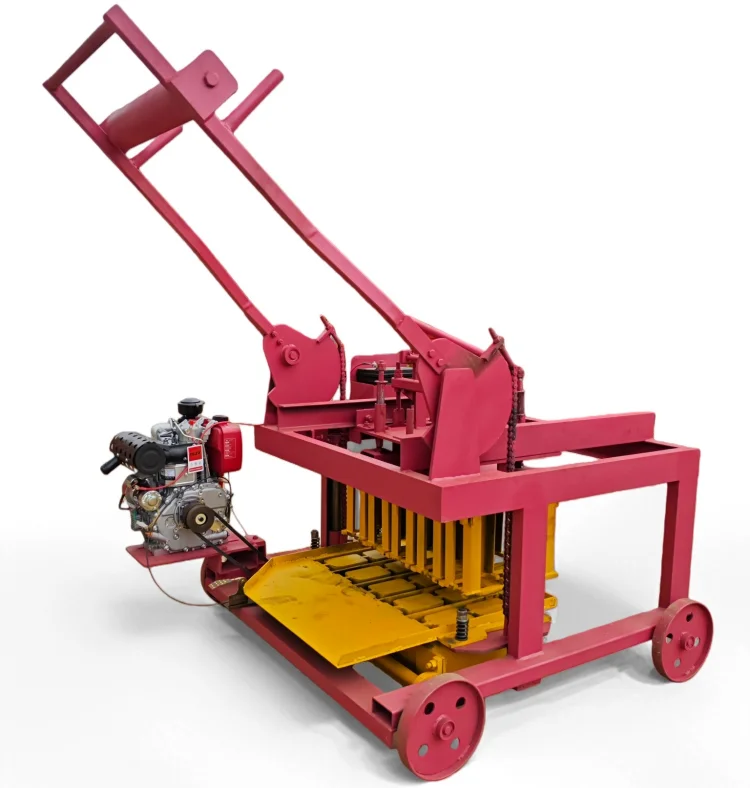
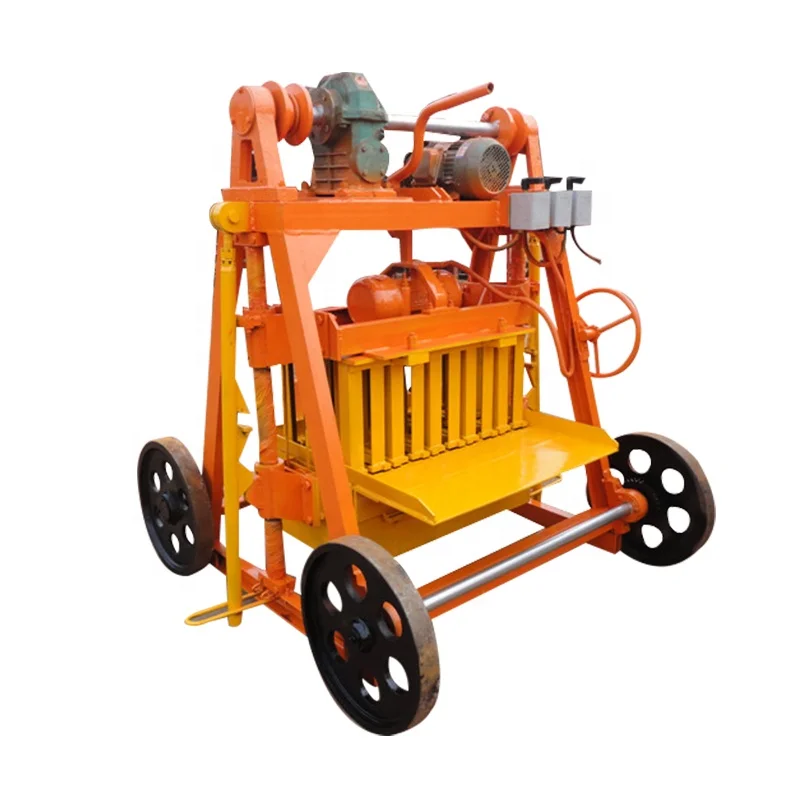
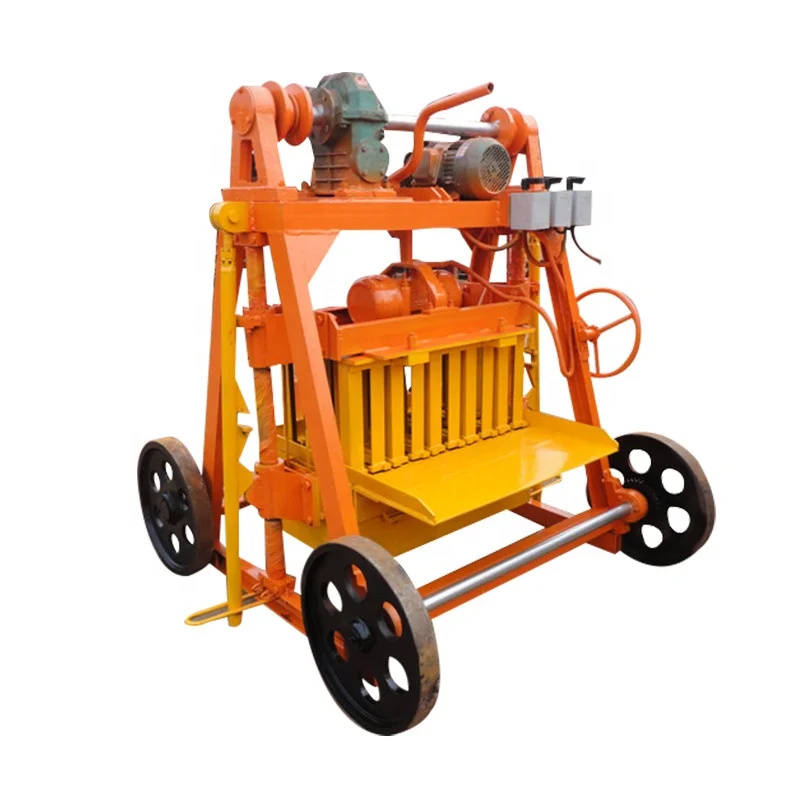
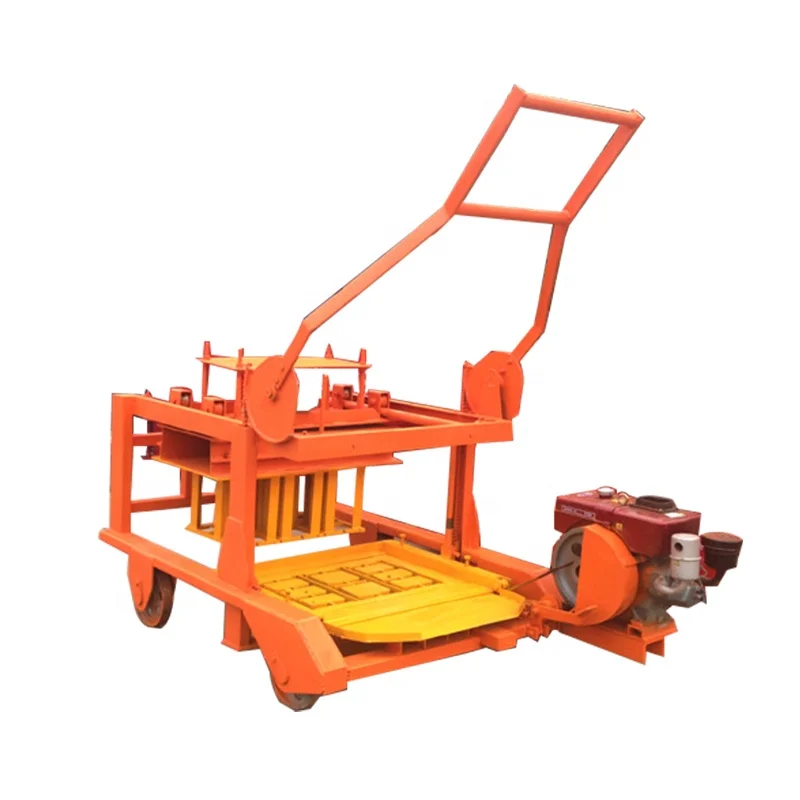
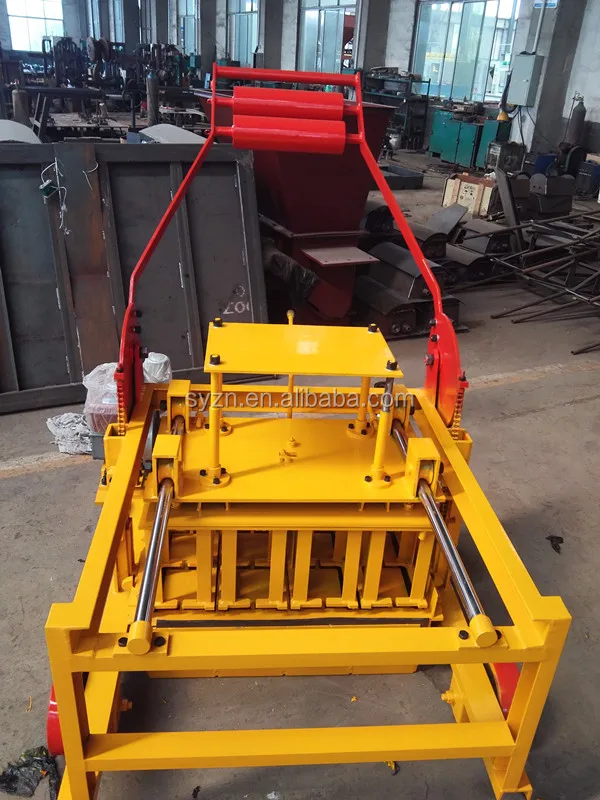
Specified Block Format Capacity — The QMR4-45 mobile block machine quotes cycle time and vibration force against the actual hollow or solid format you intend to produce, not a catalogue peak figure.
Technical Specifications
| Parameter | Value |
|---|---|
| Model | QMR4-45 |
| Product Type | Mobile Block Making Machine |
| Molding Cycle | 45 s (basis to be confirmed per block format) |
| Molding Form | Vibration and Pressure |
| Vibration Force | 60 KN |
| Power Source | Diesel (electric motor option available) |
| Rated Power | 8 hp (diesel engine) |
| Pallet Requirement | No pallet required (egg-laying type) |
| Overall Dimensions (L×W×H) | 2420 × 1320 × 1650 mm |
| Total Weight | 800 kg |
| Automation Level | Manual / Semi-automatic (operator-assisted movement) |
| Mould Format | Paver brick, hollow block, concrete block, solid brick, fly ash brick (confirm block dimensions per mould) |
| Output Capacity | basis to be confirmed per block format, material and shift hours |
| Supporting Equipment | JZC350 or JQ350 Diesel Concrete Mixer (with Electric Generating Unit); Trolley |
| Voltage & Frequency | basis to be confirmed for target market grid |
| Control System | basis to be confirmed (PLC or relay logic) |
Application Suitability
| Application | Material or Output |
|---|---|
| On-site hollow block production for remote building projects | Crushed stone, sand and cement mixed at the construction location |
| Small-scale paver brick runs for housing developments | River sand or quarry dust blended with cement |
| Solid concrete block manufacturing for first-time plant owners | Local aggregate and Portland cement |
| Fly ash brick production from thermal power station waste | Fly ash, lime, gypsum and crusher dust |
| Kerbstone and interlocking brick forming for road contractors | Graded aggregate with cement binder |
What "45-Second Cycle" Actually Means on Site
A quoted 45-second moulding cycle only translates into honest daily output when the block format and local aggregate are stated alongside it.
Buyers often see mobile egg-laying block machine specifications listed as a single cycle number without the corresponding brick dimensions or mix recipe. I have visited sites in East Africa where the operator was running a 400×200×200 mm hollow block on a machine whose brochure quoted the same cycle for a much smaller solid paver. The result was a daily tally roughly half of what had been projected at the ordering stage. The vibration force and hydraulic pressure must be matched to the density the buyer’s mix can reach, otherwise the operator compensates with longer pressing intervals that silently erode the shift [NEED_CITE: block density testing standards for concrete masonry units].
How Vibration Force and Pressure Shape the Block
The 60 KN vibration force in the QMR4-45 works together with the mechanical pressure head to compact the concrete mix inside the mould box. On a fine-aggregate mix such as fly ash and crusher dust, this force level is sufficient to achieve the density required for load-bearing hollow blocks. When the local aggregate is coarser — volcanic scoria in parts of East Africa, for example — the same force may need a longer dwell to push the paste into the voids, which extends the real cycle beyond the quoted 45 s. Asking for a trial run with your own sample material is the only way to confirm whether the mobile block machine specifications translate to the format you plan to sell.
Why Pallet-Free Production Changes the Site Layout
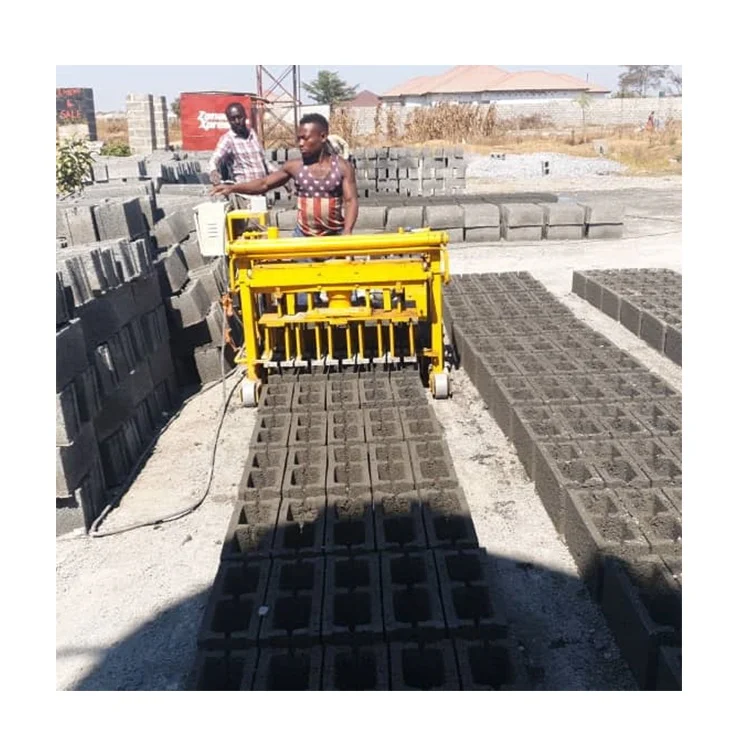
Egg-laying machines deposit the freshly pressed block directly onto the ground, so the curing area becomes part of the production footprint. A flat, compacted surface of concrete or well-rolled hardcore is necessary; loose soil will cause the bottom course to crack as the machine rolls forward. Because the QMR4-45 weighs 800 kg, the ground must also bear that concentrated load without rutting, especially in the wet season. Planning the curing rows and sprinkling schedule before the first shift starts avoids the bottleneck where finished blocks stand in the way of the next pass [NEED_CITE: ground preparation guidelines for egg-laying block machines].
Reading the Specs That Matter Most
The 8 hp diesel engine gives this machine independence from the grid, which is the main reason contractors choose it for rural housing projects or road-edge kerbstone work. However, diesel power means the operator must monitor engine rpm to keep the vibration frequency stable; a drop in rpm lowers compaction and produces a weaker block. The overall length of 2420 mm and width of 1320 mm keep the machine manoeuvrable between curing rows, yet the 1650 mm height means overhead clearance must be checked if production moves under a shelter. The QMR4-45 mobile block machine is shipped with a JZC350 or JQ350 diesel mixer, so the mixing capacity should be balanced against the press cycle to avoid the mixer idling or the press waiting for concrete.
The Cost of Overlooking Format-Specific Output
When the quotation states a single daily output number without tying it to a block format, the buyer typically discovers the shortfall only after the machine is on site and the first mould has been bolted down. Correcting the mismatch may require a larger mixer, extra moulds, or a switch in aggregate source — each adding weeks to the project timeline and unbudgeted freight costs. In some cases the vibration force simply cannot reach the required density on a lightweight aggregate, leaving the buyer to produce only non-load-bearing blocks in a market that demands structural grade [NEED_CITE: compressive strength classes for concrete masonry].
Why Buyers Spec the QMR4-45 With Us
Block machinery is our single focus, so the QMR4-45 is supplied as a matched set — press, diesel mixer, trolley and moulds — rather than assembled from separate vendors. We configure the machine against the buyer’s actual mix design and target block format, recording the cycle time and block weight during a factory test that uses sample material shipped by the buyer. Mould drawings are provided for every format on the list, and custom mould designs can be produced to buyer-supplied sketches. Automation level is selectable: a contractor can start with manual pallet-free operation and later add a batching hopper or conveyor without replacing the press. Documentation covers every step from layout sketch to packing photographs, so the machine that arrives matches the one that was tested.
Documentation & Verification
- Factory test record using your submitted aggregate and target hollow block dimensions
- Mould drawing pack listing every format and the corresponding changeover procedure
- Diesel engine specification sheet confirming rpm curve and emission rating
- Electrical schematic for the optional electric motor variant with voltage and frequency noted
- Operation and maintenance manual in the operator’s working language
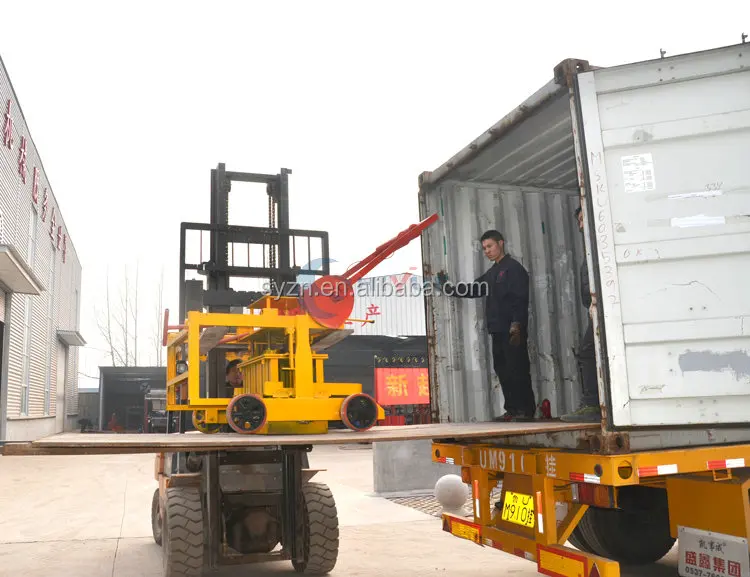
- Packing photographs and container loading plan before dispatch
Installation, Commissioning & Support
- Ground compaction check for the 800 kg machine load and curing row layout
- Diesel engine start-up procedure and rpm calibration to maintain 60 KN vibration
- Mould changeover drill practised on site with the tools supplied in the kit
- Mixer-to-press material flow balanced so the 45 s cycle is not interrupted
- Operator training on mix consistency and visual block inspection before curing
- Wear parts list with reorder codes for vibration springs and mould liners
Preparing Your Enquiry
Tell us the exact block format — length, width, height and whether hollow or solid — along with the daily volume your project requires. Share the aggregate type available locally and any sample test reports you already hold. If the site lacks grid power, confirm the diesel fuel grade and ambient temperature range so the engine can be tuned before dispatch.
Frequently Asked Questions
Q: How many blocks can the QMR4-45 produce in one shift?
A: The real shift output depends on the block format, the mix recipe and the operator’s pace. A 45-second cycle is achievable on a standard 400×200×200 mm hollow block with a well-graded sand-cement mix, but coarser aggregate or larger formats extend the cycle. We provide a per-format capacity table after reviewing your material sample.
Q: Should I choose the diesel engine or the electric motor option?
A: If the site has no reliable grid connection, the 8 hp diesel engine keeps production independent. Where stable three-phase power is available, the electric motor variant lowers running noise and eliminates fuel storage. We confirm voltage and frequency before building the control panel.
Q: What ground conditions does egg-laying production require?
A: The curing area must be flat, compacted and free of loose soil so the freshly pressed block does not settle or crack. A concrete slab or well-rolled hardcore base is recommended. The ground must also support the 800 kg machine weight without forming ruts during the wet season.
Q: How long does a mould change take, and what tools are needed?
A: Mould changeover involves unbolting the current mould box, lifting it off the vibration table and securing the replacement. With the supplied wrench set and a practised operator, the swap can be completed within a short break. We provide a step-by-step procedure for every mould on your format list.
Q: Which local aggregates can the QMR4-45 handle?
A: The 60 KN vibration force is compatible with river sand, quarry dust, crushed stone and fly ash blends. Aggregates with unusual particle shape or very low fines content may require an adjusted mix design. Sending a sample of your local material lets us run a trial before the machine leaves the factory.