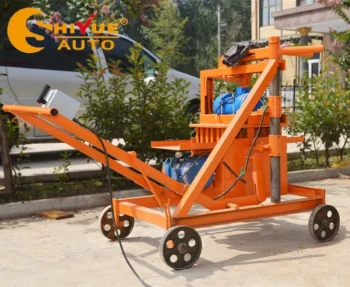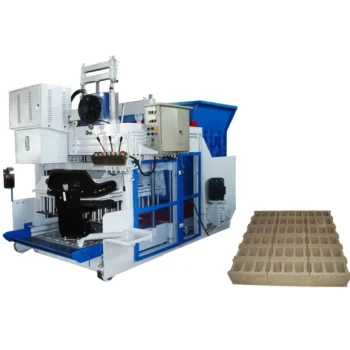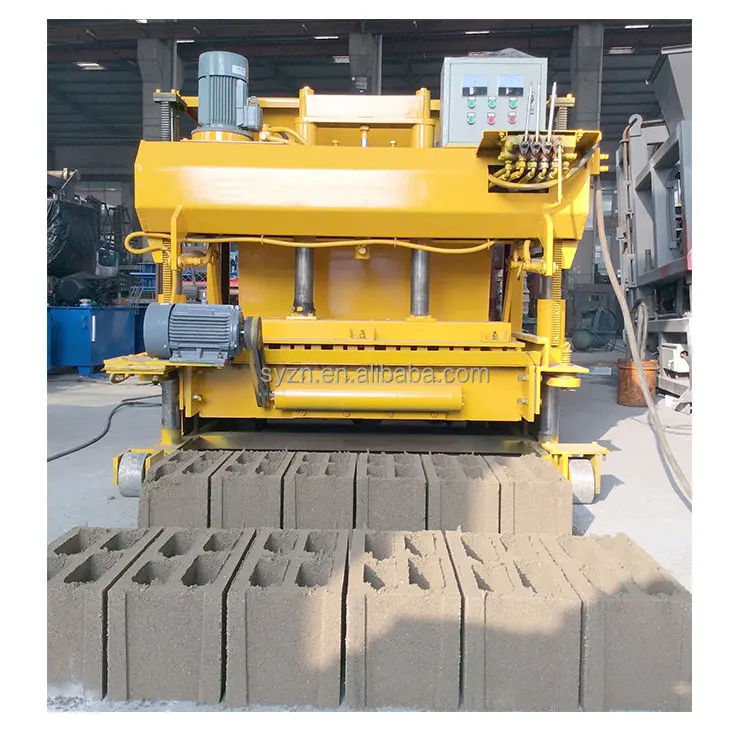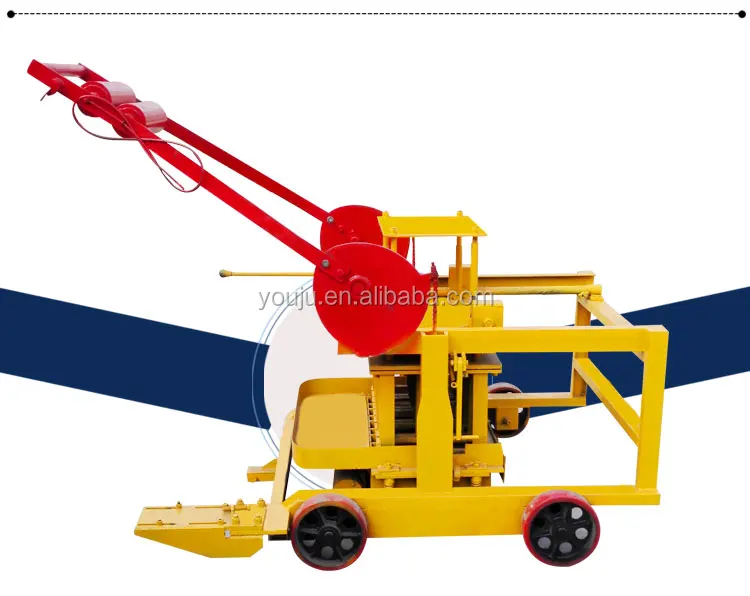
Description
Honest capacity by format — Every output figure for this mobile egg laying block making machine specifications sheet is tied to a named block size, cavity count, and cycle range, so you can match it to the product your market actually buys instead of guessing from a single brochure number.
Technical Specifications
| Parameter | Value |
|---|---|
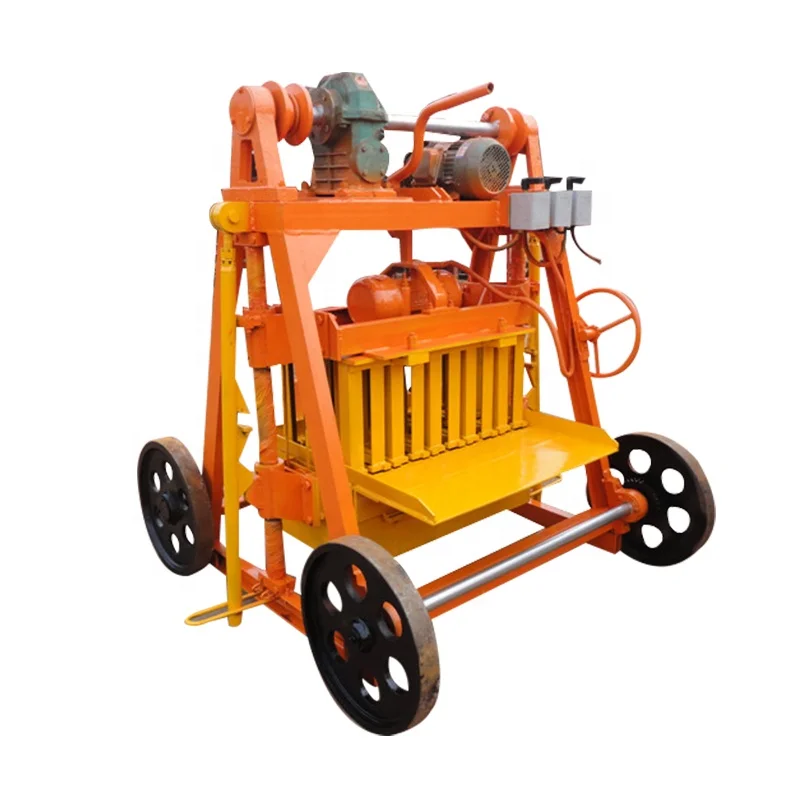
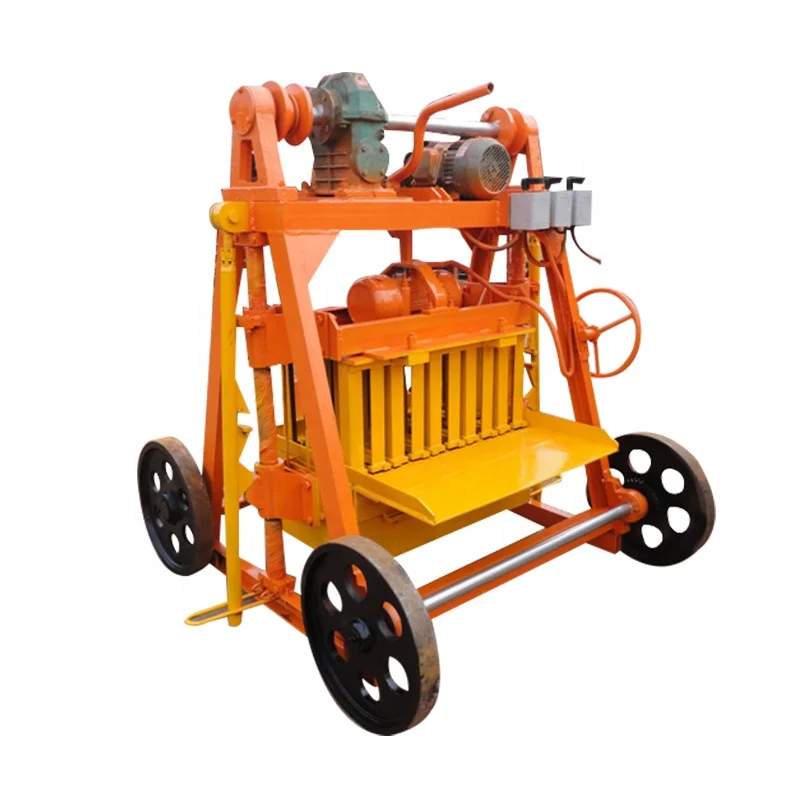
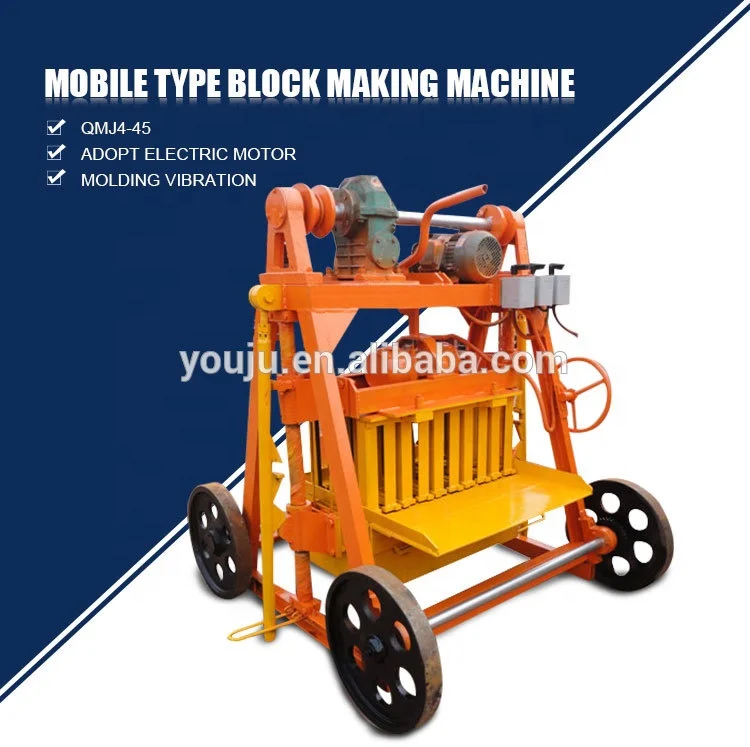
| Model | QMJ4-45 |
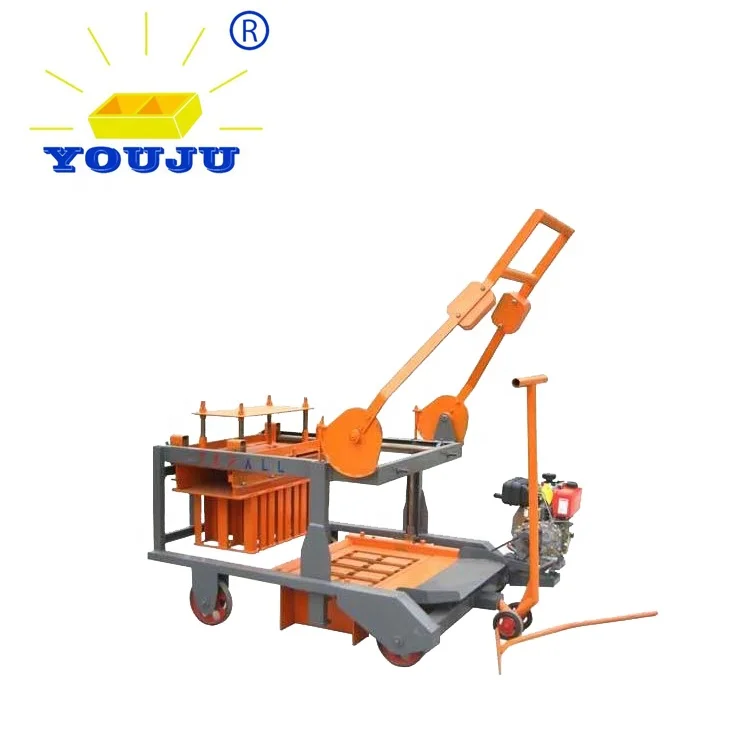
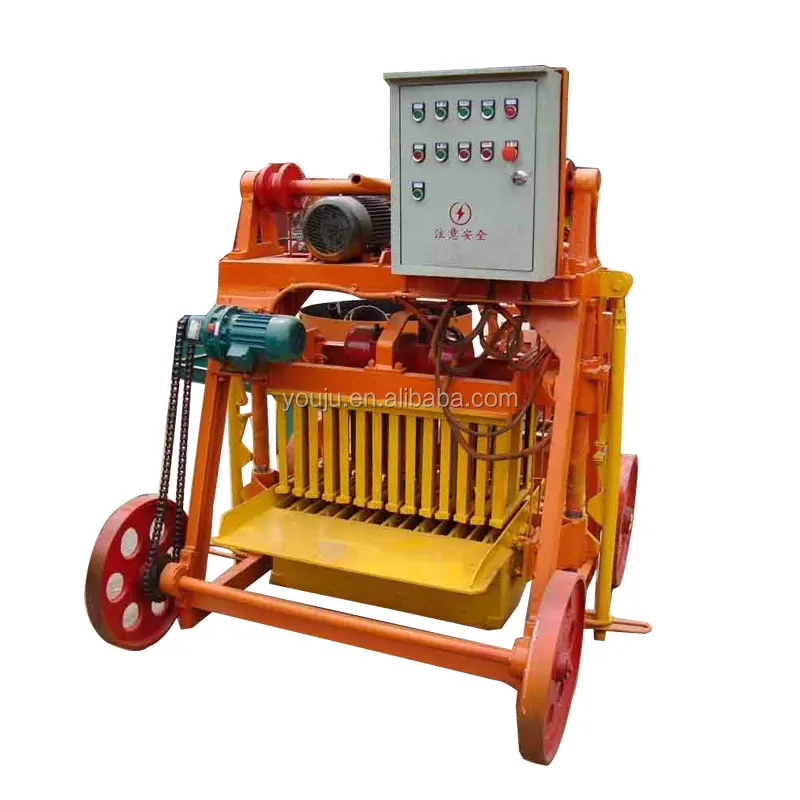
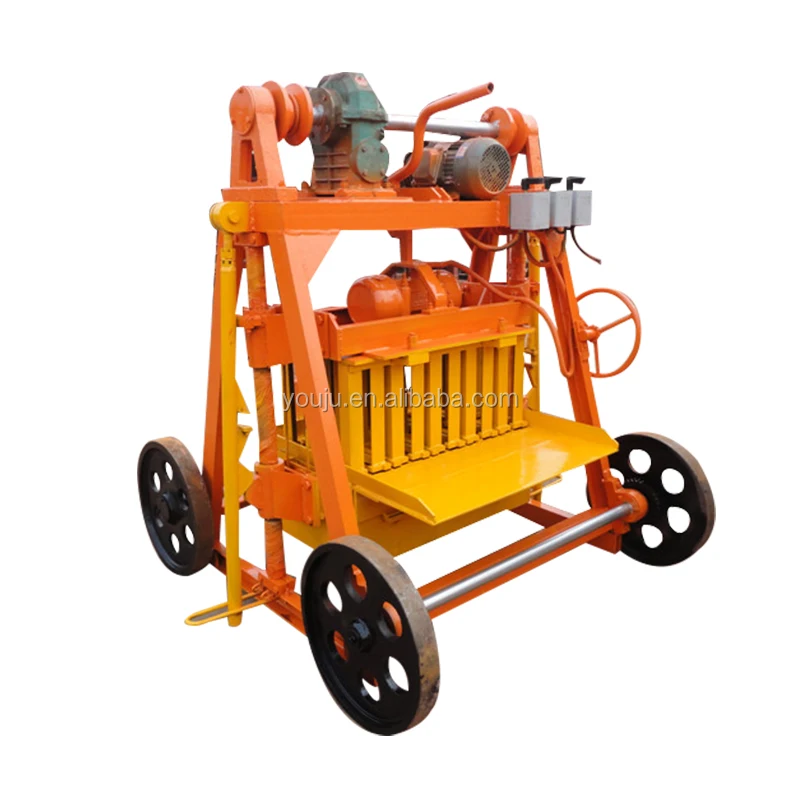
| Product Type | Mobile Egg Laying Block Making Machine |
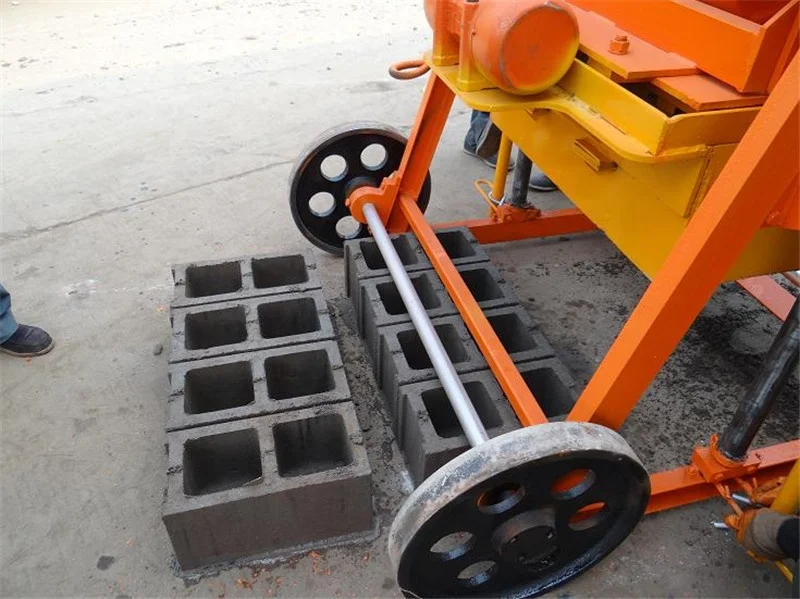
| Molding Method | Egg laying (mobile, no fixed plant required) |
| Vibration Type | Twice-vibration of molding core |
| Vibration Frequency | 2400 r/min |
| Molding Cycle | 40–45 s (basis to be confirmed per format and mix) |
| Mould Option 1 | 400×200×200 mm, 4 cavities, ~3000 pcs/day (8-hour shift, basis to be confirmed) |
| Mould Option 2 | 400×150×200 mm, 5 cavities, ~3500 pcs/day (8-hour shift, basis to be confirmed) |
| Mould Option 3 | 400×120×200 mm, 6 cavities, ~4500 pcs/day (8-hour shift, basis to be confirmed) |
| Total Power | 6 kW |
| Power Source | Diesel or petrol engine (configurable) |
| Demold Method | Manual |
| Turning Method | Manual |
| Pallet Requirement | None (egg laying on ground) |
| Automation Level | Manual |
| Warranty | 1 year |
Application Suitability
| Application | Material or Output |
|---|---|
| On-site hollow block production for small building projects | Cement, local sand or crushed stone aggregate, water |
| Garden wall and compound block manufacturing | Standard hollow blocks in 120 mm, 150 mm, and 200 mm wall thickness |
| Remote or off-grid block making where grid power is unavailable | Diesel or petrol engine-powered operation independent of local voltage |
| First-stage block plant for entrepreneurs with limited capital | Low-investment mobile unit, no pallets or curing racks required |
What "3000 Pieces per Day" Actually Means for a Mobile Block Machine
Daily output only holds true when you name the block format, the mould cavity count, and the shift length behind the number.
Suppliers often quote a single productivity figure for a mobile egg laying block making machine specifications page without stating which block size it assumes. I have watched contractors in West Africa plan their cement orders around a number that turned out to be based on the thinnest wall format, only to find their real output on 200 mm hollow blocks was noticeably lower. The QMJ4-45 lists three separate outputs — 3000, 3500, and 4500 pieces per 8-hour shift — each tied to a specific mould. This matters because your revenue per block, your cement consumption, and your curing space all shift when the format changes. [NEED_CITE: capacity calculation standards for concrete block forming equipment]
Format-Specific Capacity Breakdown
The QMJ4-45 mobile egg laying block making machine specifications page separates output into three tiers based on the block wall thickness your market demands. At 400×200×200 mm with four cavities, the machine lays blocks at a rate suited to standard structural hollow block demand. Switch to the 400×120×200 mm mould with six cavities, and the same cycle time yields noticeably more units per shift — but those blocks serve partition walls, not load-bearing applications.
Mould Change and Field Maintenance
Mould swaps on the QMJ4-45 are manual, involving bolt release and lifting. Because there is no hydraulic clamping or PLC-guided alignment, operators with basic mechanical skill handle the change without specialist tools. In rural sites I have visited across South Asia, this simplicity meant the machine kept running when a hydraulic hose on a more complex press would have halted production for days waiting on a part. The twice-vibration core delivers two vibration pulses per cycle rather than one, which helps consolidate the mix more evenly across all cavity positions. [NEED_CITE: vibration consolidation principles in mobile block forming]
Engine Power and Cycle Mechanics
The 6 kW diesel or petrol engine drives both the vibration motor and the travel mechanism, removing dependence on local grid voltage and frequency. This is not a trivial advantage — I have seen entire commissioning schedules slip because a site’s generator could not hold stable frequency under the starting load of a larger press. The 2400 r/min vibration frequency pairs with the 40–45 second molding cycle to give the mix enough dwell time for compaction before the machine advances. Demolding and turning remain manual, which keeps the maintenance burden low: no hydraulic valves to bleed, no PLC faults to diagnose in the field. The trade-off is that output pace depends directly on operator rhythm, not a fixed automation clock.
The Cost of Skipping Format Confirmation
Ordering an egg laying machine without confirming which block format the quoted capacity assumes leads to a cascade of planning errors. Cement is purchased for a volume the machine cannot actually produce in the format you sell, curing space is allocated for units that are larger or smaller than expected, and the mould you need may not be the one that arrived on the container. On project sites with tight deadlines, discovering this mismatch after arrival means weeks of lost production while the correct mould ships. [NEED_CITE: common specification mismatches in exported block machinery]
Why Source the QMJ4-45 Through This Line
Block machinery is the single focus here, so the QMJ4-45 is configured as a matched unit — machine, mould, and engine — rather than assembled from unrelated suppliers. Each mobile egg laying block making machine specifications proposal states capacity per format so you know exactly what the 400×200 mm mould will yield versus the 400×120 mm option. Moulds are designed for the hollow block sizes your market actually buys, and custom drawings are available if your region uses a non-standard wall thickness. The automation level is selectable in principle — you can start with this manual egg layer and move to a stationary line later without replacing your entire operation. Installation guidance and operator training are included so the first production run does not become a costly experiment.
Documentation & Verification
- Capacity calculation sheet stating output per block format with cycle time assumptions
- Mould drawing and format list confirming all three hollow block cavity layouts
- Engine specification sheet with fuel type, consumption rate, and spare parts list
- Operation and maintenance manual in your operator’s preferred language
- Factory test record run on the requested mould before dispatch
- Packing photographs and customs documentation support for your destination port
Installation, Commissioning & Support
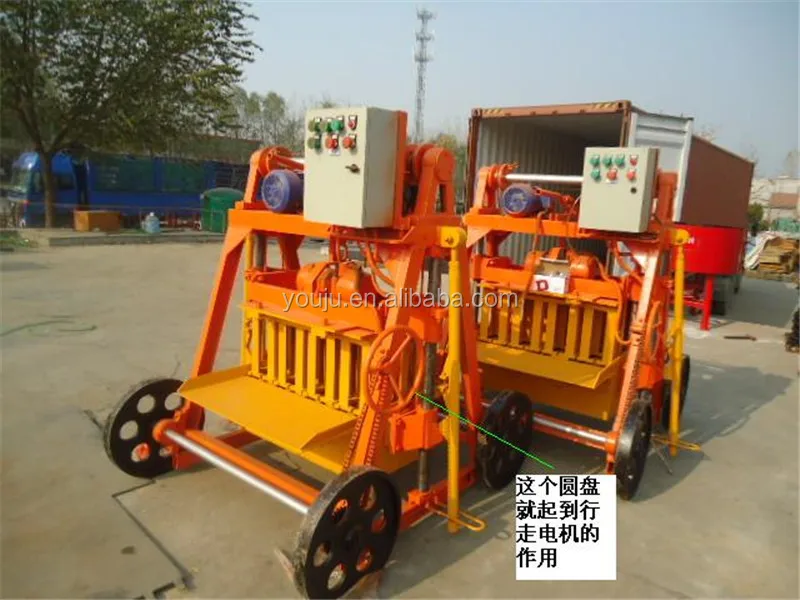
- Fully assembled on arrival — no foundation bolts or fixed plant construction required for the QMJ4-45
- Diesel or petrol engine pre-fitted; confirm fuel type matches local availability before shipment
- Level, compacted ground surface needed for consistent egg laying; no pallet inventory to manage
- First-run vibration time and water-to-cement ratio adjusted on site to match your local aggregate
- Operator training covers mould change procedure, engine maintenance, and cycle pacing
- Wear parts list and mould spare parts catalog included with the QMJ4-45 shipment
Before You Send an Inquiry
To match the right mobile egg laying block making machine specifications to your project, share the block format your market sells most — wall thickness, length, and height — along with your target daily output and the type of sand or aggregate available locally. Let us know whether you need diesel or petrol engine configuration and what language your operators require for the maintenance manual. If you already have curing space or a forklift on site, mention those so the line layout accounts for them from the start.
Frequently Asked Questions
Q: How is daily output verified, and which block format does each figure assume?
A: Each output figure is tied to a specific mould: 3000 pcs/day for 400×200×200 mm (4 cavities), 3500 for 400×150×200 mm (5 cavities), and 4500 for 400×120×200 mm (6 cavities), all based on an 8-hour shift and a 40–45 second cycle. A capacity calculation document stating these assumptions accompanies the quotation.
Q: What mould formats are available, and how long does a mould change take?
A: Three standard hollow block moulds are offered at 120 mm, 150 mm, and 200 mm wall thickness. Changeover is manual via bolt release and requires basic hand tools. Custom mould drawings are available if your market demands a non-standard size.
Q: Can the machine run on local aggregate and cement available in my region?
A: Yes, but the vibration time and water ratio must be tuned to your specific sand grading and cement type. I have seen standard settings fail on high-moisture river sand until on-site adjustments were made, so sharing your material data before shipment helps configure the starting parameters correctly.
Q: What engine options are available, and are spare parts sourced locally?
A: The QMJ4-45 ships with either a diesel or petrol engine at 6 kW total power. Engine spare parts availability depends on your region’s supply chain — we provide a parts list so you can confirm local sourcing before the machine departs.
Q: What documentation is provided with shipment?
A: The package includes a format-specific capacity calculation, mould drawings for all ordered formats, engine specification sheet, operation manual in your chosen language, factory test record, and packing photographs for customs clearance.