Description
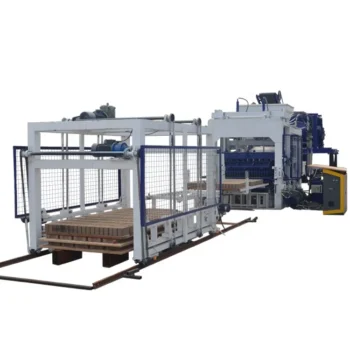
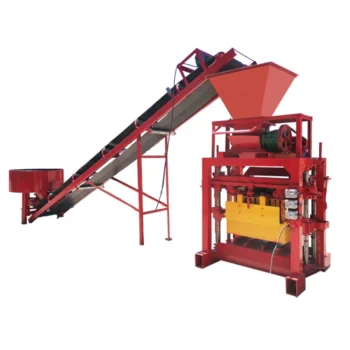
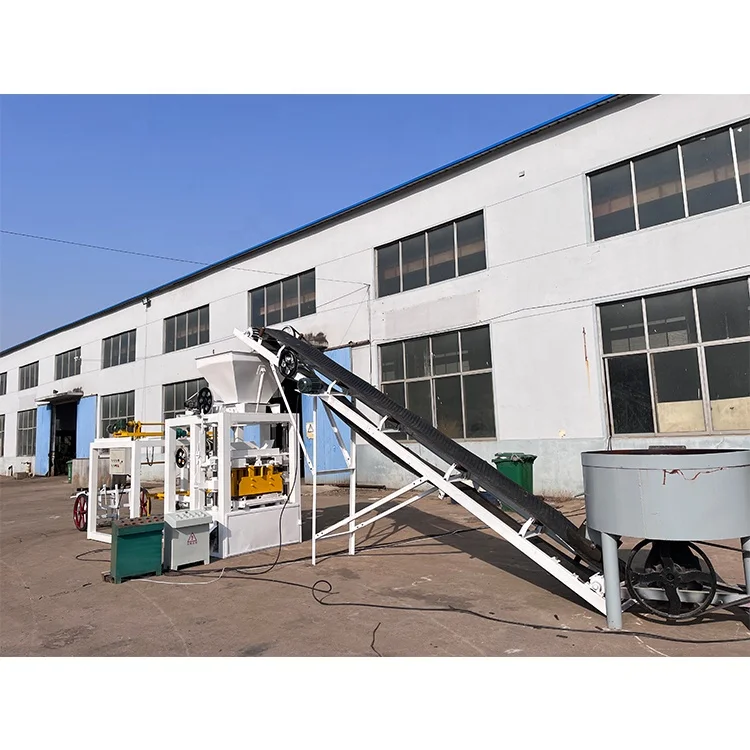
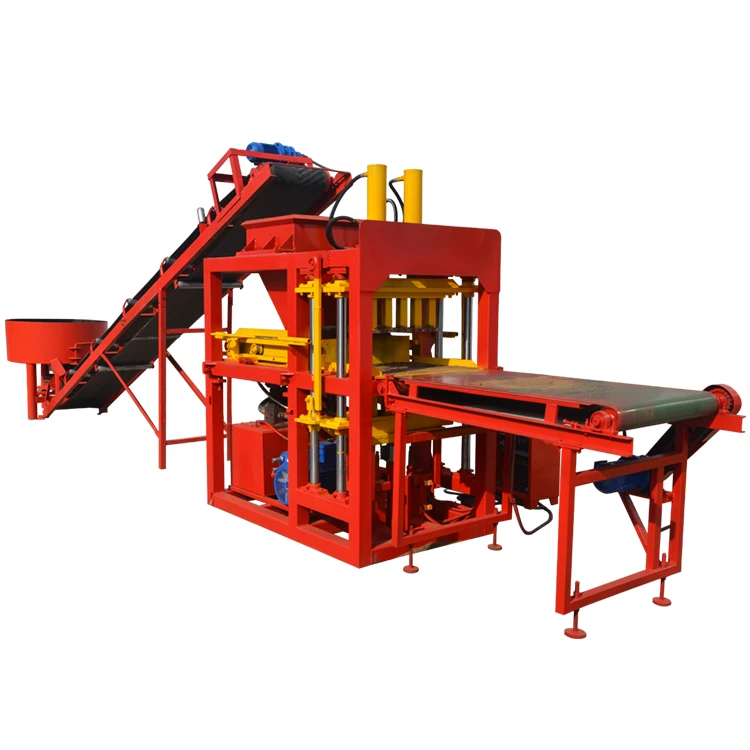
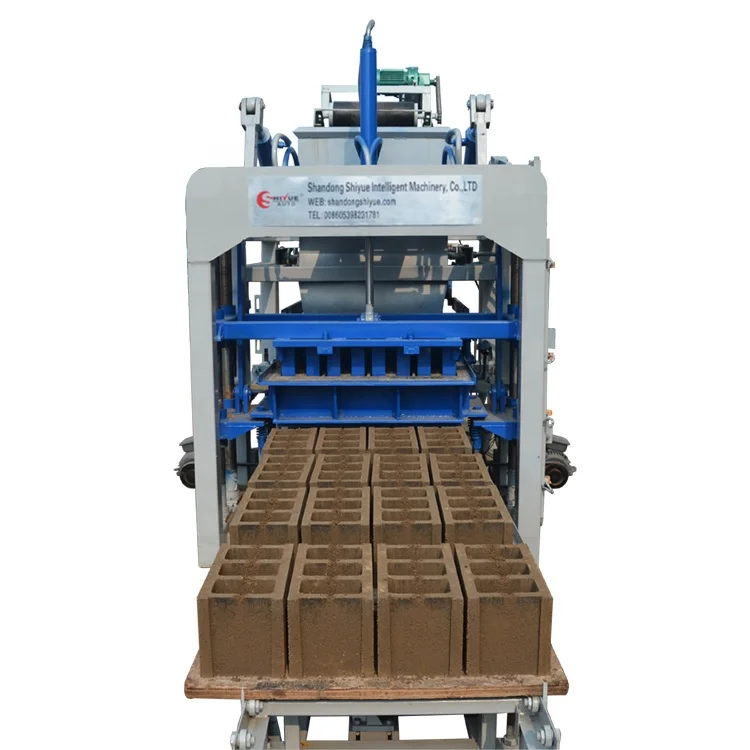
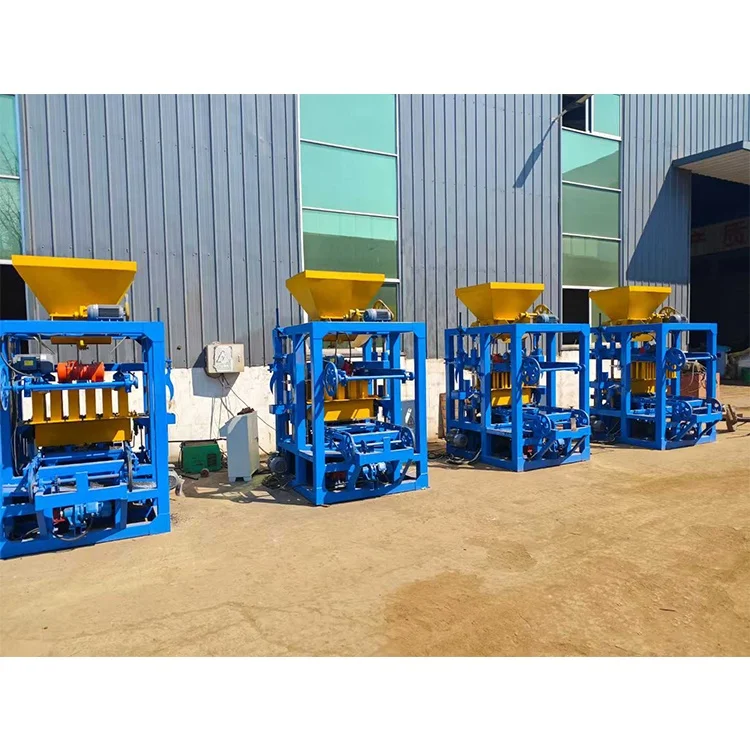
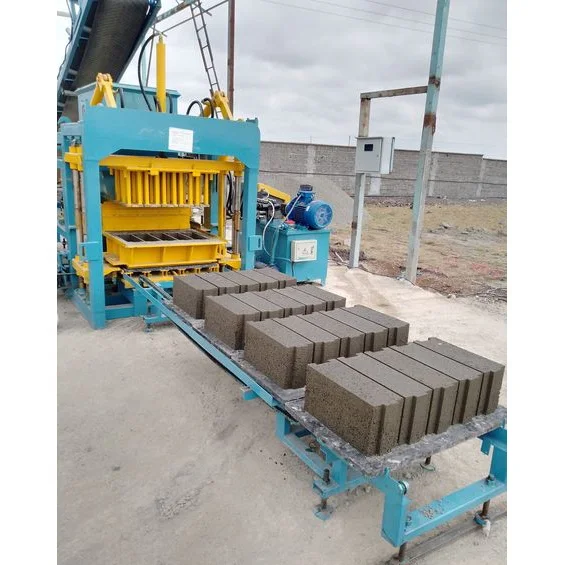
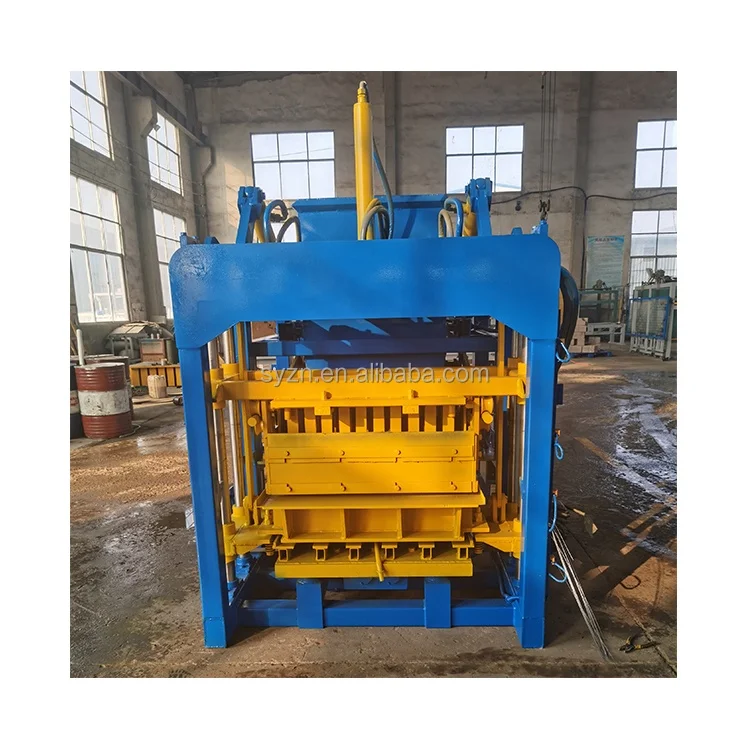
Matched Mould and Machine — the QT4-15 is configured against your specific block format, local aggregate and curing setup rather than shipped as a catalogue default.
Technical Specifications
| Parameter | Value |
|---|---|
| Model | QT4-15A |
| Product Type | Concrete Block Making Machine |
| Overall Dimensions (L×W×H) | 7100 × 1600 × 2610 mm |
| Molding Cycle | 15–25 s |
| Vibration Frequency | 4600 r/min |
| Exciting Power (Vibration Force) | 40–50 kN |
| Rated Power | 18.45 kW |
| Mixer Model | JQ350 |
| Pallet Size | 850 × 550 × 25 mm |
| Net Weight | 3 T |
| Automation Level | Semi-automatic |
| Hydraulic Station | Equipped |
| Assembly State | Skid-mounted / factory assembled |
| Applied Products | Paver, solid, hollow, curbstone |
| Raw Materials | Crushed stone, sand, cement, dust, fly ash |
| Output Capacity (Hollow 400×200×200 mm) | 4 pcs/mould, 408 pcs/hr, 3264 pcs/8hr |
| Output Capacity (Hollow 400×150×200 mm) | 5 pcs/mould, 510 pcs/hr, 4080 pcs/8hr |
| Output Capacity (Solid Brick 240×115×53 mm) | 18 pcs/mould, 2100 pcs/hr, 17000 pcs/8hr |
| Voltage & Frequency | Basis not stated in source — confirm with buyer’s site requirement |
| Control System | Basis not stated in source — confirm PLC brand and language |
| Certification | Basis not stated in source — confirm CE or other applicable standards |
Application Suitability
| Application | Material or Output |
|---|---|
| Hollow block production (400×200×200 mm) | Crushed stone, sand, cement, fly ash blends |
| Hollow block production (400×150×200 mm) | Standard concrete and lightweight aggregate mixes |
| Solid brick production (240×115×53 mm) | Cement, sand and fine aggregate |
| Paver block manufacturing | Dense concrete mixes with fine and coarse aggregate |
| Curbstone manufacturing | High-strength concrete with coarse aggregate |
| On-site block production for housing projects | Locally sourced sand, stone dust and cement |
What "400 Pieces per Hour" Leaves Out About the QT4-15 Concrete Block Making Machine Specifications
Every output figure must name the block format it assumes — otherwise it is meaningless.
Sellers routinely quote a single cycle count as if the machine produces all formats at the same rate. A mould forming four 400×200×200 mm hollow blocks per cycle will never match the hourly throughput of a mould pressing eighteen solid bricks per cycle. I have watched buyers sign off on a headline number, then discover on commissioning day that their actual product format cuts real daily volume in half. The QT4-15 concrete block making machine specifications here list output per format so you can size against the block your market actually buys [NEED_CITE: honest capacity disclosure standards in construction machinery trade].
Mould Format Flexibility Across Hollow, Solid and Paver Production
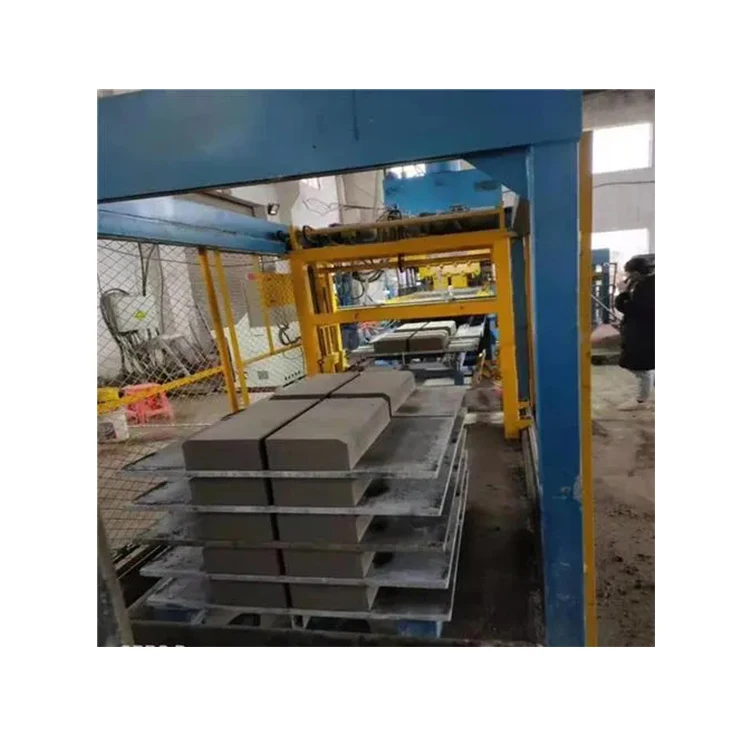
The QT4-15 concrete block making machine runs hollow blocks, solid bricks, pavers and curbstones on a single press frame. Mould changes let a small plant rotate through formats as orders shift, rather than dedicating one machine per product. The 850 × 550 mm pallet footprint accommodates standard mould layouts for the formats listed in the capacity table above.
Matching Vibration Force to Your Local Aggregate
The 40–50 kN vibration force and 4600 r/min frequency are calibrated for typical crushed stone and sand mixes. If your local aggregate is unusually fine — such as fly ash-heavy blends or fine river sand — the consolidation behaviour changes. Before we finalise the QT4-15 configuration, I review the buyer’s actual mix proportions and adjust the vibration and hydraulic pressure settings so block strength stays consistent across batches [NEED_CITE: effect of aggregate grading on concrete block density and strength].
How Hydraulic Pressure and Vibration Work Together on Block Density
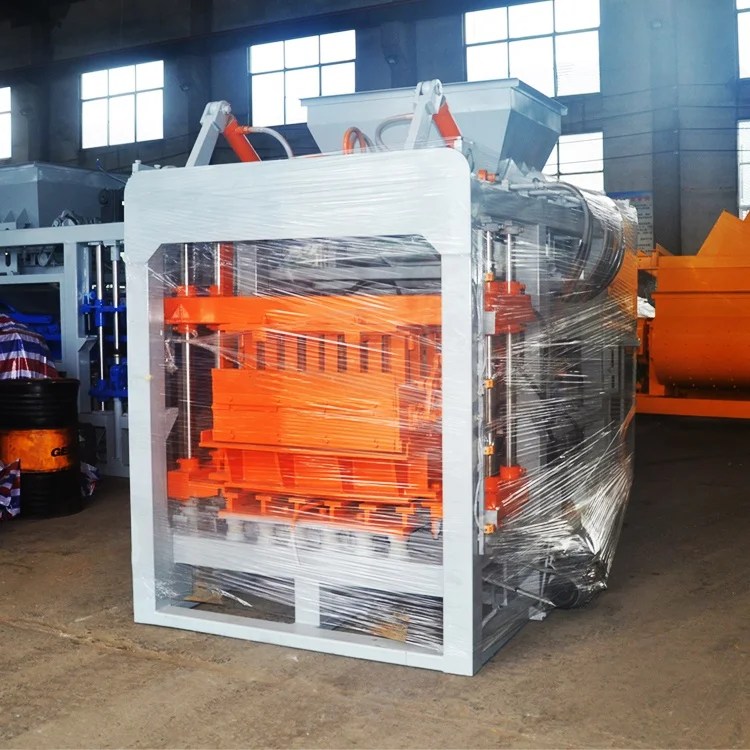
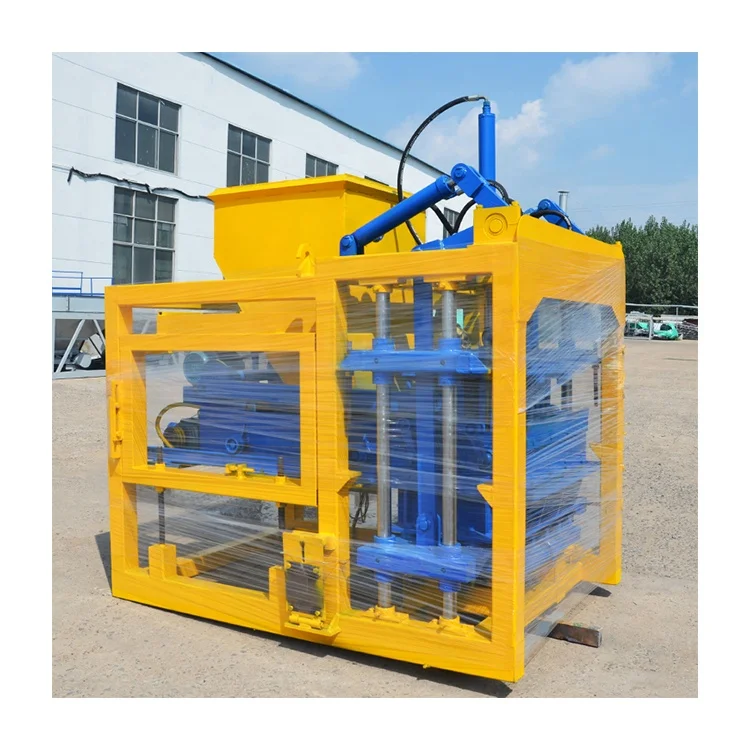
Block density is not decided by vibration alone. The hydraulic station applies downward pressure through the upper mould while the vibration table consolidates the mix from below. On the QT4-15A, the 15–25 second molding cycle gives the hydraulic ram enough dwell time to compress the concrete into the mould cavity at full force. If the hydraulic pressure is set too low for a stiff mix, the blocks emerge under-filled and weak at the corners. If vibration is excessive for a wet mix, the cement paste migrates to the surface and the block body stays porous. Balancing these two forces against the buyer’s specific mix design is where the QT4-15 concrete block making machine specifications move from paper numbers to real block strength on the pallet.
The Cost of Ignoring Pallet and Curing Area Compatibility
Buyers often select a pallet size based on what the machine accepts, without checking whether their curing racks and forklift can handle it. If the 850 × 550 × 25 mm pallet does not match the rack spacing already in the yard, blocks stack on the floor and curing times stretch unpredictably. Mismatched pallets also mean buying new handling equipment after the machine arrives — a cost that never appeared in the original quotation [NEED_CITE: pallet handling compatibility in block plant layout].
Why the QT4-15 Stands Up to Close Inspection
The machine, mould, pallet and handling equipment are specified as one matched system rather than assembled from separate suppliers. Each configuration is set against the buyer’s actual mix design and target block format, not a catalogue default. Mould design covers the formats the buyer’s market sells, with custom drawings available when standard sizes do not match. The semi-automatic level means a buyer can start with manual pallet handling and add automation later without replacing the press. Installation support includes on-site commissioning and operator training so the crew knows how to adjust vibration and pressure for local materials.
Documentation & Verification
- Line layout and capacity calculation stating the block format assumed for each QT4-15 output figure
- Mould drawing and format list confirming dimensions match your market sizes
- Pallet specification sheet detailing material, thickness and load rating
- Hydraulic and electrical schematic for local maintenance reference
- Voltage, frequency and control language confirmation recorded before production begins
- Factory test record with cycle timing on your specified block format
Installation, Commissioning & Support
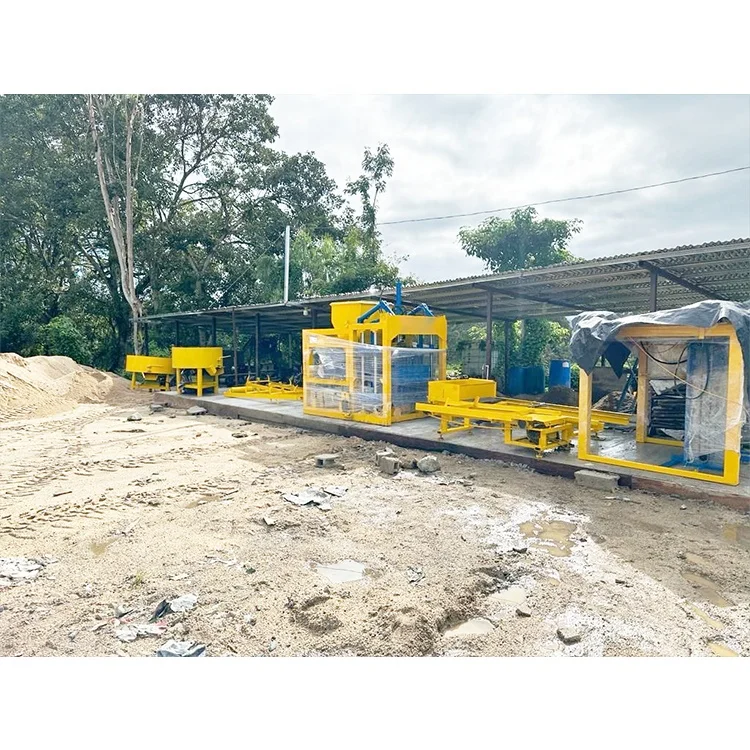
- Skid-mounted assembly allows the 7100 mm frame to sit on a level concrete pad without deep foundations
- 18.45 kW rated power requires a dedicated three-phase circuit sized for continuous motor starting load
- Voltage and frequency confirmed to match your site supply before the electrical panel is wired
- JQ350 mixer positioned upstream so feed timing matches the 15–25 second press cycle
- Semi-automatic controls configured with operator language before commissioning begins
- Wear parts list and mould inventory sheet handed over at installation for local procurement planning
What to Include in Your QT4-15 Inquiry
To size the QT4-15 concrete block making machine correctly, share the block formats your market demands, the daily volume you need per format, and the raw materials available locally including aggregate grading. Confirm your site voltage, frequency and preferred PLC display language so the control panel is wired right the first time. If you already have curing racks or a forklift, send the pallet dimensions those systems accept so the 850 × 550 mm pallet can be verified or adjusted before production starts.
Frequently Asked Questions
Q: How is output capacity calculated per block format on the QT4-15?
A: Each capacity figure is tied to a specific block size and mould cavity count. The 400×200×200 mm hollow block uses a 4-cavity mould producing 408 pieces per hour, while the 240×115×53 mm solid brick uses an 18-cavity mould producing 2100 pieces per hour. These figures assume continuous operation with the standard 15–25 second molding cycle and do not account for downtime or pallet changeover.
Q: How do I match vibration force to my local aggregate and mix design?
A: The 40–50 kN vibration force suits standard crushed stone and sand blends. Fine aggregates such as fly ash or fine river sand need lower vibration amplitude to prevent paste migration, while coarse gravel may require the upper end of the range. We review your mix proportions and adjust the vibration and hydraulic settings before the factory test.
Q: How long does a mould change take on this machine?
A: A trained operator can swap moulds on the QT4-15A within a single shift using the standard bolt-and-clamp system. The exact time depends on whether the new mould is pre-assembled and whether the pallet feed path needs adjustment for a different block height. We include a mould change procedure in the operation manual.
Q: What pallet size and material should I choose for my curing setup?
A: The standard 850 × 550 × 25 mm pallet fits the QT4-15 press table, but you should verify it matches your existing curing rack spacing and forklift tine width. Bamboo, PVC and steel pallets are available, each with different load ratings and service lives. We recommend confirming these dimensions before production so the pallets arrive matched to your yard.
Q: Which block formats and custom moulds are available for my market?
A: Standard moulds cover hollow blocks, solid bricks, pavers and curbstones in the sizes listed in the capacity table. If your local market uses non-standard dimensions, we can produce custom moulds from your drawings or from sample blocks you send us. The mould drawing and format list are confirmed during the proposal stage before manufacturing begins