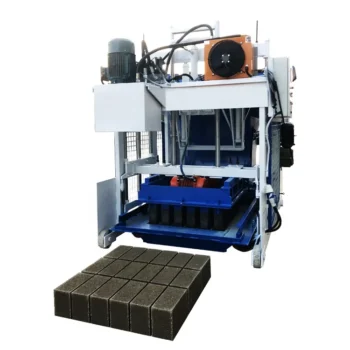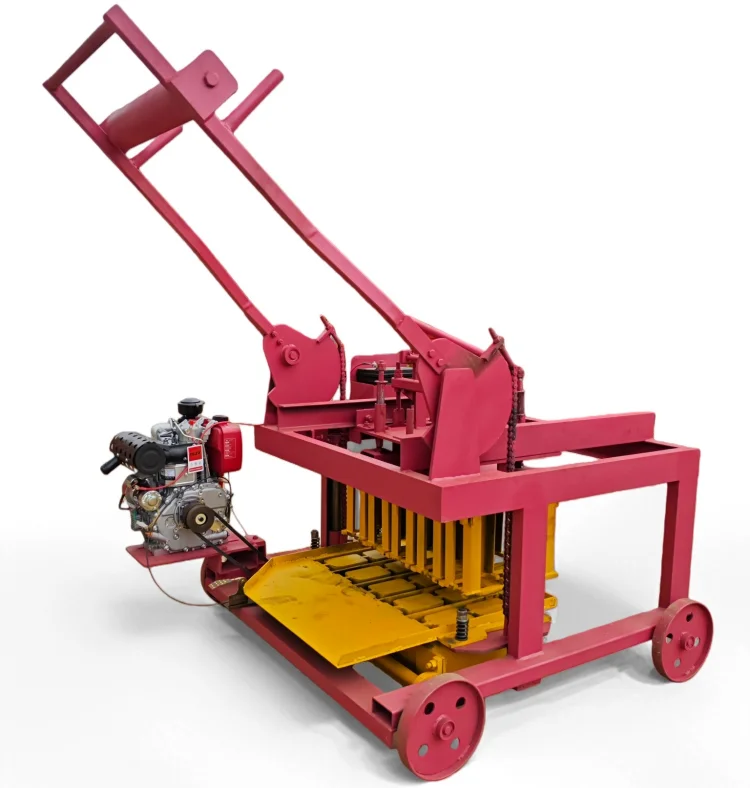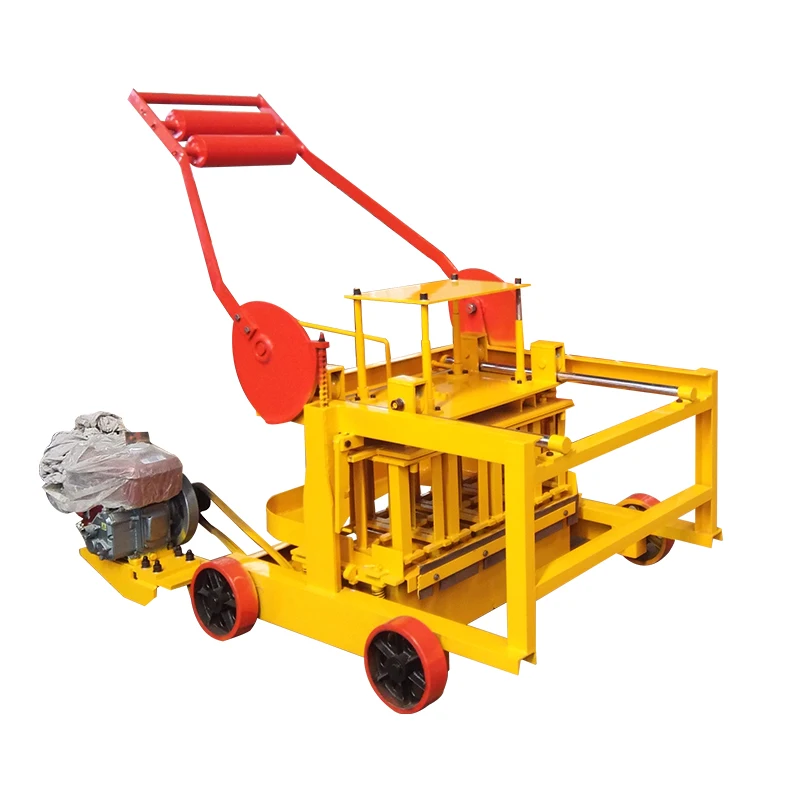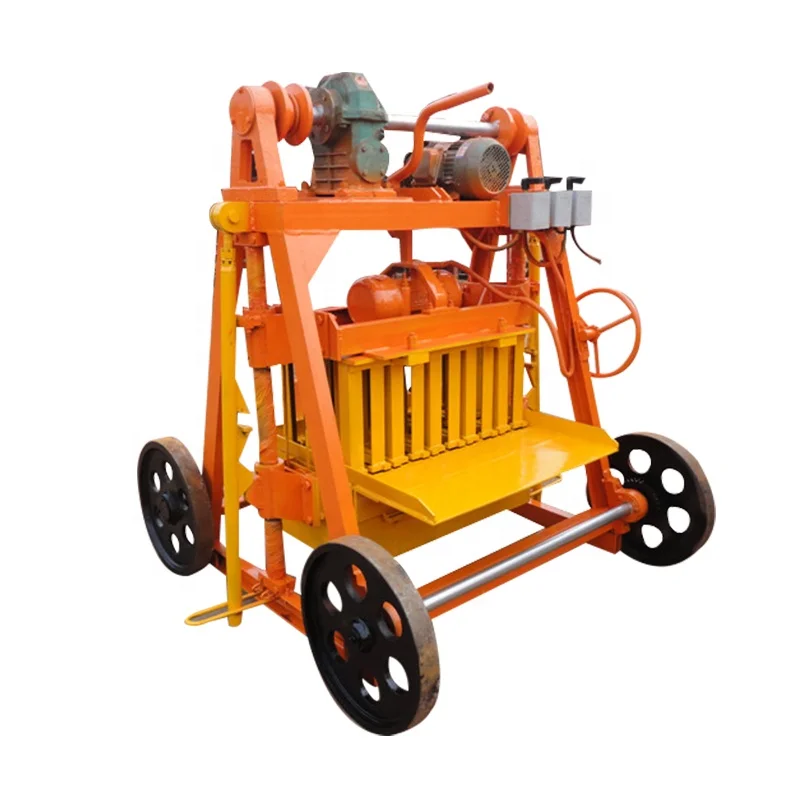


Description
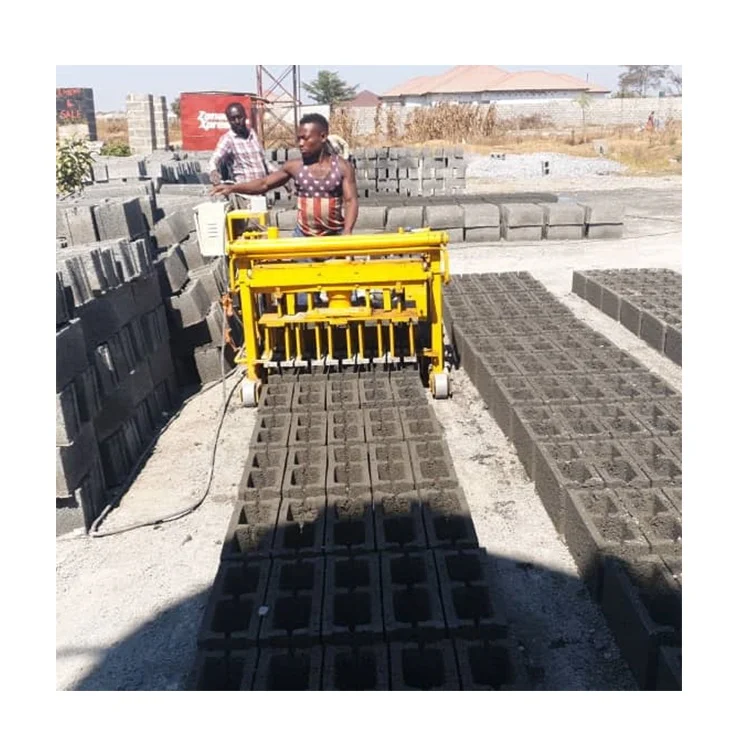
Matched to local aggregate — the QMY4-30 mobile block machine is configured against the buyer’s actual mix design and target block format, not a catalogue default, so vibration force and hydraulic pressure meet the density your market demands.
Technical Specifications
| Parameter | Value |
|---|---|
| Model | QMY4-30 |
| Product Type | Mobile Concrete Block Making Machine |
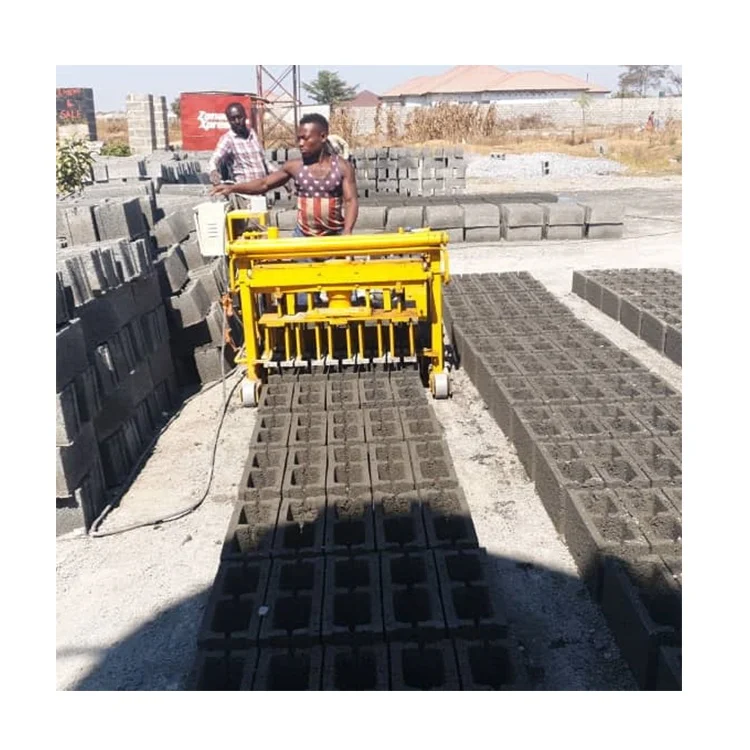
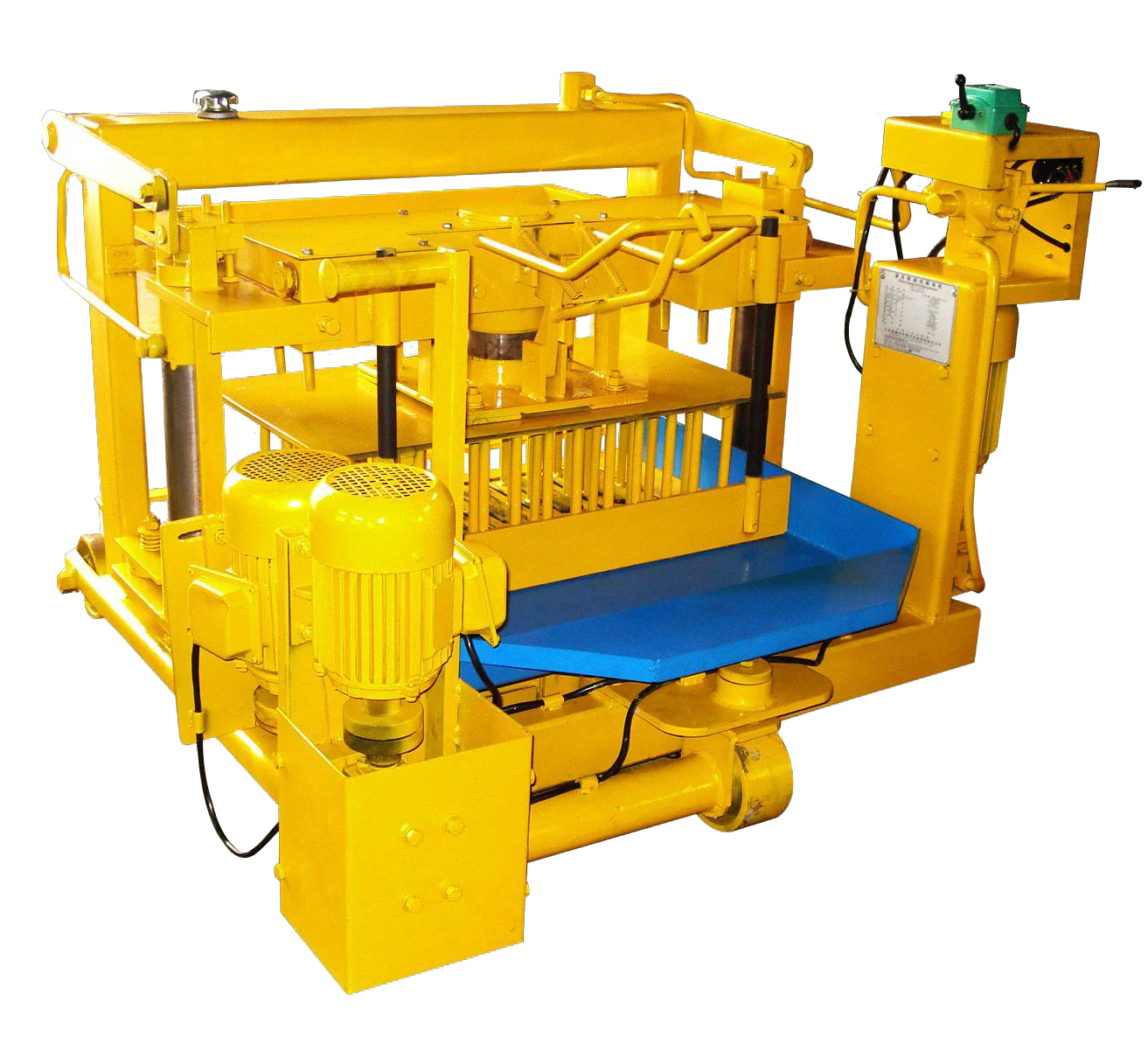
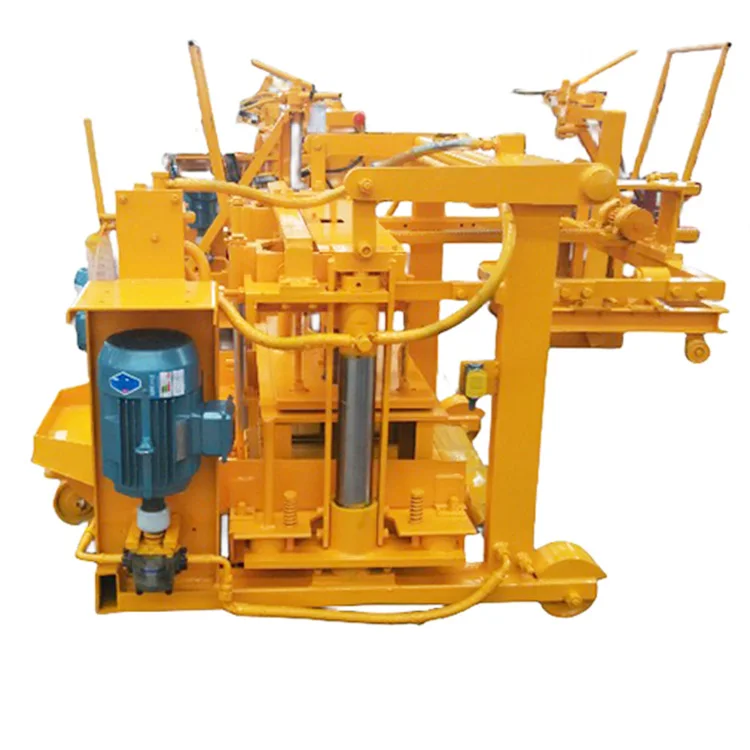
| Machine Type | Mobile / egg-laying block machine |
| Rated Power | 5 kW |
| Molding Cycle Time | 30 seconds |
| Overall Dimensions (L×W×H) | 1200 × 1200 × 1100 mm |
| Net Weight | 950 kg |
| Raw Materials | Cement, sand, crushed stones, slag |
| Automation Level | Manual with hydraulic assist |
| Mould Format Capability | Hollow block and solid brick (standard sizes) |
| Mould Change | Changeable moulds for hollow block and solid brick |
| Output Capacity (400×200×200 mm hollow block, 4 pcs/mould) | 480 pcs/hour, 3840 pcs/8 hours |
| Output Capacity (400×150×200 mm hollow block, 5 pcs/mould) | 600 pcs/hour, 4800 pcs/8 hours |
| Output Capacity (400×100×200 mm hollow block, 7 pcs/mould) | 840 pcs/hour, 6720 pcs/8 hours |
| Pallet Size | Not stated in source — confirm pallet dimensions and material |
| Hydraulic Pressure | Not stated in source — confirm pressure rating |
| Vibration Force | Not stated in source — confirm vibration force (kN) |
| Voltage & Frequency | Not stated in source — confirm voltage, frequency and phase |
| Control System | Not stated in source — confirm PLC or relay logic |
| Certification | Not stated in source — confirm CE or other applicable standards |
Application Suitability
| Application | Material or Output |
|---|---|
| Small-scale block production for startups | Cement, sand, crushed stone, slag mixtures |
| On-site hollow block production for housing projects | 400×200×200 mm and 400×150×200 mm hollow blocks |
| Contractor self-production at development sites | 400×100×200 mm hollow blocks and standard solid bricks |
| Small-volume block manufacturing by distributors | Format changes via interchangeable moulds on a single machine |
What "840 Pieces per Hour" Leaves Out When No Format Is Stated
Capacity is meaningless unless tied to a specific block format and mould cavity count.
Many small-scale buyers order an egg-laying machine based on a single headline number, only to discover on site that the daily output assumes the smallest block in the mould catalogue. The QMY4-30 runs a 30-second cycle regardless of which mould is mounted, so hourly output shifts from 480 pieces on a 400×200×200 mm hollow block to 840 pieces on a 400×100×200 mm hollow block because the mould cavity count changes from four to seven. Quoting mobile block machine specifications without the format attached sets a false expectation that no amount of operator effort can close. [NEED_CITE: common causes of output shortfall in small block plants]
Matching Cycle Time to the Block Your Market Actually Buys
The 30-second moulding cycle on the QMY4-30 holds steady across all standard hollow block formats the machine accepts. Because the cycle time is constant, the only variable that changes throughput is the number of cavities in the mounted mould. A buyer whose local contractors specify 400×200×200 mm hollow blocks will see 480 pieces per hour, while a buyer in a market dominated by 400×100×200 mm partition blocks will reach 840 pieces per hour on the same mobile block machine. This is why format must be decided before capacity is calculated, not after.
Why Pallet Choice Follows the Curing Area, Not the Brochure
Pallet size and material are listed as "to be confirmed" on this machine because the correct choice depends on the curing yard the buyer already has or plans to build. A timber pallet may work for a contractor laying blocks on a flat concrete slab beside the build site, while a PVC pallet suits a distributor running a dedicated curing rack area with a small forklift. Confirming pallet dimensions before the machine leaves the factory prevents a situation where freshly pressed blocks cannot be moved to the curing zone without manual double-handling. [NEED_CITE: pallet material selection for mobile egg-laying block machines]
Reading the Spec Sheet Beyond the Headline Numbers
Rated power of 5 kW keeps utility demands low enough for a first-time block plant operating from a site generator, but the buyer still needs to confirm voltage, frequency and phase with the supplier before production begins. A 50 Hz motor shipped to a 60 Hz market will run faster and hotter, shortening bearing life, while a three-phase machine arriving at a single-phase site simply will not start. The QMY4-30 spec sheet leaves hydraulic pressure and vibration force as items to confirm, and those two values together determine whether the compaction energy is sufficient for the buyer’s local aggregate and cement ratio.
The Hidden Cost of Skipping the Raw Material Sample
Sending a bag of local sand and aggregate to the supplier for a trial press takes a week and prevents months of on-site frustration. Clay-rich sand absorbs water differently and demands higher vibration force to achieve the same block density as clean crushed stone. Contractors who skip this step frequently find that blocks crumble at the edges after demoulding, forcing them to increase cement content and raise production cost per block to compensate for inadequate compaction energy. [NEED_CITE: effect of local aggregate clay content on block compressive strength]
Why Configuration Confirmation Belongs Before the Invoice
Each QMY4-30 is matched against the buyer’s target block format, local raw material profile and site electrical supply rather than shipped as a catalogue default. Mould drawings are reviewed and confirmed before production begins, so the cavities produce the exact hollow block dimensions the buyer’s market requires. Voltage, frequency and control language are documented in writing, removing the risk of a machine that cannot be commissioned on arrival. Factory test records are generated with the buyer’s specific mould mounted, providing a capacity baseline that both parties can reference during on-site installation.
Documentation & Verification
- Line layout showing footprint for the QMY4-30 and curing yard clearance
- Capacity calculation sheet stating output per block format and mould cavity count
- Mould drawing confirming hollow block dimensions before production starts
- Voltage, frequency and control language confirmation recorded in writing
- Factory test record with the buyer’s selected mould mounted on the machine
- Wear parts and mould availability list for the first replacement cycle
Installation, Commissioning & Support
- Flat concrete slab of adequate size to accommodate the 1200 × 1200 mm machine footprint
- Dedicated electrical circuit matching confirmed voltage, frequency and phase for the 5 kW rated power
- Machine delivered in single compact unit, reducing on-site assembly time
- First-run parameter setting with the buyer’s local raw material mix
- Operator training covering mould change procedure and cycle timing
- Wear parts list supplied so hydraulic seals and mould liners are available locally
What to Prepare Before Requesting a Quotation
Provide the exact hollow block or solid brick dimensions your local contractors order most often, along with a sample of the sand and aggregate available at your site. Confirm the voltage, frequency and phase of the electrical supply where the QMY4-30 will operate, and describe the curing area layout so pallet size and material can be matched. If you plan to produce more than one format, state which sizes you need so the mould list can be finalised before production begins.
Frequently Asked Questions
Q: How is daily output calculated and which block format does each figure assume?
A: Output is derived from the 30-second cycle time multiplied by the number of mould cavities. On a 400×200×200 mm hollow block with four cavities the QMY4-30 produces 480 pieces per hour, while a 400×100×200 mm block with seven cavities yields 840 pieces per hour. Always check which format the quoted capacity assumes.
Q: What block formats can the QMY4-30 produce and can custom moulds be supplied?
A: The machine accepts interchangeable moulds for standard hollow blocks and solid bricks. Custom moulds can be manufactured to buyer drawings, provided the format fits within the machine’s mould envelope and the cavity count is confirmed against the 30-second cycle time.
Q: What voltage and frequency does the machine require, and is the control language configurable?
A: Voltage, frequency and phase are confirmed before production to match the buyer’s site supply. Control panel language is also agreed in advance so operators can read the display in a familiar language, reducing commissioning delays.
Q: How does mould change work on a mobile machine and how long does a switch take?
A: The mould is unbolted and lifted from the machine frame, then the replacement mould is positioned and secured. The process requires basic hand tools and is designed so a trained operator can complete a format switch within a standard shift break.
Q: What raw material mix does the machine need to produce blocks of adequate strength?
A: The QMY4-30 uses cement, sand, crushed stones and slag. Because local aggregate varies in clay content and grading, sending a raw material sample to the supplier for a trial press ensures vibration force and mix proportions are matched to the buyer’s specific materials.