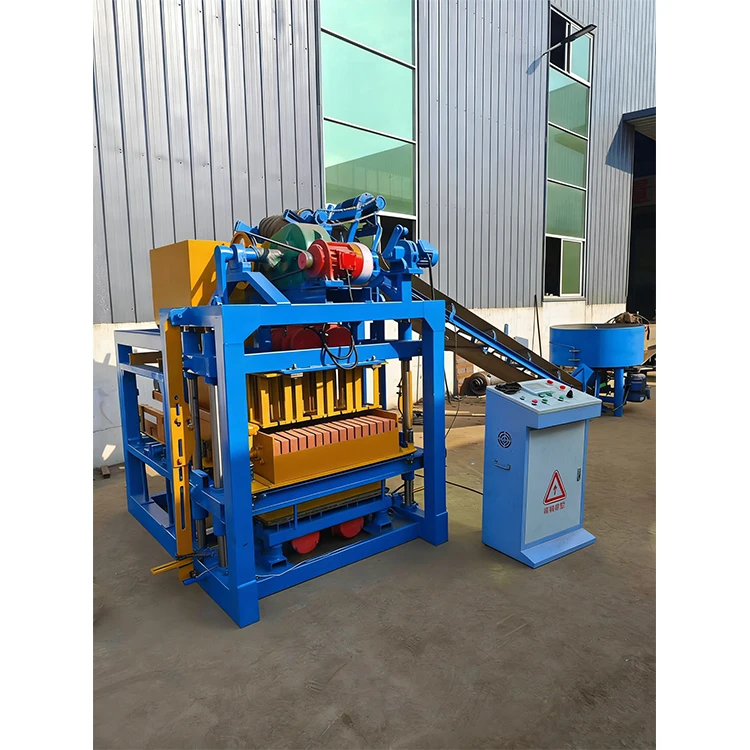
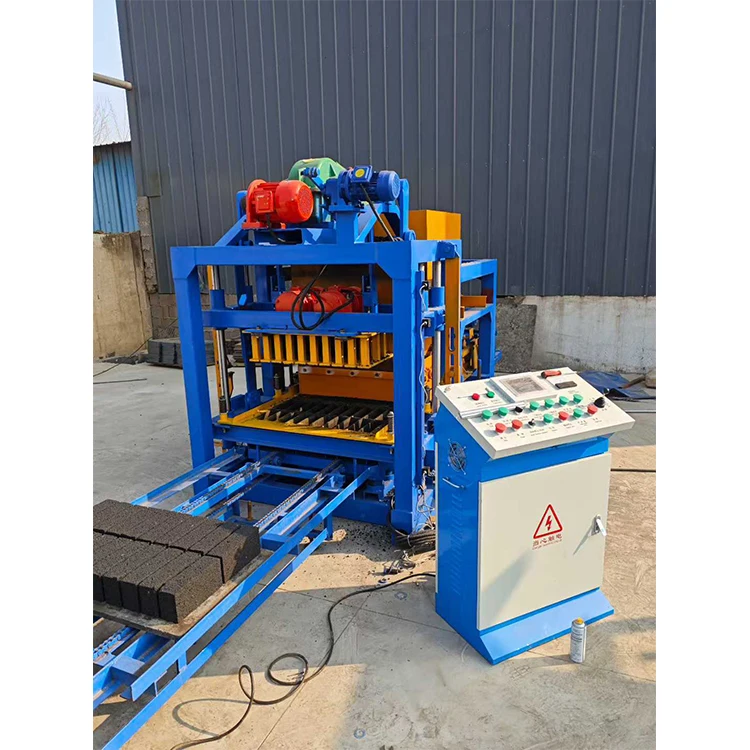
Description
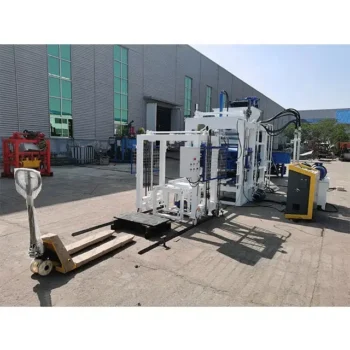
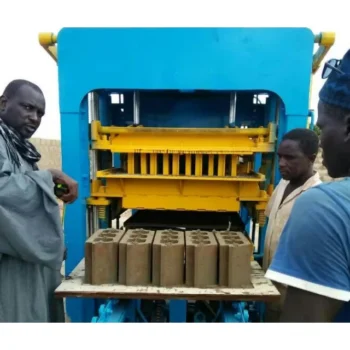
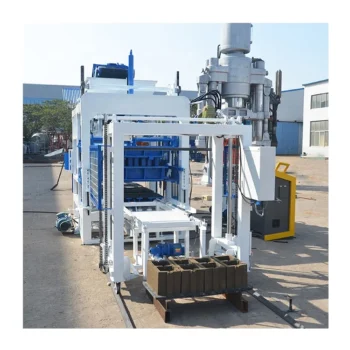
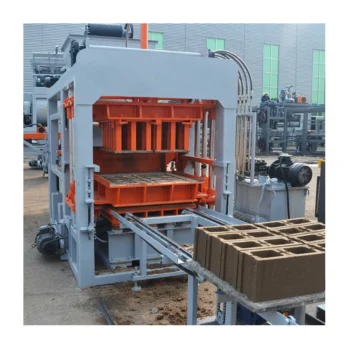
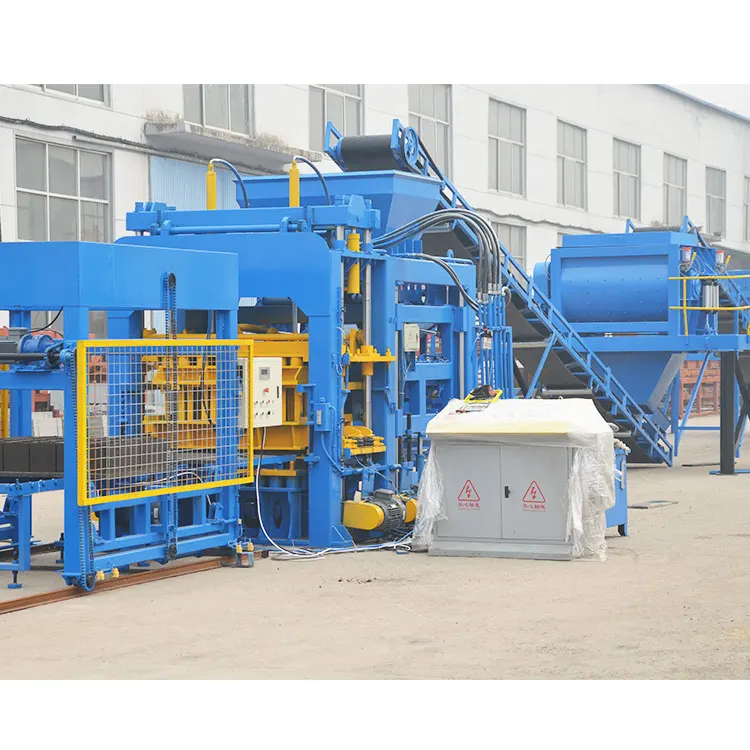
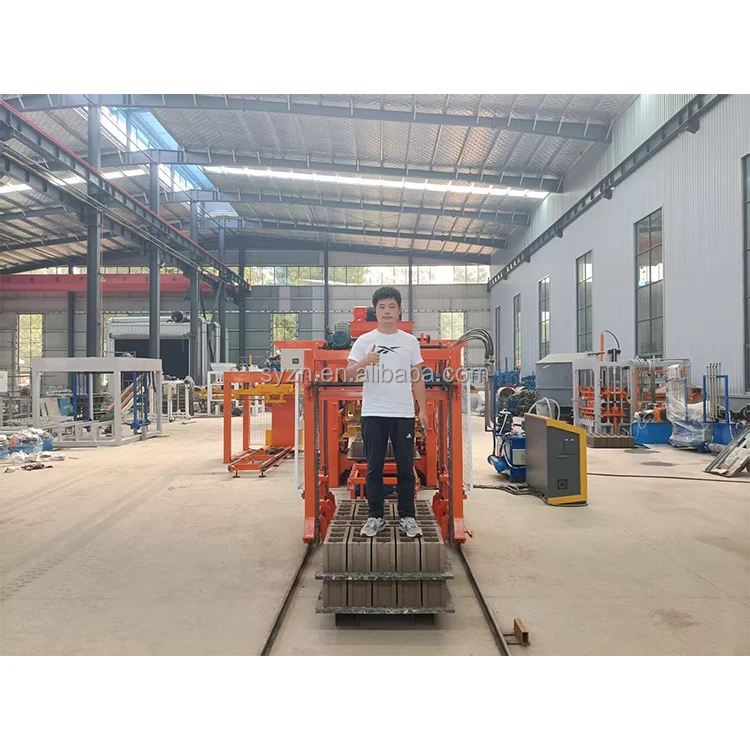
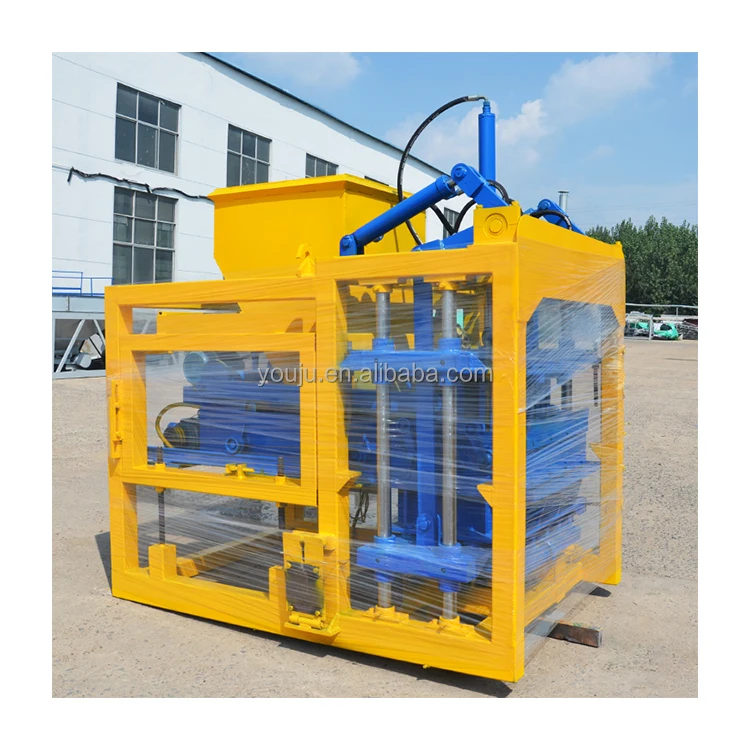
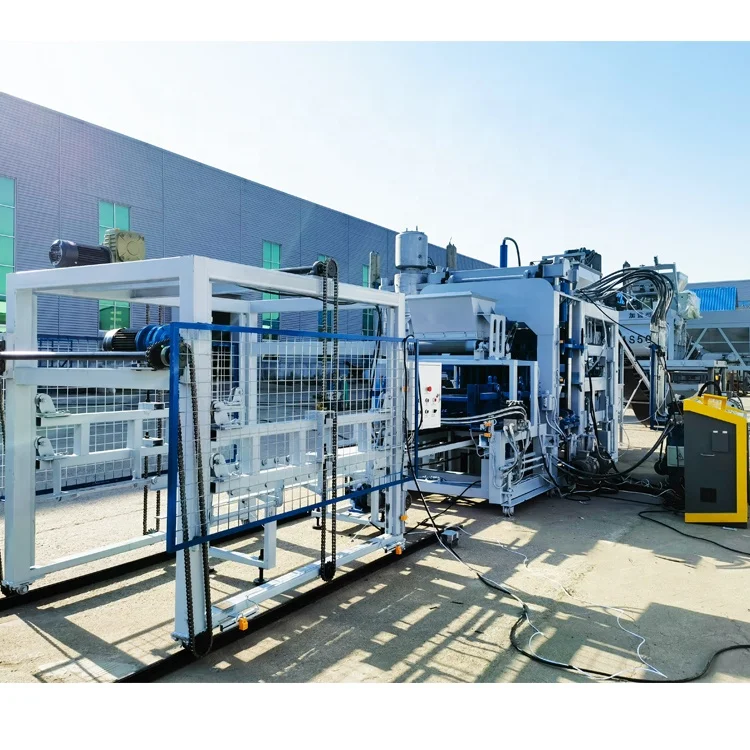
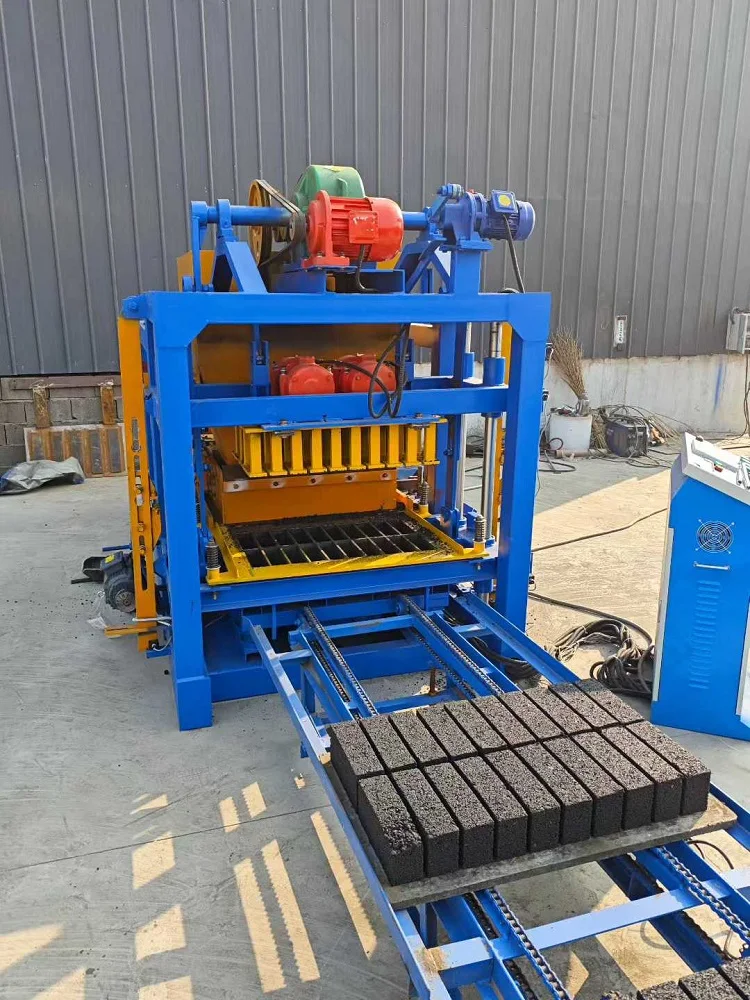
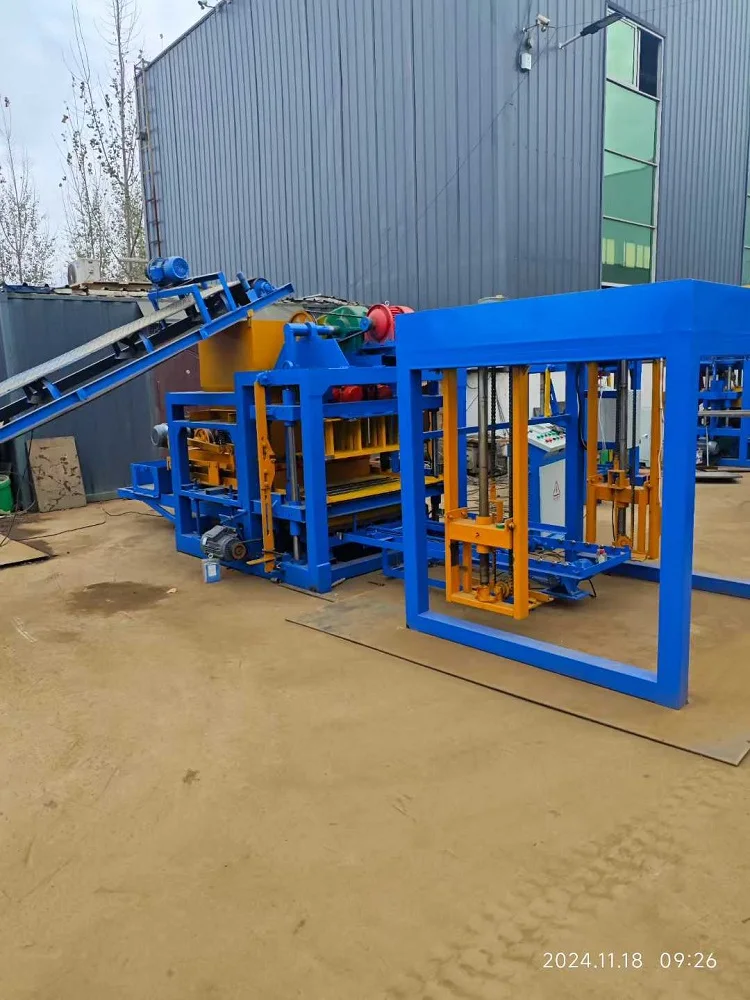
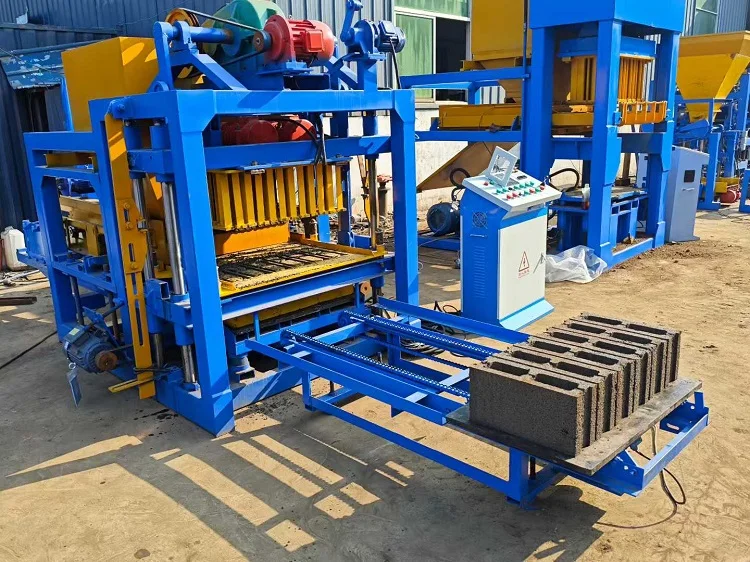
Single-Focus Block Machinery — the QTJ4-25 is specified as one matched system where machine, mould, pallet and handling are configured against your actual block format and local aggregate rather than assembled from catalogue defaults.
Technical Specifications
| Parameter | Value |
|---|---|
| Model | QTJ4-25 |
| Product Type | Automatic Concrete Block Making Machine |
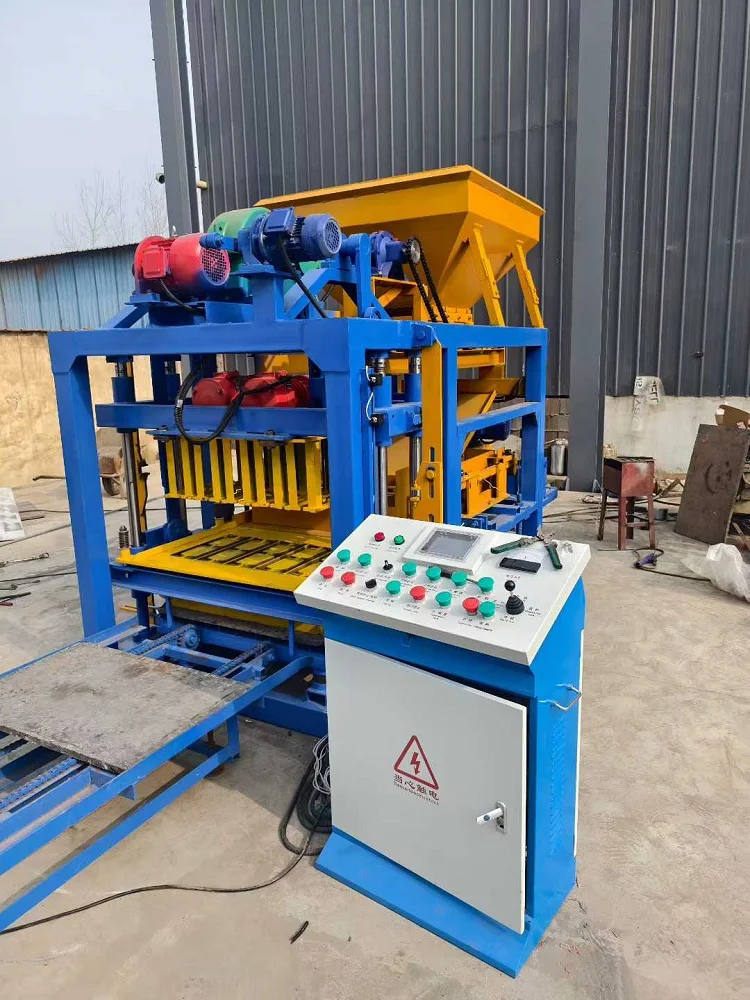
| Control System | PLC controlled, fully automatic |
| Rated Power | 16.58 kW |
| Molding Cycle | 25 seconds |
| Output Capacity | 4600 pcs/8hours (basis not stated in source — confirm block format and material) |
| Net Weight | 5000 KGS |
| Overall Dimensions (L×W×H) | 6400 × 1500 × 2700 mm |
| Pallet Size | 850 × 480 mm |
| Vibration System | Vibration motor with large vibration box (non-hydraulic) |
| Motor Brand | Siemens motor |
| Automation Level | Fully automatic — automatic pallet feeding, material feeding and scraping, block stacking |
| Block Formats Supported | Hollow blocks, solid blocks/bricks, paver stone bricks |
| Raw Material Compatibility | Concrete, sand, cement, fly ash, crushed stone, lime, water |
| Voltage & Frequency | Configurable to buyer’s local supply |
| Frame Construction | Thickened steel frame |
| Warranty | One year with free parts supply |
Application Suitability
| Application | Material or Output |
|---|---|
| Hollow block production for load-bearing walls | Concrete mix with crushed stone and cement |
| Solid brick manufacturing for partition walls | Sand, cement and fly ash blends |
| Paver stone production for walkways and driveways | Aggregate-graded concrete with surface finish layer |
| Medium-scale block factory start-up | Multi-format production on a single pallet size |
| Format expansion for existing concrete product plants | Additional moulds for hollow, solid and paver types |
What "4600 Pieces per 8 Hours" Actually Means for the QTJ4-25 Automatic Block Machine
That figure assumes a specific block format, and your real daily output depends entirely on which hollow block, solid brick or paver size you intend to produce.
When I sent a similar fully automatic block machine to a customer in West Africa, the quotation listed a cycle-based capacity that looked strong on paper. Once the line was running, the customer was producing a larger hollow block format with thicker walls, which meant the vibration cycle had to be extended and the effective output dropped well below the quoted number. The machine was not at fault — the capacity figure simply referenced a different block format than the one the customer’s market demanded. This is why the QTJ4-25 automatic block machine specifications and mould capacity must be stated per format before any purchase decision is made. [NEED_CITE: block format variations and their impact on nominal output ratings]
Mould Selection and Per-Format Cycle Time
The QTJ4-25 supports hollow blocks, solid bricks and paver stone bricks on a single platform, but each format carries its own cycle time reality. A standard hollow block with thin walls and generous void area moves through the 25-second cycle relatively quickly, while a dense solid brick or a thick interlocking paver demands longer vibration dwell to reach full compaction. Before confirming your order, the mould drawing and format list must show exactly which block dimensions are included and what cycle time each one requires so that the daily output calculation holds up against your sales target.
Vibration Force Matched to Your Mix Design
This machine uses a vibration motor paired with a large vibration box rather than a hydraulic pressure system. That configuration works well for standard concrete mixes, but the vibration force must be matched to your local aggregate gradation and cement content. If your sand has a high fines percentage or your crushed stone runs angular rather than rounded, the vibration energy transfer changes. I have seen QTJ4-25 automatic block machine installations where the first production run produced blocks that crumbled at the corners because the vibration frequency was set for a different mix profile. Sending a raw material sample before configuration prevents that outcome. [NEED_CITE: aggregate shape and gradation influence on vibration compaction]
Pallet Size, Curing Area and Forklift Compatibility
The 850 × 480 mm pallet on the QTJ4-25 is not an arbitrary dimension — it dictates the spacing of your curing racks, the turning radius required in your yard and the fork width on the forklift you already own. A buyer who overlooked this ended up re-racking an entire curing zone because the new pallets were 30 mm wider than the rack slots his local fabricator had welded. Confirming pallet dimensions against your existing infrastructure before the machine ships avoids a costly site rework after commissioning.
The Cost of Overlooking Configuration Details
When voltage, frequency and PLC display language are left unconfirmed, the machine may arrive and sit idle while the electrical panel is rewired or the operator struggles with a control interface in a language they cannot read. Similarly, when the mould change procedure is not rehearsed at the factory, what should take minutes stretches into a shift, erasing the format flexibility that justified the investment. These are not manufacturing defects — they are specification gaps that surface only after the crate is opened. [NEED_CITE: common commissioning delays caused by unconfirmed electrical and control parameters]
Why Source the QTJ4-25 Through a Block-Machinery-Focused Supplier
The QTJ4-25 is not treated as a standalone press here. Machine, mould, pallet and handling equipment are specified together as a single line, so the automatic pallet feeder, material scraper and block stacker are dimensioned to match the 25-second cycle without bottlenecks. Configuration is set against your actual block format and target compressive strength, not a catalogue default. Mould design covers the formats your market sells, with custom drawings accepted for non-standard dimensions. Automation level is selectable, meaning you can start with semi-automatic pallet handling and upgrade to full stacking and cubing later. Every shipment is backed by a factory test record that demonstrates the machine running your specified block format before it leaves the workshop floor.
Documentation & Verification
- Line layout with capacity calculation stating the block format assumed
- Mould drawing and format list showing included and optional block types
- Pallet specification verified against your curing rack spacing and forklift
- Voltage, frequency and PLC display language confirmed in writing before production
- Factory test record showing the QTJ4-25 running your target block format
- Operation and maintenance manual with wear parts and mould replacement schedule
Installation, Commissioning & Support
- Foundation plan matched to the 6400 × 1500 mm footprint and 5000 KGS static load
- Dedicated power circuit sized for the 16.58 kW rated draw with correct voltage and frequency
- Machine arrives partially dismantled for container loading with reassembly guide included
- First-run commissioning with vibration parameters set to your confirmed mix design
- Operator training covering PLC interface navigation and mould change procedure
- Wear parts list for vibration box liners, scraper blades and pallet guides with reorder intervals
Requesting a Meaningful Quotation
To get a proposal that reflects your actual production reality rather than a generic catalogue price, share the block format dimensions you intend to sell, the local aggregate type and source, and your target daily output per format. Include your site voltage and frequency, the PLC display language your operators need and the dimensions of your planned curing area. A raw material sample is the single most useful item you can send before the configuration is locked in.
Frequently Asked Questions
Q: What block format does the output figure assume, and what is the realistic capacity for my hollow block size?
A: The 4600 pieces per 8 hours figure is a general reference that does not specify a block format. Realistic output for your hollow block depends on wall thickness, void ratio and vibration cycle adjustment. We provide a per-format capacity calculation once your target block dimensions and mix design are confirmed.
Q: How does the 850 × 480 mm pallet size affect my curing area and forklift?
A: The pallet size dictates curing rack slot width, yard turning space and forklift tine spacing. We verify the 850 × 480 mm dimension against your existing infrastructure before production so the pallets integrate with your current handling equipment without site modifications.
Q: What is the mould change time, and can I order custom moulds to my own drawings?
A: Mould change time depends on the format swap and operator familiarity. Custom moulds are available to buyer-supplied drawings, and we include a mould change procedure in the operator training so format switches do not consume an entire shift.
Q: Which mix design is this machine configured for, and what if my local aggregate differs?
A: The vibration system is configured to match your specific aggregate gradation, cement content and target block strength. We request a raw material sample before finalizing vibration parameters so the machine performs correctly with the materials you can actually source locally.
Q: How is block strength verified against my market’s compressive strength requirement?
A: Block strength is a function of vibration force, mix density and curing conditions. We set the vibration parameters based on your target compressive strength and confirm results during the factory test using your specified block format and material sample before the machine ships.