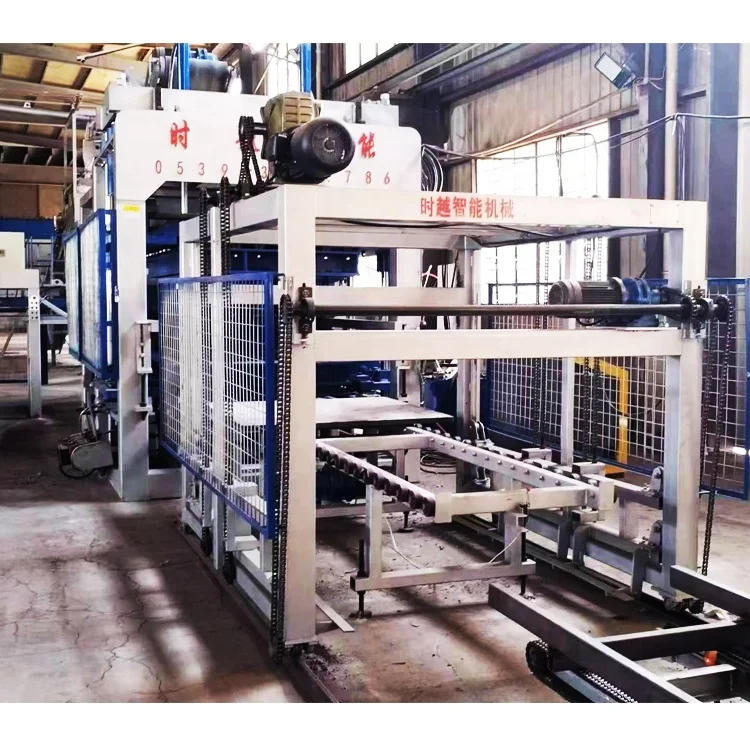
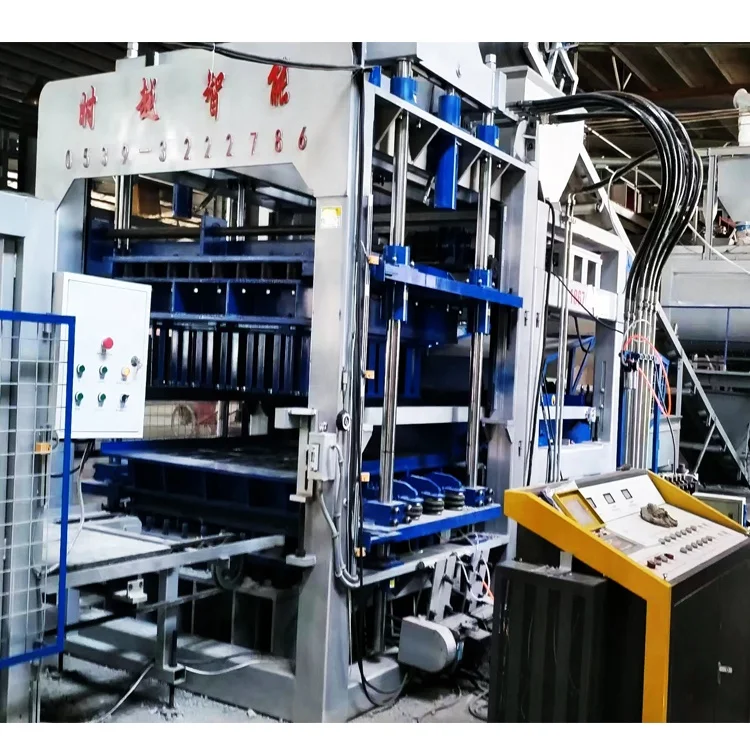
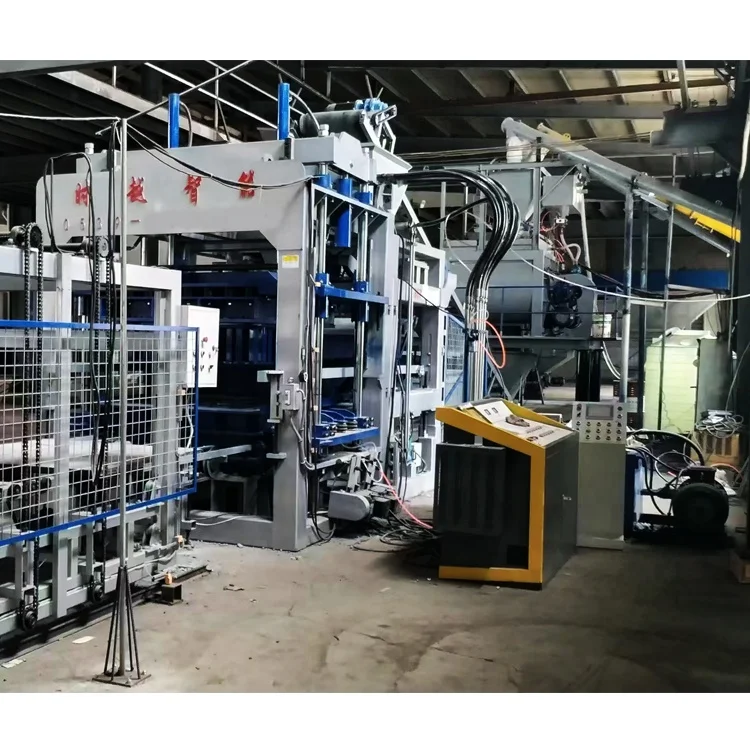
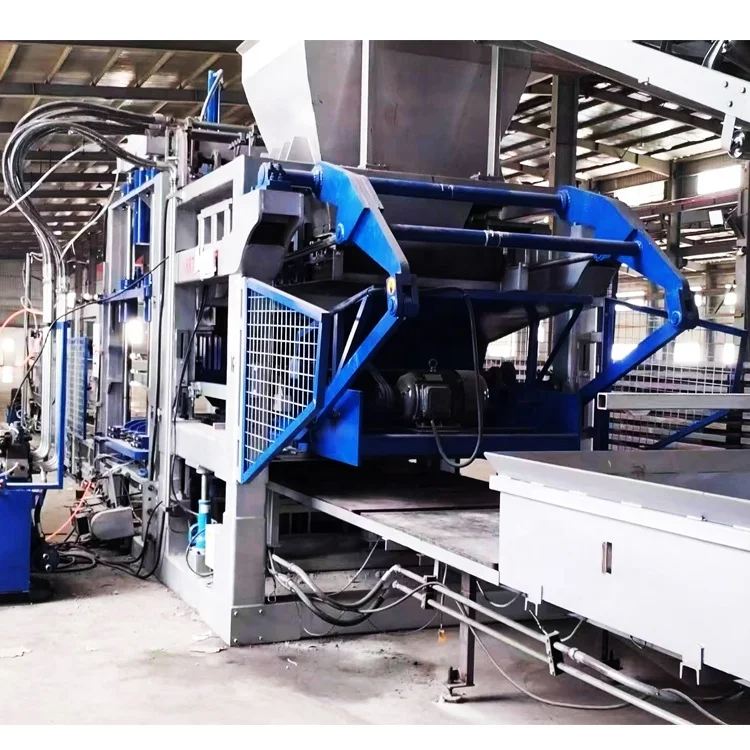
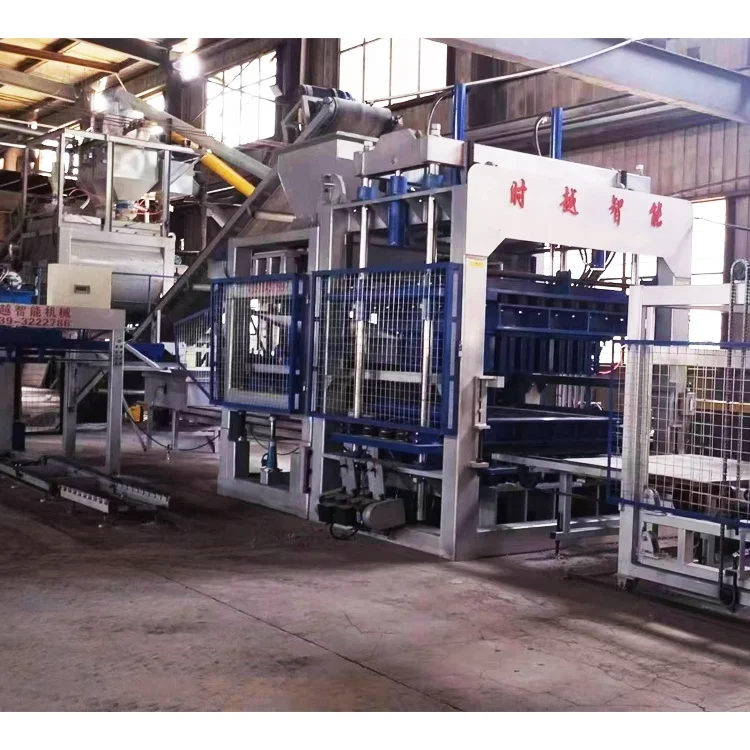
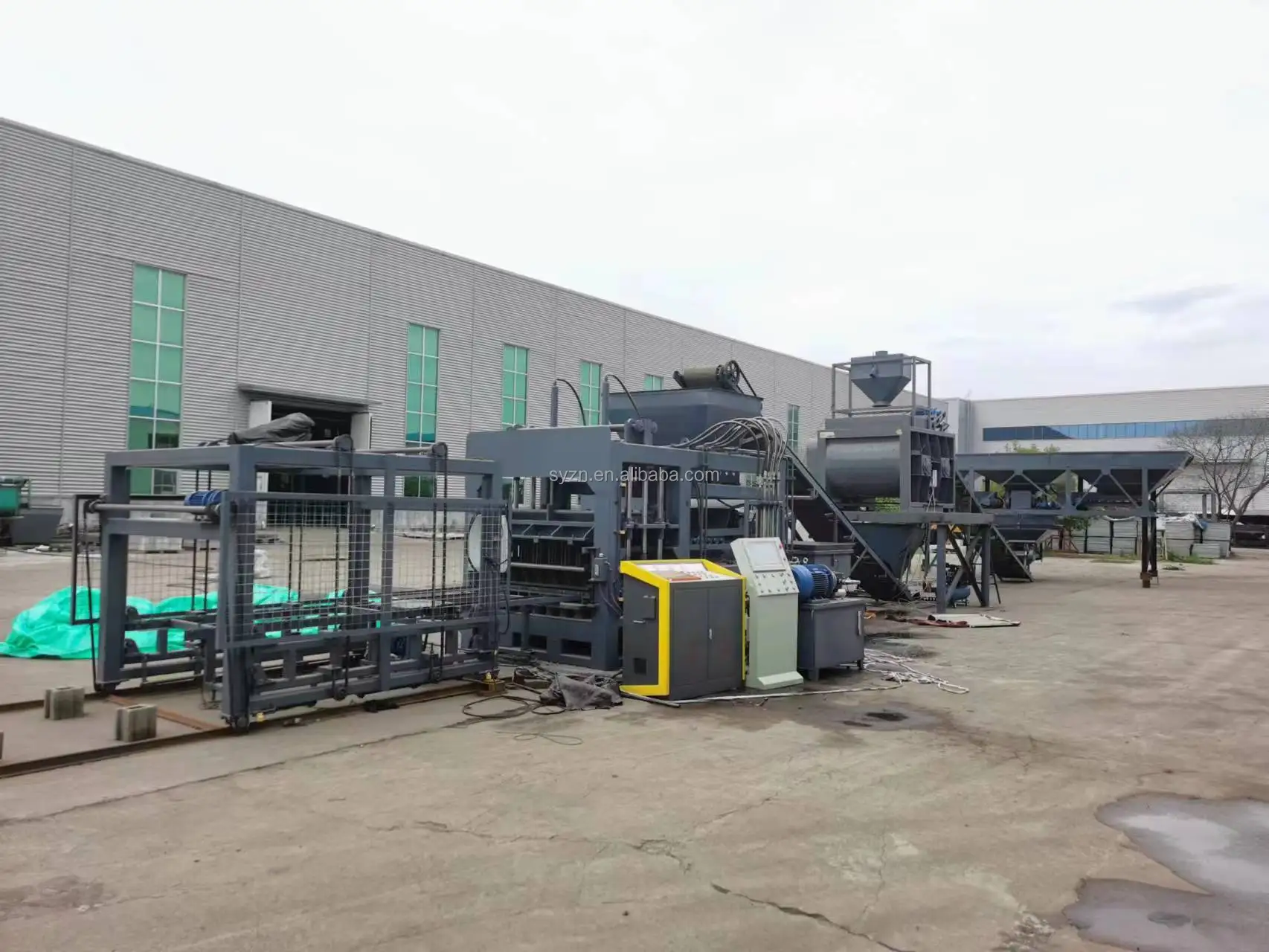
Description
Matched System Design — Every output figure on this page is tied to a named block format and mould cavity count, so you can size the press against the product your market actually buys.
Technical Specifications
| Parameter | Value |
|---|---|
| Model | QT15-15 |
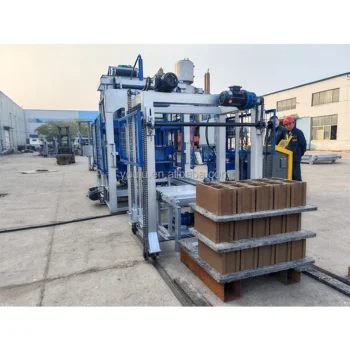
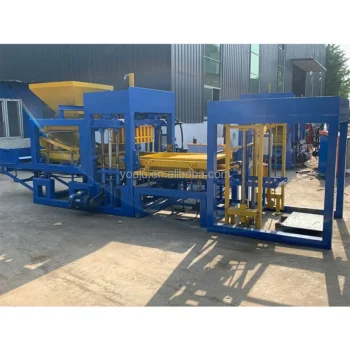
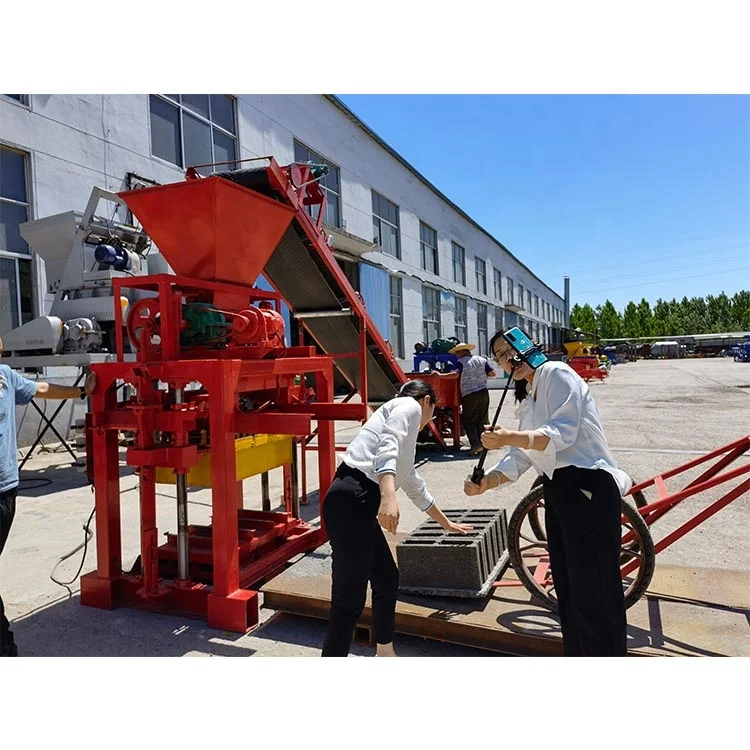
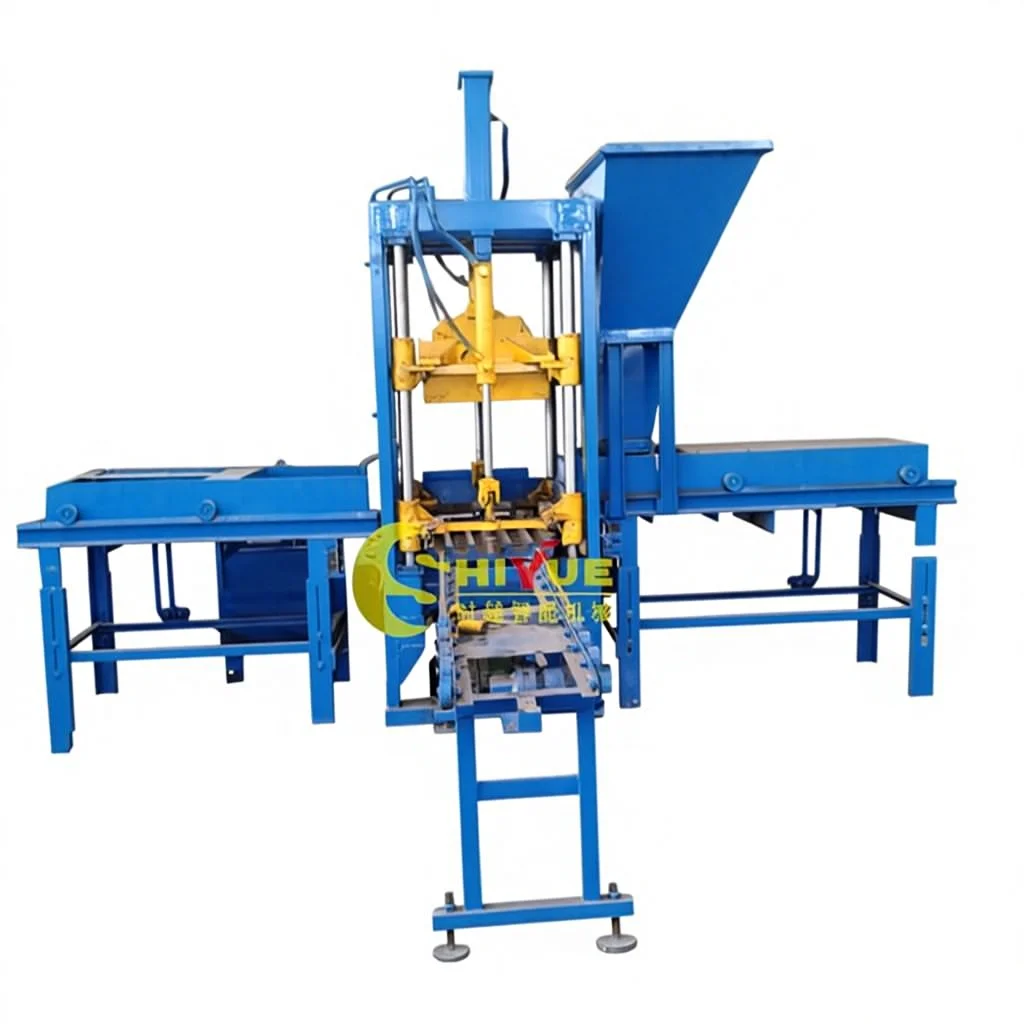
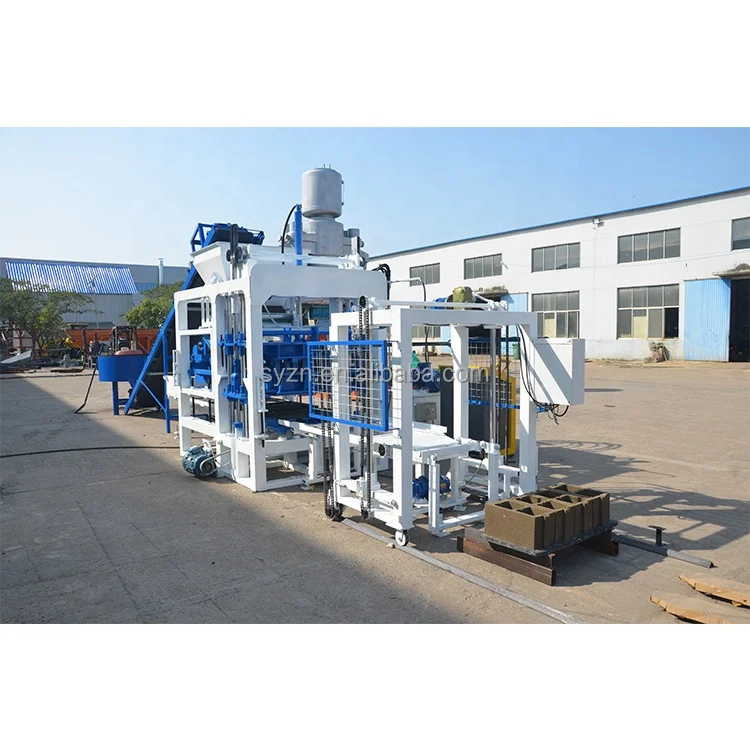
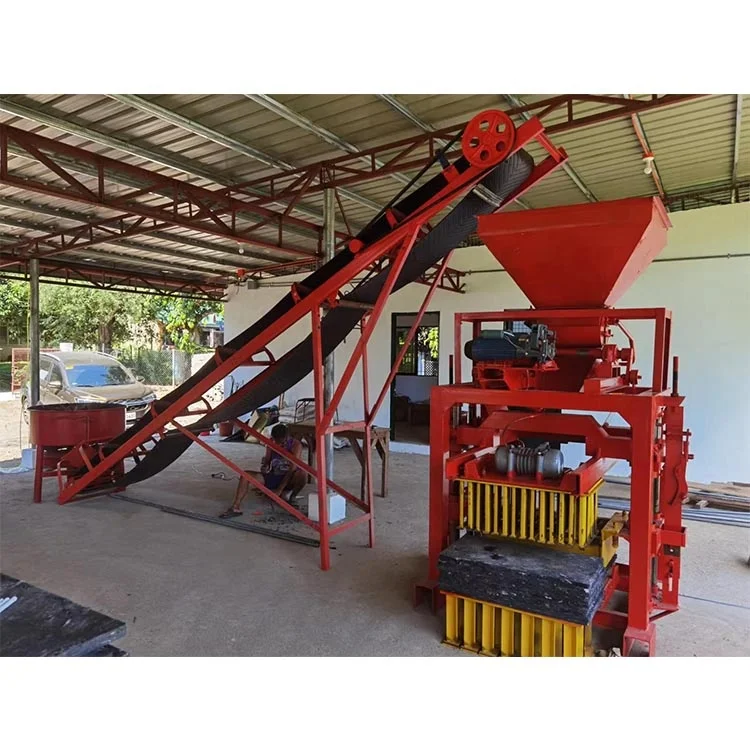
| Product Type | Stationary Concrete Block Making Machine |
| Overall Dimensions (L×W×H) | 9350×2520×2950 mm |
| Net Weight | 15 T |
| Rated Power | 45.7 kW |
| Voltage & Frequency | 380V or customized (frequency to be confirmed) |
| Control System | PLC (brand and language configurable) |
| Hydraulic Pressure | 21 MPa |
| Pallet Size | 1350×850×40 mm |
| Vibration System | Four external vibration motors with airbag pressure adjustment |
| Upper Mould Synchronization | Dual-side synchronous gear |
| Material Feeder | European design with turning arm cylinder |
| Output Capacity | 3,600 pcs/h based on 400×200×200 mm hollow block (15 pcs/mould); 4,320 pcs/h based on 400×150×200 mm block (16 pcs/mould); 14,000 pcs/h based on 240×115×53 mm solid brick (62 pcs/mould) |
| Daily Output | 28,800 pcs/day (400×200×200 mm); 34,560 pcs/day (400×150×200 mm); 112,000 pcs/day (240×115×53 mm) — shift hours not stated in source |
| Cycle Time per Format | To be confirmed by block format |
| Mould Change Time | To be confirmed |
| Automation Level | To be confirmed |
| Color Options | According to buyer request |
| Warranty | 1 year |
| Standards | ISO 9001:2008, CE |
Application Suitability
| Application | Material or Output |
|---|---|
| Hollow block production (400×200×200 mm, 400×150×200 mm) | Crushed stone, sand, cement, fly ash, and lightweight aggregates |
| Solid brick production (240×115×53 mm) | Fine aggregates, cement, and sand blends |
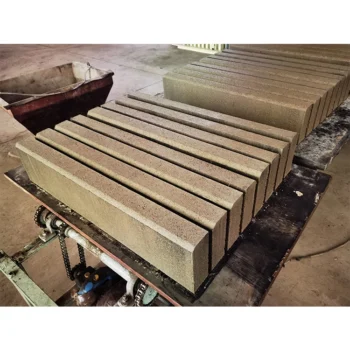
| Interlocking paver production | Crusher dust, granite dust, cement, and pigment for colored layers |
| Block production plants | Regional market formats including porous brick and kerbstone where mould is available |
| On-site construction block production | Local aggregate and cement sourced near the project location |
What "Cycles per Hour" Actually Means for Your Output
A capacity number without a block format attached is just a cycle count, not a production promise.
Many quotation sheets list a single hourly figure and leave the buyer to discover later that the number assumed a small solid brick, while the buyer intended to run large hollow blocks all day. The QT15-15 block machine specifications on this page tie every output number to a named format and mould cavity count. On a site visit to a plant running interlocking pavers, I watched a crew quote a buyer based on a hollow block cycle time and then wonder why the daily tally fell short once the mould was swapped. The mismatch is not a machine fault — it is a specification gap [NEED_CITE: capacity calculation standards for concrete block machinery].
Vibration Pressure That Adjusts to the Block You Are Making
The four external vibration motors on the QT15-15 stationary block making machine are paired with an airbag system that allows pressure adjustment by block type. Solid bricks need a different vibration profile than hollow blocks, and interlocking pavers need yet another. Rather than running a fixed vibration force and hoping the mix cooperates, the operator changes air pressure to match the format currently on the pallet.
Feeding Uniformity Across a Large Pallet Surface
The European-design material feeder with a turning arm cylinder distributes raw material across the 1350×850 mm pallet before each press stroke. When the feeder does not spread the mix evenly, blocks on one side of the pallet come out denser than blocks on the other. This matters more as pallet size grows, because the distance from the feed hopper to the far corner increases. The turning arm sweeps the material in a controlled pattern so that cavity fill stays consistent from the first block on the pallet to the last [NEED_CITE: material feeder design and block density uniformity].
How Hydraulic Pressure and Vibration Work Together
The 21 MPa hydraulic pressure and the four-motor vibration system on this stationary block making machine capacity by format are not independent — they must be matched to the mix design. High pressure alone compresses the surface but leaves the core loose if vibration does not penetrate. High vibration alone rearranges particles but does not consolidate them without sufficient press force. The QT15-15 runs both systems simultaneously during the forming cycle. The dual-side synchronous gear on the upper mould keeps the press head level across the full pallet width, preventing one side from receiving more pressure than the other. This matters especially for paver production, where surface flatness determines whether the block passes dimensional tolerance.
The Cost of a Pallet Size That Does Not Fit Your Curing Area
A 1350×850×40 mm pallet is large enough for high-output formats, but it must match the curing racks and forklift already in the buyer’s yard. If the curing racks were built for a smaller pallet, the buyer either rebuilds the racks or runs the machine at reduced capacity with undersized pallets that do not fill the platen. I have seen plants receive a press and then discover their forklift tines are too short for the pallet depth, meaning every pallet has to be moved twice [NEED_CITE: pallet handling compatibility in block production lines].
Why This Configuration Was Chosen
Block machinery as a single focus means the QT15-15 is specified alongside its mould, pallet, and handling equipment as one matched system rather than assembled from separate suppliers. The configuration is set against the buyer’s actual mix design and local aggregate, not a catalogue default. Mould design covers the formats the buyer’s market sells, including custom drawings when standard moulds do not match local demand. The automation level is selectable, so a buyer can start with semi-automatic pallet handling and add automatic stacking later. Installation includes on-site commissioning with operator training so the crew knows how to adjust vibration pressure and feed timing for their specific material.
Documentation & Verification
- Line layout and capacity calculation stating the block format assumed for each output figure
- Mould drawing and format list with cycle time confirmed per block type
- Pallet specification sheet for 1350×850×40 mm dimensions and material grade
- Voltage, frequency, and PLC display language confirmed in writing before production
- Factory test record on the buyer’s target format before dispatch
- Operation and maintenance manual with wear parts and mould replacement list
Installation, Commissioning & Support
- Foundation must support the 15 T net weight and vibration load across the 9350×2520 mm footprint
- Dedicated 380V circuit rated for the 45.7 kW draw with frequency confirmed before wiring
- Machine arrives in shipping configuration to be confirmed; on-site assembly included
- First production run adjusts vibration airbag pressure and feed timing to buyer’s aggregate
- PLC display language set to operator preference before commissioning begins
- Wear parts list and mould replacement procedure covered during operator training
What to Include With Your Inquiry
When sizing the QT15-15 to your production plan, include the block format and dimensions your market sells most, the daily volume you need to hit, and the local aggregate you intend to use. State your existing pallet size if you have curing racks in place, and confirm the voltage and frequency at the installation site. If you are adding paver production to an existing hollow block line, note the colour layer requirements and whether face-mix feeding is needed.
Frequently Asked Questions
Q: How is the per-format capacity calculated, and what cycle time does each format assume?
A: Each capacity figure on the specification table is based on a named block dimension and mould cavity count. For example, 3,600 pieces per hour assumes a 400×200×200 mm hollow block with 15 cavities per mould. Cycle time varies by format because fill depth, vibration duration, and press stroke differ between hollow blocks, solid bricks, and pavers. Confirm the cycle time for your specific format before finalising the line layout.
Q: Can the mould be designed for a custom paver or interlocking brick drawing?
A: Yes. Mould design covers standard formats and custom drawings supplied by the buyer. The 1350×850 mm pallet defines the maximum mould footprint, and cavity count is set based on the block dimensions to balance output per cycle against compaction quality. Custom moulds are built and tested before shipment.
Q: Is the 1350×850 mm pallet compatible with my existing curing racks and handling equipment?
A: Compatibility depends on rack spacing, forklift tine length, and stack height in your curing area. The 1350×850×40 mm pallet is specified to work with the QT15-15 platen, but existing yard infrastructure must be checked before ordering. If racks need modification, this should be factored into the project timeline.
Q: What hydraulic pressure and vibration setting is recommended for my local aggregate?
A: The 21 MPa hydraulic system and airbag-adjustable vibration motors are set during commissioning based on the buyer’s actual mix and aggregate. River sand with high clay content, for instance, requires different vibration duration than clean crushed granite. Settings are adjusted on-site during the first production run to achieve target block strength.
Q: How long does a full mould change take on the QT15-15, and what tools are required?
A: Mould change time depends on the mould retention system fitted and the operator’s familiarity with the procedure. The dual-side synchronous gear and upper mould design are intended to support format changeover, but the specific duration and tool list should be confirmed in the mould documentation supplied with the machine.