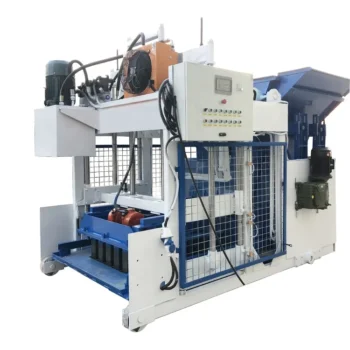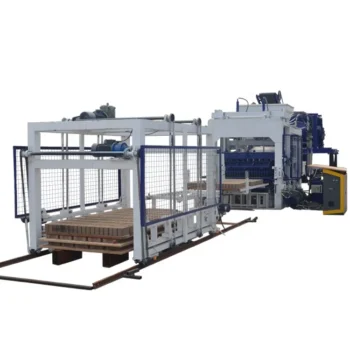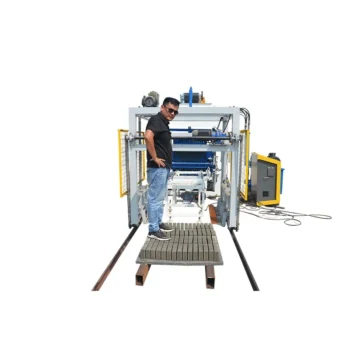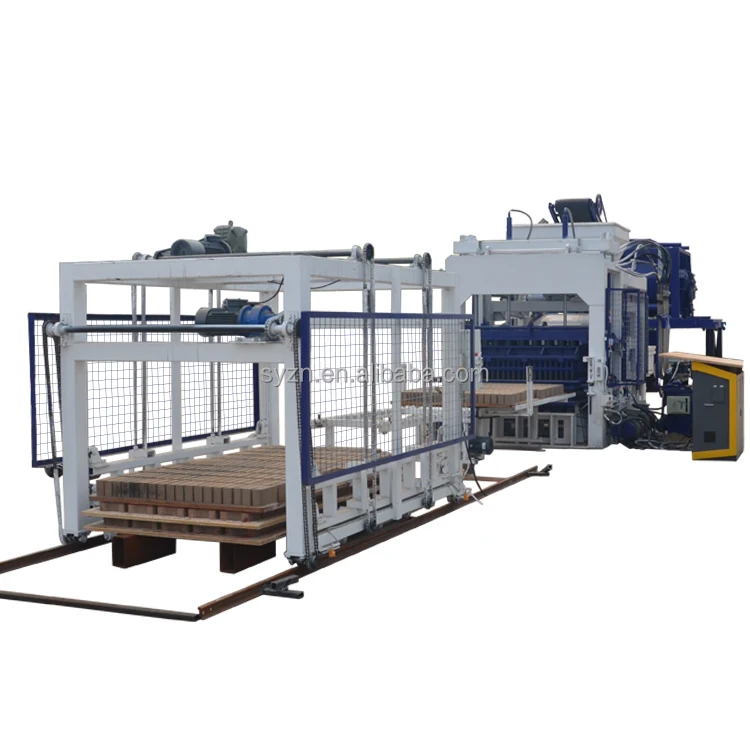
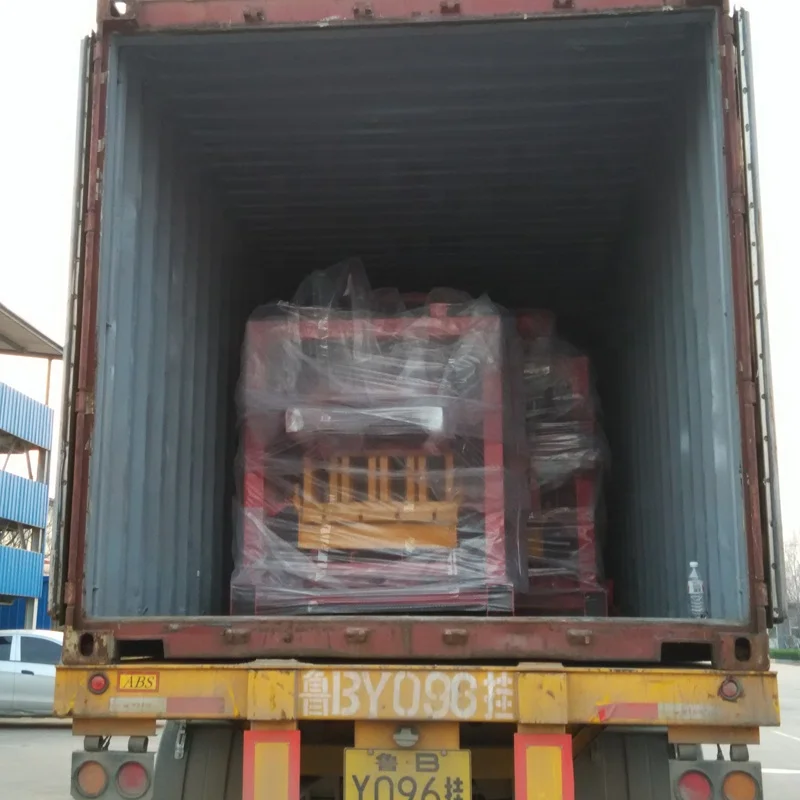
Description
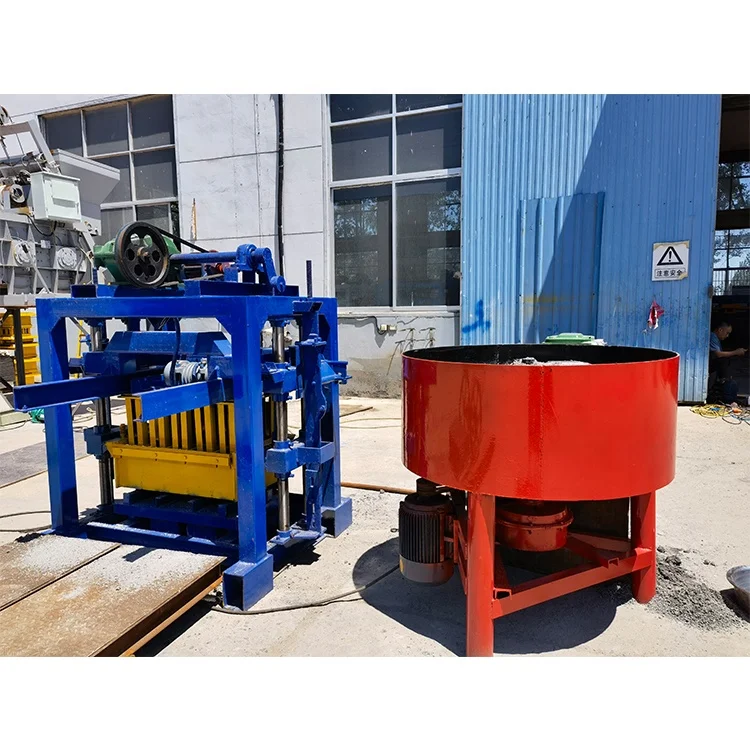
Mould-Format Matched — The QTJ4-40 is configured around the specific block format your market demands, with cycle time and output calculated per mould rather than quoted as a single misleading figure.
Technical Specifications
| Parameter | Value |
|---|---|
| Model | QTJ4-40 |
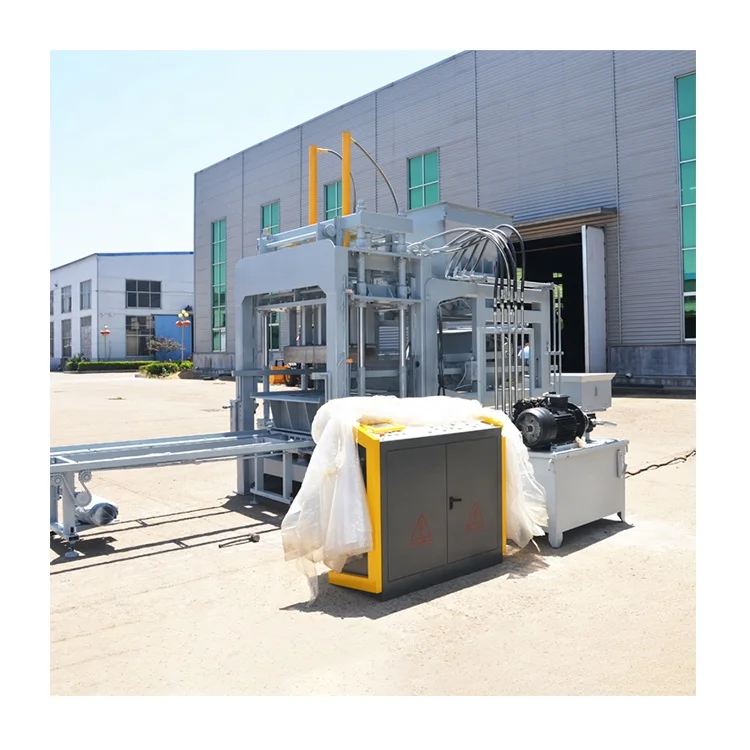
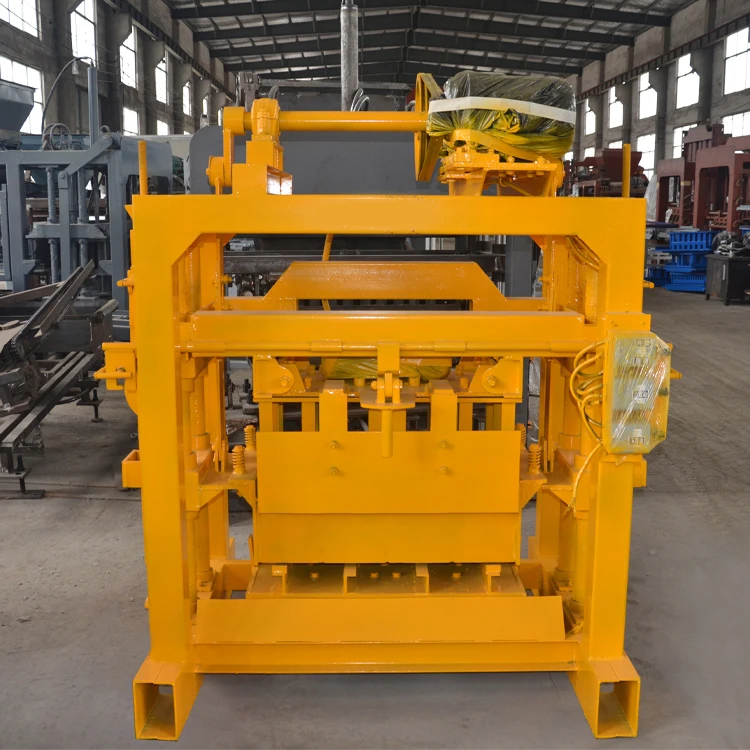
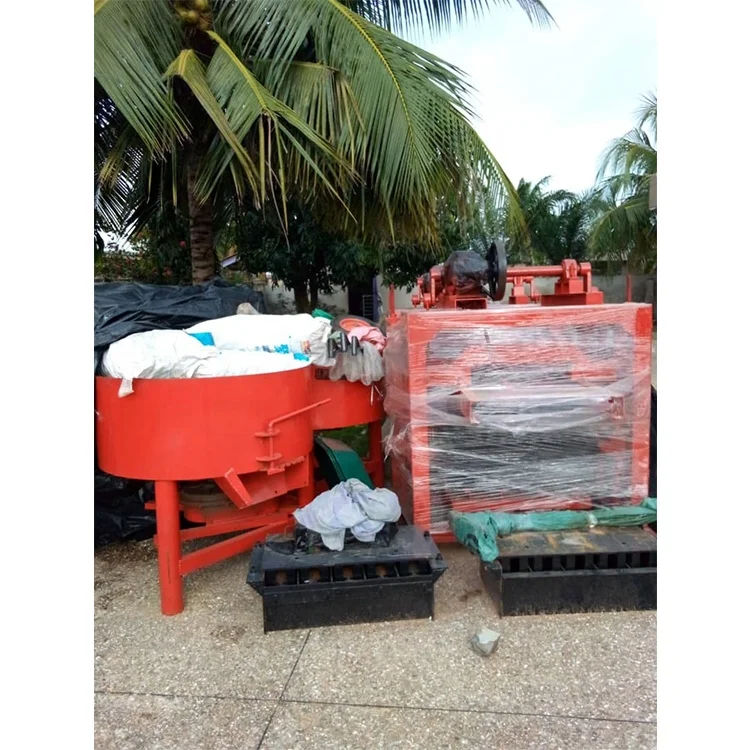
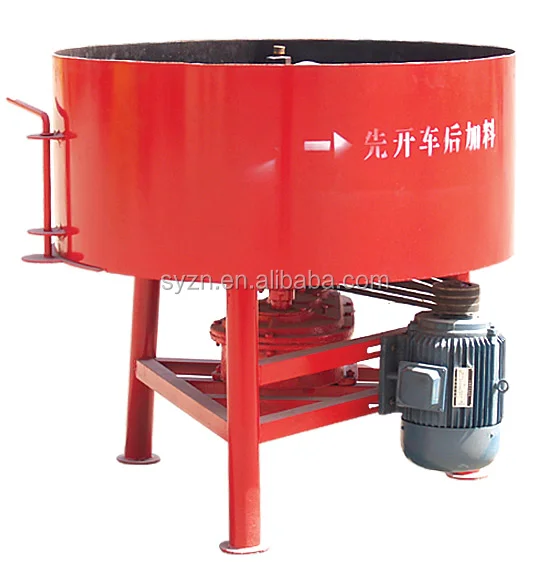
| Product Type | Semi-Automatic Concrete Block Making Machine |
| Rated Power | 9.5 kW |
| Molding Cycle | 40 s |
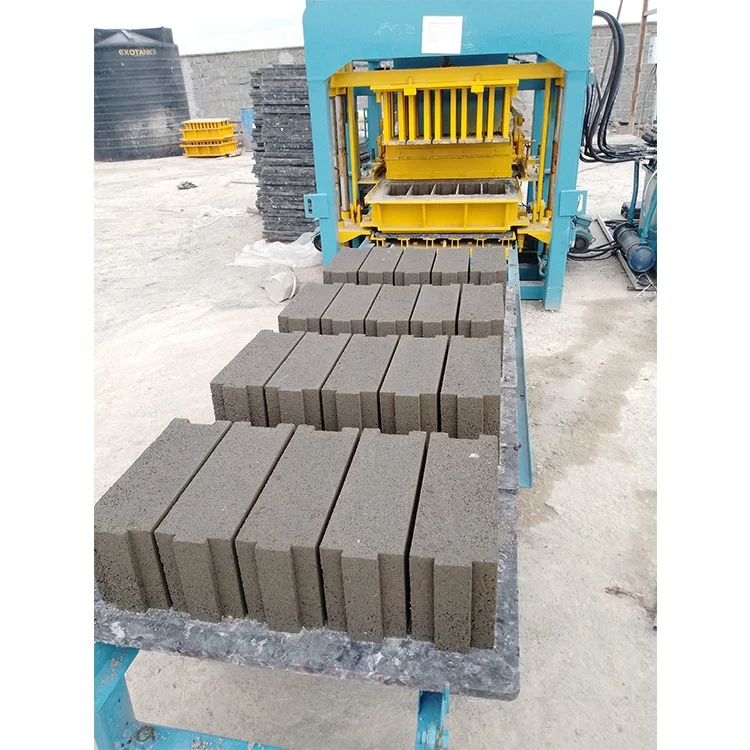
| Output — 400×200×200 mm Hollow Block (4 pcs/mould) | 360 pcs/h, 2800 pcs/day |
| Output — 400×150×200 mm Hollow Block (5 pcs/mould) | 450 pcs/h, 3600 pcs/day |
| Output — 225×112.5×60 mm Solid Brick (9 pcs/mould) | 800 pcs/h, 6400 pcs/day |
| Output Capacity (basis to be confirmed) | 2000–2500 pcs/8 hours |
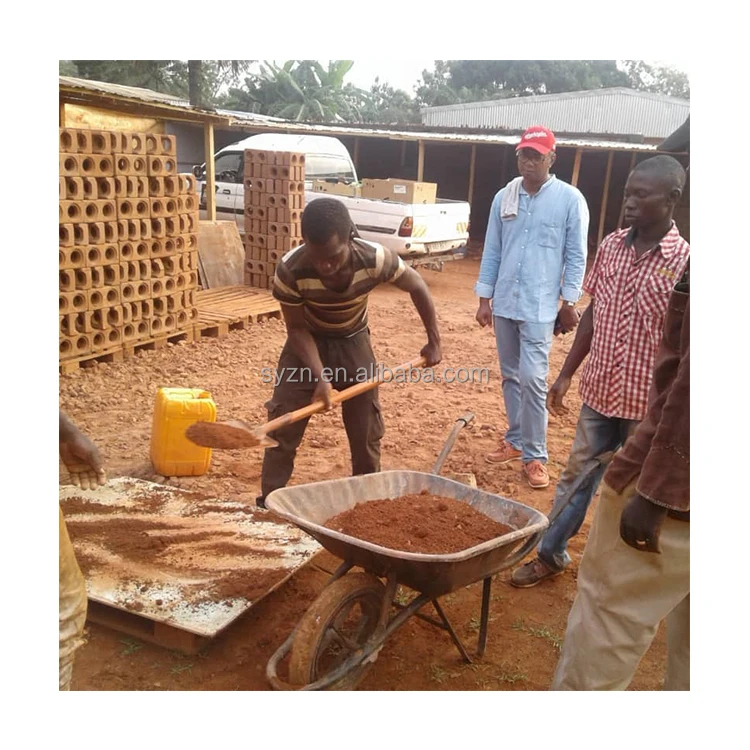
| Raw Materials | Concrete, sand, cement, fly ash, lime, gypsum |
| Machine Weight | 1 T |
| Overall Dimensions (L×W×H) | 1350 × 1460 × 1800 mm |
| Pallet Size | 850 × 450 mm |
| Voltage | According to buyer’s local voltage (confirm exact V/Hz before production) |
| Automation Level | Semi-automatic |
| Mould Operation | Top die push-pull with automatic scraper |
| Vibration System | Bed mould vertical vibration + upper mould compression vibration |
| Control System | Confirm PLC / relay / manual panel before order |
| Hydraulic Pressure | Confirm with supplier before order |
| Vibration Force | Confirm with supplier before order |
| Stacking Method | Manual |
Application Suitability
| Application | Material or Output |
|---|---|
| Small-scale hollow block production | Concrete and sand mixes for 400×200×200 mm or 400×150×200 mm formats |
| Solid brick manufacturing | Cement, sand and fly ash blends for 225×112.5×60 mm bricks |
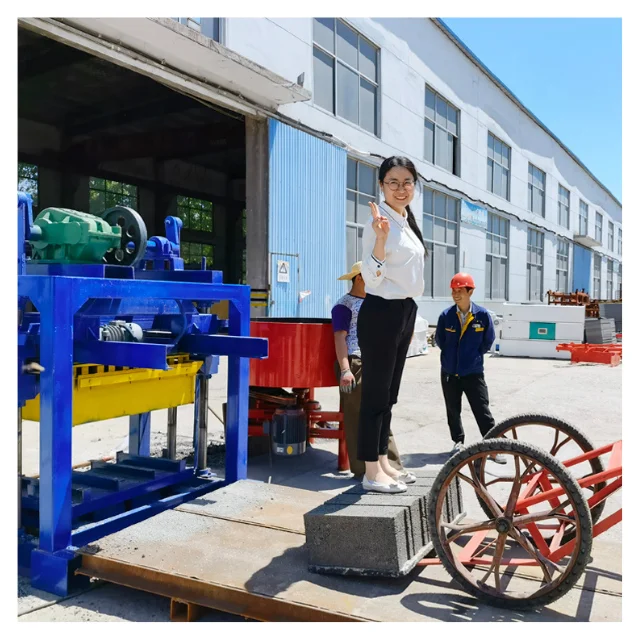
| Entrepreneur first block plant | Low-investment semi-automatic setup with manual pallet handling |
| On-site production for housing projects | Compact footprint for construction contractors working with limited space |
Why "2500 Blocks Per Day" Tells Only Part of the Story
Capacity numbers mean nothing without the block format attached to them.
I once stood in a yard outside Phnom Penh watching a contractor pull cracked hollow blocks off the pallets. He had ordered his QTJ4-40 based on a headline daily figure, but the sand he sourced locally carried high clay content. The vibration settings that worked for clean river sand left his blocks splitting along the edges. We spent two days adjusting the mix and cycle timing before the output stabilised. The machine was never the problem — the gap between quoted capacity and actual format was. [NEED_CITE: common causes of block cracking related to aggregate composition]
When buyers compare semi-automatic block machines on a single output number, they miss that switching from solid brick to hollow block can cut that number in half. A 40-second cycle produces nine solid bricks per press but only four hollow blocks. The Semi-Automatic Concrete Block Making Machine specifications must always state which format the capacity assumes, or the figure is meaningless at the point of purchase.
Output Transparency Across Every Mould Format
The QTJ4-40 runs three standard configurations, each with its own realistic throughput. At four cavities for 400×200×200 mm hollow blocks, the press delivers 360 pieces per hour. Switch the mould to five cavities for 400×150×200 mm hollow blocks and throughput rises to 450 per hour. For 225×112.5×60 mm solid bricks, nine cavities push output to 800 per hour. These figures assume continuous operation across an eight-hour shift with pallets fed and cleared by hand.
What Dual Vibration Means for Block Density
Bed mould vertical vibration combined with upper mould compression vibration addresses a problem common in single-source systems: uneven density across the pallet surface. Blocks near the vibration source compact more tightly than those at the far edge. The dual system on the QTJ4-40 pushes compaction from both directions, producing more uniform density from the first cavity to the last. This matters particularly for hollow blocks where wall thickness leaves less margin for weak zones. [NEED_CITE: vibration uniformity and compressive strength consistency in concrete block production]
Reading the Specifications That Actually Matter
The 9.5 kW rated power must match the electrical supply at your site, and voltage must be confirmed in writing before the machine enters production — arriving with a 380V motor in a 220V region delays commissioning by weeks. The 850 × 450 mm pallet size determines your curing rack spacing and forklift tine width; ordering pallets that do not match existing infrastructure creates a bottleneck the press itself cannot solve. At 1 T machine weight and 1350 × 1460 × 1800 mm overall dimensions, the QTJ4-40 fits inside a standard workshop without reinforced foundations, but floor flatness still affects vibration transfer. The 40-second moulding cycle sets the pace for the entire line — pallet feeders and manual handlers must keep up or the press sits idle between cycles.
The Cost of Skipping the Configuration Conversation
Buyers who order without confirming local aggregate properties end up adjusting mix designs on-site, burning through cement and sand while blocks fail strength tests. A machine set for clean graded aggregate will underperform with the high-fines sand common in many Southeast Asian yards. When voltage and frequency are assumed rather than confirmed, the motor overheats or the control panel refuses to initialise. Pallets ordered separately without checking the 850 × 450 mm specification arrive incompatible with the curing racks already welded on-site. [NEED_CITE: equipment commissioning delays caused by voltage mismatch in export markets]
Why Sizing Starts With Your Block, Not Our Catalogue
Every QTJ4-40 proposal begins with the block format your market actually buys, not the format that makes our capacity table look strongest. Mould design and supply cover the formats you need, including custom drawings when local building codes specify non-standard dimensions. Machine, mould, pallet and handling are specified as one matched system so nothing arrives incompatible. Configuration is set against your local aggregate and mix design rather than a catalogue default. Automation level is selectable, so you can start with semi-automatic operation and add stacking or cubing as volume grows.
Documentation & Verification
- Line layout stating the exact block format behind each output figure
- Mould drawing and format list showing included and custom-available options
- Voltage, frequency and control language confirmed in writing pre-production
- Pallet specification covering material, thickness and curing rack compatibility
- Factory test record run on your target block format before dispatch
- Operation and maintenance manual with wear parts and mould replacement list
Installation, Commissioning & Support
- Floor flatness check required before placing the 1350 × 1460 mm base frame
- Dedicated circuit matching confirmed voltage and 9.5 kW draw to prevent motor strain
- Top die push-pull mechanism aligned on-site after transit to maintain mould clearance
- Vibration bed calibrated against your mix sample during first production run
- Operator training covers mould change procedure and automatic scraper adjustment
- Wear parts list supplied with recommended replacement intervals for hydraulic and vibration components
What to Share Before Requesting a Quote
Send your target block format and the daily volume your market requires so the proposal reflects real throughput, not catalogue maximums. Include a sample description of your local aggregate — sand source, gradation and any clay or silt content — so the vibration and pressure settings match what you will actually feed. Confirm your site voltage, frequency and preferred control panel language to avoid delays once the machine arrives. [NEED_CITE: pre-order information requirements for concrete block machinery export]
Frequently Asked Questions
Q: How is QTJ4-40 capacity verified per block format, and what is the realistic daily output for my target product?
A: Each output figure is tied to a specific mould configuration: 360 pcs/h for 400×200×200 mm hollow blocks at 4 cavities, 450 pcs/h at 5 cavities for 400×150×200 mm, and 800 pcs/h for solid bricks at 9 cavities. Realistic daily output depends on shift length, pallet handling speed and your mix setting time. We provide a capacity calculation document stating the exact format assumed.
Q: How do I confirm the right mould format for the blocks my market actually sells?
A: Share the block dimensions and wall thickness your local building codes require. We supply a mould drawing and format list showing which configurations are included and which are available as custom designs. If your market uses non-standard dimensions, we can produce moulds to your drawings.
Q: What voltage, frequency and control language options are available for my destination country?
A: Voltage and frequency are configured to your site supply and must be confirmed before production begins. Control panel language is selectable. We document the exact electrical specification and language choice in writing so there are no surprises at commissioning.
Q: How does the 850×450 mm pallet size affect my curing area layout and forklift requirements?
A: Your curing racks must accommodate 850 × 450 mm pallets with enough clearance for the block height plus handling space. Forklift tine width and lifting capacity must match the loaded pallet weight. We provide a pallet specification sheet covering material and thickness so you can verify compatibility with existing infrastructure.
Q: What raw materials and mix designs is the QTJ4-40 configured for, and how do I match it to my local aggregate?
A: The machine processes concrete, sand, cement, fly ash, lime and gypsum blends. Configuration is set against your actual aggregate sample — gradation, fines content and moisture absorption all affect vibration settings and cycle timing. Share your local material description so we adjust the system before dispatch rather than troubleshooting on-site.