Description
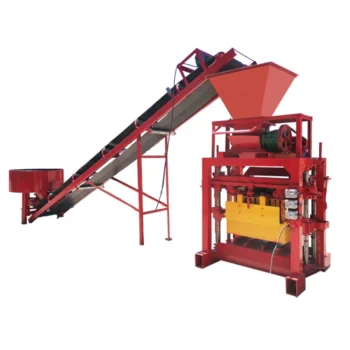
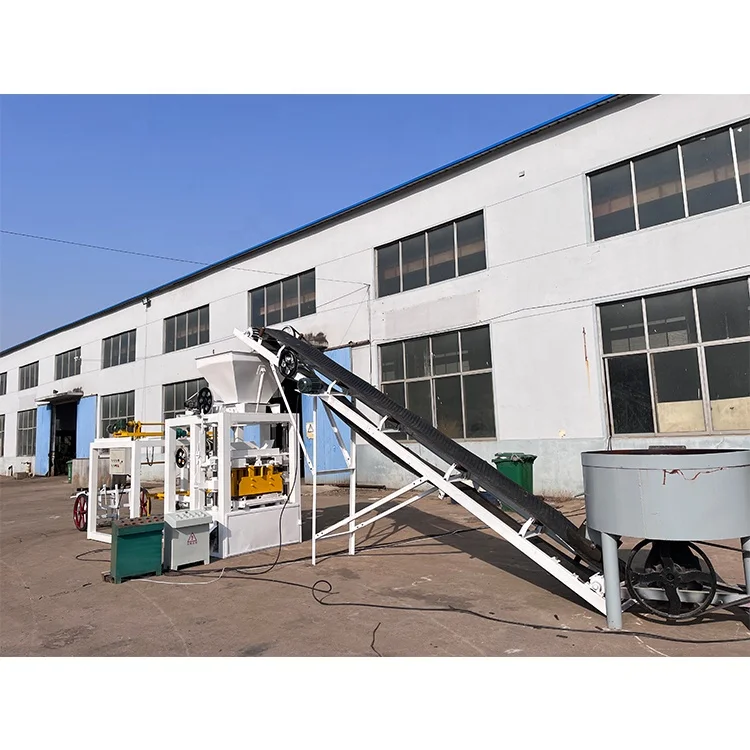
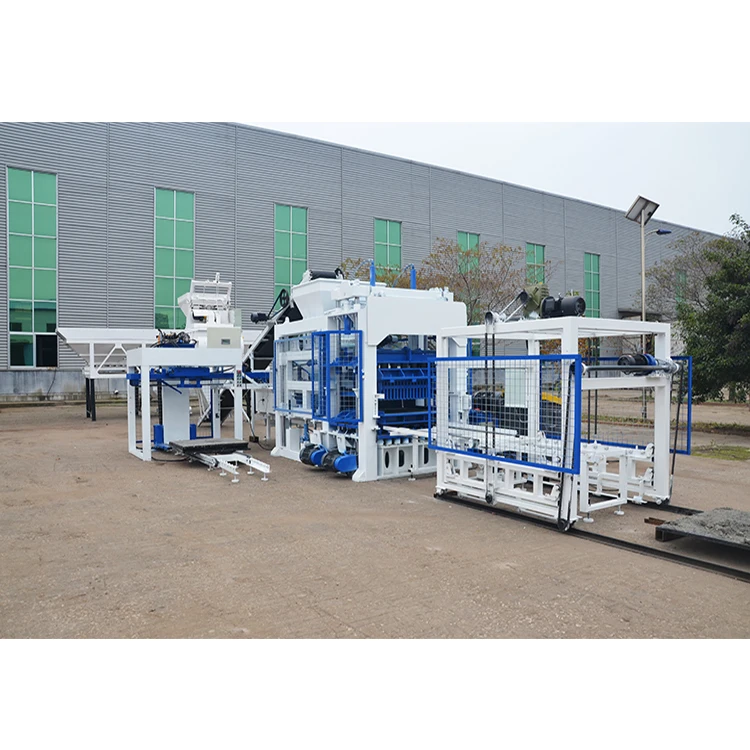
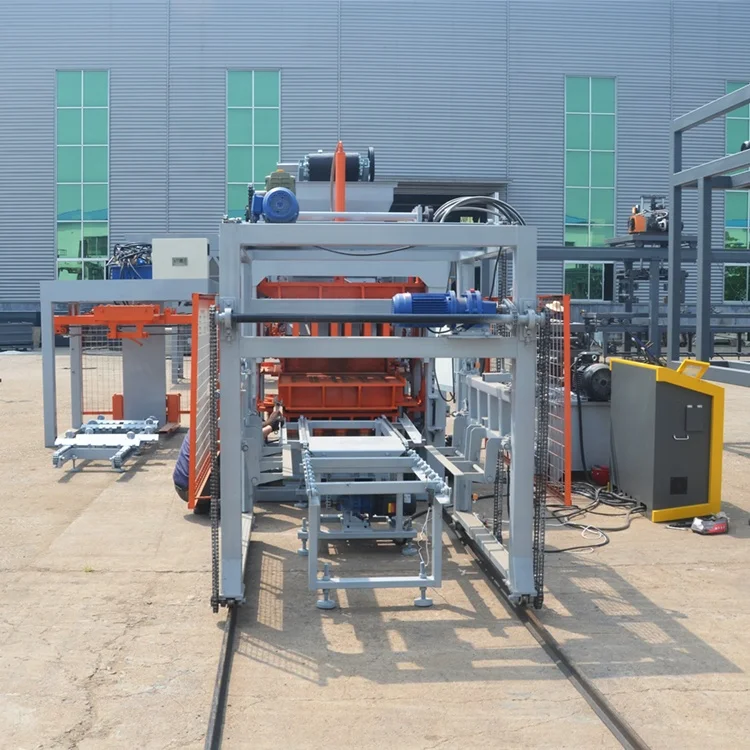
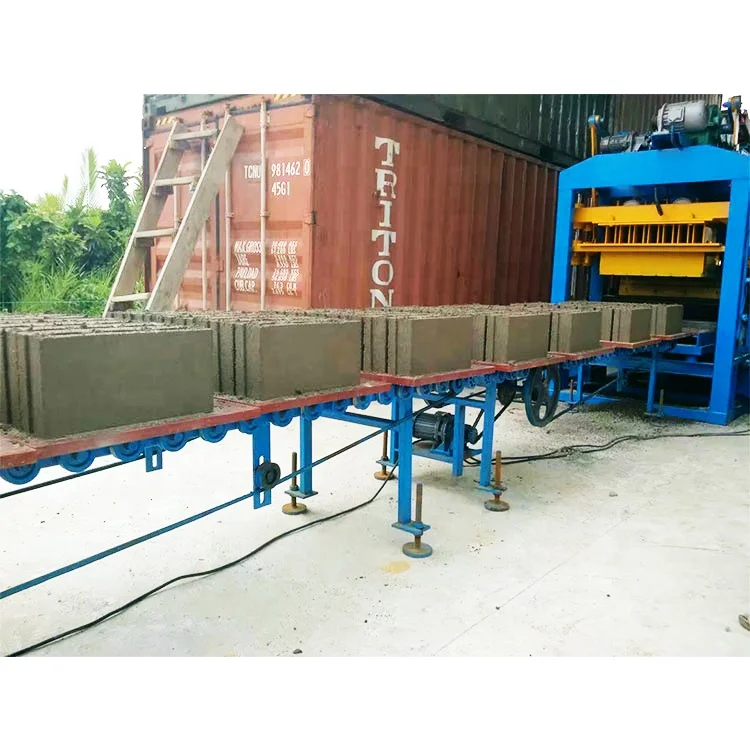
Matched System Specification — The QTJ4-25 block making machine is configured with pallet, mould and vibration parameters selected around your target block format and local aggregate, not a catalogue default.
Technical Specifications
| Parameter | Value |
|---|---|
| Product Type | Semi-Automatic Hollow Block Making Machine |
| Model | QTJ4-25 |
| Overall Dimensions (L×W×H) | 3060×1730×2580 mm |
| Cycle Time | 25 s |
| Total Weight | 4 T |
| Pallet Size | 850×550 mm |
| Block Height Range | 40–280 mm |
| Vibration Force | 45 kN |
| Belt Conveyor Length | 8 m |
| Mixer Model | JQ500 |
| Workshop Area Required | 50–150 m² |
| Material Storage Area Required | 300–500 m² |
| Motor Brand | Siemens or ABB |
| Voltage & Frequency | 380V, 3-phase, 50Hz (customizable to local voltage) |
| Control System | Electric control (PLC not specified in source) |
| Automation Level | Semi-automatic |
| Output Capacity | 480 pcs/h based on 400×200×200 mm hollow block, 4 pcs/mould |
| Output Capacity | 600 pcs/h based on 400×150×200 mm hollow block, 5 pcs/mould |
| Output Capacity | 840 pcs/h based on 400×100×200 mm hollow block, 7 pcs/mould |
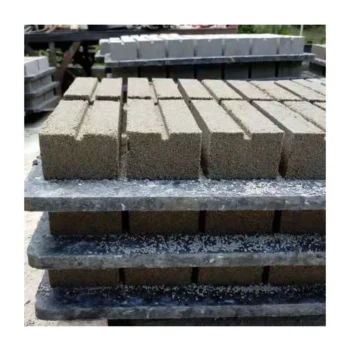
| Output Capacity | 2880 pcs/h based on 240×115×53 mm solid brick, 24 pcs/mould |
| Mould Change System | Manual |
| Stacking Method | Manual pallet handling |
| Warranty | 1 year (excluding wearing parts) |
Application Suitability
| Application | Material or Output |
|---|---|
| Hollow block production for masonry walls | Crushed stone, sand, cement, water mix on 850×550 mm pallets |
| Solid brick manufacturing | Clay-free concrete mix, 24 cavities per mould cycle |
| Interlocking paver and kerbstone | High-density aggregate blend with pigment dosing |
| Grass brick and revetment brick | Permeable mix designs for landscaping and erosion control |
| On-site production by contractors | Portable setup within 50–150 m² workshop footprint |
| Small to medium block plants | Semi-automatic operation with manual pallet handling |
What "Cycles per Hour" Leaves Out About the QTJ4-25 Block Machine Specifications
Every capacity figure for the QTJ4-25 is tied to a specific block size and mould cavity count.
Quoting a single throughput number without naming the block format it assumes is a common way to inflate expectations. I have watched buyers in Southeast Asia discover after commissioning that their daily output falls far short of what the brochure promised, simply because the quoted rate assumed a small solid brick while they needed hollow blocks. The QTJ4-25 block machine specifications list four distinct output rates, each bound to a named block dimension and cavity count, so you know exactly what to expect before the machine ships [NEED_CITE: honest capacity disclosure standards in block machinery trade].
Mould Formats and Cycle Time Reality
The 25-second cycle time applies across all mould formats installed on the QTJ4-25. That consistency means your production planning does not shift every time you swap from hollow blocks to pavers. Mould change is manual, so the time between formats depends on your crew and tooling setup, not on an automated system adding its own delay.
Pallet Size and Your Curing Area
The 850×550 mm pallet dimension is fixed for this model. Before ordering, you need to confirm that your existing curing racks, shelving spans and forklift tine spacing all accept that size. I have seen plants receive machines only to find their curing racks were built for a different pallet width, forcing a costly rack rebuild or a pile-on-the-ground workaround that damages green blocks.
Vibration Force and Mix Design Matching
The 45 kN vibration force is rated for standard concrete aggregates. When your local material is volcanic ash, lightweight pumice or a high-fines sand, that force setting may over-compact or under-compact the mix. On a project in Java, the default vibration parameters produced hollow blocks that crumbled at the corners because the volcanic aggregate needed a different frequency-amplitude balance. Matching vibration to your actual mix design is what separates consistent block strength from a rejection pile [NEED_CITE: vibration frequency and aggregate compatibility in concrete block forming].
Specifying by Block Format Instead of Guessing
The block height range of 40–280 mm covers most masonry and paving products sold in regional markets. Choosing the right mould within that range determines your per-cycle output. A buyer targeting 400×200×200 mm hollow blocks will see 480 pieces per hour from four cavities, while a buyer running 240×115×53 mm solid bricks pulls 2880 pieces per hour from twenty-four cavities. The machine is the same; the format you sell determines the throughput you get.
The Hidden Cost of a Mismatched Line
Sizing a QTJ4-25 block machine specifications sheet against your production target sounds straightforward, but leaving pallet handling, stacking and curing out of the plan creates bottlenecks the machine itself cannot fix. Manual pallet handling means your crew moves every board by hand. If your curing area is fifty metres from the press, cycle time is no longer the constraint — walking distance is. Buyers who overlook this end up with a press that sits idle while pallets are carried, stacked and retrieved [NEED_CITE: block plant layout and material handling bottleneck studies].
Why Source This Machine Here
Block machinery is the sole product focus, so the press, mould, pallet and handling equipment are specified as one matched set rather than assembled from separate vendors. Configuration starts from your actual mix design, local aggregate and target block format — not a catalogue default. Mould design covers the formats your market sells, and custom shapes can be built from your drawings. Automation level is selectable, so a buyer can start with the QTJ4-25 semi-automatic setup and add automatic stacking later. Installation includes on-site commissioning and operator training so your crew runs the machine correctly from day one.
Documentation & Verification
- Line layout showing capacity calculation for each block format you plan to produce
- Mould drawing and format list confirming cavity count per block type
- Voltage and control language confirmation form signed before production starts
- Pallet specification sheet matched to your curing rack and forklift dimensions
- Factory test record on your chosen block format before dispatch
Installation, Commissioning & Support
- Workshop floor must support 4 T static load across the 3060×1730 mm machine footprint
- Dedicated 380V 3-phase circuit with correct frequency confirmed before wiring
- Machine ships fully assembled; positioning requires overhead clearance above 2580 mm
- First-run parameter setting covers vibration force, cycle timing and mould alignment
- Operator training includes manual mould change procedure and pallet handling workflow
- Wear parts list covers mould liners, vibration springs and belt conveyor spares
Before You Request a Quote
To size the QTJ4-25 accurately, share the block formats you intend to sell, including dimensions and daily volume targets for each. Confirm the raw materials available locally — aggregate type, cement grade, any industrial by-products like fly ash or volcanic ash. Provide your workshop dimensions, existing curing rack specs and the voltage and frequency at your site so the motor and control panel arrive ready to connect.
Frequently Asked Questions
Q: How is QTJ4-25 output capacity verified for each block format?
A: Each capacity figure is measured against a named block dimension and mould cavity count. The 480 pcs/h rate assumes a 400×200×200 mm hollow block with four cavities, while the 2880 pcs/h rate assumes a 240×115×53 mm solid brick with twenty-four cavities. No single inflated number is quoted without its format assumption.
Q: Which mould formats fit the QTJ4-25 and what cycle time should I expect?
A: The machine accepts moulds for hollow blocks, solid bricks, interlocking pavers, kerbstones, grass bricks and revetment bricks within the 40–280 mm block height range. The 25-second cycle time holds across formats. Mould change is manual, so swap time depends on your crew and tooling setup.
Q: How do I confirm the pallet size works with my existing equipment?
A: The pallet size is 850×550 mm. Before ordering, measure your curing rack shelf width, forklift tine spacing and any pallet return conveyor dimensions. We provide a pallet specification sheet so you can cross-check every contact point before the machine is built.
Q: Can custom moulds be designed from my own drawings?
A: Yes. Send your block drawing with dimensions, desired cavity count and target block weight. The mould is designed to match the QTJ4-25 vibration force and pallet size, then tested with your specified mix before shipment.
Q: What voltage and frequency options are available for export markets?
A: The standard configuration is 380V, 3-phase, 50Hz. Voltage and frequency are customizable to match your local supply. Confirm your site specifications before production so the motor, wiring and control panel arrive correctly configured.