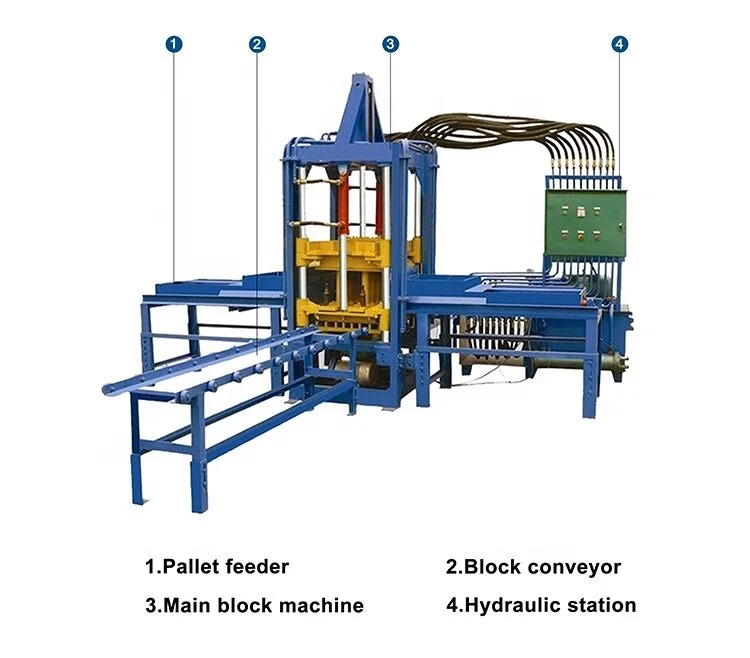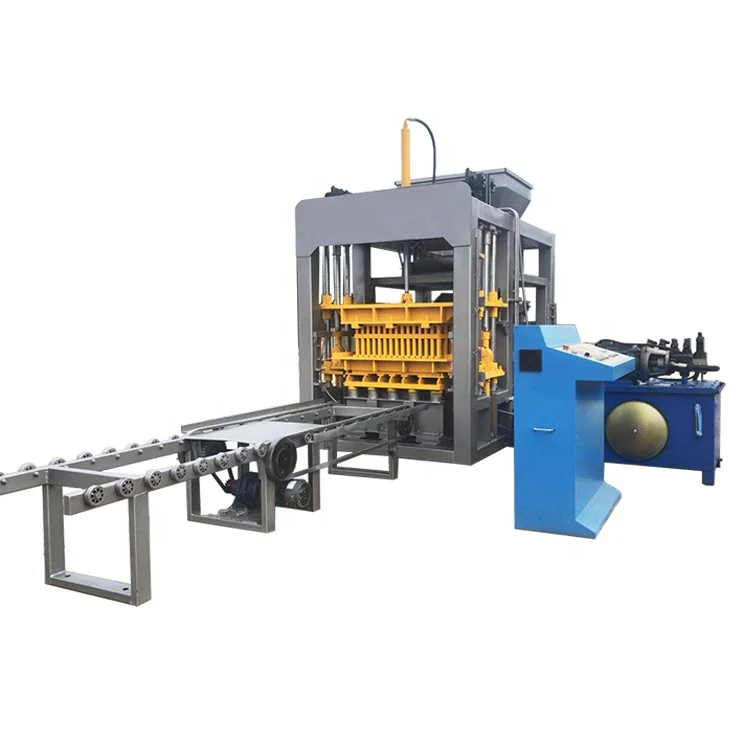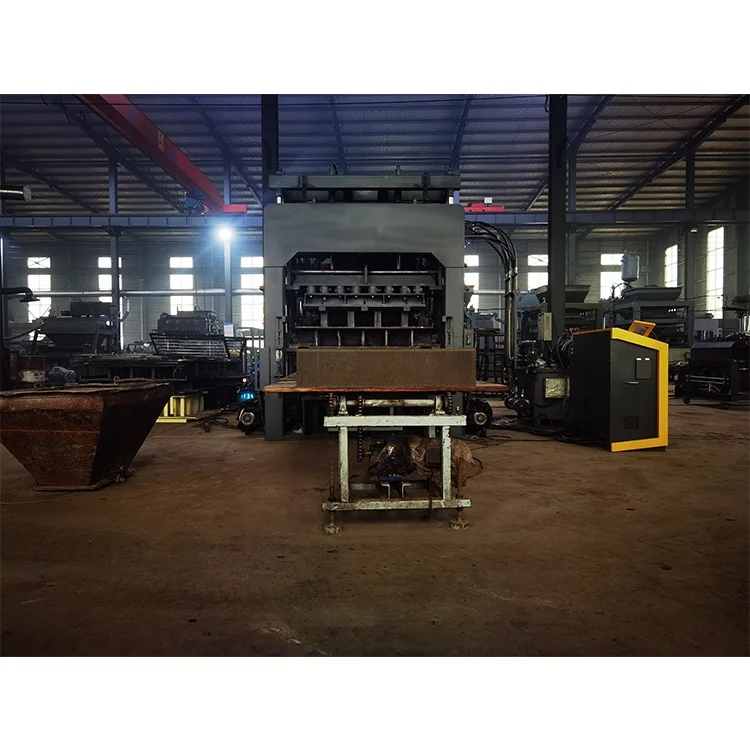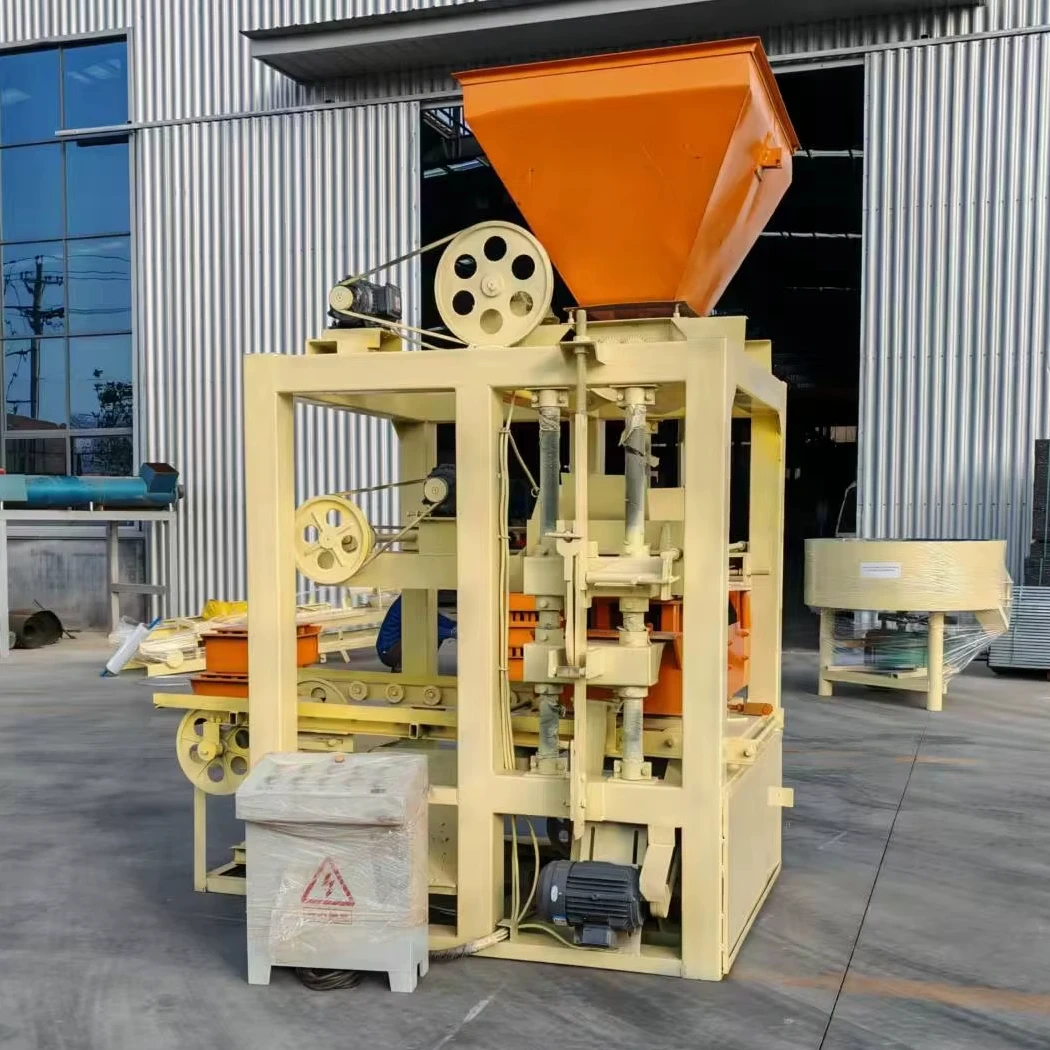
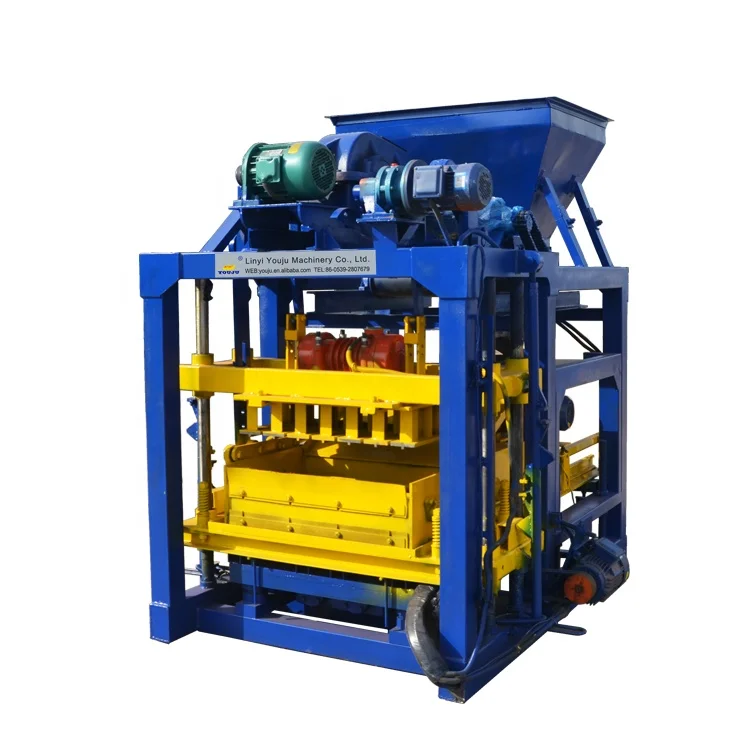
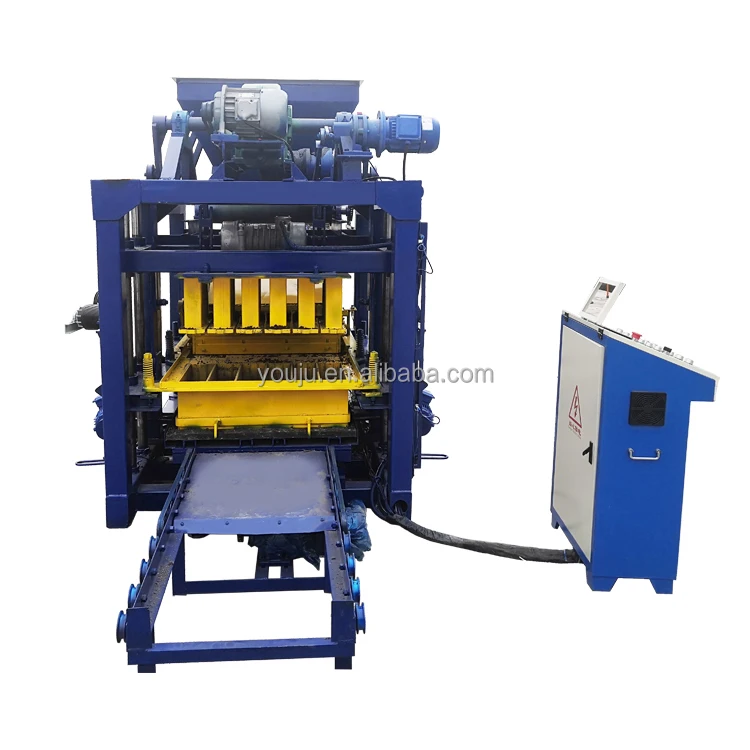
Description
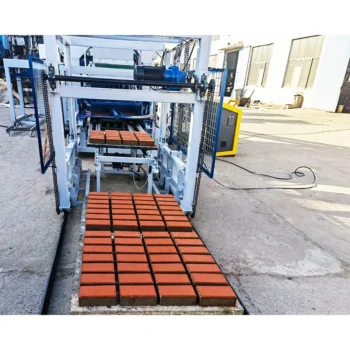
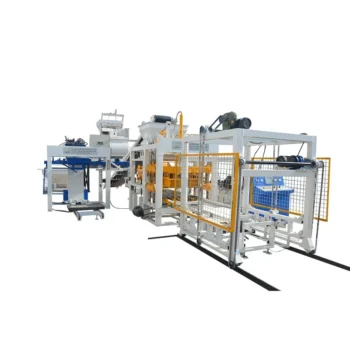
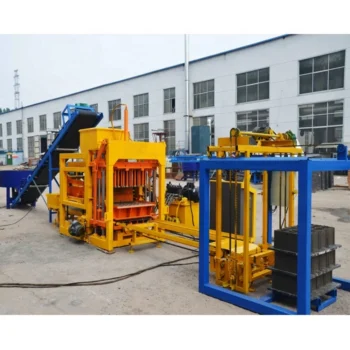
Mould and Press Matched — Every QTJ4-25 block making machine configuration pairs the host press with the specific pallet size, vibration force and mixer output needed for the buyer’s actual block format, so capacity calculations hold up when production shifts from hollow blocks to pavers.
Technical Specifications
| Parameter | Value |
|---|---|
| Model | QTJ4-25 |
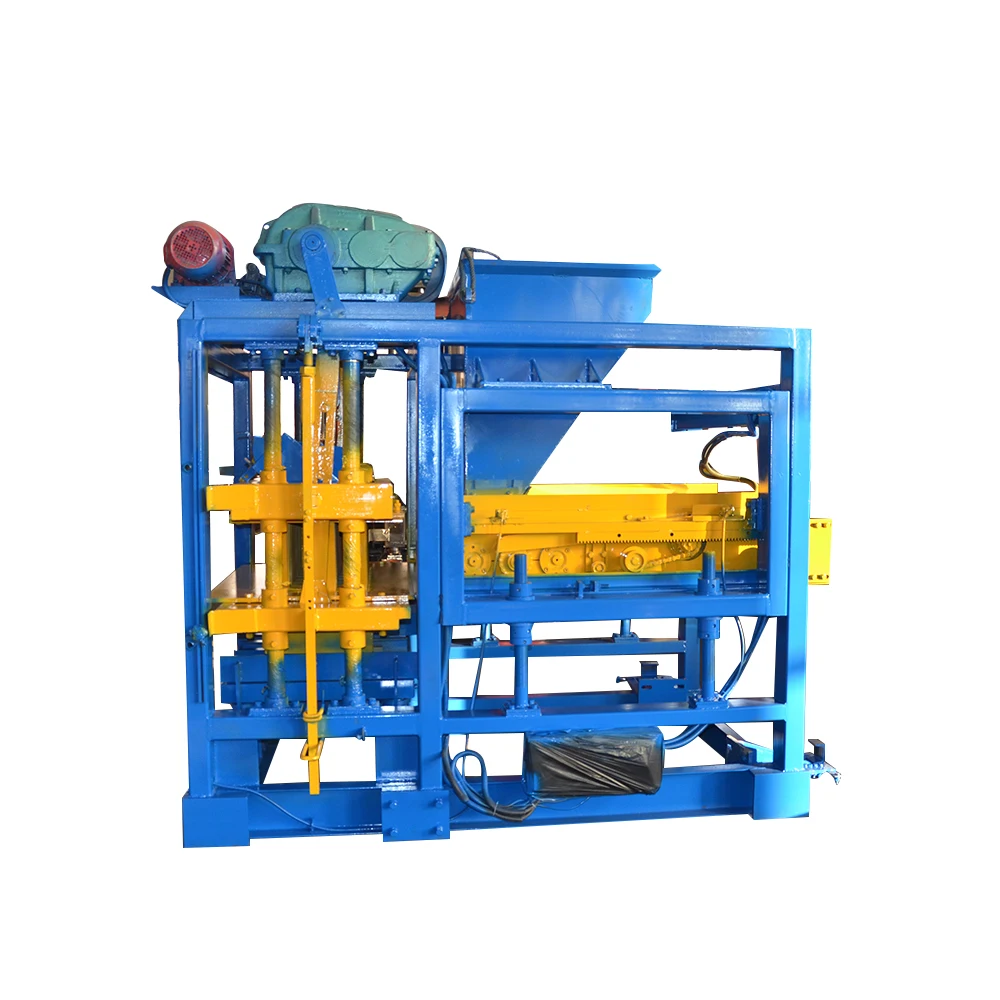
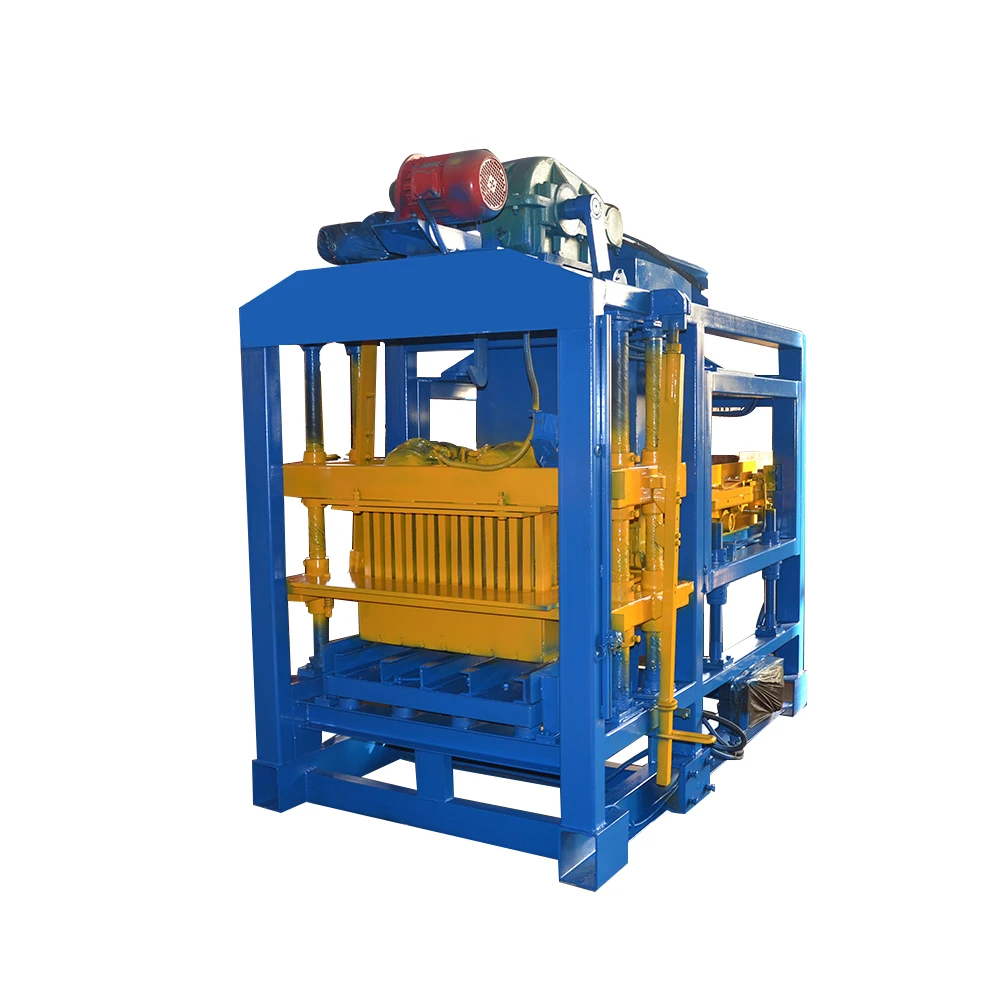
| Product Type | Semi-Automatic Hydraulic Concrete Block Making Machine |
| Rated Power | 17.9 kW |
| Overall Dimensions (L×W×H) | 6400×1500×2700 mm |
| Total Mass | 2500 kg |
| Molding Cycle | 25 s |
| Pallet Size | 850×550×20 mm |
| Vibration Frequency | 2800 r/min |
| Vibration Force (Exciting Power) | 60 kN |
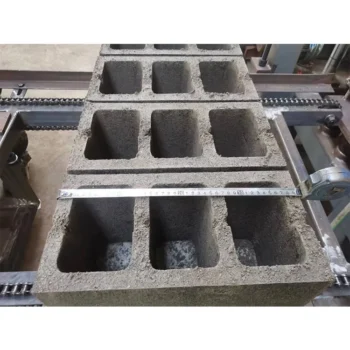
| Output Capacity | 960 pcs/h, 7680 pcs/day (based on 400×200×200 mm hollow block, 4 pcs/mould) |
| Mould Format Options | Hollow, solid, paver, curbstone (mould change required) |
| Automation Level | Semi-automatic |
| Hydraulic Station | Equipped (high pressure, stable operation) |
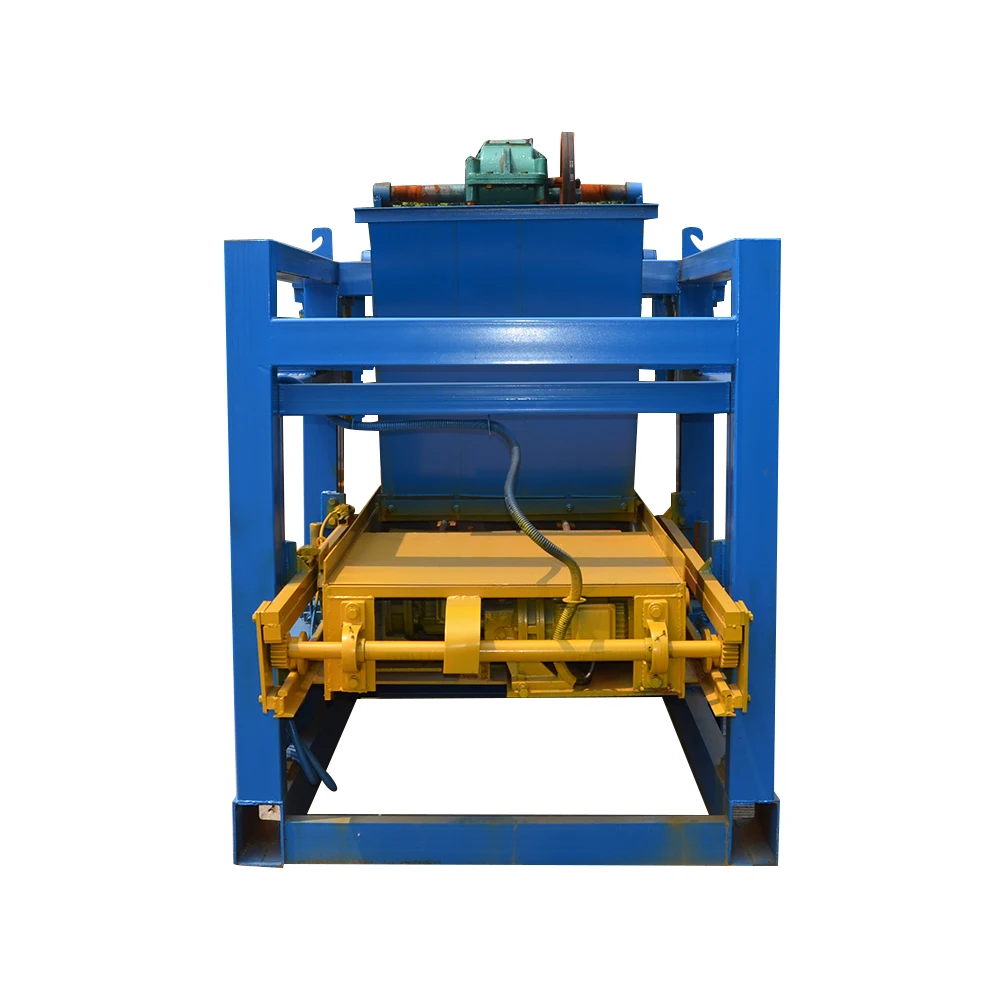
| Standard Configuration | Host machine 1 set, block mould 1 set, JQ350 mixer |
| Voltage & Frequency | Configurable to site supply (confirm before order) |
| Control System | Available with PLC or relay logic (confirm before order) |
| Stacking Method | Manual (pallet handling by trolley) |
Application Suitability
| Application | Material or Output |
|---|---|
| Hollow block production for residential walls | Crushed stone, river sand and cement at standard ratios, 4-8 inch formats |
| Solid block manufacturing for load-bearing structures | Dense aggregate mixes requiring higher hydraulic compression |
| Paving block production for walkways and yards | Fine sand and pigment blends with shorter cycle tolerance |
| Kerbstone forming for road and drainage projects | Heavy-format moulds with extended vibration dwell |
| Small to medium-scale block plants | Daily volumes tied to local construction demand |
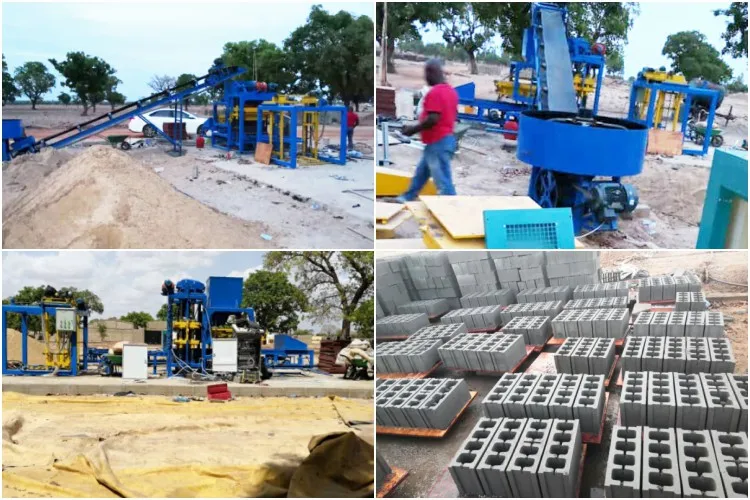
| On-site block production for contractors | Mobile setup with JQ350 mixer feeding directly to the press |
What "960 Pieces per Hour" Actually Means for the QTJ4-25 Block Making Machine Specifications
That headline figure assumes a 400×200×200 mm hollow block at four pieces per mould — switch formats and the number changes.
I once watched a buyer in Southeast Asia receive a semi-automatic block press quoted at a single cycle rate, only to discover his primary product was a smaller solid brick that cut real daily output nearly in half. The mismatch was not the machine’s fault — it was the quotation’s. When you review QTJ4-25 block making machine specifications, the capacity statement must name the exact block format, mould cavity count and cycle time behind the number [NEED_CITE: block output calculation standards by format]. Without that, daily planning becomes guesswork and pallet inventory estimates fall apart before the first production run.
Matching Cycle Time to the Block Format You Actually Sell
The QTJ4-25 completes a moulding cycle in roughly 25 seconds, but that duration was established with a standard hollow block cavity. When you swap to a paver mould with tighter dimensional tolerance, the vibration dwell may need adjustment and the effective cycle lengthens. This is where the QTJ4-25 block making machine specifications matter beyond the brochure — understanding which format drove the published number lets you recalculate honestly for the products your market actually orders.
Pallet Size as a Line-Design Decision, Not an Afterthought
The 850×550×20 mm pallet dimension governs how many blocks cure per rack, how your forklift moves stacks, and whether pallets you already own can be reused. Ordering a press without confirming pallet compatibility means you may end up storing thousands of pallets in a curing yard that was never measured for them [NEED_CITE: pallet handling and curing area planning for block plants]. Confirming this dimension early keeps the QTJ4-25 block making machine integrated into your existing layout rather than forcing a site rebuild.
Reading Vibration Force and Hydraulic Pressure Together
A vibration force of 60 kN at 2800 r/min works in concert with the hydraulic station to compact the mix into uniform density. On a semi-automatic hydraulic concrete block making machine, neither parameter alone guarantees block strength — the vibration distributes the mix while hydraulic pressure consolidates it. If your local aggregate is angular or your sand carries higher clay content, the balance between these two forces must be tuned during commissioning, something we address before the machine leaves the factory floor.
The Cost of Skipping Format-Specific Capacity Planning
When buyers focus only on the highest quoted output number, they often under-invest in pallets, curing space and mixer throughput for their real production mix. A press rated for one format may need a longer cycle on the product you sell most, meaning your JQ350 mixer and raw material feed must be sized for the actual — not the brochure — pace [NEED_CITE: block plant throughput bottlenecks from mismatched line equipment]. The result of getting this wrong is a yard full of pallets waiting for a press that cannot keep up, or a mixer running idle between cycles.
Why Sourcing From a Single-Line Supplier Matters Here
Block machinery is our only focus, so the QTJ4-25 press, its mould, pallet and JQ350 mixer are specified as one matched set rather than assembled from separate vendors. We configure vibration and hydraulic settings against your actual mix design and local aggregate, not a catalogue default. Mould design covers the formats your market sells, including custom drawings when standard cavities do not fit. Automation level is selectable — you can begin semi-automatic and add pallet feeding or stacking automation later. Installation support includes operator training so your crew understands cycle adjustment when formats change.
Documentation & Verification
- Line layout with capacity calculation stating the block format behind each output figure
- Mould drawing and format list covering every block size your market requires
- Pallet specification sheet confirming material, dimensions and curing-yard compatibility
- Voltage, frequency and control language confirmation signed before production begins
- Factory test record on your target block format before dispatch
- Operation and maintenance manual with wear parts and mould replacement schedule
Installation, Commissioning & Support
- Foundation pad sized to the 6400×1500 mm footprint with vibration isolation provisions
- Dedicated power circuit rated for the 17.9 kW total draw at your confirmed voltage and frequency
- Host machine and JQ350 mixer shipped dismantled for container loading, reassembled on site
- First-run parameter tuning matching vibration force and hydraulic pressure to your local mix
- Operator training covering mould change procedure and cycle adjustment per block format
- Wear parts list and mould inventory plan covering the first replacement cycle
Before You Request a Quote
Tell us the block formats your market demands, the daily volume you need for each, and the raw materials available locally including aggregate type and sand source. Confirm your site voltage, frequency and preferred control display language. If you already have curing racks or forklifts in place, share the dimensions so we can verify pallet compatibility before the QTJ4-25 enters production.
Frequently Asked Questions
Q: How is the 960 pcs/h output calculated, and what happens when I switch block formats?
A: That figure is based on a 400×200×200 mm hollow block at four cavities per mould with a 25-second cycle. Switching to a smaller solid brick or a paver changes the cavity count and may extend the cycle, reducing hourly output. We provide a per-format capacity table so you can plan daily production realistically for every product in your range.
Q: What pallet material and quantity do I need, and can I source them locally?
A: The QTJ4-25 uses 850×550×20 mm pallets, and the quantity depends on your curing cycle length and daily output. Bamboo, PVC and steel pallets are all options depending on your climate and handling method. We supply the specification so you can compare local sourcing against shipping pallets with the machine in the same container.
Q: How long does a mould change take, and what tools are required?
A: Mould change on the QTJ4-25 involves unbolting the current mould, lifting it clear, and securing the replacement — a process your crew will practice during commissioning. We supply the required tools and a step-by-step procedure so format switches do not consume an entire shift.
Q: Is the machine configured for my local aggregate, or will I need to change materials?
A: We configure vibration force and hydraulic pressure settings based on the mix design and aggregate you submit before production. If your local sand has high clay content or your stone is unusually angular, we adjust parameters accordingly rather than asking you to source different raw materials after arrival.
Q: What voltage and control language options are available, and how is this confirmed?
A: Voltage, frequency and PLC display language are confirmed in writing before production begins. You provide your site supply specification, we issue a confirmation sheet for your signature, and the machine is built to match — preventing commissioning delays caused by mismatched electrical standards [NEED_CITE: voltage and frequency standards by export market].