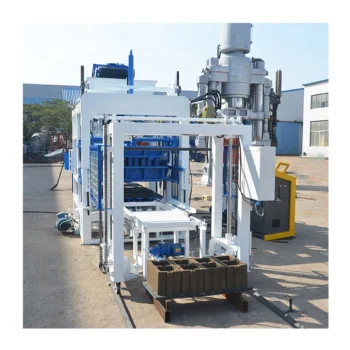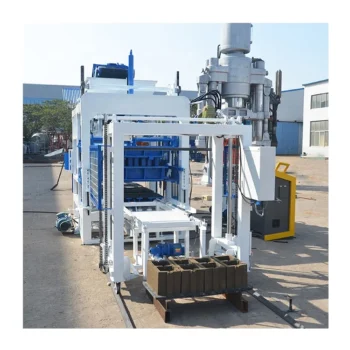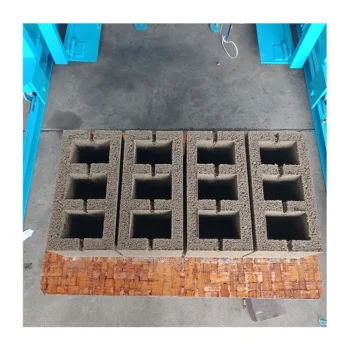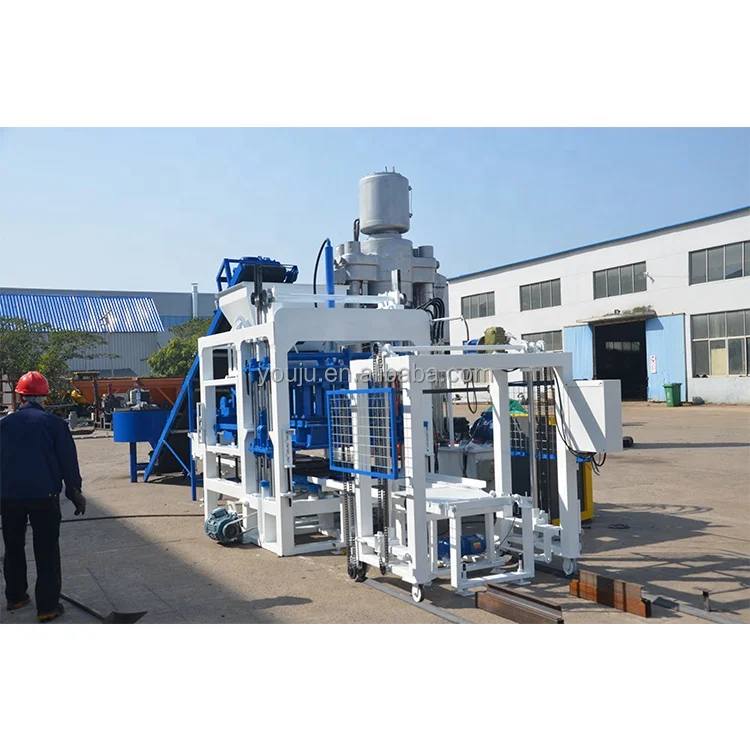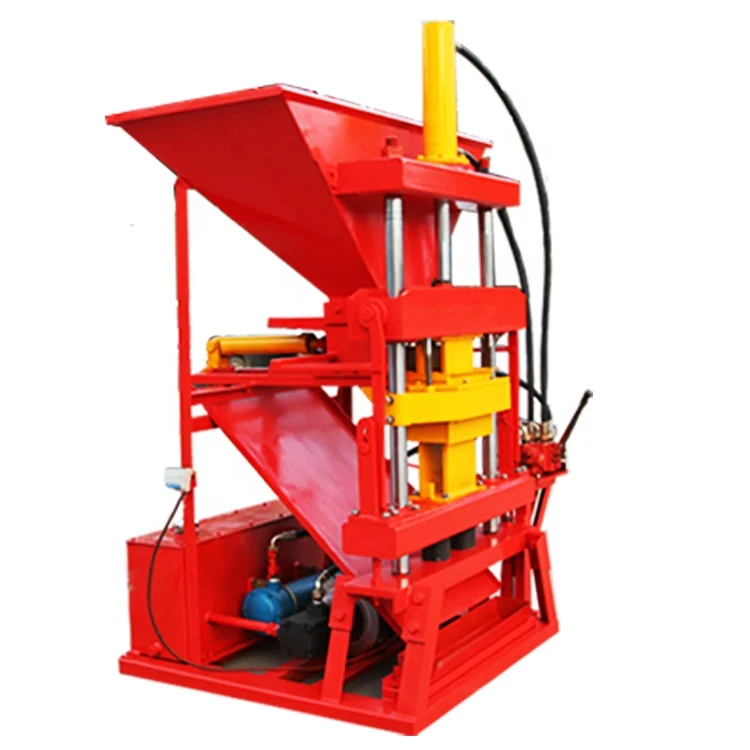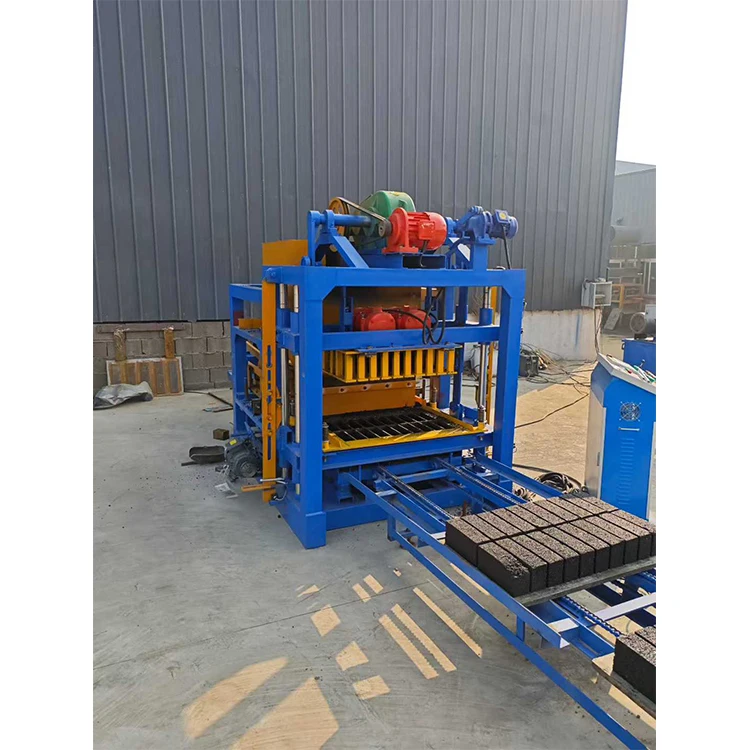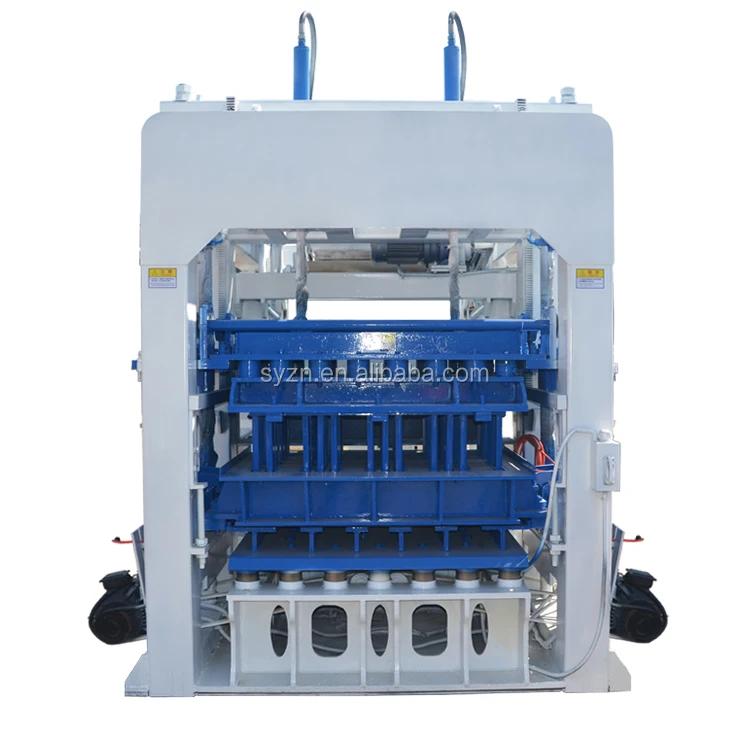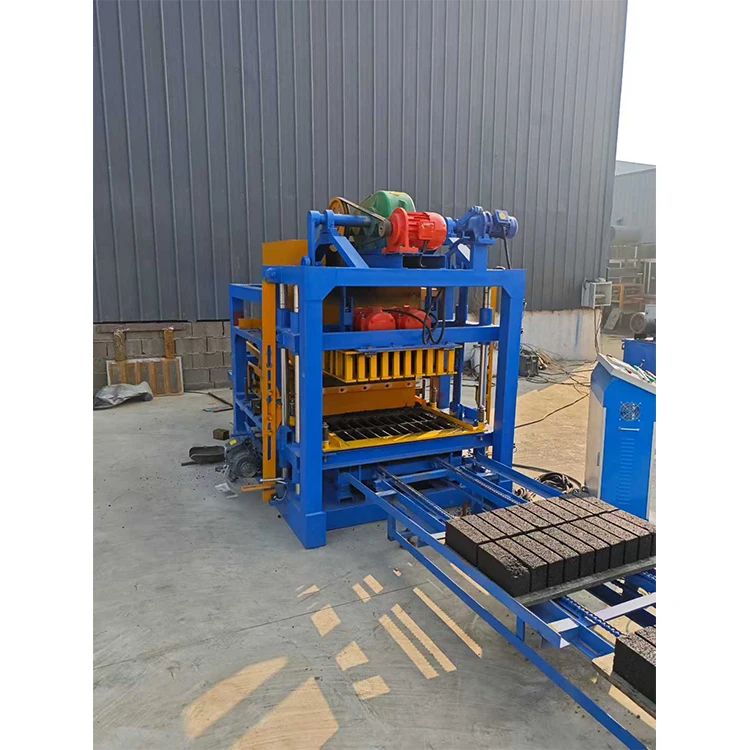
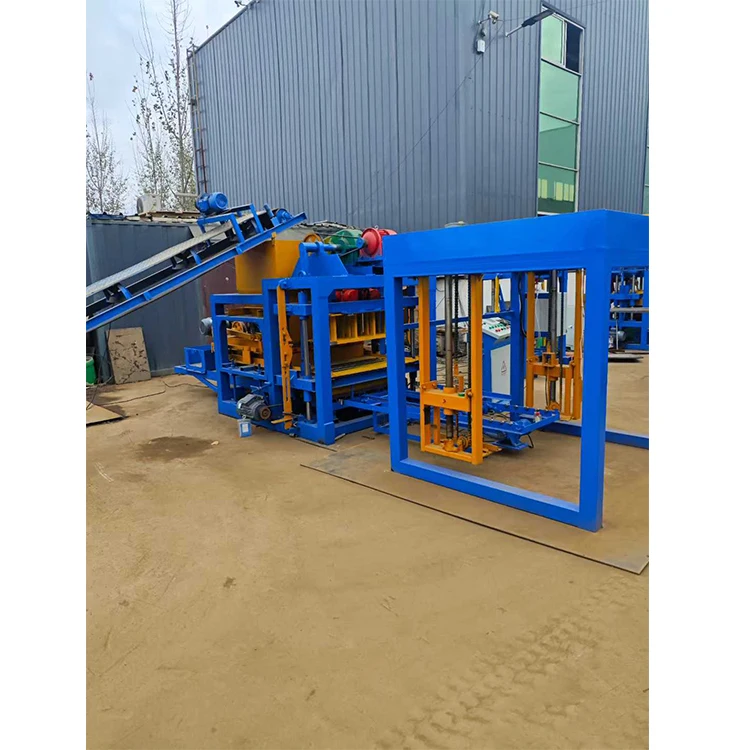
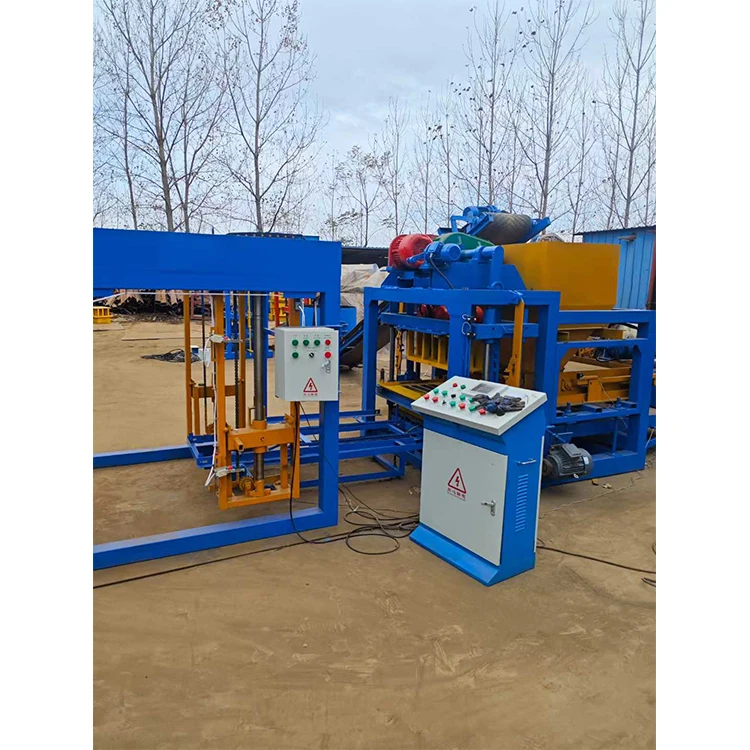
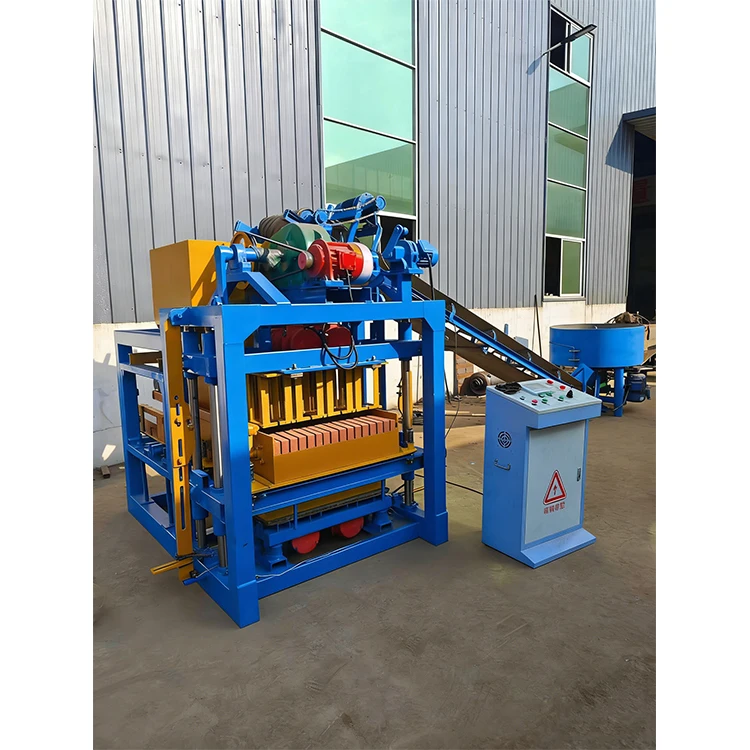
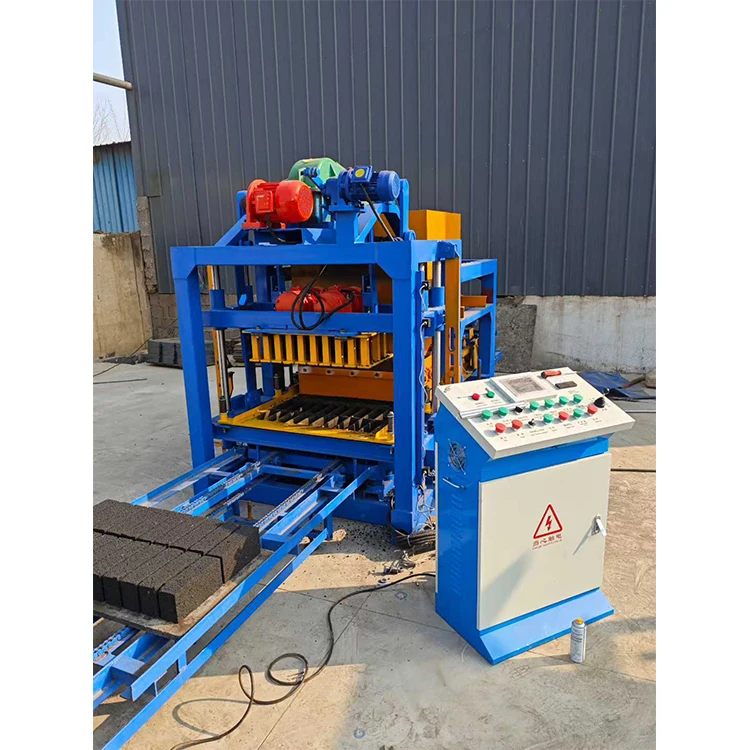
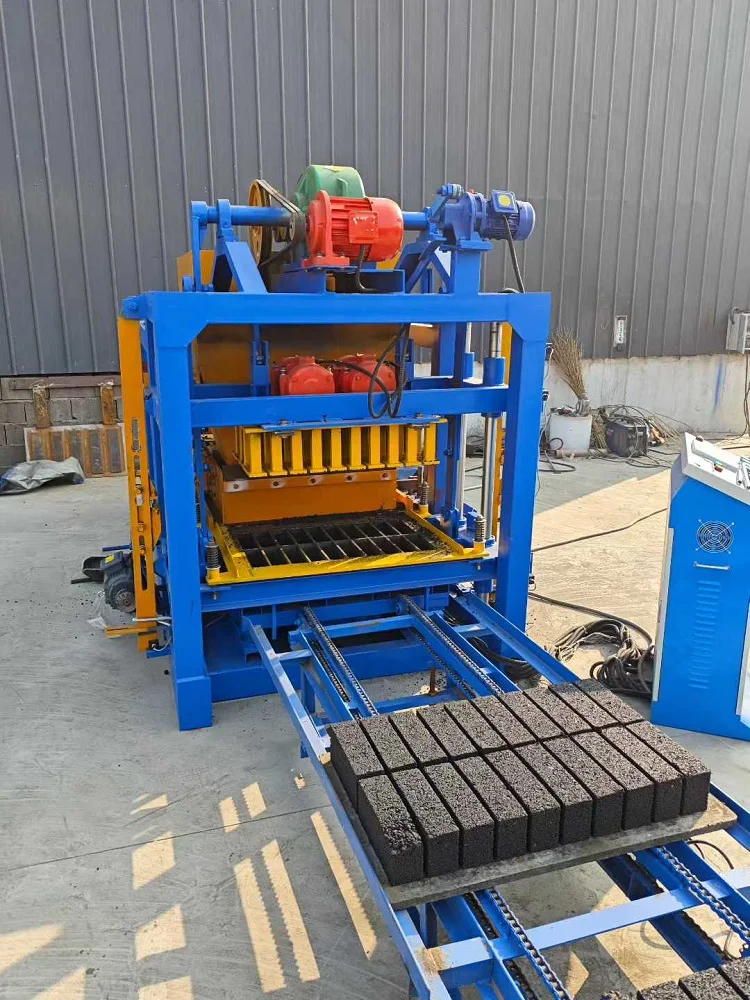
Description
Format-Matched Configuration — every QTJ4-25 we ship is set against the buyer’s actual block dimensions, pallet inventory and local aggregate, not a catalogue default.
Technical Specifications
| Parameter | Value |
|---|---|
| Model | QTJ4-25 |
| Product Type | Automatic Concrete Block Making Machine |
| Control System | PLC controlled, fully automatic |
| Machine Power | 16.58 kW |
| Molding Cycle | 25 seconds |
| Output Capacity | 4600 pcs/8hours (basis not stated in source — confirm block format / material / thickness) |
| Machine Weight | 5000 kg |
| Overall Dimensions | 6400 × 1500 × 2700 mm |
| Pallet Size | 850 × 480 mm |
| Vibration System | Vibration motor with large vibration box (non-hydraulic) |
| Frame Construction | Thickened steel |
| Motor Brand | Siemens |
| Voltage | Configurable according to buyer’s local voltage and frequency |
| Block Formats | Hollow blocks, solid blocks/bricks, paver stones |
| Warranty | 1 year (free parts during warranty period) |
Application Suitability
| Application | Material or Output |
|---|---|
| Hollow block production for wall construction | Concrete, sand, cement, crushed stone, water |
| Solid brick manufacturing | Concrete, fly ash, lime, sand, water |
| Paver stone production for walkways and yards | Concrete, crushed stone, sand, cement |
| Medium-sized block plant mass production | Standard concrete mixes with local aggregate |
What the "4600 Pieces" Headline Leaves Out for QTJ4-25 Automatic Block Machine Specifications
Daily output is meaningless until you state which block format and wall thickness that number assumes.
I remember a buyer in West Africa who received a vibration block machine quoted at a single daily figure. When his 200 mm hollow blocks came out with surface cracks and the shift total barely reached half the promised number, he assumed the machine was defective. The real problem was that the quoted capacity assumed a smaller solid brick format. The vibration force and cycle time were never recalculated for his actual product. This mismatch happens more often than buyers realize [NEED_CITE: common causes of output shortfall in concrete block production]. When reviewing QTJ4-25 automatic block machine specifications, the 25-second molding cycle is the starting point — the realistic per-format output depends entirely on how many cavities fit on the 850 × 480 mm pallet and how the local mix responds to the vibration box.
Pallet Size Dictates Your Real Per-Mould Yield
The 850 × 480 mm pallet on the QTJ4-25 determines how many block impressions fit in each cycle. For a standard 400 × 200 × 200 mm hollow block, the mould typically holds a set number of cavities across that pallet area. Switch to a thinner 100 mm solid brick and the cavity count increases, raising the per-cycle piece count. This is why a single headline capacity figure cannot represent every format the machine produces. Buyers who match their target product to the pallet footprint early avoid disappointment when the line is running at full shift.
Vibration Without Hydraulics: What It Means for Your Mix
The QTJ4-25 uses a vibration motor paired with a large vibration box rather than a hydraulic press system. This configuration works well with standard concrete mixes where cement, sand, and crushed stone are proportioned within typical ranges. However, if your local aggregate contains high fines, lightweight materials, or unusual moisture characteristics, the vibration force may need verification against your specific mix design. I have seen machines arrive at a site and underperform simply because the vibration frequency was set for a standard sand that the buyer could not source locally [NEED_CITE: effect of aggregate gradation on block compaction density]. Sending a raw material sample before the machine is configured prevents this mismatch.
Reading the Specs That Actually Matter on Site
The 16.58 kW total power rating tells you the electrical supply requirement — confirm that your site transformer and dedicated circuit can sustain this draw continuously over an eight-hour shift. The 6400 × 1500 × 2700 mm overall dimensions define the minimum floor space, but you also need clearance around the machine for pallet circulation and mould access during changeovers. The 5000 kg machine weight requires a level concrete foundation capable of absorbing vibration without settlement over time. The Siemens motor specification gives buyers confidence in sourcing replacement parts through established distribution channels in most export markets. The PLC-controlled automation covers pallet feeding, material feeding and scraping, and block stacking — removing the manual handling steps that typically bottleneck shift output on semi-automatic lines.
The Cost of Skipping Format-Specific Capacity Checks
When a buyer orders based on a single capacity number without confirming the assumed block format, the consequences show up on the first production day. The mould arrives set for a format that does not match the local market demand, forcing an immediate mould change that consumes most of a shift. The pallet size may not align with the curing racks already installed in the yard, meaning blocks have to be restacked by hand before they can be moved to the drying area [NEED_CITE: pallet and curing rack compatibility in block plant layout]. These are not machine defects — they are specification gaps that could have been resolved during the inquiry stage with a format-specific capacity calculation.
Why Technical Buyers Source This Model Here
Block machinery is our single focus, so the QTJ4-25 is specified as a matched system — machine, mould, pallet, and handling equipment are configured together rather than assembled from separate suppliers. We set the vibration parameters against your actual mix design and local aggregate, not a factory default tested on standard sand. Mould design covers the formats your market actually sells, including custom drawings when your product falls outside standard dimensions. The automation level is selectable, allowing a buyer to start with the standard PLC-controlled configuration and add handling stations later as production volume grows. Installation support includes on-site commissioning with operator training so your crew understands mould change procedures and cycle adjustment from day one.
Documentation & Verification
- Line layout showing capacity calculation stated per block format and mould cavity count
- Machine specification sheet with confirmed pallet size and vibration system rating
- Mould drawing and format list covering every block type included in your order
- Voltage, frequency, and PLC display language confirmation before production begins
- Factory test record demonstrating cycle time on your specified block format
- Packing photographs and customs documentation support for shipment
Installation, Commissioning & Support
- Level concrete foundation sized to the 6400 × 1500 mm footprint with vibration isolation
- Dedicated electrical circuit matching confirmed voltage and frequency for the 16.58 kW total draw
- Machine arrives partially assembled with vibration box and frame pre-mounted
- First-run parameter tuning against your local aggregate and target block strength
- Operator training covering PLC menu navigation, mould change procedure, and pallet loading
- Wear parts list with recommended reorder intervals for vibration motor and mould liners
- Routine maintenance schedule for frame bolt torque checks and motor bearing lubrication
What We Need to Configure Your Machine Correctly
To prepare an accurate configuration for the QTJ4-25, share your target block dimensions and wall thickness, the daily output you need per format, and a sample of your local raw materials including sand and aggregate. Confirm your site voltage, frequency, and preferred PLC display language. Let us know what pallet material and curing rack spacing you plan to use so the pallet specification is matched from the start.
Frequently Asked Questions
Q: How is realistic daily output calculated per block format on the QTJ4-25?
A: We start from the 25-second molding cycle and the 850 × 480 mm pallet area, then count how many cavities your specific block format fits per mould impression. Multiply that by achievable cycles per hour after accounting for pallet indexing and material fill time. The result is a per-format output figure, not a single headline number that collapses every format into one value.
Q: Which pallet material works best for my curing environment?
A: The choice between bamboo, PVC, or steel pallets depends on your local humidity, curing area setup, and how blocks are moved after pressing. High-humidity climates tend to shorten bamboo pallet life, while steel pallets require forklift tines rated for their weight. We confirm pallet material against your existing curing rack spacing and handling equipment before the order is finalized.
Q: How long does a mould change take on this machine?
A: Mould change time depends on the format transition and whether the replacement mould uses the same bolt pattern. Standard transitions between hollow block and solid brick moulds of the same pallet size typically require basic hand tools and a defined procedure that your operators learn during commissioning. We provide the mould drawing and changeover instructions with every format included in your order.
Q: Can the QTJ4-25 handle my local aggregate and mix design?
A: The vibration box system is effective with standard concrete mixes, but local aggregate characteristics like particle size distribution, fines content, and moisture absorption affect compaction results. We ask buyers to send a raw material sample so we can verify vibration force settings against the actual mix before the machine leaves the factory. This step prevents the output and strength shortfalls that occur when machines are configured for a generic mix.
Q: What voltage and PLC language options must I confirm before shipment?
A: Voltage and frequency must match your site supply exactly — common configurations include 380V/50Hz, 415V/50Hz, and 440V/60Hz depending on the export market. The PLC display language should be confirmed at the same time so your operators can read menus and alarms in a familiar language from the first production run. Both items are locked in before production begins to avoid commissioning delays.