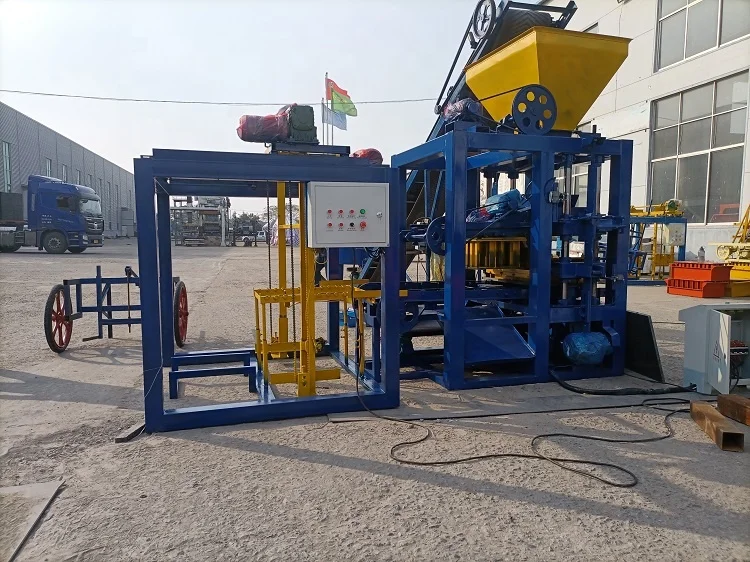
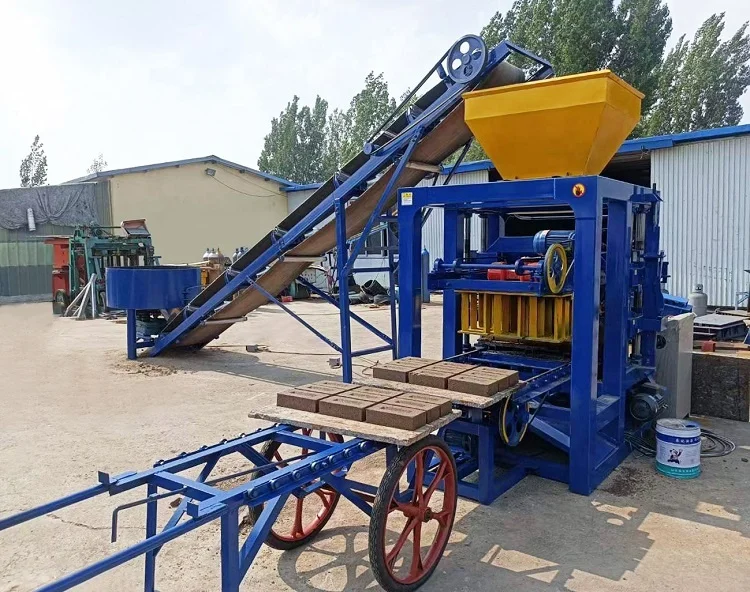
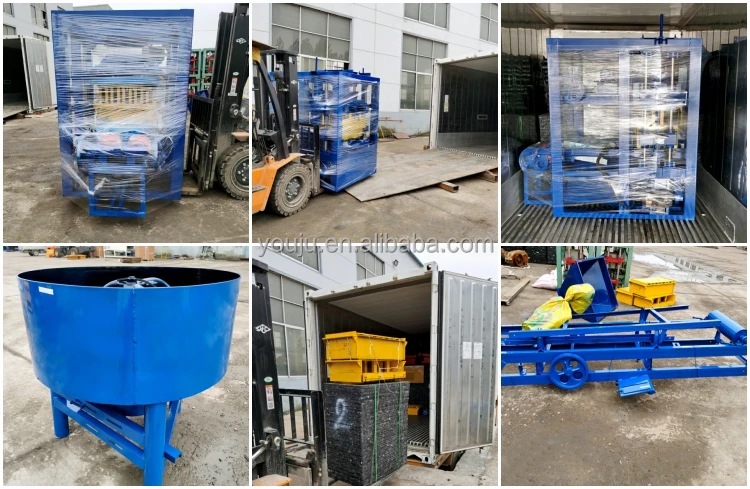
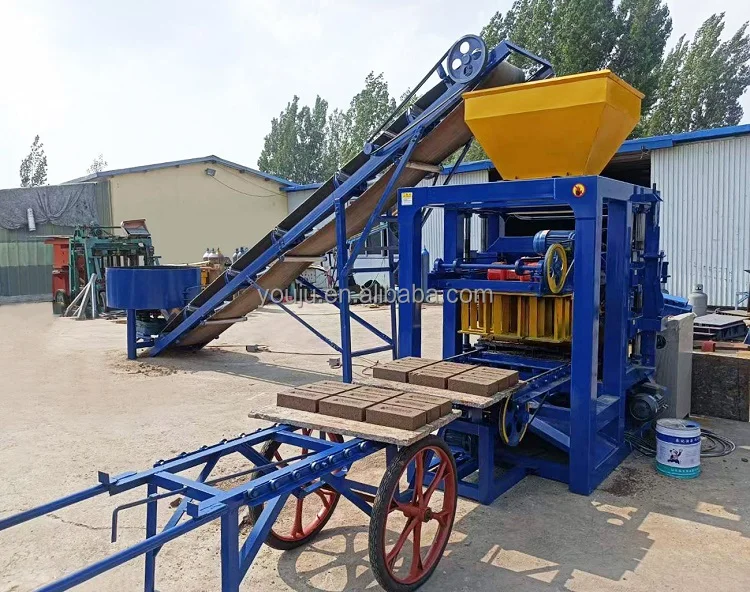
Description
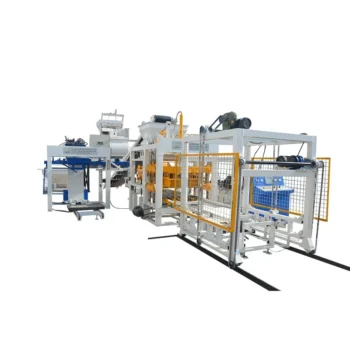
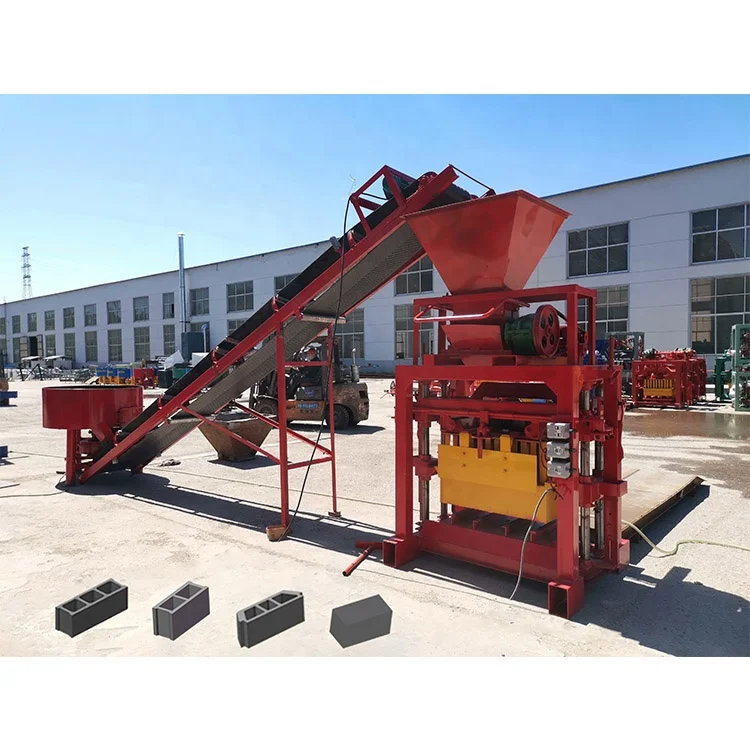
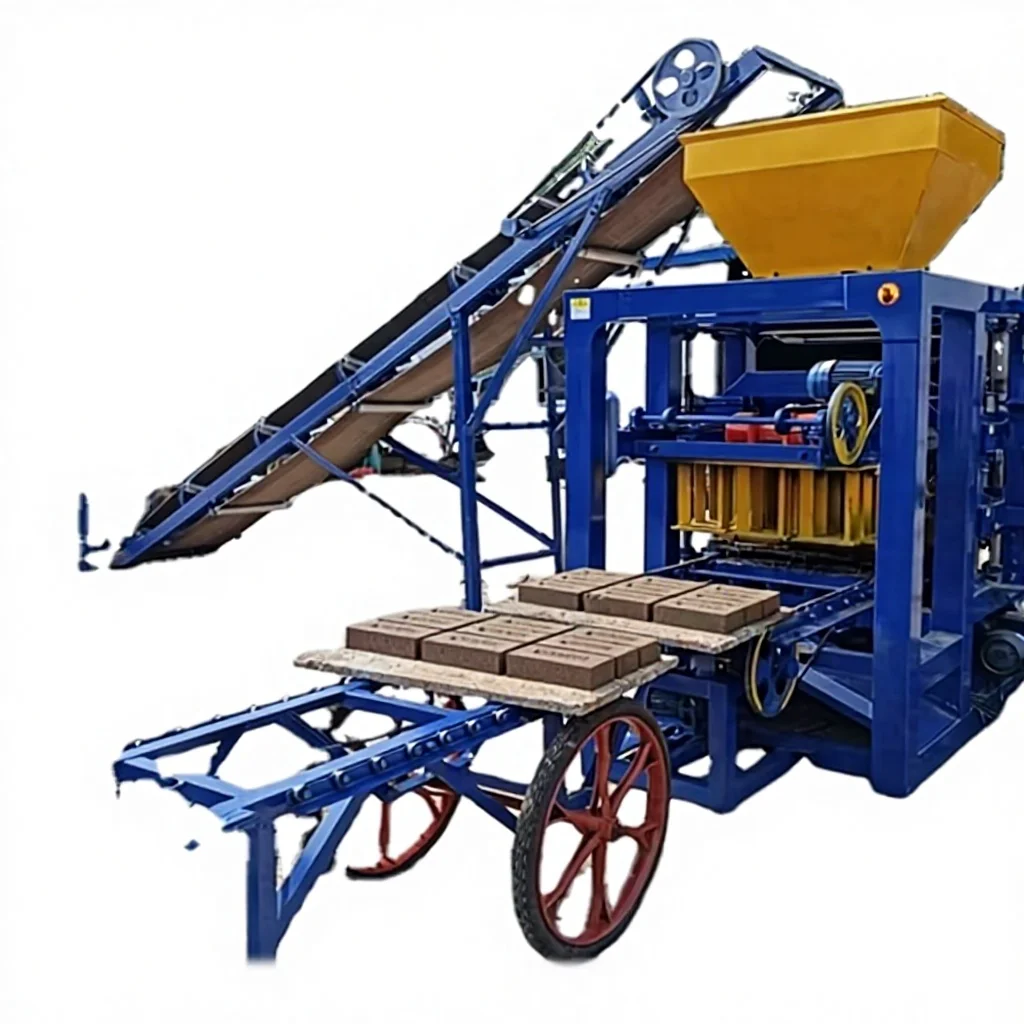
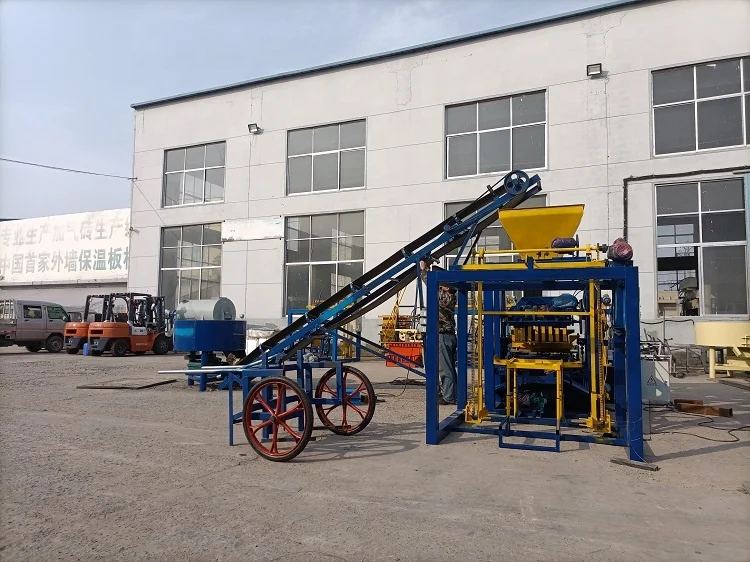
Matched System Sizing — QTJ4-24 block machine, 850×450 mm pallet, and mould configured as one line against your actual aggregate and target format.
Technical Specifications
| Parameter | Value |
|---|---|
| Model | QTJ4-24 |
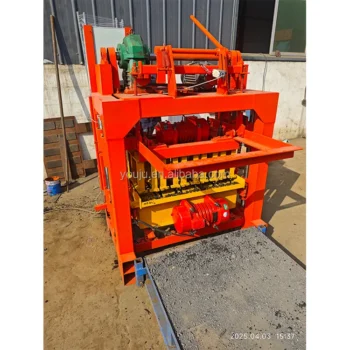
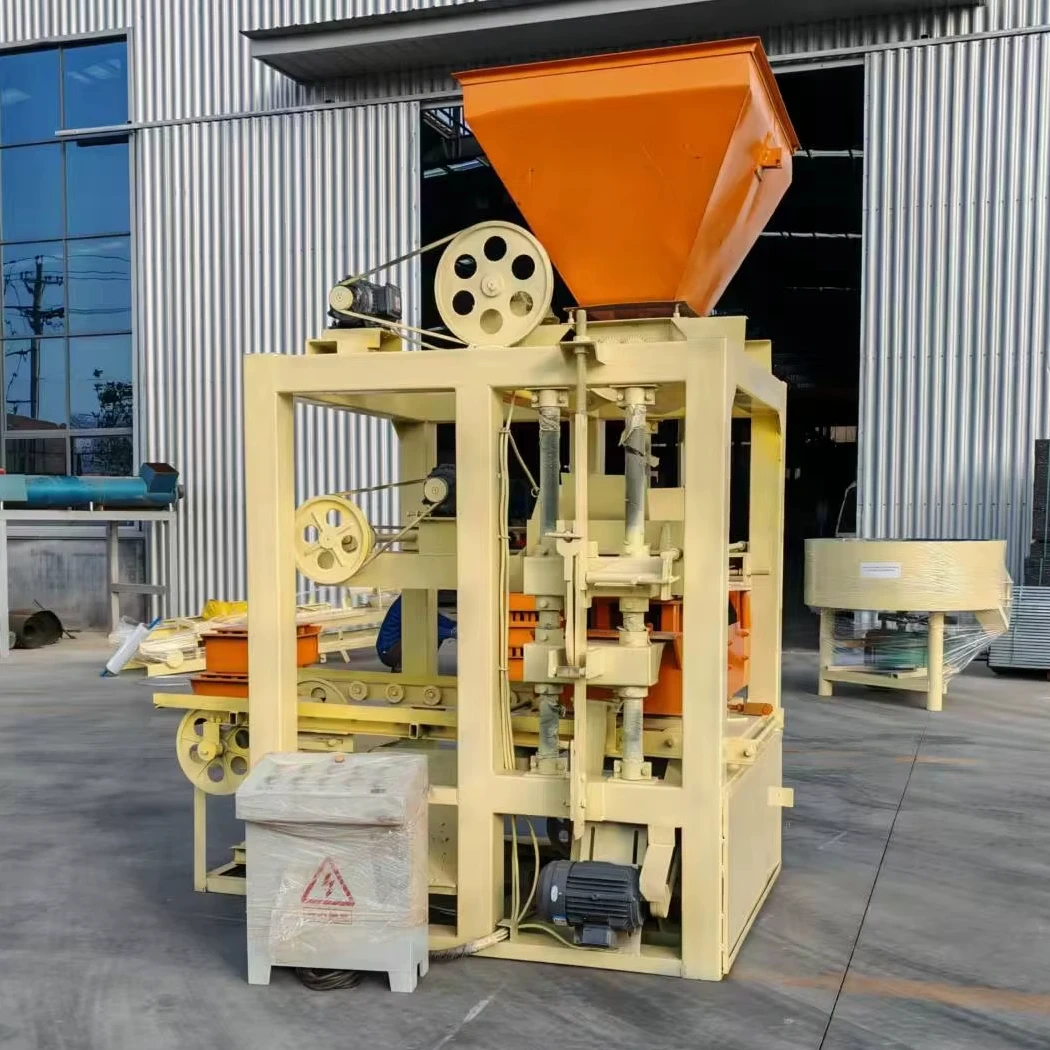
| Product Type | Semi-Automatic Stationary Concrete Block Making Machine |
| Machine Type | Stationary, platform vibration |
| Molding Type | Platform Vibration (lower + upper vibration) |
| Lower Vibration Motor Power | 2 × 3 kW |
| Upper Vibration Device Power | 1.5 kW |
| Overall Power | 14.25 kW |
| Voltage & Frequency | Configurable to buyer’s site supply (basis to be confirmed) |
| Control System | Electronic controlling part (mechanical + electronic combination) |
| Overall Dimensions | 3600 mm × 1700 mm × 2560 mm (working state) |
| Total Mass | 1750 kg |
| Pallet Size | 850 mm × 450 mm |
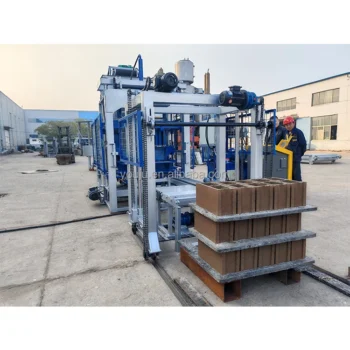
| Mould Format Examples | 390 × 190 × 190 mm (4 pcs/mould); 240 × 115 × 53 mm (21 pcs/mould) |
| Cycle Time | 24 s per cycle (basis to be confirmed — depends on block format, material, thickness) |
| Output Capacity | Basis to be confirmed — stated per actual block format and mix design |
| Elevating System | Cone-shape motor + JZQ250 speed reducer + V-belt drive |
| Delivery Device | Cycloidal pin wheel speed reducer + chain + V-belt + self-conveying frame |
| Machine Frame | Gantry style, super steel, four wear-resisting vertical guide shafts |
| Support Equipment Included | JQ350 pan mixer, 6 m belt conveyor, hand trolley |
| Optional Equipment | Auto stacker, block clamper, diesel generator, wheel loader, forklift |
| Key Features | Semi-automatic operation; manual pallet handling; optional auto stacker (3–6 layers) |
Application Suitability
| Application | Material or Output |
|---|---|
| Small-scale hollow block production | Concrete mix with crushed stone and local sand aggregate |
| Solid brick manufacturing | Cement-based mix with fine aggregate for dense bricks |
| Paving brick formats | Custom mould with high-strength concrete mix |
| On-site construction block production | Local river sand or crushed aggregate with cement binder |
| First workshop for block entrepreneurs | Low-volume start with expansion path via optional stacker |
| Adding formats to existing product range | Custom mould design to buyer drawings on the QTJ4-24 platform |
Why "Cycles per Hour" Means Nothing Without the Block Format
A cycle time only becomes useful when tied to the exact block you intend to sell.
Many quotations list a headline cycle number for the Semi-Automatic Block Machine QTJ4-24 specifications without revealing which block format that figure assumes. I recall a project in Peru where the buyer planned their entire shift schedule around a generic cycle claim, then discovered the machine ran slower on their local fine river sand than on the test aggregate used at the factory. Real daily output dropped well below the plan, and the site fell behind within the first week [NEED_CITE: block machine capacity claims and format assumptions].
The QTJ4-24’s 24-second cycle applies under specific conditions that must be verified against your target block format, material thickness, and local raw materials. When we quote this machine, every capacity figure is stated per format — hollow block, solid brick, or paver — so you can plan your shift with numbers that match your actual production reality.
Pallet Size and Curing Yard Alignment
The 850 mm × 450 mm pallet size on the QTJ4-24 is not an arbitrary catalogue default. It is selected to match the curing area dimensions and the forklift or hand trolley system the buyer already operates. A pallet too large wastes curing space; a pallet too small underutilises each cycle. For Semi-Automatic Block Machine QTJ4-24 specifications, the pallet dimension drives how many blocks cure per square metre and how efficiently your yard crew moves product from press to rack [NEED_CITE: pallet sizing for block curing operations].
Mould Format and Market Fit
The mould catalogue covers the two most common formats — 390 × 190 × 190 mm hollow blocks at four pieces per mould, and 240 × 115 × 53 mm solid bricks at twenty-one pieces per mould. Beyond these, custom mould design to buyer drawings allows the QTJ4-24 to produce paving bricks, kerbstones, or interlocking formats your local market demands. The platform vibration system, with dual 3 kW lower motors and a 1.5 kW upper device, is matched to the mould box to maintain consistent block density across formats.
How Vibration and Pressure Shape Block Strength
Platform vibration on the QTJ4-24 works through lower and upper vibration acting simultaneously on the mould box. The dual 3 kW lower motors generate the base vibration that compacts the concrete mix from below, while the 1.5 kW upper device settles the surface. Together they determine block density and compressive strength. If the vibration force does not match the buyer’s specific mix design and local aggregate gradation, blocks may emerge with inconsistent strength — a problem that surfaces only after the first batch cures. The gantry-style frame with four wear-resisting vertical guide shafts keeps the mould box aligned through every cycle, preventing uneven compaction that leads to weak edges. The 14.25 kW overall power reflects a machine sized for small-to-medium output rather than high-capacity automatic lines.
The Cost of Skipping the Aggregate Conversation
When a buyer confirms a machine order without locking down their local aggregate type, the consequences appear on day one of production. Fine river sand behaves differently in the mould box than crushed angular stone — it requires different vibration duration and sometimes a different moisture content to achieve the same block density. I have seen situations where the mix the machine was configured for simply could not be sourced locally, forcing the buyer into a costly material substitution before a single saleable block was produced [NEED_CITE: aggregate mismatch in block production].
Why Buyers Source This Line Here
The QTJ4-24 is treated as part of a matched system: machine, pallet, mould, mixer, and handling equipment are specified together rather than assembled from unrelated suppliers. Capacity calculations state the block format assumed for every output figure, never a single unqualified headline number. Mould options extend beyond standard hollow and solid formats to include custom designs based on the buyer’s market drawings. Voltage, frequency, and control language are confirmed in writing before production begins, preventing commissioning delays after the machine arrives on site.
Documentation & Verification
- Line layout and capacity calculation stating the block format assumed for each output figure
- Mould drawing and format list matching the buyer’s target product range
- Pallet specification sheet confirming 850 × 450 mm dimensions and material grade
- Voltage, frequency, and control language confirmation issued before production
- Factory test record on the buyer’s specified block format before dispatch
- Wear parts and mould list with recommended replacement intervals
Installation, Commissioning & Support
- Foundation pad sized to the QTJ4-24’s 3600 × 1700 mm footprint and 1750 kg mass
- Electrical supply confirmed to match the 14.25 kW load and buyer’s local voltage
- JQ350 pan mixer and 6 m belt conveyor positioned to feed the press without bottleneck
- First-run parameter setting calibrated to the buyer’s confirmed mix design and aggregate
- Operator training covering mould change procedure and daily maintenance checkpoints
- Wear parts stock list for vertical guide shafts and vibration motor components
What We Need to Size Your Line Correctly
To provide an accurate configuration for the QTJ4-24, share your target block format with dimensions, the local aggregate type you plan to use, and your available curing area dimensions. We also need your site voltage and frequency, preferred PLC display language, and whether your existing forklift or trolley system constrains pallet size. With these details, every capacity figure in the quotation will reflect your actual production conditions.
Frequently Asked Questions
Q: How is QTJ4-24 capacity stated per block format, and what does a realistic shift output look like?
A: Every capacity figure on the Semi-Automatic Block Machine QTJ4-24 specifications sheet is tied to a specific block format, mix design, and pallet size. Rather than quoting a single cycles-per-hour number, the proposal states realistic output for hollow block and solid brick separately, based on your confirmed aggregate and a standard eight-hour shift. This prevents the gap between quoted and actual daily production that catches many first-time buyers off guard.
Q: Which pallet size is matched to my curing yard and why is 850×450 mm chosen?
A: The 850 × 450 mm pallet is selected for the QTJ4-24 tier based on curing area efficiency and compatibility with standard hand trolleys and small forklifts. A pallet dimension mismatch wastes curing space or forces the buyer to reconfigure the yard. Before dispatch, we confirm that this pallet size aligns with your existing rack spacing and handling equipment so production flows smoothly from press to curing area.
Q: How is the machine configured against my local aggregate rather than a catalogue default?
A: The vibration duration, mix moisture range, and mould compaction settings are adjusted based on the aggregate sample and mix design you provide before production. Fine river sand, crushed stone, and volcanic scoria each behave differently under platform vibration. The QTJ4-24 is set up for your specific material so blocks reach target density and strength from the first production run, not after weeks of trial and error.
Q: What documentation ships with the QTJ4-24 before dispatch?
A: The documentation package includes a line layout with per-format capacity calculations, mould drawings, pallet specification, electrical schematic with confirmed voltage and language, factory test record on your block format, operation manual, and a wear parts list. This ensures commissioning proceeds without delays caused by missing or mismatched technical information when the Semi-Automatic Block Machine QTJ4-24 specifications are verified on site.