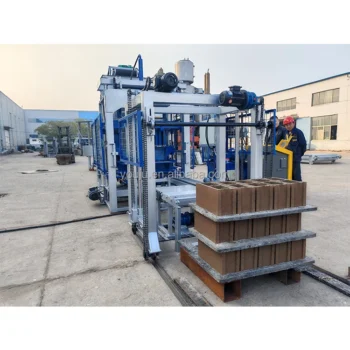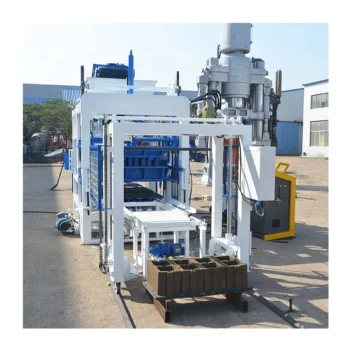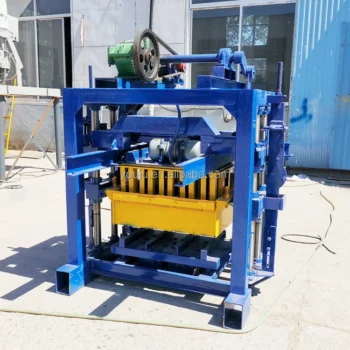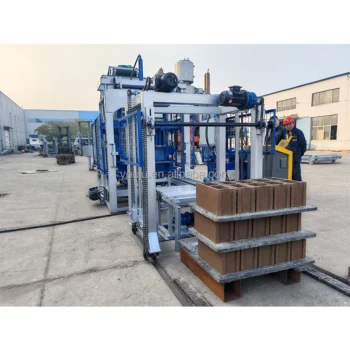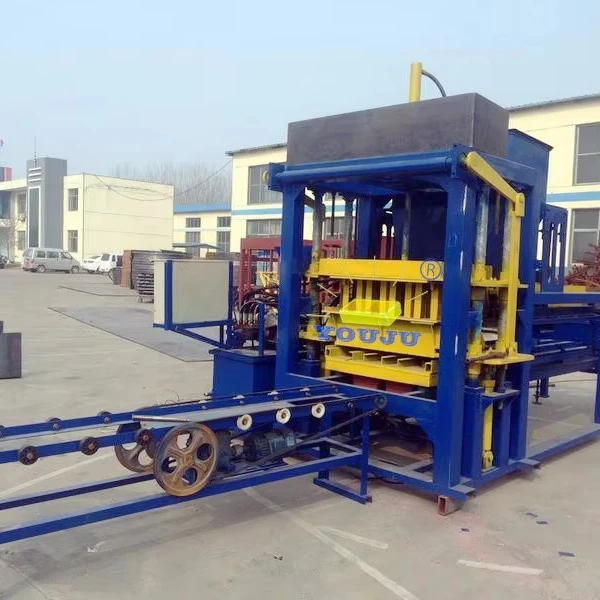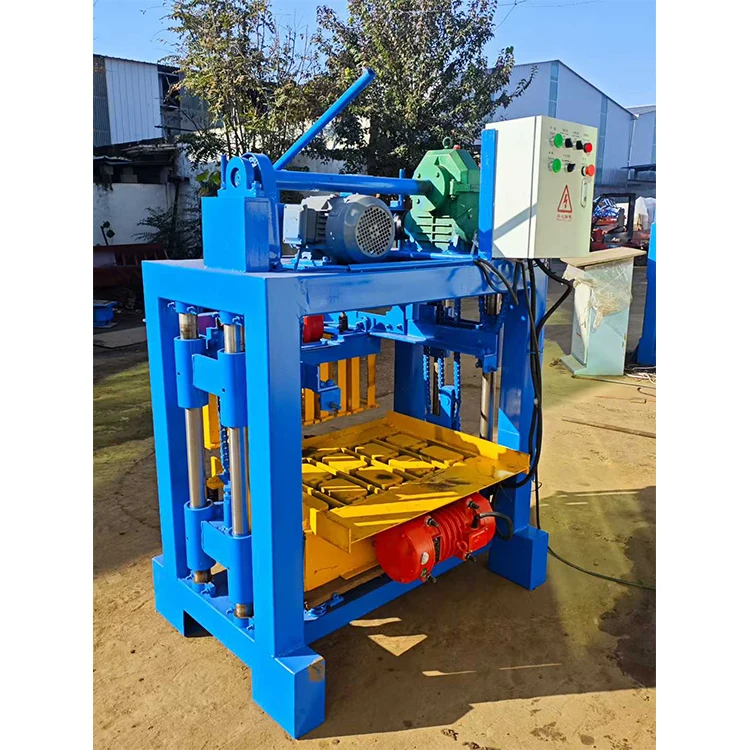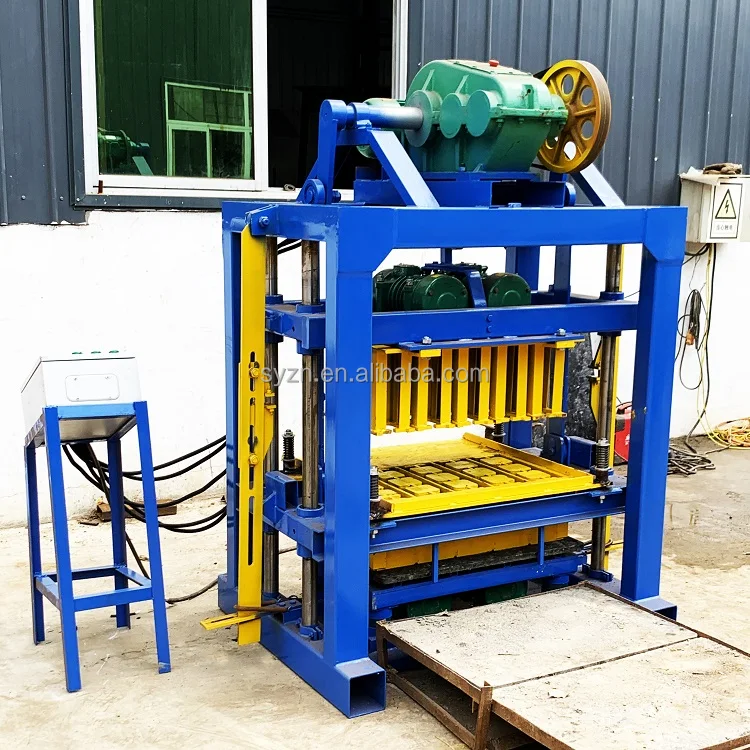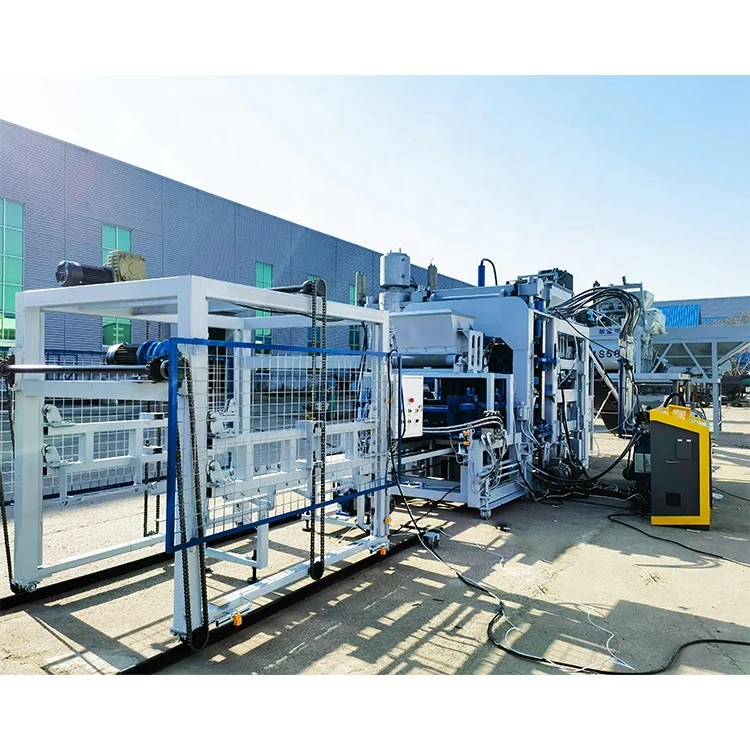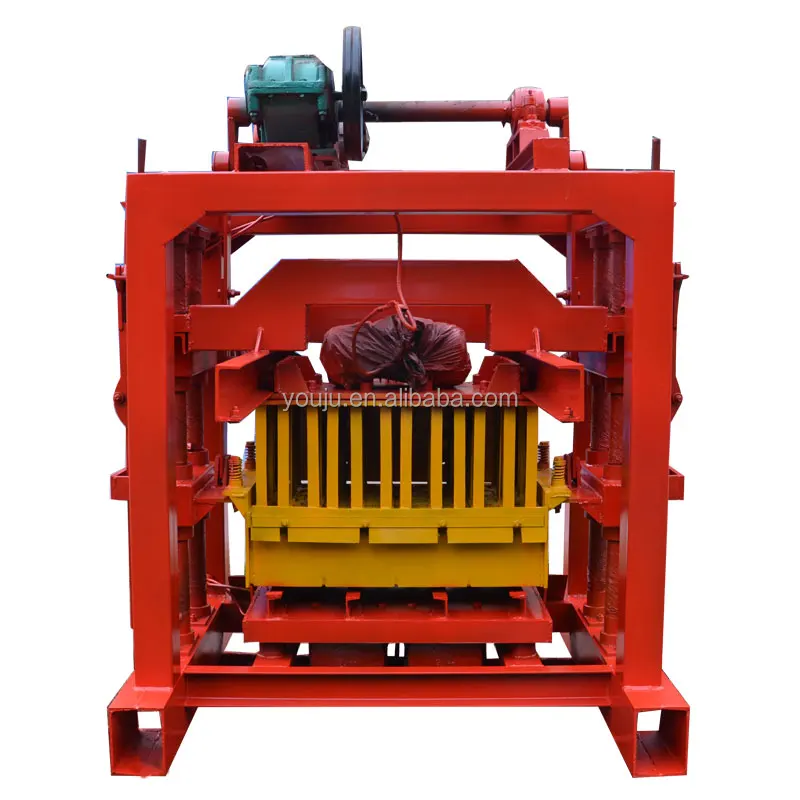
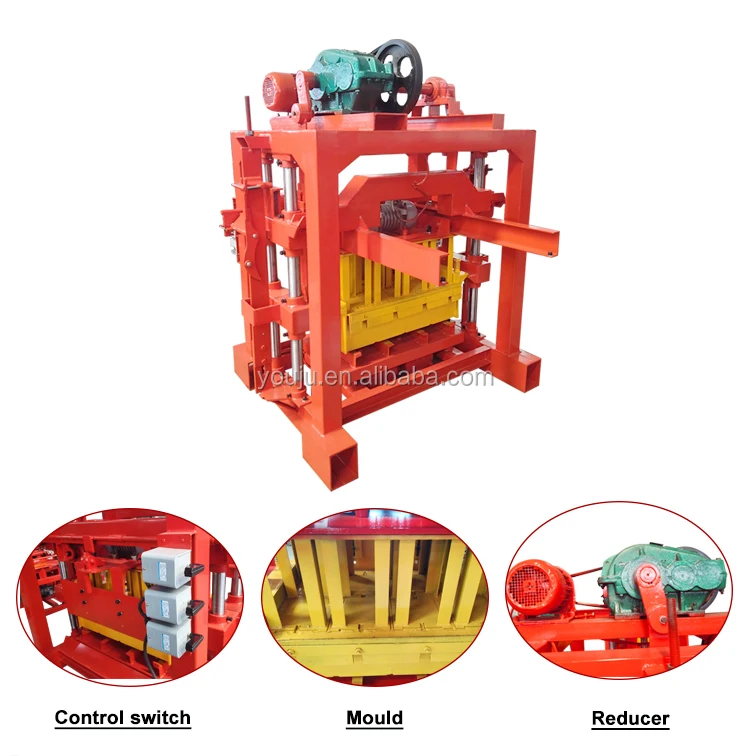
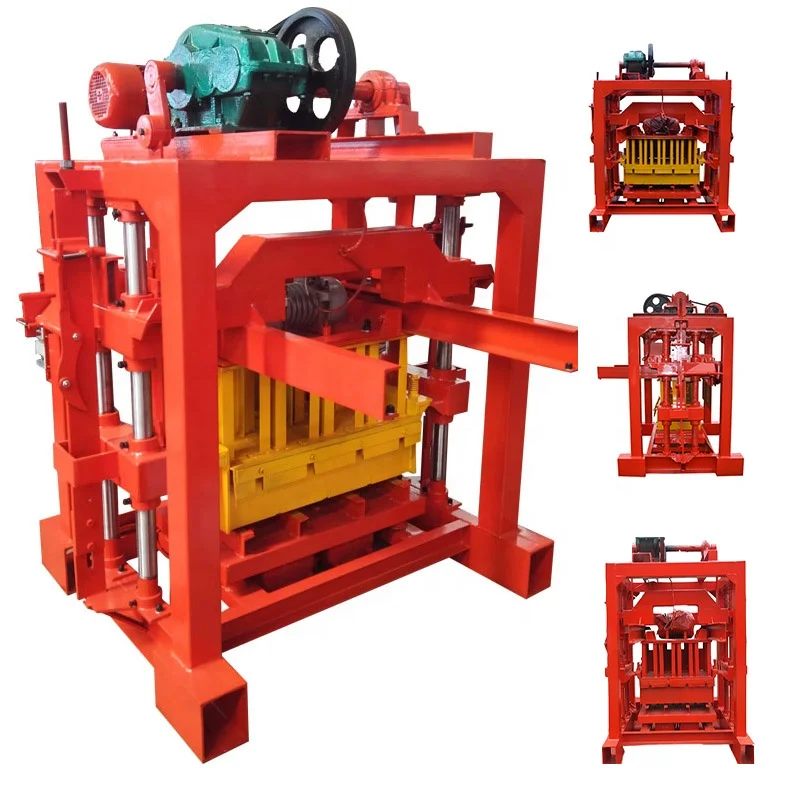
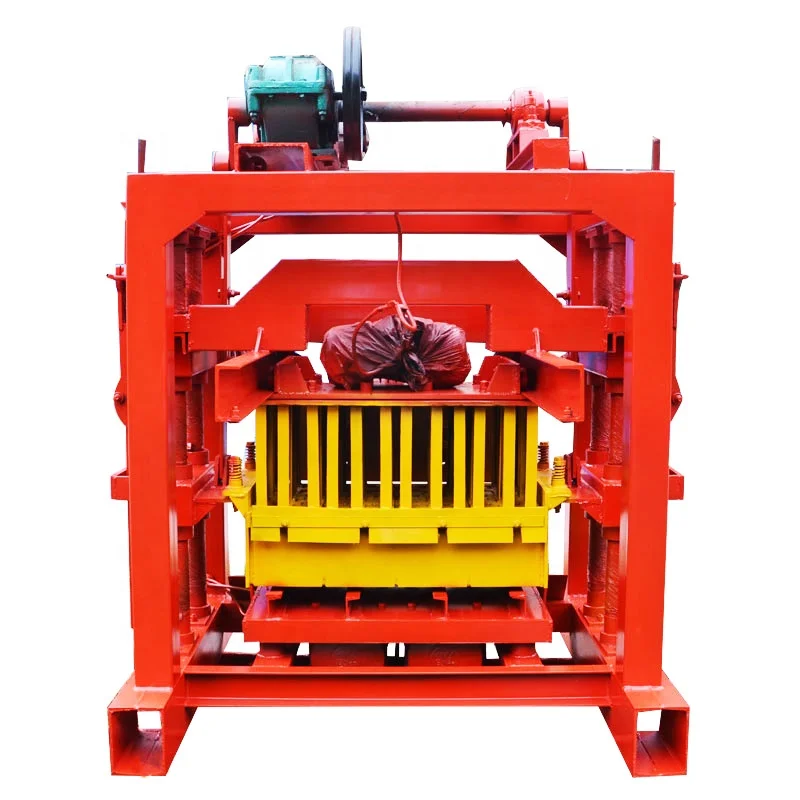
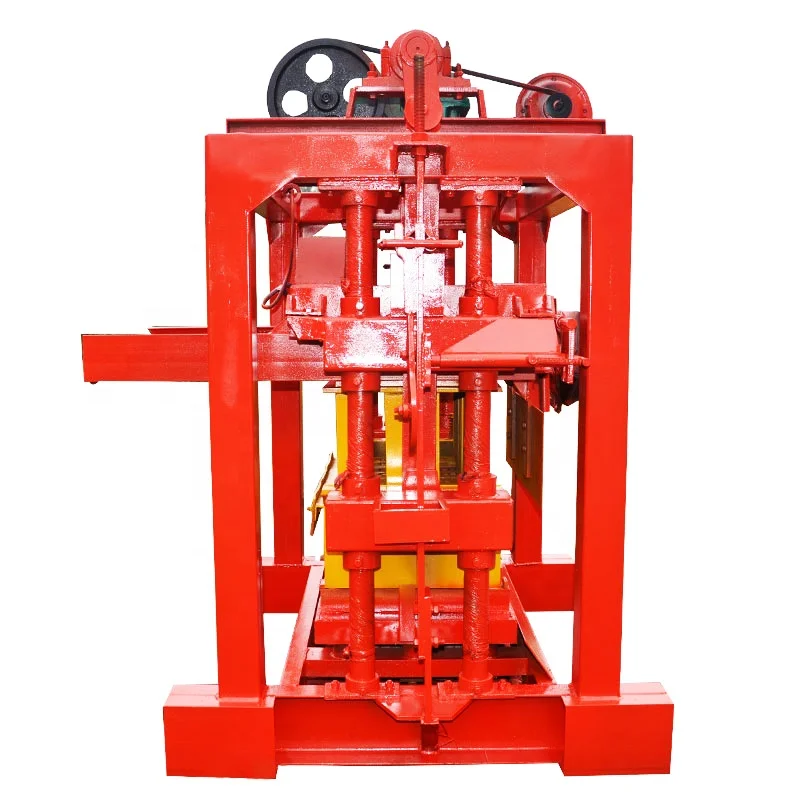
Description
Matched Mould Cavity Output — The QTJ4-40 block machine capacities are stated against a specific hollow block format and cycle, so your daily target calculation holds when production starts.
Technical Specifications
| Parameter | Value |
|---|---|
| Model | QTJ4-40 |
| Product Type | Manual Concrete Block Making Machine |
| Rated Power | 10.4 kW |
| Overall Dimensions (L×W×H) | 1350 × 1460 × 1800 mm |
| Molding Cycle | 40 seconds |
| Pallet Size | 850 × 450 × 20 mm |
| Vibration Frequency | 2800 r/min |
| Total Mass | 1200 kg |
| Vibration System | Table vibration feeding, fluctuation vibration molding, upper and lower vibrators |
| Control System | Electrical control with mechanical-electric interlock (PLC type to be confirmed) |
| Automation Level | Manual / mechanical and electric combination |
| Output Capacity | 2,400 pcs/hour, 19,200 pcs/day (basis: 400×200×200 mm hollow block, 5 pcs/mould) |
| Standard Configuration | Host machine ×1, Block mould ×1, JQ350 mixer ×1 |
| Stacking Method | Manual |
| Voltage & Frequency | To be confirmed with buyer site requirements |
| Certification | To be confirmed |
Application Suitability
| Application | Material or Output |
|---|---|
| Small-scale hollow block plant | Crushed stone, sand, cement and water mix for 400×200×200 mm hollow blocks |
| On-site block production for housing projects | Local aggregate and cement producing structural wall blocks at project location |
| Entry-level concrete product manufacturer | Hollow block format added to an existing yard using the same curing racks and forklift |
What "19,200 Blocks per Day" Actually Requires
The daily figure assumes a 40-second cycle producing 400×200×200 mm hollow blocks at five cavities per mould — change the block size or the mix, and the number changes with it.
Many quotations list a headline output without naming the block format behind it. When the machine arrives and the buyer switches to a smaller solid block or a paving format, the real throughput drops because the mould cavity count and cycle time are different. I once saw a contractor order a stationary block machine on the strength of a single capacity number, only to discover his local aggregate — a high-clay river sand — needed longer vibration to compact fully. The 40-second cycle had to stretch, and daily output fell accordingly [NEED_CITE: effect of aggregate clay content on vibration cycle time]. That mismatch between catalogue output and site reality is the reason the QTJ4-40 block machine specifications here tie every number to a named format.
Honest Capacity by Block Format
The output figures for this manual concrete block machine are calculated from a fixed set of variables: five cavities per mould for a 400×200×200 mm hollow block, a 40-second pressing cycle, and manual pallet handling between presses. If you switch to a smaller solid block where the mould holds more cavities, the per-cycle count rises but the demoulding time may differ. The honest approach is to ask which format your market actually buys and size the machine to that format, not to a best-case headline [NEED_CITE: block format selection and mould cavity planning].
Matching the Mixer to the Press Cycle
The JQ350 pan mixer included in the base configuration is sized to feed the QTJ4-40 continuously. A mixer that is too small forces the press to idle between batches; one that is too large lets the mix sit and lose workability before it reaches the mould. The 10.4 kW total rated power covers both the press vibration and the mixer drive, so a single supply circuit can run the pair from day one without an extra motor starter panel.
Vibration Force, Pallet Size and Block Density
The 2800 r/min vibration frequency delivered through upper and lower vibrators compacts the concrete mix from both directions, which matters when local aggregate is angular or poorly graded. Table vibration feeds material into the mould cavity while fluctuation vibration densifies it during the 40-second cycle. The 850×450×20 mm pallet must be checked against your existing curing rack spacing — if your racks are built for a different pallet width, blocks will not slot in without re-racking, adding manual handling time. Forklift tine width should also accommodate the 850 mm pallet length with margin [NEED_CITE: pallet sizing and curing rack compatibility in block plants].
When the Wrong Specification Costs a Production Day
Ordering without confirming voltage and frequency means the motor may not start on arrival — or worse, it starts and burns out within a week. A control panel in a language the operator cannot read turns a simple cycle adjustment into guesswork. Pallets specified without checking the curing area force the buyer to rebuild racks or stack blocks by hand on the ground, negating the labour advantage of a stationary machine. These are not theoretical issues; they appear regularly when the pre-order checklist is skipped [NEED_CITE: commissioning delays caused by unconfirmed electrical specifications].
Why Buyers Specify With Us
Block machinery is our single focus, so the QTJ4-40 is quoted as a matched system — press, mould, pallet and mixer — rather than assembled from separate suppliers. Every capacity line in the proposal names the block format, cavity count and cycle time behind the number. Mould drawings and format lists ship with the quotation so you can verify change-over procedure before you commit. Voltage, frequency and control display language are confirmed in writing before production begins. Installation support includes operator training on the specific block format your market demands, and a wear parts and mould availability list is provided at order so the first replacement does not halt production.
Documentation & Verification
- Capacity calculation sheet naming block format, cavity count and 40-second cycle behind each output figure
- Mould drawing and format list confirming change-over procedure for the QTJ4-40
- Pallet specification showing 850×450×20 mm dimensions matched to curing rack layout
- Voltage, frequency and control language confirmation document signed before production
- Factory test record on your specified block format before dispatch
- Wear parts and mould list with part numbers for first replacement order
Installation, Commissioning & Support
- Foundation pad sized to the 1350×1460 mm footprint with anchor bolt pattern drawing supplied
- Dedicated 10.4 kW circuit at confirmed voltage and frequency for press and JQ350 mixer together
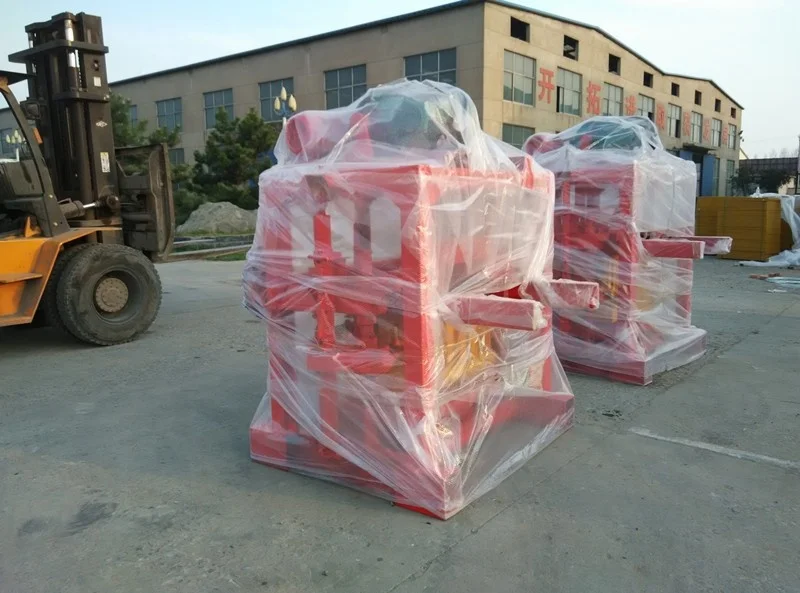
- Machine shipped as a single unit; pallet rack and mixer bolt on at site
- First-run commissioning on buyer’s local aggregate to verify block density and cycle time
- Operator training covering mould change procedure and mechanical-electric interlock operation
- Spare vibration pads and mould wear plates identified in the wear parts list at order
Before You Request a Quote
To size the QTJ4-40 manual concrete block machine to your project, share the block format your market buys most, your target daily output, and the local aggregate you plan to use. Confirm your site voltage, frequency and preferred control panel language so electrical specifications are locked before production. If you already have curing racks and a forklift, send their dimensions — the 850×450 mm pallet must fit both.
Frequently Asked Questions
Q: How is the 19,200 pcs/day figure calculated, and does it hold for a smaller solid block?
A: That figure comes from five cavities per mould on a 400×200×200 mm hollow block, pressed every 40 seconds across an eight-hour shift. Switch to a solid block and the cavity count changes, so daily output must be recalculated for that format.
Q: Is the QTJ4-40 purely mechanical vibration or does it use hydraulic pressure?
A: The QTJ4-40 uses mechanical vibration through upper and lower vibrators at 2800 r/min without a separate hydraulic pressing system. Block strength therefore depends on vibration time and mix design matched to your local aggregate.
Q: What curing rack spacing and forklift capacity should my site have for the 850×450 mm pallet?
A: Rack slots must accept an 850 mm long by 450 mm wide pallet with clearance above the block height. Forklift tines should span the pallet width and lift a loaded pallet weight that includes the 20 mm pallet itself plus wet blocks.
Q: Which block formats can the QTJ4-40 mould set cover, and are custom moulds supported?
A: The standard mould produces 400×200×200 mm hollow blocks. Additional formats and custom mould drawings can be supplied to match your market; confirm cavity count and change-over time before ordering extra moulds.