
Description
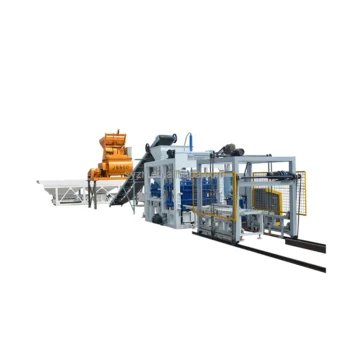
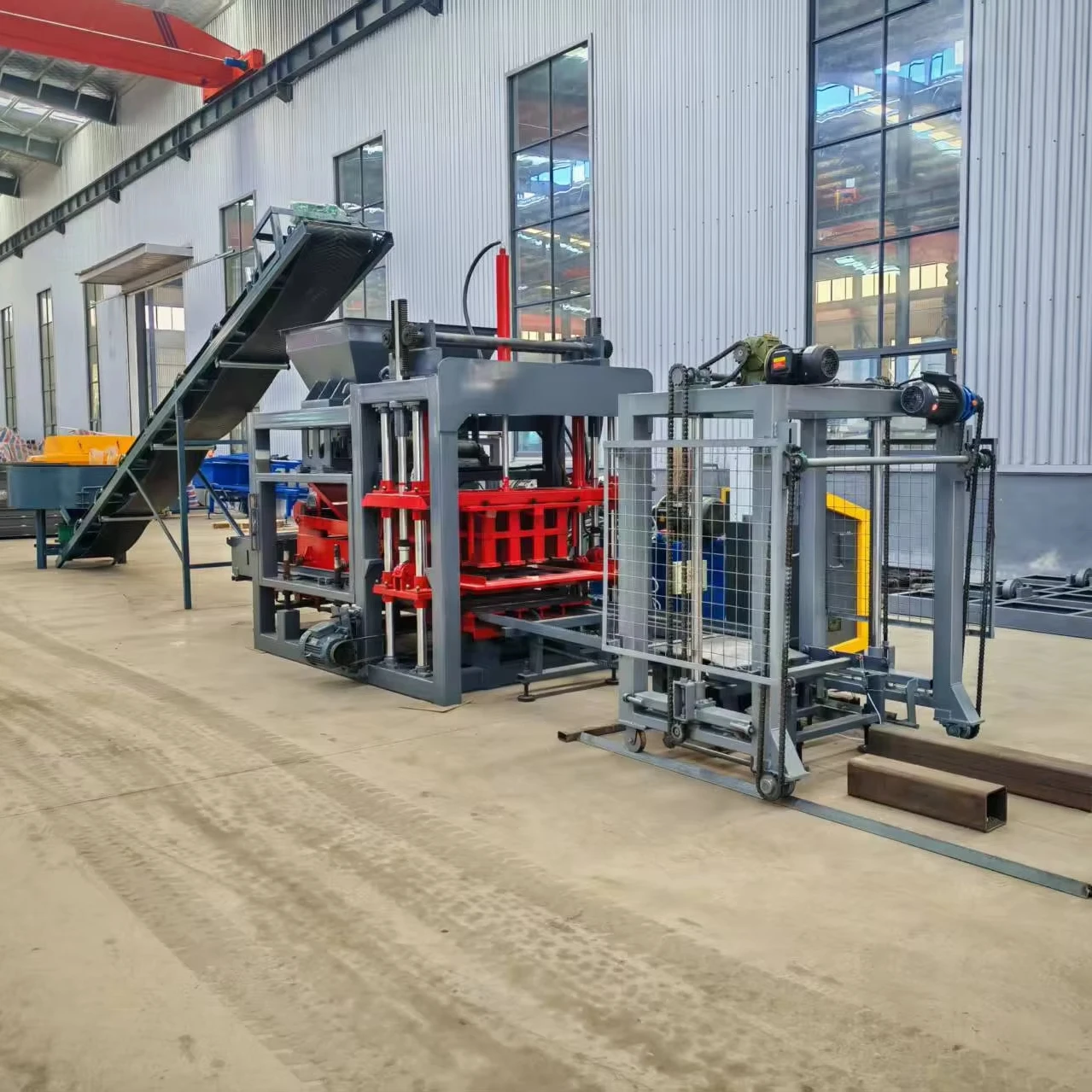
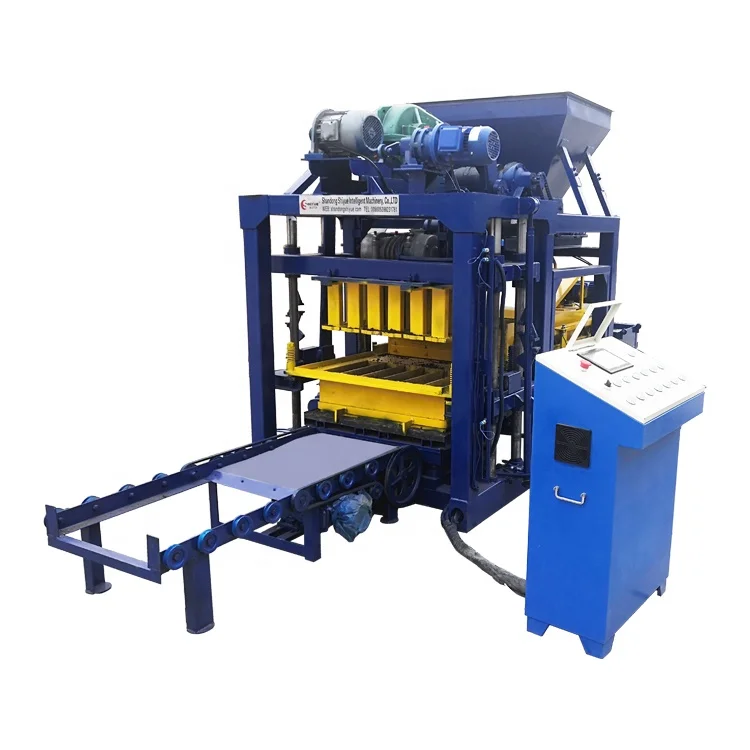
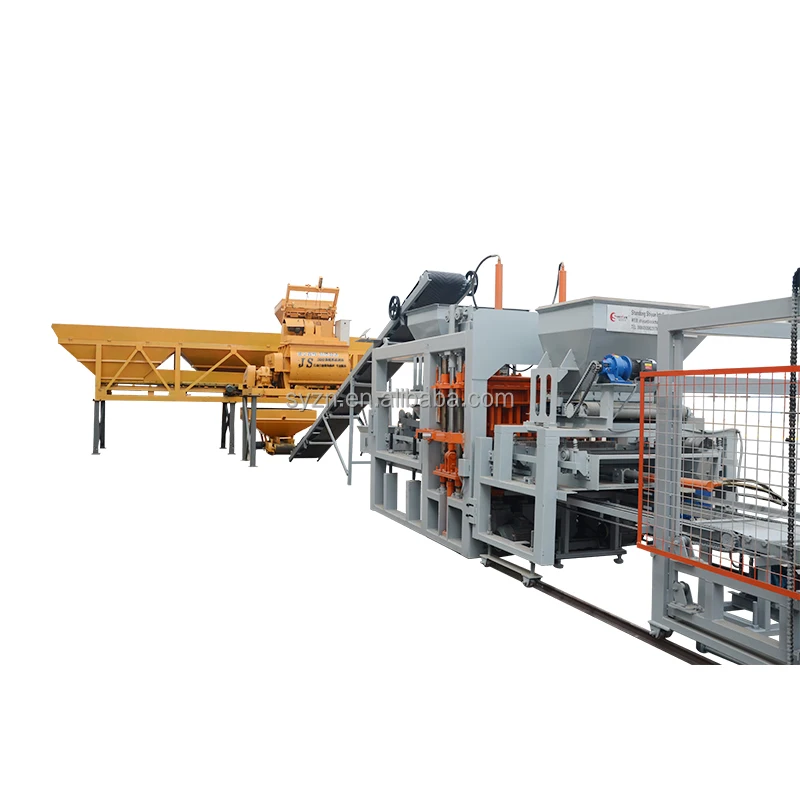
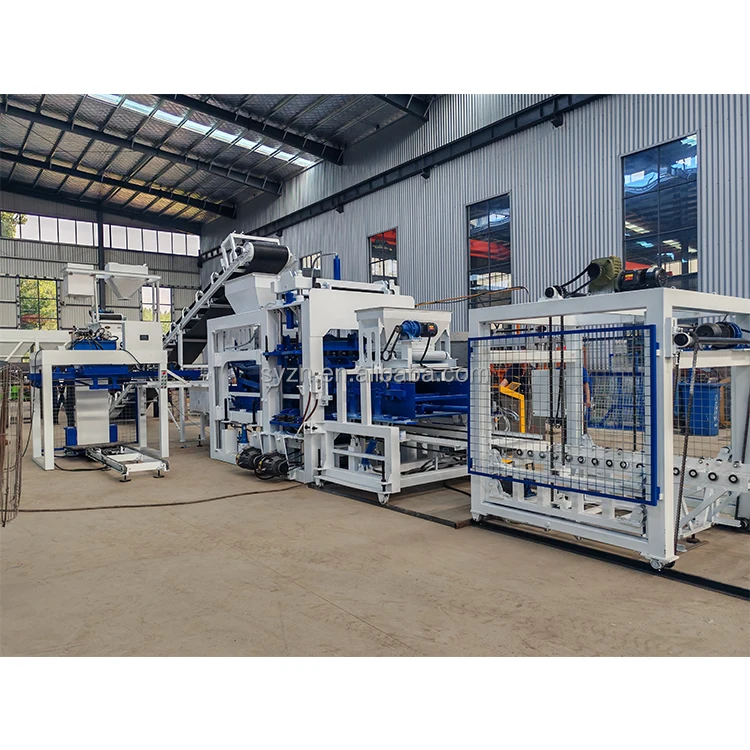
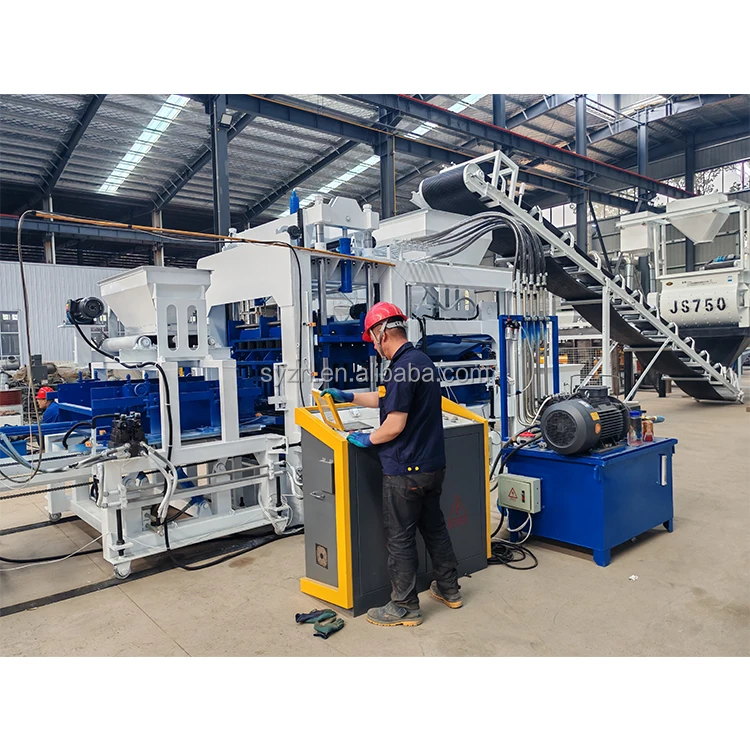
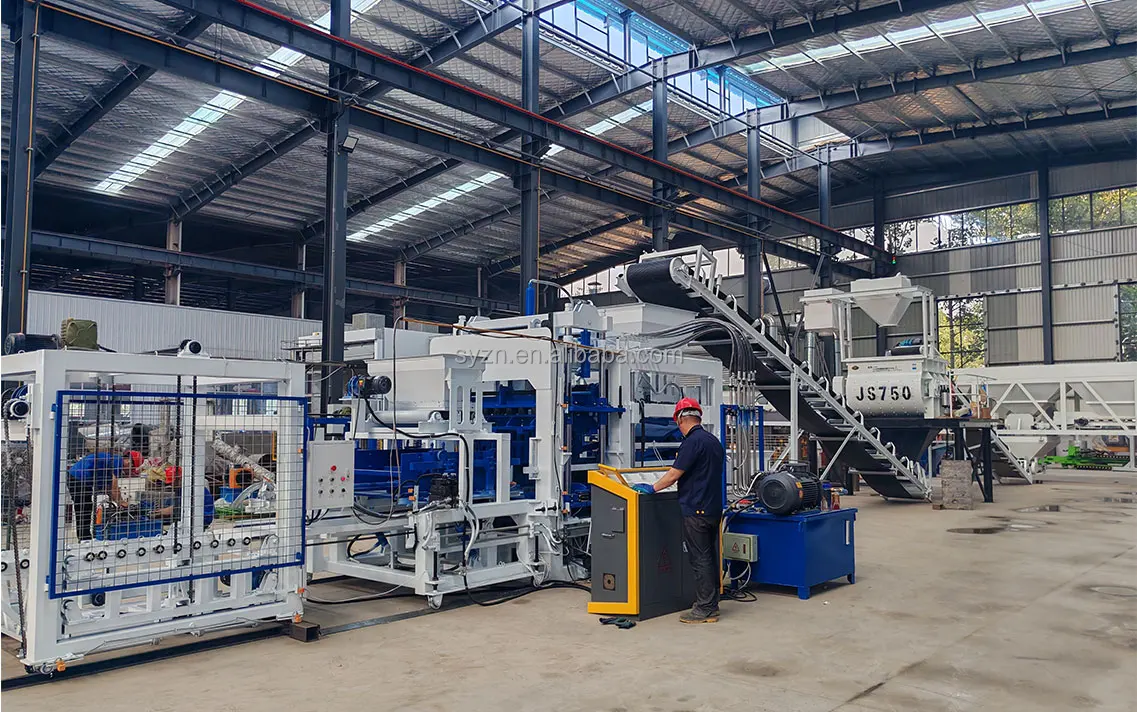
Matched System Configuration — Machine, mould, pallet and handling are specified as one integrated set for the QT8-15, not sourced separately and forced to fit together on your floor.
Technical Specifications
| Parameter | Value |
|---|---|
| Model | QT8-15 |
| Product Type | Hydraulic Block Making Machine |
| Overall Dimensions (L×W×H) | 8300 × 1860 × 3000 mm |
| Rated Hydraulic Pressure | 21 MPa |
| Main Vibration Form | Platform Vibration |
| Vibration Force | 45 KN |
| Vibration Frequency | 2800–4500 r/min |
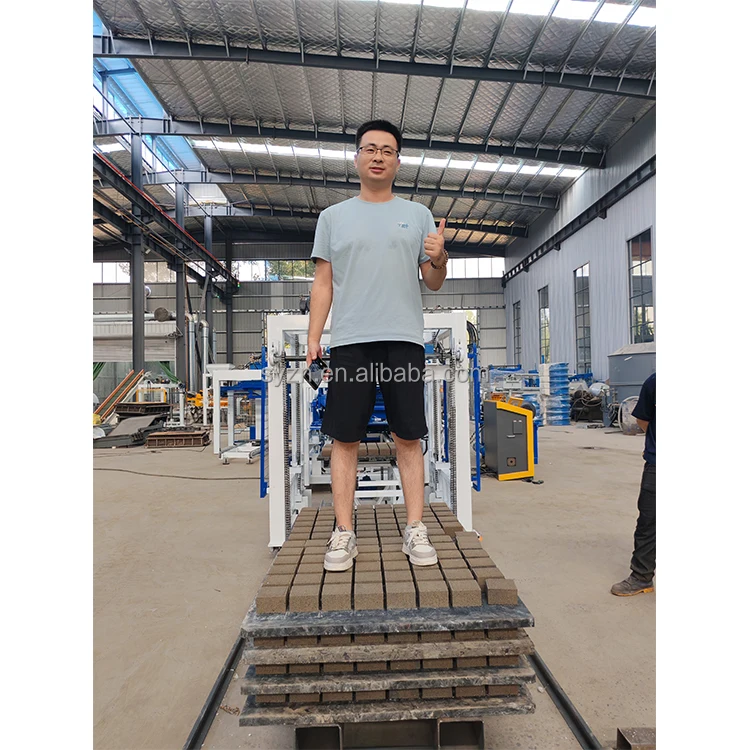
| Pallet Size | 950 × 900 mm |
| Molding Cycle | 15–20 s (basis to be confirmed) |
| Overall Power | 55.5 kW |
| Total Mass | 8 T |
| Demolding Method | Hydraulic |
| Recommended Factory Area | 300 m² |
| Raw Materials | Crushed stone, sand, cement, dust, fly ash, gravel, slag |
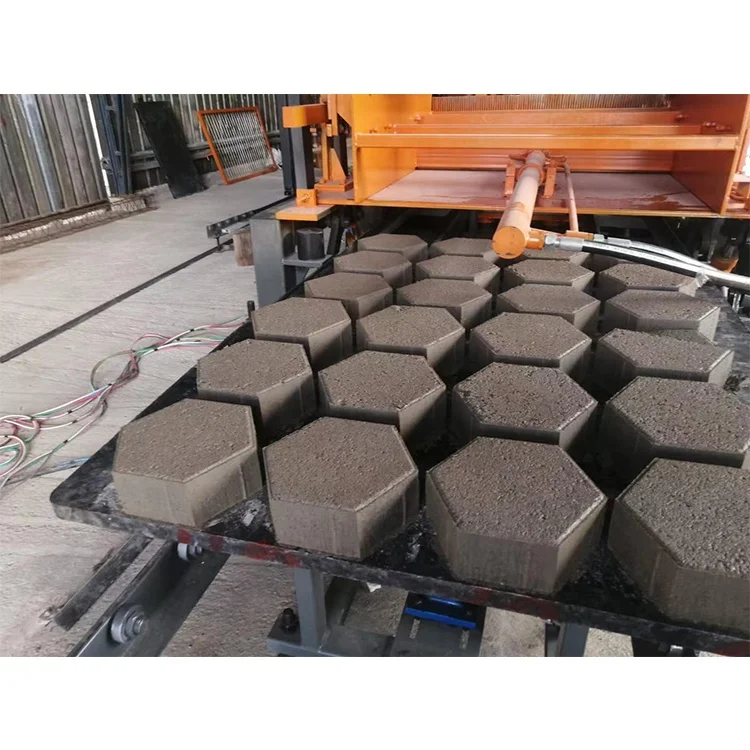
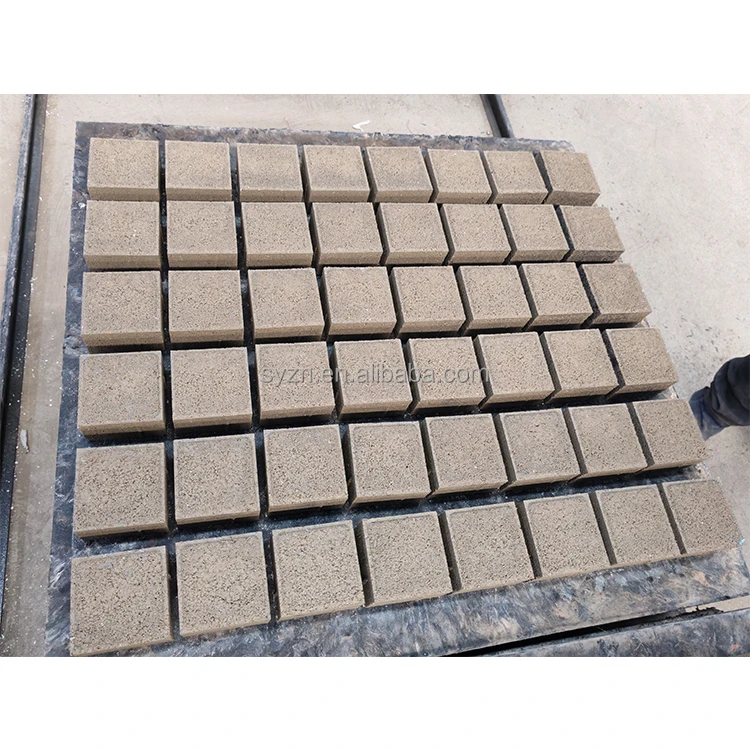
| Applied Products | Concrete blocks, hollow/solid blocks, pavers, interlocking blocks, kerbstones, colored pavers |
| Output Capacity | Capacity table available; per-format basis to be confirmed |
| Voltage & Frequency | Configurable to buyer market (confirm before shipment) |
| Control System | PLC (brand and display language to be confirmed) |
| Automation Level | Selectable from semi-automatic to fully automatic stacking |
| Mould Change Time | To be confirmed |
| Certification | CE declaration where applicable |
| Warranty | 1 year (whole machine, excluding wear parts) |
| Loading | 1×40HQ container (basic equipment) |
Application Suitability
| Application | Material or Output |
|---|---|
| Hollow block production for residential walls | Crushed stone, sand, cement, fly ash blends |
| Solid block production for load-bearing structures | Dense aggregate and cement mixes |
| Paving block manufacturing for roads and walkways | Colored or standard concrete mixes with fine aggregate |
| Interlocking brick production for retaining walls | Sand, cement, and dust combinations |
| Kerbstone forming for curb and gutter applications | Coarse gravel and cement formulations |
| On-site production for housing projects | Locally sourced sand, gravel, and cement |
What "15–20 Second Cycle" Actually Means for Your Daily Output
A cycle time without a stated block format is a number that means nothing on the factory floor.
When I was commissioning a mid-sized block plant in Southeast Asia, the owner had ordered a machine rated at a cycle that looked impressive on paper. Once we started running his actual hollow blocks with the local river sand, the vibration time had to be extended because the high clay content in the aggregate dampened the platform resonance. The QT8-15 block making machine specifications list a 15–20 second molding cycle, but that figure depends entirely on which block format you are pressing, what your mix design looks like, and how your local aggregate behaves under vibration. Without locking these variables down before the order is placed, buyers routinely find their real daily throughput falling well below what the brochure suggested. [NEED_CITE: effect of aggregate gradation on vibration compaction time]
Matching the Mould Set to the Formats Your Market Actually Buys
The QT8-15 accommodates multiple mould formats on a single 950×900 mm pallet, covering hollow blocks, solid blocks, pavers, interlocking bricks, and kerbstones. The real question is which of these formats your local market demands and in what proportion. A buyer producing primarily hollow blocks for residential construction needs a different mould set and cycle configuration than one focused on colored paving blocks for municipal contracts. The QT8-15 block making machine specifications serve as the starting point; the actual production plan should dictate which moulds ship with the machine.
How Platform Vibration Interacts with Your Local Aggregate
Platform vibration delivers force upward through the pallet, compacting the concrete mix from below. The 45 KN vibration force and the 2800–4500 r/min adjustable frequency range on the QT8-15 allow operators to tune the compaction profile to different mix densities. Coarse gravel blends typically need higher amplitude at lower frequency, while fine sand mixes with fly ash benefit from higher frequency to achieve uniform consolidation. Getting this wrong means blocks that crumble at the edges or fail compression testing. [NEED_CITE: vibration compaction principles for concrete block production]
Reading the Numbers That Matter Beyond the Brochure
The 21 MPa rated hydraulic pressure and 45 KN vibration force work together to determine the density and strength of the finished block. Hydraulic pressure controls the compression phase, while vibration eliminates voids within the mix. If either parameter is mismatched to your aggregate, you get inconsistent results — strong blocks on Monday and friable ones on Wednesday when the sand moisture changes. The 55.5 kW overall power rating reflects the energy needed to drive both systems simultaneously across a 15–20 second cycle. The 8-ton total mass provides the static weight needed to keep the platform vibration contained within the mould area rather than dissipating into the foundation. A 300 m² factory area recommendation accounts for the press footprint, pallet return path, and basic curing rack space. The 950×900 mm pallet size must align with your existing forklift capacity and curing yard dimensions before the order is finalized, because changing pallet size after installation is not a simple adjustment.
When Pallet Size Is Decided Without Looking at Your Curing Yard
A buyer once received a block line configured with pallets that were too large for his existing forklift and curing racks. The pallets arrived, the machine produced blocks, but the curing area could not accommodate them. Workers ended up offloading blocks by hand onto the floor, negating any efficiency the machine offered. The 950×900 mm pallet on the QT8-15 is not arbitrary — it must be confirmed against your actual material handling equipment and curing infrastructure before production starts. Overlooking this step turns a well-engineered press into a bottleneck that no amount of automation upstream can fix. [NEED_CITE: pallet handling compatibility in block production lines]
Why This Configuration Approach Works for Your Project
Block machinery as a single focus means the QT8-15 press, its mould set, pallets, and handling equipment are specified as one matched system rather than assembled from unrelated suppliers. The configuration is set against your actual mix design and local aggregate, not pulled from a catalogue default that assumes materials you cannot source. Mould design covers the formats your market actually sells, with custom drawings available when standard options do not match. The automation level is selectable, so a buyer can start with semi-automatic pallet handling and add automatic stacking and cubing later as production volume justifies it. Installation support includes on-site commissioning with operator training, so the team running the machine understands how to adjust vibration frequency and hydraulic pressure when raw material batches vary.
Documentation & Verification
- Line layout and capacity calculation stating the block format assumed for each output figure
- Mould drawing and format list confirming which block types the quoted set covers
- Pallet specification matched to your curing area dimensions and forklift rating
- Voltage, frequency, and PLC display language confirmed in writing before production
- Factory test record on your specified block format before dispatch
- Hydraulic and electrical schematic for on-site maintenance reference
Installation, Commissioning & Support
- 300 m² factory area requirement verified against your actual site dimensions and ceiling height
- 55.5 kW power draw confirmed against your local supply capacity and dedicated circuit rating
- Machine dismantled into 1×40HQ container loading with reassembly sequence documented
- On-site commissioning includes vibration frequency tuning to your specific aggregate blend
- Operator training covers hydraulic pressure adjustment and mould change procedure
- Wear parts list with hydraulic seals and vibration motor bearings identified for first-year stocking
What We Need from You to Size This Correctly
Before quoting, we need your target block format, the daily volume you plan to produce, and a sample or description of your local raw materials — particularly the sand or fine aggregate source and its typical moisture and clay content. Your available voltage and frequency, along with the preferred PLC display language, should be confirmed early so the control panel is built to match. If you already have forklifts and curing racks on site, share their specifications so the pallet size and handling equipment are selected to integrate with what you have.
Frequently Asked Questions
Q: How is the QT8-15 output capacity calculated for different block formats?
A: Capacity varies significantly between hollow blocks, pavers, and interlocking bricks because each format has a different cavity volume, compaction requirement, and demolding behavior. We provide a capacity table stating the assumed block format, mix design, and cycle time for each figure, so you can match the calculation to your actual production plan rather than relying on a single generic number.
Q: Which mould formats fit the 950×900 mm pallet, and how is mould change handled?
A: The pallet accommodates hollow blocks, solid blocks, paving blocks, interlocking bricks, and kerbstones. Mould change time depends on the specific mould design and whether quick-release clamps are included in your configuration. We confirm which formats ship with the machine and provide drawings for each, along with the changeover procedure during commissioning.
Q: How do you match vibration settings to my local aggregate?
A: During configuration, we review your aggregate gradation, moisture content, and clay percentage. The adjustable 2800–4500 r/min frequency range and 45 KN vibration force are then set to a starting point that suits your mix. Fine-tuning happens on-site during commissioning, where we run test cycles and adjust until block density and surface finish meet your strength requirements.
Q: What electrical and control details must be confirmed before production begins?
A: Voltage, frequency, and PLC display language all need to be locked in writing before the control panel is built. Sending a machine with the wrong voltage or an unreadable interface delays commissioning by weeks. We confirm these details during the proposal stage and document them in the specification sheet that accompanies your order.