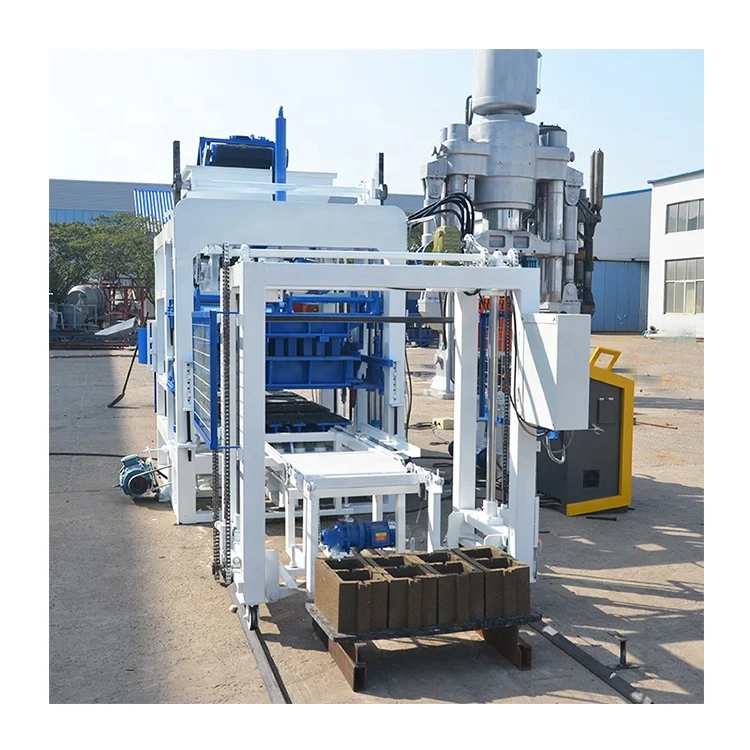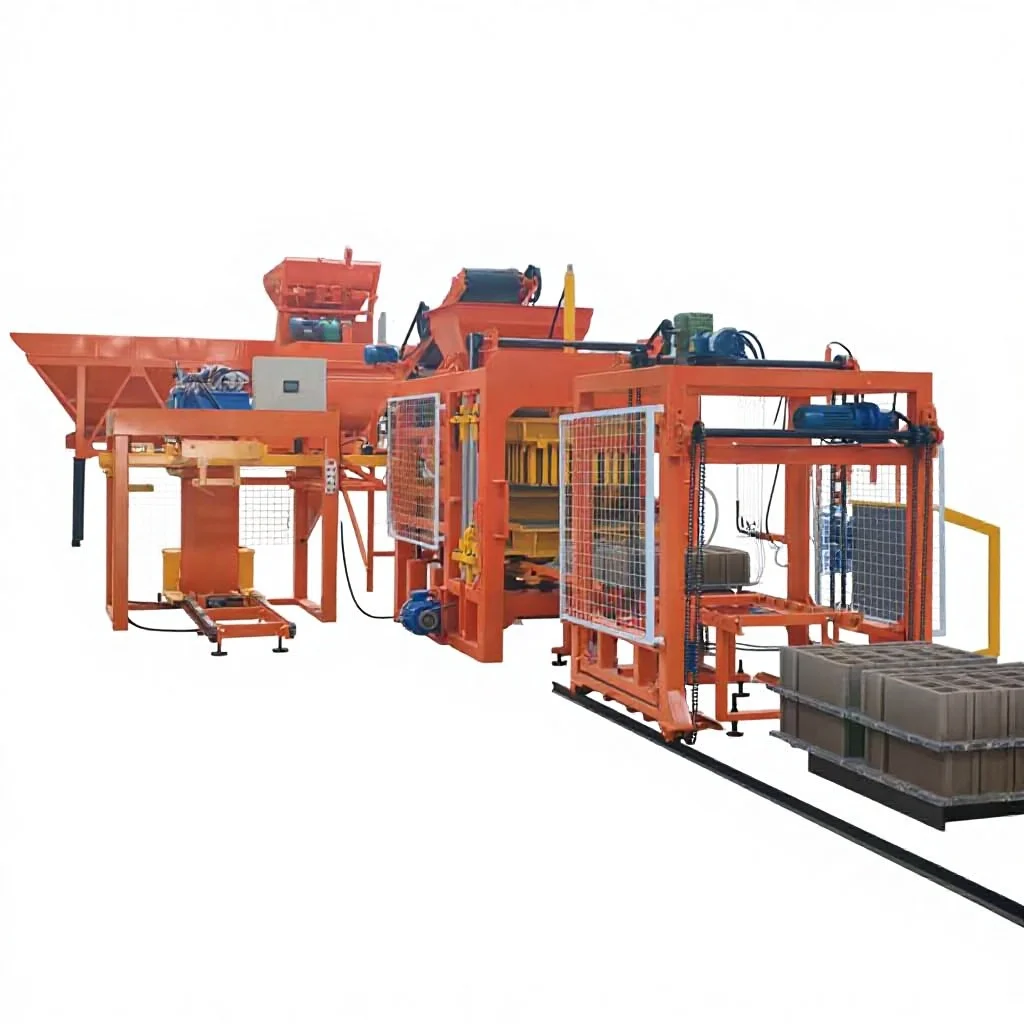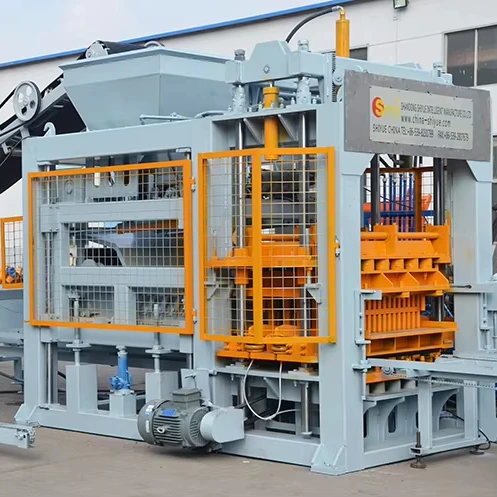
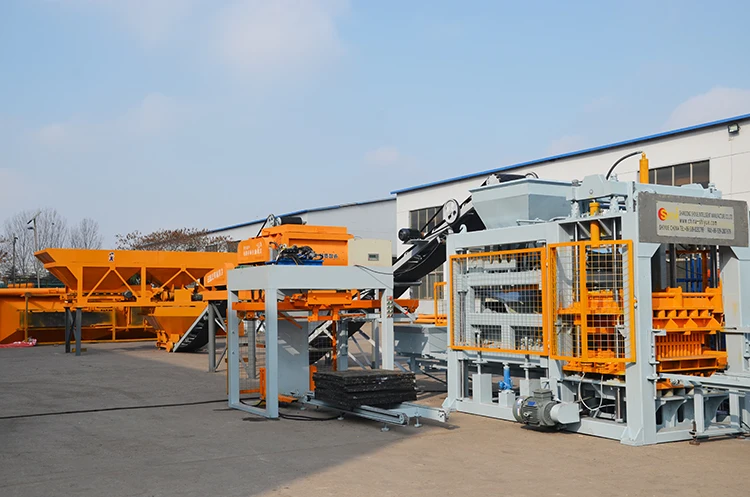
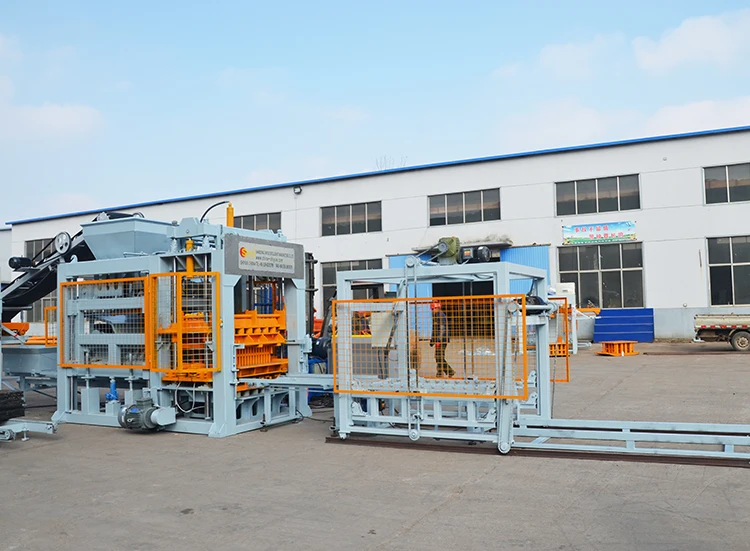
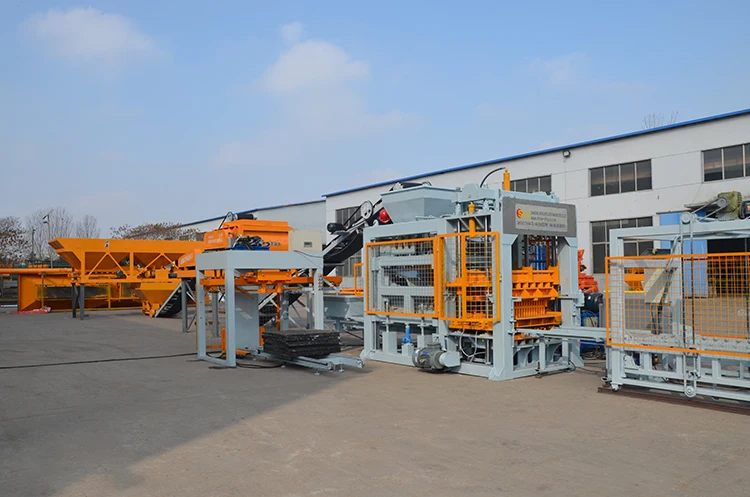
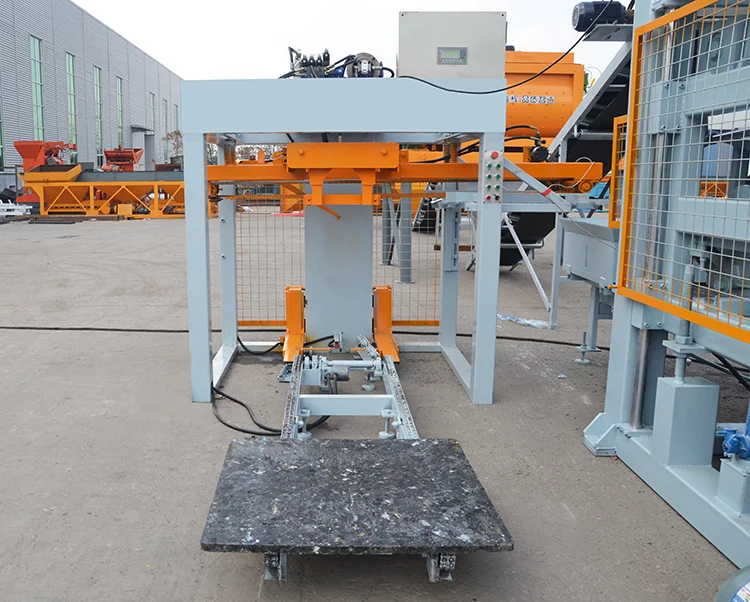

Description
Format-Matched Output — cycle time and daily capacity are calculated per block format and local aggregate, not pulled from a single catalogue line, verified before the QT8-15 ships.
Technical Specifications
| Parameter | Value |
|---|---|
| Model | QT8-15 |
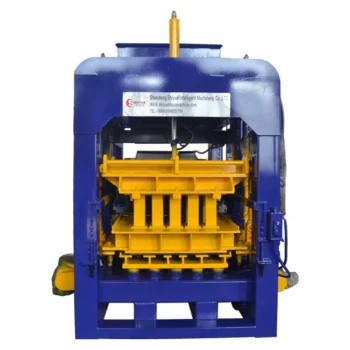
| Product Type | Automatic Concrete Block Making Machine |
| Dimension of Host Machine | 5870 × 2220 × 2850 mm |
| Weight of Host Machine | 10 Tons |
| Molding Area | 950 × 900 mm |
| Host Machine Power | 47 kW |
| Vibration Force | 100 kN |
| Vibration Method | Hydraulic + Platform Vibration |
| Vibration Frequency | 2800–4500 Times/Minute |
| Molding Period | 15 Seconds (basis to be confirmed by block format) |
| Pallet Size | 950 × 900 × 25 mm |
| Voltage | 220 / 380 / 415 / 440V (Customized) |
| Control System | Siemens PLC with independently developed control program |
| Travel Switch | France Schneider / Japan Omron |
| Motor Brand | Germany SIEMENS or CE standard brand |
| Mould Hardness | 54–58 HRC (heat treatment + carburizing) |
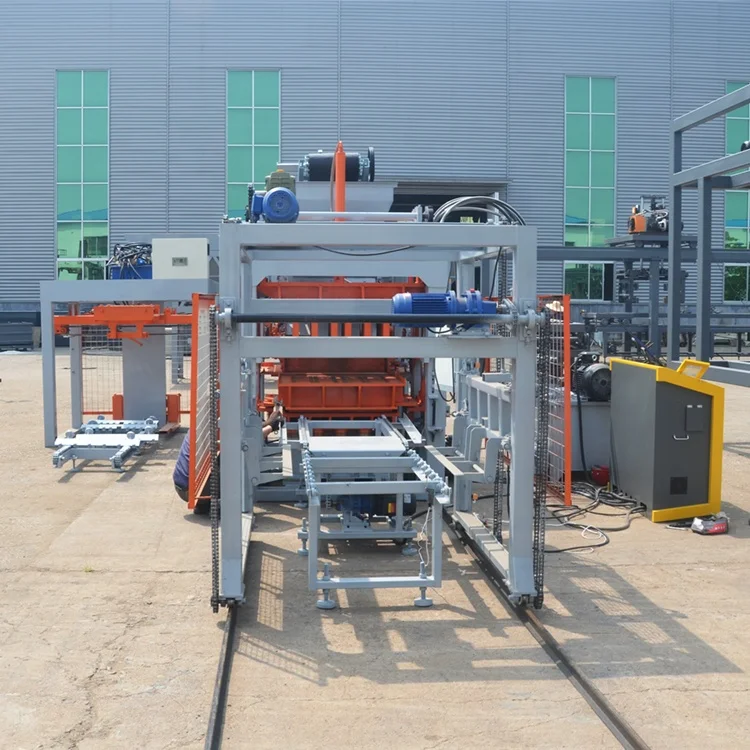
| Automation Level | Automatic (pallet feeder, brick receiver, hydraulic station, stacker) |
| Grouped Equipment | PLD1200 Batching Machine, JS750 Concrete Mixer, SY-8 Stacker, Hydraulic Station, Conveyor Belt, Hydraulic Trolley |
| Color Paver Option | Color feeding system available as add-on |
| Standards | CE (materials and spare parts selected according to international CE standards) |
Application Suitability
| Application | Material or Output |
|---|---|
| Hollow block production for housing and commercial walls | Crushed stone, river sand, cement, fly ash |
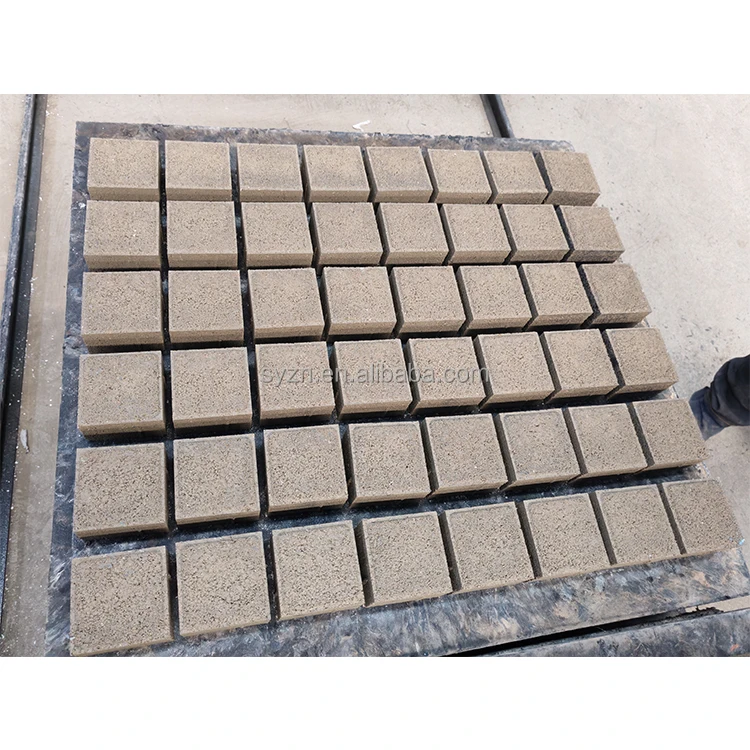
| Interlocking paver manufacturing for municipal walkways | Fine aggregate, cement, pigment for face mix |
| Solid load-bearing block for structural construction | Coarse aggregate, cement, locally sourced sand |
| Kerbstone and curb production for road projects | High-strength mix with graded stone and cement |
| Color paving brick for landscape and plaza surfaces | Base mix with color feeding system overlay |
What "15-Second Cycle Time" Actually Means for Your Daily Output
A single cycle number hides the format assumption behind it, and real output shifts dramatically between hollow blocks, solid bricks, and interlocking pavers.
When a buyer sees a QT8-15 block machine specifications sheet listing a 15-second molding period, the first question should be: for which block? A hollow block fills the pallet quickly with a single press stroke, while an interlocking paver may need longer vibration to reach target density. I once watched a Middle East project stall because the quoted capacity assumed standard river sand, but the local volcanic aggregate required different vibration tuning — daily output dropped to roughly sixty percent of the brochure figure, and the site team spent a full week adjusting parameters before the rhythm stabilized. That is why format-specific capacity calculation must come before any purchase order [NEED_CITE: block format impact on cycle time and daily output in concrete block production].
Matching the QT8-15 to Your Block Format and Market
The QT8-15 block machine specifications cover a 950 × 900 mm molding area, which determines how many blocks fit on a single pallet per cycle. A standard 400 × 200 × 200 mm hollow block arrangement yields fewer pieces per press than a thin interlocking paver layout, so the daily tonnage and pallet turnover rate differ even at the same cycle speed. Buyers planning a how to choose automatic block making machine decision must start with the block formats their market actually purchases, then work backward to the pallet layout and cycle time that make sense.
Vibration Tuning Against Local Aggregate
Vibration force of 100 kN combined with hydraulic pressure shapes the block density, but the correct frequency — anywhere from 2800 to 4500 times per minute — depends on the particle shape and moisture content of local aggregate. Angular crushed stone absorbs energy differently than rounded river gravel, and a mix designed for one may produce weak or cracked blocks with the other. This is why the QT8-15 control program allows frequency adjustment within the rated range, letting the operator dial in the setting that delivers consistent strength for the available raw material [NEED_CITE: vibration frequency adjustment for different aggregate types in block making].
Reading the Specification Sheet Like a Technical Buyer
The Siemens PLC with Schneider and Omron travel switches controls batch-to-batch consistency, meaning the same block dimensions and density repeat across thousands of cycles even after a mould change. The PLD1200 batching machine delivers ingredient precision within ±2 percent, which matters when cement content directly determines compressive strength. Mould hardness at 54–58 HRC through heat treatment and carburizing means the tooling withstands extended production runs before refurbishment, lowering per-block mould cost over time. The JS750 mixer with 750-liter discharge capacity must keep pace with the press cycle so the hopper never starves, and the 950 × 900 × 25 mm pallet size should align with the curing rack spacing and forklift tine width already on the plant floor.
The Hidden Cost of Skipping Format-Specific Verification
Ordering without a format-by-format capacity breakdown means the line arrives and the real daily output falls short of the project schedule. Mould change that takes most of a shift cancels out the flexibility the buyer expected from having multiple block types available. Voltage and PLC display language left unconfirmed before production can delay commissioning by days or weeks once the machine reaches the site, because rewiring or reprogramming on location costs both time and specialist labor [NEED_CITE: commissioning delays caused by unconfirmed voltage and PLC language settings].
Why Source the QT8-15 Through This Line
Configuration is set against the buyer’s actual mix design, local aggregate, and target block format rather than a default catalogue entry, so the vibration parameters and batching ratios match what is available on the ground. Mould design covers the specific formats the buyer’s market sells, including custom drawings when a non-standard paver or kerbstone profile is needed. The machine, pallet, mould, and handling equipment are specified as one matched system — the 950 × 900 mm pallet, the SY-8 stacker, and the curing rack layout are all coordinated before the order is finalized. Automation level is selectable, allowing a buyer to start with semi-automatic pallet handling and add the full automatic stacking and cubing package later as volume grows.
Documentation & Verification
- Line layout and capacity calculation stating the block format assumed for each output figure
- Mould drawing and format list with cycle time confirmed per block type
- Voltage and PLC display language confirmation in writing before production
- Factory test record demonstrating run with buyer’s specified block format
- Hydraulic and electrical schematic for on-site maintenance reference
- Wear parts and mould list with replacement cycle guidance
Installation, Commissioning & Support
- Foundation plan based on the 5870 × 2220 mm host machine footprint and 10-ton weight
- Dedicated power circuit sized for 47 kW host machine power plus grouped equipment load
- On-site assembly with vibration frequency calibrated to buyer’s actual aggregate sample
- Siemens PLC program walkthrough with travel switch locations identified for maintenance
- Operator training covering mould change procedure and pallet feeder alignment
- Spare mould and hydraulic wear parts list provided at handover
What to Prepare Before Requesting a Quote
To move from a general inquiry to a firm QT8-15 configuration, share the target block formats with dimensions, the daily output requirement per format, and the local raw material source including aggregate type and gradation. Confirm the available voltage and frequency at the plant site, the PLC display language preference, and the curing area dimensions so the pallet size and stacking equipment can be matched accordingly.
Frequently Asked Questions
Q: What is the realistic daily output of the QT8-15 for hollow blocks versus interlocking pavers versus solid blocks?
A: Daily output depends on the block format, pallet layout, and local aggregate. The 15-second molding period applies to a specific configuration, and the actual figure shifts when switching between hollow blocks, dense solid blocks, and interlocking pavers. Request a format-by-format capacity calculation with your target dimensions before confirming the order.
Q: How is mould selection matched to the block formats my market sells, and what is the mould change time?
A: Moulds are designed for the specific block dimensions and profiles the buyer’s market demands, including custom drawings for non-standard formats. The QT8-15 mould system is built for repeatable changeover, but the exact time depends on the mould size and operator familiarity. Confirm the changeover procedure during the factory test.
Q: Can the QT8-15 be configured for my local aggregate and mix design?
A: Yes. The vibration frequency range of 2800–4500 times per minute and the PLD1200 batching machine with ±2 percent precision allow the system to be tuned to local crushed stone, river sand, fly ash, or other available materials. A trial run with the buyer’s actual aggregate sample is recommended before shipment.
Q: What pallet size does the QT8-15 use, and how does that align with my existing curing area and forklift?
A: The standard pallet size is 950 × 900 × 25 mm. This dimension should be checked against the curing rack spacing and forklift tine width already on site to avoid mismatches that slow down pallet handling and stacking after the machine arrives.
Q: What documentation verifies block strength and cycle time before the machine ships?
A: The factory test record demonstrates a production run using the buyer’s specified block format and target strength. Combined with the line layout capacity calculation and mould drawing package, this documentation confirms that the QT8-15 meets the agreed output and quality parameters before dispatch.