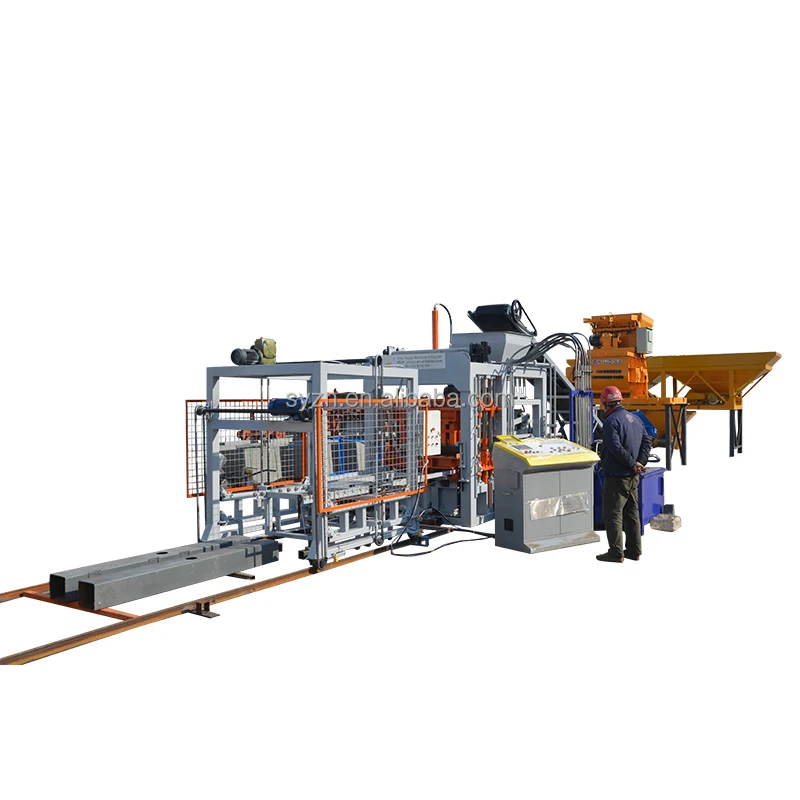


Description
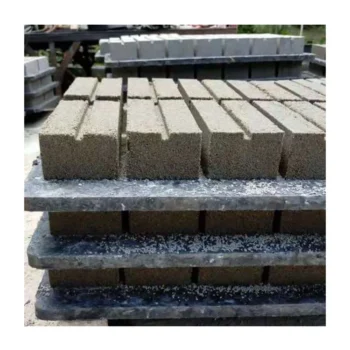
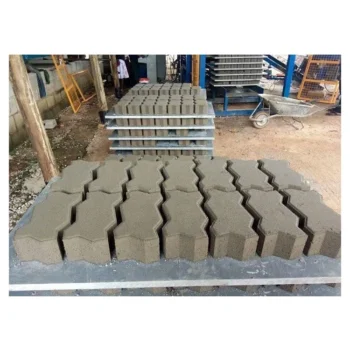
Mould-First Sizing — the QT7-15 block machine is configured around the exact hollow, paver, or interlocking format your market sells, with cycle time and pallet size matched to your local aggregate rather than a catalogue default.
Technical Specifications
| Parameter | Value |
|---|---|
| Model | QT7-15 |
| Product Type | Hydraulic Concrete Block Making Machine |
| Pallet Size | 1150 × 700 mm |
| Vibration Force | 100 kN |
| Vibration Frequency | 0–60 Hz (adjustable) |
| Vibration Form | Platform Vibration |
| Molding Cycle | 15–25 s (basis not stated in source — confirm block format, material, and thickness) |
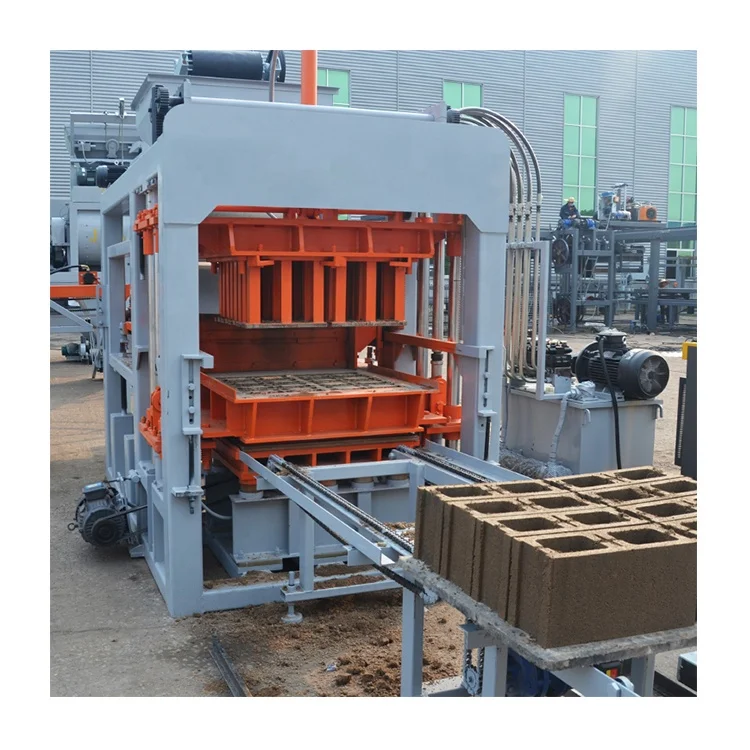
| Demolding Method | Hydraulic |
| Overall Power | 45 kW |
| Total Mass | 8 T |
| Control System | PLC with touch screen interface |
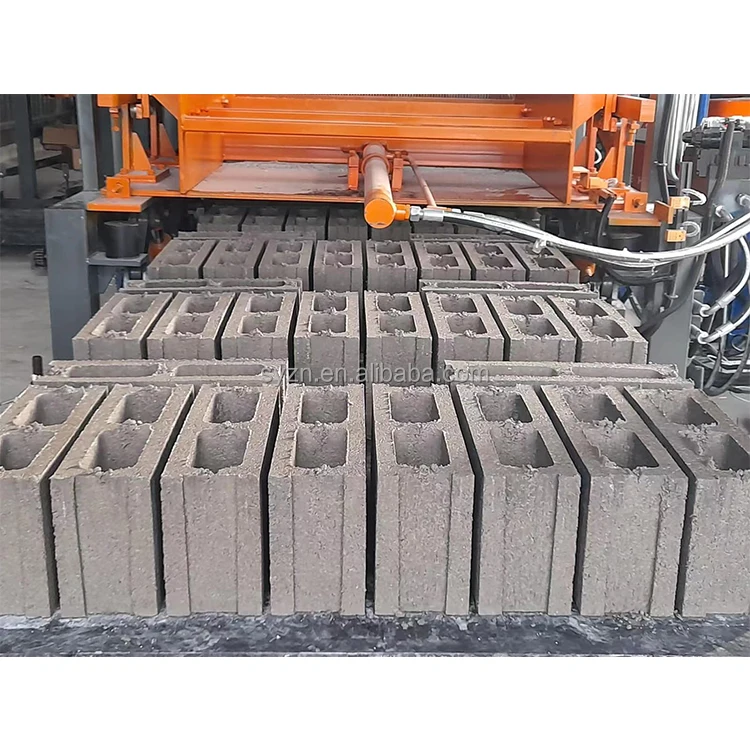
| Output — Hollow Block 400×200×200 mm | 1,260–1,680 pcs/h (10,080–13,440 pcs/8 hr) |
| Output — Hollow Block 400×150×200 mm | 1,440–1,920 pcs/h (11,520–15,360 pcs/8 hr) |
| Output — Rectangular Paver 200×100×60 mm | 3,888–4,860 pcs/h (31,104–38,880 pcs/8 hr) |
| Mould Change System | Simple mould replacement for multi-format production |
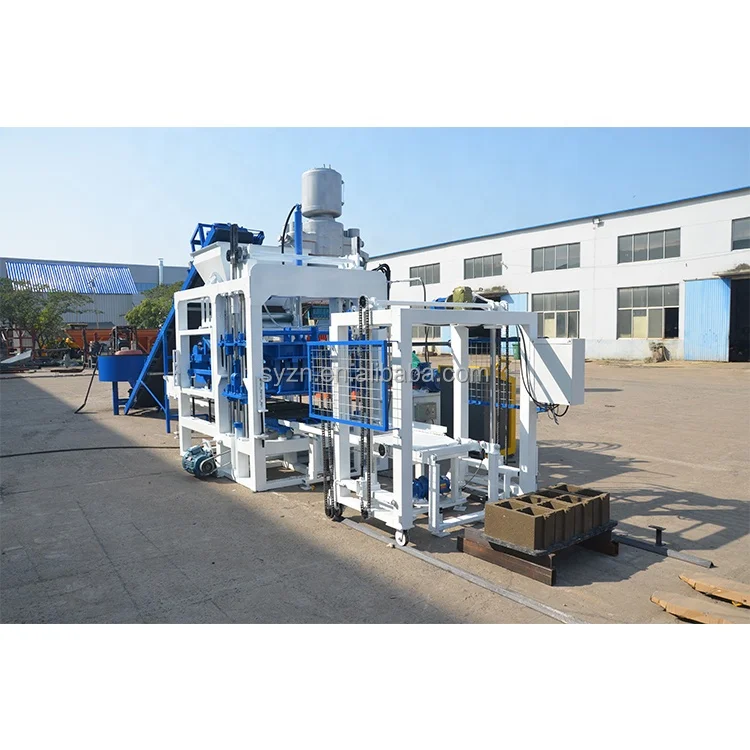
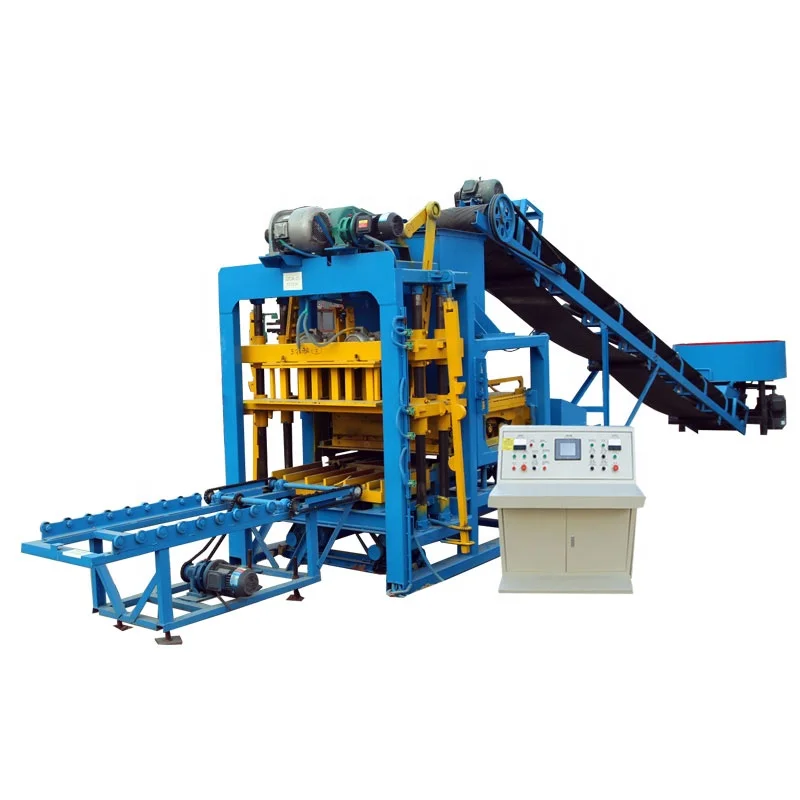
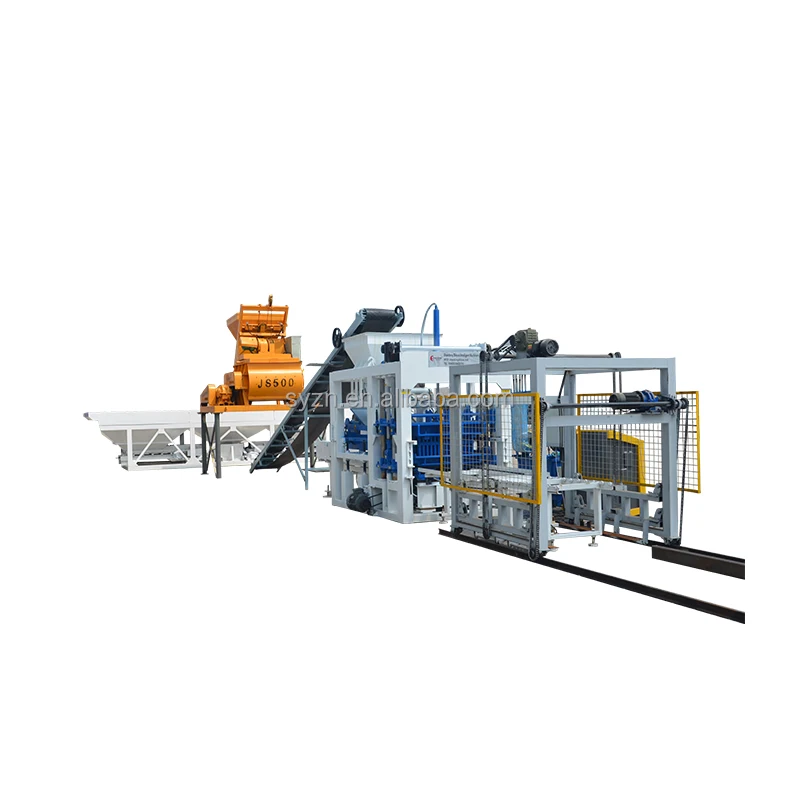
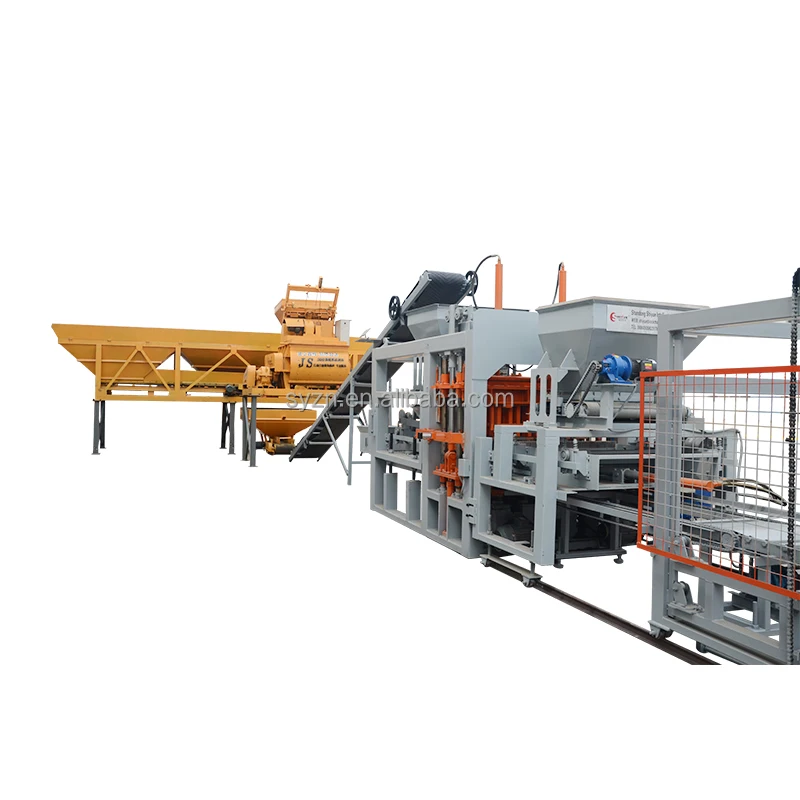
| Components Included | Pallet feed machine, block making machine, storage hopper, conveyor, hydraulic unit, PLC control cabinet |
| Warranty | 1 year (excluding spare parts) |
| Certification | CE (documentation available) |
Application Suitability
| Application | Material or Output |
|---|---|
| Hollow block production for wall construction | Crushed stone, sand, cement, and water mix at standard ratios |
| Solid block manufacturing for load-bearing structures | Dense aggregate blends with cementitious binder |
| Rectangular paving block for walkways and yards | Fine aggregate and pigment for colour-fast surface finish |
| Interlocking brick for retaining walls and landscaping | Coarse aggregate with controlled moisture for dry-cast interlock profile |
| Kerbstone and porous brick for infrastructure | Permeable aggregate gradation or high-density mix depending on format |
What "Pieces per Hour" Leaves Out When Sizing a QT7-15 Block Machine
The number only matters when it names the exact block format behind it.
Every capacity figure on a QT7-15 block machine specification sheet assumes a particular block size, mould cavity count, and cycle time. A rate quoted for a 400×150×200 mm hollow block cannot be applied to a 200×100×60 mm paver because the mould footprint, vibration duration, and demolding stroke all differ. [NEED_CITE: block format impact on cycle time in hydraulic press operations]. Buyers who receive a single headline number often discover on commissioning day that their actual daily output for the product they sell falls noticeably short of what was discussed. That gap is not a machine fault — it is a specification gap. The honest way to size any concrete block machine is to ask for the capacity tied to each specific format in your product mix, with cycle time stated per mould.
Matching Mould Selection to Your Local Market
The QT7-15 block machine accepts interchangeable moulds, so the formats you produce depend entirely on which moulds are in your inventory at start-up and which you add later. A technical buyer planning to supply hollow blocks for residential walling and rectangular pavers for municipal footpaths needs both moulds on site from day one, plus verified cycle times for each. Without that data, production scheduling becomes guesswork.
Vibration Force and Your Local Aggregate
Platform vibration at 100 kN with a 0–60 Hz adjustable frequency is designed to compact a range of aggregate gradations. On one Middle East project I supported, the buyer’s local supply was a volcanic lightweight aggregate that behaved nothing like the standard silica sand used during factory testing. The vibration profile had to be re-tuned across several days before block strength stabilised. The lesson: QT7-15 block machine specifications must be validated against the actual raw material available within hauling distance of your plant. [NEED_CITE: aggregate density influence on vibration compaction requirements].
Reading the Specification Sheet Honestly
The 45 kW total power draw covers the hydraulic pump, vibration motor, conveyor, and PLC cabinet running simultaneously — a figure useful for sizing your main supply breaker and dedicated circuit. The 1150 × 700 mm pallet size determines how many blocks are pressed per cycle and must align with your curing rack spacing and forklift tine width; ordering pallets that do not fit your existing curing area creates a bottleneck no machine adjustment can fix. Hydraulic demolding replaces mechanical ejection, reducing edge chipping on thin-walled hollow blocks and interlocking profiles where green strength is still low. The PLC touch screen stores process data for each format, allowing operators to recall vibration duration and pressure settings by mould number instead of relying on memory between shifts.
The Cost of Skipping Format-by-Format Verification
When a buyer accepts a single output number without tying it to a specific block size, the consequences surface after installation. The plant runs daily, but the target volume for the highest-margin format is never reached, forcing a second shift or a missed delivery deadline. Moulds that were never listed in the original quotation then have to be ordered separately, adding weeks of waiting. Pallets sized without checking the curing rack mean blocks are stacked manually while the machine idles, erasing the automation advantage the buyer thought they had purchased. [NEED_CITE: mismatched pallet dimensions and curing rack compatibility].
Why Source the QT7-15 Through a Mould-and-Line Focused Supplier
Block machinery is the single focus here, so the QT7-15 block machine, its moulds, pallets, and handling equipment are specified as one matched set rather than assembled from unrelated vendors. Configuration is set against your actual mix design and target format, not a catalogue default. Mould design covers the formats your market actually sells, including custom drawings when your product range includes non-standard interlock profiles. Automation level is selectable, allowing a buyer to start with manual pallet handling and add automatic stacking later as volume justifies the investment. Documentation before shipment includes the line layout with capacity calculated per block format, hydraulic and electrical schematics, and confirmed voltage and control language.
Documentation & Verification
- Line layout stating assumed block format for each QT7-15 capacity figure
- Mould drawing and complete format list matching your product range
- Pallet specification cross-checked against your curing rack and forklift
- Voltage, frequency, and PLC display language confirmed before production
- Factory test record on your specified block format before dispatch
- Operation and maintenance manual with wear parts list included
Installation, Commissioning & Support
- Foundation must support 8 T static mass plus dynamic vibration loads from the QT7-15 platform
- Dedicated circuit required for 45 kW total draw; voltage and frequency confirmed before wiring
- Machine shipped with hydraulic unit and PLC cabinet separately crated for container loading
- On-site commissioning includes vibration frequency tuning to your local aggregate
- Operator training covers PLC fault diagnosis and mould change procedure
- Wear parts and mould spare list provided with recommended reorder intervals
What to Include in Your Enquiry
To size the QT7-15 block machine correctly, provide the exact block formats your market sells, the daily volume required for each format, and the local aggregate type available near your site. Confirm your facility voltage and frequency, the PLC language preference for your operators, and the curing area dimensions so pallet size can be matched before the order is placed.
Frequently Asked Questions
Q: How is the output capacity of the QT7-15 verified for each block format?
A: Every capacity figure is stated against a specific block size and mould. For example, the hollow block 400×200×200 mm rate assumes that exact format with its corresponding cycle time. We provide a written capacity calculation per format in the line layout so you can compare quoted output against your actual daily requirement.
Q: How do I select the right mould for the formats my market sells?
A: Provide the drawings or dimensions of every block your customers currently buy. We design and supply moulds for those formats and confirm cycle time per mould. Custom profiles, including non-standard interlock shapes, are engineered from your drawings before the QT7-15 block machine enters production.
Q: What pallet size does the QT7-15 require, and how does it match my curing setup?
A: The machine uses 1150 × 700 mm pallets. Before the order is finalised, we cross-check this dimension against your curing rack spacing and forklift tine width so pallets integrate with your existing handling equipment without modification on arrival.
Q: Can vibration force and hydraulic pressure be adjusted to my local aggregate?
A: Yes. The platform vibration runs from 0 to 60 Hz, and hydraulic pressure is adjustable. During commissioning we tune both parameters to the aggregate and mix design available at your site, ensuring consistent block strength across production batches rather than relying on a factory-default setting.
Q: How long does a mould change take on the QT7-15?
A: The simple mould replacement system is designed so format switches do not consume an entire shift. We provide the specific tools and step-by-step procedure during training, and the PLC stores recall settings per mould number so operators restore vibration and pressure parameters without manual re-entry.