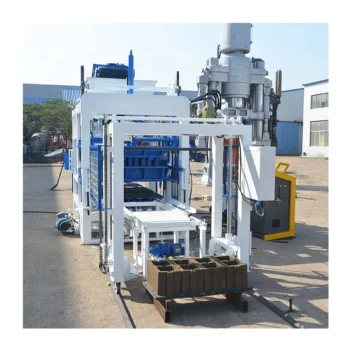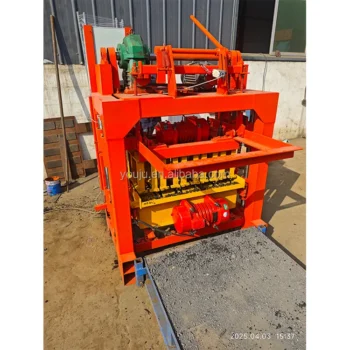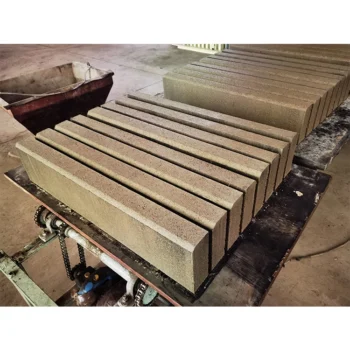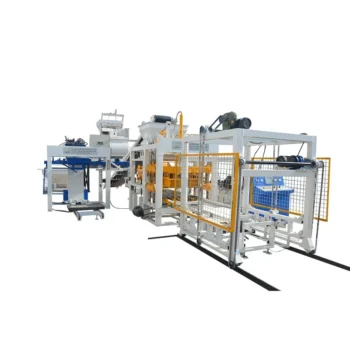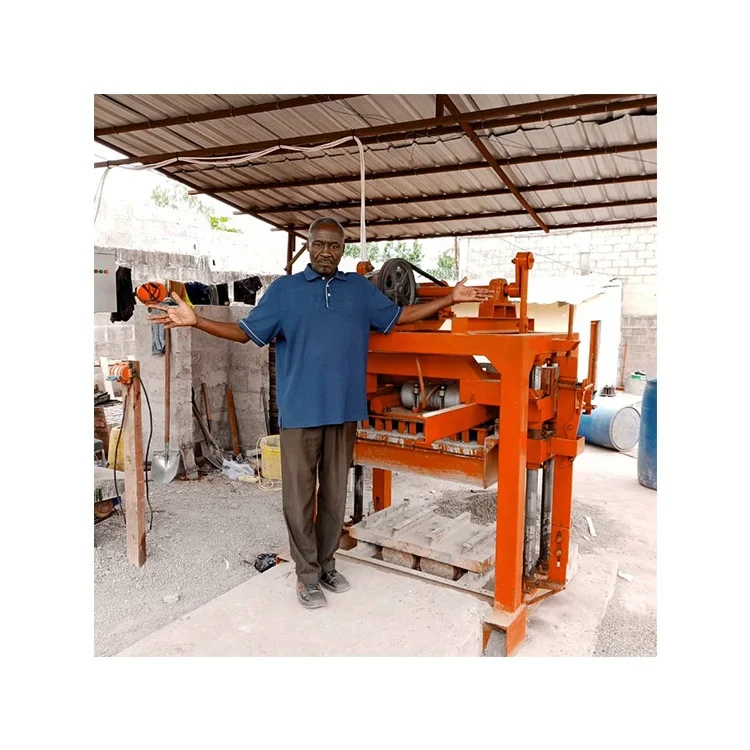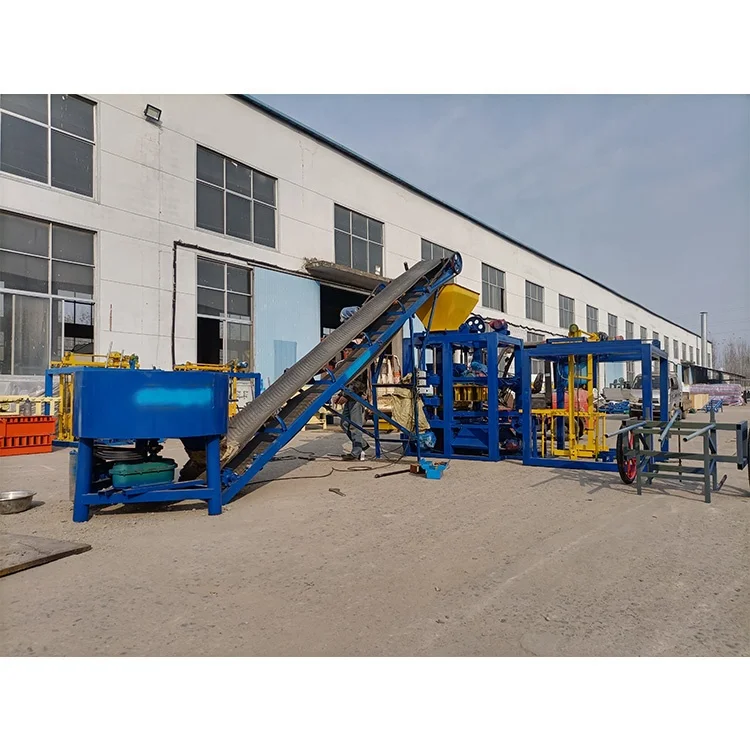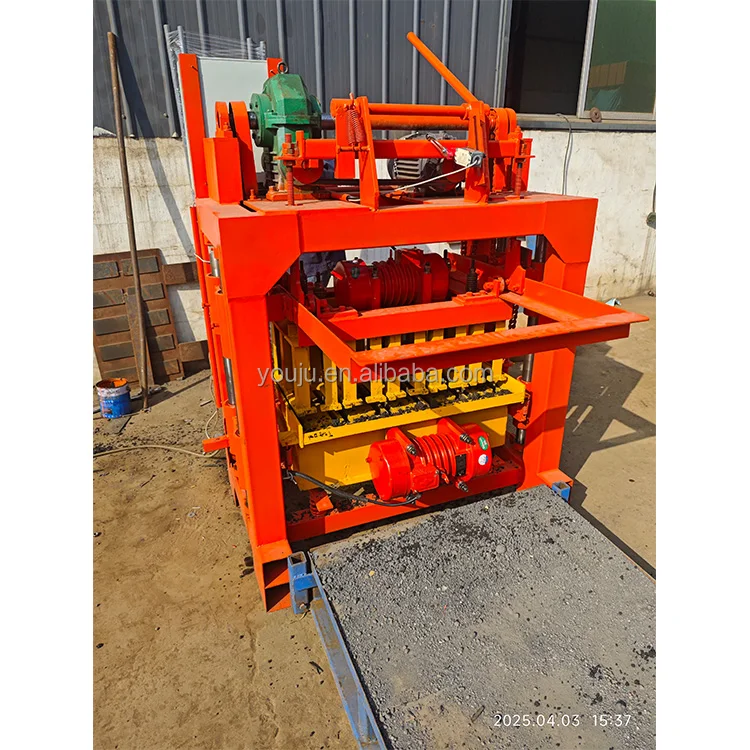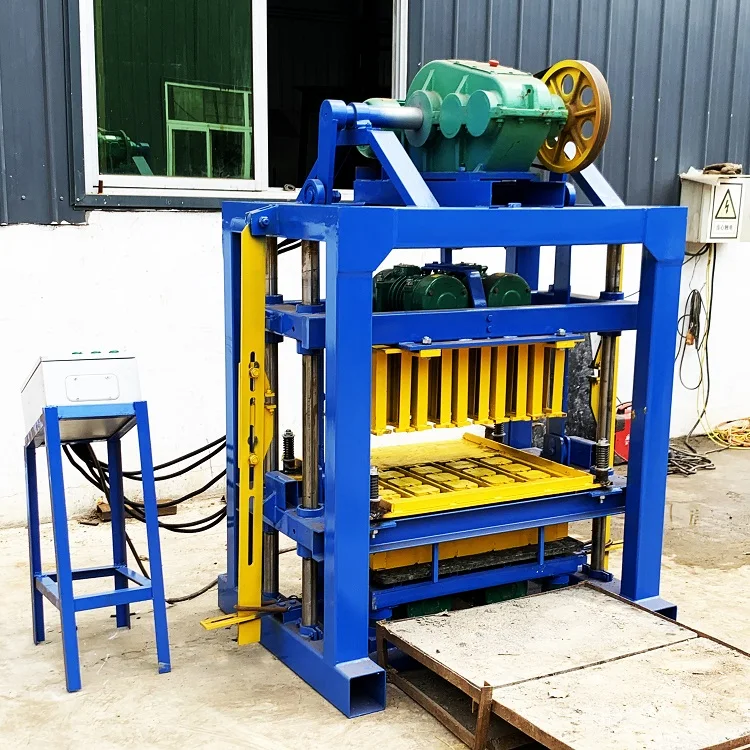
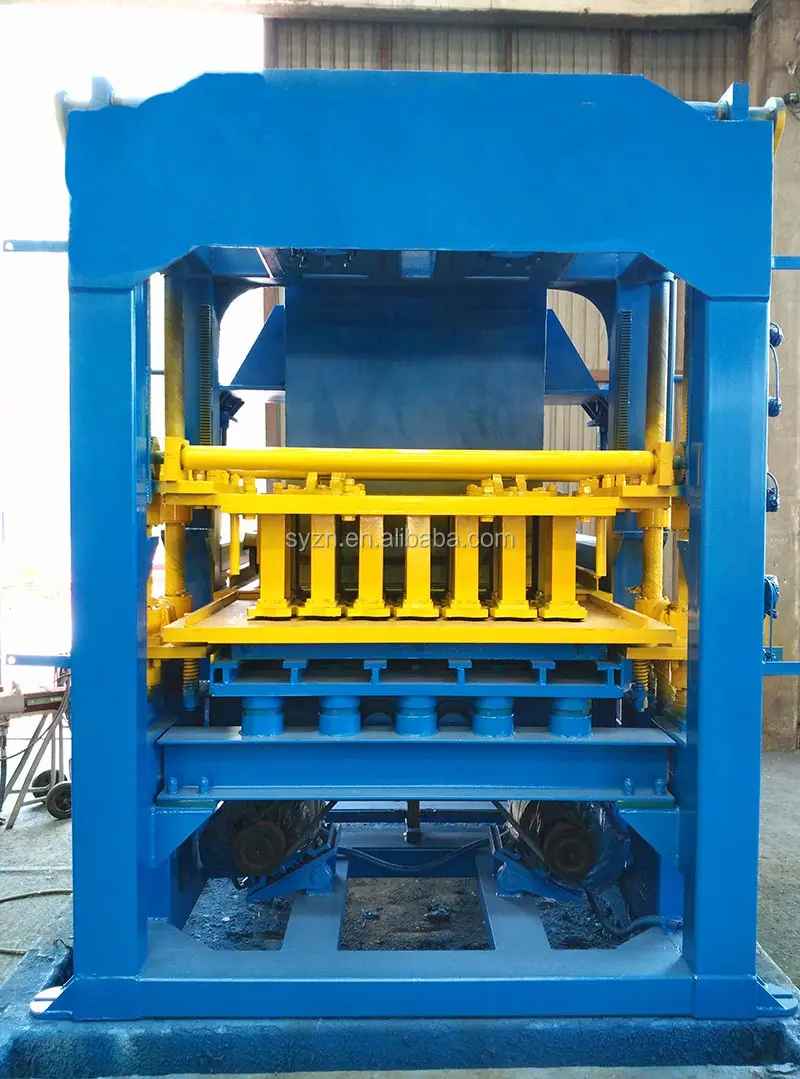
Description
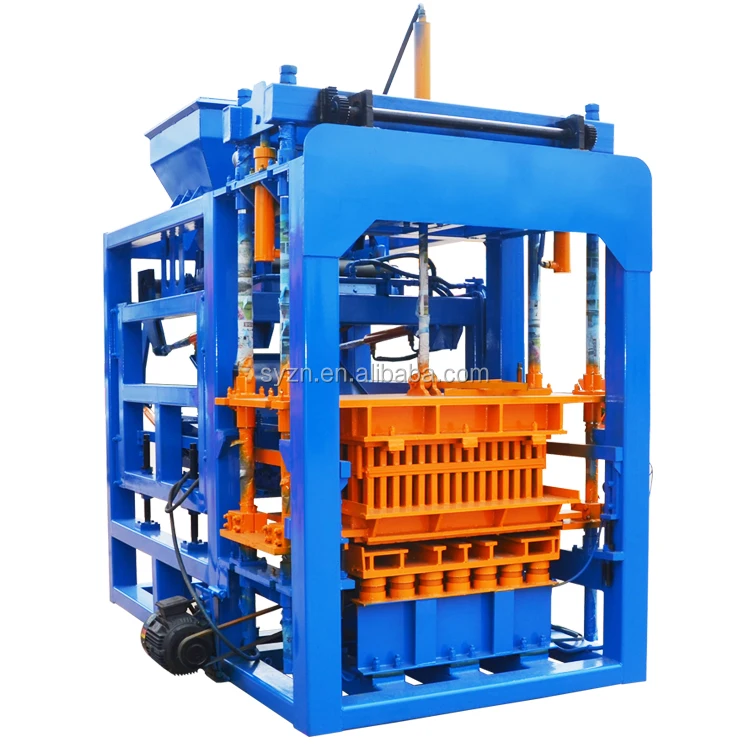
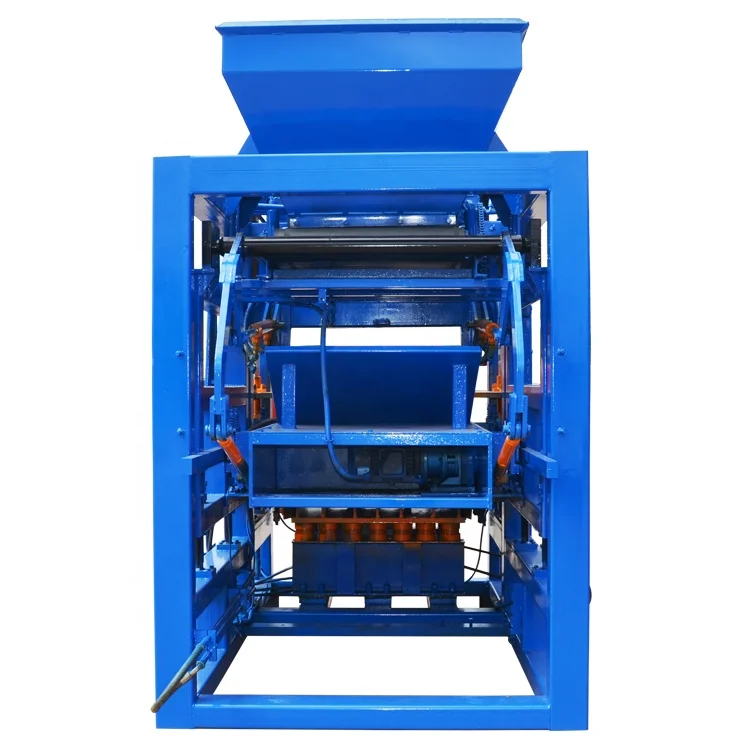
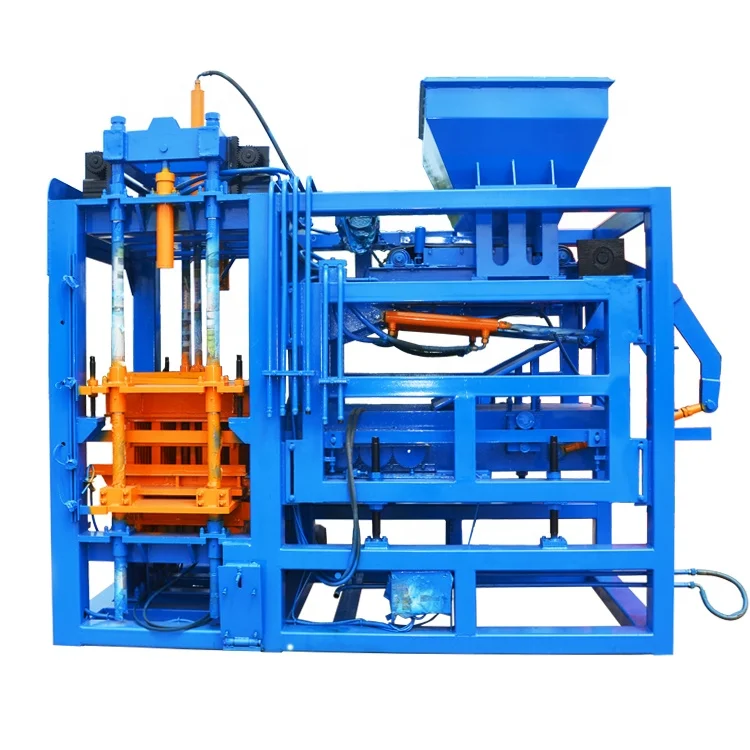
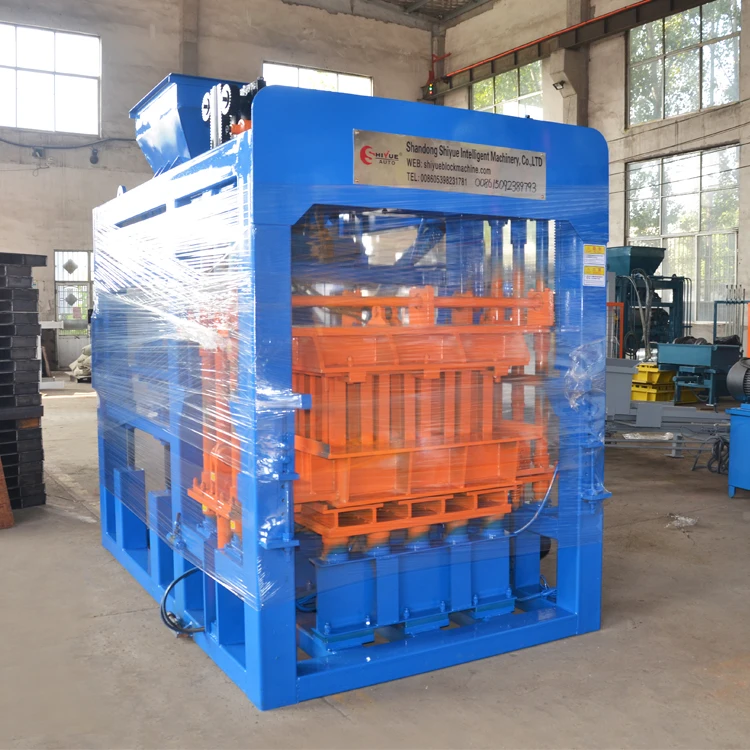
Mould format matched to market — Every QT6-15 block making machine specification sheet states cycle time and cavity count per block format so the output you plan around is the output you actually get on the shop floor.
Technical Specifications
| Parameter | Value |
|---|---|
| Model | QT6-15 |
| Product Type | Fully Automatic Hydraulic Block Making Machine |
| Overall Dimensions (L×W×H) | 8200×1700×2950 mm |
| Pallet Size | 880×850 mm |
| Vibration Form | Platform Vibration |
| Vibration Frequency | 0–60 Hz |
| Vibration Force | 45 kN |
| Moulding Mode | Automatic loading, vibration moulding |
| Demolding Method | Hydraulic |
| Hydraulic System | Independent integrated hydraulic station |
| Control System | PLC with touch screen and fault diagnosis |
| Overall Power | 37 kW |
| Total Mass | 7 T |
| Molding Cycle | 15–20 s (basis to be confirmed by block format and material) |
| Block Compressive Strength | >15 MPa (source value — verify against specific mix design) |
| Output — Hollow Block 400×200×200 mm | 1080–1440 pcs/h (6 pcs/mould, 15–20 s cycle) |
| Output — Hollow Block 400×150×200 mm | 1440–1920 pcs/h (8 pcs/mould, 15–20 s cycle) |
| Output — Solid Brick 240×115×53 mm | 5760–7680 pcs/h (32 pcs/mould, 15–20 s cycle) |
| Output — Rectangular Paver 200×100×60 mm | 2160–2880 pcs/h (21 pcs/mould, 20–25 s cycle) |
| Output — Zigzag Paver 225×112.5×60 mm | 2160–2880 pcs/h (15 pcs/mould, 20–25 s cycle) |
| Factory Area Required | 1200 m² |
| Warranty | 1 year for whole machine (excluding spare parts) |
Application Suitability
| Application | Material or Output |
|---|---|
| Hollow block production for residential and commercial walls | Crushed stone, river sand, cement, waste ash, and slag |
| Solid brick manufacturing for load-bearing masonry | Local aggregate blends with reduced cement dosage |
| Rectangular and interlocking paver for roads and walkways | Fine aggregate and cement mixes at higher compaction |
| Kerbstone and porous block for municipal infrastructure | Coarse aggregate with permeable concrete ratios |
| On-site block production for housing project contractors | Locally sourced sand and gravel matching site conditions |
Why "Pieces per Hour" Without a Format Is Meaningless for the QT6-15 Block Making Machine
A capacity number is only honest when it names the block it was measured on.
I have watched buyers sign off on a block making machine because the brochure promised an impressive hourly output, only to discover after commissioning that the figure assumed a small solid brick while their market actually demanded hollow blocks. The daily tally dropped to a fraction of what was budgeted. [NEED_CITE: common causes of output shortfall in block plant commissioning reports]. With this QT6-15 block making machine, the specification sheet lists five separate block formats, each with its own cavity count and cycle window, so the capacity conversation starts with the product you actually sell rather than the one that looks best on paper.
Format-Specific Cycle Time and What It Means for Your Shift Plan
The QT6-15 block making machine runs hollow blocks at a 15–20 second cycle and pavers at a 20–25 second cycle because denser paver mixes need longer vibration to reach full compaction. When you map these windows against your target format, you can calculate a realistic shift output before the machine is even crated. This matters especially when a single plant is expected to rotate between hollow blocks and pavers across different days of the week.
Pallet Size as the Hidden Constraint on Your Curing Yard
The 880×850 mm pallet is the footprint that travels from the press through curing and into the forklift aisle. If your existing racks and yard were built around a different pallet dimension, every pallet of green blocks will need manual re-stacking before it leaves the press area. [NEED_CITE: pallet compatibility and handling cost in block plant layout studies]. Confirming the pallet size against your curing space and forklift fork spread is a step that costs nothing in the inquiry phase but becomes expensive once concrete is being poured.
How Vibration Force and Hydraulic Pressure Decide Block Density
Platform vibration at 45 kN works together with the independent hydraulic station to compress the mix from both directions during the moulding stroke. The vibration frequency range of 0–60 Hz lets the operator tune the energy input to the stiffness of the local aggregate — a high-silt sand will need a different frequency setting than washed crushed stone. Getting this pairing wrong is the usual reason blocks crumble at the edges right after demolding or fail compressive strength tests weeks later. The 37 kW total power rating gives the hydraulic pumps and vibration motors enough headroom to sustain these forces across a full shift without thermal cut-backs.
The Cost of Skipping Voltage and Language Confirmation
Buyers who treat electrical specifications as a minor checkbox sometimes find the machine sitting idle in a container yard because the local supply is 415 V 60 Hz while the motor was wound for 380 V 50 Hz. The same applies to the PLC touch screen: if the operator cannot read the fault diagnosis messages, every alarm becomes a reason to call the supplier at odd hours. [NEED_CITE: commissioning delays traced to voltage and HMI language mismatch]. These details must be locked in writing before the QT6-15 enters production, not discovered during on-site start-up.
Why Buyers Choose This Source for Format-Matched Machines
Block machinery is the single production focus here, which means the press, mould, pallet, and handling equipment are specified as one system rather than assembled from unrelated suppliers. Moulds are designed for the formats the buyer’s market actually purchases, including custom drawings when a local standard differs from catalogue sizes. The automation level is selectable, so a plant can launch semi-automatic and add stacking and cubing modules as demand grows. Every configuration is validated against the buyer’s mix design and target block strength before the quotation is finalised. Installation support includes operator training on the PLC fault diagnosis system, and a wear parts list is supplied so the first replacement order is predictable.
Documentation & Verification
- Line layout stating pallet flow from press through curing rack to cubing area
- Capacity calculation per block format with cycle time and cavity count noted
- Mould drawing and format list for every mould included in the order
- Hydraulic and electrical schematic matching your voltage and frequency
- Factory test record run on your specific block format before shipment
- Packing photographs and customs documentation support for export clearance
Installation, Commissioning & Support
- Foundation pad sized to the 8200×1700 mm footprint with anchor bolt plan
- Dedicated 37 kW circuit with voltage and frequency confirmed before wiring
- Machine shipped in dismantled state; re-assembly and alignment on your slab
- PLC parameter tuning for your local aggregate during commissioning week
- Operator training on touch screen controls, mould change, and fault diagnosis
- Wear parts list covering hydraulic seals, vibration springs, and mould liners
Preparing a Useful Inquiry
When you are ready to size a QT6-15 block making machine for your plant, share the exact block formats your market demands along with the daily volume you need per format. Tell us what aggregate is available locally — river sand, crushed stone, waste ash — and whether you have a curing yard already laid out. Include your site voltage and frequency and the language your operators read best so the PLC screen can be set before the machine leaves the factory.
Frequently Asked Questions
Q: How is capacity per block format calculated on the QT6-15?
A: Each figure in the specification table is derived from the mould cavity count and the cycle time window for that format. A 400×200×200 mm hollow block uses a 6-cavity mould at 15–20 seconds per cycle, giving 1080–1440 pieces per hour. Paver formats run longer cycles, so their hourly output is lower even on the same machine.
Q: Can the machine handle my local aggregate and mix design?
A: The vibration frequency range of 0–60 Hz and adjustable hydraulic pressure let the operator tune compaction to different sand, stone, and ash blends. We ask for a sample of your typical aggregate so we can validate block strength and cycle time during the factory test before shipping.
Q: What pallet size does the QT6-15 use, and how does it affect my yard?
A: The machine runs on 880×850 mm pallets. You need to confirm that your curing racks, yard spacing, and forklift fork spread match this dimension. A mismatch means every pallet of blocks must be manually re-handled before it enters the curing area.
Q: How long does a mould change take, and what formats can share one machine?
A: The machine accepts hollow block, solid brick, rectangular paver, and zigzag paver moulds on the same platform. Changeover time depends on the mould mounting system and operator familiarity; confirm the expected changeover duration with the supplier before finalising your format list.
Q: When must voltage and PLC language be confirmed?
A: These should be written into the purchase specification before production starts. The motor winding, transformer taps, and PLC screen text are all set during assembly, and changing them after the machine is built causes commissioning delays on site.