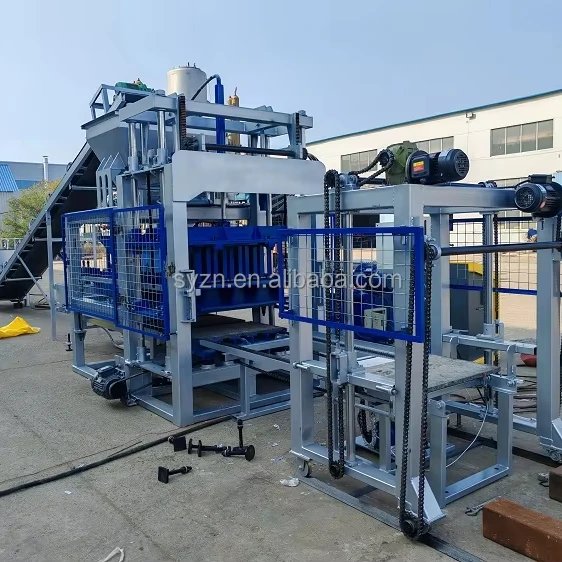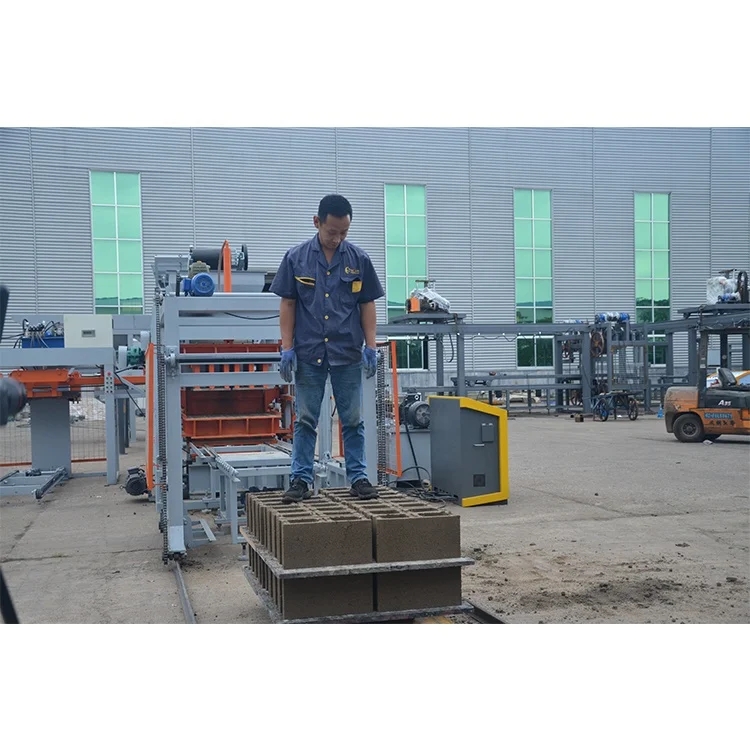
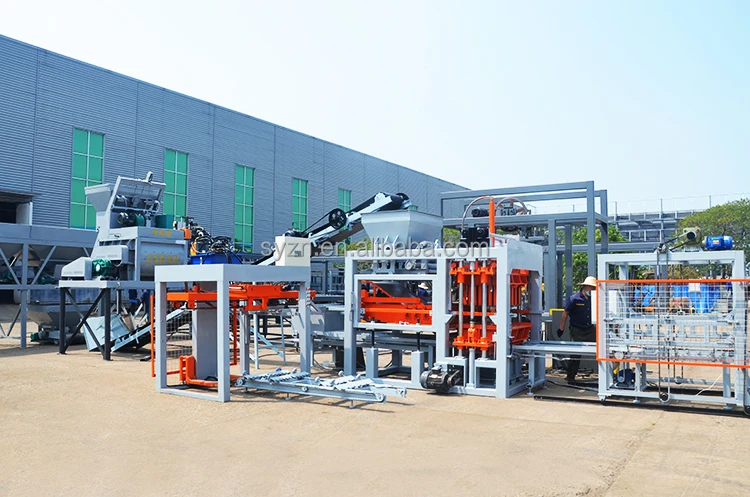
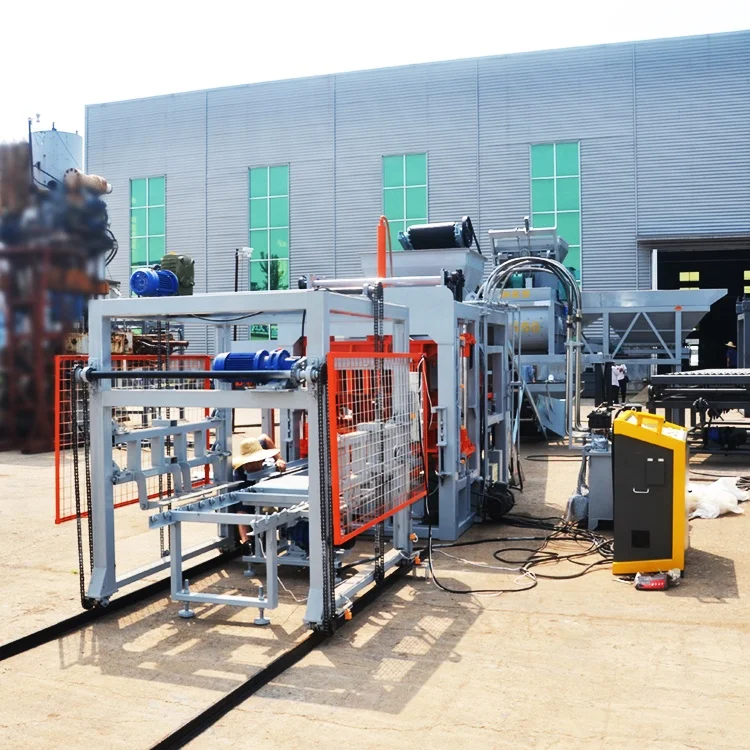
Description
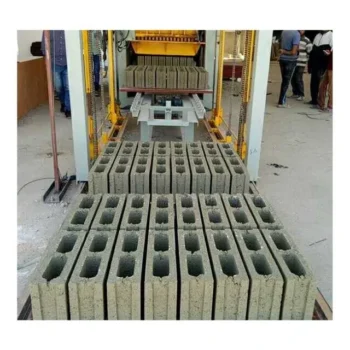
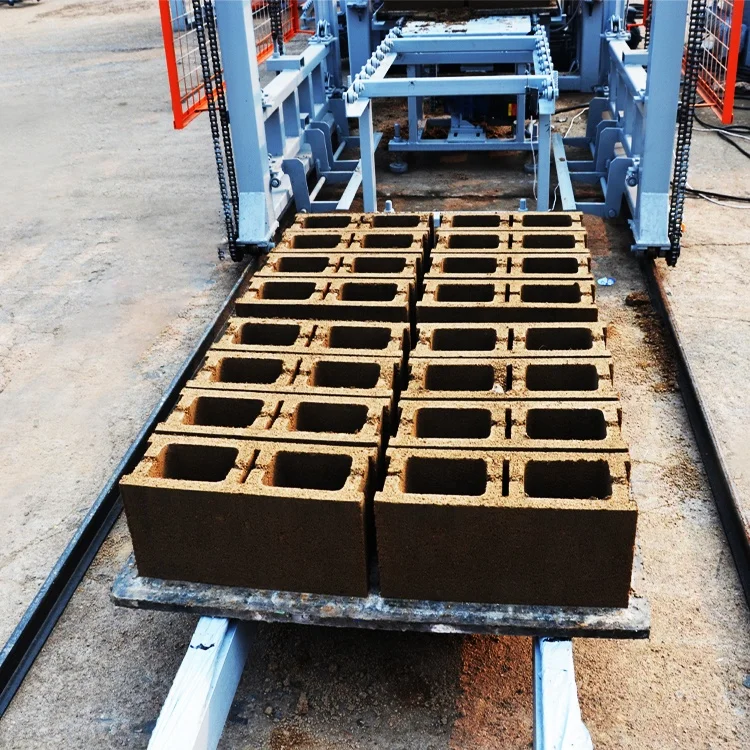
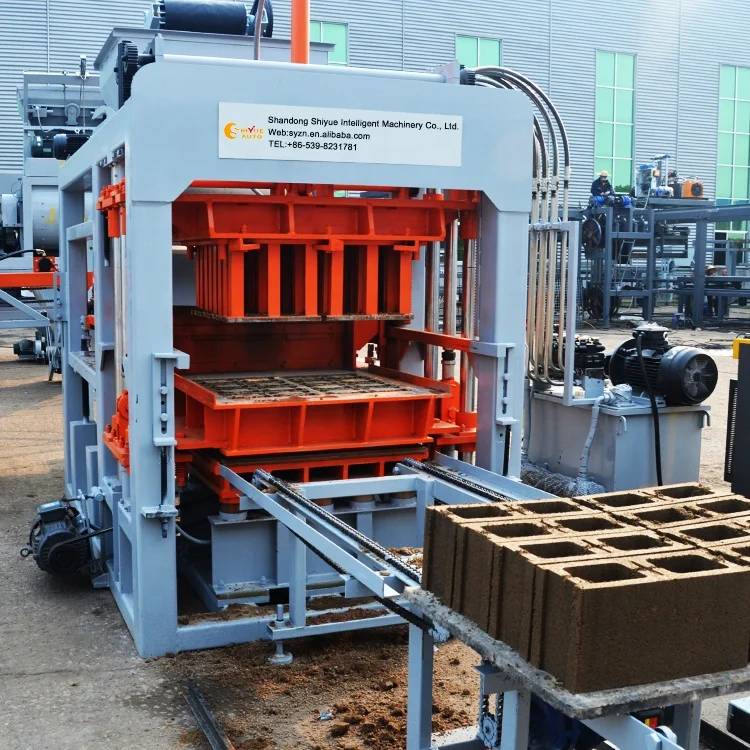
Configured for Your Market’s Block Format — the QT6-15 block machine specifications and mould capacity are calculated per actual block type, not a single headline cycle time, ensuring honest daily output expectations from day one.
Technical Specifications
| Parameter | Value |
|---|---|
| Model | QT6-15 |
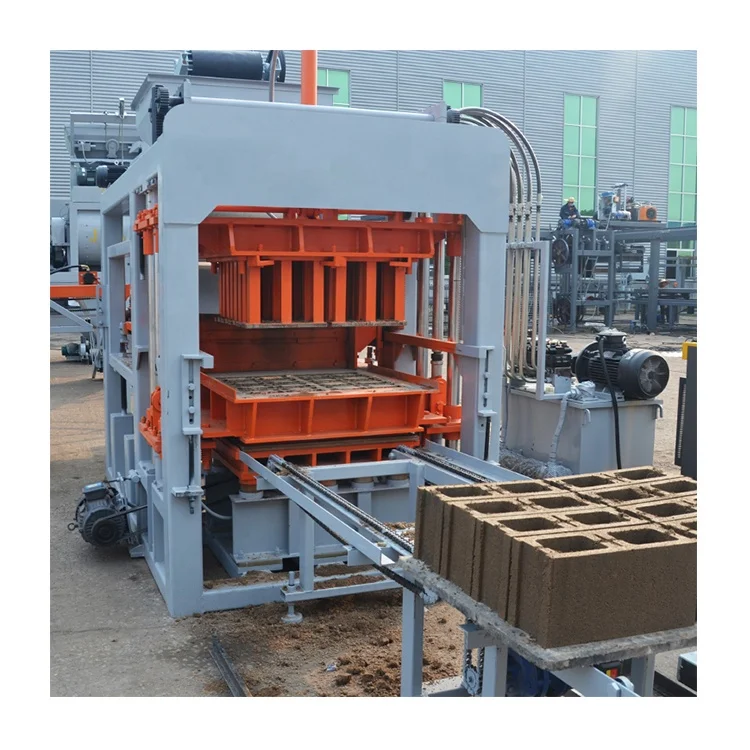
| Product Type | Automatic Hydraulic Concrete Block Making Machine |
| Overall Dimensions (L×W×H) | 8200×1700×2950 mm |
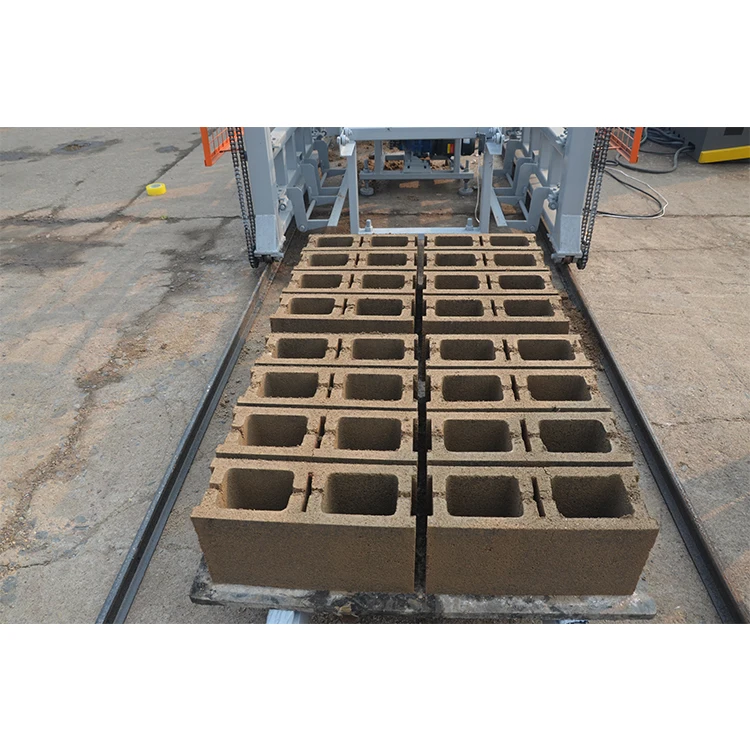
| Pallet Size | 880×850 mm |
| Molding Cycle | 15–20 s (basis: standard hollow block) |
| Vibration Frequency | 0–60 Hz |
| Vibration Form | Platform Vibration |
| Vibration Force | 45 kN |
| Demolding Method | Hydraulic |
| Overall Power | 37 kW |
| Total Mass | 7 T |
| Recommended Factory Area | 1200 m² |
| Control System | PLC with touch screen interface |
| Hydraulic System | Independent integrated hydraulic station |
| Moulding Mode | Automatic loading with vibration moulding |
| Warranty | 1 year (excluding spare parts) |
Output Capacity by Block Format
| Block Format | Pieces per Hour | Pieces per 8-Hour Shift |
|---|---|---|
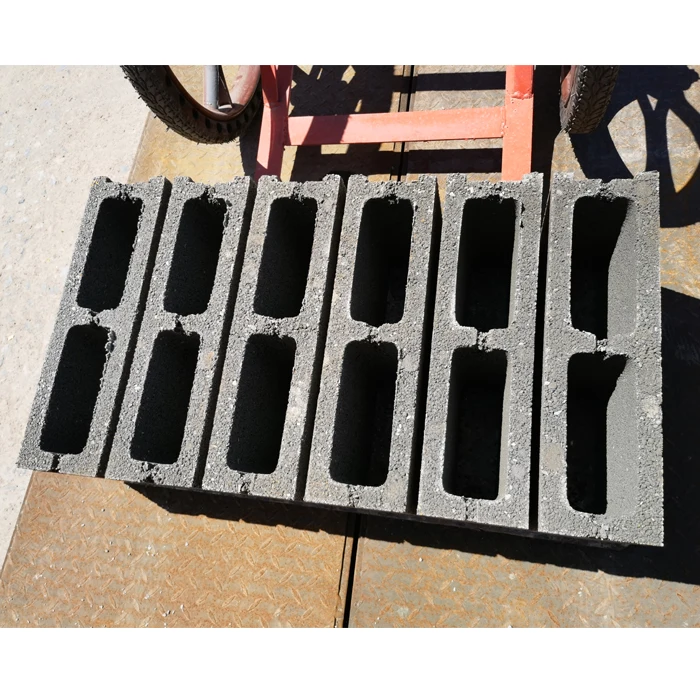
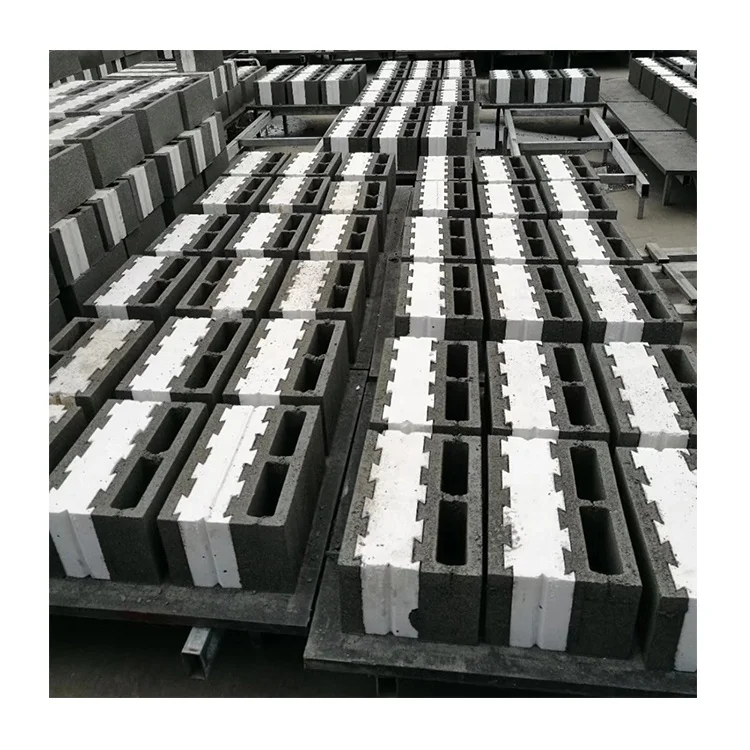
| Hollow Block (400×200×200 mm) | 1080–1440 | 8640–11520 |
| Hollow Block (400×150×200 mm) | 1440–1920 | 11520–15360 |
| Solid Brick (240×115×53 mm) | 5760–7680 | 46080–61440 |
| Rectangular Paver (200×100×60 mm) | 2160–2880 (basis: 20–25 s cycle) | 17280–23040 |
| Zigzag Paver (225×112.5×60 mm) | 2160–2880 (basis: 20–25 s cycle) | 17280–23040 |
Application Suitability
| Application | Material and Output Detail |
|---|---|
| Hollow block production | Crushed stone, river sand, and cement mixes for load-bearing and non-load-bearing masonry units |
| Solid brick manufacturing | Fine aggregate and cement blends for standard building bricks |
| Rectangular paving brick production | High-density aggregate mixes for pedestrian and light-traffic pavement surfaces |
| Interlocking (zigzag) paver output | Graded sand and cement combinations for heavy-duty interlocking paving layouts |
| Waste material utilization | Fly ash, slag, and recycled aggregate incorporation into structural and non-structural block formats |
Why the Mould Change Time Decides Your Real Format Flexibility
A block plant that can only run one format per shift because the mould swap consumes most of the morning is a single-product plant, regardless of what the brochure promised. The QT6-15 block machine specifications and mould capacity documentation lists every included format so the buyer knows exactly which products are ready from day one and which require additional mould investment.
The real cost of format flexibility is measured in minutes, not catalogue pages.
I have watched buyers invest in multi-format machines only to discover that the physical mould change, hydraulic reconnection, and PLC parameter adjustment together consumed enough time to cancel out the afternoon production run. The vibration frequency and hydraulic pressure settings that work for a 400×200×200 mm hollow block do not transfer directly to a 200×100×60 mm rectangular paver. Every format change means a full parameter review, and the time that takes is rarely mentioned in the quotation [NEED_CITE: mould change procedure and typical downtime across block machine tiers].
Matching Cycle Time to Block Format and Local Aggregate
The QT6-15 block machine specifications and mould capacity are not a single number. A 15–20 second moulding cycle applies to standard hollow block formats under controlled conditions. Paver production, particularly interlocking zigzag formats, typically requires a 20–25 second cycle because the higher density demand calls for longer vibration exposure and slower hydraulic compression. The vibration force of 45 kN at platform level must penetrate the full depth of the mould cavity, and denser aggregate blends or finer sand gradations shift the optimal vibration duration.
A buyer in West Africa working with laterite sand will need a different vibration profile than one using crushed granite in Southeast Asia. The cycle time per format adjusts accordingly, and the daily output figures in the specification table already reflect the standard range. Actual throughput at the buyer’s site depends on confirming the aggregate type, cement ratio, and moisture content before the press is configured.
Pallet Size as the Hidden Constraint on Your Curing Workflow
The 880×850 mm pallet is the physical link between the press output and the curing yard. Every block produced on this machine sits on that pallet until it is dry enough to handle. If the buyer’s existing curing racks, forklift tines, or stacking frames were designed around a different pallet dimension, the entire post-press workflow breaks down [NEED_CITE: pallet handling compatibility in block production lines]. This is not a problem that appears at installation. It appears on the first day of full production when pallets do not fit the rack spacing and the forklift operator cannot lift a loaded pallet without catching the adjacent one.
Cross-checking the pallet specification against the curing area layout and material handling equipment before the machine ships eliminates a category of delay that no amount of on-site adjustment can fix. The recommended factory area of 1200 m² assumes a standard pallet circulation pattern; a tighter site may require a modified pallet return system or a different stacking configuration altogether.
How Vibration Force and Hydraulic Pressure Shape Block Density
The 45 kN vibration force at 0–60 Hz works through platform vibration, meaning the energy enters the mix from below and compacts upward through the mould cavity. This is paired with hydraulic demolding, which controls the extraction speed so that freshly formed blocks are not damaged by sudden release. The combination determines the green strength of the block as it leaves the press, and green strength determines how many blocks survive the journey to the curing rack without corner damage or surface cracking.
The independent integrated hydraulic station sits apart from the main machine frame, which isolates it from the vibration and dust generated during the moulding cycle. This separation matters because hydraulic valve response time directly affects both the compression phase and the demolding phase. A station contaminated by concrete dust or subjected to constant vibration will see accelerated seal wear and slower valve shifts, which lengthen the effective cycle time and reduce the consistency of block density from the first piece to the last in a production run.
What Happens When the Machine Is Configured for the Wrong Mix
A block machine set up for a river sand and cement mix that the buyer cannot source locally will produce blocks that fail compressive strength tests, not because the machine is faulty, but because the vibration duration and hydraulic pressure were never adjusted for the actual aggregate. Laterite sand, volcanic ash, and crushed limestone all behave differently under platform vibration. The water-to-cement ratio that produces a workable mix with one aggregate will create a slurry or a dry crumble with another.
I have seen a buyer arrive at commissioning only to discover that the standard test blocks we produced at the factory used an aggregate profile nothing like what was available at the project site. The machine was technically performing to specification, but the output was unusable until the vibration frequency range and moulding cycle were recalibrated for the local material [NEED_CITE: aggregate variation impact on concrete block compressive strength]. This is why the aggregate sample and mix design must be reviewed before the machine is configured, not after it arrives.
Why Buyers Source the QT6-15 Through This Channel
Block machinery is the single focus here, which means the press, mould, pallet, and handling equipment are specified as one matched system. A QT6-15 configuration is never assembled from separate supplier catalogues; the pallet size, vibration force, and hydraulic pressure are selected together against the buyer’s target block format and local raw material.
Mould design covers the formats the buyer’s market actually sells, and custom mould drawings are reviewed before production so that the included format list matches real demand. The automation level is selectable, allowing a buyer to start with semi-automatic pallet handling and add automatic stacking and cubing as production volume grows. Installation support includes operator training that covers format-specific PLC parameter adjustment, not just general machine operation.
Documentation & Verification
- Line layout with capacity calculation stated per block format and cycle time assumption
- Mould drawing and format list confirming included block types and pallet dimensions
- Hydraulic and electrical schematic matching the independent integrated station configuration
- Voltage, frequency, and PLC display language confirmation before production begins
- Factory test record on the buyer’s specified block format and aggregate sample
- Packing photographs and customs documentation support for the 7 T machine shipment
Installation, Commissioning & Support
- Foundation plan sized to the 8200×1700 mm footprint with vibration isolation provisions
- Power supply matching the 37 kW overall power requirement on a dedicated circuit
- Machine dismantling and reassembly guidance for container loading and on-site positioning
- PLC touch screen commissioning with language set to the buyer’s operator preference
- Format-specific moulding cycle calibration using the buyer’s local aggregate sample
- Wear parts and mould list provided with recommended replacement intervals per component
What to Include in Your Technical Inquiry
To move from general interest to a workable QT6-15 configuration, the most useful starting information includes the specific block format and daily output target for the local market, the aggregate type and cement supply available at the project site, and the voltage and frequency standard for the destination country. Equally important is the pallet size already in use in any existing curing area, so the 880×850 mm pallet can be confirmed or an alternative discussed before the quotation is finalized.
Frequently Asked Questions
Q: How is QT6-15 block machine specifications and mould capacity calculated for each block format?
A: Output figures are derived from the moulding cycle time specific to each block dimension. The 400×200×200 mm hollow block runs on a 15–20 second cycle, while paver formats use a 20–25 second cycle due to higher density requirements. Daily capacity assumes continuous operation over an 8-hour shift with pallet circulation and raw material feed running without interruption.
Q: Which mould formats come with the machine and how long does a mould change take?
A: The included format list is confirmed before production based on the buyer’s market demand. Hollow blocks, solid bricks, rectangular pavers, and zigzag pavers are all available. Mould change involves mechanical swap, hydraulic reconnection, and PLC parameter adjustment, and the time required should be factored into the production schedule when planning multi-format days.
Q: How do vibration force and hydraulic pressure match my local aggregate and mix design?
A: The 45 kN vibration force at 0–60 Hz and the hydraulic demolding system are calibrated against the buyer’s aggregate sample and target mix design. Local materials like laterite sand or crushed limestone require different vibration durations and pressure profiles than standard river sand, and this calibration is completed before the machine ships.
Q: Is the 880×850 mm pallet compatible with my existing curing racks and forklift?
A: Pallet dimensions must be cross-checked against the curing rack spacing, forklift tine width, and any automatic stacking equipment already on site. If the existing infrastructure was built around a different pallet size, the mismatch will disrupt post-press handling from the first production day. Confirming this before order placement avoids costly on-site modifications.
Q: What voltage, frequency, and PLC language will be configured for my country?
A: Voltage and frequency are confirmed in writing before production to match the destination country’s electrical standard. The PLC touch screen interface language is set to the buyer’s preference so that operators can read fault diagnostics and parameter menus without translation barriers during commissioning and daily operation.