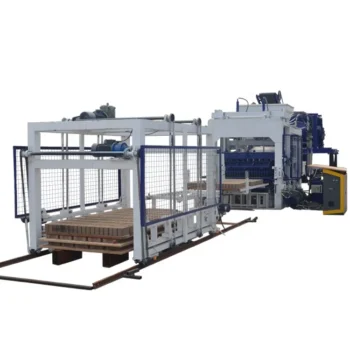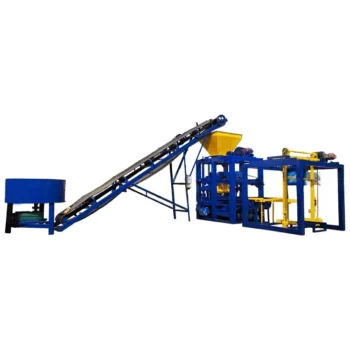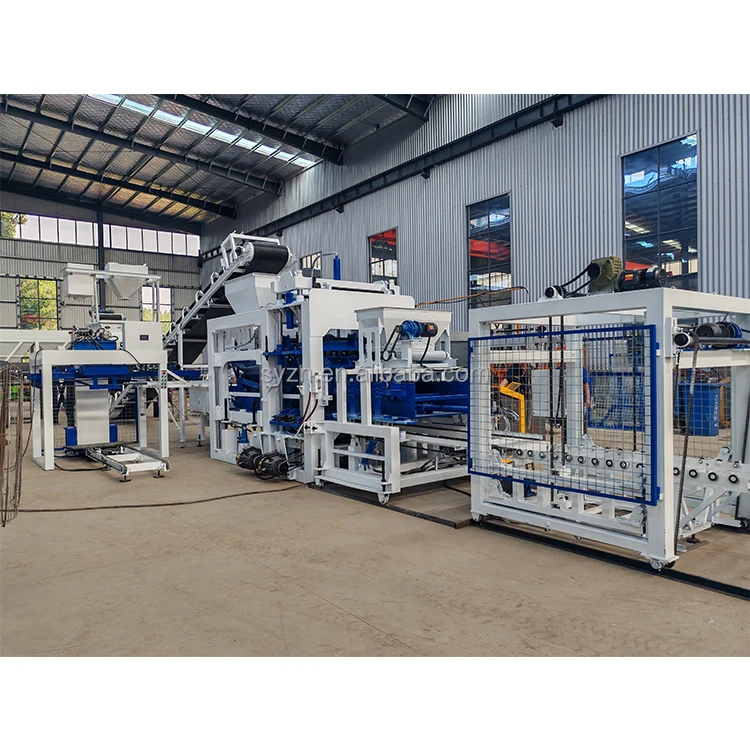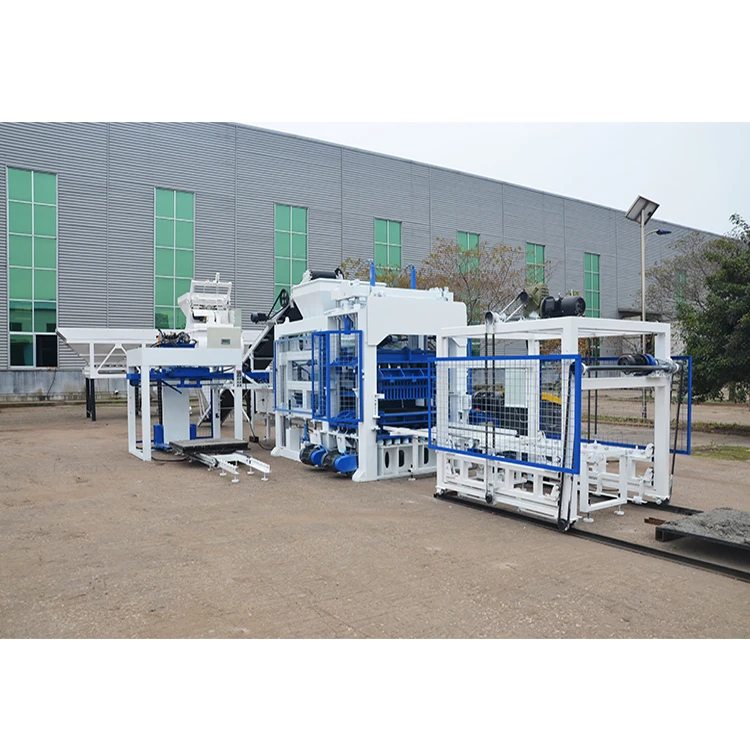

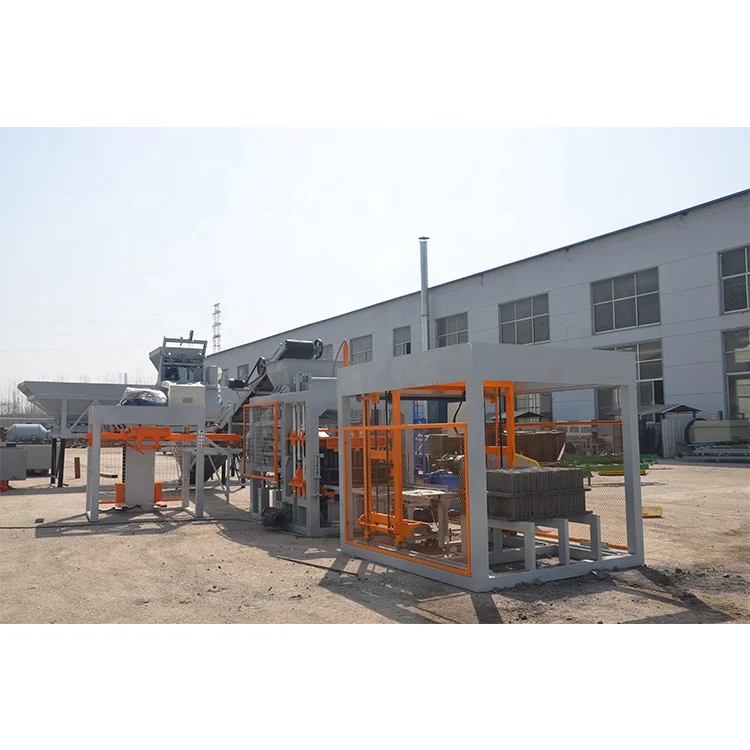


Description
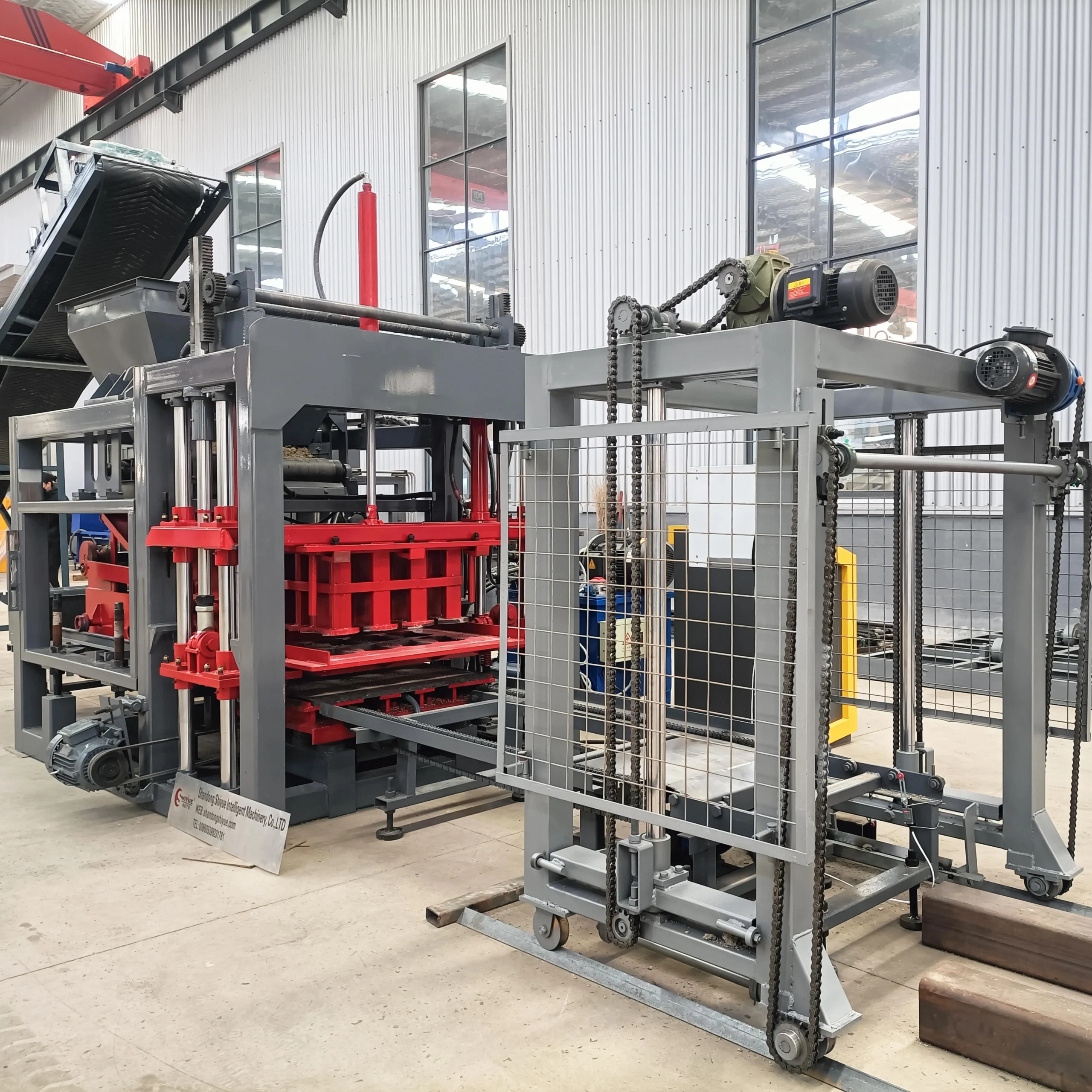
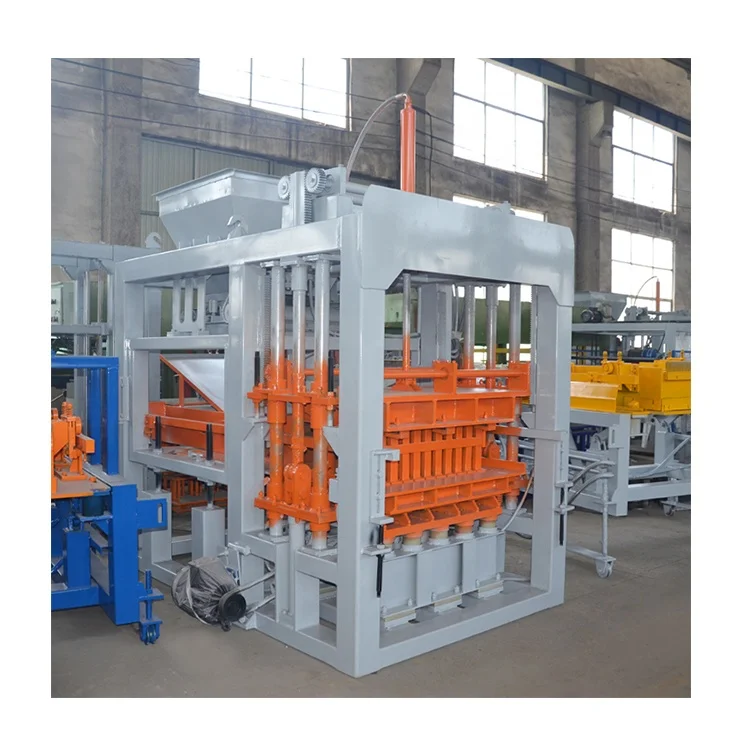
Matched system configuration — Every QT5-15 block machine is specified against the buyer’s actual block format, pallet size, and local aggregate rather than shipped as a catalogue default.
Technical Specifications
| Parameter | Value |
|---|---|
| Model | QT5-15 |
| Product Type | Automatic Concrete Block Making Machine |
| Overall Dimensions (L×W×H) | 7100×1600×2610 mm |
| Total Weight | 5 T |
| Molding Cycle | 15 s |
| Vibration Frequency | 0–60 Hz |
| Exciting Force | 40 kN |
| Total Power | 33.5 kW |
| Mixer Model | JS500 |
| Pallet Size | 1100×550 mm |
| Control System | PLC control system |
| Hydraulic Station | Included, high pressure |
| Automation Level | Fully automatic |
| Output — Hollow Block 400×200×200 mm | 5 pcs/mould, 450 pcs/hr, 3600 pcs/8 hr |
| Output — Hollow Block 400×150×200 mm | 6 pcs/mould, 540 pcs/hr, 4320 pcs/8 hr |
| Output — Solid Brick 400×100×200 mm | 8 pcs/mould, 720 pcs/hr, 5760 pcs/8 hr |
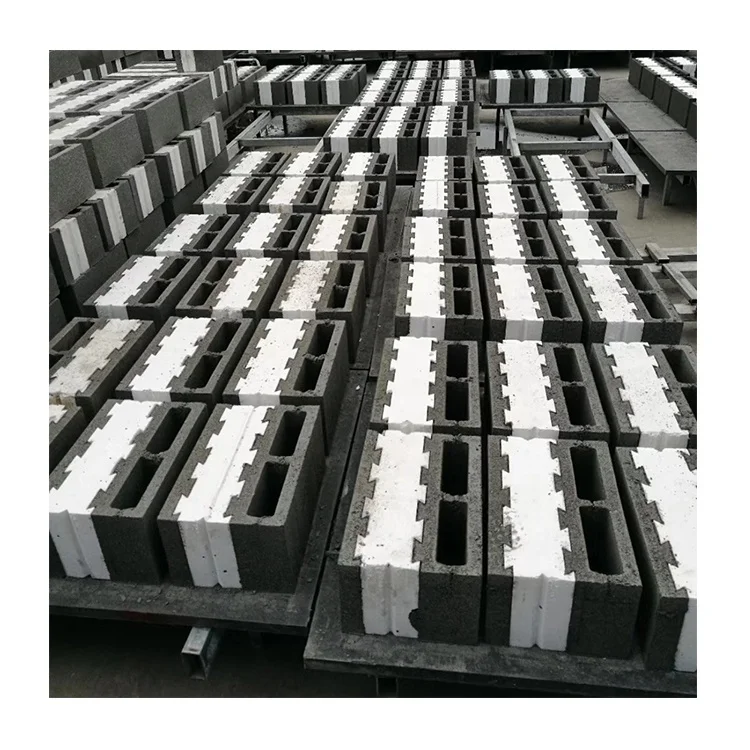
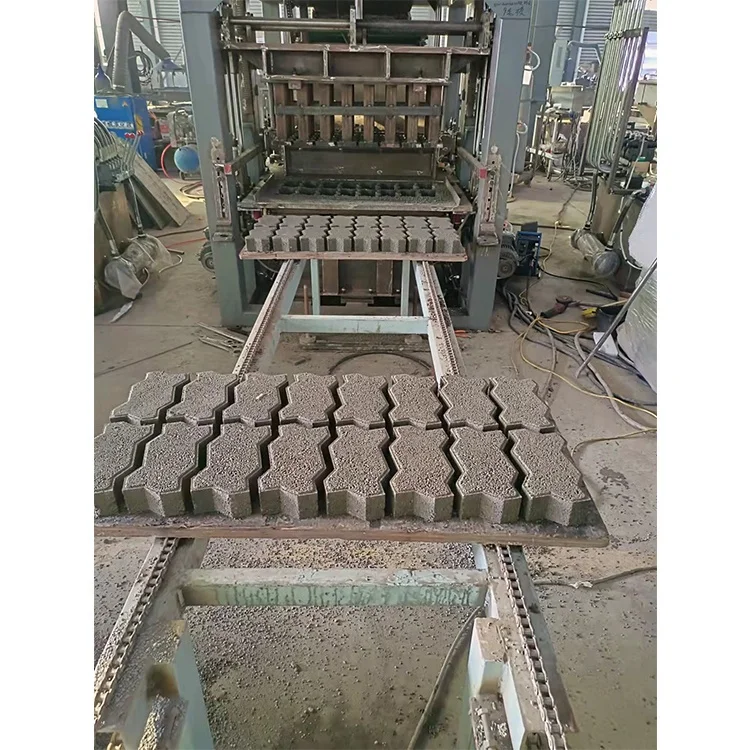
| Applied Products | Paver, solid block, hollow block, curbstone |
| Raw Materials | Crushed stone, sand, cement, dust, fly ash |
| Included Equipment | Block making machine, hydraulic station, PLC control system, pallet feeder, brick conveyor, block sweeper |
| Free Accessories | Manual hydraulic trolley, spare parts and tools |
| Voltage & Frequency | Basis to be confirmed with buyer’s local grid |
| Hydraulic Pressure | Basis to be confirmed against manufacturer catalog |
| Stacking Method | Basis to be confirmed (manual or automatic) |
| PLC Language Options | Basis to be confirmed before production |
Application Suitability
| Application | Material or Output |
|---|---|
| Hollow block production for masonry walls | Crushed stone, sand, cement, fly ash blends |
| Solid brick manufacturing | Cement-rich mixes with fine aggregate |
| Interlocking paver production for roads and yards | High-strength crushed stone and dust mixes |
| Curbstone forming for municipal projects | Dense aggregate with cement binder |
| On-site block production for housing developments | Locally sourced sand and stone dust |
What the QT5-15 Block Machine Specifications Leave Out About Daily Output
Capacity numbers are meaningless unless tied to a specific block format and mix design.
I have stood on job sites in West Africa where a brand-new block press sat idle because the catalogue promised a figure that assumed a hollow block the local market never buys. The owner had committed to a daily target based on a number that fell apart the moment they switched to the 150 mm partition block their customers actually ordered. The QT5-15 block machine specifications here list output per format — 450 pieces per hour for 400×200×200 hollow blocks, 540 for 400×150×200, and 720 for solid bricks — because that is the only honest way to present it. Molding cycle alone does not tell you throughput; the number of cavities per mould, the compaction time required by your aggregate, and the pallet return speed all reshape the real daily number. [NEED_CITE: common discrepancies between quoted and actual block machine output in field conditions]
How Mould Selection Defines What the QT5-15 Actually Produces
The 1100×550 mm pallet determines every mould that can run on this press. A buyer targeting both standard hollow blocks and paving stones needs to confirm that each format fits within that pallet boundary while leaving clearance for the brick conveyor and sweeper. We work from the buyer’s product list — not a generic mould catalogue — so the formats quoted are the ones the local market actually purchases.
Matching Vibration Force to Your Local Aggregate
The 40 kN exciting force and 0–60 Hz adjustable vibration frequency must align with the density and gradation of the stone available near your plant. Coarse crushed granite responds differently than fine river sand or fly-ash-heavy mixes, and the PLC control system lets the operator tune frequency and duration per format. Getting this wrong means blocks that crack during curing or fail compressive strength tests on site. [NEED_CITE: vibration frequency and aggregate matching in concrete block production]
Reading the QT5-15 Specifications Beyond the Data Sheet
The 15-second molding cycle is a starting point, not a guarantee across every block type. Denser formats like curbstones often need extended vibration and higher hydraulic dwell, which lengthens the cycle and reduces hourly throughput. The JS500 mixer must keep pace — if it cannot deliver a consistent batch within the press cycle, the operator is left waiting and output drops. The 33.5 kW total power draw requires a stable supply; voltage dips common in some industrial zones can trip the hydraulic station mid-press, damaging both the mould and the fresh block. The fully automatic sequence — pallet feeder, press, brick conveyor, block sweeper — removes manual handling between stations, but each link must be timed so the press never sits empty.
The Hidden Cost of Ignoring Pallet and Handling Details
Buyers who focus only on the press often discover, after arrival, that the pallet size does not match their curing racks or their forklift’s tine spacing. A mismatched pallet means blocks are moved by hand, slowing the entire line and negating the automation the buyer paid for. The curing area must accommodate the 1100×550 mm footprint at the spacing that allows air circulation; without this planning, blocks cure unevenly and strength varies across the batch. [NEED_CITE: pallet sizing and curing rack compatibility in block plant layout]
Why the QT5-15 Is Configured as a Complete Line
Block machinery is our single focus, so the machine, mould, pallet, and handling equipment are specified together rather than sourced from separate vendors. The configuration is set against the buyer’s actual mix design and target block format — not a catalogue default. Moulds are designed for the formats the buyer’s market sells, with custom drawings available. The automation level is selectable, so a plant can start with manual pallet handling and add stacking later. Installation includes on-site commissioning and operator training so the line runs at its rated cycle from the first week.
Documentation & Verification
- Line layout and capacity calculation stating the exact block format assumed for each QT5-15 output figure
- Mould drawing and format list covering every block type in your market
- Pallet specification cross-checked against your curing area dimensions and forklift capacity
- Voltage, frequency, and PLC display language confirmation document before production begins
- Factory test record demonstrating molding cycle and output on your specified block format
- Hydraulic and electrical schematic for your maintenance team
Installation, Commissioning & Support
- Foundation plan sized for the 7100×1600 mm footprint and 5 T operating weight of the QT5-15
- Dedicated electrical circuit rated for the 33.5 kW total power draw with voltage confirmed to your grid
- Hydraulic station pressure set and verified against your block strength requirement during commissioning
- PLC control system programmed in your preferred language before the machine leaves the factory
- Operator training covering mould change procedure, vibration tuning, and daily maintenance on the JS500 mixer
- Wear parts list with recommended reorder intervals for hydraulic seals and mould liners
What We Need to Size Your QT5-15 Correctly
Tell us the block formats your market buys, including dimensions and target compressive strength. Share the raw materials available locally — the type of stone, sand gradation, and whether fly ash is an option. Confirm your site voltage, frequency, and the language your operators need on the PLC display so commissioning is not delayed after the machine arrives.
Frequently Asked Questions
Q: How is the QT5-15 output capacity calculated for each block format?
A: Each output figure is based on the 15-second molding cycle applied to a specific mould cavity count. The 400×200×200 mm hollow block yields 5 pieces per cycle at 450 per hour, the 400×150×200 yields 6 at 540 per hour, and the solid brick yields 8 at 720 per hour. Actual throughput depends on mix consistency, pallet return speed, and operator rhythm.
Q: How do I match vibration force and hydraulic pressure to my aggregate?
A: The QT5-15 offers adjustable vibration from 0 to 60 Hz and a high-pressure hydraulic station. We configure both based on a sample of your local aggregate and target block strength. Coarse stone typically needs higher frequency and shorter duration, while fine sand or fly ash mixes need lower frequency with longer dwell.
Q: What is involved in changing moulds between block formats?
A: Mould changeover on the QT5-15 involves releasing the clamping bolts, lifting the current mould, positioning the new one, and recalibrating the PLC vibration and press parameters for the new format. We provide a procedure document and train your team during commissioning so the switch can be completed within a planned maintenance window.
Q: Is the 1100×550 mm pallet compatible with my existing curing setup?
A: Compatibility depends on your curing rack spacing and forklift tine width. We cross-check the pallet dimensions against your existing equipment before production. If your racks are sized for a different pallet, we adjust the specification or recommend rack modifications to avoid manual handling after arrival.
Q: How do I confirm voltage, frequency, and PLC language before shipment?
A: We collect your local grid specifications and preferred PLC display language during the configuration stage and include them in a written confirmation document. The electrical system and control panel are set to these values before the factory test, so no rewiring or reprogramming is needed on site.