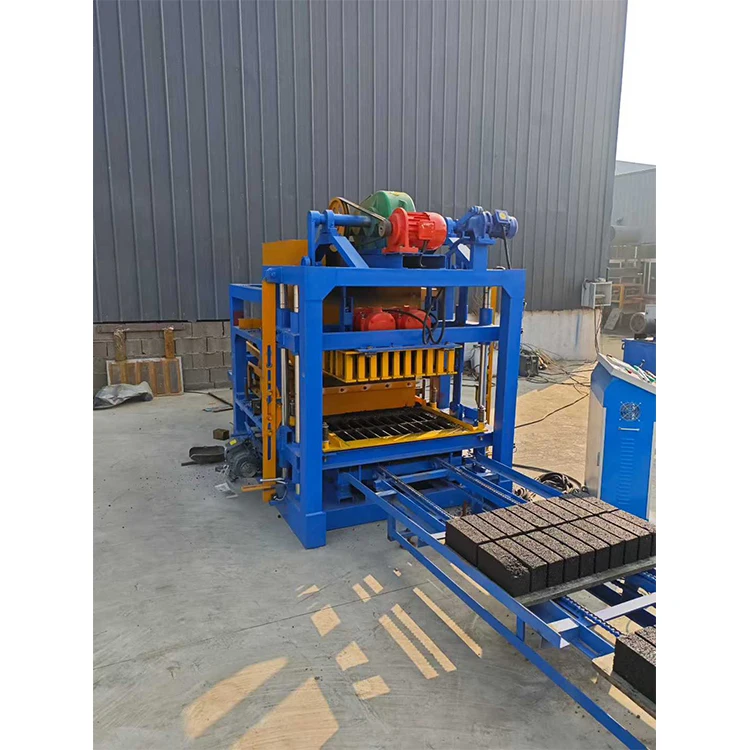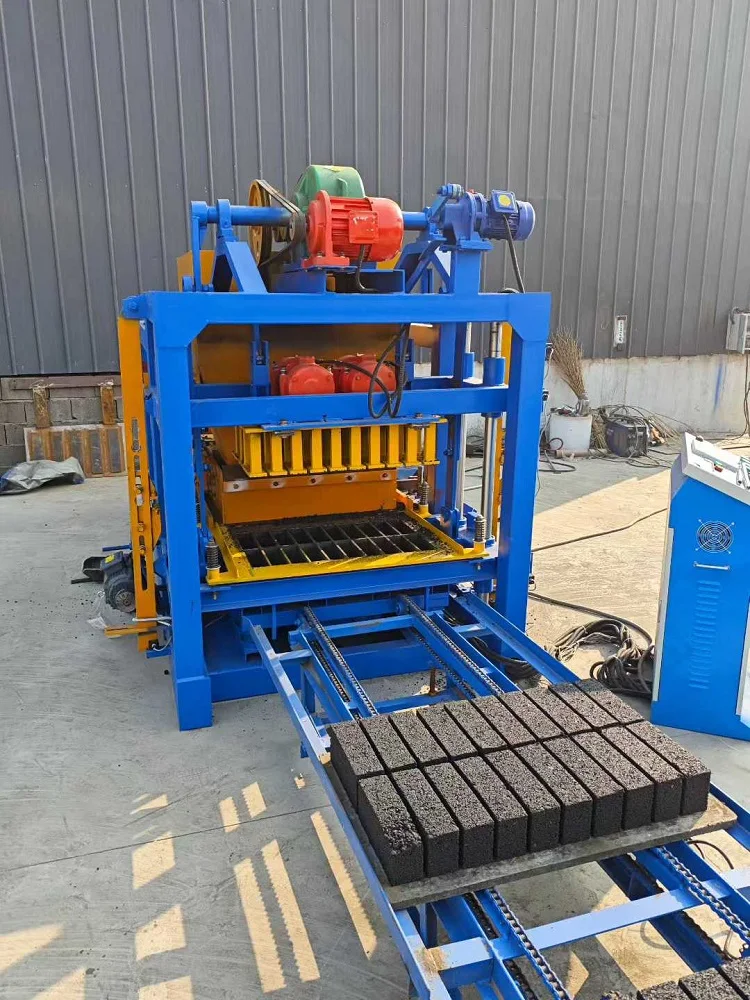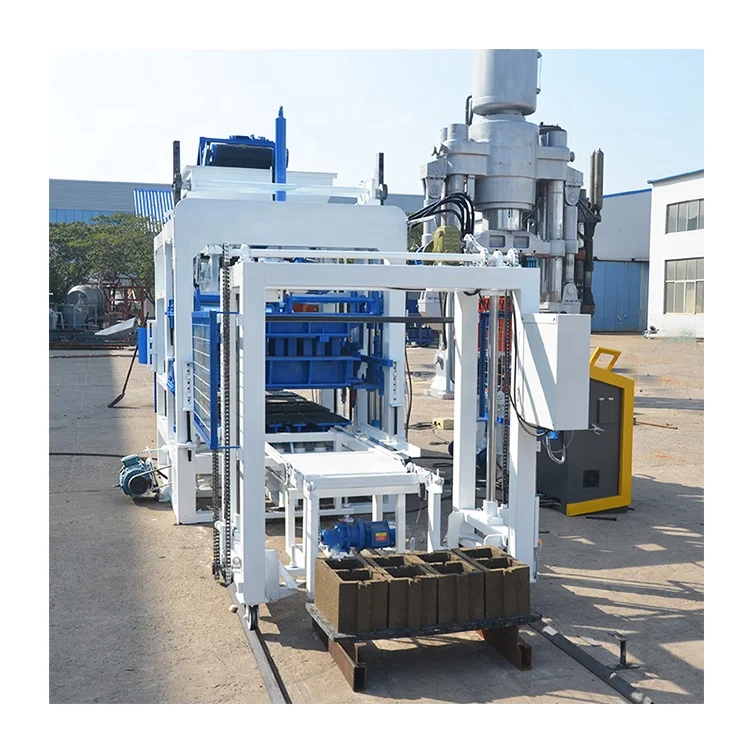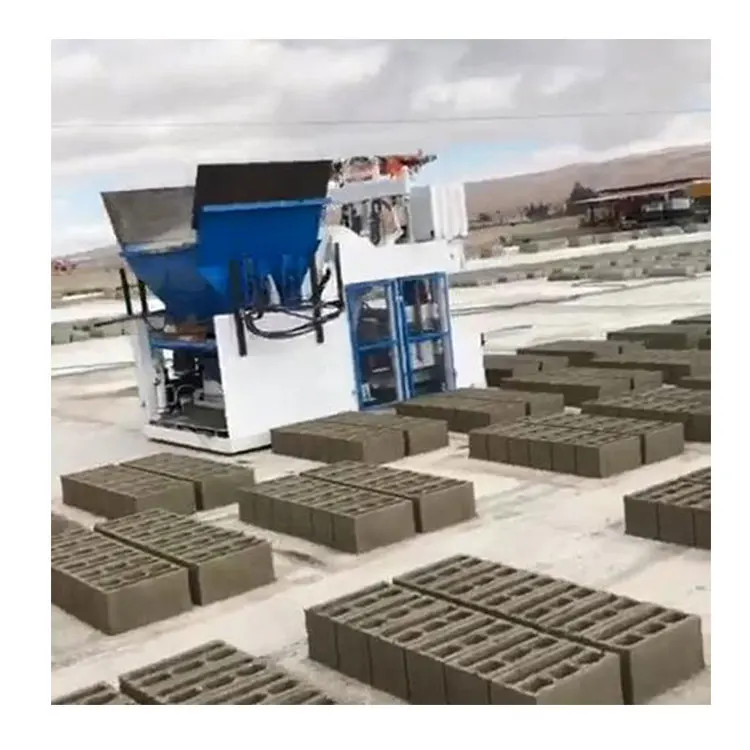

Description
Mould-to-Block Matching — Every QT5-15 configuration starts with your target block format and local aggregate, ensuring the vibration force and hydraulic pressure are set to produce the exact density and strength your market requires.
Technical Specifications
| Parameter | Value |
|---|---|
| Model | QT5-15 |
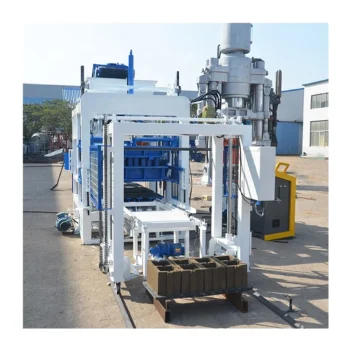
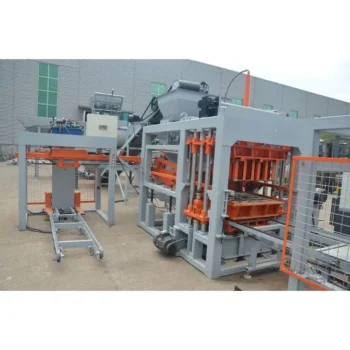
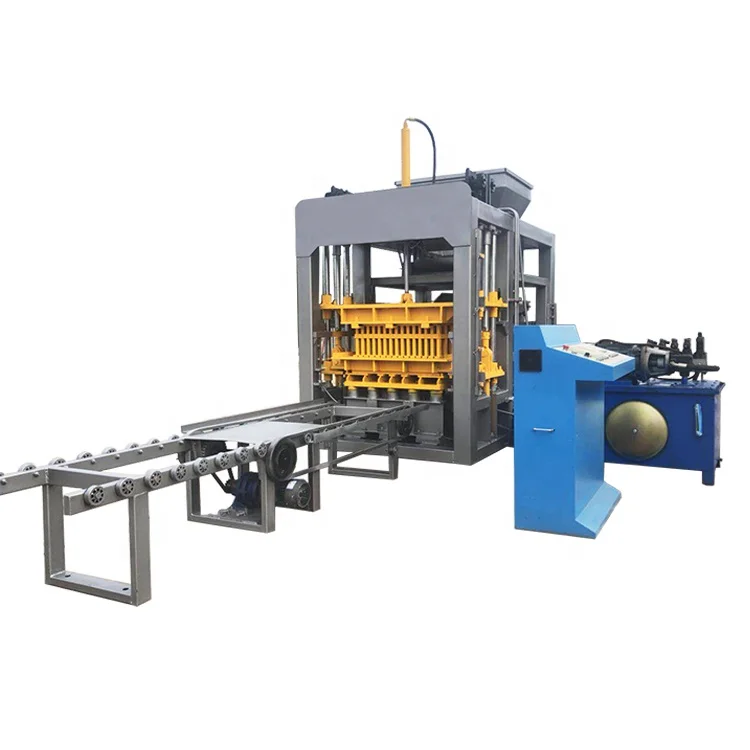
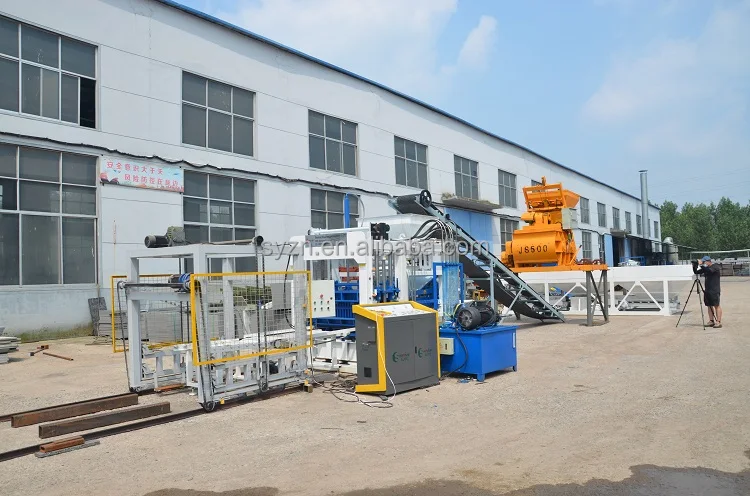
| Product Type | Automatic Hydraulic Concrete Block Making Machine |
| Rated Power | 26.5 kW |
| Hydraulic Pressure | 16–21 MPa |
| Vibration Force | 45 kN |
| Main Vibration Form | Platform vibration |
| Molding Cycle | 15–20 seconds |
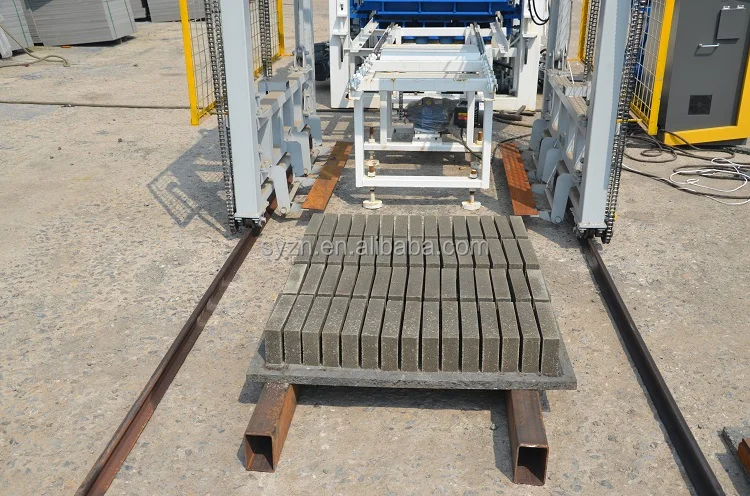
| Pallet Size | 1100 × 550 mm |
| Overall Dimensions | 7400 × 1950 × 2800 mm |
| Machine Weight | 6000 kg |
| Control System | PLC controller (language configurable) |
| Voltage | Configurable to buyer’s local supply (frequency to be confirmed) |
| Automation Level | Automatic with electric and hydraulic interlock |
| Output — Hollow Block (400×200×200 mm, 5 pcs/mould) | 7,200–9,600 pcs/day (basis: 15–20 s cycle, 8 h shift assumed, basis not stated in source) |
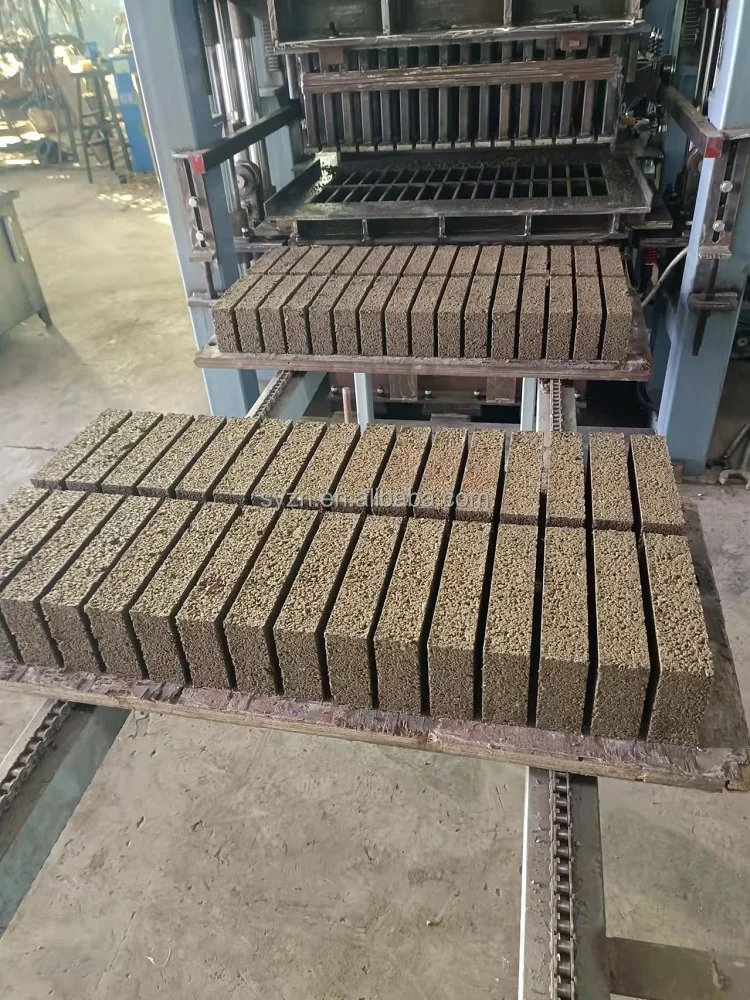
| Output — Porous Block (240×115×90 mm, 16 pcs/mould) | 23,000–28,800 pcs/day (basis: 15–20 s cycle, 8 h shift assumed, basis not stated in source) |
| Output — Standard Block (240×115×53 mm, 32 pcs/mould) | 61,440–70,400 pcs/day (basis: 15–17 s cycle, 8 h shift assumed, basis not stated in source) |
Application Suitability
| Application | Material or Output |
|---|---|
| Hollow block production for load-bearing walls | Crushed stone, sand, cement blends |
| Porous and perforated brick for infill masonry | Fly ash, sand, cement mixes |
| Paving and interlocking block for driveways and walkways | Gravel dust, slag, cement aggregates |
| Curbstone and kerb production | Dense aggregate and cement |
| Solid block for partition and foundation work | Industrial waste materials, cement |
What "7,200 Blocks per Day" Actually Means on the QT5-15
Capacity figures only hold true when the block format, cycle time, and shift length behind them are clearly stated.
A headline output number attached to the QT5-15 block machine specifications can look compelling until you realize it was calculated on a small solid brick rather than the 400 mm hollow block your project actually needs. Each format changes the cavity count, the vibration duration, and the demoulding behavior, which means the same press produces vastly different daily volumes depending on what sits on the pallet. Buyers who skip the per-format breakdown often find their real output falls noticeably short once production starts [NEED_CITE: block format impact on cycle time and daily throughput].
Per-Format Cycle Time and Realistic Daily Output
The QT5-15 block machine specifications list a 15–20 second molding cycle, but that range shifts depending on the block geometry. A 400 mm hollow block with five cavities requires longer vibration to fully compact the thin webs, while a 32-cavity standard solid brick can release faster. Quoting capacity without naming the format is essentially quoting a number detached from the product you intend to sell.
Matching Vibration Force to Your Aggregate Profile
Platform vibration at 45 kN must work together with hydraulic pressure between 16 and 21 MPa to achieve target block density. If the local aggregate is lightweight volcanic pumice rather than dense river gravel, the compaction energy required is different. A mismatch shows up as inconsistent block strength across the pallet face, and no amount of PLC tuning compensates for poorly paired mechanical forces [NEED_CITE: vibration and hydraulic pressure relationship in concrete block compaction].
How Vibration and Pressure Shape Block Density
The 45 kN vibration force agitates the concrete mix inside the mould box, driving air out and forcing aggregate particles into tight contact. Hydraulic pressure at 16–21 MPa then locks that particle arrangement in place before demoulding. If vibration is too low for a coarse aggregate, voids remain and block weight drops below standard. If pressure is excessive for a fine sand mix, the material extrudes through the mould gaps and damages the edges. The pallet size of 1100 × 550 mm also determines how many blocks cure per cycle and how they fit onto your existing curing racks, so specifying pallet dimensions against your forklift capacity and yard layout prevents handling bottlenecks downstream.
The Cost of Skipping the Format Conversation
Ordering a QT5-15 based on a single headline capacity number often leads to a line that cannot meet daily delivery commitments for the formats the market actually buys. The machine arrives, the moulds are installed, and the shift supervisor quickly discovers the cycle time on the 400 mm hollow block is longer than the brochure suggested because the vibration duration was never confirmed for that specific geometry [NEED_CITE: common block machine output shortfalls from unspecified cycle assumptions]. Mould changes then take far longer than expected because the quick-change mechanism was not included in the original scope.
Why Sourcing the Matched System Matters
Every QT5-15 we configure is sized against the buyer’s actual block format, local aggregate sample, and target daily volume rather than a catalogue default. Mould drawings are reviewed and approved before production so cavity count and block dimensions align with market requirements. Pallet material and dimensions are chosen to match the curing racks and forklift fleet already on site. Voltage, frequency, and PLC display language are confirmed in writing before assembly begins. Factory testing runs the exact block format the buyer will produce, so the test record reflects real conditions rather than a generic sand mix.
Documentation & Verification
- Capacity calculation sheet stating block format and assumed shift length
- Mould drawing and format list for every block type in scope
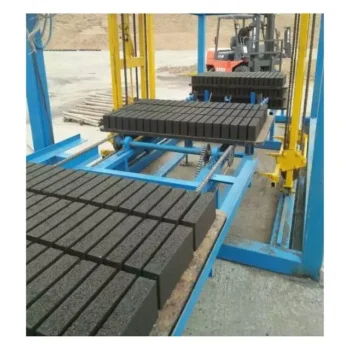
- Pallet specification matched to curing rack spacing and forklift load limit
- Voltage, frequency, and PLC language confirmation document
- Factory test record on the buyer’s target block format
- Hydraulic and electrical schematic for local maintenance teams
Installation, Commissioning & Support
- Foundation plan sized to the 7400 × 1950 mm machine footprint and 6000 kg operating weight
- Dedicated power circuit confirmed against the 26.5 kW rated load and local voltage
- Dismantling and container loading plan for safe transit and site reassembly
- On-site commissioning with cycle time verification on the buyer’s block format
- PLC language set and operator training on mould change and daily maintenance
- Wear parts list covering vibration springs, hydraulic seals, and mould liners
What to Include in Your Inquiry
To size the QT5-15 correctly, share the block formats your market demands, the local aggregate type available, and the daily volume you need per format. Confirm the voltage and frequency at your site, the PLC language your operators prefer, and whether your curing area can accept the 1100 × 550 mm pallet. If you have an existing mixer or batching plant, note its capacity so the feeding system can be matched.
Frequently Asked Questions
Q: How is daily output calculated for each block format on the QT5-15?
A: Output is derived from the molding cycle time, the number of cavities per mould, and the assumed shift length. A hollow block with five cavities at a 15–20 second cycle yields a different daily total than a 32-cavity standard brick at a 15–17 second cycle. We provide a capacity sheet stating the exact format and shift assumption behind every figure.
Q: Which mould formats are available, and what is a realistic mould change time?
A: Moulds cover hollow, solid, porous, paving, interlocking, and curbstone formats. Change time depends on whether a quick-change carriage is specified or a manual bolt-on system is used. We confirm the procedure and expected duration for each format during the proposal stage so it matches your production schedule.
Q: How should pallet size and material be chosen?
A: The standard 1100 × 550 mm pallet must align with your curing rack spacing, yard layout, and forklift tine width. Material selection — bamboo, steel, or composite — affects pallet weight, lifespan, and block release quality. We cross-check these factors against your site conditions before finalizing the pallet specification.
Q: Can vibration force and hydraulic pressure be adjusted for local aggregate?
A: Yes. The 45 kN vibration and 16–21 MPa hydraulic range can be tuned to match lightweight pumice, dense crushed stone, or fly ash blends. We request an aggregate sample and target block strength to set the correct compaction parameters before factory testing.
Q: What electrical and control details are confirmed before shipment?
A: Voltage, frequency, and PLC display language are confirmed in writing before production begins. This prevents commissioning delays caused by incompatible power supplies or control screens that operators cannot read on arrival.