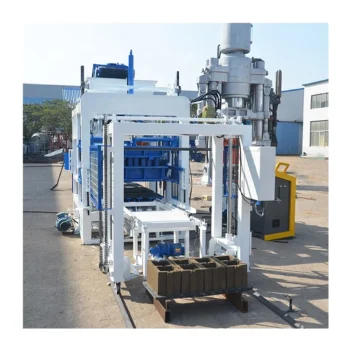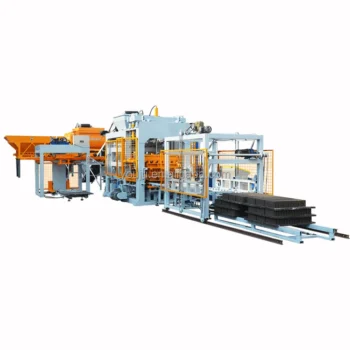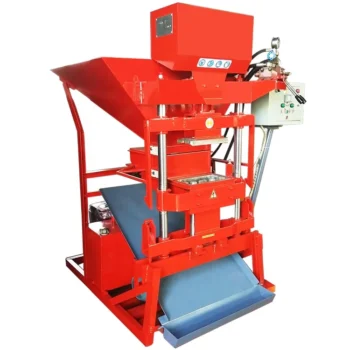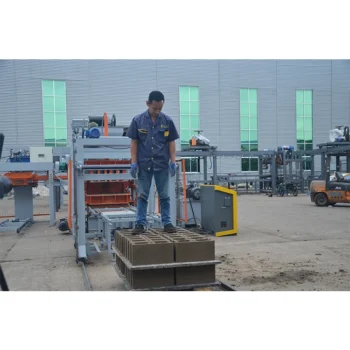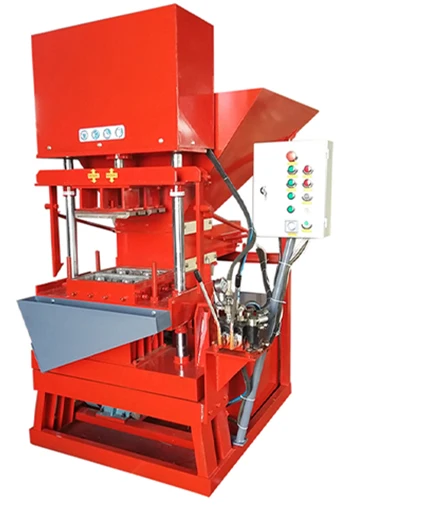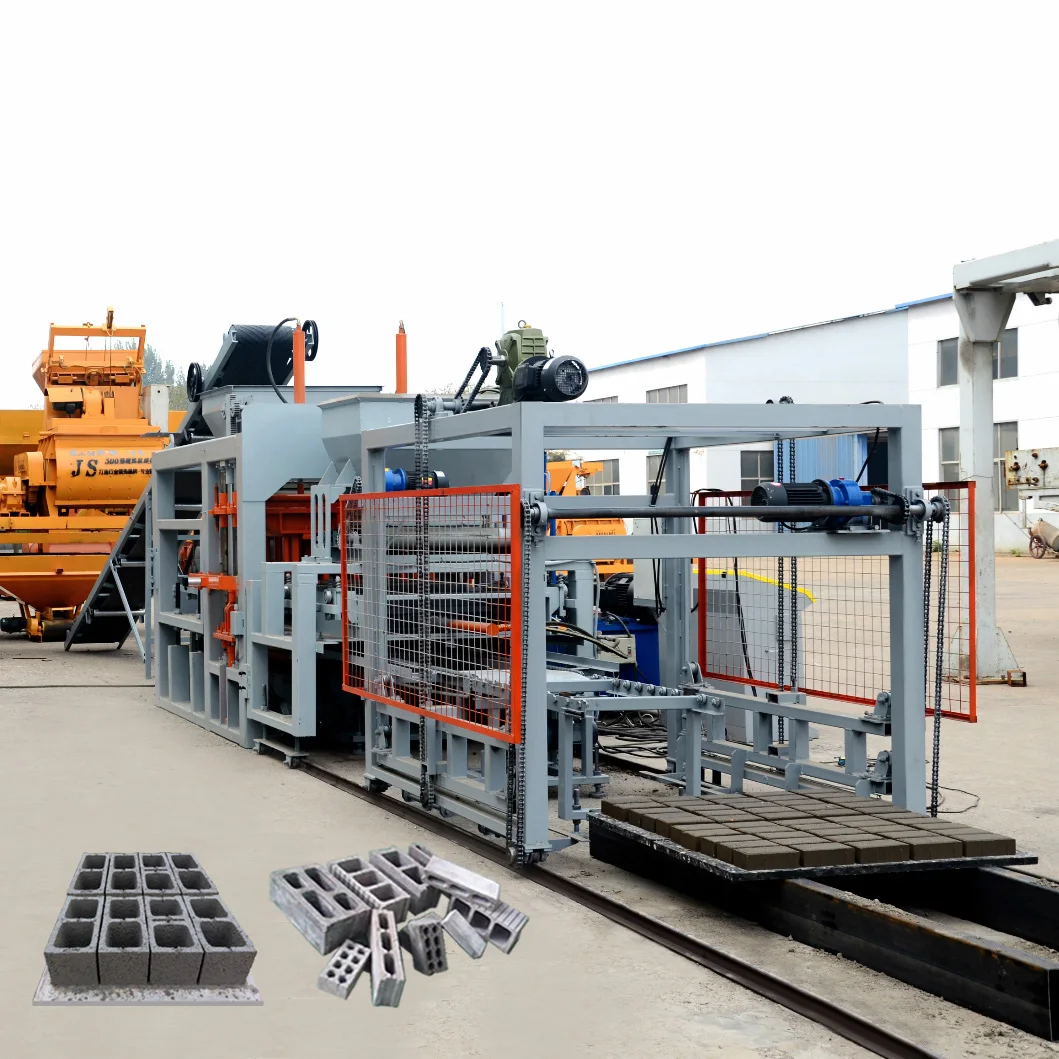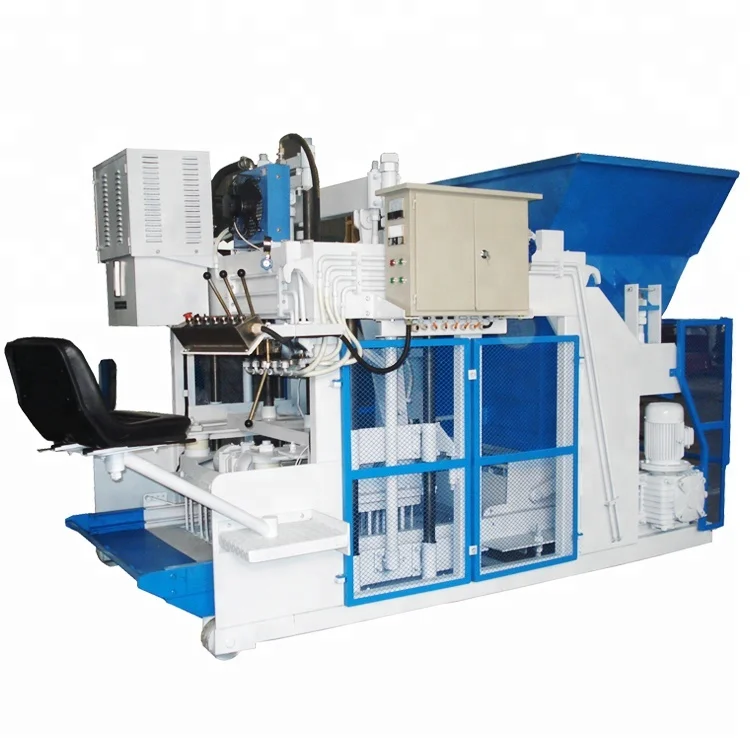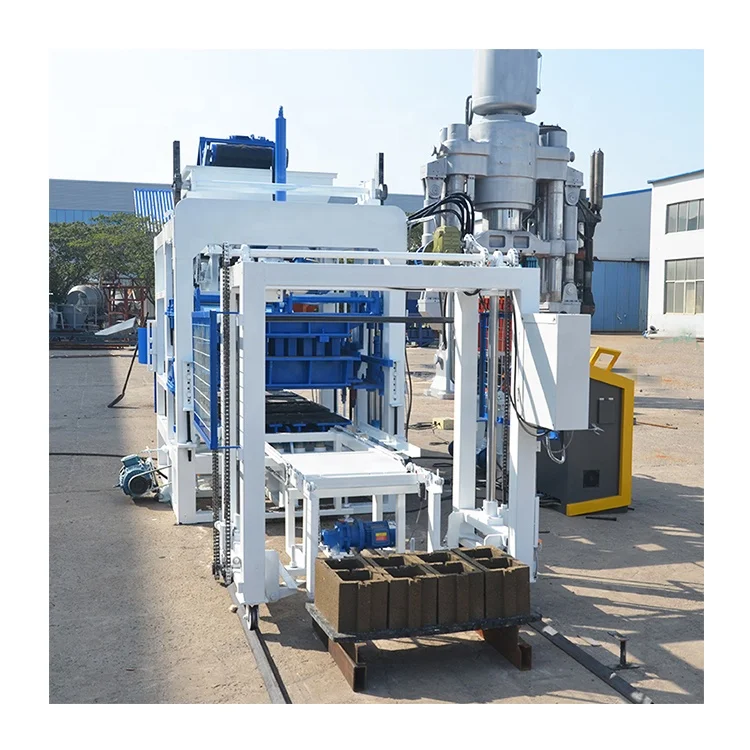
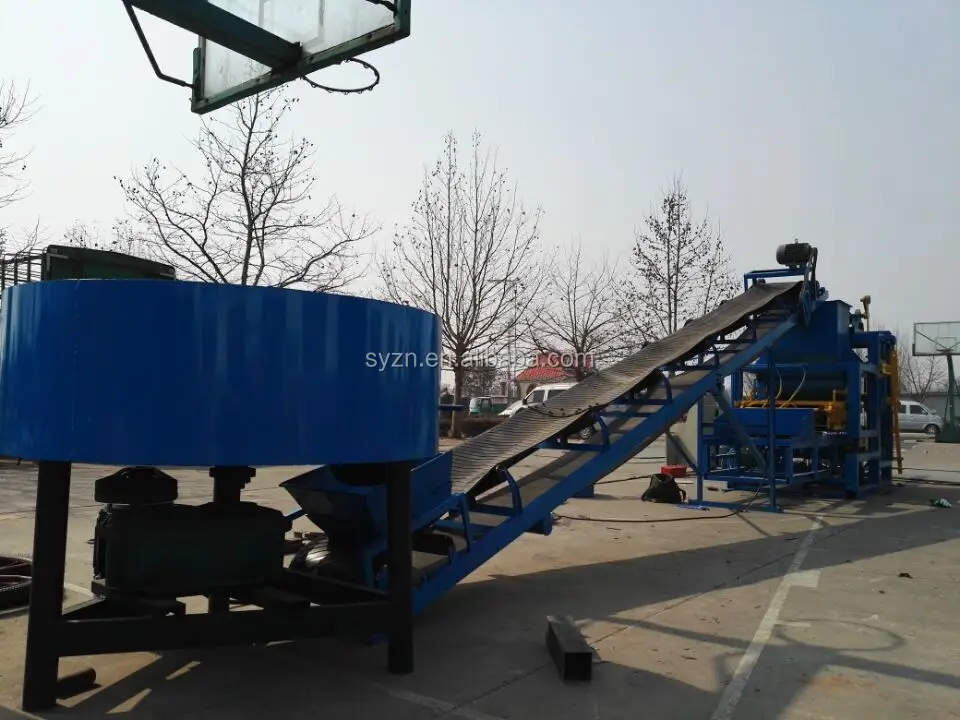
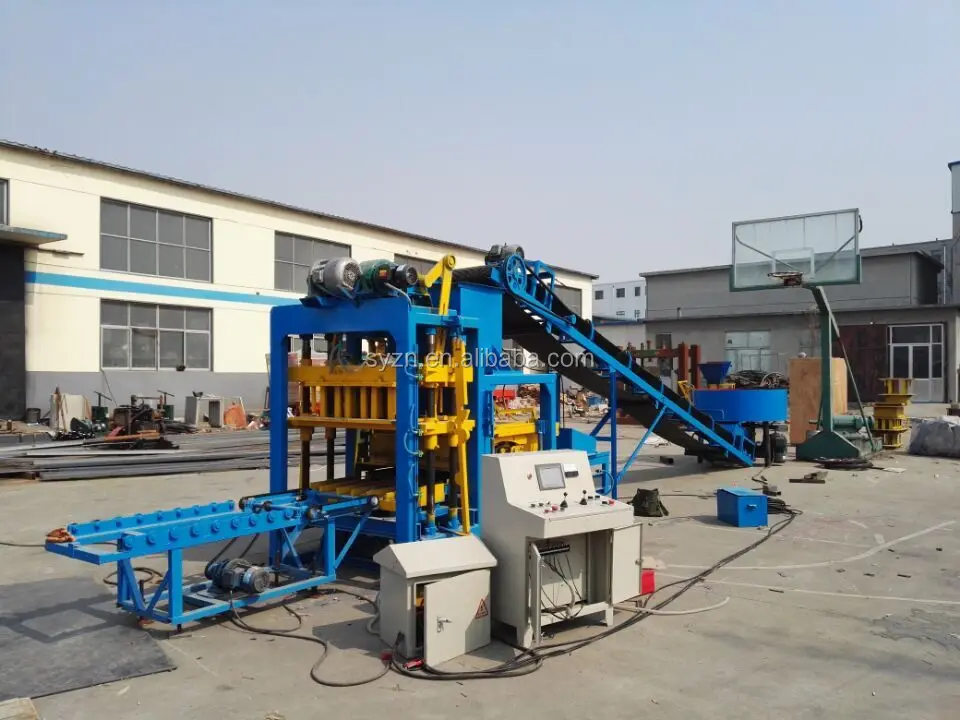
Description
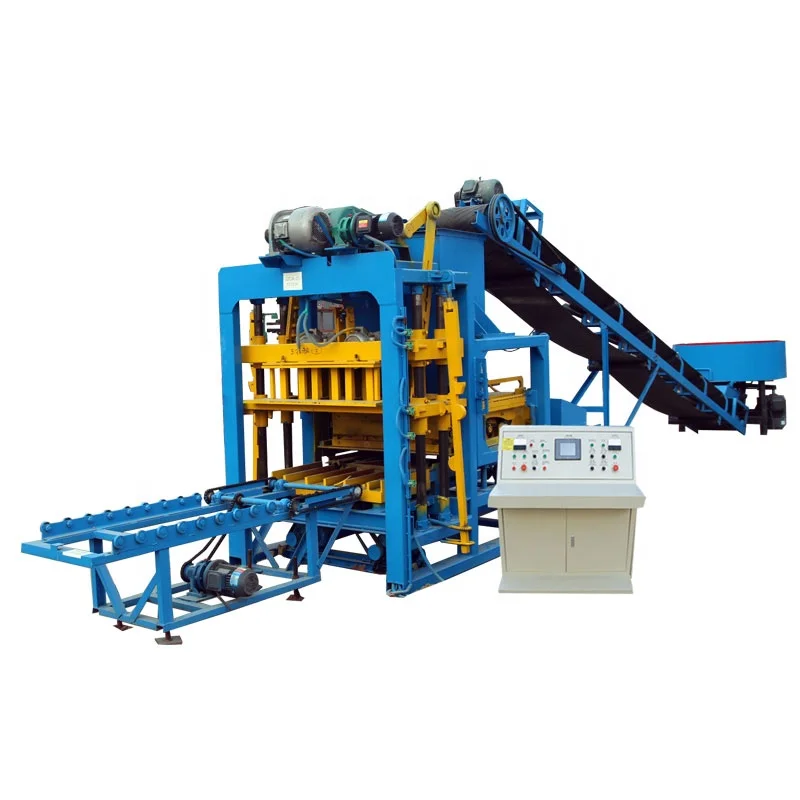
Matched System Supply — machine, mould, pallet and handling specified together so the QTJ4-25 cycle time translates into the daily output your curing area can actually absorb.
Technical Specifications
| Parameter | Value |
|---|---|
| Model | QTJ4-25 |
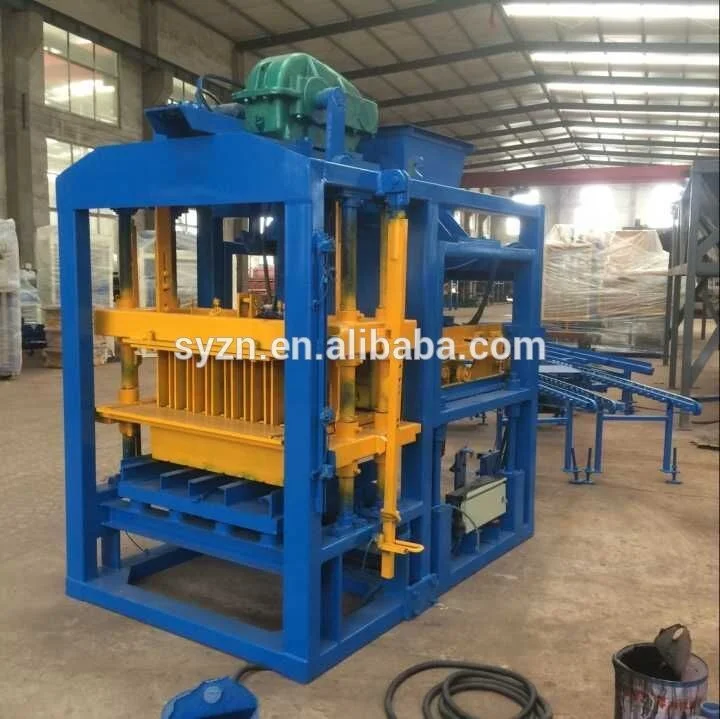
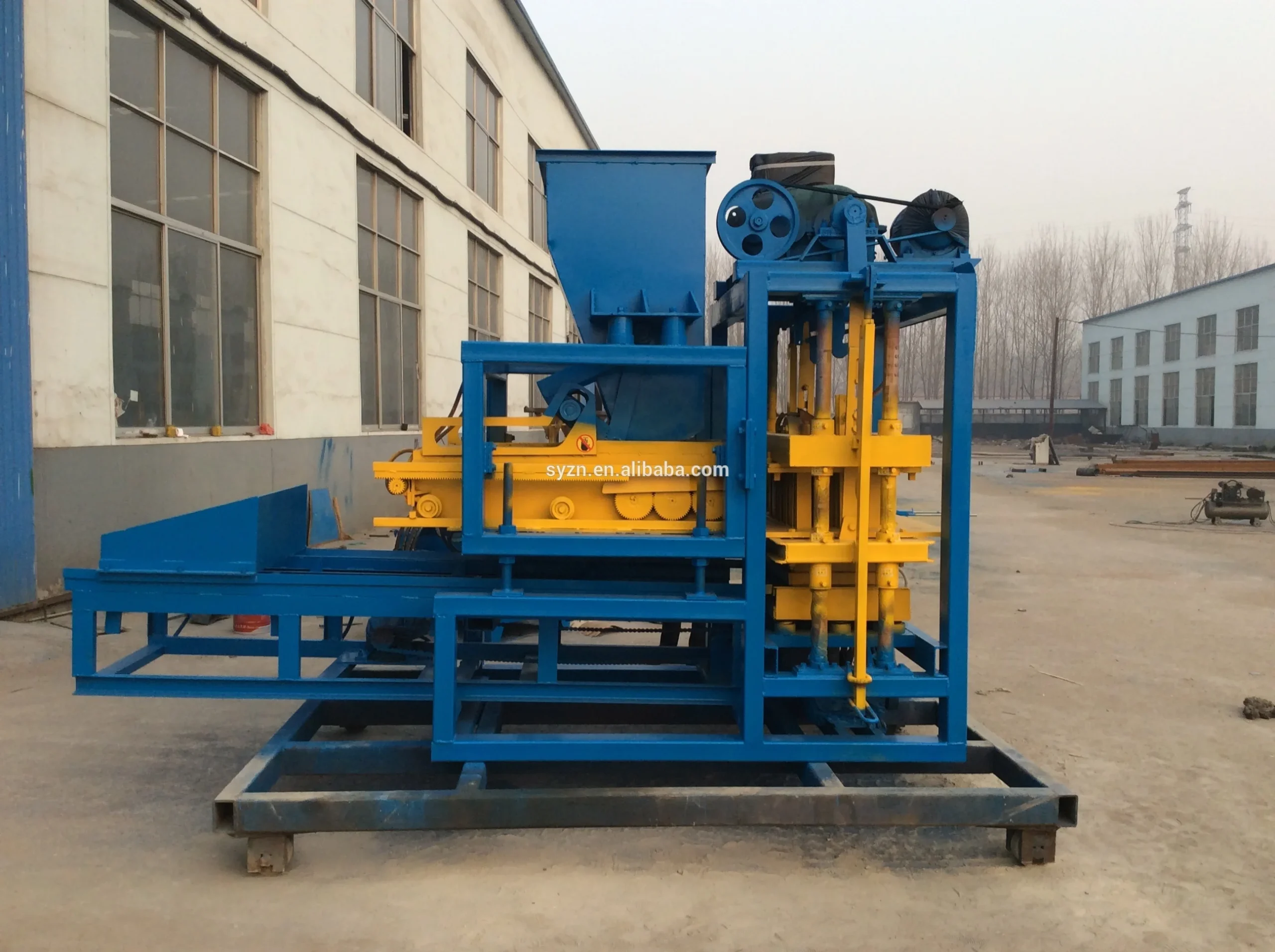
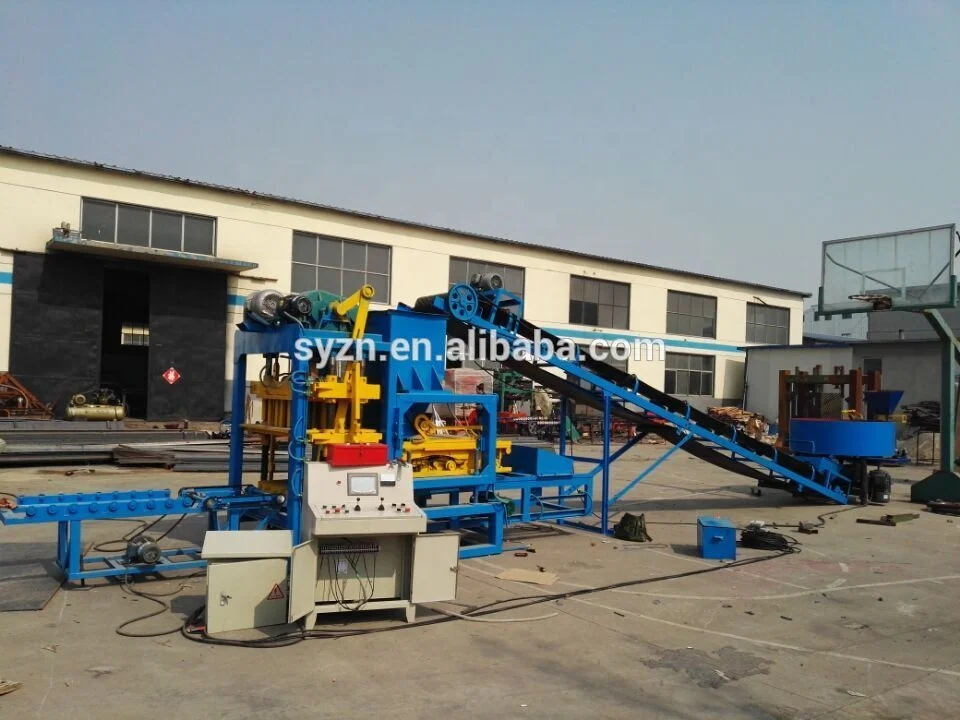
| Product Type | Automatic Concrete Block Making Machine |
| Overall Dimensions (L×W×H) | 6400×1500×2700 mm |
| Total Mass | 3500 kg |
| Cycle Time | 25 s |
| Output Capacity | 3600 pcs/day (8 h) (basis not stated in source) |
| Pallet Size | 850×480 mm |
| Operating Staff | 1–2 staff |
| Rated Power | 17 kW |
| Rated Pressure | 21 MPa |
| Mould Change System | Exchangeable moulds |
| Automation Level | Semi-automatic (electro-mechanical integration) |
| Voltage & Frequency | 380 V, 3-phase, 50 Hz (customizable to local voltage) |
| Warranty | 1 year (excluding wearing parts) |
Application Suitability
| Application | Material or Output |
|---|---|
| Hollow block production | Crushed stone, sand, cement, fly ash |
| Solid block manufacturing | Gravel, slag, dust blended with cement |
| Paving and interlocking block runs | Colored aggregates with fine sand |
| Curbstone forming | Coarse aggregate and high-cement mixes |
| On-site construction block supply | Locally sourced sand and crushed stone |
What "3600 Pieces per Day" Leaves Out About QTJ4-25 Block Machine Specifications
Daily output only holds true when the block format, mould cavity count and local aggregate are all named.
Many quotations for a QTJ4-25 block machine specifications sheet list a single daily number without saying whether that figure assumes a 400×200×200 hollow block or a 225×112.5×60 paver. I have watched buyers sign off on a capacity number, then discover on site that their river sand carries high clay content, extending the vibration cycle and cutting real output nearly in half [NEED_CITE: aggregate moisture and clay content effects on vibration cycle time]. The QTJ4-25 cycle time of 25 seconds was measured under controlled conditions; your actual number depends on the format you run and the mix you can source locally.
Output Breakdown by Block Format and Mould Cavity Count
When you review QTJ4-25 block machine specifications, the mould cavity count is what turns cycle time into hourly throughput. A 400×150×200 mm hollow block mould carries five cavities, yielding 600 pieces per hour and a theoretical 4800 pieces over an eight-hour shift. Switch to a 225×112.5×60 mm paver mould with twelve cavities and the same 25-second cycle produces 960 pieces per hour. Listing output per format keeps expectations honest and lets you match the machine to the block your market actually buys.
Pallet Size and Curing Area Alignment
The 850×480 mm pallet is the link between press output and your curing rack capacity. If your existing forklift tines are spaced for a different pallet width, every loaded pallet needs re-handling before it enters the curing zone. Buyers who overlook this detail end up stacking blocks by hand at the end of the line [NEED_CITE: pallet handling bottlenecks in small block plants]. Confirm pallet dimensions against your curing racks, forklift capacity and stacking height before the QTJ4-25 leaves the factory.
Rated Pressure, Vibration Force and Local Aggregate
The QTJ4-25 delivers a rated pressure of 21 MPa, but pressure alone does not guarantee block strength. Vibration force and hydraulic pressure must be matched to the aggregate gradation and cement ratio available in your region. A mix with high dust content absorbs vibration differently from clean crushed stone, altering compaction density. When the parameters are set for a catalogue default rather than your actual material, blocks leave the press with inconsistent strength from batch to batch [NEED_CITE: vibration force and hydraulic pressure matching to aggregate gradation].
The Hidden Cost of Unconfirmed Voltage and Control Language
A machine wired for 380 V 50 Hz arrives in a country running 440 V 60 Hz and the motor burns out during commissioning. Control panels labelled only in a language the local operator cannot read lead to incorrect parameter adjustments, shortening component life. These issues are entirely avoidable if voltage, frequency and display language are confirmed before the QTJ4-25 is crated. Yet they remain among the most common reasons installation stretches from days into weeks [NEED_CITE: voltage and frequency standards by export market].
Why Source the QTJ4-25 Here
Block machinery is our single focus, so the press, mould, pallet and handling equipment are specified as one matched set rather than sourced from separate vendors. Configuration starts from your local aggregate and target block format, not a catalogue default. Moulds are designed for the formats your market sells, including custom drawings when standard cavities do not fit. Automation level is selectable, allowing you to begin semi-automatic and add stacking or batching later. Installation includes operator training so your team understands cycle time adjustments for different mixes.
Documentation & Verification
- Line layout stating the block format assumed for the QTJ4-25 daily output figure
- Mould drawing with cavity count per format to verify pcs/mould independently
- Pallet specification matched to your curing rack spacing and forklift capacity
- Voltage, frequency and control display language confirmation before shipment
- Factory test record run on your requested block format before crating
Installation, Commissioning & Support
- Foundation pad sized for the 6400×1500 mm footprint and 3500 kg mass
- Dedicated 17 kW circuit at confirmed voltage and frequency for the QTJ4-25
- Machine shipped partially dismantled with re-assembly guidance on site
- First-run cycle time adjustment against your local mix design and aggregate
- Operator training on mould change procedure and pallet feeding routine
- Wear parts list identifying hydraulic seals and vibration springs for stocking
Preparing Your Enquiry for the QTJ4-25
Tell us which block format sells in your market and the daily quantity your buyers expect. Share the aggregate types and cement brands available locally, along with samples if possible. Confirm your site voltage, frequency and preferred control panel language so the QTJ4-25 block machine specifications are locked before production begins.
Frequently Asked Questions
Q: How do I verify the real daily output of the QTJ4-25 for my block format?
A: Request the capacity calculation sheet that names the exact block format, mould cavity count and cycle time assumed. Compare the pcs/mould figure against the mould drawing we supply. If your aggregate differs from the test sample, ask for a revised cycle time estimate before the order is confirmed.
Q: What mould formats are available and how does cavity count affect output?
A: The QTJ4-25 accepts exchangeable moulds from 400×250×200 mm hollow blocks at three cavities up to 225×112.5×60 mm pavers at twelve cavities. More cavities mean more pieces per 25-second cycle, so choosing the right mould directly sets your hourly throughput.
Q: How does the 850×480 mm pallet relate to my curing setup?
A: Measure your curing rack width and forklift tine spacing before ordering. If the pallet does not match, every loaded board requires manual re-handling. We confirm pallet size and material against your existing infrastructure so blocks move from press to curing zone without extra labour.
Q: What voltage and control options are available before shipment?
A: Standard supply is 380 V three-phase 50 Hz, but voltage and frequency can be customized to your local grid. We also confirm the PLC or relay display language so operators read instructions in a familiar language, avoiding mis-set parameters during commissioning.