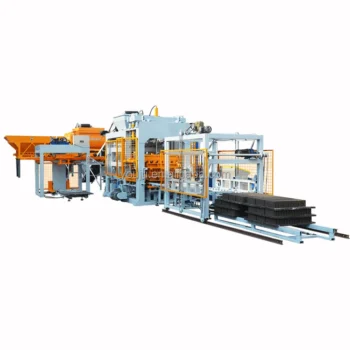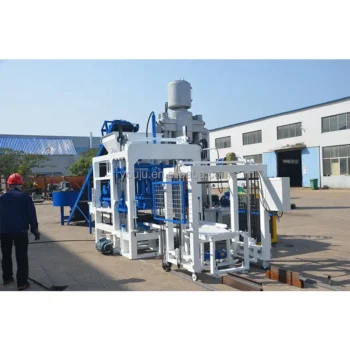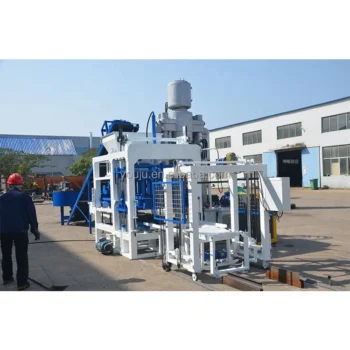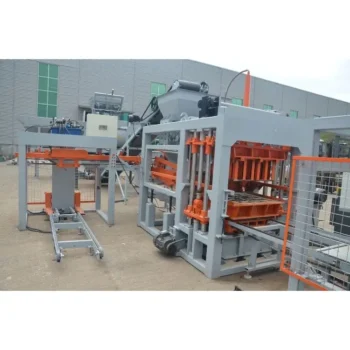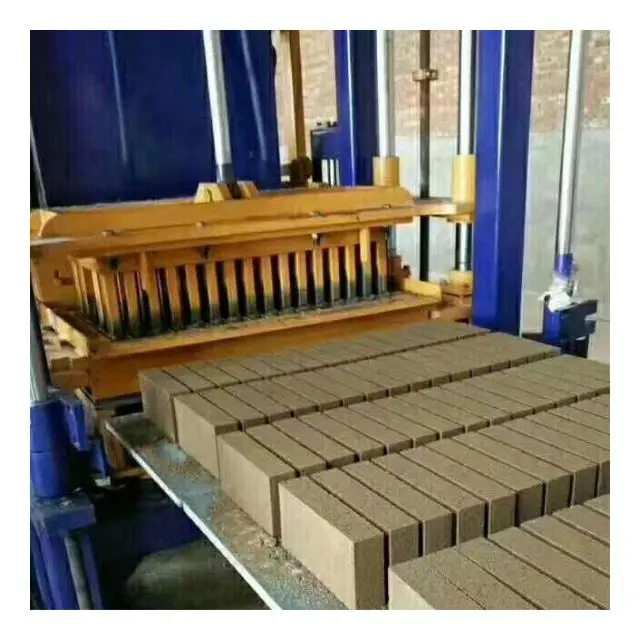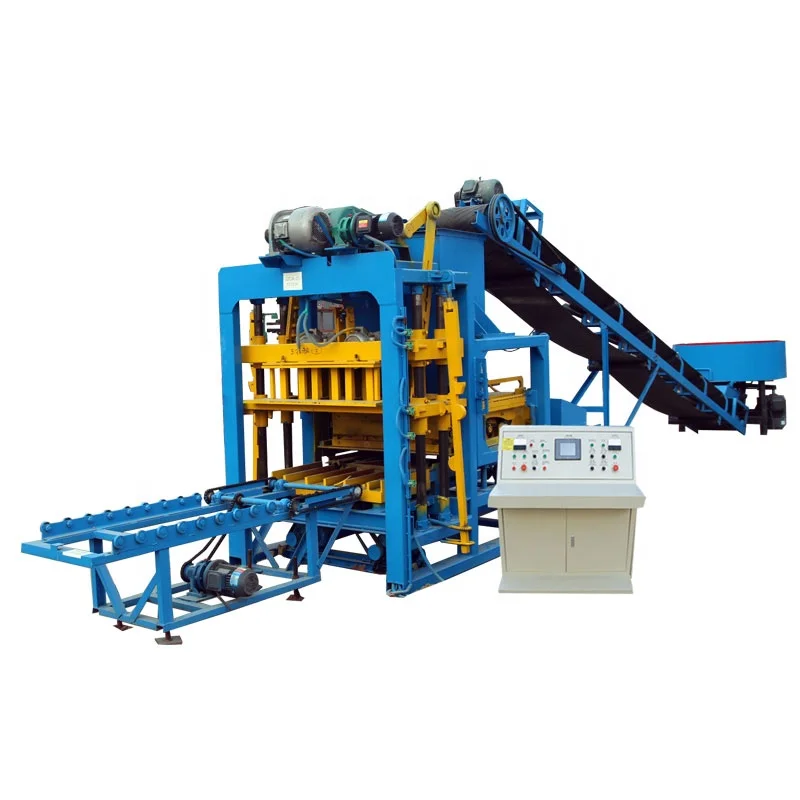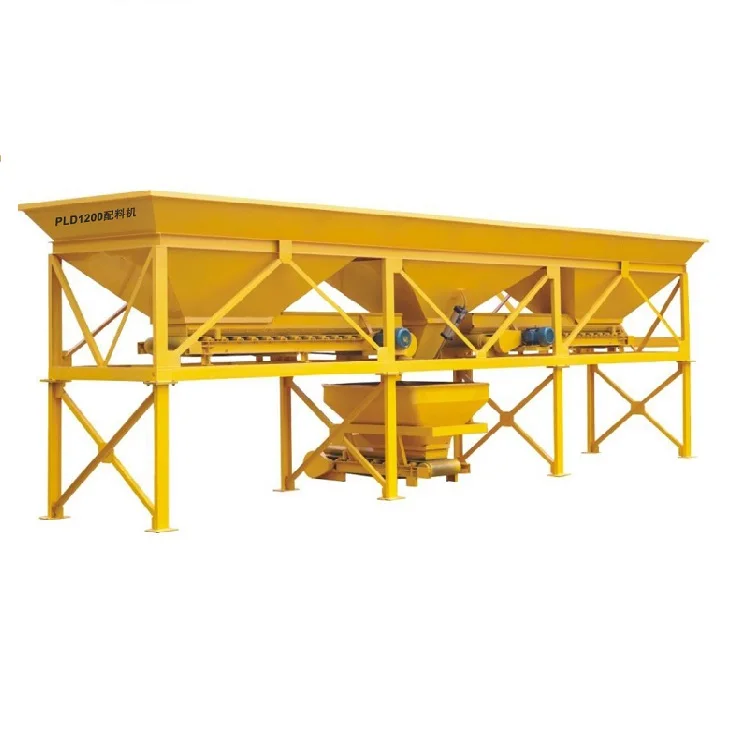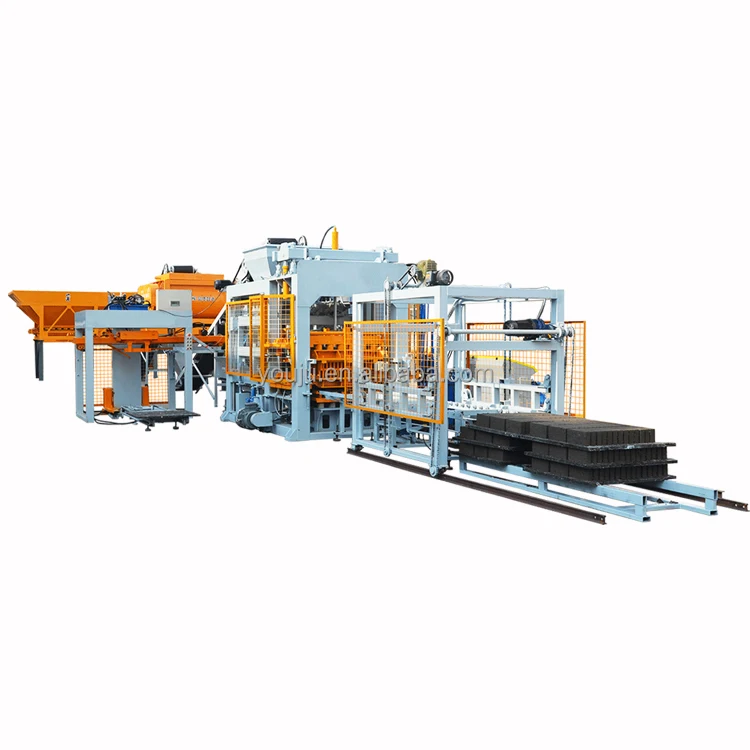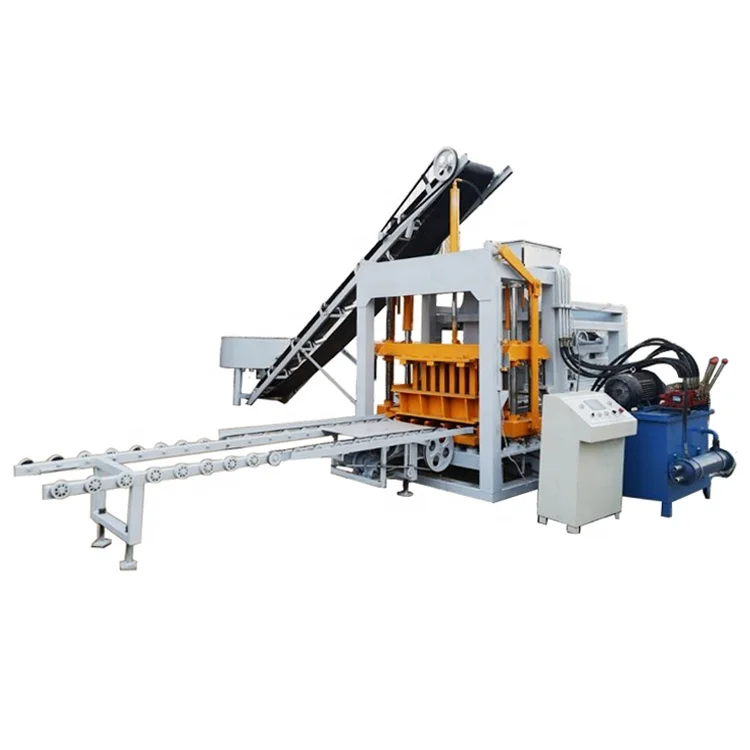
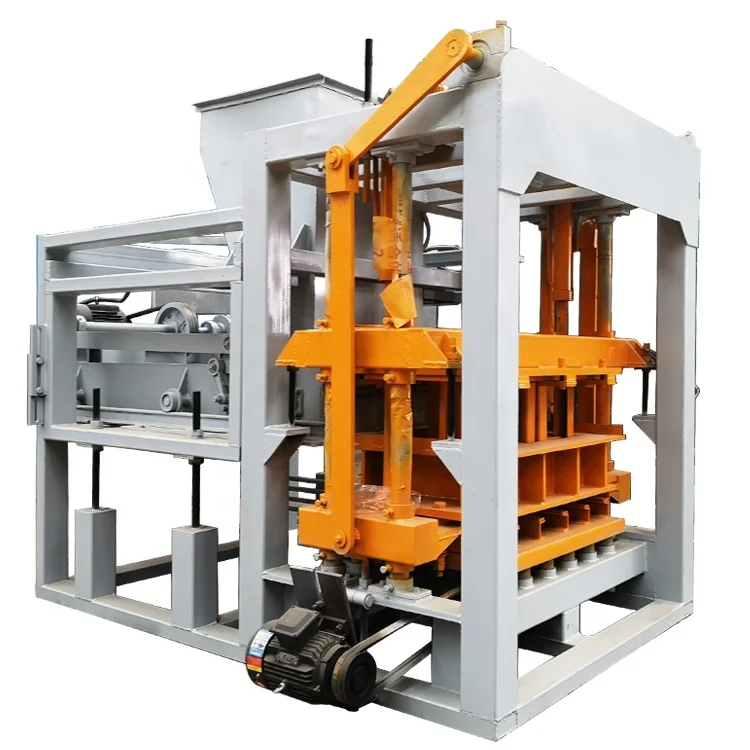
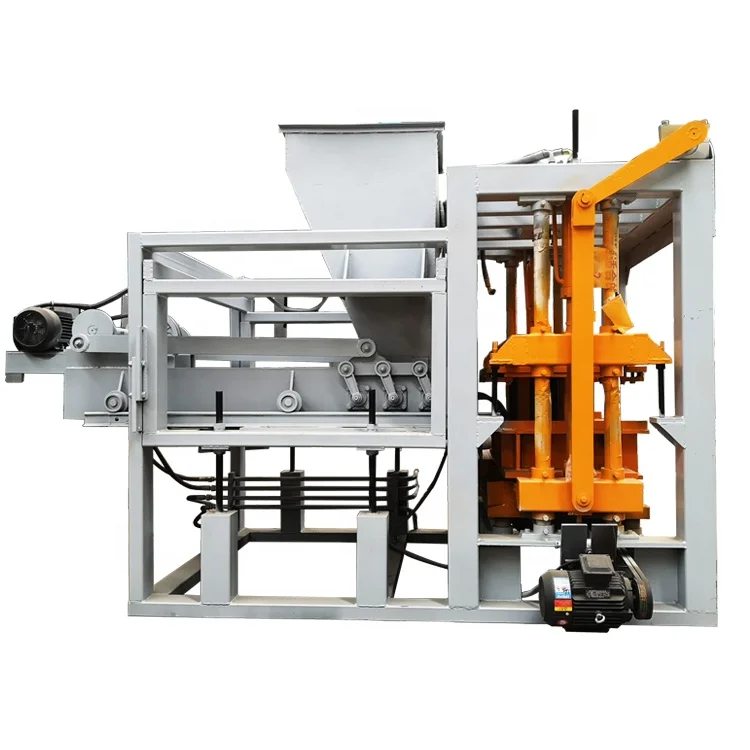


Description
Honest Capacity Planning — the QT4-20 block making machine specifications and mould options are calculated per block format, so daily output figures reflect your actual product mix rather than catalogue peaks.
Technical Specifications
| Parameter | Value |
|---|---|
| Model | QT4-20 |
| Product Type | Automatic Concrete Block Making Machine |
| Overall Dimensions (L×W×H) | 7100×1600×2610 mm |
| Rated Pressure | 16–21 MPa |
| Main Vibration Form | Platform Vibration |
| Vibration Frequency | 4600 r/min |
| Pallet Size | 950×500 mm |
| Molding Cycle | 15–25 s |
| Overall Power | 27.5 kW |
| Hydraulic System | Yes, main forming driven by hydraulic system |
| Control Monitoring | Non-contact proximity switch |
| Automation Level | Semi-automatic |
| Block Strength (Finished Product) | ≥15 MPa |
| Container Loading | 40 ft high-cube container |
| Warranty | 1 year for the whole machine (excluding spare parts) |
Application Suitability
| Application | Material or Output |
|---|---|
| Hollow Block 400×200×200 mm | Sand, cement, fly ash, slag |
| Hollow Block 400×150×200 mm | Sand, cement, industrial waste residue |
| Hollow Block 400×100×200 mm | Crushed stone, cement, gangue |
| Paver Block 200×100×60 mm | Sand, cement, fine aggregate |
| Solid Brick 240×115×53 mm | Fly ash, sand, cement mix |
| Grass-growing Block & Curbstone | Coarse aggregate, cement blends |
Why "Pieces Per Hour" Means Nothing Without the Block Format
Quoted capacity without a stated block format leaves buyers disappointed at the end of the first shift.
I have watched buyers arrive at the factory expecting a certain daily tonnage, only to realize the brochure number assumed a small solid brick while their market actually sells 400×200×200 hollow blocks. The QT4-20 block making machine specifications and mould options address this directly by listing output per format: 480–720 pcs/h for the 400×200×200 hollow block (4 pcs/mould, 20–30 s cycle), up to 3360–5930 pcs/h for the 240×115×53 solid brick (28 pcs/mould, 20–30 s cycle). When you compare these against your local market demand, the real picture of your plant becomes clear [NEED_CITE: block format demand varies significantly by regional construction code].
Matching the Machine to the Block Your Market Actually Buys
A block plant that produces the wrong format at high speed still loses money. The QT4-20 block making machine specifications and mould options cover hollow blocks, pavers, solid bricks and curbstones, each with a different cavity count and cycle range. Before ordering, confirm which formats your distributors move fastest and request the mould drawing and format list that matches those dimensions.
Pallet Size, Curing Area and Forklift Alignment
The 950×500 mm pallet determines how your curing racks must be spaced and which forklift tine width will work. If your existing curing area was built for a different pallet dimension, the mismatch forces either a costly rack rebuild or manual restacking after demoulding. Verify pallet material and curing rack spacing against the line layout before the machine leaves the factory [NEED_CITE: pallet and curing area coordination in block plants].
Reading the Core Specs Beyond the Brochure
The rated pressure of 16–21 MPa combined with platform vibration at 4600 r/min determines the density and compressive strength of the finished block. Higher vibration frequency compacts fine aggregate more effectively, while hydraulic pressure locks the shape before the block leaves the mould. The 15–25 s molding cycle range means the operator can adjust dwell time when switching between a lightweight hollow block and a dense paver. The non-contact proximity switch monitors each station without mechanical wear, reducing unplanned stops during long production runs. Semi-automatic operation keeps the initial investment moderate while leaving room to add automatic pallet feeding and stacking later.
The Hidden Cost of Skipping Configuration Details
Ordering a machine without confirming voltage, frequency and PLC display language delays commissioning for weeks after the container arrives. The hydraulic system and vibration motor are wound for a specific supply; rewinding on site is expensive and voids the warranty. Likewise, a mould change system that is not included in the quotation turns format flexibility into a full-shift exercise, cancelling the productivity the buyer thought they had purchased [NEED_CITE: commissioning delays from unconfirmed electrical standards].
Why Source This Machine Here
The QT4-20 is configured against the buyer’s actual mix design and local aggregate, not a catalogue default, so vibration and pressure settings match your raw material from day one. Mould design and supply cover the formats your market sells, with custom drawings available when standard cavities do not fit. The semi-automatic setup allows a first-time plant owner to start with lower capital and add automation as volume grows. Installation includes on-site commissioning and operator training, ensuring the crew can run the machine independently before the service engineer departs.
Documentation & Verification
- Line layout and capacity calculation stating the block format assumed for each output figure
- Mould drawing and format list confirming cavity count and dimensions
- Hydraulic and electrical schematic matching your voltage and frequency
- Factory test record on your target block format before dispatch
- Operation and maintenance manual in your preferred language
- Wear parts and mould list with part numbers for reordering
Installation, Commissioning & Support
- Foundation must accommodate 7100×1600 mm footprint with level tolerance for hydraulic alignment
- Dedicated power circuit required for 27.5 kW overall load at confirmed voltage and frequency
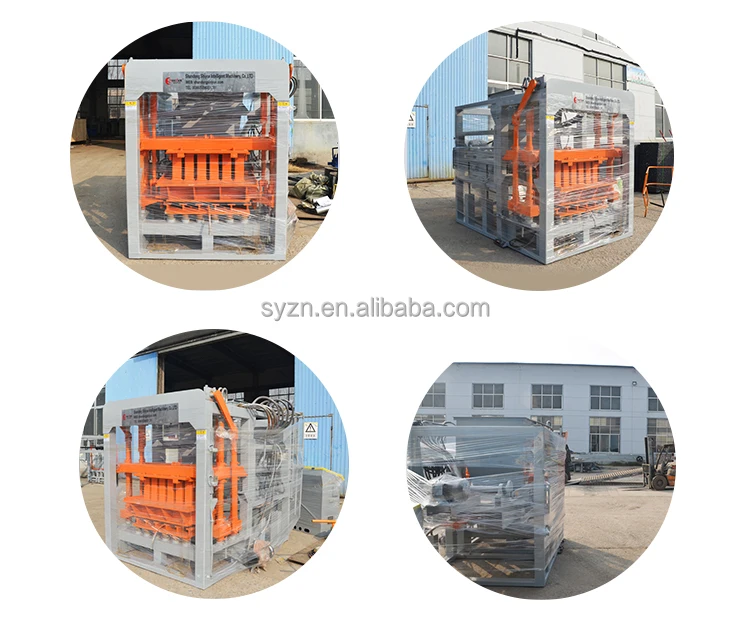
- Machine ships dismantled for 40 ft high-cube container loading, reassembled on site
- First-run commissioning includes pressure and vibration tuning to your local aggregate
- Operator training covers mould change procedure, pallet handling and daily maintenance
- Wear parts list supplied with part numbers for hydraulic seals and vibration components
What to Include in Your Inquiry
Send your target block formats, required daily output per format, and the local raw materials you plan to use. Confirm your site voltage, frequency and the control language your operators read. If you already have curing racks or forklifts, share their dimensions so the pallet and line layout can be matched before quotation.
Frequently Asked Questions
Q: How is the output capacity of the QT4-20 calculated and which block format does each figure assume?
A: Each capacity figure states the block dimension, mould cavity count and cycle time. For example, 480–720 pcs/h is based on the 400×200×200 mm hollow block with 4 cavities and a 20–30 s cycle. This lets you plan daily output against your actual product mix.
Q: What pallet size does the QT4-20 require and how does it affect my curing layout?
A: The machine uses a 950×500 mm pallet. Your curing rack spacing and forklift tine width must match this dimension. Confirming these details before shipment avoids costly rack modifications or manual restacking after demoulding.
Q: Which block formats and mould options are available, and how long does a mould change take?
A: Available formats include hollow blocks, pavers, solid bricks and curbstones, each with dedicated moulds. Mould change time depends on the operator and tooling included; request the mould change procedure and verify which tools ship with the machine.
Q: How should the machine be configured for my local aggregate and mix design?
A: Vibration frequency and hydraulic pressure are adjusted to match your specific aggregate gradation and cement ratio. Providing a sample of your local sand or crushed stone allows the factory to set parameters that deliver the required block strength from the first production run.