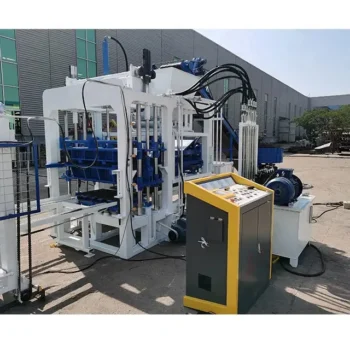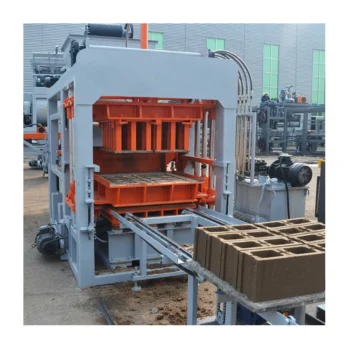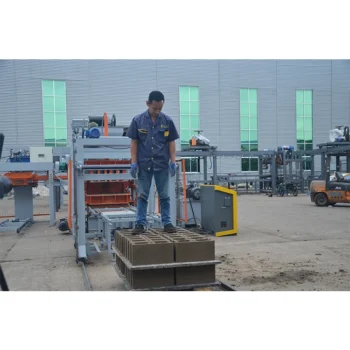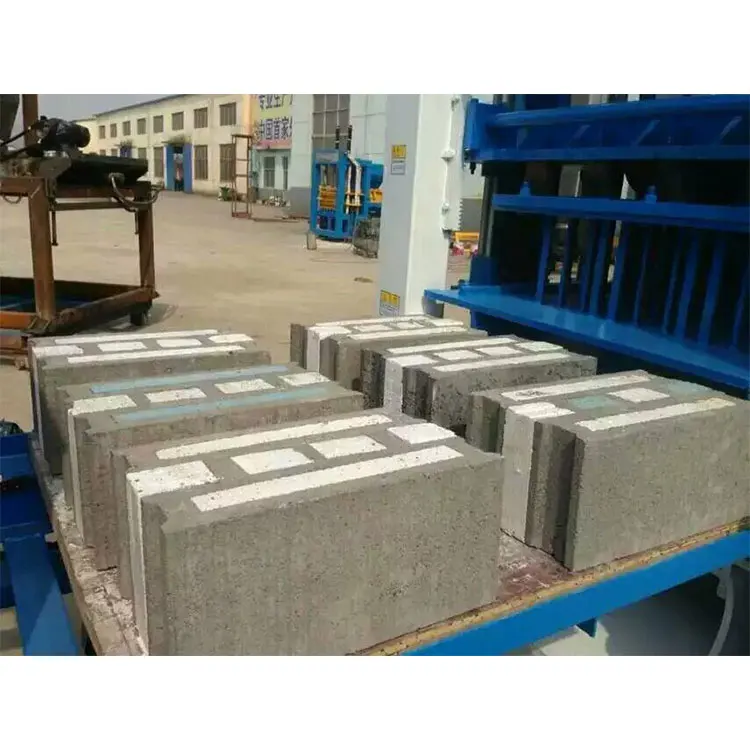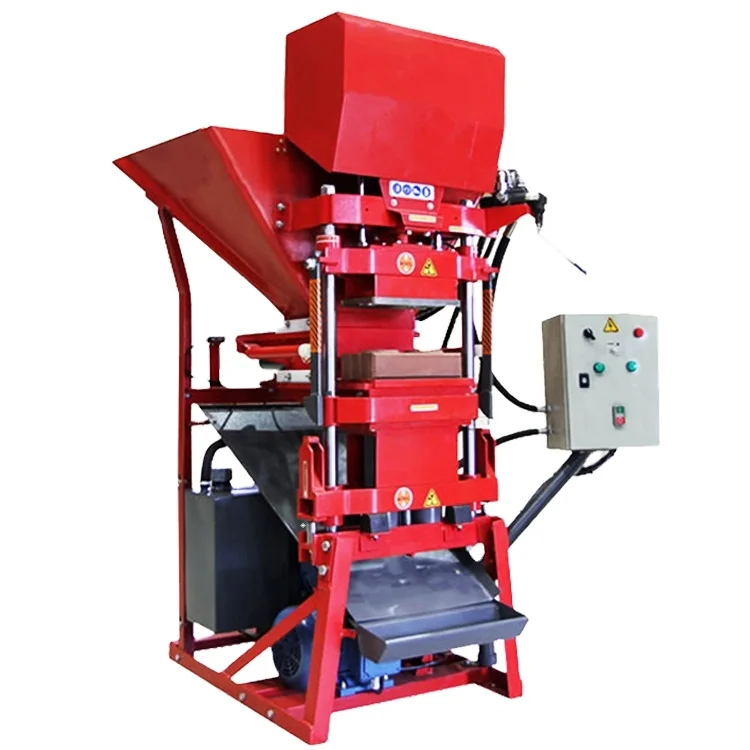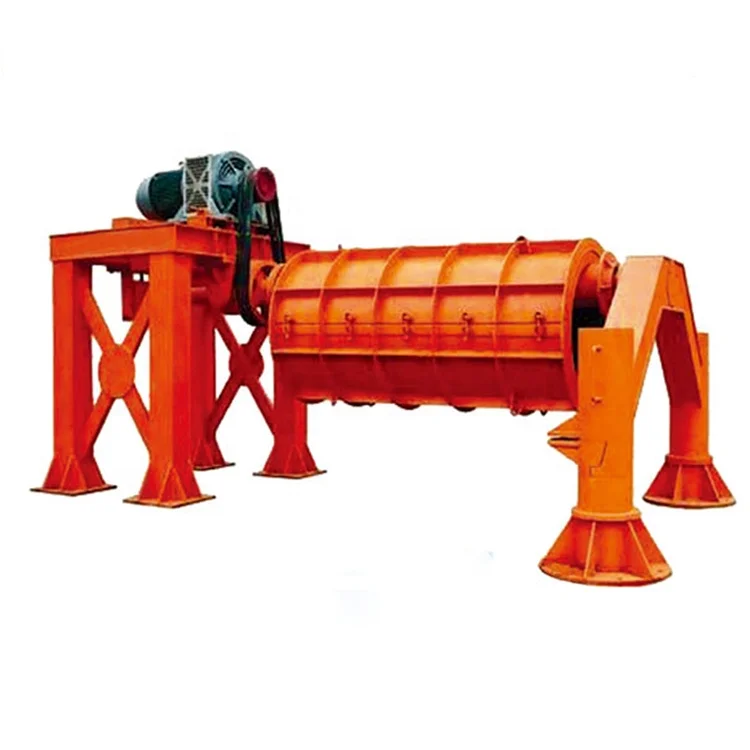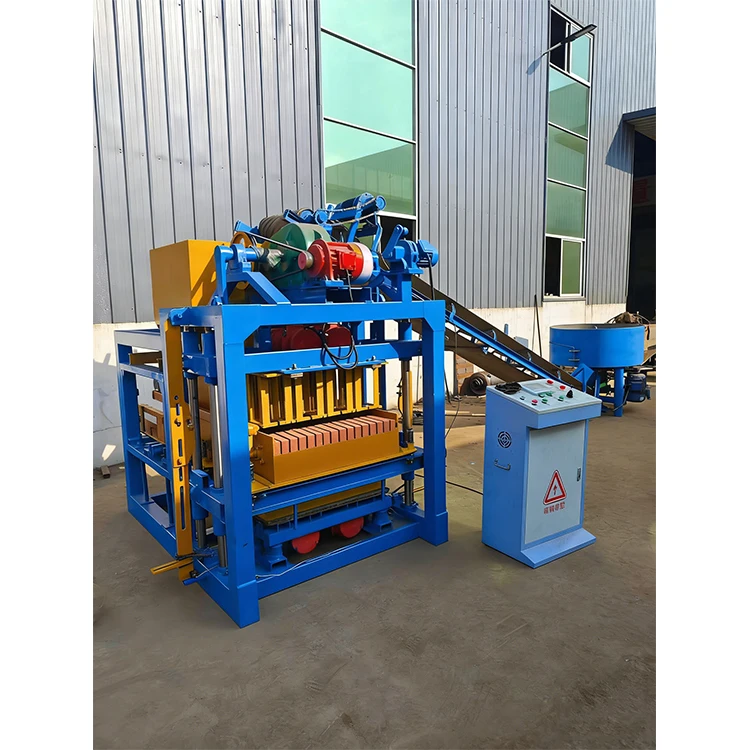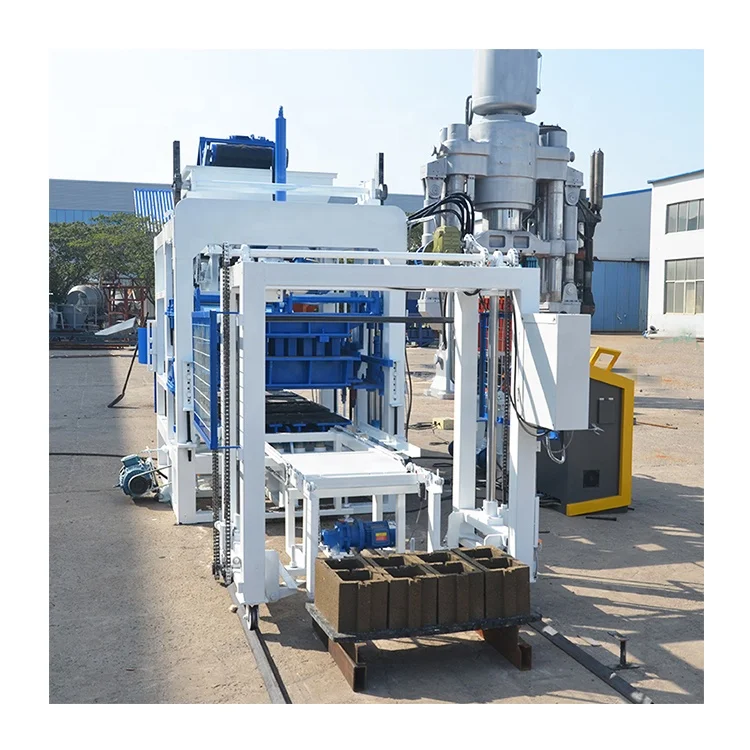
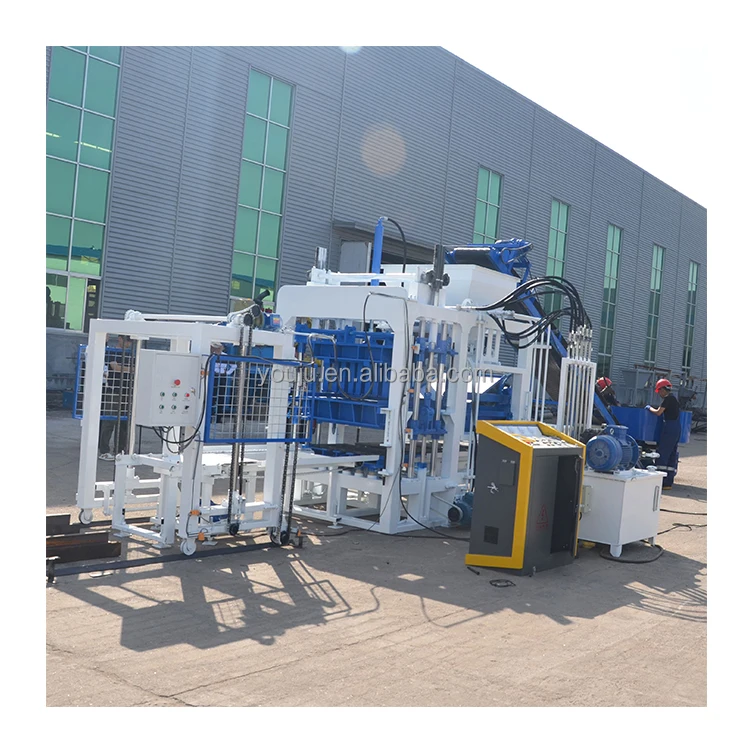
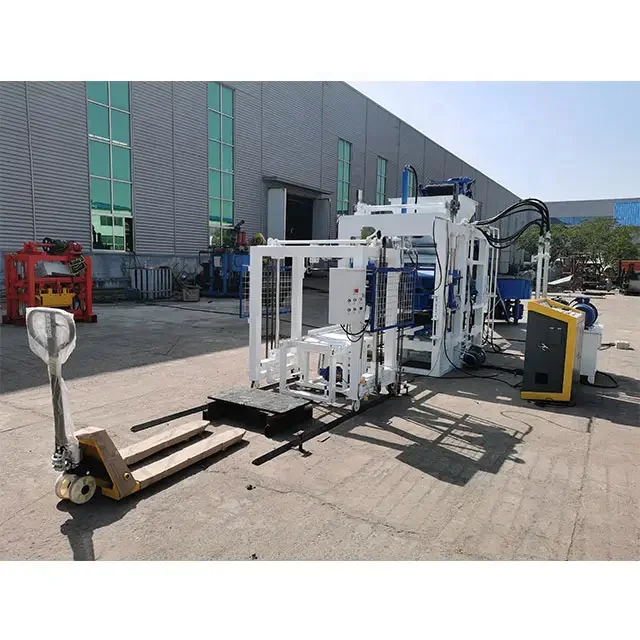
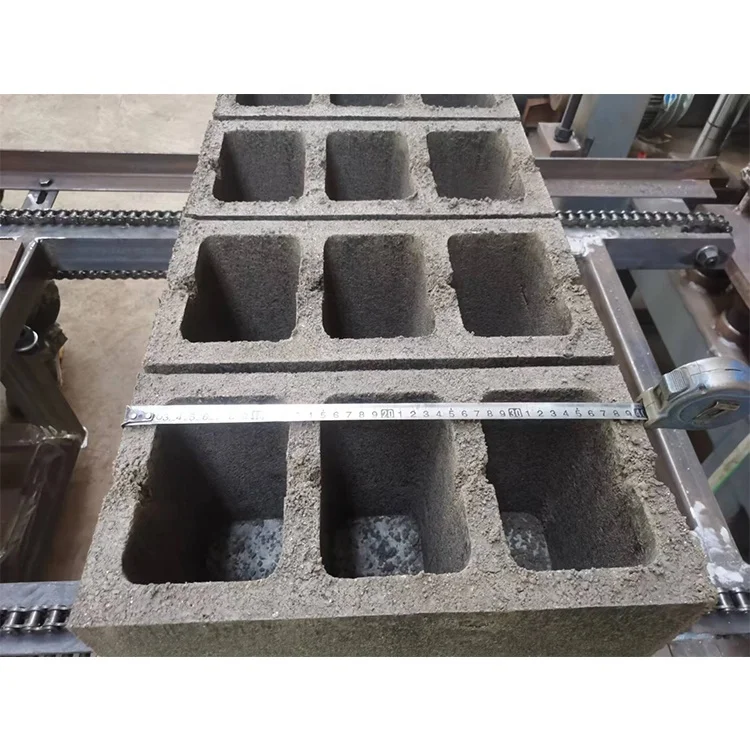
Description
Vibration Force and Hydraulic Pressure Matched to Your Local Aggregate — The QT4-16 block machine is configured around the buyer’s actual mix design and target block format, not a generic catalogue output figure.
Technical Specifications
| Parameter | Value |
|---|---|
| Model | QT4-16 |
| Product Type | Automatic Hydraulic Concrete Block Making Machine |
| Overall Dimensions | 7400 × 1950 × 2800 mm |
| Rated Hydraulic Pressure | 21 MPa |
| Main Vibration Form | Platform Vibration |
| Vibration Frequency | 2800–4500 r/min |
| Vibration Force | 40 kN |
| Pallet Size | 900 × 550 mm |
| Molding Cycle | 15–20 s (basis to be confirmed per block format and material) |
| Demolding Method | Hydraulic |
| Total Mass | 5 T |
| Recommended Factory Area | 600 m² |
| Control System | PLC intelligent control with man-machine interface, fault diagnosis, remote control function |
| Automation Level | Full Automatic |
| Voltage & Frequency | Configurable to buyer’s site supply (to be confirmed before production) |
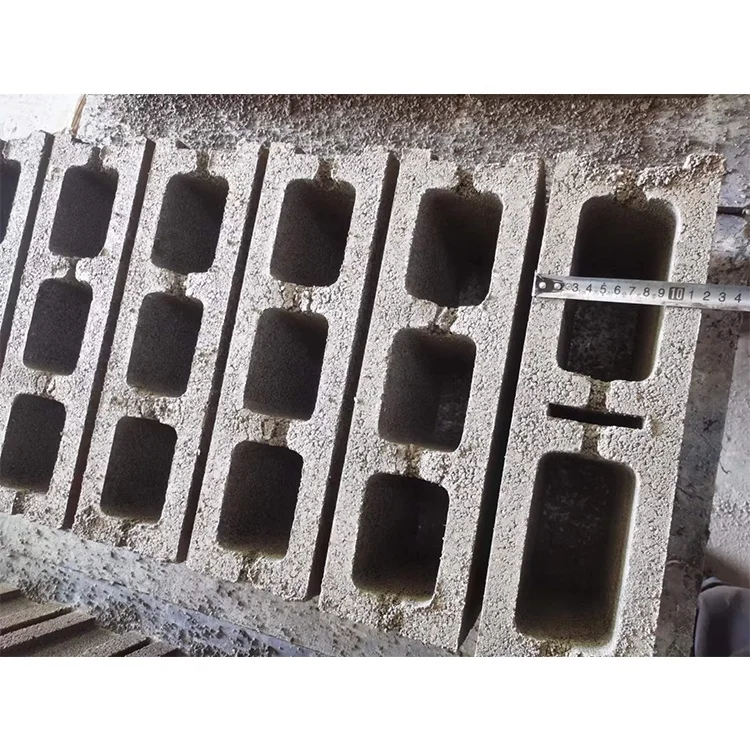
| Standard Mould Formats | 8-inch / 6-inch / 5-inch / 4-inch hollow block (additional formats optional) |
| Raw Materials | Crushed stone, sand, cement, fly ash, gravel, slag, dust |
Application Suitability
| Application | Material or Output |
|---|---|
| Hollow block production (4"–8") | Crushed stone, sand, cement, fly ash blends |
| Solid block production | Dense aggregate and cement mixes |
| Paving block and colored paver production | Fine aggregate, cement, pigment blends |
| Interlocking block production | Gravel, sand, cement with interlocking mould |
| Kerbstone production | Coarse aggregate, slag, cement mixes |
What "Cycle Time 15–20 Seconds" Leaves Out for QT4-16 Block Machine Specifications
Cycle time is only meaningful when tied to a specific block format, mould cavity count, and material density.
Many suppliers quote the QT4-16 block machine specifications with a single cycle figure that applies to the lightest, simplest format in their mould range. When a buyer then runs 8-inch hollow blocks with a high-fly-ash mix, the actual cycle stretches beyond that headline number, and daily output falls well below the quoted figure. I have watched projects in the Middle East lose half a shift every day because the capacity table in the brochure assumed 4-inch blocks with standard river sand — an aggregate the site simply could not source. [NEED_CITE: honest block machine capacity calculation methods]
Mould Formats and Realistic Cycle Time by Block Type
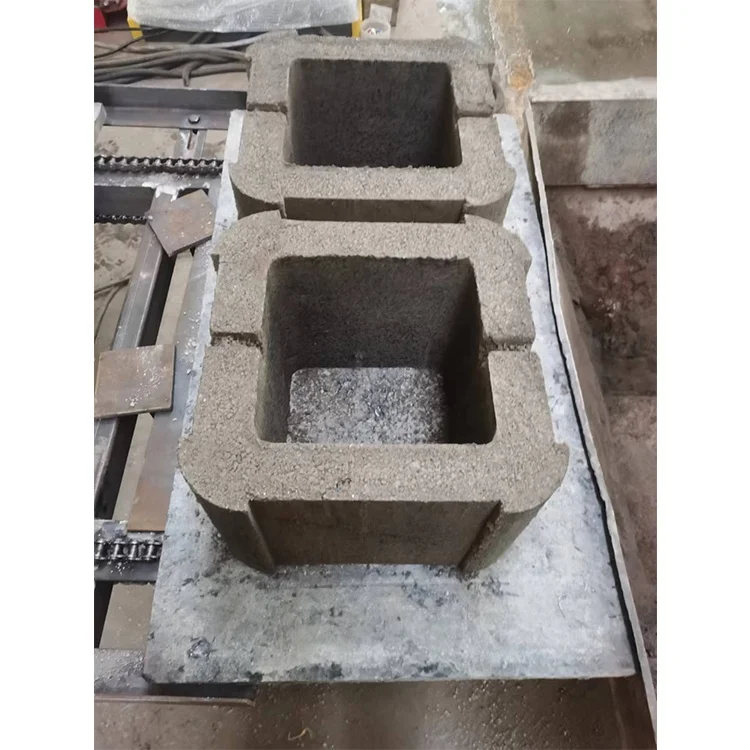
The QT4-16 block machine specifications cover hollow blocks from 4-inch to 8-inch, solid blocks, pavers, interlocking bricks, and kerbstones. Each format demands a different vibration duration and hydraulic hold time. A 4-inch hollow block typically requires the shortest press cycle, while an 8-inch block with thickened walls needs the vibration frequency to dwell at the upper range to achieve target density. When reviewing how to choose the right configuration, buyers should request a capacity table that breaks output down format by format, rather than accepting a single pieces-per-hour claim.
Matching Vibration and Pressure to Local Aggregate
In my time on-site across the Gulf region, I have seen standard QT4-16 block machine specifications produce excellent hollow blocks with river sand but struggle with volcanic scoria or crushed limestone. The rated pressure of 21 MPa combined with 40 kN of platform vibration gives a wide working envelope, but only when the vibration frequency is tuned to the particle size and shape of the aggregate actually available. A buyer using lightweight pumice aggregate, for example, needs the lower end of the 2800–4500 r/min range to avoid over-compacting the face mix and cracking block edges. [NEED_CITE: aggregate grading effect on concrete block compaction]
How Hydraulic Pressure and Vibration Shape Block Density
The QT4-16 relies on hydraulic demolding paired with platform vibration rather than mould vibration alone. At 21 MPa, the press head forces the concrete mix into every corner of the mould cavity while the platform transmits vibration upward through the pallet. This combination determines block compressive strength far more than cement content alone. The 900 × 550 mm pallet size dictates how many block cavities fit per press stroke, directly linking pallet dimensions to per-cycle output. Buyers planning their curing yard must also match pallet size to existing rack spacing and forklift tine width, otherwise newly pressed blocks cannot move into the curing zone without manual re-handling.
The Hidden Cost of Wrong Pallet and Voltage Configuration
Choosing a pallet material without considering the local climate and curing method leads to warping in high-heat environments, which then causes uneven block thickness and increased reject rates. Similarly, if voltage and frequency are not confirmed before the QT4-16 enters production, the PLC may boot in a default language unfamiliar to the operator, and the vibration motor can run at the wrong speed — problems that only surface after the machine arrives on site and the first shift tries to commission it. [NEED_CITE: industrial motor voltage mismatch consequences]
Why Specify the QT4-16 as a Matched System
Block machinery is the sole focus of this production line, meaning the QT4-16 press, moulds, pallets, and handling equipment are designed as one integrated system rather than assembled from unrelated suppliers. Each configuration is set against the buyer’s actual mix design and target block format, not a catalogue default. Mould design covers the formats the local market sells, including custom drawings when a buyer needs a non-standard interlocking profile or kerbstone shape. Automation level can be selected to match available labour, allowing a buyer to start with semi-automatic pallet handling and upgrade to full automatic stacking later. Installation and commissioning include operator training so the first production run meets strength targets from day one.
Documentation & Verification
- Line layout showing QT4-16 footprint with block format assumed for each capacity figure
- Mould drawing and format list confirming included and optional block sizes
- Pallet specification sheet with size, material, and load rating for curing rack compatibility
- Voltage and PLC display language confirmation sheet signed before production
- Factory test record on the buyer’s requested block format prior to dispatch
- Operation and maintenance manual with wear parts and mould replacement intervals
Installation, Commissioning & Support
- 600 m² minimum factory area with level concrete floor to support 5 T machine mass
- Dedicated power circuit matching confirmed voltage and frequency for the 21 MPa hydraulic unit
- Machine arrives partially dismantled; reassembly aligns platform vibration with pallet feed
- First-run parameter tuning adjusts vibration frequency to the buyer’s local aggregate sample
- Operator training covers PLC fault diagnosis interface and remote control troubleshooting
- Spare mould and hydraulic wear parts list provided with reorder lead times
Before You Send an Inquiry
To size the QT4-16 correctly, share the block formats your market buys most, the daily output you need per format, and a sample or description of your local aggregate. Confirm your site voltage, frequency, and preferred PLC display language. If you already have curing racks and forklifts on site, send their dimensions so the 900 × 550 mm pallet can be verified against your existing handling infrastructure.
Frequently Asked Questions
Q: How is QT4-16 capacity verified per block format, and what block size is assumed?
A: Every output figure is tied to a specific block format, mould cavity count, and material density. Rather than quoting a single cycles-per-hour number, the capacity table breaks down cycle time for 4-inch, 5-inch, 6-inch, and 8-inch hollow blocks individually. Buyers should request this format-by-format breakdown before comparing the QT4-16 block machine specifications against other options.
Q: Which mould formats are standard, and how long does a mould change take?
A: The QT4-16 ships with moulds for 8-inch, 6-inch, 5-inch, and 4-inch hollow blocks as standard. Paver, interlocking, and kerbstone moulds are optional. Mould change time depends on whether the quick-release clamp kit is fitted; buyers should confirm this option during quotation to avoid losing a significant portion of a shift on every format switch.
Q: How is the machine configured for local aggregate rather than a catalogue default?
A: Before finalizing the QT4-16 block machine specifications, buyers are asked to send a local aggregate sample or grading report. The vibration frequency range of 2800–4500 r/min and the 21 MPa hydraulic pressure are then adjusted to achieve target block density with that specific material, rather than relying on a generic river-sand baseline.
Q: What pallet size does the QT4-16 use, and how does it fit existing curing racks?
A: The standard pallet size is 900 × 550 mm. Buyers should cross-check this dimension against curing rack slot width and forklift tine spacing before production. If existing racks were built for a different pallet, the supplier can adjust pallet length or suggest rack modifications to avoid manual re-handling during curing.
Q: What block strength can the QT4-16 achieve at 21 MPa and 40 kN vibration?
A: Compressive strength depends on mix design, aggregate type, and curing conditions, not just machine pressure. At 21 MPa hydraulic pressure and 40 kN platform vibration, the QT4-16 can meet common hollow block and paver strength standards when paired with a correctly graded mix. Buyers should request a test record on their specific material before confirming the order.