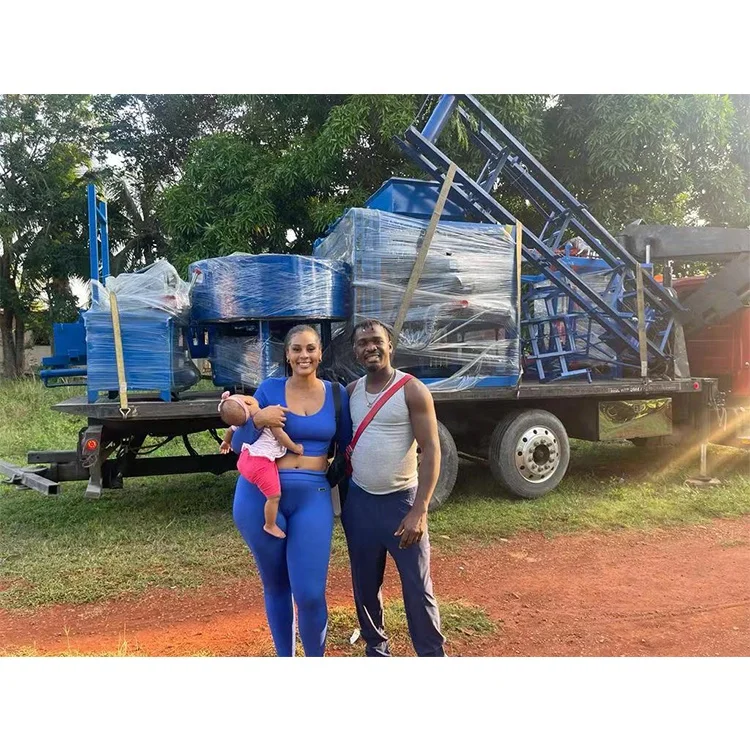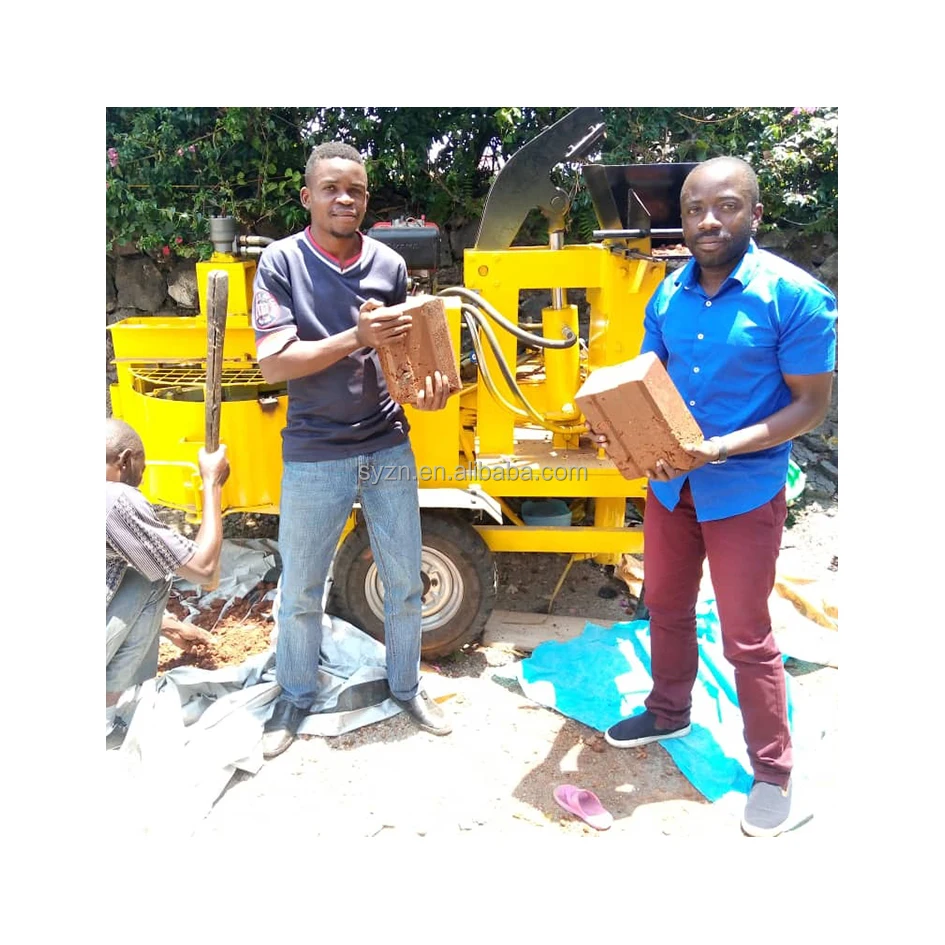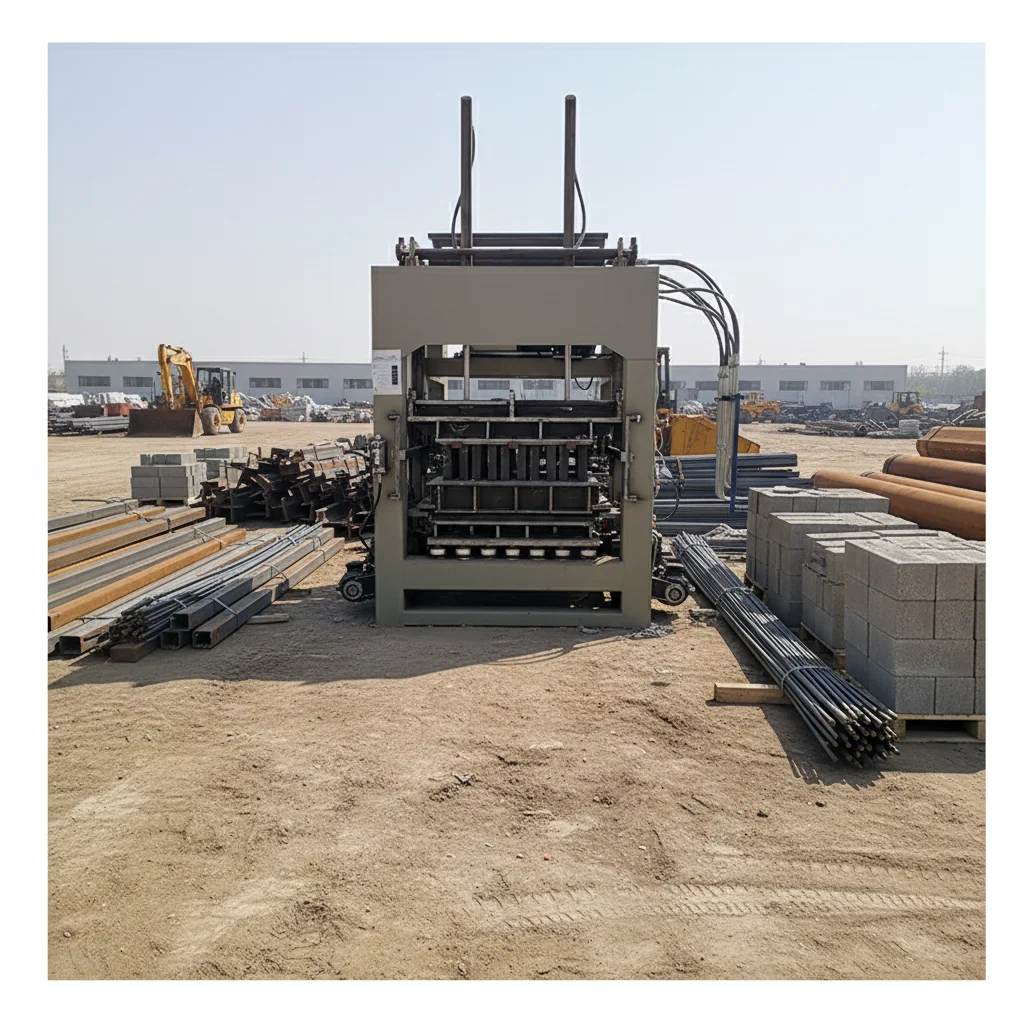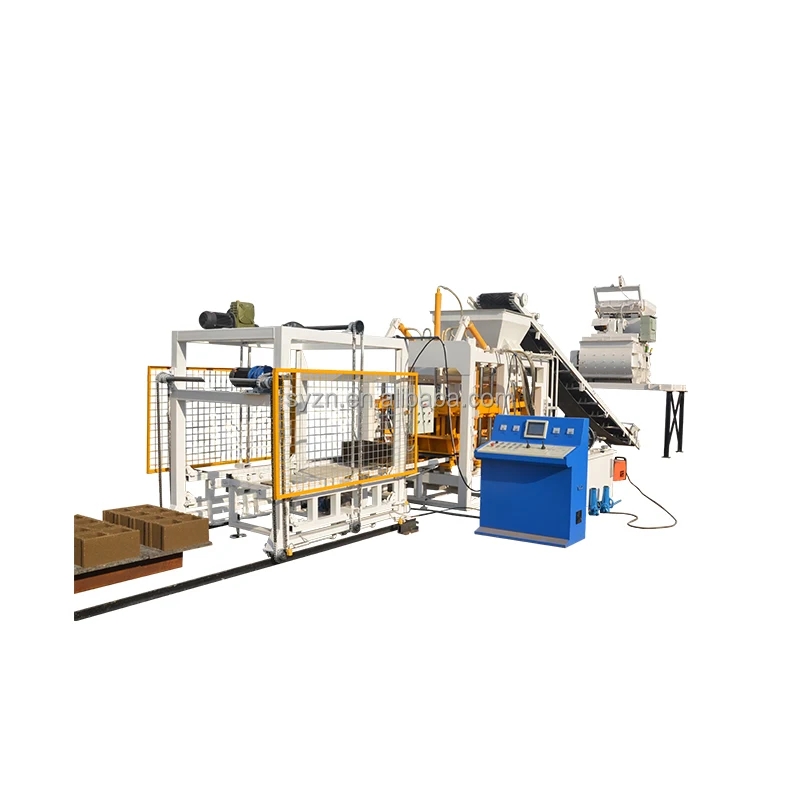
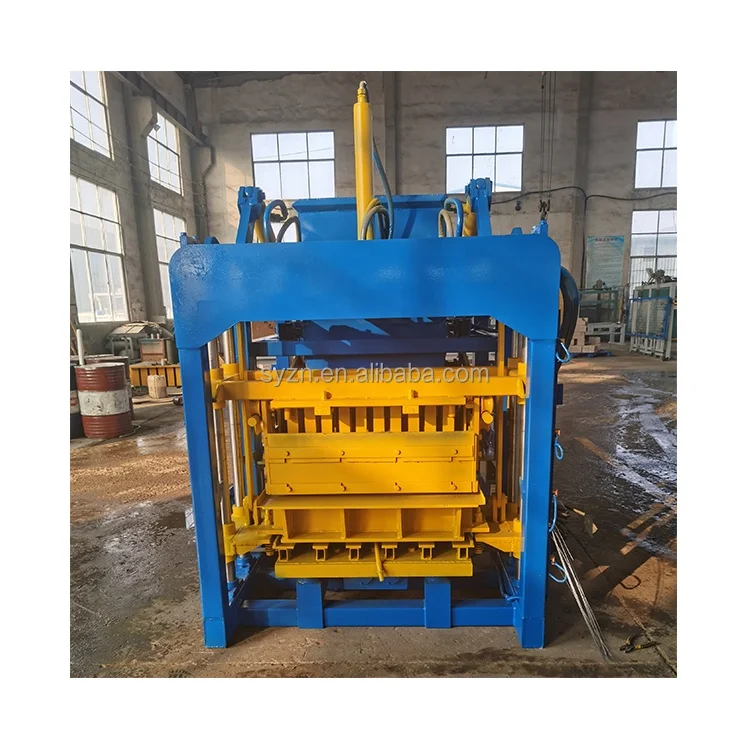

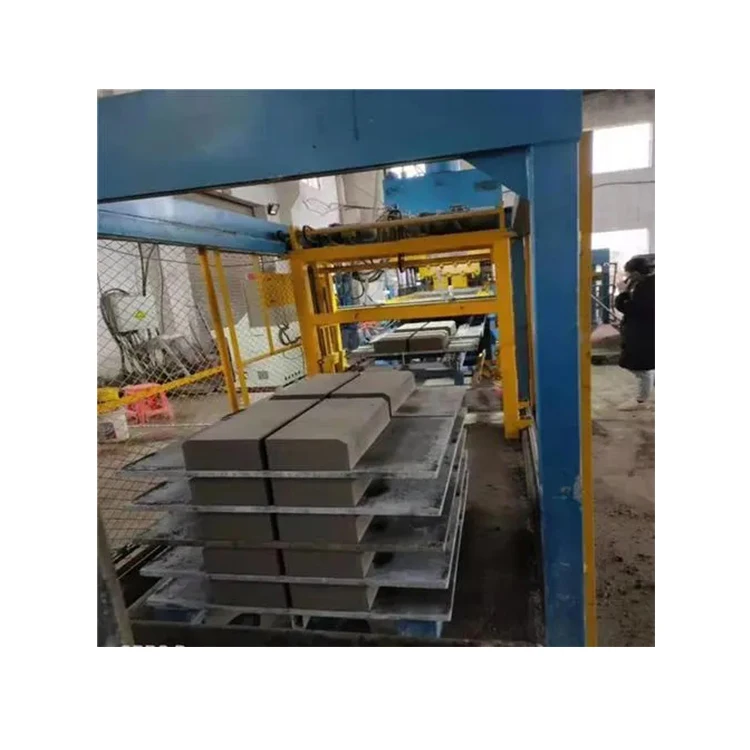


Description
Format-Matched Output — Every QT4-15A automatic block machine configuration is sized against the buyer’s confirmed block format, pallet dimensions, and local aggregate rather than a default catalogue sheet.
Technical Specifications
| Parameter | Value |
|---|---|
| Model | QT4-15A |
| Product Type | Automatic Hydraulic Block Making Machine |
| Overall Dimensions (L×W×H) | 7100×1600×2610 mm |
| Total Weight | 3 T |
| Molding Cycle | 15-25 s (basis not stated in source — confirm block format / material / thickness) |
| Vibration Frequency | 4600 r/min |
| Vibration Force (Exciting Power) | 40-50 kN |
| Total Power | 18.45 kW (rated or peak not specified) |
| Hydraulic Station | High-pressure hydraulic station included |
| Control System | PLC control system |
| Mixer Model | JQ350 |
| Pallet Size | 850×550×25 mm |
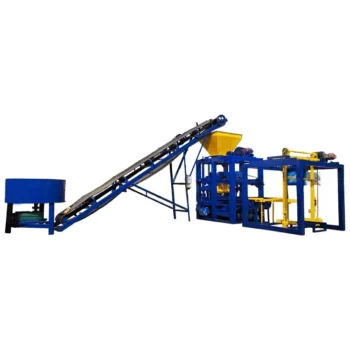
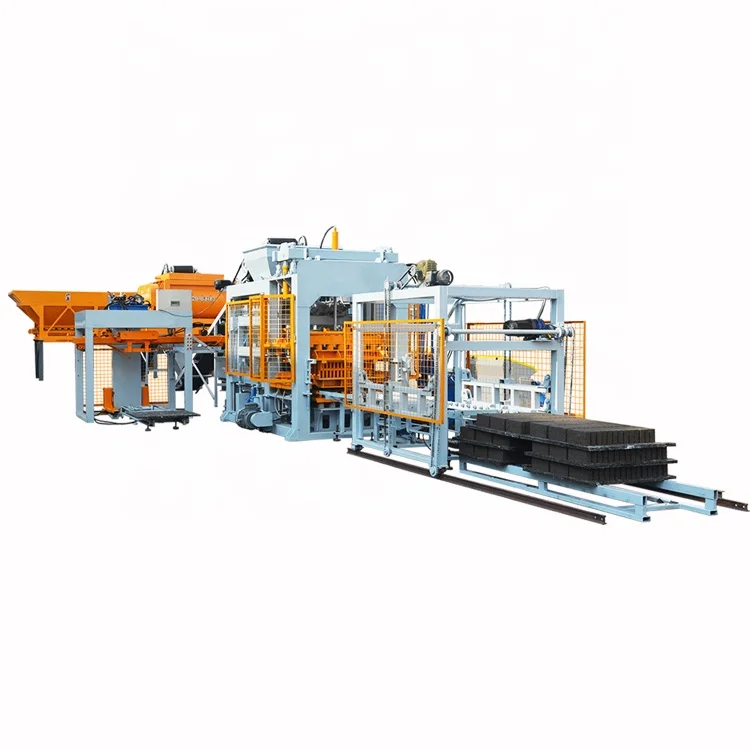
| Line Equipment Included | Block making machine, hydraulic station, PLC control system, pallet feeder, brick conveyor, block sweeper |
| Free Accessories | Manual hydraulic trolley, spare parts and tools |
| Output — Hollow Block 400×200×200 mm | 4 pcs/mould, 408 pcs/hr, 3264 pcs/8hr |
| Output — Hollow Block 400×150×200 mm | 5 pcs/mould, 510 pcs/hr, 4080 pcs/8hr |
| Output — Solid Brick 240×115×53 mm | 18 pcs/mould, 2100 pcs/hr, 17000 pcs/8hr |
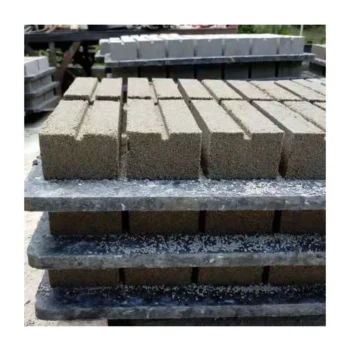
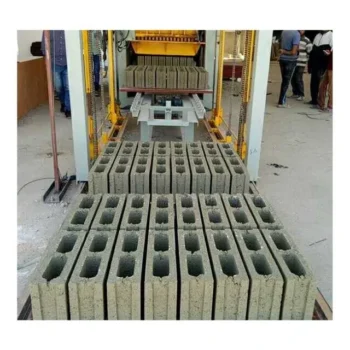
| Applied Products | Hollow block, solid brick, paver, curbstone |
| Raw Materials | Crushed stones, sand, cement, dust, fly ash |
| Container Loading | 20GP, nude packing, approx. 500 pcs pallets loadable |
| Voltage & Frequency | To be confirmed before order |
| PLC Display Language | To be confirmed before order |
Application Suitability
| Application | Material or Output |
|---|---|
| Hollow block production for load-bearing and partition walls | Crushed stone, sand, cement, fly ash mixes — 400×200×200 mm and 400×150×200 mm formats |
| Solid brick manufacturing for masonry and infill | Cement-stabilised aggregates — 240×115×53 mm standard brick |
| Paver and curbstone production for roads and landscaping | High-strength concrete mixes with fine aggregate grading |
| On-site block production by construction contractors | Locally sourced sand, crushed stone, and cement within mixer capacity |
| Format expansion for existing concrete product plants | Additional moulds for hollow, solid, paver, or curbstone formats on one machine |
What the QT4-15A Automatic Block Machine Specifications Leave Unstated
Cycle time only means something when tied to a specific block format and mix design.
Catalogue sheets often quote a single moulding cycle for the QT4-15A automatic block machine specifications without clarifying whether that figure applies to a lightweight 400×200×200 mm hollow block or a dense paver requiring higher compaction. In practice, a porous mix with local river sand may complete a cycle at the lower end of the 15-25 s range, while a stiff mix with angular crushed aggregate demands longer vibration to achieve target density. I have seen buyers in volcanic aggregate regions order machines based on the shortest quoted cycle, only to discover their actual daily output fell well short because the vibration force was insufficient for harder stone [NEED_CITE: aggregate hardness and compaction time relationship in concrete block production]. Confirming the cycle per format before purchase removes that uncertainty.
Matching Block Format to Mould and Cycle
The QT4-15A automatic block machine specifications list three reference formats — a 400×200×200 mm hollow block at 408 pieces per hour, a 400×150×200 mm hollow block at 510 pieces per hour, and a 240×115×53 mm solid brick at 2100 pieces per hour. Each figure assumes its corresponding mould is fitted and the mix is proportioned for that format. Switching to a paver or curbstone mould changes the cycle, the vibration duration, and the hydraulic pressure required for adequate compaction. Buyers planning a multi-format product range should request a capacity table that states the cycle and output for every format they intend to produce.
Vibration Force and Hydraulic Pressure as a Paired System
The 40-50 kN vibration force and 4600 r/min frequency work together with the hydraulic station to compact the mix inside the mould cavity. Vibration loosens the aggregate particles while hydraulic pressure clamps the mould head down, preventing the mix from bouncing and creating weak layers. If the buyer’s aggregate is harder or more angular than the factory test material, the vibration force may need to be adjusted upward within the machine’s range, or the mix design modified to include finer filler material. A mismatch here shows up as inconsistent block strength across a single production run [NEED_CITE: vibration and hydraulic pressure interaction in block density].
Reading the Pallet, Power, and Line Equipment Details
The 850×550×25 mm pallet size determines how many blocks fit per cycle and how the cured products move through the yard. If the buyer’s existing curing racks or forklift forks are dimensioned for a different pallet, the entire handling workflow needs adjustment before the machine arrives. Total power of 18.45 kW covers the press, the JQ350 mixer, the pallet feeder, the brick conveyor, and the block sweeper as one integrated line. The PLC control system manages the automatic sequence, but the display language and the electrical supply — voltage and frequency — must be confirmed before production so that commissioning is not delayed by a transformer swap or an unreadable HMI screen.
When a Pallet Mismatch Stops the Whole Line
A pallet that does not fit the buyer’s curing rack means every block must be re-stacked by hand after demoulding, adding labour and breakage risk to a process that was supposed to be automatic. The 850×550 mm pallet is standard for this tier, but yard layouts vary. Buyers who skip pallet verification often discover the problem only when the first container arrives and the racks are already welded in place [NEED_CITE: pallet and curing rack dimension compatibility in block plants].
Why Buyers Source the QT4-15A From a Block-Line Specialist
The QT4-15A is supplied as a matched system — press, hydraulic station, PLC, pallet feeder, conveyor, and sweeper — rather than assembled from unrelated components. Mould options cover hollow block, solid brick, paver, and curbstone formats, each with a stated cycle so the buyer can plan output per product. The machine is configured against the buyer’s local aggregate and mix design, not a generic test mix, reducing the chance of density shortfalls after installation. Pallet size and automation level are confirmed during the proposal stage, so the line connects to existing yard equipment without modification. Factory testing replicates the buyer’s block format before dispatch, and documentation includes the capacity calculation for each confirmed format.
Documentation & Verification
- Line layout drawing with pallet flow from feeder through sweeper to curing rack entry
- Capacity calculation table stating cycle time and output for each confirmed block format
- Mould drawing and format list covering every block type in the buyer’s product range
- Hydraulic and electrical schematics with confirmed voltage, frequency, and PLC language
- Factory test record run on the buyer’s specified mix and block format before shipment
- Packing photographs showing machine, moulds, pallets, and accessories per container load
Installation, Commissioning & Support
- Foundation pad sized to the 7100×1600 mm footprint with anchor bolt template provided
- Dedicated 18.45 kW supply circuit at confirmed voltage and frequency before machine energisation
- Hydraulic station filled and bled on site; pressure verified against mould-specific settings
- PLC programme loaded in confirmed display language; cycle parameters tuned per block format
- Operator training covering mould change procedure, pallet feeder adjustment, and daily greasing points
- Wear parts list with hydraulic seals and mould liner dimensions for first reorder planning
Preparing an Accurate QT4-15A Inquiry
To size the QT4-15A to a real production target, share the block formats the local market demands, the daily output required per format, and a sample of the intended aggregate. Include the yard’s existing pallet dimensions, curing rack layout, and the site’s voltage and frequency so the electrical package matches on arrival.
Frequently Asked Questions
Q: How is the output capacity of the QT4-15A calculated for each block format?
A: Each output figure — such as 408 pieces per hour for a 400×200×200 mm hollow block — is based on a specific mould, a standard mix, and a cycle time within the 15-25 s range. If the buyer’s aggregate or block design differs, the cycle may shift, so we state capacity per confirmed format after reviewing the buyer’s mix.
Q: How should vibration force and hydraulic pressure be matched to local aggregate?
A: The 40-50 kN vibration force at 4600 r/min is the machine’s operating range. Harder or more angular aggregate requires higher vibration energy and possibly a longer cycle to reach target density. We request a sample of the buyer’s aggregate before finalising the pressure and vibration settings.
Q: What determines the mould change time between hollow block, solid brick, and paver formats?
A: Mould change time depends on the clamping system and the operator’s familiarity with the procedure. The QT4-15A uses a bolt-fixed mould mounting arrangement. We provide a step-by-step change guide and recommend that first-time changes be supervised during commissioning.
Q: How is the 850×550×25 mm pallet size matched to the buyer’s curing area?
A: Pallet dimensions must align with the curing rack slot width and the forklift fork spacing already in use at the plant. We confirm rack and forklift dimensions during the proposal stage so the pallet specification fits the buyer’s existing yard infrastructure without modification.
Q: Which voltage, frequency, and PLC language options are confirmed before shipment?
A: Voltage and frequency are set to the buyer’s site supply — typically ranging across common industrial standards — and the PLC display language is agreed in writing before production begins. This avoids transformer replacements or unreadable screens during on-site commissioning.